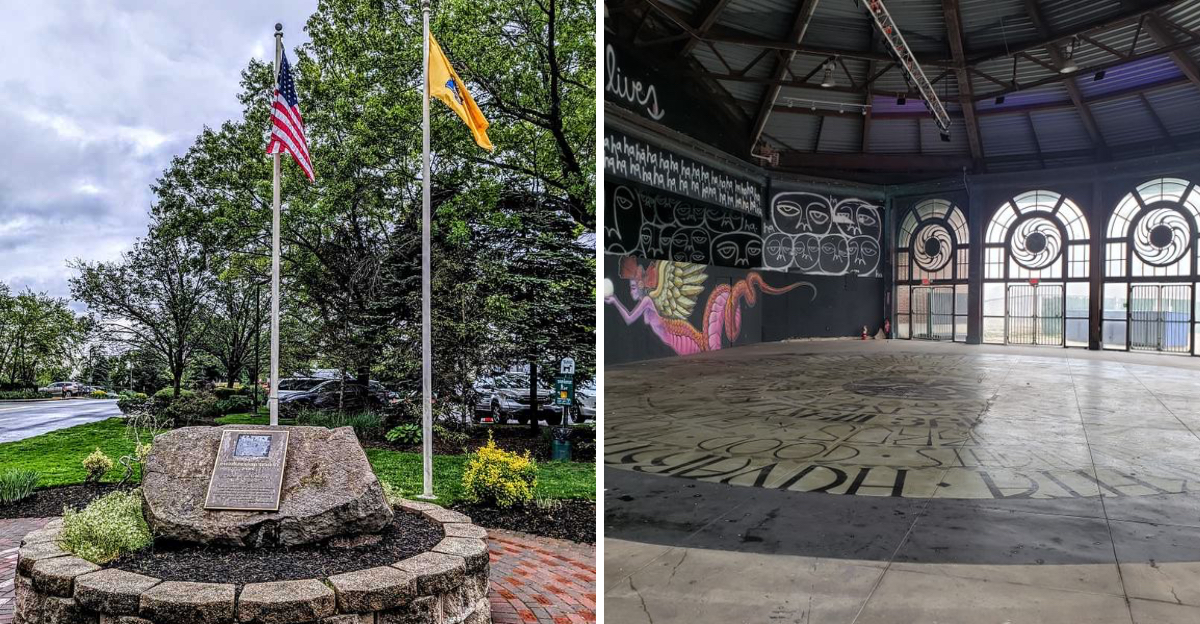
New Jersey hides entire chapters of amusement history in plain sight, tucked behind shopping centers, along cliffside walkways, and under tangles of ivy.
If you know where to look and when to slow down, you can still follow faint traces of midway lights, coaster footings, and the foundations of rides that once whirled with color and noise.
Even in their quiet state, these spots carry energy, the kind that makes your imagination pick up where history left off.
Old signs peek through foliage, a fractured boardwalk creaks underfoot, and glimpses of water remind you that many parks leaned on the shore for both thrill and view.
The echoes of laughter, the distant jingle of tokens, and the murmur of summer crowds feel surprisingly close, as if carried by the wind over the Hudson or along the Jersey Shore.
Stopping here means more than a walk; it’s a chance to sense the stories that time tried to bury.
Come wander these paths, pause at corners that history left behind, and let the Garden State reveal its secret amusement past, moments frozen, yet still alive if you pay attention.
1. Palisades Amusement Park: Cliffside Memories
Perched on the Hudson River palisades, the former Palisades Amusement Park still lingers in subtle fragments that reward a patient stroll.
The site today spans residential towers and landscaped grounds, yet clues remain along Palisade Avenue in Fort Lee and Cliffside Park.
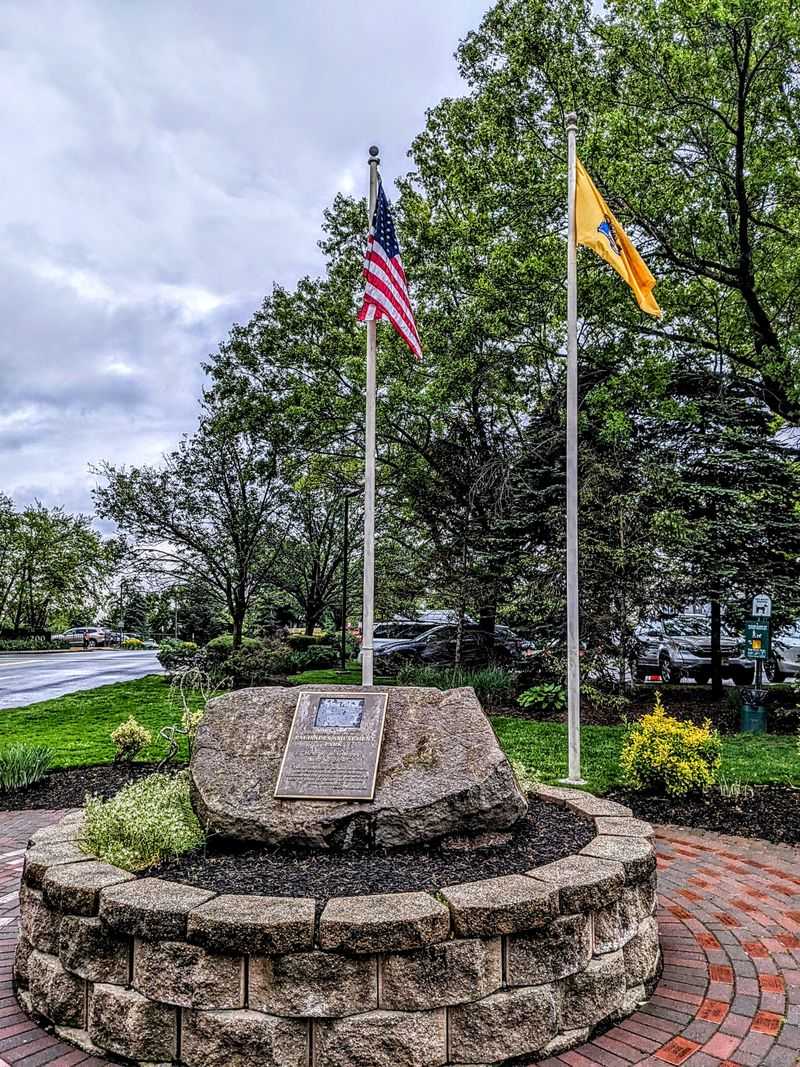
You can find the commemorative plaque near 780 Palisade Avenue, Fort Lee, NJ, marking where gates once welcomed crowds.
Stair treads carved into the cliff occasionally peek out after storms, their angles pointing toward long vanished paths and platforms.
Stand by the overlook and you can almost map the ride skyline, with coaster metal now imagined as distant bridgework and ship masts.
Local history groups host seasonal walks that trace the saltwater pool perimeter, a feature now reduced to memory and photographs.
The neighborhood feels polished, yet every retaining wall or odd concrete curve invites a second look.
New Jersey history is layered here, blending entertainment lore with the region’s transit and riverfront stories.
Keep to sidewalks and posted areas, since many vantage points sit within residential complexes.
The best route follows Palisade Avenue from Myrtle Avenue to Columbia Avenue, where interpretive markers sometimes appear.
Golden hour light warms the cliff face, revealing textures that daytime glare can flatten.
Listen for traffic hush between lights, and the river answers with a low metallic hum from passing barges.
That sound frames the silence where carousel music once floated.
Bring old postcards on your phone and line up rooflines to match the past with the present.
It turns a short walk into a moving timeline of New Jersey leisure culture.
Even without rides, the ridge carries an unmistakable theatrical quality shaped by light, distance, and height.
The river’s constant shimmer creates a moving backdrop that helps you imagine how summer days once unfolded here.
Older residents sometimes share anecdotes that anchor the site’s geography to specific attractions long gone.
You begin to notice how certain tree lines follow the former paths and how terracing still hints at purposeful design.
As the walk ends, the blend of city noise and river quiet makes the past feel both remote and near enough to touch.
2. Jungle Habitat: Wild Ruins in West Milford
Jungle Habitat hides in plain sight inside the West Milford woods, where trail networks crisscross concrete pads and fading service roads.
The property is now part of the township’s park system, with access from Airport Road, West Milford, NJ.
Trailheads lead to broad clearings where animal enclosures once stood, their outlines visible as mossy rectangles and short walls.
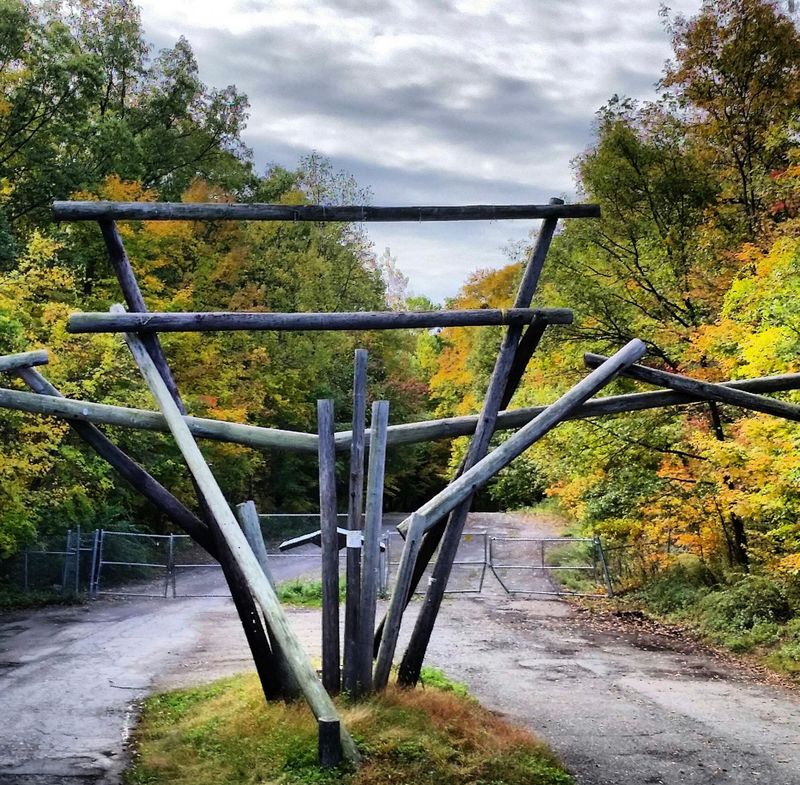
Rusted posts and weathered gates emerge like sculptures, softened by ferns and wild blueberry bushes.
New Jersey hikers use these routes for mountain biking and birding, sharing the space with fox tracks and deer prints.
Follow the main loop and watch for the entrance plaza foundations, a jumble of pads stitched together by saplings.
A few large pools sit dry and cracked, now reflecting sky in shallow rain puddles after storms.
Interpretive signs appear near popular forks, reminding visitors to stay on established paths.
Local legends about escaped wildlife persist, yet official records point to careful removals and relocations.
The thrill here comes from the quiet, where a gust through pitch pines sounds like far off crowd noise.
Mornings give the best visibility for spotting concrete edges under leaf litter.
Afternoons bring golden light that turns the understory into a glowing maze of trunks.
Pack a map and note cell coverage gaps common in this corner of New Jersey.
Leave no trace and photograph structures from a respectful distance.
The ruins feel fragile, and that fragility is part of the story the forest is patiently telling.
A few bends in the trail reveal long, gentle slopes that once guided vehicles through the attraction’s loops.
Matted leaves hide subtle ridges that show where fencing corrals shaped visitor routes.
When wind threads through the trees, it carries a tone that seems to match the old drive-through rhythm.
Standing still, you notice how the forest has grown around each artifact without fully erasing its shape.
By the time you return to the trailhead, the mix of nature and memory feels remarkably cohesive.
3. Rocky Glen Park: Pennsylvania Border Mystery
Rocky Glen Park sits across the state line in Pennsylvania, yet its legacy touches New Jersey day trip lore and borderland history.
The remains lie near Rocky Glen Road, Moosic, PA, with perimeter fences limiting direct access to interior structures.
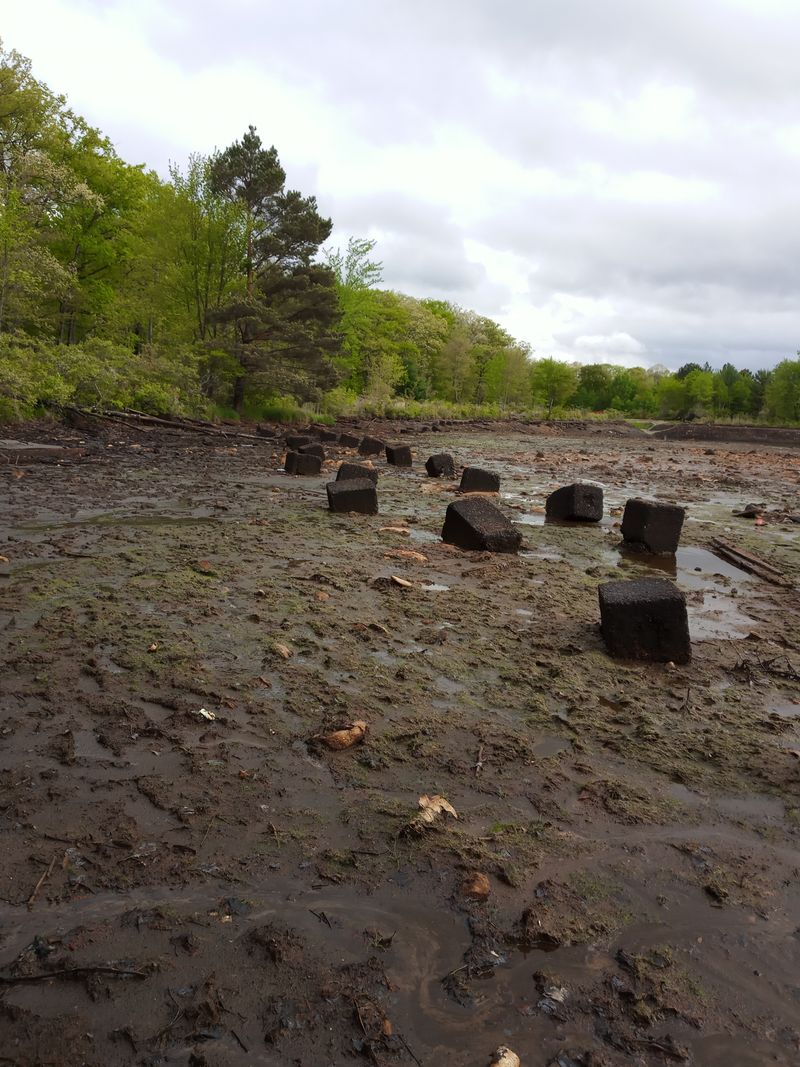
Foundations hide in brush and seasonal vines, their shapes hinting at platforms and station houses.
Steel fragments and bolts dot the ground outside posted areas, a reminder to keep to legal vantage points.
The setting feels like a green amphitheater cupped by low hills and creek beds.
New Jersey explorers who venture west often pair this stop with Delaware Water Gap overlooks on the return drive.
The old coaster line can be traced by uneven mounds that curve through second growth trees.
Even from public roads you can frame distant supports through chain link diamonds.
Soft overcast suits photography here, bringing out lichen colors on concrete and galvanized metal.
Birdsong replaces the mechanical whirr that once filled summer air.
Local historical societies curate images that help match sightlines to vanished structures.
Use those references to anchor your view and avoid trespassing in closed sections.
Border stories make places feel shared, and this one belongs to a wider Mid Atlantic playground map.
If you stand quietly, nearby water sounds like faint applause rolling across the valley.
Then the wind pauses, the scene holds still, and the old midway fades back into the trees.
rom certain bends in the road, shifting shadows expose geometric voids that betray old construction footprints.
Local weather patterns contribute to how visible the ruins become, with rain darkening outlines and snow revealing form.
A sense of distance allows the mind to reconstruct how the park must have fitted into the valley’s contours.
Listening closely, you can hear the creek echo along the slopes, creating a natural soundtrack that suits the site.
Leaving the area, the blend of faint structure and strong landscape lingers in a way that sharpens curiosity.
4. Action Park Remnants: Vernon Valley’s Dangerous Past
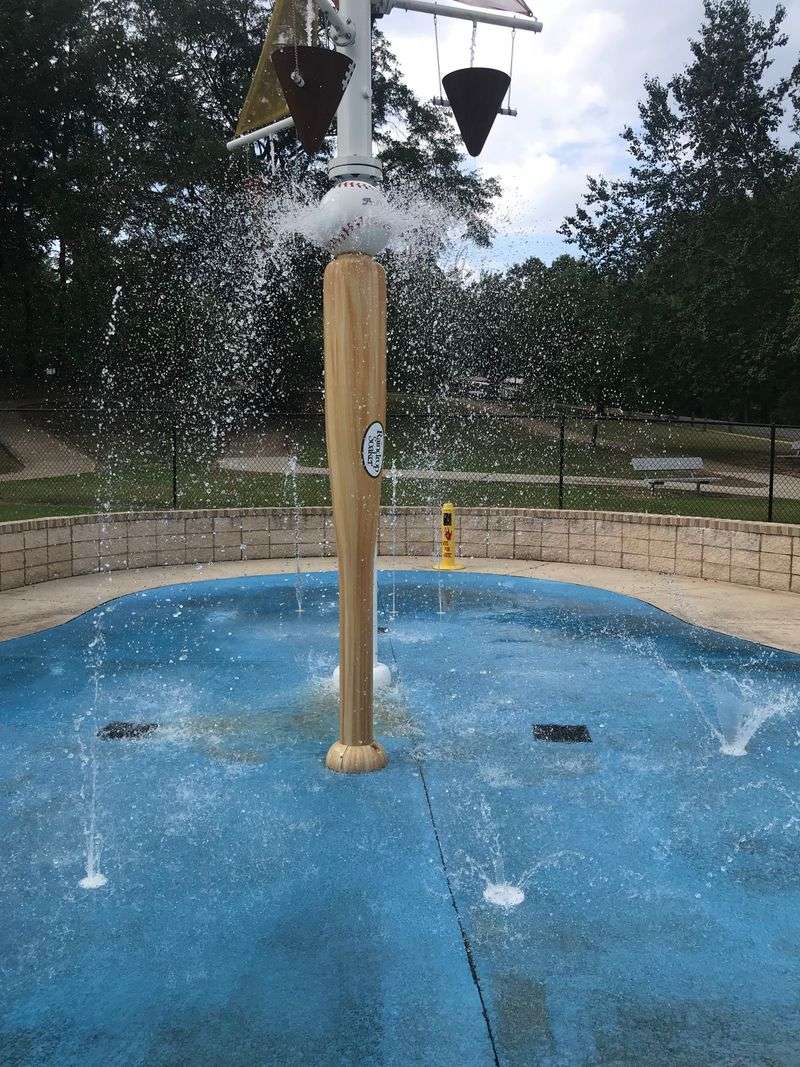
Action Park’s footprint overlaps today’s Mountain Creek property in Vernon, where scattered remnants still surface off the main routes.
The area sits around 200 Route 94, Vernon Township, NJ, with public entry focused on current resort facilities.
Look from legal trails and roads for concrete pads that once anchored slide towers and queue houses.
Segments of channel troughs appear in brush lines, shaped like tilted gutters running into the woods.
Locals point to footings near old maintenance zones, now half buried under leaf mold and gravel.
New Jersey visitors often pair a quiet search with a hike on nearby ridges for valley views.
Alpine Slide scars remain on certain slopes as pale stripes when grass dries late in the season.
The stories feel louder than the ruins, which makes each small find feel like a decoded rumor.
Stay within permitted areas and observe all signage around operational attractions.
Dusk paints the valley in gentle shadows that suit low angle photos of concrete textures.
Morning fog sometimes pools near drainage swales, giving the site an otherworldly hush.
You carry the history in memory here, not in large structures or intact rides.
That lightness keeps the search focused, detail by detail, along hedgerows and service paths.
New Jersey’s mountain air sharpens sound, so distant chairlift clacks can feel oddly close.
Leave everything as found, and let the past rest where time decided to leave it.
Low stonework sometimes emerges near tree roots, giving scale to where slides and tracks once cut through the hill.
Older lift towers on active slopes remind you how closely past and present intertwine here.
Even minor debris fields reveal how the park adapted to terrain rather than reshaping it.
The valley’s acoustics add depth, carrying faraway voices and making every remnant feel alive for a moment.
As you step back to the main paths, the modern resort setting reframes the past with surprising clarity.
5. Olympic Park: Irvington’s Forgotten Playground
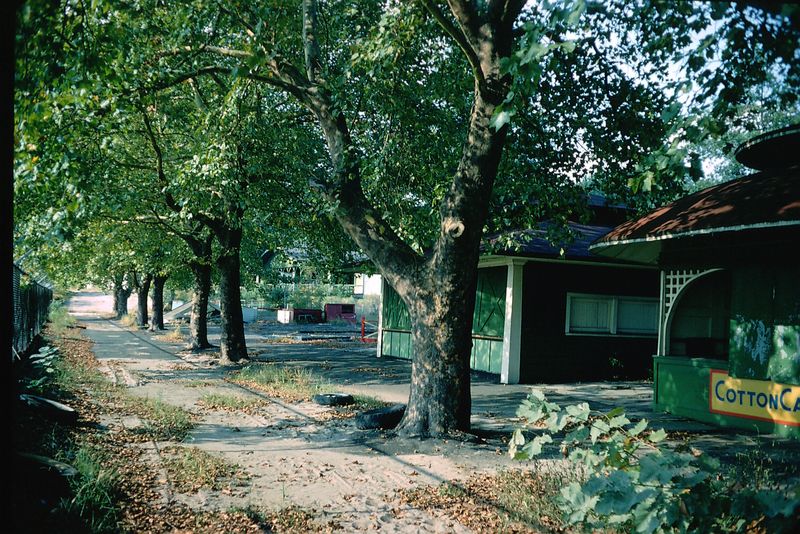
Olympic Park once filled the gap between Irvington and Maplewood, and today quiet hints linger near commercial strips and side streets.
The general area includes 1460 Springfield Avenue, Irvington, NJ, with traces scattered behind retail lots and along Chancellor Avenue.
A brick power station still stands in weathered dignity, its windows framing sky like a grid of postcards.
Look for distinctive lamp posts repurposed along nearby sidewalks, their shapes matching archival photos.
The carousel house foundation can be located in a local park setting identified by a small commemorative marker.
New Jersey residents walk dogs past these artifacts without a second thought, which adds to the ghostly charm.
Move slowly and small details reveal themselves, like conduit stubs and anchor bolts in retaining walls.
Traffic hum sets the rhythm for a site that once pulsed with music and crowd chatter.
Late afternoon sun deepens the red in the brickwork and sharpens mortar shadows.
Follow crosswalks to keep vantage points safe and legal when you line up photographs.
Leaf litter can hide edges, so a careful step prevents stubbed toes and missed finds.
Neighborhood textures, from storefront awnings to stoops, frame your shots with lived in warmth.
Maps from local archives help pinpoint original entrances even when modern parcels look different.
New Jersey’s layered urban fabric turns this search into a city walk with a historical compass.
By the time streetlights flicker, the park feels vividly present, then fades back into brick and asphalt.
A careful gaze across parking lots reveals subtle dips that once formed walkways between attractions.
Overgrown corners hide broken edges that read like punctuation marks from the old park’s layout.
Intersections now carrying daily traffic were once aligned to guide strollers toward music and movement.
Suburban soundscapes wrap around the remnants, adding an unexpected tenderness to each find.
When you finish the loop, the shift from amusement hub to neighborhood feels complete yet still traceable.
6. Palace Amusements: Asbury Park’s Ghostly Grin
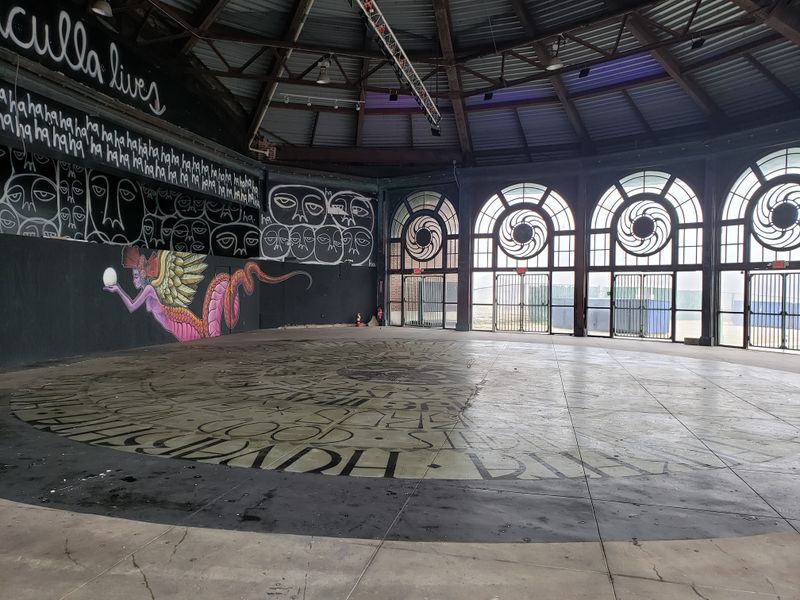
Palace Amusements left its mark on Asbury Park, and the search begins near the boardwalk and downtown cross streets.
The original site stood off Cookman Avenue, Asbury Park, NJ, and the surrounding blocks still carry pieces of its story.
The Tillie mural survives on a nearby facade, saved and reinstalled where you can admire the grin without stepping off the sidewalk.
Inside the Silverball Retro Arcade along the boardwalk, preserved signage and classic machines offer a curated link to the past.
Public art displays sometimes include carousel horses and wrought iron elements attributed to the complex.
Convention Hall anchors the shoreline with a tunnel once rumored to run toward the old amusement building, now sealed and unlit.
The boardwalk’s planks creak in a way that folds time, especially on quiet mornings.
New Jersey shore light turns glass and tile into a soft glow that flatters architectural salvage pieces.
Look for ornamental metal along storefront entries on Cookman, details that echo the former interior.
Respect posted boundaries and stick to pedestrian corridors when framing murals and facades.
Evening shots catch neon reflections shimmering across varnished wood and brick.
The soundscape carries gulls, footsteps, and arcade chimes that blend with memory like a gentle chorus.
Local galleries often display historic photos that help match cornices and window rhythms to old floor plans.
That context makes each walk feel like a guided tour without a script.
You leave with the grin still in mind, and with a deeper sense of how New Jersey keeps its seaside stories alive.
Walking inland, the changing architecture mirrors the evolving tone of a town that has reinvented itself many times.
Faded tiles in older buildings echo palette choices from the Palace era, subtly binding eras together.
Certain shop interiors display salvaged objects that bridge the line between décor and preservation.
As the day lengthens, boardwalk shadows stretch in ways that seem to reference the old building’s silhouette.
You leave with a sense that the amusement hall’s spirit has diffused into the city rather than disappearing.
Dear Reader: This page may contain affiliate links which may earn a commission if you click through and make a purchase. Our independent journalism is not influenced by any advertiser or commercial initiative unless it is clearly marked as sponsored content. As travel products change, please be sure to reconfirm all details and stay up to date with current events to ensure a safe and successful trip.
