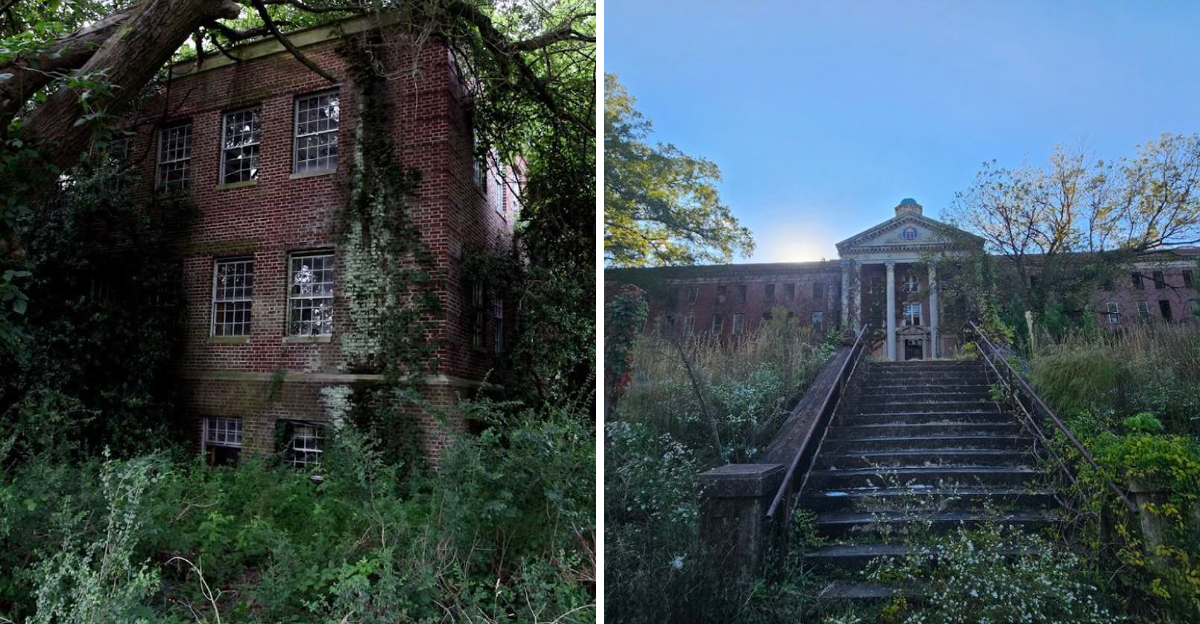
Abandoned buildings have a way of holding onto their past. The walls remember.
The hallways echo. And when those buildings once housed people who had nowhere else to go, the weight feels heavier.
Virginia has several abandoned asylums scattered across the state, places where thousands of patients lived, suffered, and in many cases, died. Some of these buildings are now ruins, crumbling into the earth.
Others still stand, boarded up and silent, waiting for someone to tell their stories. I have visited a few, and each time I left with more questions than answers.
The patients may be gone, but something lingers. This is not easy history.
But it is history worth remembering.
1. St. Albans Sanatorium, Radford
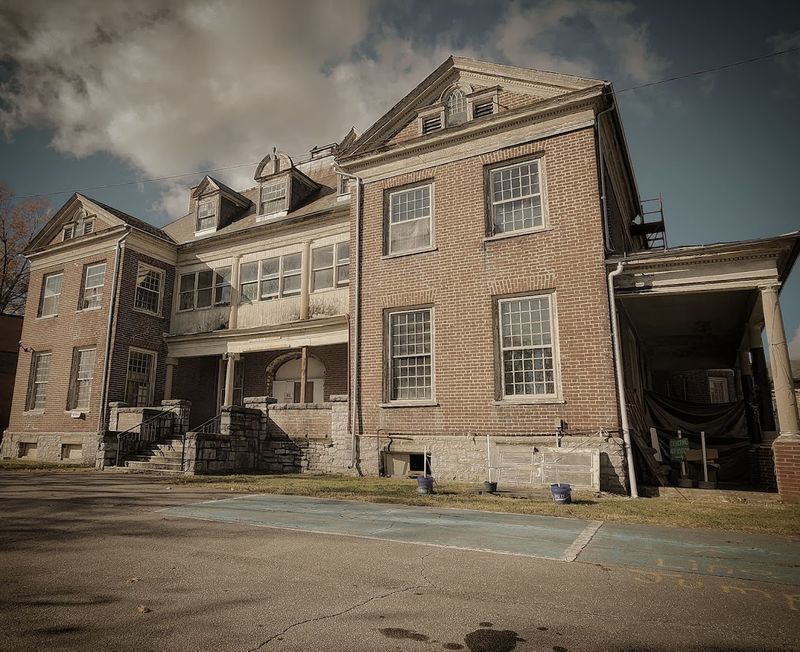
Long before it became Virginia’s most notorious asylum, this imposing brick structure in Radford had already earned a grim reputation. Built in the late nineteenth century as a Lutheran boys’ preparatory school, the building saw cruelty long before its first psychiatric patient ever walked through the door.
Accounts of bullying, harsh punishment, and student suicides set a dark tone that never quite lifted.
When it reopened as a psychiatric hospital in the early twentieth century, conditions grew even more troubling. Patients were subjected to lobotomies, electroshock therapy, insulin coma treatments, and experimental hydrotherapy sessions that involved ice baths or prolonged submersion in scalding water.
The patient-to-staff ratio reached shocking extremes, and St. Albans eventually recorded the highest patient suicide rate in all of Virginia.
The facility closed in the mid-nineties following a wave of lawsuits and patient deaths. Staff reportedly walked out overnight, leaving medical equipment, personal belongings, and patient records exactly where they sat.
Some accounts claim living patients were abandoned alongside the furniture.
Today, the building is owned by a former patient and offers historical tours and paranormal investigations throughout the year. A popular Halloween haunted house also draws curious crowds each autumn.
Reports from those who visit include disembodied screams, shadow figures moving through corridors, and the unsettling sensation of being touched by something unseen. Whatever happened inside these walls clearly left a mark that soap and fresh paint could never scrub clean.
Address: 1000 Wadsworth St, Radford, VA 24141
2. DeJarnette Sanitarium, Staunton
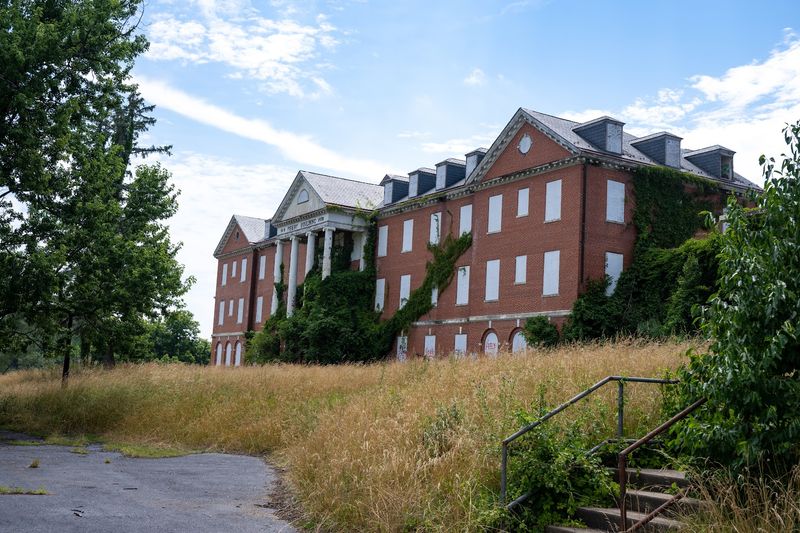
Few places in Virginia carry a moral weight quite as heavy as this crumbling complex in Staunton. Named after Dr. Joseph S.
DeJarnette, a psychiatrist who became one of America’s most fervent champions of forced sterilization, the sanitarium opened in the early twentieth century as a semi-private facility for what was coldly termed the middle-income mentally ill. From the beginning, its mission was tangled up with the eugenics movement.
Dr. DeJarnette spent decades lobbying for laws that would allow the state to sterilize anyone deemed genetically unfit. He wrote poetry praising the practice and directed the nearby Western State Hospital simultaneously, spreading his ideology across multiple institutions.
Under Virginia’s Eugenical Sterilization Act, hundreds of patients at this facility were permanently sterilized without meaningful consent.
The sanitarium relocated in the mid-nineties, leaving the original Staunton complex completely abandoned. Anti-trespassing signs now ring the perimeter, and the deteriorating brick buildings are strictly off-limits to the public.
That has not stopped urban explorers and paranormal investigators from being drawn to the site like moths to a very disturbing flame.
Those who have documented the interior describe whispers echoing through empty wards, doors swinging without explanation, and phantom footsteps trailing investigators down pitch-black hallways. Many believe the restless energy belongs to patients who were robbed of their autonomy and never truly mourned.
The building itself seems to remember every injustice committed inside it.
Address: 308 Byers St, Staunton, VA 24401
3. Western State Hospital Original Campus, Staunton
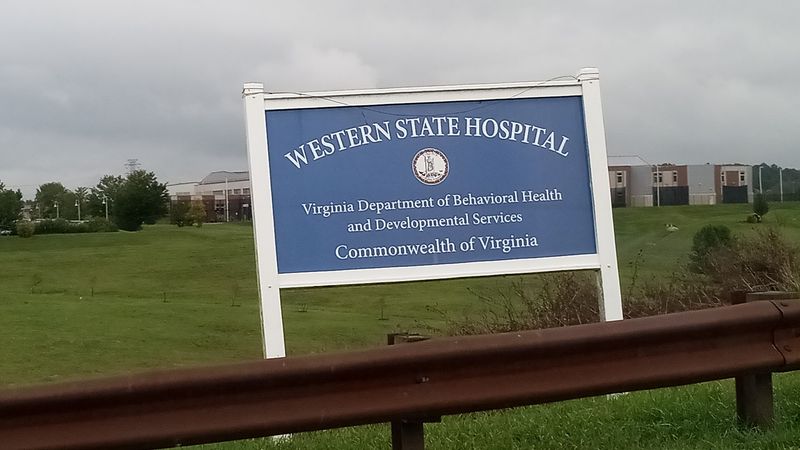
Opened in the late eighteen-twenties as the Western State Lunatic Asylum, this Staunton institution was originally designed to feel almost like a resort. Terraced gardens, structured outdoor activities, and a philosophy of moral therapy shaped the early vision.
The idea was that beauty and calm could heal troubled minds. That optimism did not last long.
Overcrowding arrived quickly, and with it came a brutal toolkit of treatments including straitjackets, wrist and ankle restraints, electroshock therapy, and eventually lobotomies. Dr. Joseph DeJarnette, the same man who later founded his own sanitarium down the road, directed this hospital for nearly four decades.
His tenure is widely associated with a steep decline in the quality of patient care and a sharp increase in forced sterilizations carried out under Virginia’s eugenics laws.
The hospital eventually relocated to a new campus, abandoning the original property. It was repurposed into a correctional facility, which also closed, leaving the site vacant for years.
Portions of the complex were later redeveloped, and the centerpiece building now operates as The Blackburn Inn, a boutique hotel with beautifully restored interiors. But history has a way of sticking around uninvited.
Staff and guests at the inn have reported hearing quiet moans drifting through corridors at night and catching glimpses of figures that disappear around corners. Surrounding businesses have noted unexplained sounds near the old structure after dark.
The gardens are lovely, but something about the silence feels just slightly off.
Address: 301 Greenville Ave, Staunton, VA 24401
4. Central State Hospital Abandoned Structures, Petersburg
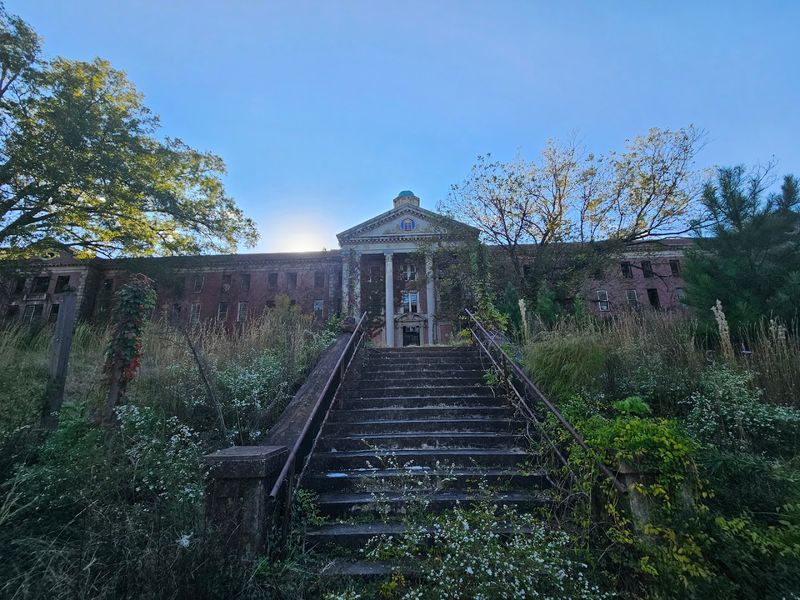
Founded just after the Civil War, Central State Hospital holds a deeply significant and deeply painful place in American history. It was established as the first mental health facility in the entire country built exclusively for African American patients, operating under the brutal logic of racial segregation.
For nearly a century, it remained a separate and profoundly unequal institution, reflecting the worst of the era’s attitudes toward both race and mental illness.
Overcrowding was chronic and severe. Treatments mirrored what was happening at other institutions across Virginia, including lobotomies, forced restraint, and electric shock therapy.
Forced sterilization continued at Virginia facilities until the late nineteen-seventies, and Central State was no exception. Patients were buried in unmarked graves, their identities reduced to numbers on wooden stakes.
The hospital still operates today as a modern psychiatric facility, but the original Petersburg campus holds abandoned structures that feel frozen in another time. The massive Kirkbride building that once defined the skyline has been demolished, but other large brick structures remain standing, slowly surrendering to ivy and weather.
Walking past them feels like reading a sentence that was never finished.
The atmosphere around the old ward buildings is consistently described as heavy and oppressive, the kind of quiet that feels loaded rather than peaceful. Apparitions have been reported near the deteriorating walls, and the grounds carry a gravity that is hard to shake.
Some debts, it seems, are not easily forgiven.
Address: 26317 West Washington St, Petersburg, VA 23803
5. Virginia State Colony for Epileptics and Feebleminded, Madison Heights
Opened in the early twentieth century near Lynchburg, this sprawling complex was built on a premise that still turns the stomach. Its founding mission was to isolate individuals deemed genetically undesirable and prevent them from reproducing.
The colony became one of the most prominent centers of the American eugenics movement, a place where pseudoscience and state power combined to devastating effect.
Under Superintendent Dr. Albert Priddy, sterilizations began years before Virginia even passed its official eugenics law. Carrie Buck, a young woman committed here under deeply questionable circumstances, became the central figure in the Supreme Court case Buck v.
Bell, which upheld forced sterilization laws across the country. That ruling cast a long shadow over American civil rights history and still stands unreversed today.
The facility later became known as the Central Virginia Training Center and operated for over a century before permanently closing in the spring of the year the world was already reeling from a pandemic. As of the most recent updates, the buildings stand completely abandoned, with redevelopment plans for the land still moving slowly forward.
Visitors who have documented the site describe it as hauntingly still, the kind of silence that feels inhabited. The grounds are described as haunted by voices no one can quite locate.
Whether that is atmosphere, acoustics, or something else entirely depends on who you ask. What is not up for debate is the scale of suffering that unfolded here, and the fact that this Virginia property still carries every ounce of it.
Address: 2602 Colony Rd, Madison Heights, VA 24572
6. Southwestern Virginia Mental Health Institute, Marion
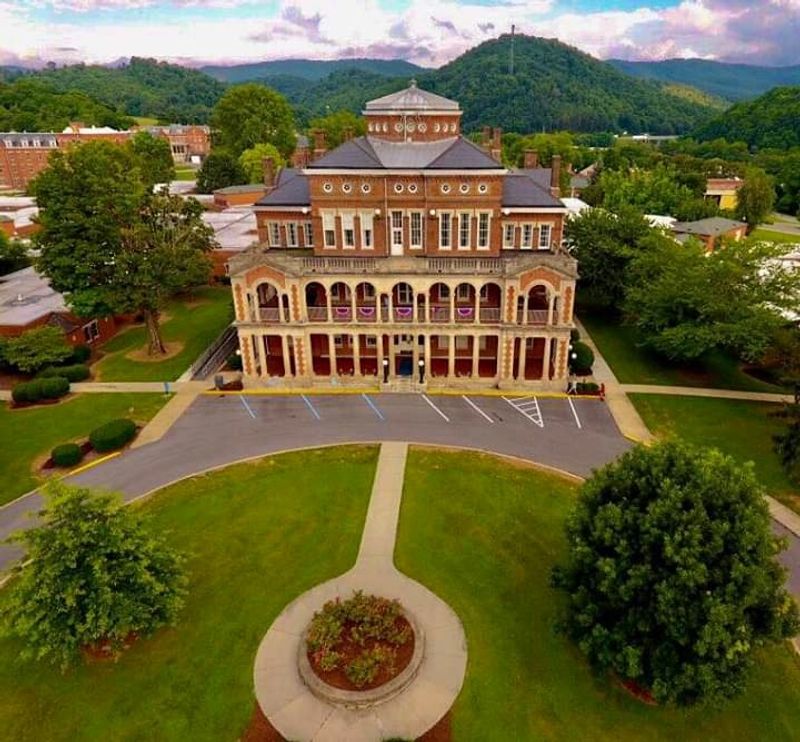
Perched in the heart of Appalachian Virginia, the Southwestern Virginia Mental Health Institute in Marion has been serving the region since the late nineteenth century. The main building is a genuinely striking structure, fortress-like in its proportions, with long rows of windows that stare out over the surrounding landscape like a face that has seen too much and chosen to say nothing.
Much of the campus remains active today, continuing to provide psychiatric services to the communities of southwestern Virginia. But the older wings, the ones that predate modern treatment philosophy by several decades, have been left behind.
They sit quietly at the edges of the active facility, paint peeling, floors warping, hallways filling with the particular smell of abandonment that no amount of description quite captures.
Local legends have grown up around the old medical building, particularly its upper floors. Stories of a figure in white wandering the top story after dark have circulated through Marion for generations.
Whether you file that under folklore or something more unsettling is entirely your call, but the locals who tell the story do not typically seem like they are joking.
The contrast between the functioning modern facility and its ghostly older wings creates an atmosphere unlike any other on this list. Somewhere between institutional present and haunted past, the campus feels like two different timelines occupying the same address.
Marion is a small, friendly Appalachian town, which somehow makes the whole thing feel even stranger.
Address: 340 Bagley Circle, Marion, VA 24354
7. Eastern State Hospital Dillard Complex, Williamsburg
The story of Eastern State Hospital in Williamsburg is one of the longest and most layered in American psychiatric history. The original institution, established in colonial Williamsburg in the eighteenth century, holds the distinction of being the first public mental health facility in the entire United States.
Early patients were shackled to walls in unheated cells, treated less like patients than prisoners in a system that barely acknowledged mental illness as a medical condition.
The hospital relocated over the decades, eventually settling on a campus on Ironbound Road. A portion of that campus, known as the Dillard Complex, was leased to the College of William and Mary for student housing starting in the nineteen-sixties.
Students lived in buildings that had previously housed psychiatric patients, which is the kind of real estate detail that tends to come up at parties.
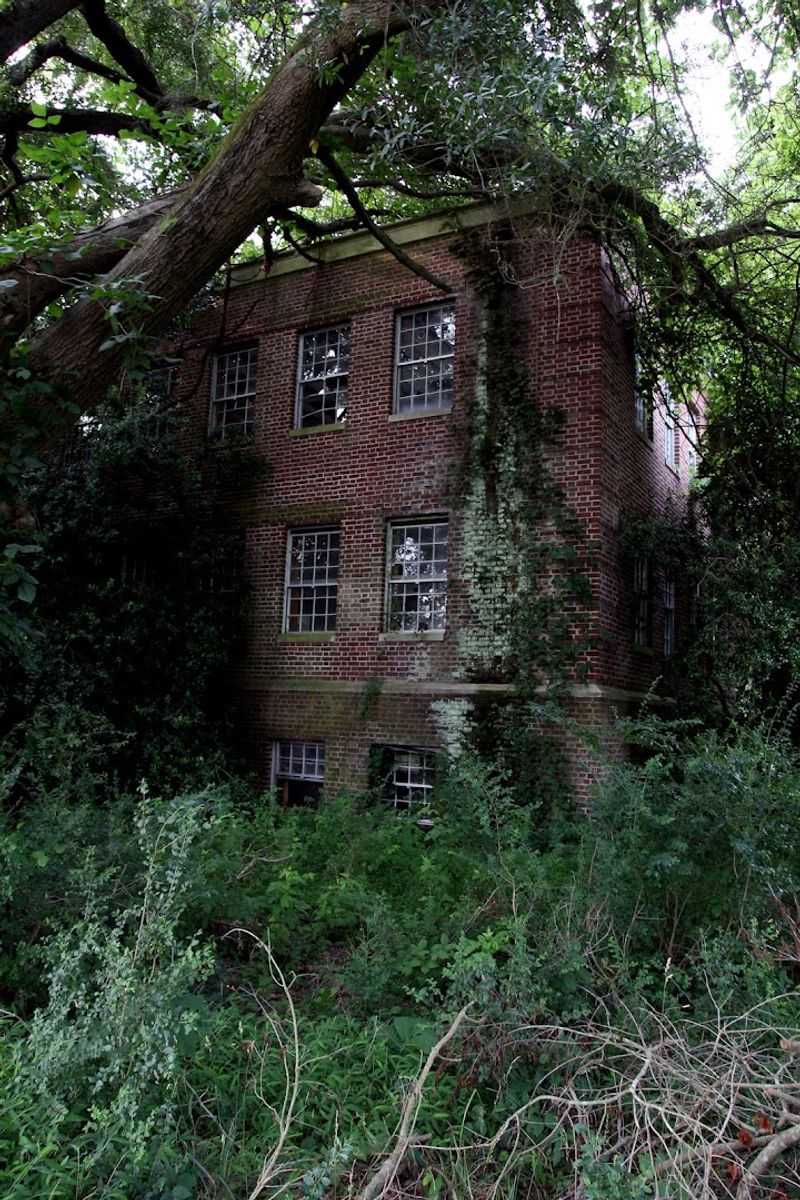
The Dillard Complex closed in the early two-thousands, and those buildings have remained abandoned ever since. They carry a double layer of history: first as a mental health facility, then as a student dormitory, and now as empty shells slowly being reclaimed by Virginia’s relentless humidity and plant life.
Security staff who patrol the empty structures have reported strange lights moving through darkened rooms, the sound of doors slamming in buildings with no occupants, and an overall atmosphere that makes even the most skeptical person pick up their pace. Williamsburg is already one of the most ghost-story-saturated cities in America, and the Dillard Complex fits right in.
Address: 4601 Ironbound Rd, Williamsburg, VA 23188
