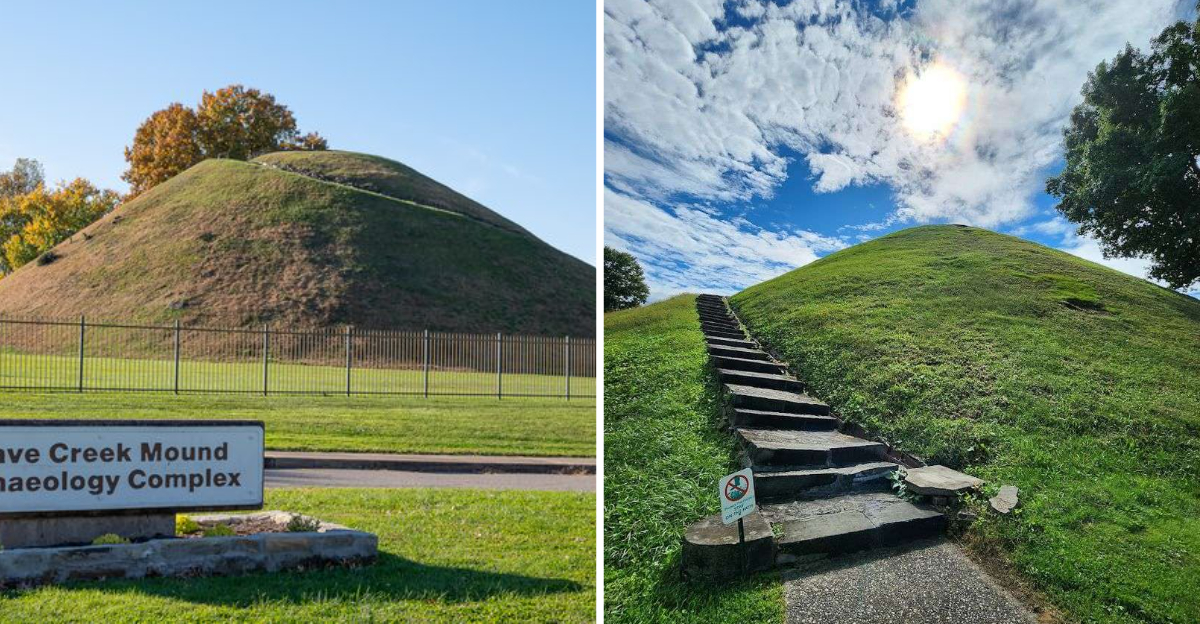
Sixty two feet high. Two thousand years old. Zero heavy machinery.
This massive earthen cone rises from the flat valley floor as proof of what bare hands can accomplish.
The Adena people moved over sixty thousand tons of soil using nothing but woven baskets and pure determination.
That is the weight of nearly ten fully loaded school buses hauled basket by basket.
A wooden walkway now leads you to the top where you can look across the surrounding town and river.
The scale hits you differently up there.
Forty eight million baskets full of dirt just to honor their departed.
This West Virginia time capsule sits quietly between a parking lot and a museum.
Some monuments shout. This one just breathes.
Who Actually Built This Thing
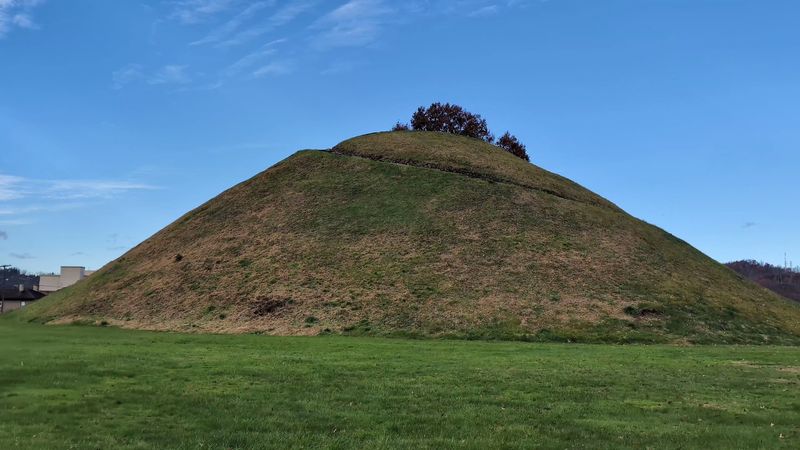
Long before anyone drew a map of West Virginia, a group of prehistoric people called the Adena were living, thriving, and building along the Ohio River Valley.
They were part of what archaeologists call the Early Woodland period, a time roughly 2,000 to 2,500 years ago when communities organized themselves around ceremony, trade, and burial traditions.
The Adena were not a wandering group with no roots. They had complex social structures and a deep connection to the land.
Their burial practices reflected real reverence for the dead, which is exactly why they put so much effort into constructing massive earthen mounds.
Visiting the site museum gives you a genuinely eye-opening look at who these people were.
Artifacts recovered from the mound and surrounding areas paint a picture of a community that was resourceful, spiritually connected, and far more sophisticated than most people expect.
Getting to know the Adena before climbing the mound makes the whole experience feel personal rather than just historical.
62 Feet Tall and 240 Feet Wide
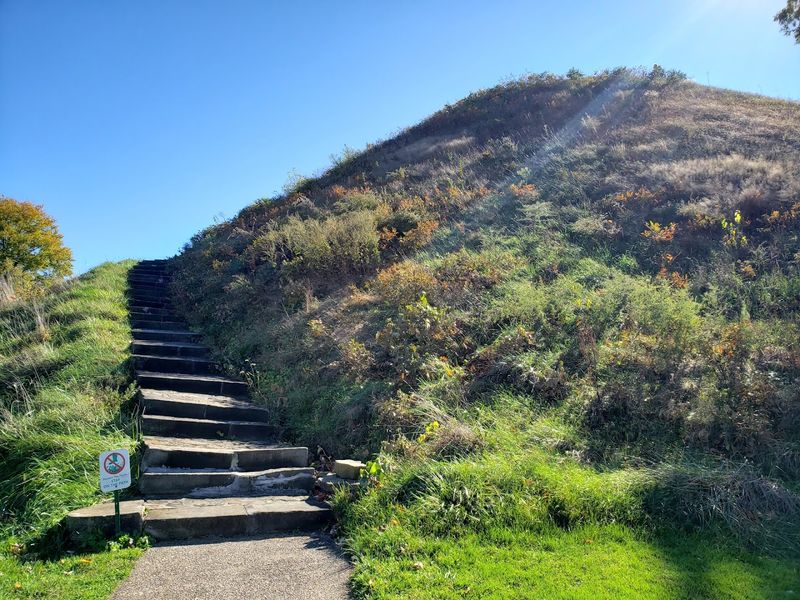
Reading that the mound is 62 feet tall and 240 feet wide at the base sounds like a math problem until you are actually standing next to it. Then the numbers turn into something physical, something your legs will absolutely feel if you decide to climb to the top.
Back in 1838, before decades of natural settling and erosion, the mound was recorded at 69 feet tall and 295 feet wide at the base. So what you see today is slightly smaller than its original form, but still completely commanding.
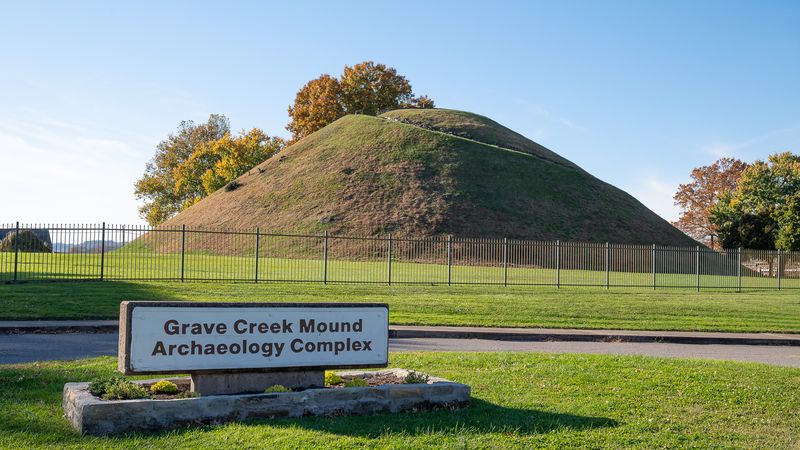
The shape is a near-perfect cone, which is part of what makes it so visually striking in the middle of a regular neighborhood street.
From the top, the view opens up in every direction. You can see the surrounding town of Moundsville laid out below, and on a clear day the Ohio River landscape stretches out beautifully.
Getting up there takes some effort on the stone steps, but every single step is worth it. Few viewpoints in West Virginia feel quite this earned.
Three Million Basket-Loads
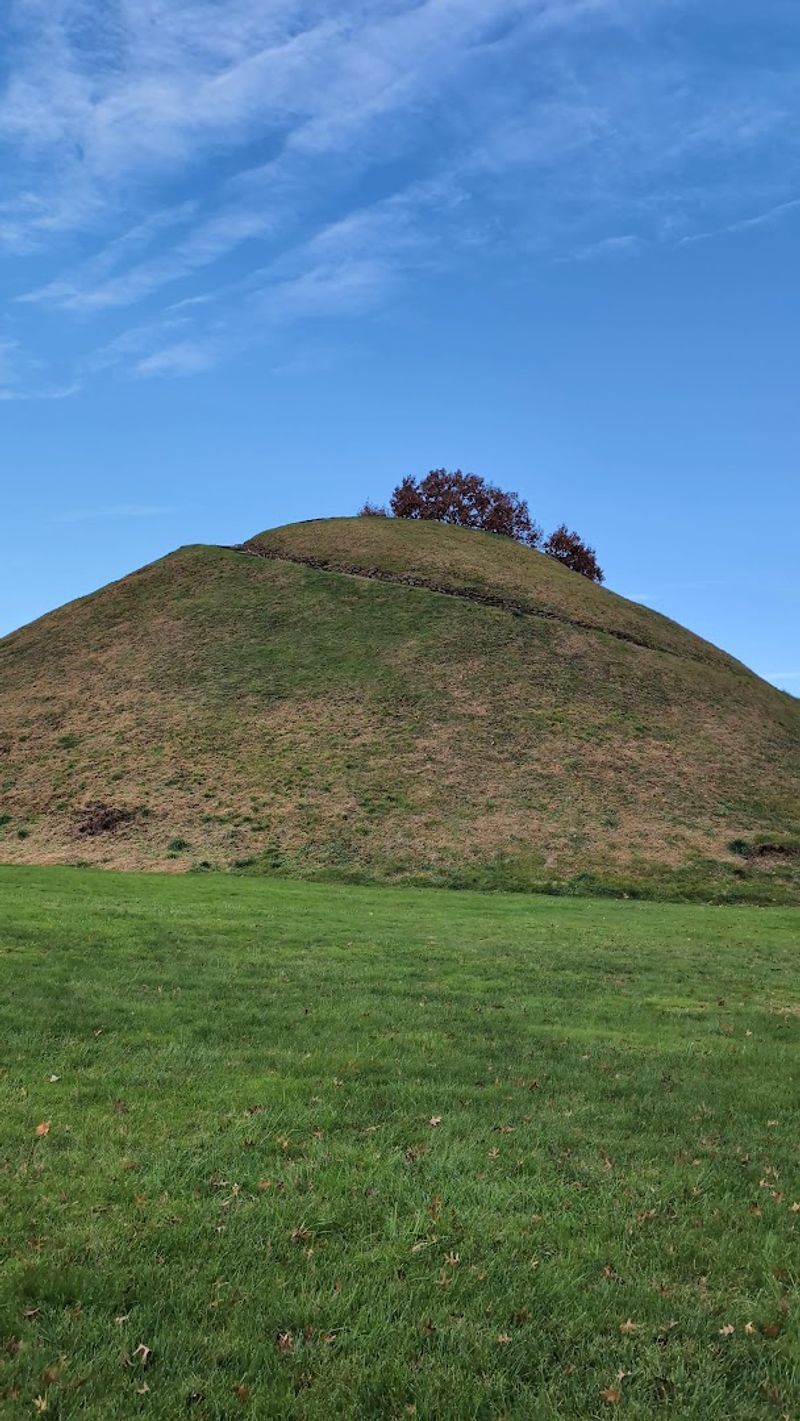
Here is a number that will stop you mid-thought: archaeologists estimate it took roughly three million basket-loads of earth to build this mound. Three million.
Each one carried by hand, probably in woven baskets, by people who had no wheels, no carts, and no machinery of any kind.
The total earth moved weighed somewhere between 57,000 and 60,000 tons. A lot of that soil came from a moat dug around the mound, which originally measured 910 feet long, 40 feet wide, and up to five feet deep.
That moat was essentially a massive excavation project in itself.
What makes this even more remarkable is that construction happened in stages over more than a hundred years, meaning multiple generations of Adena people contributed to the same project. Think about that kind of long-term community commitment.
No one who started the mound lived to see it finished. The sheer human effort baked into every inch of this structure is honestly breathtaking once the numbers sink in.
The Burial Chambers Hidden Inside the Mound
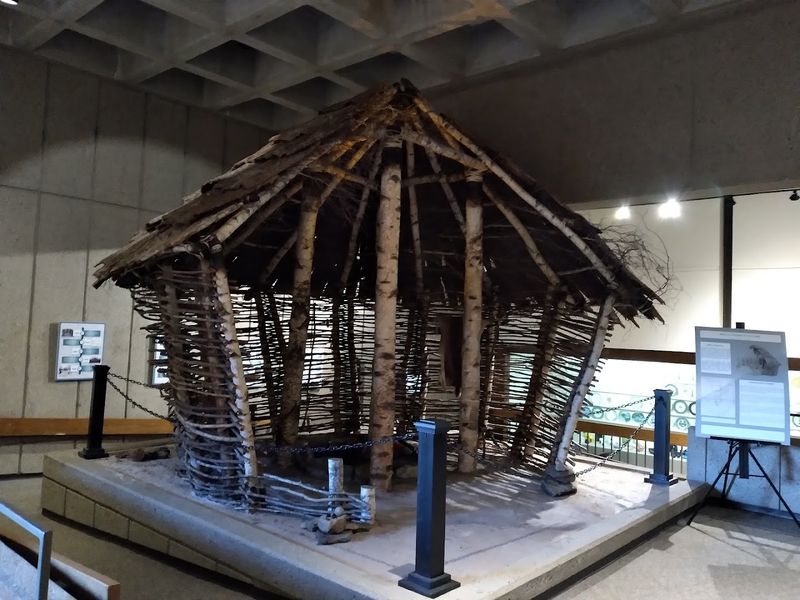
The mound was not just a pile of dirt. Inside, at different levels, the Adena constructed actual burial chambers, including log-lined tombs that held the remains of important individuals.
These were not simple graves. They were carefully built spaces that reflected the status and significance of the people placed inside.
Multiple burials were found at different depths, suggesting that the mound grew over time as more people were interred and more earth was added on top. Each new layer was essentially a new chapter in the community’s history.
The log tombs themselves were an impressive feat of engineering for the era, requiring precise placement of heavy timber inside an earthen structure.
Unfortunately, early European settlers dug into the mound in the 1800s looking for treasure and artifacts, which caused significant damage to the burial chambers. The museum tells this story honestly and in detail.
What survived is still remarkable, and the artifacts recovered from the site offer a genuine window into Adena burial customs, spiritual beliefs, and social hierarchy that is hard to find anywhere else.
The Free Museum That Completely Steals the Show
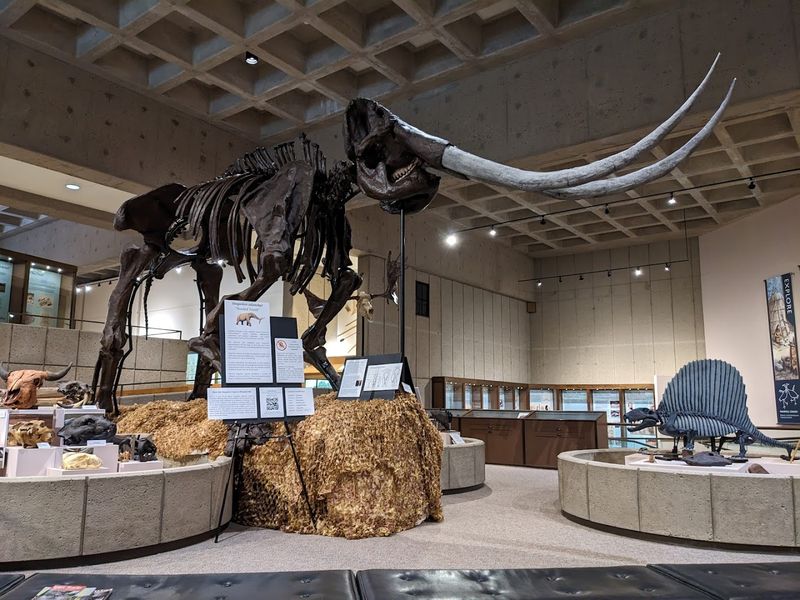
Walking into the museum attached to the site feels a little like finding a secret. From the outside, the building looks modest and unassuming.
Inside, it opens up into a genuinely well-organized and richly detailed collection of exhibits that covers far more ground than most people expect.
Artifacts recovered from the mound and surrounding archaeological sites are displayed with clear, accessible explanations.
There are exhibits covering Adena culture, local history, the glass-making industry that once defined the region, and even a section on the Marx Toy Company, which was based in Moundsville.
The variety keeps things lively.
The best part? Admission is completely free.
That alone makes it one of the best value stops in the entire state. Families, solo travelers, and history enthusiasts all seem to leave genuinely impressed.
Plan to spend at least an hour inside before heading out to the mound itself. The museum context makes climbing those stone steps feel like the final chapter of a story you have been reading since you walked through the front door.
Stone Steps, Sore Legs, and a Spectacular View
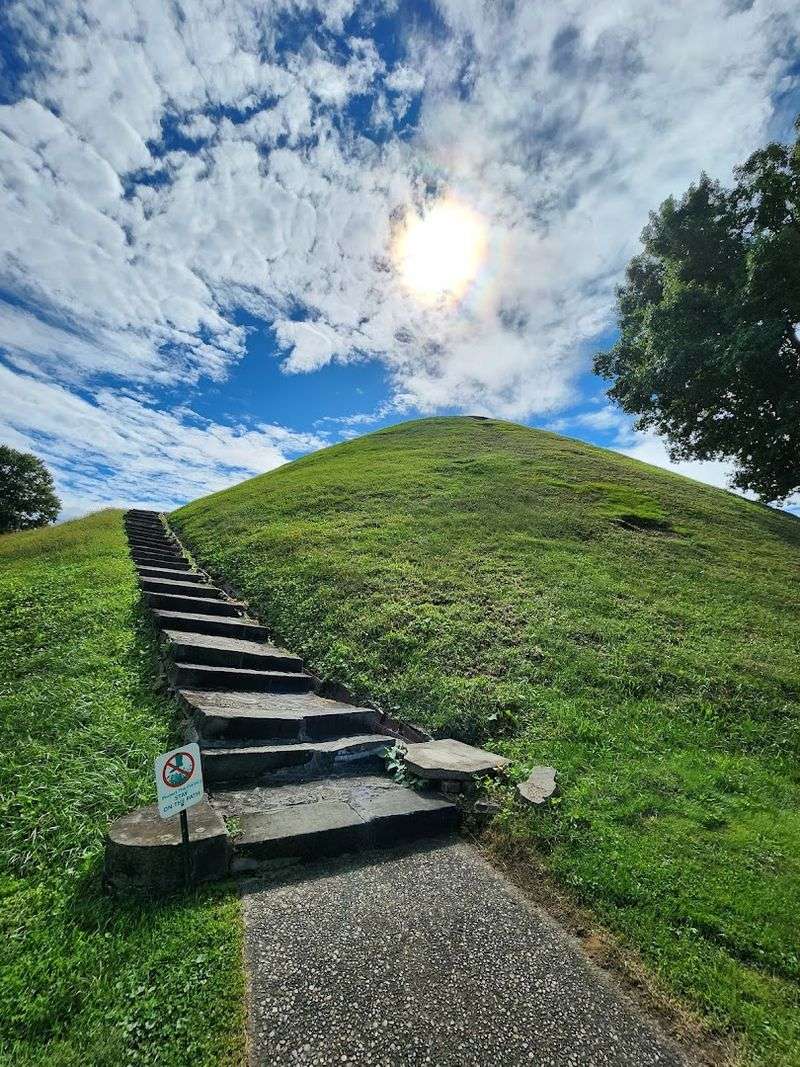
The steps up the side of the mound are made from stone, and they are steep enough to remind your thighs that they exist. There is something intentional-feeling about that.
Concrete steps would have been easier, but they would have taken something away from the experience. The stone feels right.
At the top, there is a low stone wall that gives you a place to catch your breath and look out over the surrounding landscape.
The town of Moundsville spreads out below, and the old West Virginia State Penitentiary across the street is visible from up there, which adds a genuinely surreal layer to the whole scene.
Two wildly different chapters of human history, separated by a single road.
On warm days, the climb gets a little sweaty. Wear comfortable shoes and bring water.
The trail to the top is closed during icy or snowy weather, which makes sense given the stone surface. Morning visits on clear days tend to offer the best light and cooler temperatures.
The view from the top is one of those moments that genuinely rewards the effort.
A National Historic Landmark Sitting in a Quiet Neighborhood
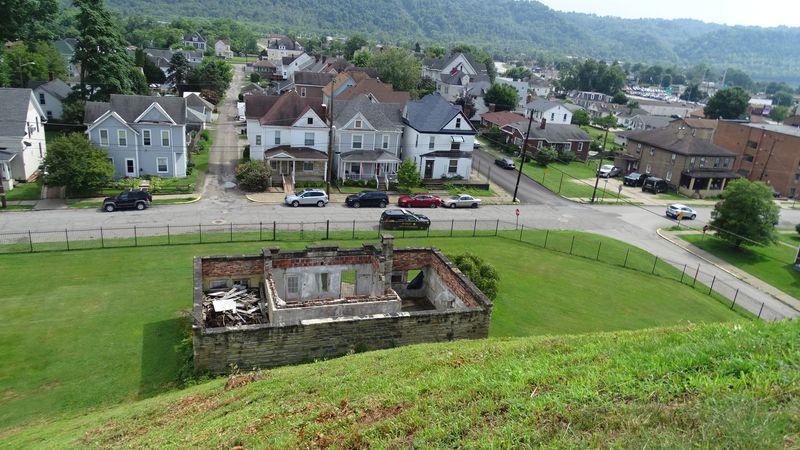
One of the strangest and most wonderful things about this site is its location. The largest conical earthen burial mound in North America is sitting right in the middle of a regular neighborhood in a small West Virginia city.
Houses, streets, and everyday life surround it on all sides.
That contrast hits differently in person than it does on a map. You turn a corner, and there it is, this massive ancient structure just existing quietly next to a sidewalk.
It has been designated a National Historic Landmark, which means it carries the same level of federal recognition as places like Independence Hall and Yellowstone National Park.
The designation came because the mound is genuinely irreplaceable. It is the best-preserved example of its kind in the entire country.
Centuries of misuse, excavation, and development took a toll on the structure, but what remains is still extraordinary. The fact that it survived at all, given everything that happened to it over the last two hundred years, feels like its own kind of miracle.
The address is right off Jefferson Avenue, easy to find and completely worth the detour.
Moundsville’s Layered Past
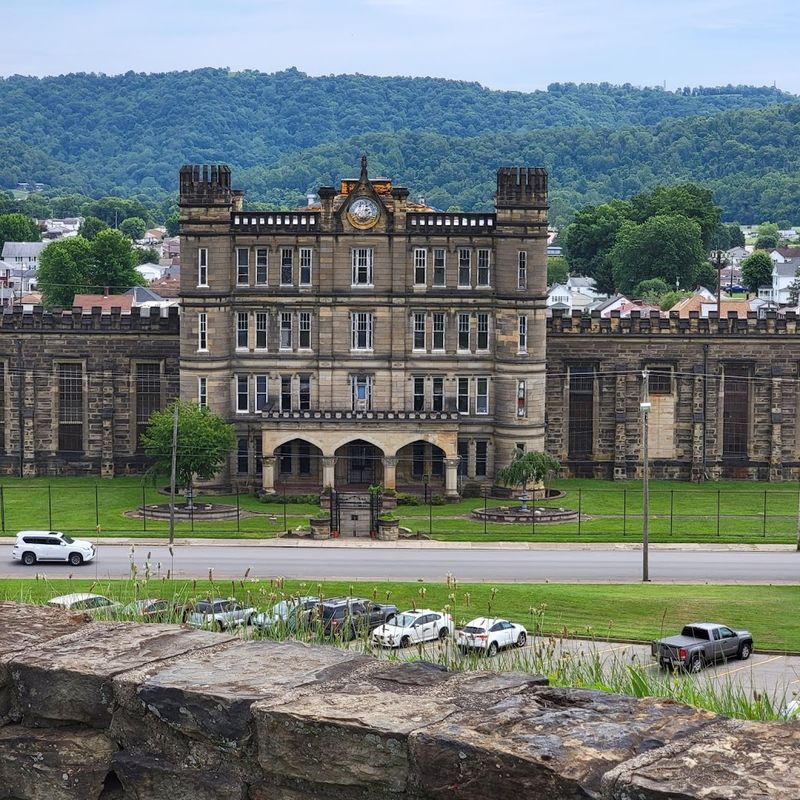
Moundsville is a town that carries a lot of history in a small footprint. Right across the street from the mound sits the old West Virginia State Penitentiary, a hulking Gothic-style building that operated from 1876 to 1995.
The visual contrast between the two structures is jarring in the best possible way.
The museum actually addresses the connection between the two sites, which adds a fascinating layer to the visit.
The city itself grew up around and over what was once a landscape dotted with dozens of smaller mounds, most of which were destroyed during European settlement in the 1800s.
Grave Creek Mound is the last one standing.
Walking around town after visiting the site, you start to see Moundsville differently. Every block has a story underneath it, literally.
The town’s name is not coincidental, and the museum does a thoughtful job of connecting the ancient Adena history to the more recent chapters of life along the Ohio River.
It is the kind of place that rewards curiosity and rewards even more on a second visit.
PlanHours, Tips, and What to Bring
The site is open Tuesday through Saturday from 9 AM to 4:30 PM, and it is closed on Sundays and Mondays. Arriving closer to opening time on a weekday tends to mean fewer crowds and more space to explore the museum at your own pace.
Mornings also tend to be cooler, which matters if you plan to climb the mound.
Wear sturdy, comfortable shoes. The stone steps up the mound are uneven and require some attention, especially on the way back down.
The trail is closed during icy or snowy weather, so checking conditions ahead of time in winter months is a smart move before making the trip.
Bring a water bottle, especially in warmer months. The outdoor portion of the visit can get warm on summer days.
There is a picnic area on the grounds, which makes packing a lunch a genuinely pleasant option. The whole visit, museum plus mound climb plus gift shop, can comfortably fill two to three hours.
It is free, it is fascinating, and it is one of those rare places that feels bigger on the inside than it looks from the outside.
Address: 801 Jefferson Ave, Moundsville, WV
