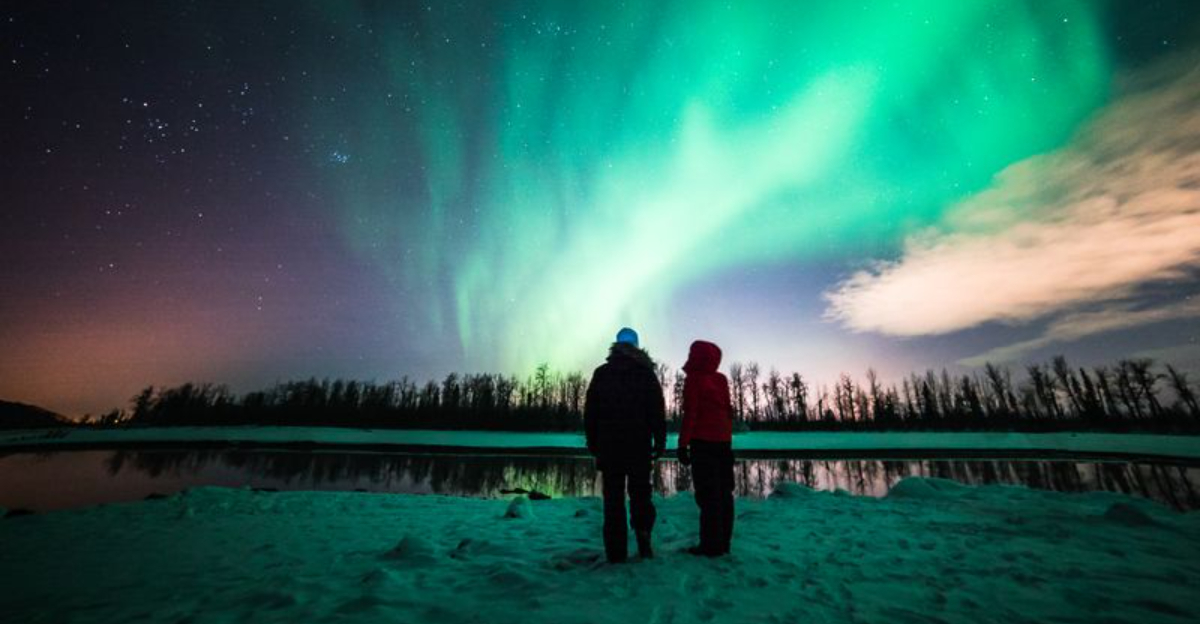
As darkness falls in Alaska, the sky transforms into a canvas of dancing green, pink, and purple lights. Beyond midnight, travelers witness one of nature’s most magical spectacles – the aurora borealis – rippling above silent forests and frozen rivers. The hush of snow and the crackle of ice sharpen every sensation, turning the night into pure possibility. If you crave awe, adventure, and photographs that feel like dreams, this guide will lead you into Alaska’s nocturnal heart.
Fairbanks: Gateway to Midnight Auroras
Fairbanks sits beneath a powerful auroral oval, delivering frequent displays from late August to mid-April, with December to March offering long, dark nights. Venture just beyond town to avoid light pollution – places like Murphy Dome or Cleary Summit are favorites. From 10 p.m. to 2 a.m., the lights often surge, but staying out later can reward you with surprise bursts.
Dress in layers, cover extremities, and pack hand warmers; -20°C nights are common. Local lodges provide heated yurts, wake-up calls, and shuttle services to prime viewing spots. Check the UAF aurora forecast and cloud cover before heading out, then let your eyes adjust to the darkness.
When the arc brightens into curtains and coronas, steady your tripod, breathe slowly, and shoot. In Fairbanks, patience, preparation, and a thermos of cocoa often lead to unforgettable midnight skies.
Denali National Park: Wild Silence, Big Skies
Denali’s vast wilderness amplifies aurora drama: low, unobstructed horizons and zero urban glow. Winter access is limited, but that’s part of the magic – snowshoeing the roadside corridors or stargazing from pullouts yields pristine skies. Bring extra layers, emergency gear, and a charged satellite communicator; temperatures can drop suddenly and cell coverage is spotty.
For photography, wide lenses (14–24mm) capture sweeping curtains above the Alaska Range, while telephotos isolate rippling textures. Moonlit nights reveal snowy ridgelines reflecting auroral greens in silver-blue relief. Keep an eye out for fox tracks and the ghostly silhouettes of spruce edging frozen creeks.
Respect wildlife distance and stay on packed surfaces to avoid post-holing. Arrive before full darkness, mark your return route, and wait. When Denali breathes, the night hums – then the sky unfurls, and the silence turns electric.
Chena Hot Springs: Steam and Skyfire
Chena Hot Springs pairs geothermal warmth with otherworldly skies. Slip into steaming pools as the aurora weaves overhead, fog haloing the stars. The resort’s heated yurts, ice museum glow, and late-night wake-up calls create a cozy base for subzero nights. When lights stir, step carefully onto packed snow paths and set up your tripod away from steam plumes to avoid lens fog.
Dress in a dry robe and insulated boots between soaks, and pack lens wipes plus silica gel. Guides offer photography briefings and shuttle rides to darker perches beyond ambient lighting. Peak viewing hovers around midnight, though activity can spike anytime.
Order hot cocoa, watch for pink edges on green bands, and listen for the faint rustle of snow crust. Few places make aurora chasing feel this indulgent – and this unforgettable.
Nome and Utqia?vik: Arctic Edge Encounters
For raw Arctic immersion, Nome and Utqia?vik deliver stark horizons and deep cultural resonance. Here, auroras sweep over sea ice, tundra, and wind-carved drifts, with minimal light intrusion. Prepare for harsher winds, extreme cold, and limited services after hours – layer intelligently, protect batteries, and cover skin.
Engage local guides who share Indigenous perspectives and safety know-how on coastal travel and polar bear awareness. In Nome, venture inland on maintained roads for darker skies; in Utqia?vik, scope wind breaks and safe vantage points near town. Check weather closely – blowing snow can white-out landmarks. Photographers should anchor tripods and use lens hoods against spindrift.
When the sky erupts, reflections shimmer across pressure ridges, and silence feels immense. These communities remind travelers that the aurora is both spectacle and story, etched into Arctic night.
Night Photography Mastery: Gear and Settings
Mastering aurora photography starts with a sturdy tripod, wide fast lens (f/1.4–f/2.8), and manual control. Begin around ISO 1600–3200, 5–15s exposures, f/2–f/2.8; adjust for brightness and motion. Use manual focus on a bright star, magnifying live view, then tape the ring.
Disable image stabilization on tripod, use a remote, and cover the viewfinder to prevent leaks. Shoot RAW, and bracket when the display pulses rapidly. Keep batteries warm in inner pockets and rotate often. A red headlamp preserves night vision; lens heaters or hand warmers prevent frost.
Compose with foreground – spruce silhouettes, snow textures, or icy rivers – to anchor the sky dance. Review histograms, not screens, to judge exposure. With preparation and patience, every burst becomes a frame-worthy memory in the cold.
Complementary Adventures Under the Lights
Alaska after dusk invites movement: dog sledding along quiet trails, snowshoeing through moonlit spruce, or gliding on cross-country skis as the sky flickers. Outfitters run late sessions that pause for aurora bursts, letting you photograph huskies with shimmering skies.
Try fat-biking groomed paths or skating on cleared lake ice – bring headlamps and reflective layers. For winter campers, pitch on wind-sheltered sites, anchor guylines, and vent the tent to reduce frost. Always check avalanche bulletins in mountain corridors and travel with partners. Listen for owls and the hiss of sled runners on cold snow.
Movement keeps you warm, and the interplay of breath, rhythm, and light turns a viewing session into an adventure narrative you’ll retell for years.
Safety Beyond Midnight: Cold, Darkness, Preparedness
Long winter nights demand respect. Dress in moisture-wicking base layers, insulating mid-layers, and windproof shells; protect fingers, face, and toes. Pack a headlamp with spare batteries, a thermos, high-calorie snacks, and a small first-aid kit. In remote areas, carry a satellite messenger, paper map, and tell someone your route and return time.
Watch ice conditions on lakes and rivers, avoid unfamiliar river mouths, and use microspikes on glare ice. Keep phones and camera batteries warm, and beware of drowsy driving after late sessions – schedule rest or lodging nearby.
Monitor weather, wind chill, and aurora forecasts; adapt plans if clouds build. Safety planning preserves the magic, letting you linger under the lights until the final flare fades.
Cultural Constellations: Indigenous Stories and Guides
Across Alaska, the aurora carries meanings woven through generations. Guided experiences led by Alaska Native experts illuminate stories, etiquette, and the respectful ways to be present under living skies. Listening by firelight, travelers learn how shimmering arcs signal change, connection, and seasonal rhythms.
These tours blend astronomy with tradition, grounding a spectacle often reduced to photos in deeper context. Support local operators and cultural centers, ask permission before recording, and arrive with curiosity.
The aurora becomes not just light but language, a dialogue between earth, ice, and sky. In the stillness, understanding grows – and the night feels fuller, warmer, and more human.
Unique Stays: Igloos, Domes, and Wake-Up Calls
Transform your chase with lodging designed for skywatching. Glass igloos, geodesic domes, and panoramic cabins let you watch the aurora from bed, with heated interiors fending off deep cold. Many properties offer all-night aurora alerts, allowing rest between activity peaks.
Choose locations away from city glow yet accessible by plowed roads; request north-facing views and dark-out lighting. Keep camera gear set on the deck for quick deployment and shield lenses from indoor-to-outdoor fog with gradual acclimation.
A midnight flare becomes a barefoot dash and a whispered gasp beneath a crystalline sky. These curated stays turn a freezing vigil into comfort-forward wonder.
Why After Dusk Changes Everything
After dusk, Alaska slows and expands. Frozen lakes mirror emerald ribbons, spruce shadows deepen, and every footstep crackles with intent. Travelers, photographers, and stargazers become attuned to small cues: a brightening arc, a sudden ripple, a chorus of stars sharpening in polar air.
Night adventures – whether soaking, mushing, or quietly watching – converge in a shared hush of anticipation. The aurora is unpredictable, but that’s the gift; patience turns to revelation in a moment’s flare.
Chasing the Northern Lights beyond midnight isn’t sightseeing – it’s an encounter with the sublime. Snowy forests, frozen rivers, and endless skies shape memories that linger long after the night ends.
Dear Reader: This page may contain affiliate links which may earn a commission if you click through and make a purchase. Our independent journalism is not influenced by any advertiser or commercial initiative unless it is clearly marked as sponsored content. As travel products change, please be sure to reconfirm all details and stay up to date with current events to ensure a safe and successful trip.
