Alaska sits at the edge of the world, where nature still runs wild and untamed.
This massive northern state offers adventures that simply don’t exist anywhere else on the planet.
From glaciers that glow electric blue to wildlife encounters found nowhere else, Alaska delivers experiences that will stay with you forever.
Whether you’re watching the sky dance with color or standing face-to-face with massive bears, these seven experiences define what makes Alaska truly unique.
Get ready to discover what sets this incredible state apart from every other destination on Earth.
1. Walking on the Matanuska Glacier

Imagine strapping metal spikes to your boots and walking across a river of ice that’s been flowing for thousands of years.
Matanuska Glacier stretches 27 miles long and is one of the few glaciers in the world you can actually drive up to and walk on.
Located about 100 miles northeast of Anchorage along the Glenn Highway, this massive ice formation is roughly four miles wide and up to 300 feet thick in some places.
The experience starts when you gear up with crampons, which are special metal spikes that attach to your shoes and let you grip the slippery ice.
Your guide leads you across the glacier’s surface, where you’ll see deep blue crevasses, ice caves, and meltwater streams carving through the ancient ice.
The color of the ice is absolutely stunning; it glows in shades of blue that you won’t believe until you see them with your own eyes.
Most glacier walks last between two to five hours, depending on which tour you choose.
You’ll learn how glaciers form, move, and shape the landscape around them.
Guides share fascinating facts about the ice beneath your feet, including how some of it might be hundreds or even thousands of years old.
What makes this experience impossible to replicate elsewhere is the accessibility combined with the raw, untouched beauty.
While other places have glaciers, very few let you safely walk on them without extensive mountaineering experience.
Matanuska Glacier offers this incredible adventure to regular folks who just want to experience something extraordinary.
The feeling of standing on ice that old, surrounded by Alaska’s wild mountains, creates memories that photographs simply can’t capture.
This is Alaska at its most elemental and unforgettable.
2. Watching the Northern Lights Dance in Fairbanks
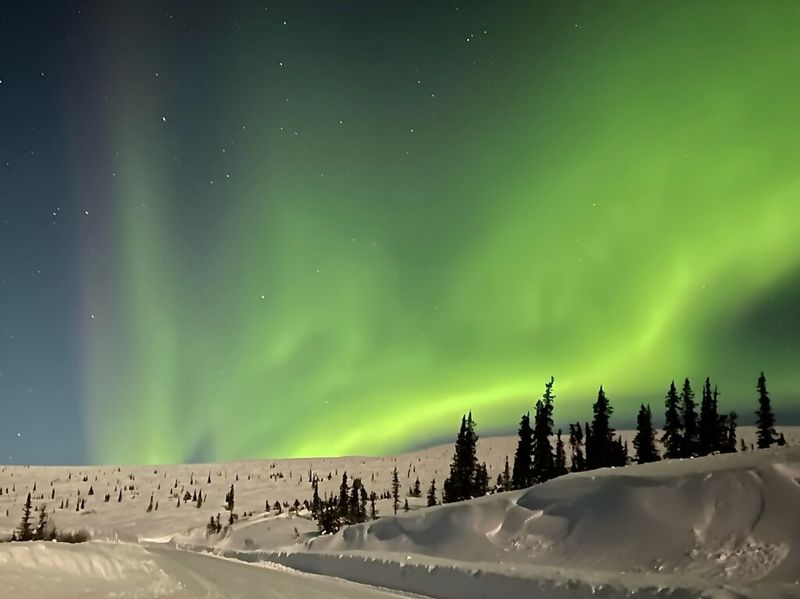
Did you know that Fairbanks is one of the best places on Earth to witness the aurora borealis?
Sitting just below the Arctic Circle, this city experiences over 200 nights per year when the northern lights are visible.
The magic happens when charged particles from the sun collide with gases in Earth’s atmosphere, creating ribbons of color that shimmer and wave across the night sky.
Between late August and mid-April, when the nights are longest and darkest, the aurora puts on its most spectacular shows.
Green is the most common color you’ll see, but sometimes purple, pink, red, and even blue streaks join the display.
The lights don’t just sit still; they move like curtains blowing in the wind, dancing and swirling in patterns that seem almost alive.
Many visitors head to places like Chena Hot Springs Resort, located about 60 miles northeast of Fairbanks at 17600 Chena Hot Springs Road.
Here you can soak in natural hot springs while watching the aurora overhead, which creates an absolutely surreal experience.
Other popular viewing spots include Cleary Summit, Murphy Dome, and various locations along the Chena River.
Local aurora tour companies offer heated cabins where you can wait comfortably until the lights appear.
They monitor aurora forecasts and know exactly when and where to position you for the best views.
Some tours even include traditional Alaska activities like dog sledding or snowshoeing under the dancing lights.
Nowhere else combines the reliability, intensity, and accessibility of aurora viewing quite like Fairbanks.
The city’s location, clear skies, and minimal light pollution create perfect conditions for this natural phenomenon.
Watching those ethereal lights swirl above you in the frozen Alaska night is a spiritual experience that connects you to something much bigger than yourself.
3. Bear Viewing at Brooks Falls in Katmai National Park

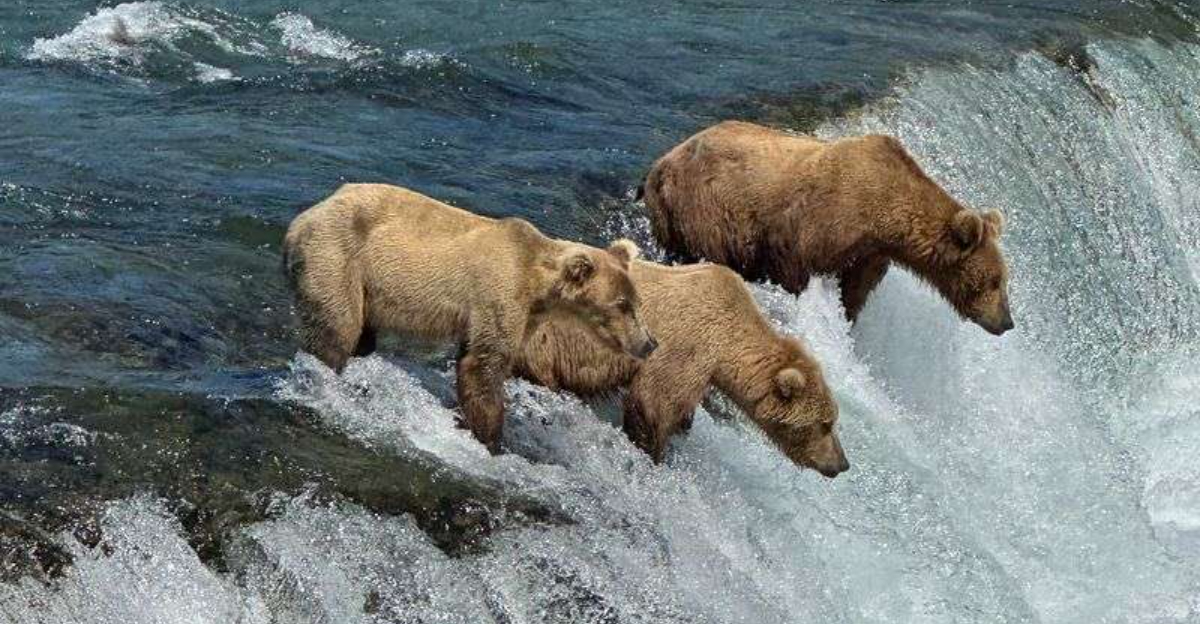
Picture yourself standing on a wooden platform while massive brown bears fish for salmon just 50 feet away.
Brooks Falls in Katmai National Park offers the most famous bear-viewing experience on the planet.
Every summer, salmon swim upstream to spawn, and the bears know exactly where to wait for their meal.
The falls create a natural obstacle that forces salmon to jump, and the bears have learned to position themselves perfectly to catch fish in mid-air.
Some bears stand right at the lip of the falls with their mouths open, waiting for salmon to jump directly into them.
Others patrol the waters below, using their powerful paws to pin fish against the rocks.
You might see a dozen bears at once, each using their own fishing technique.
Getting to Brooks Falls requires flying from Anchorage to King Salmon, then taking a floatplane into the park.
The remote location means you won’t find roads, cars, or crowds; just wilderness, bears, and the sound of rushing water.
The park requires visitors to watch a safety video about bear behavior before heading to the viewing platforms.
Rangers are always present to ensure both human and bear safety.
July is peak season when salmon runs are strongest and bear activity is highest.
The elevated viewing platforms at Brooks Camp put you at eye level with the action while keeping everyone safe.
You’ll watch bears that weigh up to 900 pounds display fishing skills that seem almost too clever to be real.
No zoo or wildlife park can replicate this experience.
These are wild bears in their natural habitat, doing what they’ve done for thousands of years.
The combination of accessibility, safety, and the sheer number of bears makes Katmai’s Brooks Falls absolutely unique.
You’ll leave with a profound respect for these magnificent animals and their ancient rhythms.
4. Cruising Through Glacier Bay National Park

Glacier Bay National Park protects over 3.3 million acres of wilderness that’s only accessible by boat or plane.
This UNESCO World Heritage Site contains more actively calving tidewater glaciers than anywhere else in the world.
When chunks of ice break off and crash into the ocean with thunderous roars, you’ll feel the power of nature in your chest.
Cruise ships and smaller tour boats navigate through icy waters surrounded by glaciers that rise hundreds of feet above the surface.
The park contains 16 tidewater glaciers, seven of which actively calve icebergs into the bay.
Margerie Glacier, one of the most visited, is over 250 feet tall at its face and stretches back 21 miles into the mountains.
When ice breaks off, it creates waves that rock your boat and sends seabirds scattering.
Wildlife viewing here is exceptional because the marine environment supports such diverse life.
Humpback whales breach near your vessel, sea otters float on their backs cracking open shellfish, and harbor seals rest on floating ice chunks.
Bald eagles soar overhead while mountain goats pick their way across impossibly steep cliffs.
Park rangers often board cruise ships to provide narration about the geology, wildlife, and history of this remarkable place.
The bay itself is a relatively new feature; just 250 years ago, it was completely covered by a massive glacier.
As the ice retreated, it revealed this spectacular fjord system.
You’re literally watching the landscape emerge from the ice age.
No other place combines this many active tidewater glaciers with such easy access and abundant wildlife.
The protected waters of the bay allow boats to get incredibly close to glacier faces safely.
Hearing the crack and boom of calving ice echoing off mountain walls while surrounded by pristine wilderness creates an experience that defines Alaska’s wild character.
5. Panning for Gold in Historic Mining Towns

Alaska’s gold rush history isn’t just something you read about in books; you can actually live it yourself.
Towns like Fairbanks, Nome, and Chicken still welcome visitors to try their luck panning for real gold in the same streams where prospectors struck it rich over a century ago.
The thrill of seeing actual gold flakes glittering in your pan connects you directly to Alaska’s wild frontier past.
Gold panning is surprisingly simple once you learn the technique.
You scoop gravel and water into a shallow pan, then swirl it in a specific way that lets lighter materials wash over the edge while heavier gold settles to the bottom.
Many mining operations offer guided experiences where they teach you the proper method and let you keep whatever you find.
El Dorado Gold Mine near Fairbanks at 1975 Discovery Drive provides authentic mining experiences with original equipment and knowledgeable guides.
Some places let you use more advanced equipment like sluice boxes, which are long troughs that process larger amounts of material.
You’ll shovel gravel into the box while water flows through it, catching gold in special riffles along the bottom.
It’s hard work that gives you real appreciation for what those early prospectors endured.
The town of Chicken, with a population of about seven people, maintains its gold rush character with wooden boardwalks and historic buildings.
Nome, located on the Bering Sea coast, still has active gold mining operations where visitors can try their luck on the beach.
The gold here is real, and while you probably won’t strike it rich, finding even a tiny flake creates genuine excitement.
What makes this uniquely Alaskan is the combination of authentic history, real gold, and the frontier atmosphere that still exists in these remote towns.
You’re not just watching a demonstration; you’re participating in an activity that shaped Alaska’s development and brought thousands of hopeful prospectors north during the late 1800s.
6. Fishing for King Salmon in the Kenai River

The Kenai River produces the largest king salmon in the world, with fish regularly exceeding 50 pounds and occasional monsters topping 90 pounds.
These powerful fish migrate from the ocean into the river’s turquoise waters each summer, creating fishing opportunities that anglers travel across the globe to experience.
Hooking into a king salmon; also called chinook; tests your strength, skill, and patience in ways few other fish can match.
The river flows 82 miles from Kenai Lake to Cook Inlet, passing through some of Alaska’s most beautiful wilderness.
Two separate runs of king salmon enter the river each year; the early run from mid-May through June, and the late run from July into early August.
The town of Soldotna, located at Mile 94 on the Sterling Highway, serves as the fishing headquarters with numerous guide services, tackle shops, and river access points.
Most anglers fish from drift boats that float downstream while guides position you in the best spots.
You’ll use heavy tackle because these fish fight with incredible power, often making long runs that strip line off your reel.
The battle can last 20 minutes or more, leaving your arms shaking and your heart pounding.
When you finally land one of these silver giants, you’ll understand why people become obsessed with king salmon fishing.
The Kenai also produces impressive runs of sockeye salmon, which are prized for their excellent eating quality.
Anglers line the riverbanks during sockeye season, practicing a technique called flossing or lining to hook these fish.
The Russian River, a tributary of the Kenai, is particularly famous for sockeye fishing.
No other river system combines the size of the fish, the beauty of the setting, and the accessibility quite like the Kenai.
World records have been set here, and every cast carries the possibility of hooking the fish of a lifetime.
The experience connects you to Alaska’s fishing heritage while challenging you with nature’s most powerful freshwater gamefish.
7. Dog Sledding with an Iditarod Musher

Long before snowmobiles existed, dog sleds were Alaska’s primary winter transportation.
Today, you can experience this traditional method of travel by riding with mushers who compete in the legendary Iditarod Trail Sled Dog Race.
These athletes and their incredible dogs cover over 1,000 miles from Anchorage to Nome each March, and many offer summer and winter sled dog experiences for visitors.
The dogs themselves are absolute athletes; lean, powerful, and bred specifically for endurance and speed.
Alaskan huskies don’t look like the fluffy Siberian huskies you might picture; they’re working dogs with incredible stamina and an almost supernatural love for running.
When it’s time to harness up, they bark, howl, and leap with excitement because they genuinely want to pull the sled.
Their enthusiasm is contagious and heartwarming.
During summer months, mushers use wheeled carts on trails since there’s no snow.
Winter sledding happens on packed snow trails through forests and across frozen lakes.
Many kennels are located near Willow, Talkeetna, and Seward, where mushers train their teams year-round.
At locations like Seavey’s IdidaRide Sled Dog Tours in Seward, you’ll meet multiple generations of Iditarod champions and learn what it takes to compete in the world’s toughest race.
Mushers explain how they care for their dogs, what the dogs eat, and how they train for different conditions.
You’ll learn commands like “hike” for go, “gee” for right, and “haw” for left.
Some experiences let you help harness the dogs or even stand on the runners and drive the sled yourself under the musher’s guidance.
What makes this uniquely Alaskan is the deep connection between the mushers, their dogs, and the land.
These aren’t just pets; they’re working partners who share an incredible bond with their humans.
Experiencing the speed, silence, and teamwork of dog sledding gives you a profound appreciation for Alaska’s history and the remarkable animals who helped settle this frontier.
Dear Reader: This page may contain affiliate links which may earn a commission if you click through and make a purchase. Our independent journalism is not influenced by any advertiser or commercial initiative unless it is clearly marked as sponsored content. As travel products change, please be sure to reconfirm all details and stay up to date with current events to ensure a safe and successful trip.
