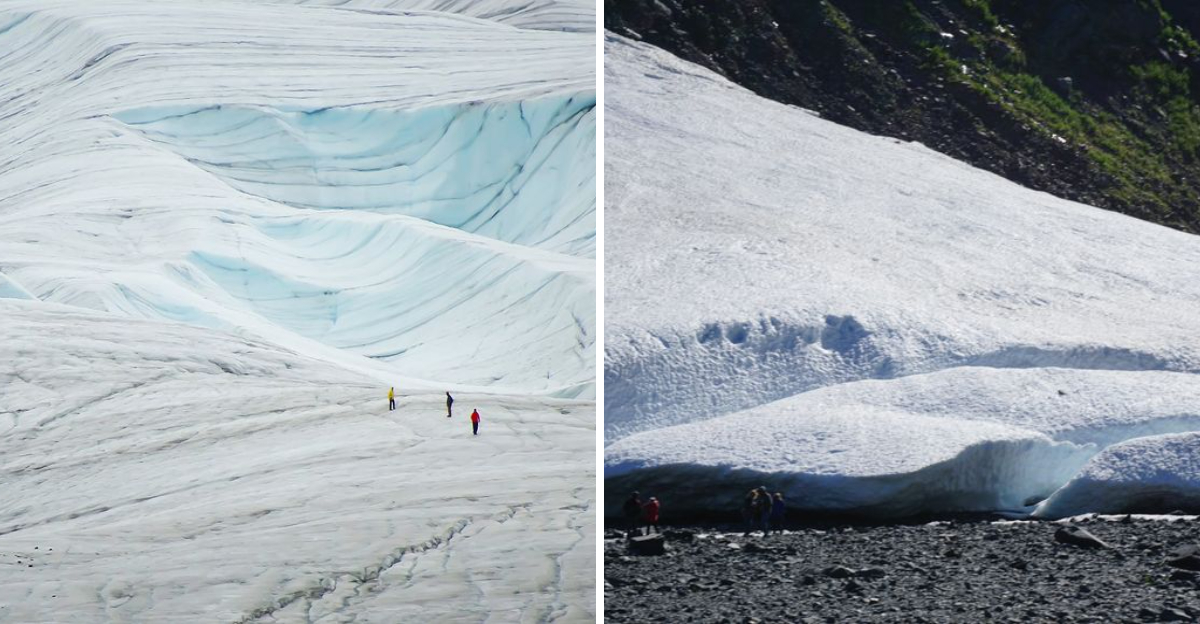
Alaska holds some of the most breathtaking glacier landscapes on Earth, where towering walls of ancient ice meet rugged mountain terrain.
These frozen giants have carved out valleys and created otherworldly environments that seem almost impossible to believe until you see them with your own eyes.
Glacier hiking in Alaska offers adventurers a chance to walk on ice that has been forming for thousands of years, exploring crevasses, ice caves, and brilliant blue formations that change with every season.
Whether you’re an experienced mountaineer or a first-time glacier explorer, Alaska’s glacier hikes provide unforgettable experiences that will make you feel like you’ve stepped onto another planet.
From the famous Exit Glacier to remote ice fields that few people ever visit, these seven hikes showcase the raw beauty and power of Alaska’s glacial wilderness.
Each trail offers something unique, from accessible walks suitable for families to challenging treks that require technical skills and proper equipment.
Prepare to be amazed by the stunning blue ice, the sound of glaciers groaning and shifting, and the incredible feeling of standing on ice that predates modern civilization.
Matanuska Glacier Trek
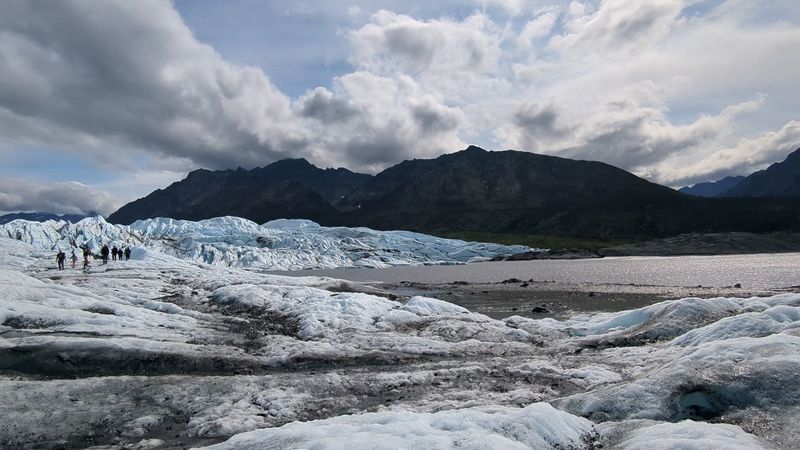
Matanuska Glacier stretches 27 miles long and four miles wide, making it one of the largest glaciers accessible by car in the United States.
Located about 100 miles northeast of Anchorage along the Glenn Highway, this massive river of ice offers visitors an up-close encounter with glacial features that most people only see in documentaries.
The glacier descends from the Chugach Mountains and creates a dramatic landscape of peaks, crevasses, and ice formations that change constantly.
Guided tours are highly recommended for this glacier because the ice surface can be treacherous without proper knowledge of safe routes.
Experienced guides lead you across the glacier’s surface, pointing out moulins (vertical shafts in the ice), ice caves, and brilliant blue ice pools that form during warmer months.
The contrast between the white and blue ice creates photography opportunities that will fill your camera with stunning images.
Most tours last between three to five hours and provide all necessary equipment including crampons, helmets, and ice axes.
The glacier sits at a relatively low elevation, which means the weather can be surprisingly mild compared to other Alaskan glaciers.
Summer temperatures often reach into the 60s and 70s Fahrenheit, making this an accessible option for visitors who want a glacier experience without extreme cold.
Walking on Matanuska feels surreal because you’re literally standing on ice that formed during the last ice age.
The glacier’s accessibility combined with its impressive size makes it perfect for first-time glacier hikers.
You’ll hear the ice creaking and shifting beneath your feet, a reminder that glaciers are living, moving entities.
The experience of standing in an ice canyon with walls towering 20 feet above you creates memories that last a lifetime and changes how you think about the natural world.
Root Glacier Trail in Wrangell-St. Elias National Park
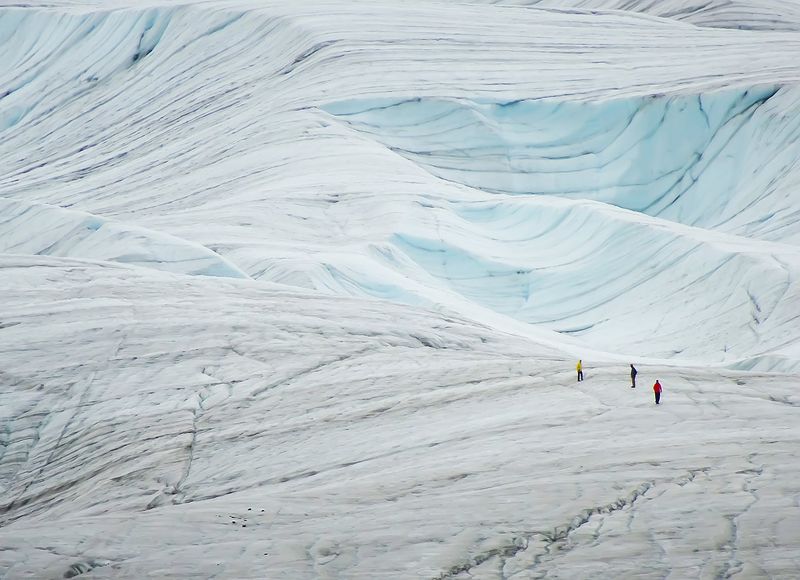
Root Glacier offers one of the most rewarding self-guided glacier experiences in Alaska, located in the massive Wrangell-St. Elias National Park near the historic mining town of Kennicott.
The trail begins at the Kennicott Glacier Lodge and follows a well-marked path for about four miles before reaching the glacier itself.
This hike combines historical interest with natural wonder, as you’ll pass abandoned copper mining buildings from the early 1900s on your way to the ice.
Once you reach Root Glacier, you can walk onto the lower sections without technical equipment, though crampons make the experience safer and more enjoyable.
The glacier surface here features fascinating ice formations, including ice caves that you can carefully explore during certain times of year.
Bright blue meltwater streams cut channels across the white ice, creating patterns that look like abstract art painted by nature.
What makes Root Glacier particularly special is the sense of solitude and wilderness you’ll experience.
Unlike more commercialized glacier hikes, you might have large sections of this glacier to yourself, allowing for quiet contemplation of the ancient ice beneath your feet.
The surrounding mountains of the Wrangell-St. Elias range create a dramatic backdrop that makes you feel incredibly small in the best possible way.
The round-trip hike takes most people between four to six hours, depending on how much time you spend exploring the glacier.
Bring plenty of water, snacks, and layers of clothing because weather in this region can change rapidly.
The trail gains about 500 feet in elevation, making it moderately challenging but accessible to most reasonably fit hikers.
Photographers love Root Glacier because the combination of ice, mountains, and historic buildings creates diverse subjects within a single hike.
Visiting in late summer gives you the best chance of finding accessible ice caves, though conditions vary each year.
This glacier hike feels unreal because you’re exploring a massive ice field in one of America’s largest and least-visited national parks.
Exit Glacier Trail and Ice Field Access
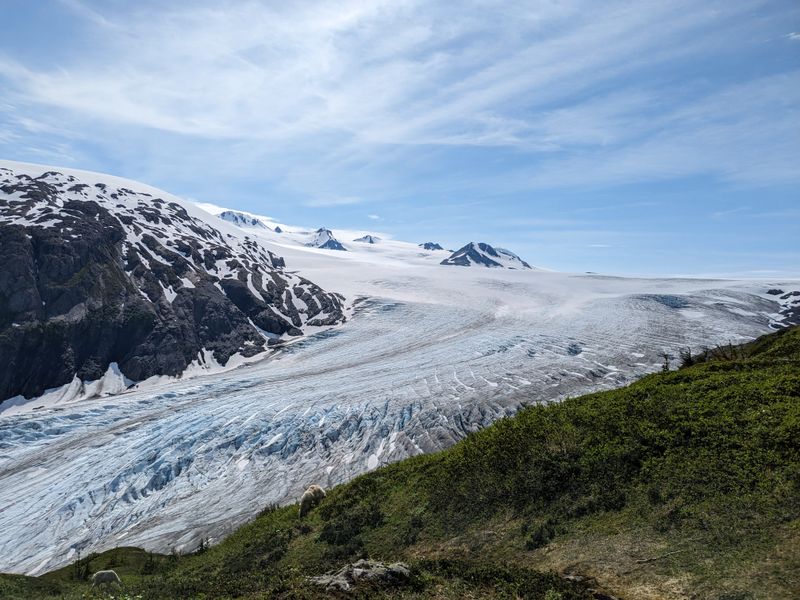
Exit Glacier represents one of the most accessible glaciers in Alaska, located just outside Seward in Kenai Fjords National Park.
The main trail system here offers multiple viewing points that showcase the glacier from various distances, including the popular Harding Icefield Trail for those seeking a more challenging adventure.
What makes Exit Glacier feel almost unreal is watching how dramatically it has retreated over the past century, with markers along the trail showing where the glacier’s edge was located in different years.
The easy Edge of the Glacier Trail takes just 30 minutes round trip and brings you close enough to feel the cold air radiating from the ice.
For a more substantial hike, the Harding Icefield Trail climbs 3,000 feet over four miles, eventually bringing you to a viewpoint overlooking the massive ice field that feeds Exit Glacier.
This challenging trail rewards hikers with views that truly seem otherworldly, as the ice field stretches to the horizon in every direction.
Summer months bring wildflowers to the lower elevations, creating beautiful contrasts between colorful blooms and ancient blue ice.
The trail passes through different ecological zones, showing how plant life gradually reclaims land as the glacier retreats.
You’ll walk through areas that were covered by ice just decades ago, a powerful reminder of how quickly our planet’s glaciers are changing.
Ranger-led walks are available during summer months and provide fascinating information about glacial geology, climate change, and the park’s wildlife.
Black bears and mountain goats are sometimes spotted in the area, adding an element of wildlife watching to your glacier experience.
The Exit Glacier Nature Center offers exhibits and restrooms before you begin your hike.
Many visitors combine a trip to Exit Glacier with other Seward activities like boat tours of Kenai Fjords or visits to the Alaska SeaLife Center.
The glacier is accessible from late May through early October, with the Harding Icefield Trail typically snow-free from mid-July through August.
Standing at the ice field viewpoint and seeing nothing but ice stretching toward distant mountains creates a perspective-shifting moment that helps you understand the true scale of Alaska’s glacial landscapes.
Byron Glacier Trail
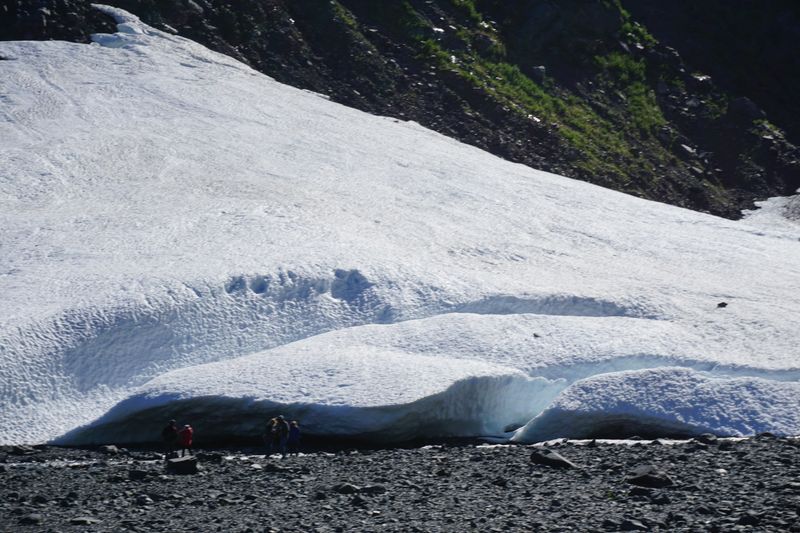
Byron Glacier offers a family-friendly introduction to glacier hiking, located in the Portage Valley about 50 miles south of Anchorage along the Seward Highway.
The trail is only about 1.4 miles round trip with minimal elevation gain, making it accessible even for young children and those new to hiking.
Despite its ease, this trail delivers an impressive glacier experience as it leads directly to the face of Byron Glacier, where you can get remarkably close to the ice.
During summer months, the trail follows Byron Creek through a valley surrounded by steep mountain walls.
Wildflowers bloom along the path, and the sound of rushing meltwater accompanies your walk.
The glacier comes into view gradually as you round a bend, its blue-tinged ice contrasting sharply with the dark rock of the surrounding peaks.
What makes Byron Glacier feel unreal is how accessible this frozen giant is to visitors of all abilities.
You can walk right up to the glacier’s base and touch ice that has been compressed over centuries.
Small ice caves sometimes form at the glacier’s edge, though these should be admired from a safe distance as falling ice presents a real danger.
The trail is typically accessible from June through September, though early season visitors might encounter snow on parts of the path.
Waterproof boots are recommended because the trail can be wet and muddy, especially near the glacier.
The area receives significant rainfall, so bringing rain gear is wise even on days that start sunny.
Byron Glacier is part of the Chugach National Forest, which offers numerous other hiking and recreation opportunities in the Portage Valley area.
The nearby Begich, Boggs Visitor Center provides information about the region’s glaciers and natural history.
Many visitors combine a trip to Byron Glacier with stops at Portage Lake or the Alaska Wildlife Conservation Center.
Photographers appreciate the dramatic lighting that occurs when sun breaks through clouds and illuminates the glacier against dark mountain walls.
The short distance makes this an ideal hike for those with limited time or mobility concerns who still want to experience Alaska’s glacial beauty.
Standing at the base of Byron Glacier and looking up at the massive wall of ice creates a powerful sense of nature’s scale and beauty.
Worthington Glacier Trail
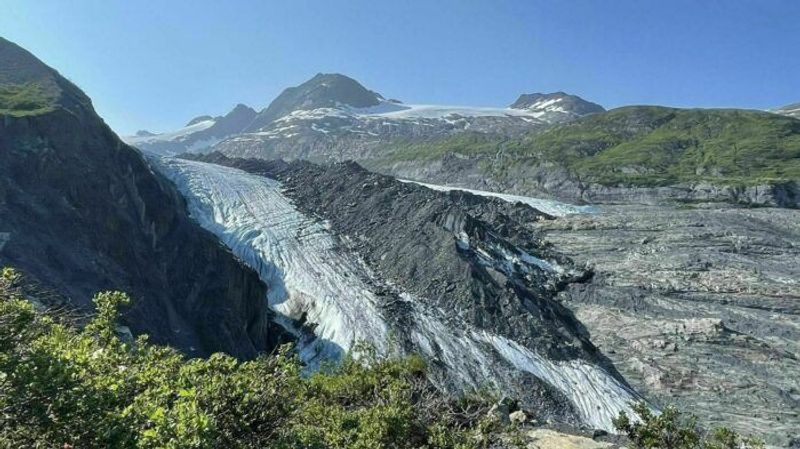
Worthington Glacier provides one of the most convenient glacier experiences in Alaska, located right off the Richardson Highway at Thompson Pass, about 28 miles north of Valdez.
You can literally park your car and walk a short quarter-mile trail to reach the glacier’s face, making this an ideal stop for road-trippers and those with limited hiking experience.
Despite its accessibility, Worthington Glacier delivers stunning views and a genuine sense of glacial grandeur that rivals more remote locations.
The paved parking area includes interpretive signs that explain glacial formation and the history of this particular ice mass.
A short loop trail takes you to viewing areas where you can observe the glacier’s features, including crevasses, ice falls, and the brilliant blue ice visible in the glacier’s deeper sections.
The surrounding Thompson Pass area is known for receiving massive snowfall each winter, sometimes exceeding 500 inches, which feeds the glacier and creates the deep snowpack visible even in summer.
More adventurous visitors can explore beyond the maintained trail, carefully approaching the glacier for closer inspection.
Local guides offer ice climbing experiences on Worthington Glacier for those interested in a more technical adventure.
The glacier’s relatively stable face and accessible location make it popular for introducing people to ice climbing in a controlled environment.
Thompson Pass sits at about 2,600 feet elevation, which means temperatures can be cool even in summer months.
Bring warm layers because the glacier generates cold winds that can make the area feel significantly chillier than the surrounding valleys.
The combination of high elevation and northern latitude means snow can occur in any month of the year.
Worthington Glacier has been retreating like most Alaskan glaciers, but it remains an impressive sight that helps visitors understand the power of ice to shape landscapes.
The short walk from parking to glacier viewing makes this accessible for elderly visitors, families with small children, and anyone with mobility limitations.
Photography opportunities abound, with the glacier providing a dramatic backdrop against the steep mountains of Thompson Pass.
Many travelers stop at Worthington Glacier as part of the journey between Anchorage and Valdez, making it an easy addition to Alaska itineraries that focuses on road-accessible attractions.
Spencer Glacier Trail via Alaska Railroad
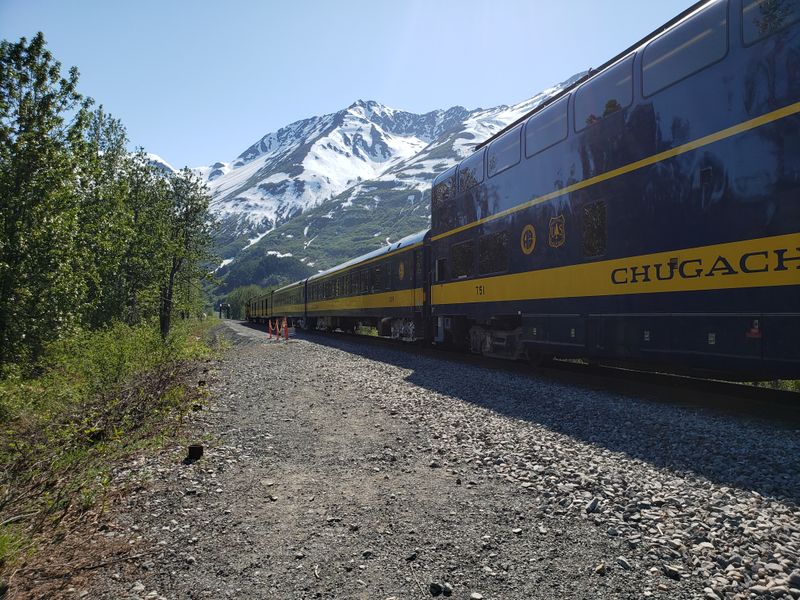
Spencer Glacier offers a truly unique hiking experience because the only way to reach it is by taking the Alaska Railroad’s Glacier Discovery Train from Girdwood or Anchorage.
The train makes a special whistle-stop at Spencer Glacier, dropping hikers and campers in a remote wilderness location with no road access.
This combination of train travel and glacier hiking creates an adventure that feels like stepping back in time to an era of wilderness exploration.
The train ride itself provides stunning views of mountains, valleys, and glimpses of other glaciers along the route.
When the train stops at Spencer Glacier, you’ll disembark onto a platform surrounded by wilderness, with the glacier visible across Spencer Lake.
From the whistle-stop, trails lead to viewing points overlooking the glacier and lake, where icebergs calved from the glacier float in the turquoise water.
Spencer Glacier is part of the Chugach National Forest and offers both day-hiking and overnight camping opportunities.
The Forest Service maintains several rustic cabins in the area that can be reserved in advance, providing shelter for those wanting to spend more time exploring.
Overnight visitors can experience the glacier in different lighting conditions and enjoy the profound silence of this roadless wilderness.
Day hikers typically have about four hours between train arrivals to explore the area before catching the return train.
The trails around Spencer Glacier vary from easy walks to more challenging routes that climb higher for better views.
Kayaking is also possible on Spencer Lake for those who bring inflatable kayaks on the train, allowing paddlers to get close to icebergs and the glacier’s face.
The remoteness of Spencer Glacier means you need to be self-sufficient with food, water, and gear.
Bear safety is important here, as black and brown bears inhabit the area and are attracted to salmon streams during spawning season.
The train operates from mid-May through mid-September, with the peak season offering the most daily departures.
What makes Spencer Glacier feel almost unreal is the combination of train travel, remote wilderness, and stunning glacial scenery all in one experience.
The lack of road access means fewer crowds compared to more famous glaciers, giving you a more intimate connection with the landscape.
Standing beside Spencer Lake watching ice chunks drift past while surrounded by mountains and knowing the train is your only way out creates an adventure that few other glacier hikes can match.
Dear Reader: This page may contain affiliate links which may earn a commission if you click through and make a purchase. Our independent journalism is not influenced by any advertiser or commercial initiative unless it is clearly marked as sponsored content. As travel products change, please be sure to reconfirm all details and stay up to date with current events to ensure a safe and successful trip.
