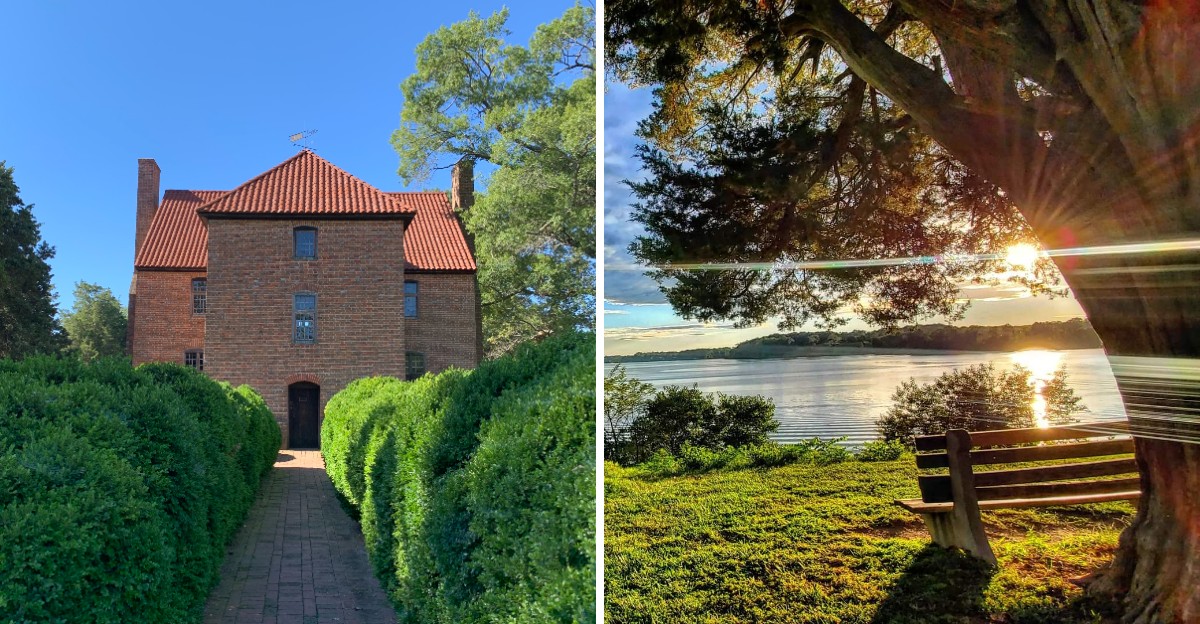
Most people can name the current capital. Far fewer know about the town that held the title first.
This small Maryland town served as the state capital long before the honor moved elsewhere, and today, almost nobody remembers. The streets still carry traces of that history if you know where to look.
Old buildings, quiet corners, and markers that hint at a past most visitors walk right past. It is the kind of place where you can learn something unexpected just by paying attention.
Locals are proud of the history, even if they do not shout about it. A reminder that significance is not always obvious.
The kind of town that rewards a curious visitor. A slice of Maryland history hiding in plain sight.
The Fort Where Maryland Actually Began
Most origin stories are vague. Maryland’s is not.
In 1634, colonists arriving on the Ark and the Dove built a fort here, and archaeologists spent years searching for exactly where it stood before finally pinning it down.
The site now has a reconstructed palisade wall, a tall line of upright timbers marking the footprint of that first defensive enclosure. Walk the perimeter and the scale sinks in fast.
It was not large. A few dozen people, a handful of structures, and a whole lot of uncertainty about what came next.
Seeing the outline in real space does more for understanding than any textbook paragraph ever could.
What makes the fort especially interesting is that the discovery is recent. For generations, historians knew roughly where the settlement began but could not confirm the fort’s exact location until modern survey technology and careful digging pointed the way.
Interpretive panels explain how the Yaocomaco people were already living on this land and how the colonists negotiated for the site rather than seizing it outright. That detail shapes everything that followed.
Bring decent shoes, because the ground is uneven and the grass gets tall in summer. Morning light across the open field is genuinely lovely, and the river breeze keeps things comfortable even in August.
Plan to linger. The fort site rewards people who slow down, read the signs, and imagine a tiny cluster of English settlers staring at an enormous unfamiliar shoreline.
Climbing Aboard the Maryland Dove
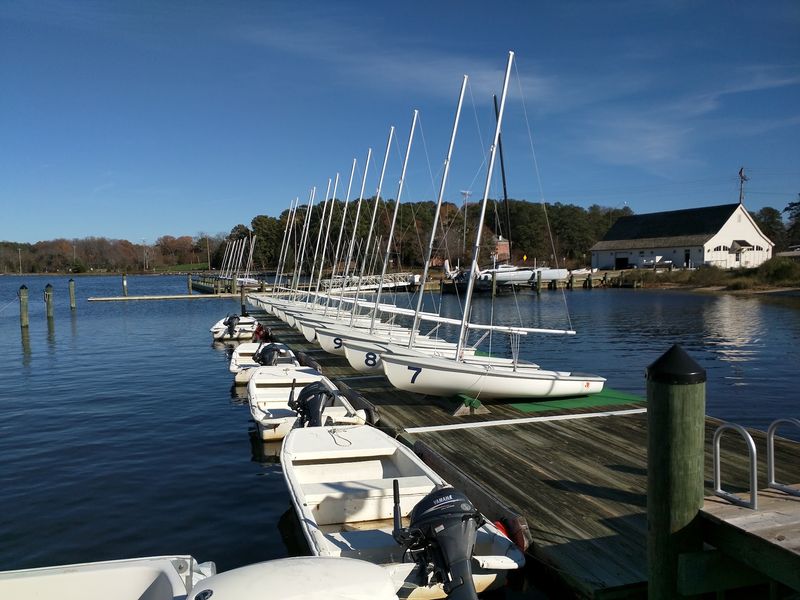
A ship changes the whole tone of a visit. The Maryland Dove sits at the dock along the St. Mary’s River, a careful reproduction of one of the two vessels that carried the colony’s first settlers across the Atlantic.
Visitors can step aboard and poke around the deck. Rigging overhead, worn plank flooring underfoot, and a hold below that looks impossibly cramped for a months-long ocean crossing.
That cramped hold is the part that sticks with people. Passengers shared space with barrels, tools, livestock, and each other, with no privacy and very little fresh air.
Crew members and interpreters are usually on deck to explain how the ship was sailed, how cargo was stowed, and why square-rigged vessels handled the way they did. Ask questions, because the answers tend to be more entertaining than expected.
The current Dove is a newer build, launched in recent years to replace an earlier reproduction, and it was constructed using traditional shipwright techniques. Details like hand-worked joinery and tarred rope give it real credibility.
Sunlight bouncing off the water, gulls arguing nearby, and a wooden hull creaking gently make this one of the most atmospheric stops on the property.
Check the schedule before arriving, since the Dove occasionally sails to other ports for events and is not always at her home dock. Catching her in place is worth the small bit of planning.
Inside the Reconstructed State House of 1676
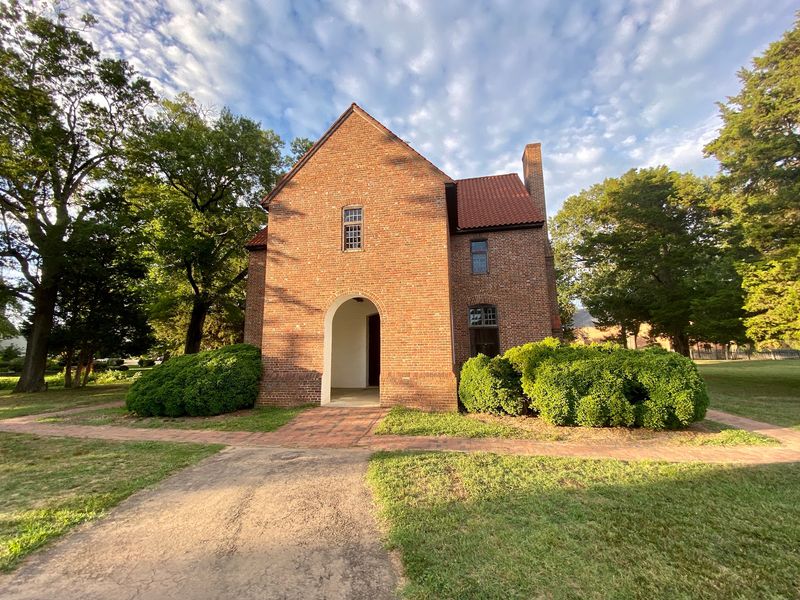
Government buildings are rarely this charming. The reconstructed State House of 1676 rises out of a green lawn overlooking the water, all warm brick, steep roofline, and diamond-paned leaded glass windows that catch the afternoon sun.
Inside, the main chamber feels serious in the way old courtrooms do. Heavy timber, wide floorboards, and fireplaces big enough to stand in.
Maryland’s colonial assembly met in the original building on this ground, debating laws for a colony still figuring itself out. Standing in the replica makes the distance between 1676 and now feel shorter than it should.
The reconstruction dates to the 1930s and was built as a tribute to the colony’s founding, sitting near the site of the vanished original. It has since become the visual symbol of the whole historic area, the building that shows up on postcards and road signs.
Interpreters sometimes stage mock assembly sessions, letting visitors take seats and vote on colonial-era questions. Kids especially seem to enjoy the theatrics of shouting aye or nay.
Views from the lawn out toward the river are quietly spectacular, particularly in autumn when the surrounding trees turn.
Give yourself time to walk the full circuit around the building rather than ducking in and out. The exterior brickwork, the setting, and the slope down toward the water are half the experience.
A Working Farm Frozen in 1667
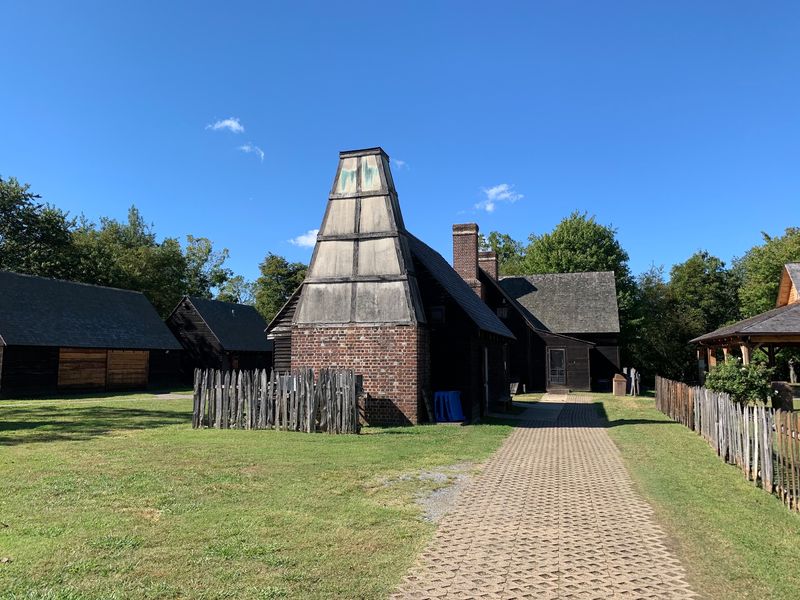
Chickens wander where they please at the Godiah Spray Tobacco Plantation, and nobody seems bothered. The site recreates a modest working farm as it would have looked in 1667, complete with timber-framed buildings, split rail fences, and gardens full of crops grown more than 350 years ago.
Costumed living historians handle daily chores while visitors watch. Hearth cooking, woodworking, tending animals, hauling water.
Conversation flows easily here because the interpreters stay busy and welcome company. Ask what is bubbling in the pot and the answer often comes with a story about where the ingredients came from.
Heirloom breeds of farm animals roam the pens, chosen because they resemble the livestock colonists would have raised. Rare-breed cattle and hogs look noticeably different from modern farm animals, which surprises a lot of people.
The garden deserves a slow look. Plants grown for food and medicine sit side by side, and interpreters can explain what each one was used for, including remedies that sound questionable by modern standards.
Smoke from the hearth drifting through the yard gives the whole place a lived-in smell that no exhibit case can replicate.
Wear clothes you do not mind getting dusty, and go slowly. The charm of the plantation comes from hanging around long enough to watch a task finish rather than snapping a photo and moving along.
The Brick Chapel and Maryland’s Bold Experiment
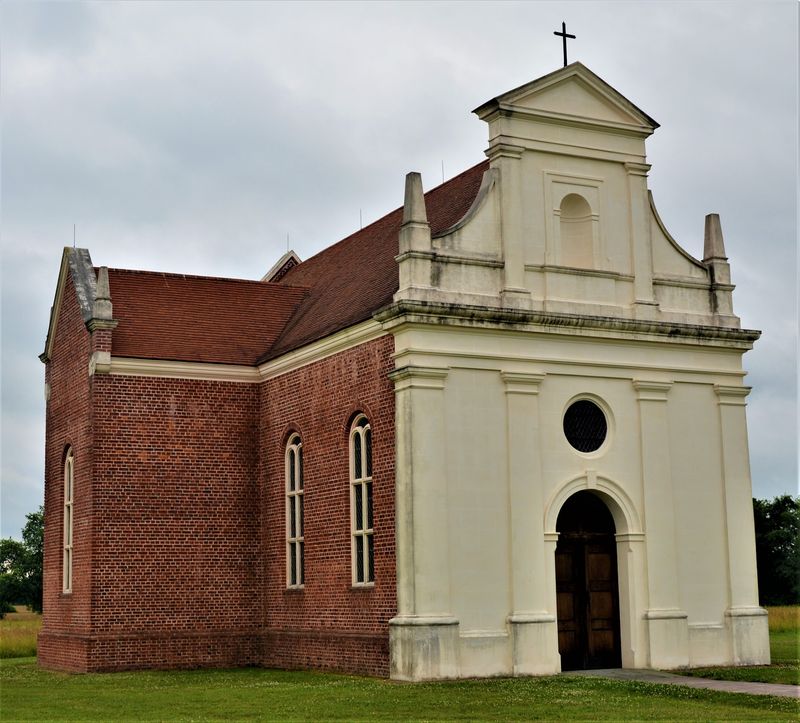
Religious freedom got its early North American test right here, and the Brick Chapel is the physical proof. Rebuilt on its original 1667 foundation, the cruciform brick structure was the first monumental Catholic church in the English colonies.
Lord Baltimore imagined Maryland as a refuge for English Catholics facing persecution back home. The Maryland Toleration Act of 1649 put that idea into law.
That act did not last, and the chapel itself was eventually shut down and dismantled, its bricks carted off for other uses. History here is rarely tidy.
Archaeologists located the foundation and used it as the blueprint for the reconstruction, matching brick patterns and dimensions as closely as the evidence allowed. Lead coffins discovered beneath the floor added another layer of intrigue to the excavation.
Inside, the space is spare and bright. Arched windows let daylight fall across bare floors, and the acoustics make ordinary footsteps sound important.
Standing quietly in the middle of it is oddly moving, even for visitors who did not come for the religious angle. The building represents an argument about tolerance that Maryland made long before most places were ready to hear it.
Approach on foot from the town center path rather than driving as close as possible. The chapel appearing gradually through the trees is a much better introduction than a parking lot view.
Meeting the Yaocomaco at the Woodland Indian Hamlet
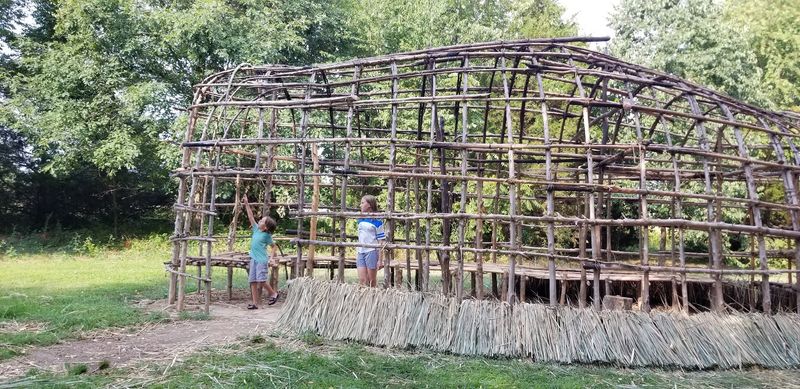
Long before any English ship appeared on the horizon, the Yaocomaco people lived along these rivers, and the Woodland Indian Hamlet gives their story real space. Bark-covered longhouses, called witchotts, sit among the trees with woven mats and reed bedding inside.
Step through the low doorway and the temperature drops. Filtered light, the smell of woodsmoke and dried grass, and a surprisingly cozy interior.
Interpreters explain how homes were built, how food was gathered and stored, and how seasonal movement shaped daily life. Tools made from bone, stone, and shell are laid out for close inspection.
The hamlet also addresses the uncomfortable parts of the story. Colonists negotiated with the Yaocomaco for land, but disease, pressure, and expansion reshaped Indigenous life across the region within a generation.
Details make the exhibit work. Cooking areas, drying racks, and garden plots show a community that had its own systems figured out long before anyone arrived to write them down.
Children tend to gravitate here because everything feels hands-on and touchable rather than roped off behind glass.
Give the hamlet more than a quick pass. Skipping it turns the whole site into a story about newcomers, which misses the deeper and frankly more interesting half of what happened on this ground.
Digging Through a Million Artifacts at the St. John’s Site
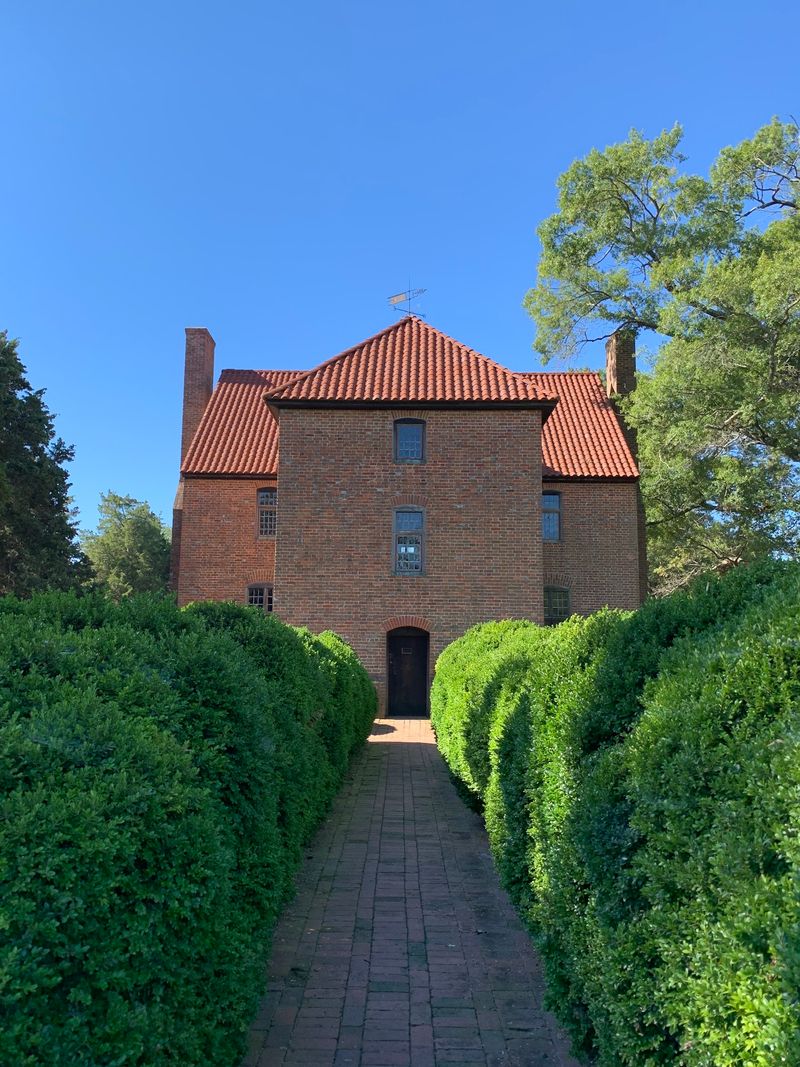
Archaeology usually happens out of sight, but the St. John’s Site Museum flips that around. The building is constructed directly over the excavated foundation of one of the settlement’s earliest houses, so visitors look down into the actual dig.
Exposed soil layers, brick footings, and post holes are visible below the walkways. The effect is part laboratory, part time capsule.
Exhibits explain how researchers piece together the past from broken bits of pottery, buttons, pipe fragments, and seeds. More than 300 archaeological sites have been excavated across the city, producing well over a million artifacts.
The house that stood here mattered politically. Assembly meetings happened under its roof, and it connects to early debates about religious freedom and to Margaret Brent, who famously demanded a vote in the colonial assembly.
Address for the visitor center, by the way, is 18751 Hogaboom Lane, St. Mary’s City, MD 20686, and staff there can point out which digs are active during a given season.
Summer visits sometimes coincide with St. Mary’s College field school students working new excavations outdoors. Watching students brush dirt off a find in real time beats any display case.
Budget a solid hour here. The museum is smaller than it looks, but the amount of detective work packed into it takes a while to absorb properly.
Trails, Riverbanks, and the Valley of the Daffodils
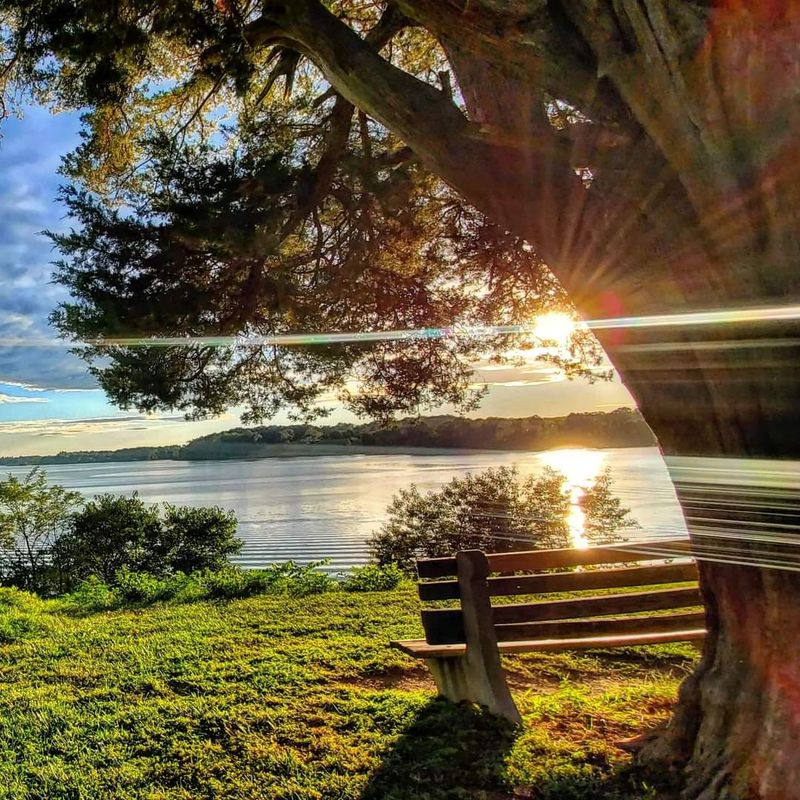
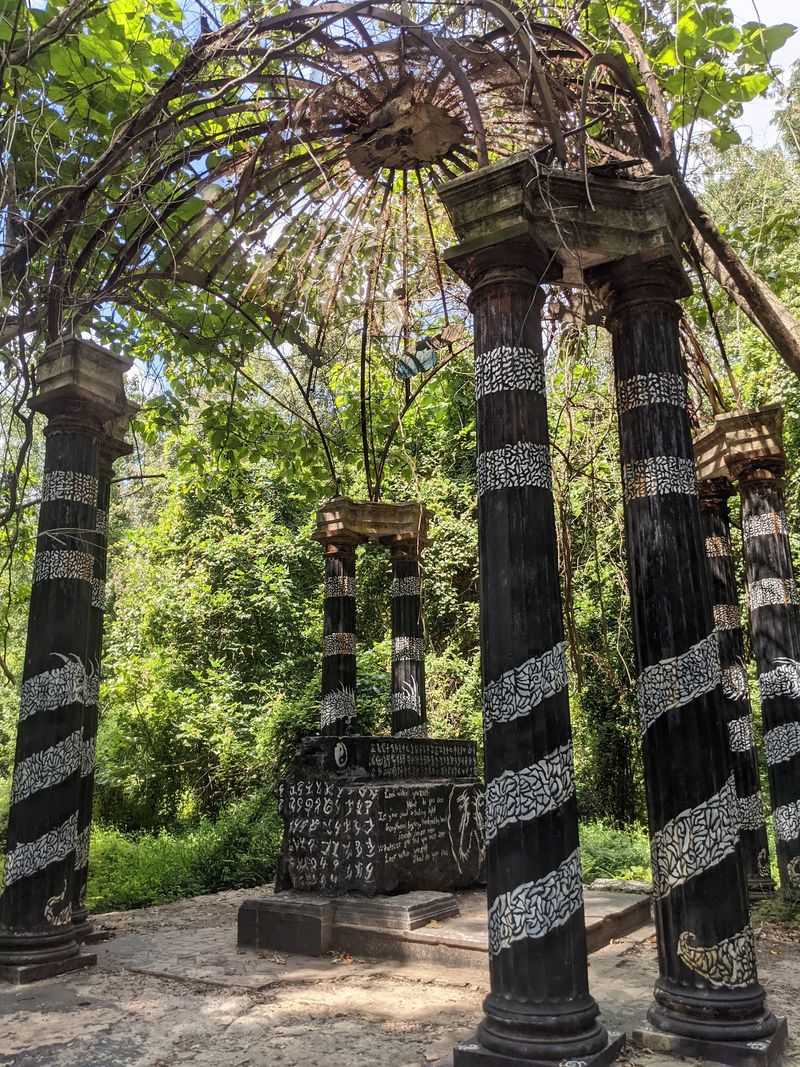
History aside, the land itself is a reason to come. Roughly 700 acres of woods, fields, and shoreline surround the historic area, threaded by about three miles of trails that wander well away from the reconstructed buildings.
Paths dip through hardwood forest and open onto views of the St. Mary’s River. Water, sky, marsh grass, repeat.
Small sandy beaches appear along the bank, quiet enough that wading birds barely react to passing hikers. Bring a water bottle and bug spray in warmer months, because tidewater Maryland takes its mosquitoes seriously.
Spring brings the Valley of the Daffodils, a shaded low spot where thousands of yellow blooms come up each year. Locals know it well, visitors often stumble onto it by accident, and both reactions are fun to watch.
Autumn might be the best season overall. Cooler air, thinner crowds, and color running through the tree line above the water.
Trail maps are available at the visitor center, and the routes are gentle enough for most fitness levels, with a few muddy stretches after rain.
Save the walk for the end of a visit. After a day of forts, ships, chapels, and dig sites, a slow loop through the woods lets everything settle, and the silence out there is the closest thing to hearing what 1634 sounded like.
