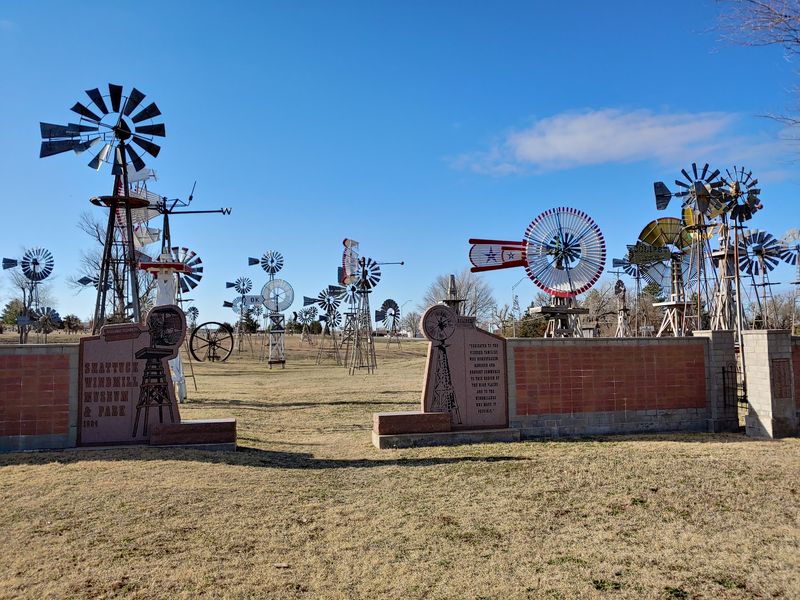
Somewhere out in the wide open corner of northwestern Oklahoma, a field full of steel and wooden wheels spins all day long, and almost nobody driving by expects it. I pulled over mostly out of curiosity, figuring I would stretch my legs for five minutes and get back on the road.
Forty minutes later I was still walking the gravel paths, listening to dozens of old windmills creak and hum together like some strange prairie orchestra. What looked like a roadside oddity turned out to be one of the most quietly fascinating stops I have made in this state.
A Field Of Turning Wheels On South Main Street
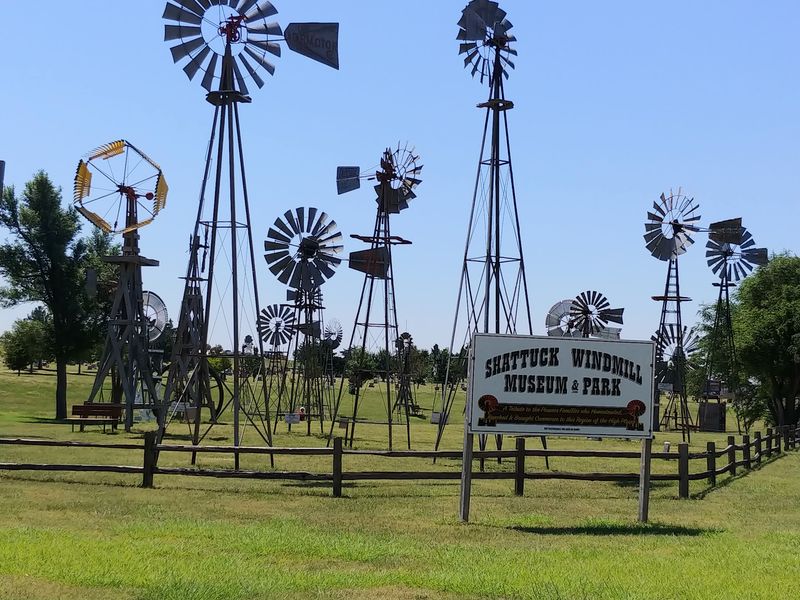
At the south edge of Shattuck, Oklahoma, where Highways 283 and 15 cross in the far northwest corner of the state, a green field sprouts windmills instead of crops. The Shattuck Windmill Museum and Park sits right along South Main Street, and it practically leaps out at you as you drive past.
Depending on which source you trust, the collection runs somewhere between 37 and 63 individual windmills. Visitors counting on foot usually land in the 30 to 60 range, which tells you how easy it is to lose track while wandering.
Every unit here is authentic, restored, and set on solid footing, with many still turning and genuinely capable of pumping water. Some stand barely taller than a person.
Others tower overhead like steel skeletons.
Calling it a museum undersells things a bit. The whole park spreads across open ground with mowed paths, benches, and picnic tables scattered between the towers.
It is an outdoor collection first and a building second, which means the Oklahoma sky and wind are part of the exhibit whether you planned for that or not.
Why The High Plains Needed Wind In The First Place
Water was the whole problem out here. The High Plains of western Oklahoma got precious little surface water, and settlers who arrived with plows and hope quickly learned that a creek was not going to save them.
Underground, though, there was plenty. Pulling it up by hand was brutal work, so the windmill became the answer, turning free and endless prairie wind into a steady pump that filled stock tanks, watered gardens, and kept homesteads alive.
Livestock depended on it. So did the railroads, whose steam engines needed enormous quantities of water at regular intervals across empty country.
Without these machines, a good chunk of western Oklahoma settlement simply does not happen the way it did. That is not an exaggeration by the museum, it is just the practical math of living somewhere dry.
Walking among the towers with that context in mind changes the experience completely. You stop seeing quaint farm decorations and start seeing survival equipment.
One visitor described the collection as a testament to the ingenuity and stubbornness of the people who settled this land, and that reads about right.
From The Five-Foot Star Zephyr To The Towering Samson
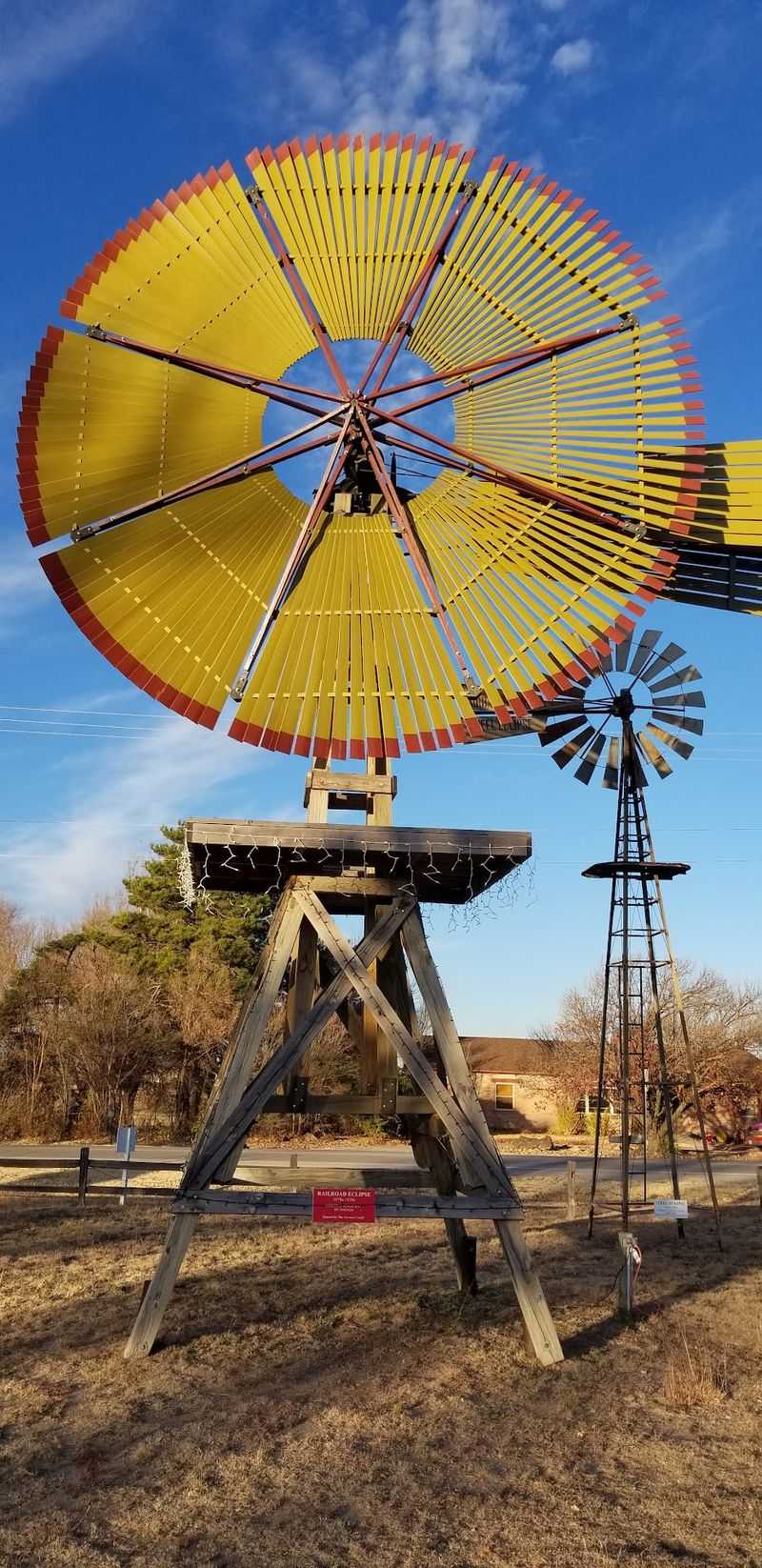
No two windmills in this park are exactly alike, and that is the whole point. Some are wooden, weathered and spoked like wagon wheels.
Others are steel, with blades cut and curved in ways you would never notice from a passing car.
The smallest of the bunch is a five-foot unit called the Star Zephyr, a little thing that looks almost like a toy next to its neighbors. At the other extreme stands Samson, an eighteen-foot giant that commands attention from anywhere in the field.
Collectively, the machines on display span roughly a century of design, dating from the 1850s through the 1950s. You can literally trace how manufacturers experimented with blade shapes, gear housings, tail vanes, and governing systems as the technology matured.
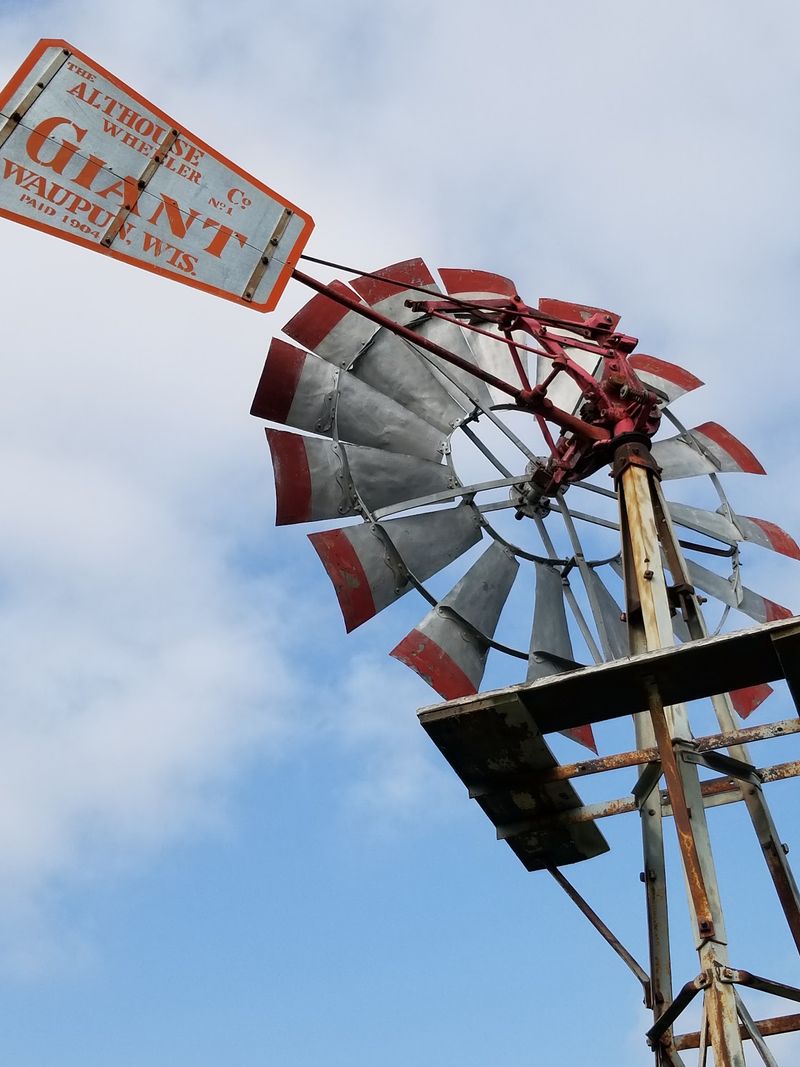
Names stamped on the vanes come from manufacturers all over the United States, not just Oklahoma. Some models were built by companies that vanished generations ago.
Bring a camera. The variety of silhouettes against a big western sky makes this one of the more photogenic free stops in the state, especially in the golden hour before sunset.
The Sound Of Several Dozen Windmills At Once
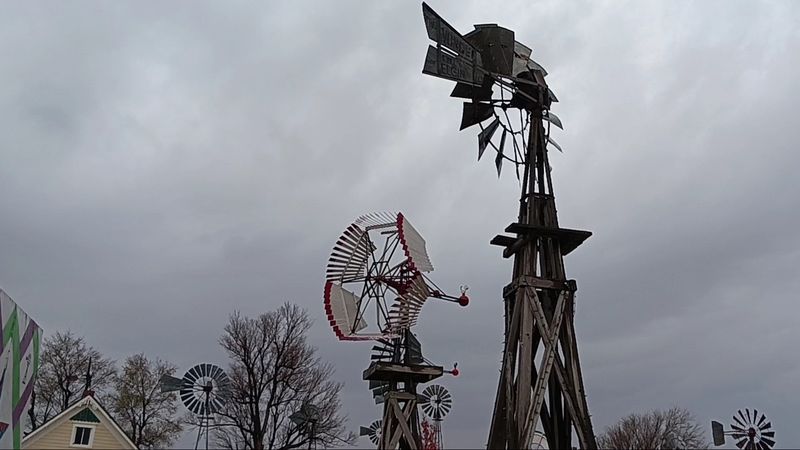
Nobody warns you about the noise, and honestly they should, because it is the best part. When the wind picks up across that field, several dozen wheels start spinning at slightly different speeds, and the result is a low mechanical chorus of creaks, clicks, whirs, and metallic sighs.
Visitors who happen to arrive on a genuinely windy day tend to describe the effect as magical, and that word keeps coming up for good reason. It is a sound most people have never heard and will not hear anywhere else.
Western Oklahoma rarely disappoints on the wind front. Spring afternoons in particular can deliver a steady blow that gets nearly everything in the park moving at once.
Calm days are quieter, of course, and a few wheels will sit still. Even then, the sheer visual density of towers makes the walk worthwhile.
My advice: put the phone down for two full minutes and just listen. That sound was once the everyday background hum of life on the plains, and there are very few places left where you can still hear it.
The Soddy, The Farmhouse, And The 1904 Mercantile
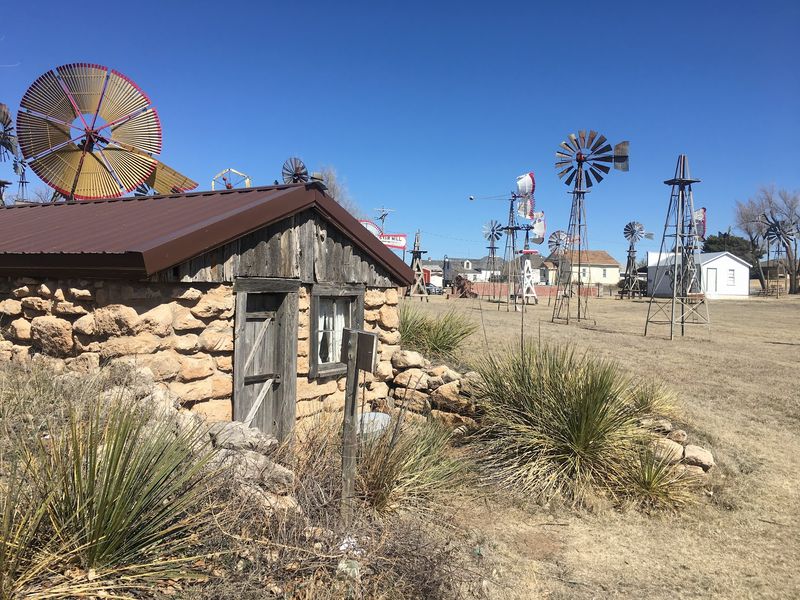
Windmills get top billing, but the park quietly doubles as a pioneer-life exhibit. Tucked among the towers sits a furnished half-dugout soddy, built the old way from sod and stone, the kind of shelter families actually lived in before lumber was easy to get.
There is also a relocated farmhouse you can step into, plus a recreated version of the 1904 George Schultz General Mercantile. The Mercantile doubles as the visitor center and gift shop, stocked with souvenirs and T-shirts.
Nearby, a large shed holds additional water pumps and windmill components under cover, which is handy if the weather turns on you mid-visit.
Worth knowing: the historic buildings are sometimes kept locked because artifacts have gone missing in the past. One traveler found the dugout closed, asked at the office, and a staff member came out with a ring of keys in 102 degree heat to open it up personally.
So ask. The worst answer is no, and the best answer is a private history lesson you were not expecting.
Tune Your Radio To 90.3 In The Parking Lot
Here is the trick that repeat visitors always pass along: before you get out of the car, tune your FM radio to 90.3. A short low-power broadcast plays a recorded history of the windmills and the park, running roughly five minutes.
It is a charmingly low-tech solution, and it works beautifully. People in RVs have parked, rolled the windows down, and listened to the whole thing without leaving their seats.
The recording covers what these machines did, where they came from, and why this particular field in Oklahoma ended up holding so many of them. Consider it your free audio guide.
If the visitor center happens to be closed when you arrive, the broadcast becomes even more valuable, since it fills in the context you would otherwise get from staff.
Signs along the highway side of the park add a bit of homespun personality too. One favorite mentions thirsty cows and sheep getting their water whenever the wind blew, which is a pretty tidy summary of the entire exhibit.
Volunteers, Caretakers, And The Windmiller Crowd
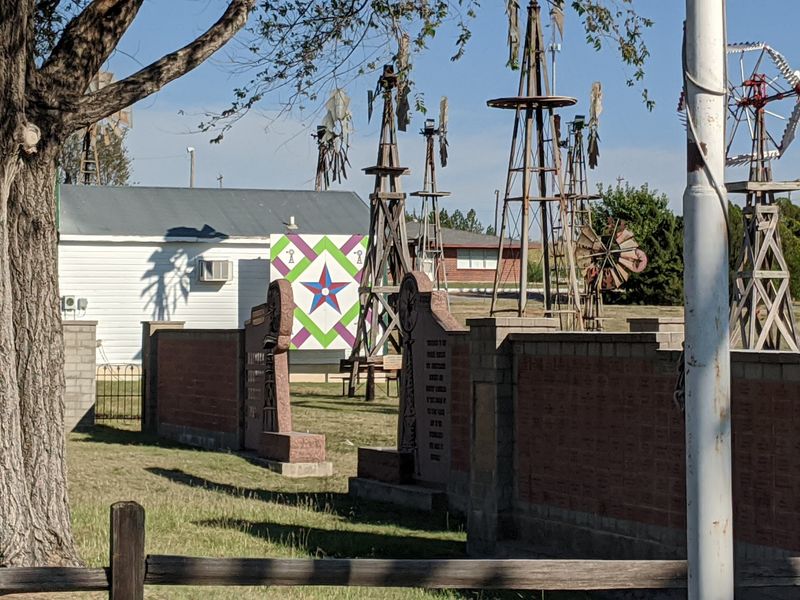
Machines this old do not restore themselves. Nearly everything standing in the park exists because Shattuck townspeople and volunteers decided these things were worth saving, then put in the hours to make it happen.
Windmill enthusiasts from around the country pitch in too. Shattuck hosts an annual International Windmiller’s Trade Fair, which brings collectors and restorers together and has helped keep the collection growing and maintained.
The human welcome gets mentioned constantly. Guests talk about kind staff, gracious volunteers, and caretakers who go far out of their way to explain what you are looking at.
More than a few travelers have received impromptu personal tours from whoever happened to be on site that day, complete with stories and memories that never made it onto any placard.
That personal touch is arguably the real attraction. A field of windmills is interesting on its own, but a local who can tell you which one came from where, and what it took to get it standing again, turns a quick stop into something you remember.
Be kind to them, sign the guest book, and leave a donation if you can.
Free Admission, Open Gate, Donation Box
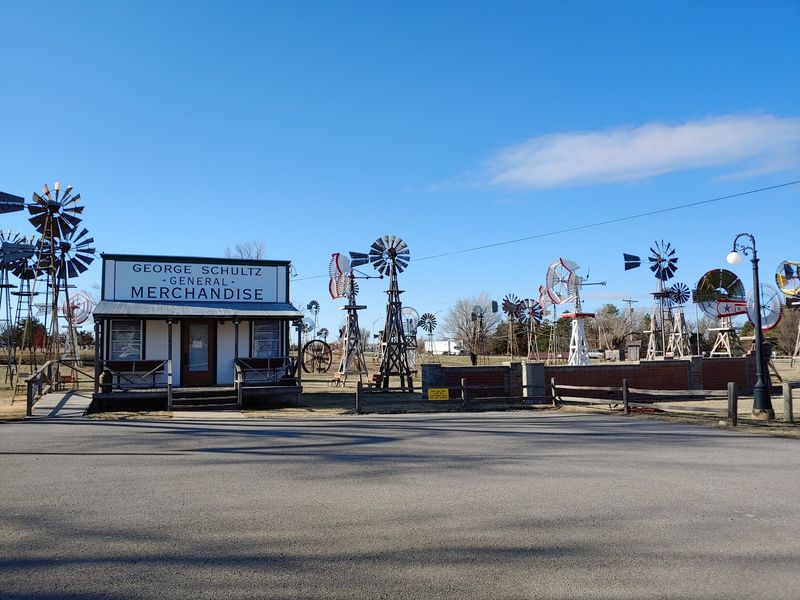
Cost is about as friendly as it gets: nothing. The outdoor park is free to walk, accessible daily from daylight to dark, with no gate, no ticket window, and no admission line.
A donation box and a guest book sit near the entrance, and travelers are encouraged to drop something in and note where they traveled from. Given that volunteers keep the whole place standing, a few dollars goes a long way.
The Mercantile and visitor center typically operate Monday through Saturday from 10:00 AM to 4:00 PM, though hours at small-town attractions can shift, so a quick call to 580-938-5291 may save you a surprise.
Restrooms are available at the gift shop when it is open, which matters on a long drive through country where services are spread thin.
For an Oklahoma road trip budget, this is nearly unbeatable value. You can spend an hour among century-old machinery, learn something real about how the plains were settled, and walk away having spent only whatever you chose to give.
Getting There From OKC, Tulsa, Or The Interstate
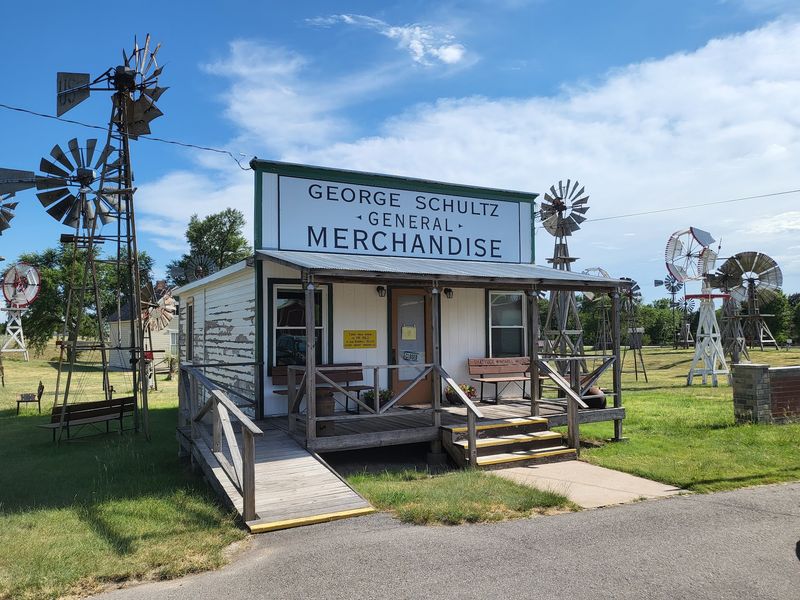
Shattuck is not on the way to much of anything, and regular visitors will tell you that is precisely the charm. The park sits at the junction of Highways 283 and 15 in Ellis County, close to the Texas line.
Coming from Interstate 40, the common route is to exit and head north on Highway 283. From Oklahoma City, plan on roughly three hours of driving through wheat country and small towns.
Tulsa travelers are looking at a longer haul, so it pairs best with a broader northwest Oklahoma loop rather than a quick day trip.
Parking is simple and free right off Main Street, with room for RVs and trailers. People pulling campers stop here regularly to stretch their legs.
Since you are already out this way, consider adding the Washita Battlefield National Historic Site to your itinerary. Several visitors suggest pairing the two, and it makes for a solid day of Oklahoma history without much backtracking.
Gas up before you go. Stations thin out fast in this part of the state.
Practical Warnings: Stickers, Heat, And Tall Grass
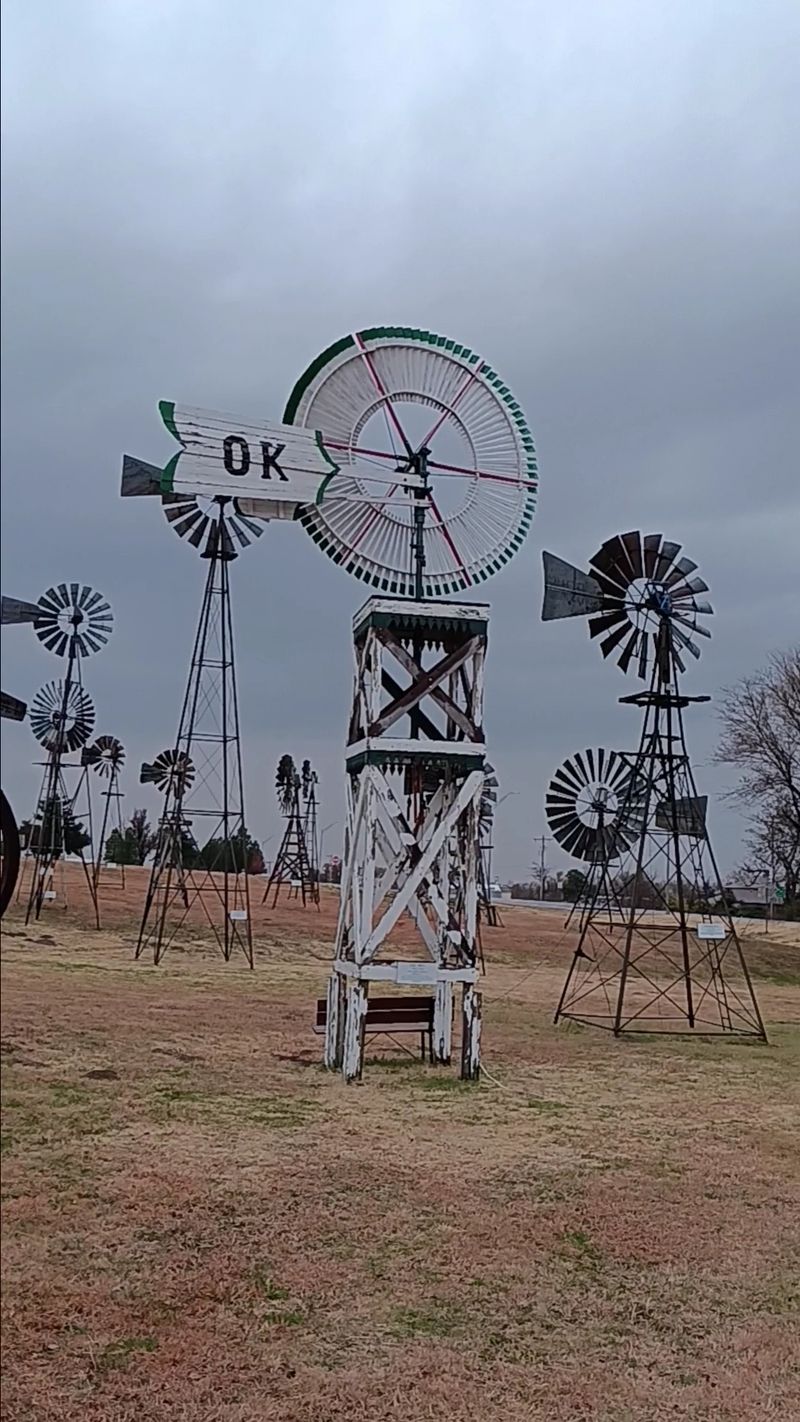
Sandburs are the unofficial mascot of any big Oklahoma field, and this one is no exception. Seasoned visitors recommend closed-toe shoes and a quick check of your socks and cuffs before climbing back into the vehicle, because those stickers travel home with you otherwise.
Summer heat is the other honest consideration. One guest described walking the grounds in 102 degree temperatures, which is genuinely common out here in July and August.
Morning and evening visits are far more comfortable. Spring and fall are ideal, with fall bringing cooler air and better light for photos.
Grounds upkeep can vary through the season. A visitor noted tall weeds and bugs during one stop, so long pants may be the smarter call during the growing months.
Bring water, since there is no concession stand and the nearest options are in town. Sunscreen and a hat help too, as shade is limited to whatever the towers throw.
None of this should scare anyone off. It is a field on the plains, and dressing for it makes the visit far more pleasant.
Who Gets The Most Out Of A Stop Here
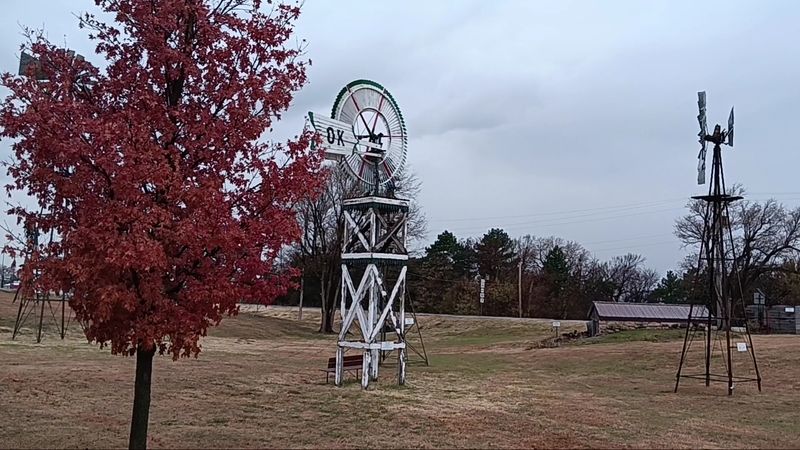
History-minded travelers are the obvious match, but the appeal stretches wider than that. Grandparents who grew up around farm equipment tend to light up here, and kids usually get a kick out of the sheer scale and the spinning blades.
Photographers find endless compositions. Road-trippers who deliberately avoid interstates consider this exactly the kind of Americana worth the detour.
Plan on forty-five minutes to an hour if you are moving at a relaxed pace, longer if someone opens the buildings for you or starts telling stories.
It is stroller-workable on the mowed paths in dry weather, though the ground is uneven in spots. Picnic tables and benches make it easy to eat a packed lunch under open sky.
Would I drive three hours just for this? Paired with the rest of northwest Oklahoma, absolutely.
On its own, it still delivers more than most free attractions anywhere.
What lingers afterward is the sound, that odd metallic chorus turning over a quiet field, doing exactly what it was built to do more than a century ago.
