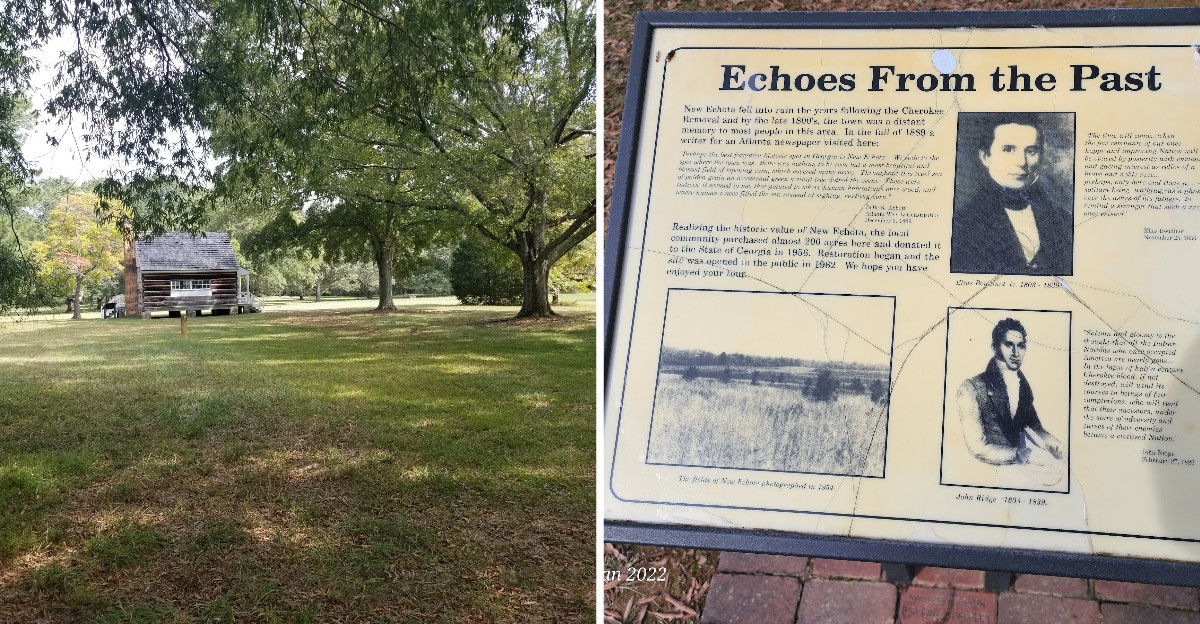
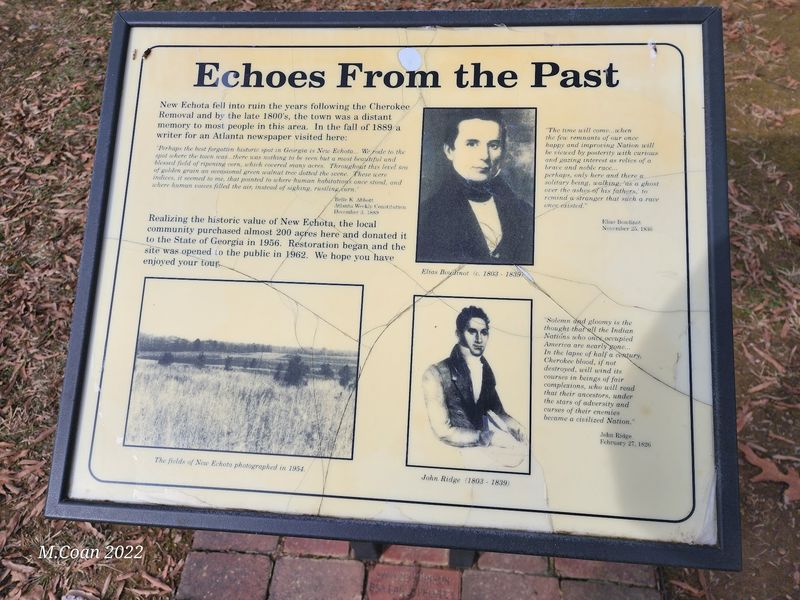
Shady paths and grassy fields in northwest Georgia look quiet now, but this spot was once the bustling capital of the Cherokee Nation. What was expected was maybe an hour of walking.
Instead, most of an afternoon disappeared between rebuilt government buildings and tall oaks. Back in 1828, a small print shop here produced the first newspaper published by Native Americans in the United States.
Its pages printed English and Cherokee in columns right next to each other, and a replica of that press still stands for visitors to see. Wind moves through the oaks, and the weight of what happened here settles in slowly.
The stories that stick are the ones worth sharing. This place holds more history than its quiet fields suggest.
A Capital Built With Big Ambitions
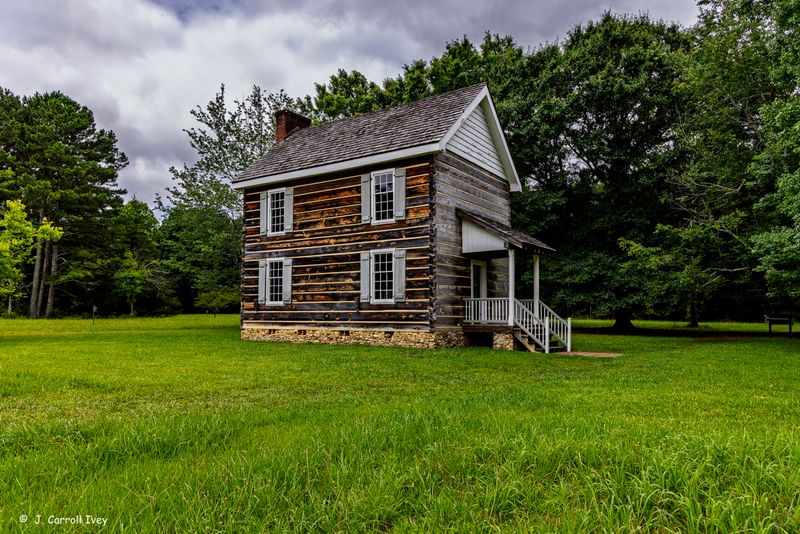
My first surprise came from the wide, open layout of the grounds. Back in 1825, the Cherokee National Council chose this spot in northwest Georgia to become its official capital, and they planned it with real care.
Streets, a town square, and public buildings were all part of the design.
Only two years later, in 1827, the Cherokee Nation adopted a written constitution. It set up three branches of government, much like the United States system, with lawmakers, judges, and a principal chief.
That was a bold move for a nation trying to prove it could govern itself on its own land.
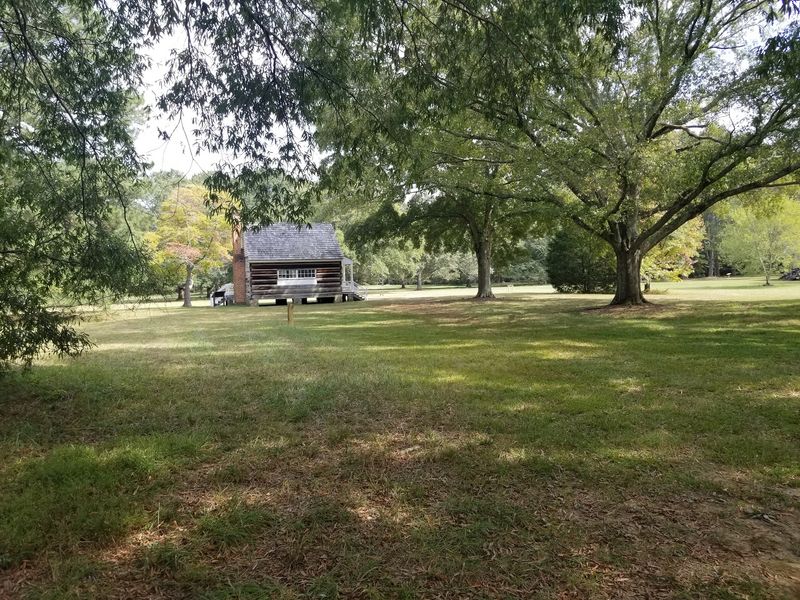
Today the fields are quiet, but little signs mark where homes, shops, and meeting places once stood. I found myself pausing at each one, trying to picture neighbors trading news on a busy afternoon.
Some spots are simply open grass now, which somehow makes the imagining easier.
Think of it as a town meant to last for generations, built by people who fully expected to stay.
A good tip is to grab a map at the visitor center before you head out. The buildings are spread apart, and knowing the layout helps you follow the story in order.
Wear comfortable shoes too, because the site is bigger than it looks from the parking lot.
The Print Shop Where News Was Born
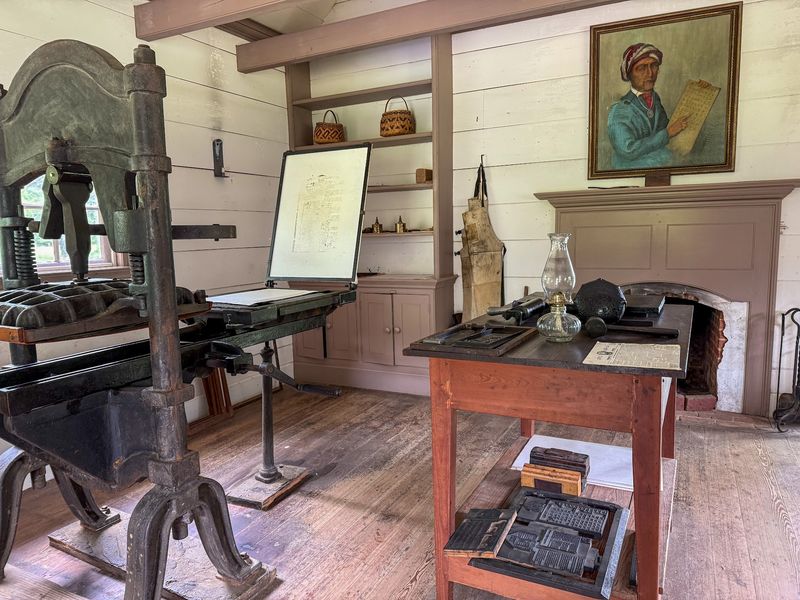
Ink, wood, and heavy iron. Those are the three things I noticed right away inside the rebuilt print shop, a simple building that tells one of the most exciting stories at the site.
On February 21, 1828, the very first issue of the Cherokee Phoenix came off a press right here in New Echota. It was the first newspaper published by Native Americans in the United States, and the first printed in a Native American language.
The paper came out weekly, carrying laws, notices, news stories, and even prayers.
The General Council of the Cherokee Nation set up the printing office, and missionary Samuel Worcester helped get it running. Picture workers setting tiny metal characters by hand, one at a time, then pressing each sheet with muscle and patience.
It was slow, careful work, and every page mattered.
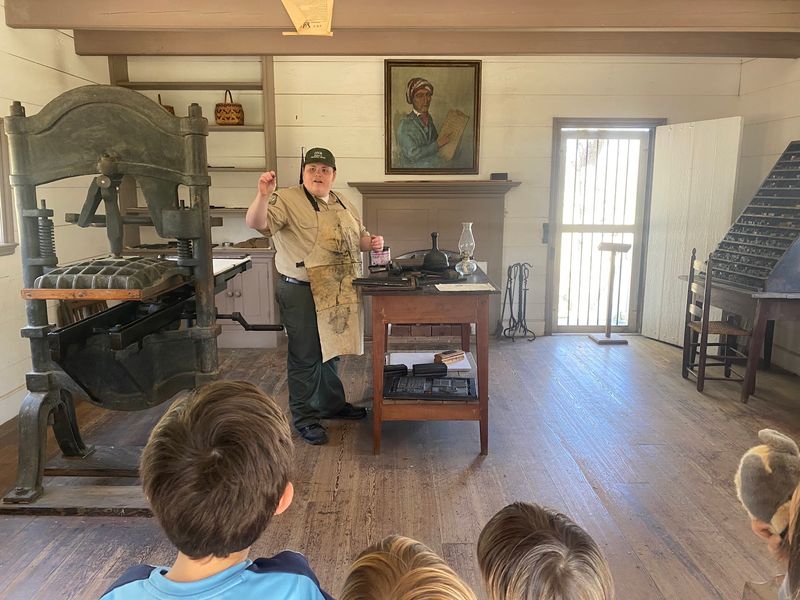
The replica press inside gives you a real sense of how much effort went into a single issue. During some guided tours, rangers show how the printing process worked, which is a treat if you enjoy old machines.
Kids especially love watching the lever come down.
Before leaving, take a close look at the sample newspaper pages on display. Seeing the columns lined up so neatly makes the whole achievement feel very real and very human.
English and Cherokee, Side by Side
Honestly, I stared at one printed page for a long time. On the left sat familiar English words, and right beside them ran rows of Cherokee characters that looked like a code I badly wanted to crack.
The Cherokee Phoenix printed many of its stories in parallel columns, one language next to the other. The paper’s first plan promised that matters of common interest would appear in both languages this way.
That choice meant Cherokee readers could follow news in their own words, while English speakers across the country could read the same stories.
Why did this matter so much? The paper became a voice for the Cherokee Nation at a tense moment, when Georgia and the federal government were pushing hard for removal.
Printing in English let the Cherokee speak directly to the wider public and explain their side.
It worked, too. Subscribers signed up from across the United States and even from Europe, which is pretty impressive for a small weekly paper printed in the Georgia hills.
When you visit, try comparing a Cherokee line with its English partner and see if you can spot repeating symbols. It turns into a fun puzzle, and it helps you appreciate how clever the whole setup really was.
Bring a notebook if you like jotting things down.
Sequoyah’s Brilliant Writing System
Here is a fact that blew my mind: the Cherokee writing system used in the newspaper was created by one man who could not read or write any language before he started. His name was Sequoyah, and he finished his syllabary around 1821.
Instead of letters for single sounds, a syllabary uses a symbol for each syllable. Sequoyah’s version had 86 characters, and it was so practical that many Cherokee people learned to read it in a short time.
Reading and writing spread quickly through the Nation, almost like a wave.
Without that system, the Cherokee Phoenix could never have existed in two languages. Special metal type had to be made for every single character, so printers could arrange them into words and sentences.
That was a big job, since each symbol needed its own little block.
I spent a few minutes at the exhibits tracing the shapes with my eyes. Some look a bit like English letters, while others curl and loop in ways that feel totally new.
It is a good reminder that language can be invented, shaped, and shared by ordinary people with extraordinary ideas.
If you have young readers with you, challenge them to find a favorite symbol. Asking them to guess its sound makes the history feel playful instead of dusty.
Council House and Supreme Court
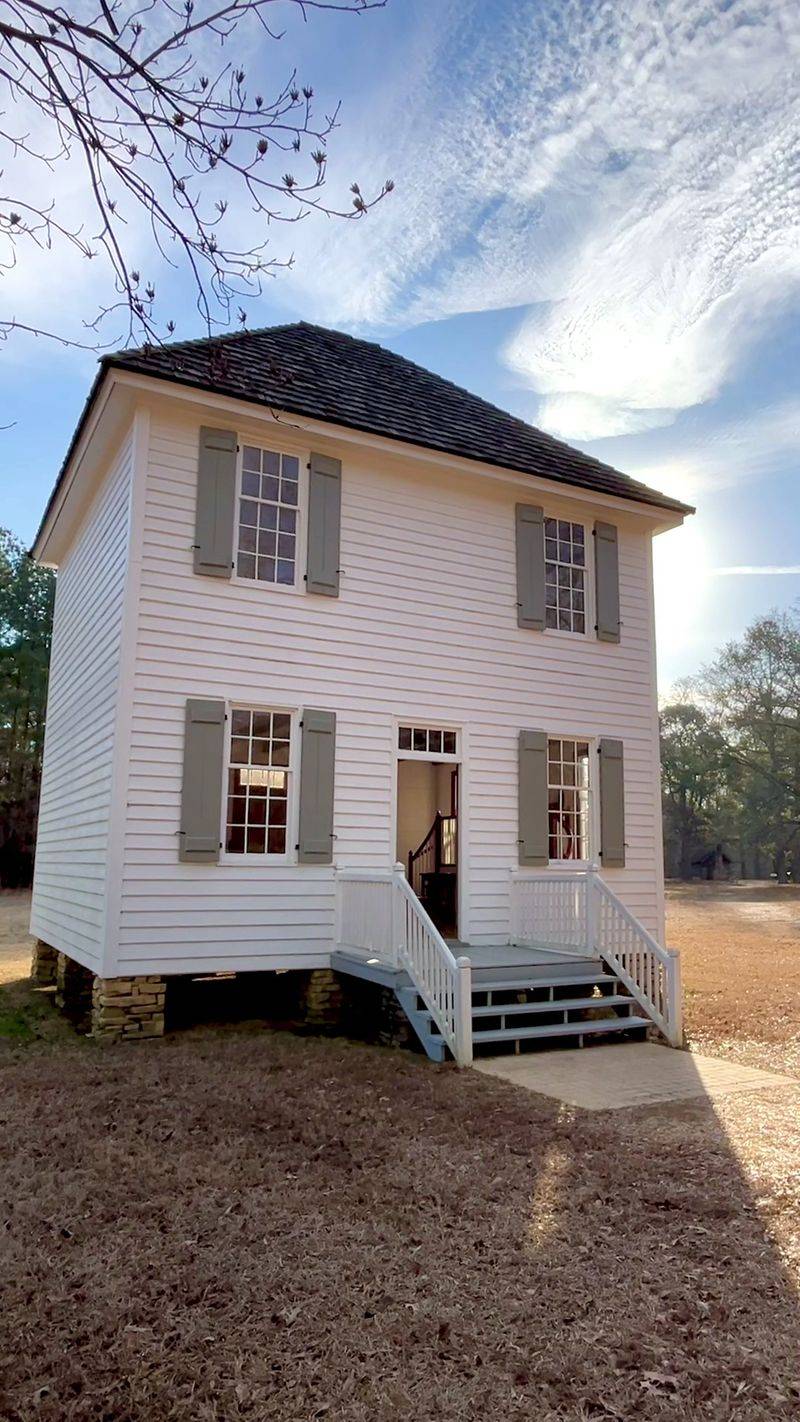
Two tall buildings caught my eye as I followed the path, and both tell a story about serious government. The Council House and the Supreme Court building are reconstructions, built to show how the Cherokee Nation ran its affairs in the 1820s and 1830s.
Inside the two-story Council House, lawmakers once debated and passed laws for the whole Nation. Nearby, the Supreme Court handled legal cases, showing that the Cherokee had judges, rules, and a clear system of justice.
It is a lot like what you would find in a state capital today, just on a smaller and more personal scale.
What struck me most was how organized everything felt. These were not temporary shelters; they were public buildings made to serve a nation that planned to stay for a very long time.
Around the grounds you will also spot farm buildings like smokehouses, corn cribs, and barns. There is also an old store dating to 1805 that was moved to the site.
Together, they show a busy farming community where people worked as planters, merchants, and leaders.
Some buildings are locked unless you join a guided tour, so ask about tour times at the visitor center. Steps can be steep in a few spots, so take your time climbing up for a look.
Where the Trail of Tears Began
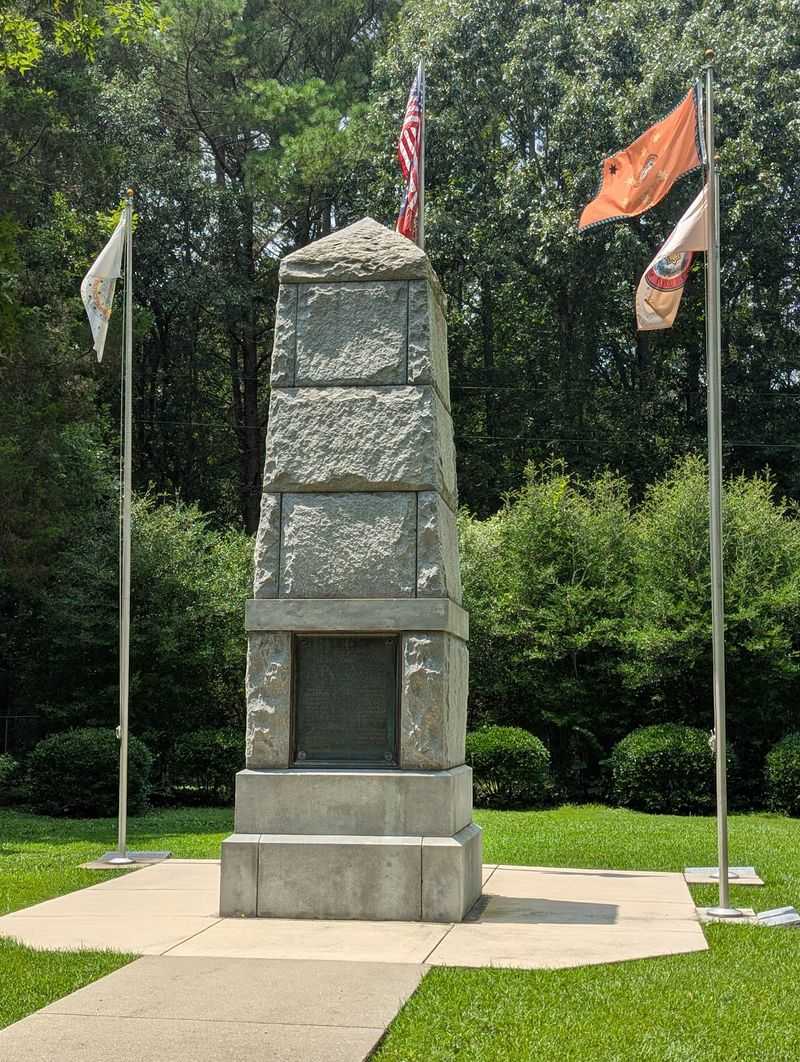
The mood shifted for me here, and it should. New Echota is where a hopeful capital turned into the starting point of one of the saddest chapters in American history.
In 1835, a small group of Cherokee signed the Treaty of New Echota at this site. Most of the Cherokee Nation never agreed to it, and their leaders protested strongly.
Still, the United States used the treaty to force the Cherokee off their homelands.
The Cherokee Phoenix had already stopped printing in 1834, largely because money was running out. In 1835, Georgia forces seized the press and scattered the type, silencing the voice that had spoken so boldly for years.
By 1838, thousands of Cherokee people were rounded up and sent west on the long, dangerous journey known as the Trail of Tears. Many lost their lives along the way.
Worcester later followed the Cherokee west and set up printing again in what is now Oklahoma.
The site handles this history honestly, without softening the hard parts. I found a quiet bench and just sat for a while, thinking about everything that was lost and everything that survived.
Give yourself some time for reflection here. It turns the visit from a simple history lesson into something you will carry with you long after you leave.
Planning a Visit and Exploring the Trails
My best advice came from watching the film first. The visitor center shows a 17-minute movie that sets the scene beautifully, and the exhibits nearby explain Cherokee life, government, and the newspaper in easy-to-follow displays.
After that, head outside and explore at your own pace. A 1.5-mile nature trail winds through tall, mature trees to New Town Creek and a small beaver pond, and it is gentle enough for most kids and adults.
Birdsong, rustling leaves, and the soft trickle of water make it a peaceful break from all the history.
A few practical tips will help. The site is open Tuesday through Saturday from 9 a.m. to 5 p.m. and Sunday from 1 p.m. to 5 p.m., and it is closed on Mondays.
Hours can change in winter, so check the Georgia State Parks website before you go.
Wear sturdy shoes, bring water, and stay on the paths to avoid ticks in warmer months. There is a shaded picnic area if you want to pack a lunch.
Leashed pets can join you on the grounds, but they are not allowed inside the buildings.
Plan on spending about two or three hours to see it all without rushing. Guided tours, when offered, are worth planning around if you want to get inside the locked buildings.
Address: 1211 GA-225, Calhoun, GA 30701
