Gates from the White House rising beside a quiet Ohio estate road are the first surprise on this trip, and pieces of the Berlin Wall turn up farther along in two very different places. These objects make a familiar route feel full of discoveries, each one carrying a story that started somewhere else.
A giant mining bucket, a pioneer home sheltered indoors, and fragments of a divided city all sit within driving distance of one another. Communities here keep history close, placing it along roadsides and in small parks where anyone can stop and look.
Curiosity is the only requirement, because the oddest sights often have the most to say. Ohio does not always announce its treasures loudly, but they are there, waiting for someone to notice.
1. White House Gates at Spiegel Grove, Fremont
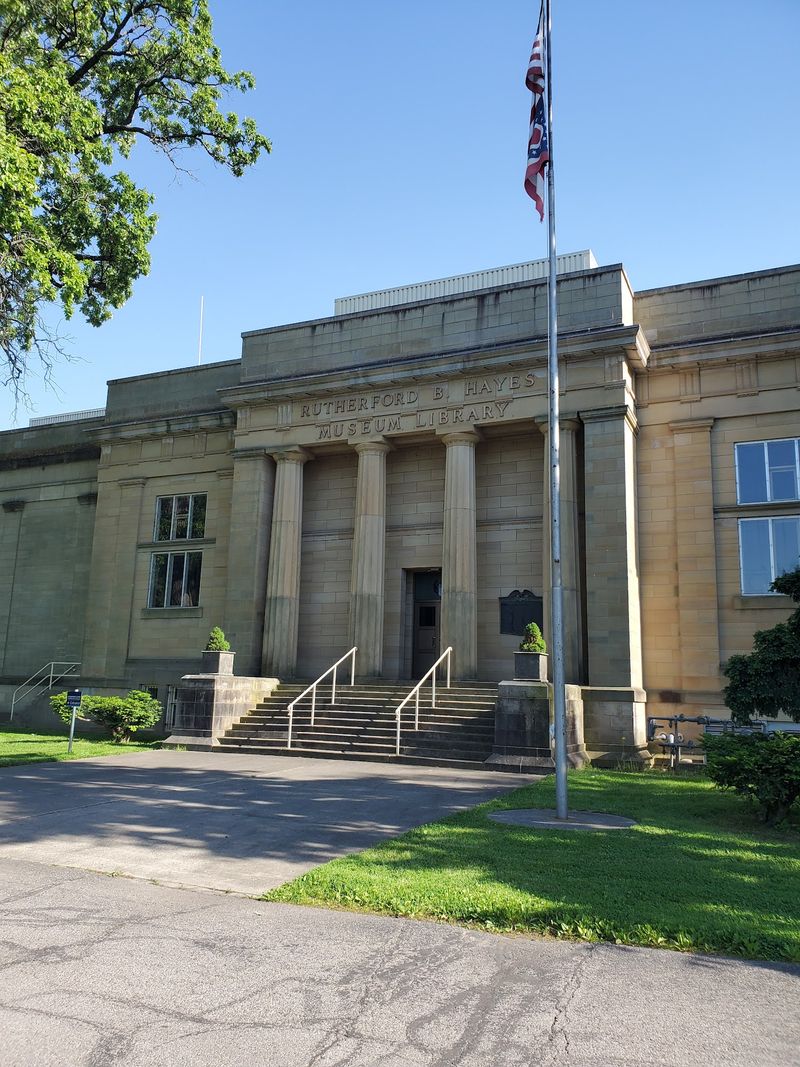
I had barely reached the tree-lined entrance when the trip took a presidential turn. The gates here once guarded an entrance to the White House grounds, yet now they welcome visitors to Rutherford B.
Hayes’s Ohio estate. Their ironwork looks at home among the trees, which makes their journey from Washington all the more surprising.
Beyond them lies Spiegel Grove, the 25-acre property where Hayes lived. He was the nineteenth U.S. president, but the grounds also tell a quieter story about the place he called home.
Take a moment before heading inside to study the gates and the road beyond them. It is easy to rush past an entrance when the museum is the goal, and that would mean missing one of the estate’s strangest artifacts.
For me, the best part is the change in scale. A gate associated with national power now opens onto lawns and shade, where a visitor can pause without a crowd pushing forward.
Think about the many ordinary arrivals a gate witnesses, then picture this one in its earlier setting. Its move to Fremont gives the estate an unexpected link to the capital while keeping a piece of history in plain sight.
If you are traveling with children, ask them what they would have guessed the gates once guarded before telling them.
Address: Spiegel Grove, Fremont, Ohio
2. A Berlin Wall Slab on a Bexley Campus
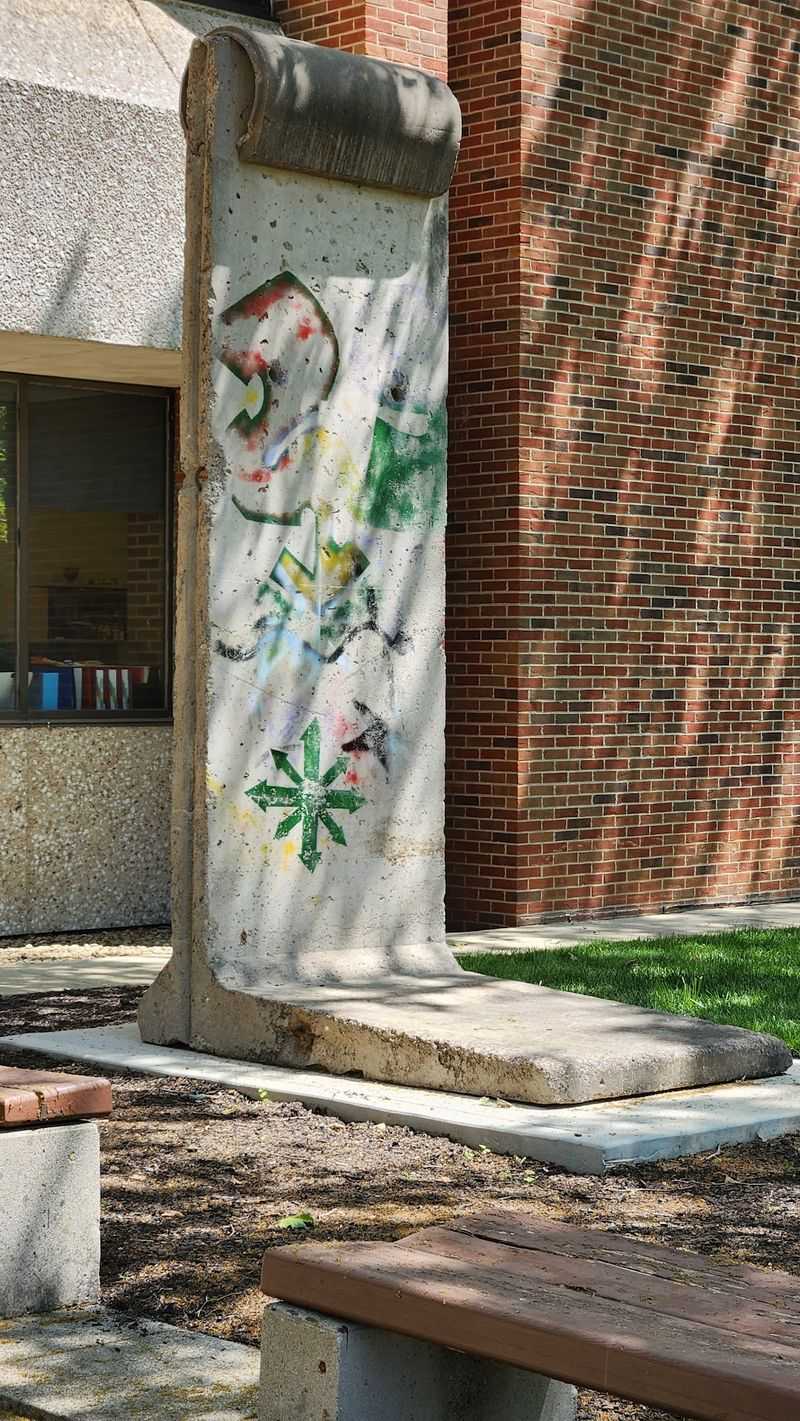
College walkways usually lead me past bikes, trees, and students heading to class. Near Capital University’s Blackmore Library, one leads to a towering piece of the Berlin Wall.
Its concrete face brings a divided German city into an Ohio campus setting, where it is hard to mistake for ordinary public art.
The slab came to Ohio for the 1992 AmeriFlora exhibition and later found a long-term home at the university. It first stood inside the library before moving outdoors near its entrance.
Look at both sides if you can: graffiti covers one face, while the other is bare. That contrast reflects life beside the Wall, where one side was accessible to people who painted it and the other faced a heavily guarded area.
The shift from Berlin to Bexley makes this stop especially useful for younger travelers learning history. Rather than memorizing a date alone, they can point to a physical clue and ask why the two faces look so different.
Give the piece a little space in your schedule, even if you only planned a quick campus stop. Its height makes an immediate impression, but the surface rewards slower attention.
The university’s ties to the area’s German community add another reason this unlikely home fits.
Address: 2309 E Main Street, Columbus, Ohio
3. A Second Berlin Wall Piece by the Ohio River
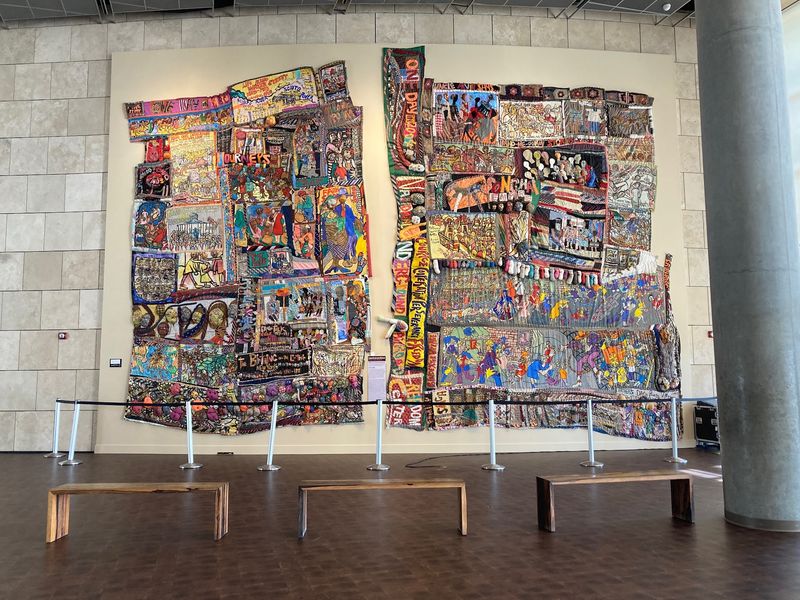
The river caught my eye first, but a piece of concrete outside the Freedom Center made me stop. Another fragment of the Berlin Wall stands here in Cincinnati, far from the street where it once divided people.
Its setting asks visitors to think beyond one country and one moment in history.
The museum shares stories of the Underground Railroad, the fight against slavery, and the continuing struggle for human rights. Placing a Wall segment outside it connects different barriers without pretending those experiences were the same.
People in Berlin lived with a guarded border; people escaping slavery in America faced their own dangers and cruel laws. The object offers a starting point for talking about what freedom means and who has been denied it.
Spend time with the fragment before going inside, then return to it afterward if you can. The stories in the museum may change what you notice about a plain slab of concrete.
Nearby, the Ohio River gives the visit another layer, since crossing it was an important step for many people seeking freedom. If children are with you, let them describe what they see before explaining the larger history.
Simple observations can lead to careful, worthwhile questions.
Address: 50 E Freedom Way, Cincinnati, Ohio
4. The Merchant Ball’s Slow Mystery in Marion
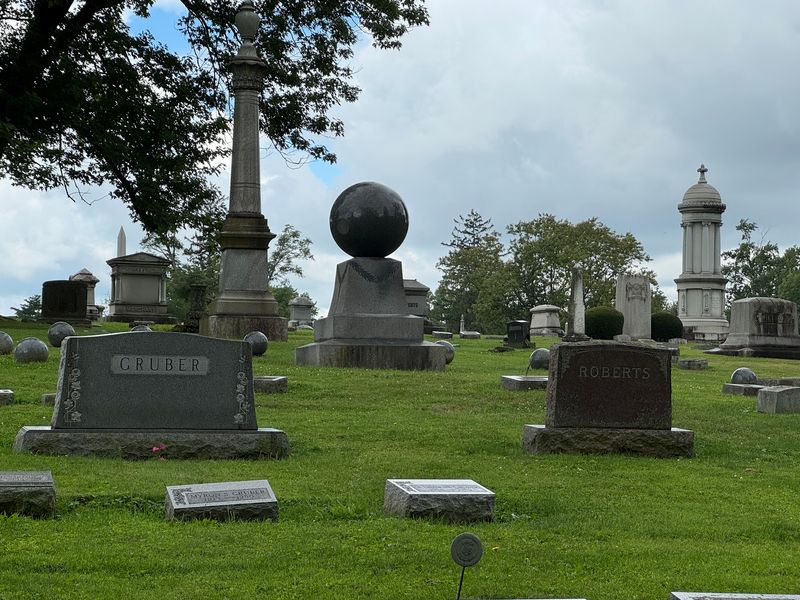
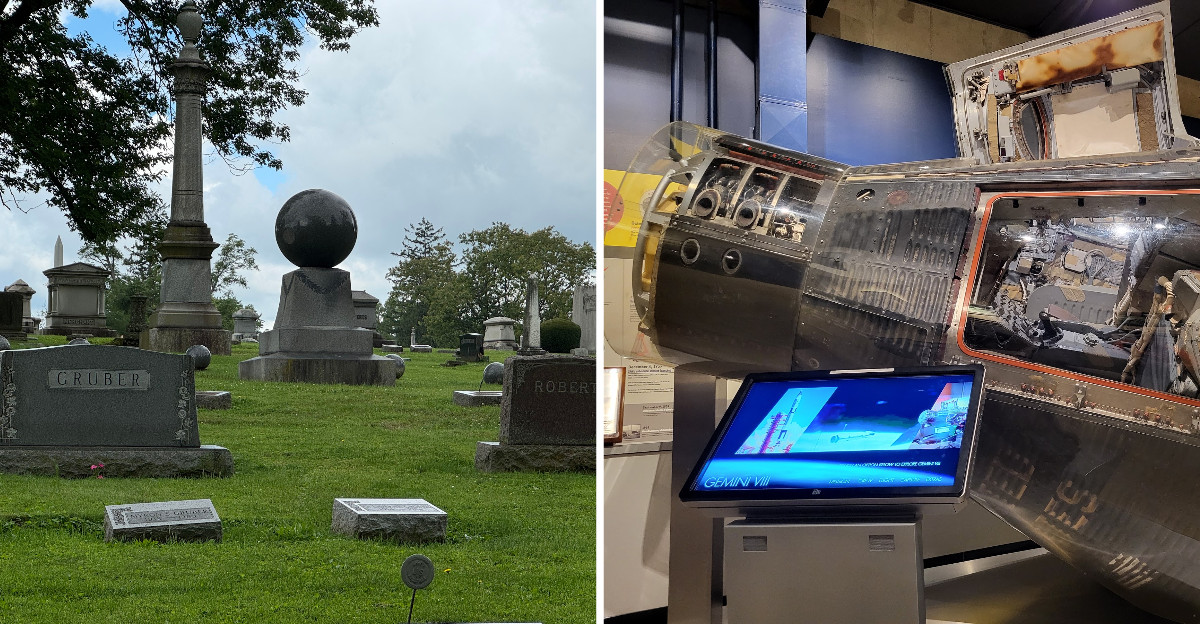
A polished stone ball would be unusual enough in a cemetery, but the Merchant Ball has another trick. This massive granite sphere appears to have slowly shifted on its pedestal over time.
I would have walked past it thinking it was perfectly still if its strange history had not made me look twice.
The Merchant family erected the monument in 1886. Within a few years, people noticed that an unpolished patch, once hidden against the base, had become visible.
The ball weighs about 5,200 pounds, so its apparent movement has inspired plenty of guesses. None gives a visitor a reason to expect to see it turn during a brief stop.
This is a mystery measured over years, not minutes.
Find the monument with the same care you would bring to any cemetery visit. Stay on paths where possible, leave nearby markers untouched, and keep voices low.
The fun is in noticing how an object made to last can still prompt questions about small changes. Look at the fit between sphere and pedestal, then imagine how patiently someone must have watched to spot a difference.
Marion’s quieter setting suits that kind of attention. There is no need to solve the puzzle to enjoy it; the ball is memorable because an ordinary memorial became a remarkably odd local landmark.
Address: 620 Delaware Ave, Marion, Ohio
5. Big Muskie’s Bucket in the Open Air
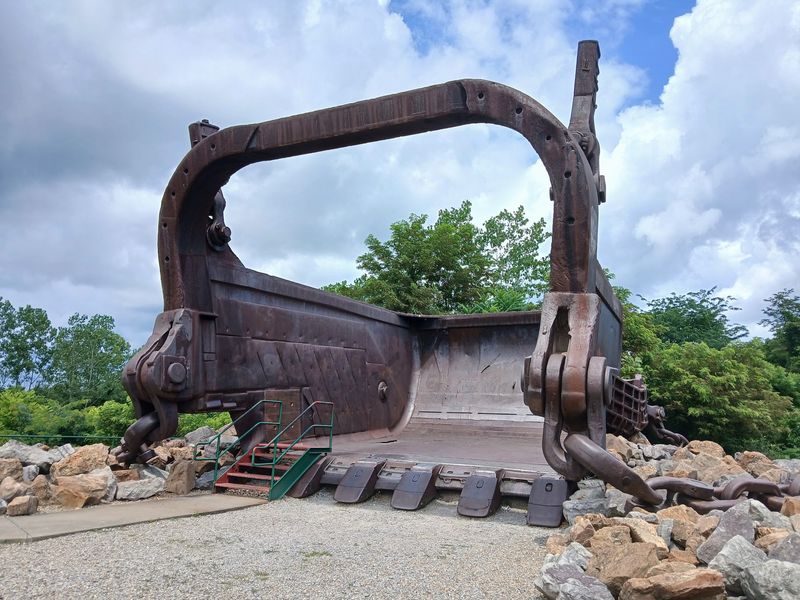
Nothing prepared me for a mining bucket large enough to make the surrounding ground look miniature. Big Muskie’s 220-cubic-yard bucket sits at Miners’ Memorial Park, where visitors can finally judge its size without seeing the rest of the machine.
It once belonged to a giant walking dragline used in southeastern Ohio’s coalfields.
Big Muskie operated from 1969 to 1991, moving earth on a scale that is difficult to picture from a roadside description. The machine was later dismantled, but the bucket remained.
Its empty weight was about 460,000 pounds. Even that number feels abstract until you compare the steel opening with something familiar, such as the space a school bus needs.
Give yourself room to walk around the display rather than viewing it from only one angle. The curved metal, heavy edges, and wide mouth reveal more about the work it did than a distant photo can.
The park also honors miners, so the bucket is more than a giant curiosity. It points toward the people who worked in the region and toward a landscape shaped by mining and later reclamation.
On this part of an Ohio trip, the open sky adds to the effect: an industrial tool has become a place to pause and think about the ground beneath your feet.
Address: State Route 78, McConnelsville, Ohio
6. The Shenandoah Propeller Story in Caldwell
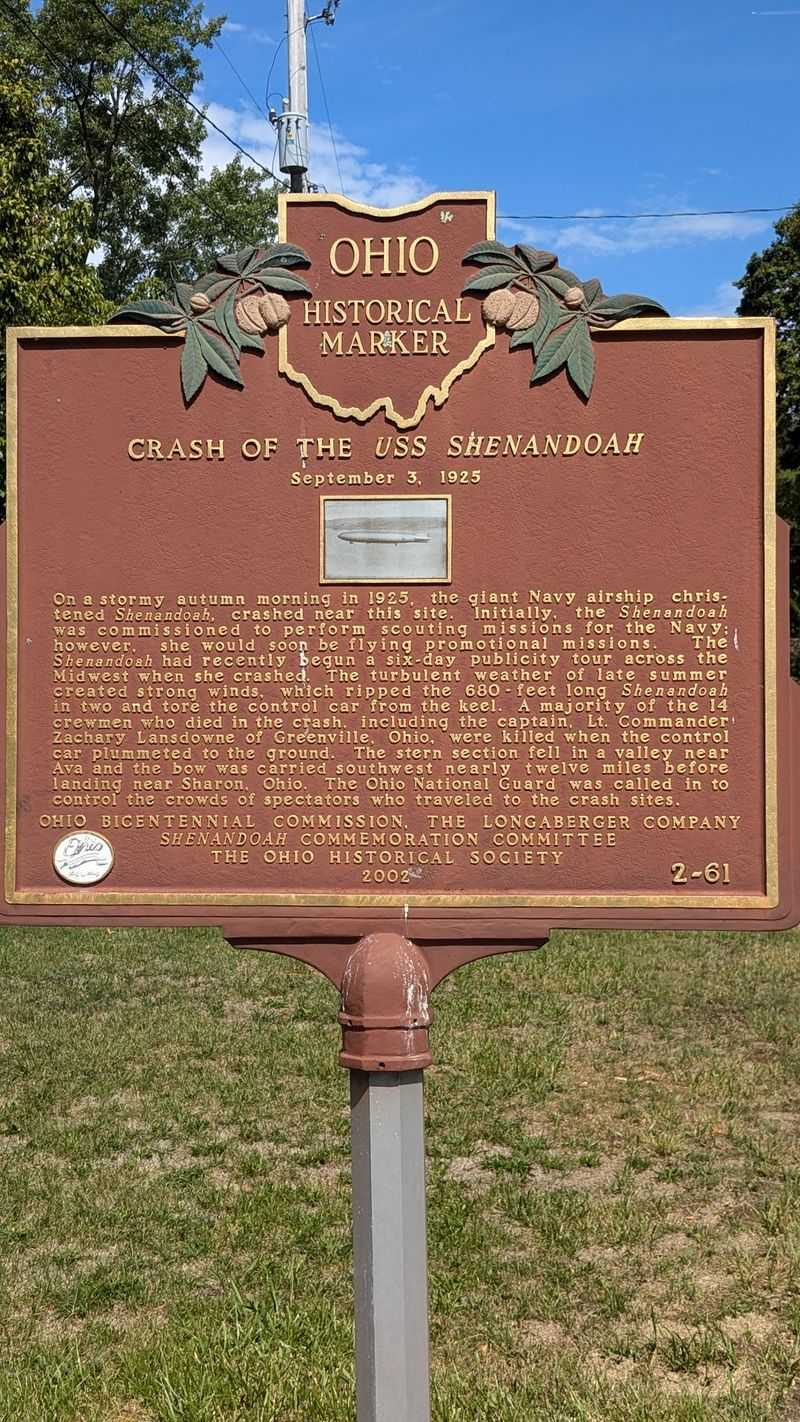
I came to Caldwell looking for an airship story in an unlikely place: a county courthouse. The USS Shenandoah, a Navy airship driven by propellers, broke apart during a storm over Noble County on September 3, 1925.
Fourteen crew members passed away. That history explains why the disaster remains part of the county’s public memory.
There is an important detail to check before making the trip. Although a Shenandoah propeller is sometimes named as a courthouse attraction, the supplied information confirms a courthouse mural depicting the airship’s commanding officer, Lieutenant Commander Zachary Lansdowne, not a propeller on display.
I would not plan a visit around seeing the propeller without first asking the courthouse or a local historical group to verify where it is. The distinction matters when an artifact is the reason for a stop.
Even without that object confirmed, Caldwell gives travelers a way to understand why the Shenandoah’s loss mattered here. Memorials and historical markers elsewhere in Noble County recall the crash and its crew.
At the courthouse, the mural offers a human point of focus amid the facts about the storm. Treat the building as a working public space, check access before visiting, and leave time to consider how a national aviation tragedy became a local story.
Address: 350 Courthouse Square, Caldwell, Ohio
7. McKinley’s Carriage Takes a Museum Stop
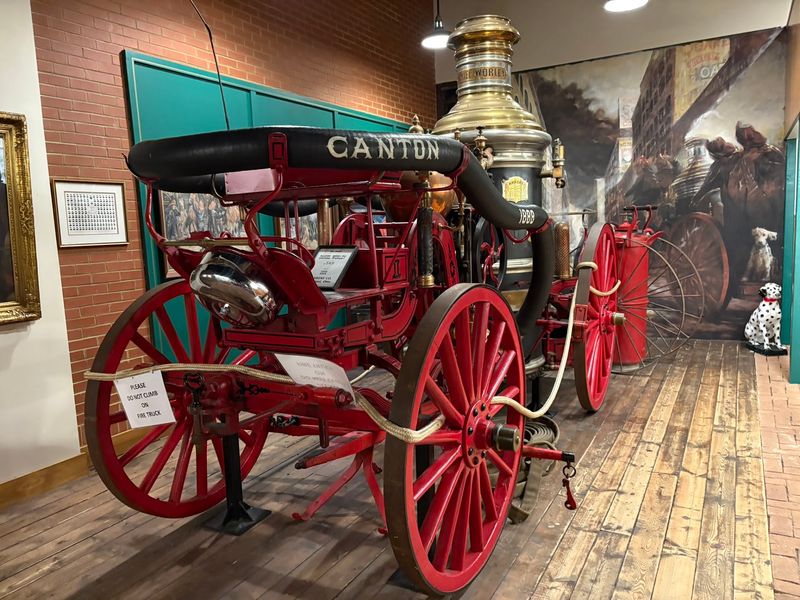
The carriage caught my attention because it makes a president’s travel look wonderfully slow. At the William McKinley Presidential Library and Museum, McKinley’s presidential carriage offers a close look at transportation from his era.
Unlike a portrait, it asks you to picture the practical parts of a public day: arriving, leaving, and being seen along the way.
McKinley was an Ohioan and the twenty-fifth U.S. president. His carriage belongs to a larger collection that also tells the story of Stark County.
That mix gives a visitor useful context. A national figure did not exist apart from a hometown, and a vehicle used in public life can feel more immediate than a long list of dates.
Notice the passenger space and the details of its construction, then think about how different a journey would feel without a modern car.
Canton has its own strong connection to McKinley, so the carriage is less out of place than it first seems. The surprise is finding such a formal presidential object resting indoors, where you can slow down and study it rather than watch it pass.
Leave enough time to connect the display with the museum’s other history instead of treating it as a single photo stop. For younger visitors, comparing this ride with today’s travel can open an easy conversation about change.
Address: 800 McKinley Monument Drive NW, Canton, Ohio
8. Moon-Age Objects in Armstrong’s Hometown
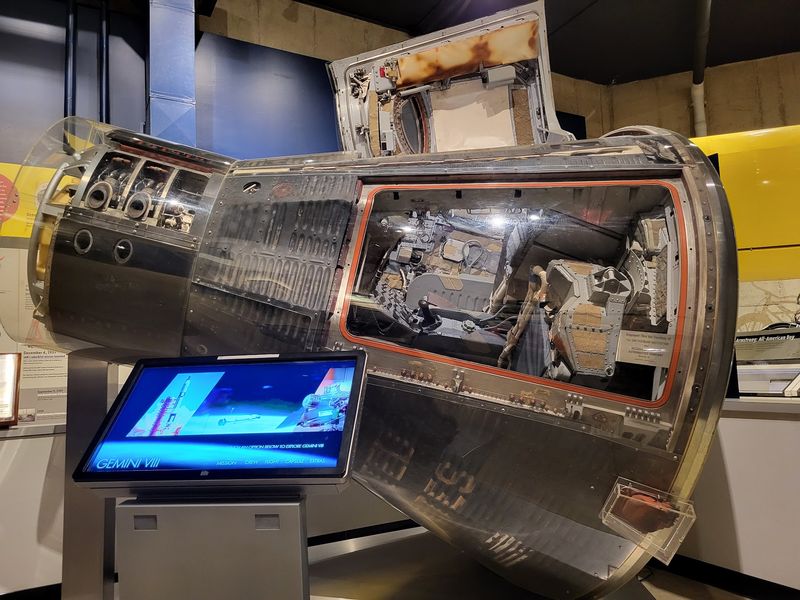
Wapakoneta seems like a wonderfully down-to-earth place to find pieces of the space age. The Armstrong Air & Space Museum honors hometown astronaut Neil Armstrong with objects tied to the flights that carried people beyond Earth.
Its striking building hints at what is inside, but the artifacts make the huge distances feel surprisingly personal.
Among the exhibits are Armstrong’s Gemini and Apollo spacesuits, a moon rock collected during Apollo 11, and the original Gemini 8 spacecraft he piloted. Gemini 8 completed the first docking of two spacecraft in orbit.
That achievement took careful work long before Armstrong’s famous walk on the moon. Space food and other flight items add smaller details that are easy to imagine handling, even if the journeys themselves remain hard to grasp.
I would begin with one object and ask what job it had to do. A suit had to protect a person; a spacecraft had to bring its crew home.
That simple approach helps children look past the shine of the display and toward the risks and planning behind it. Give each case a little time, especially if you are traveling between other Ohio stops.
Here, a quiet town and a piece of lunar history share the same room, making the story of flight feel close enough to examine.
Address: 500 Apollo Drive, Wapakoneta, Ohio
9. A Pioneer House Kept Inside in Marietta
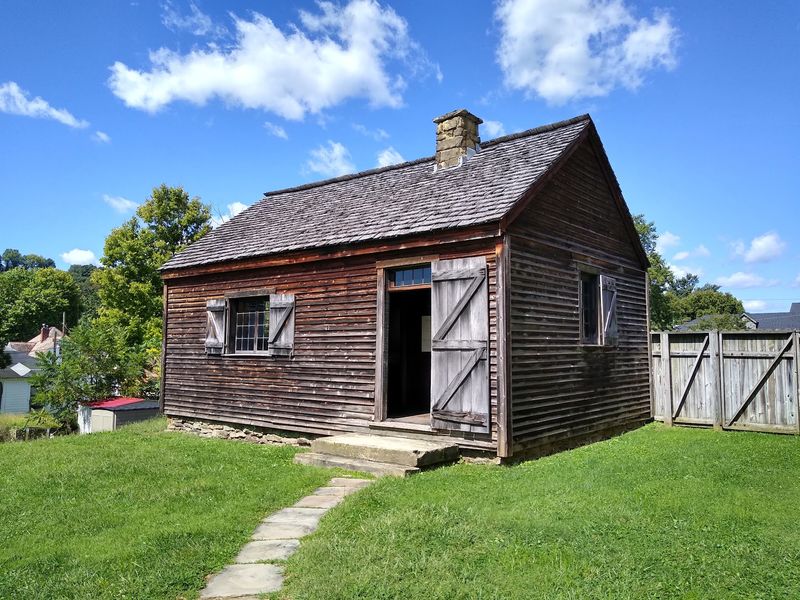
I expected rooms full of pioneer objects in Marietta, not a whole pioneer house protected inside a museum. The Rufus Putnam House stands within Campus Martius Museum, making the building itself the exhibit.
It is a rare chance to consider a home at full size instead of trying to piece one together from tools and drawings.
The house is the only surviving dwelling from the original Campus Martius fortification, built during the early settlement of the Northwest Territory. Rufus Putnam, an important figure in Marietta’s founding, lived there.
Unlike a house moved in from elsewhere, it remains on its original site. The museum, constructed around the historic area, now shelters it from the weather and gives visitors a way to see its structure up close.
Take time to notice the size of the rooms and the materials around you. A doorway or wall can say more about daily life than a long timeline, especially when you imagine carrying supplies, keeping warm, and sharing limited space.
This stop also calls for care in how the region’s history is told: settlement brought conflict with Native peoples already connected to this land. The preserved home is remarkable, but it is only part of that larger story.
Its unlikely indoor setting helps keep those questions close.
Address: 601 2nd Street, Marietta, Ohio
