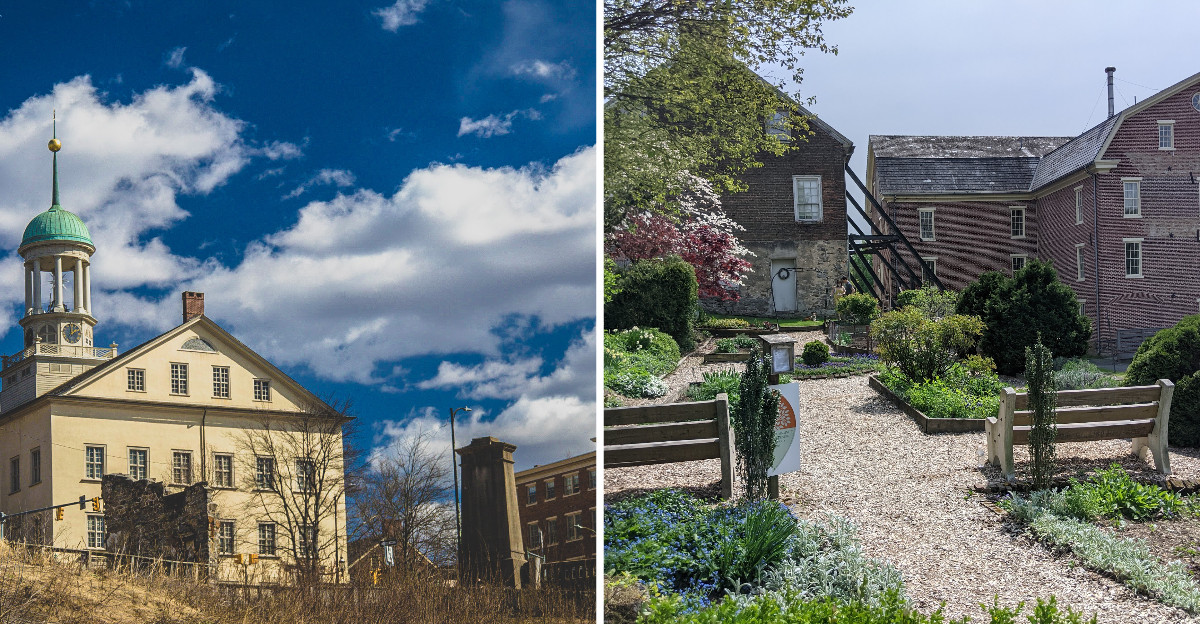
Water runs steady and cold under a stone bridge, even on a warm afternoon. Ten acres of mills, ruins, and shaded footpaths sit just below a main street in Pennsylvania.
A squat limestone building with a red tile roof once turned the machinery that gave America its first pumped public water supply. Wooden logs, bored out by hand, carried spring water uphill to the town in 1762.
Sitting on a bench near the creek for longer than planned, watching the water do the same thing it did for the Moravians almost three centuries ago, felt like a lesson without a lecture. The mill buildings are quiet now, but the water still moves exactly as it always has.
Paths wind past stone foundations and restored workshops, and the whole place feels like a park that happens to hold a revolution in engineering. It is the rare historic site that teaches you something without ever raising its voice.
The 1762 Waterworks and Its Red Tile Roof
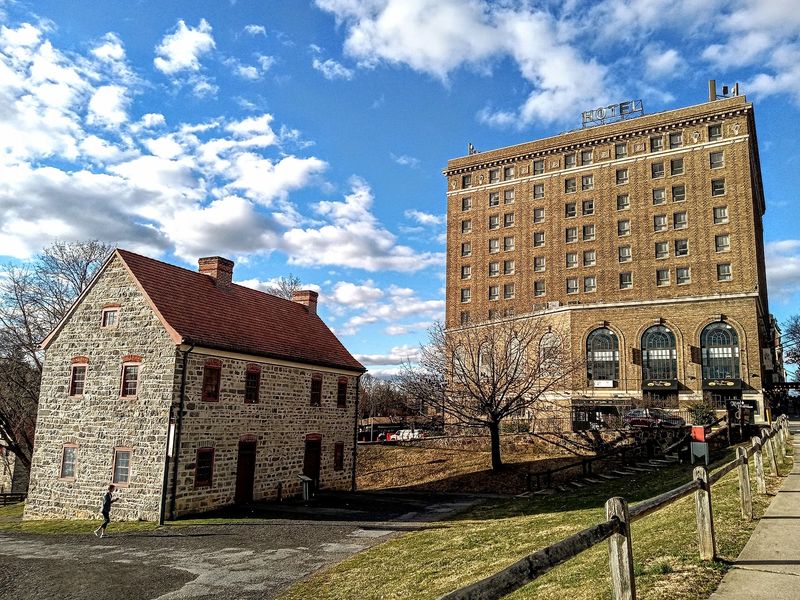
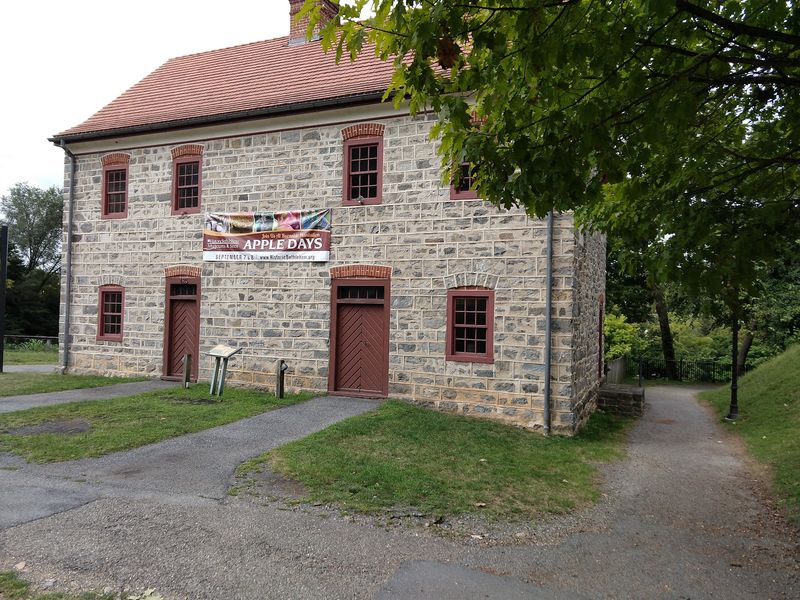
My eyes went straight to the roof. Bright red clay tile on a small limestone building, sitting low in the floodplain of the Monocacy Creek, looking more like something from a European village than a Pennsylvania town.
Inside that 2.5-story structure, roughly 24 feet square, sat the machinery that made Bethlehem famous among engineers and even common folks. Three single-acting iron pumps, cast at the nearby Durham Furnace, pushed spring water uphill through wooden pipes toward a collecting tower.
Service began on July 6, 1762, drawing from a spring that produced around 800 gallons a minute. That is a genuinely wild number for a colonial settlement of a few hundred people.
The building itself is currently closed to visitors, which surprised me at first. Then I realized how much you can still read from the outside: the thick stone walls, the position right against the water, the way everything was built for function rather than show.
Guided tours fill in the details you cannot see through the windows. I would recommend timing your visit around one, because the story of how water got from creek level to hilltop makes far more sense when someone walks you through it step by step.
Bored Hemlock Logs and The Original Plumbing
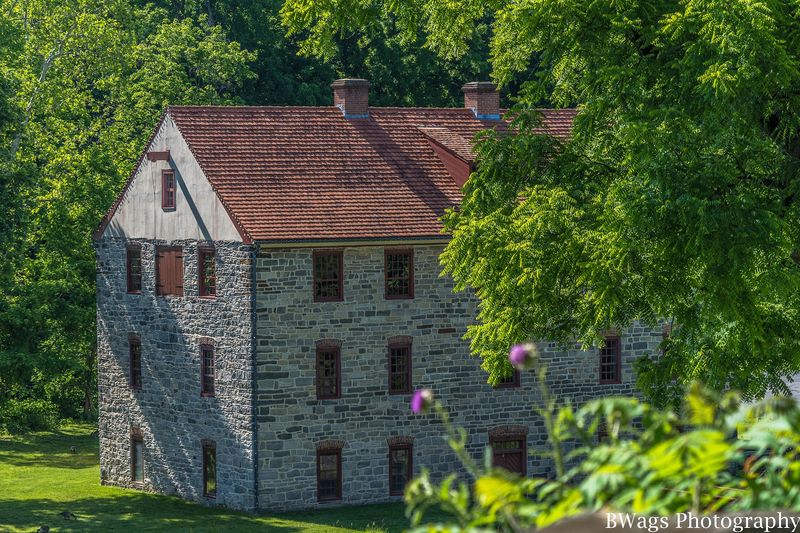
Picture a tree trunk with a hole drilled straight through the middle, end to end, by hand. That was the plumbing of colonial Bethlehem, and honestly it still amazes me that it worked at all.
The earliest version of the system, running from 1755, sent water through pipes made from bored hemlock logs. They leaked.
They burst. Wood under pressure has opinions.
When the works were rebuilt in 1762, the builders got smarter about materials, using gum wood for the high-pressure force mains and pitch pine for the distribution lines. Later generations swapped in lead, then iron, as technology caught up.
Sections of those original wooden pipes survive and are on display at the Moravian Museum of Bethlehem, a short walk from the Quarter. Seeing one up close changes how you think about the whole project.
The bore is rough. The wood is dark and scarred.
You can practically feel the hours of labor in it.
I left with a new appreciation for turning on a tap, which is not something I expected from an afternoon walk.
It is a wonderfully simple reminder that even the most basic conveniences around us once required an astonishing amount of ingenuity, patience, physical labor, and trial and error.
Hans Christopher Christiansen, the Millwright Behind It All
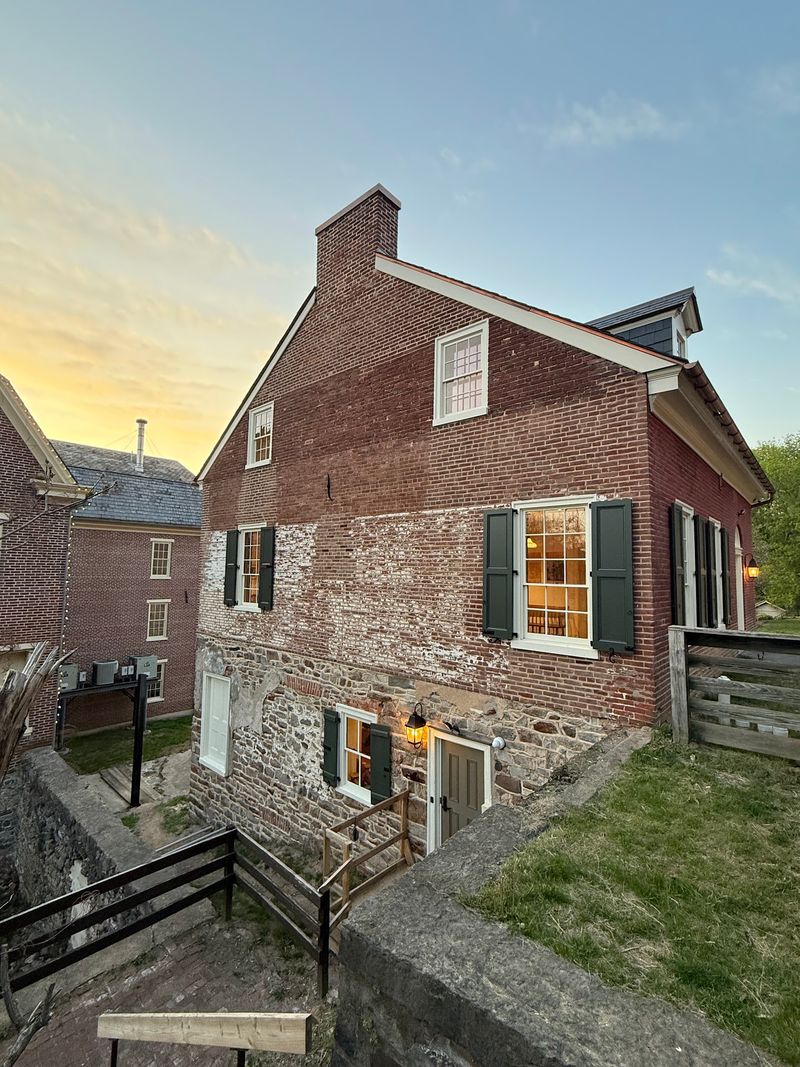
Every great piece of engineering has someone stubborn behind it. Here, that person was Hans Christopher Christiansen, a millwright from Denmark who arrived in Bethlehem in 1751.
He designed and built the first waterworks in 1754, with regular service starting June 27, 1755. The original pump was carved from lignum vitae, a tropical wood so dense it barely floats.
Water traveled uphill to a wooden reservoir near where Central Moravian Church stands today. Then the leaks started, and the demand grew, and it became clear the whole thing needed rebuilding.
What strikes me about Christiansen is that he solved a problem nobody in the colonies had solved yet. No manual, no precedent, just knowledge carried across an ocean and applied to a creek in Pennsylvania.
His drawings mattered long after his lifetime too. When the waterwheel was restored in 2009, craftsmen worked from original 18th-century master drawings to get the details right.
Reading his name on an interpretive marker in the Quarter felt oddly personal. One skilled immigrant, one very good idea, and a town that trusted him enough to let him build it.
An 18-Foot Waterwheel Doing the Work of 100 Men
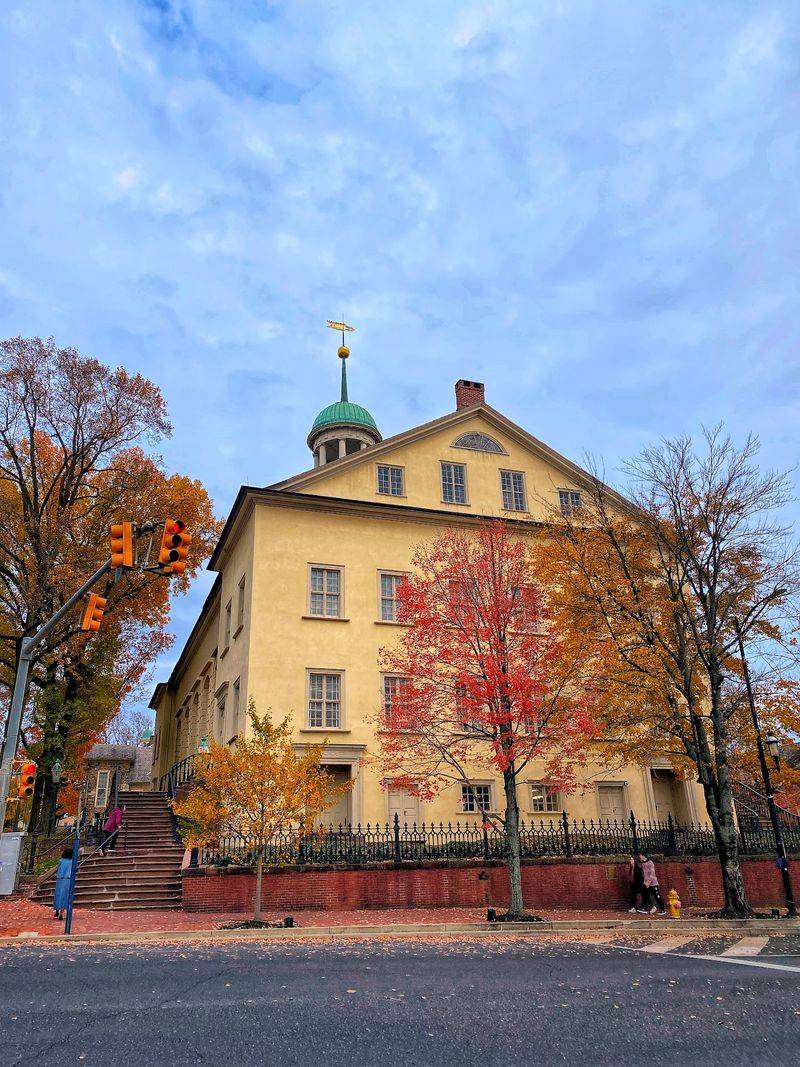
Eighteen feet across. Undershot, meaning the creek pushed the bottom paddles rather than water falling from above.
The power output was described in its day as equal to about 100 men working together.
That comparison stuck with me as I stood near the creek and tried to imagine a hundred people hauling buckets up the hill instead.
Monocacy Creek supplied the muscle, and the wheel translated it into the up-and-down motion that drove those three iron pumps. Simple physics, brilliantly applied.
Hurricane Ivan damaged the historic wheel in 2004, which could easily have been the end of the story. Instead, a careful restoration was completed in 2009, guided by the original craftsman’s drawings.
Guided tours sometimes include a look at the reconstructed wheel, and reviewers who have taken them tend to mention it as the highlight. I would take that tip seriously.
Even from outside, the relationship between building and creek is obvious. Everything here was placed with intention, positioned exactly where the water could be put to work without wasting a single foot of drop.
Uphill Water, Five Cisterns, and One Clever Tower
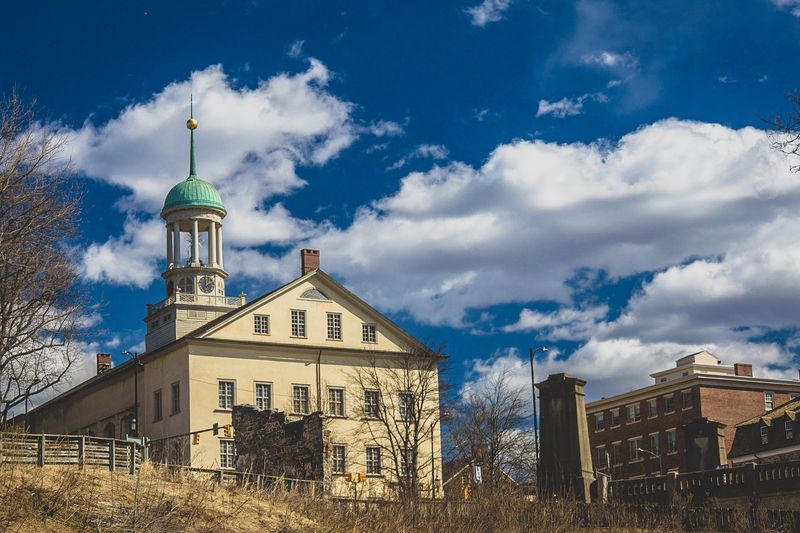
Getting water out of a creek is easy. Getting it up a hill in 1762 is the actual achievement.
The pumps forced water nearly 94 to 100 feet up the slope to a collecting tower. From there, gravity took over and fed five separate cisterns spread through the community.
Residents did not have to walk down to the creek and back with heavy buckets. Water came to them, distributed at convenient points around town, which was close to unheard of in colonial America.
Boston had a gravity-fed municipal supply back in 1652, but that relied entirely on elevation doing the work. Bethlehem’s mechanical pumping approach was the first of its kind here, and decades passed before other American towns caught up.
Walking from the Quarter up toward Main Street gives you a real sense of the climb. It is a steady grade, the kind that makes your legs notice.
I kept thinking about how ordinary this must have felt to the people living here, and how extraordinary it looked to visitors from anywhere else.
When Washington and Adams Came Looking
Word about Bethlehem’s engineering traveled fast, and the visitor list ended up rather distinguished. George Washington and John Adams both came through to see what the Moravians had built.
Adams wrote in 1777 that the Moravians had “carried the mechanical Arts to greater Perfection here than in any Place which I have seen.” Coming from him, that is not faint praise.
The system became a model that other American waterworks projects studied and borrowed from. Bethlehem was the proof that it could be done.
Recognition kept arriving centuries later. The Waterworks was named a National Historic Civil Engineering Landmark and an American Water Landmark in 1971, then a National Historic Landmark in 1981.
It also contributes to the Historic Moravian Bethlehem District, itself a National Historic Landmark District that has been placed on the U.S. Tentative List for World Heritage nomination.
Several visitors mention the World Heritage angle, and you can feel that quiet pride around the Quarter. Reading the plaques scattered along the paths is genuinely worth the time, even if you normally skip them.
Ten Acres Along the Monocacy, America’s Earliest Industrial Park
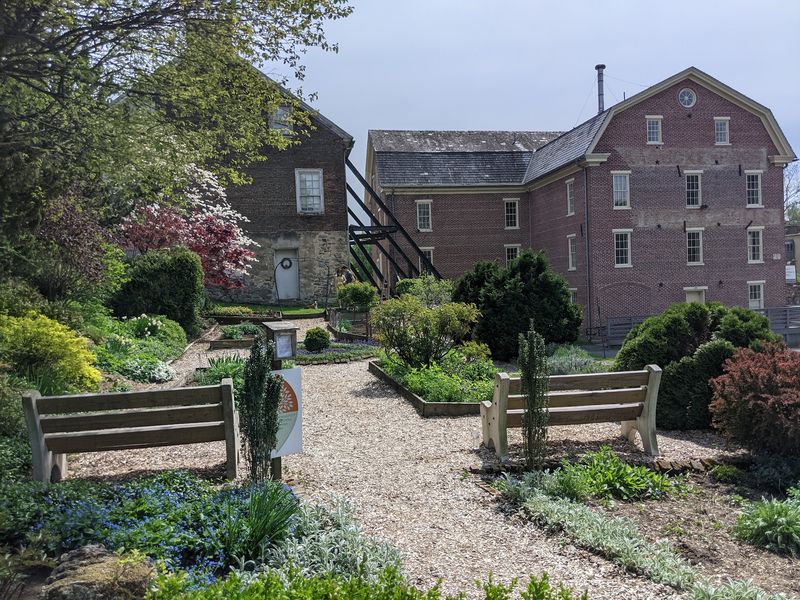
The Waterworks is the headline, but the Quarter around it is where I ended up lingering. Ten acres stretch along the Monocacy Creek, often called America’s earliest industrial park.
Moravian settlers used the creek’s power for smithies, tanneries, and mills, building a community that could largely supply itself. Preserved buildings and stone ruins sit side by side, some fully restored, others left as outlines in the grass.
Paths here are paved and easy, good for a slow wander, a run, or a walk with a dog. Benches invite you to sit and sketch or just watch the water.
The main mill building hosts rotating art exhibitions when it is open, and the blacksmith house draws steady attention from visitors. Restrooms depend on those buildings being open, so plan accordingly.
Every August the Quarter fills with Musikfest, turning these quiet lawns into something entirely different. Shops, cafes, and restaurants sit within a short walk up the hill.
Gates open at 11 AM daily and close at 6 PM. Address: 459 Old York Rd, Bethlehem, PA 18018
