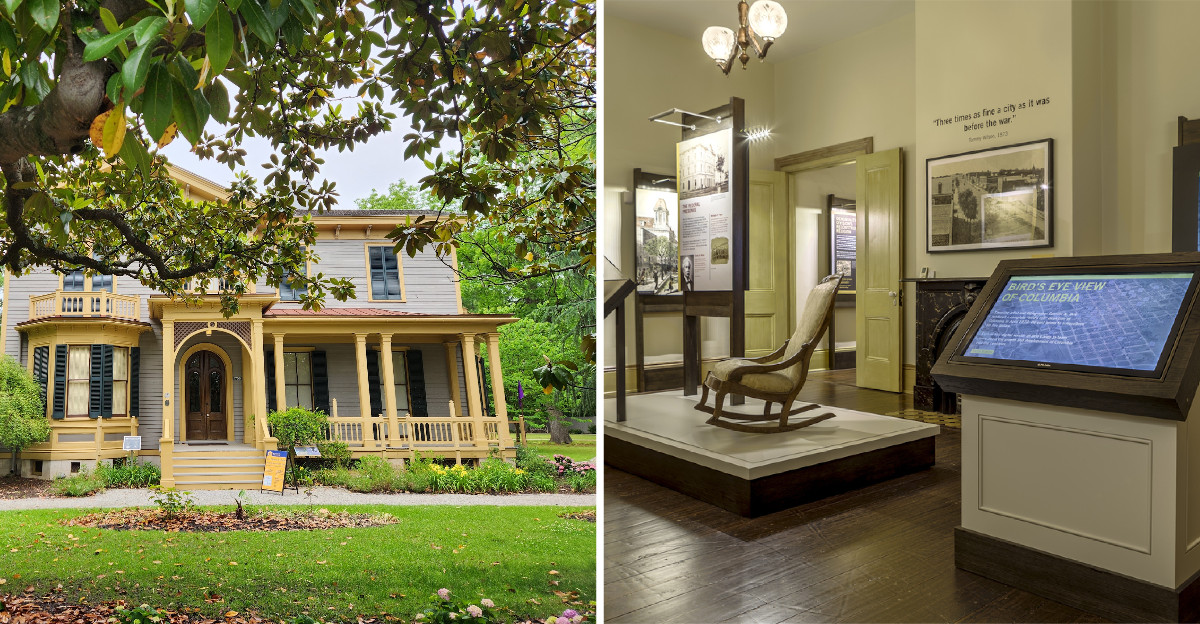
Teenage years spent in a graceful Italian villa-style house on a quiet South Carolina street are not what usually comes to mind when you think of a future president, but that is exactly what happened here in the early 1870s. What was expected was a quick look at an old home.
The afternoon disappeared instead. Inside waits a surprise: the house is now a museum focused entirely on the years right after the Civil War, the only one in the country dedicated completely to that era.
Freedom, voting, and new beginnings fill the rooms, and the story is told in a way that makes you see South Carolina with fresh eyes. The house still feels cozy and welcoming, and the exhibits teach something real without feeling like a lecture.
Places that hold both warmth and weight are rare, and this one deserves a spot on your list.
A President’s Boyhood Home With a Bigger Story
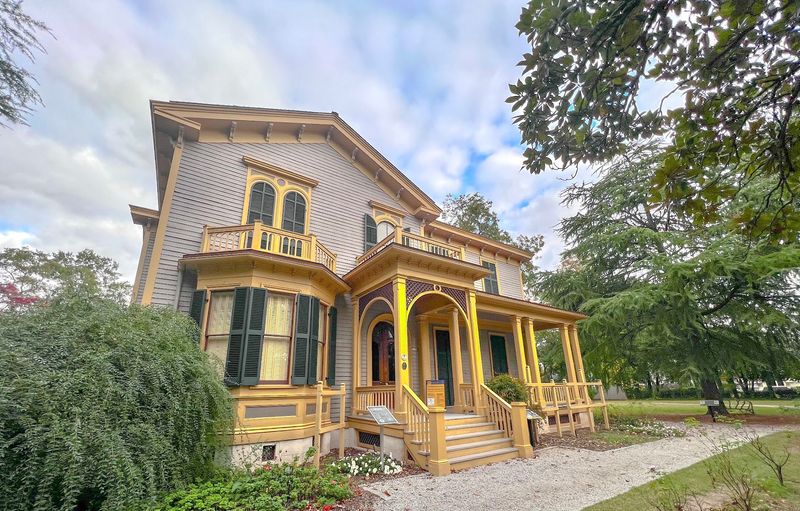
I’ll be honest, I came for the president and stayed for the history lesson I never got in school. Thomas Woodrow Wilson, the boy who would grow up to be the 28th President of the United States, lived in this house as a teenager from 1871 to 1875.
His family called him Tommy back then, which makes the whole place feel a little more human.
What surprised me most is that the house does double duty. It is the only presidential site left standing in South Carolina, and it is also the only museum in the whole country that focuses completely on the Reconstruction Era.
That pairing makes more sense than you might think. Young Tommy was growing up right as the country was trying to rebuild itself after the Civil War, and Columbia was one of the places where those changes hit hardest.
The museum uses his home as a window into that world, rather than a shrine to one famous man.
If you go in expecting a simple biography tour, you will leave with something richer. Think of Wilson as the doorway, not the destination, because the real story belongs to thousands of South Carolinians who were figuring out what freedom and citizenship meant.
That shift in focus is exactly what makes a visit here stick with you long after you leave Hampton Street.
Built in the Thick of Reconstruction
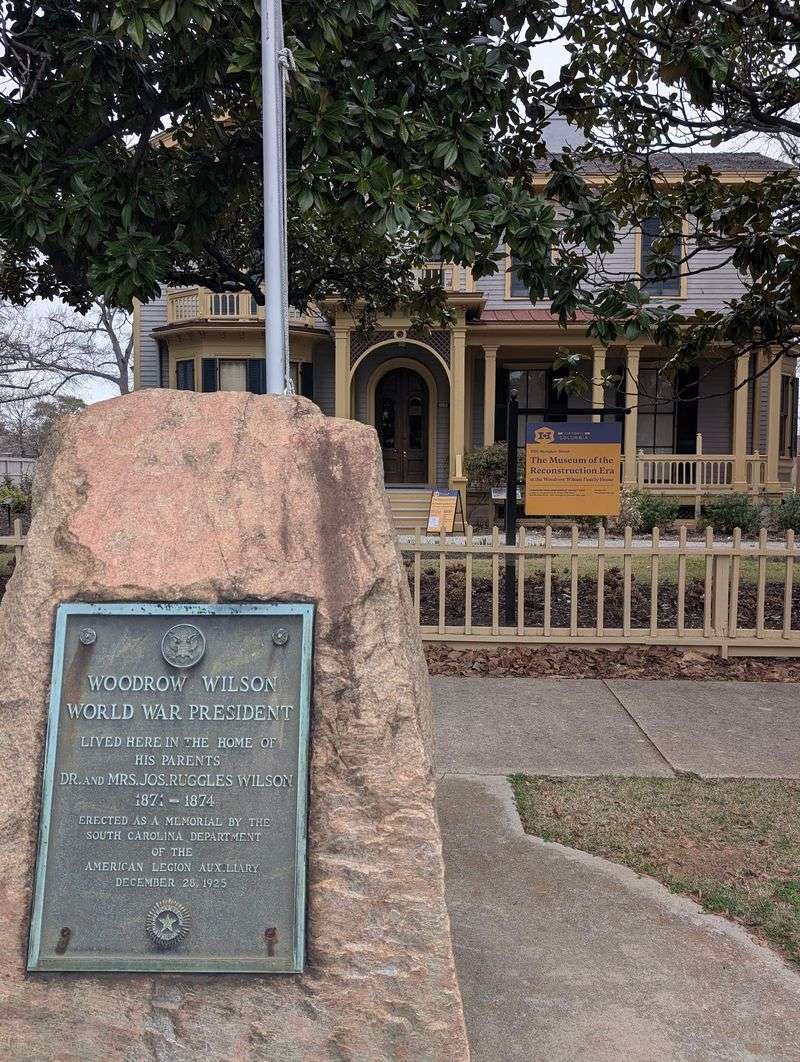
Timing is everything, and this house has some seriously interesting timing. Reverend Joseph Ruggles Wilson, Woodrow’s father, had the home built in 1871, right in the middle of the Reconstruction years that ran from 1865 to 1877.
I kept picturing what the streets outside must have looked like back then. Columbia had been badly burned near the end of the Civil War in 1865, so new buildings were going up while the city was still healing.
The Wilson family moved into a town full of fresh lumber, old scars, and big questions about the future.
That backdrop matters because the house is not just old, it is a witness. Every wall went up during the same years that formerly enslaved people were voting, holding office, and building schools and churches across the state.
You are literally inside a structure that was born from that moment.
Here is a fun detail to share on your next road trip. Wilson was only a teenager while living here, but he later became president during World War I and pushed hard for the League of Nations.
Knowing where he spent those formative years adds a neat layer to his story.
Keep that in mind as you walk up the path. The house was a front-row seat to history, even if young Tommy did not know it yet.
Italian Villa Charm on Hampton Street
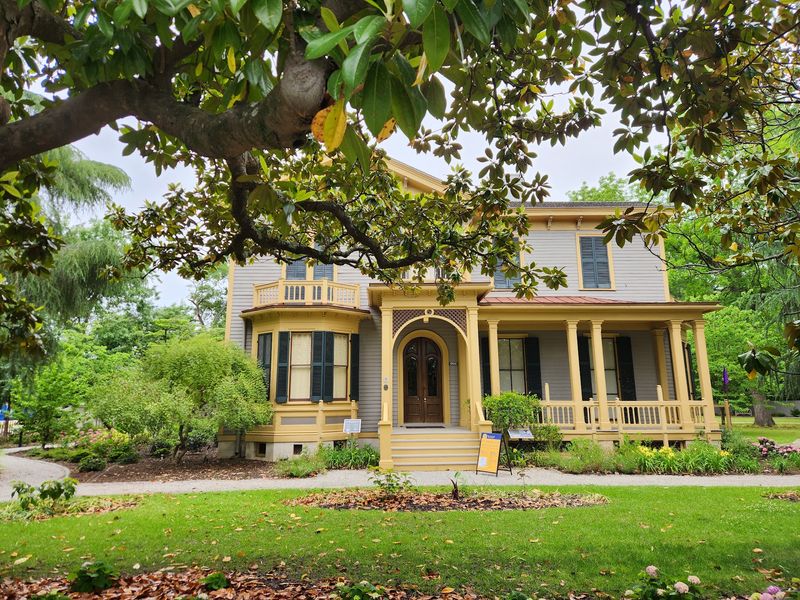
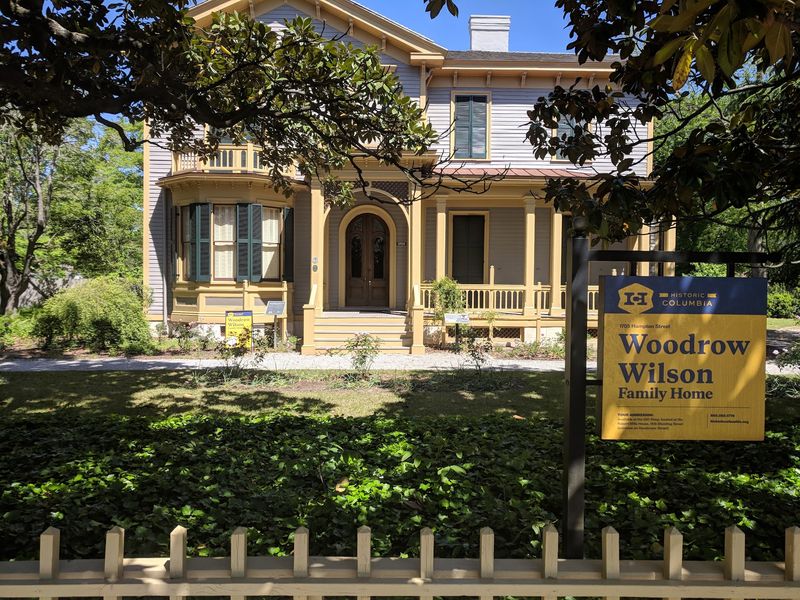
My first reaction from the sidewalk was a quiet little wow. The house is a fine example of the Italian Villa style, which was popular in the mid-1800s and gives the building a graceful, almost storybook look.
Villa-style homes usually have tall windows, deep overhanging roofs, and decorative brackets tucked under the eaves. Those details make the house feel elegant without being showy.
I spent a good few minutes just circling the outside and noticing how the light played across the trim.
Historic Columbia, the group that cares for the property, carried out a major rehabilitation before reopening it as a museum in 2014. The work helped protect much of the original character of the home, so the bones of the 1870s are still easy to spot.
Photographers, this one is for you. The front of the house looks great in soft afternoon light, and the garden setting frames it nicely from several angles.
Even visitors who arrive after tour hours often find the exterior worth the stop.
It also sits in a neighborhood packed with history, just a short distance from the South Carolina State House. Strolling the nearby blocks gives you a sense of how the heart of Columbia once looked, when homes like this one lined the streets and the capital was busy remaking itself.
Exhibits Where You Might Expect Antiques
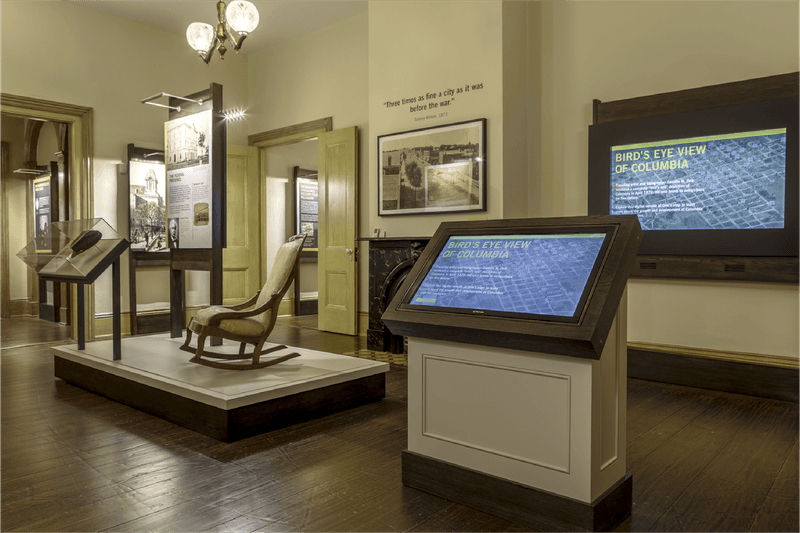
Quick heads-up before you go: this is not your typical dusty house tour with velvet ropes and fancy teacups. When Historic Columbia reinterpreted the home in 2014, the team made a clear choice to turn the inside into exhibit space focused on Reconstruction.
I actually loved that decision. Instead of rooms filled with period chairs you cannot touch, you get galleries packed with stories, documents, and displays that explain what life was like in Columbia and Richland County during the 1870s, and how ordinary people pushed for change.
Some visitors are caught off guard by this, so setting your expectations helps a lot. If restored furniture and elegant parlors are your thing, Historic Columbia offers that classic experience at the nearby Hampton-Preston Mansion.
Doing both in one day makes for a really well-rounded trip.
Inside the Wilson home, the rooms still hint at family life. You will learn a bit about the household and the people who worked there, alongside the bigger picture of the era.
The mix of personal and public history keeps things from feeling like a lecture.
My advice is simple. Come curious, ask your guide questions, and let the exhibits do the talking, because the house has been reshaped to serve the story, and the story is worth every minute you give it.
South Carolina’s Bold Experiment in Democracy
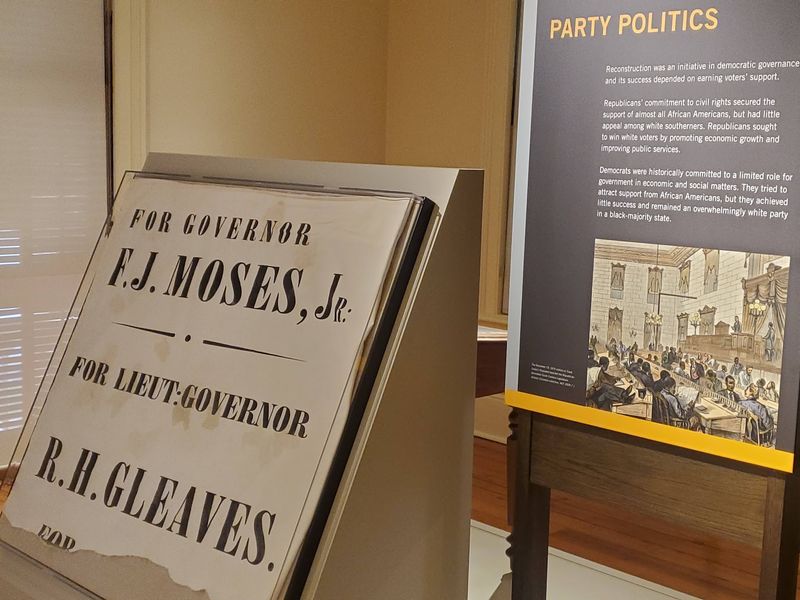
Here is a fact that stopped me in my tracks. During Reconstruction, the University of South Carolina became the only state-supported university in the South to fully integrate, welcoming Black students decades before most schools would even consider it.
Stories like that are the heart of this museum. South Carolina was one of the most dramatic stages of the whole Reconstruction period, partly because the state had a large African American population ready to take part in public life.
The exhibits explain how the 1868 State Constitution changed the rules. It removed racial and property barriers to voting, which opened the door for many more people to have a say.
Soon, African Americans were serving in the state legislature and other offices in impressive numbers.
Learning this made me see Columbia differently. The same streets I had just driven down were once the setting for some of the boldest experiments in democracy the country had ever tried.
That is a pretty powerful thought to carry around town.
The museum also shows that progress faced fierce pushback, and many of the gains did not last once Reconstruction ended in 1877. Seeing both the hope and the struggle side by side gives you a clearer picture of why this chapter still shapes conversations about rights and fairness today.
Clearing Up the Myths, One Display at a Time
Remember that one textbook paragraph about Reconstruction you skimmed in middle school? Yeah, me too.
That tiny paragraph is exactly what this museum wants to replace with something deeper and more accurate.
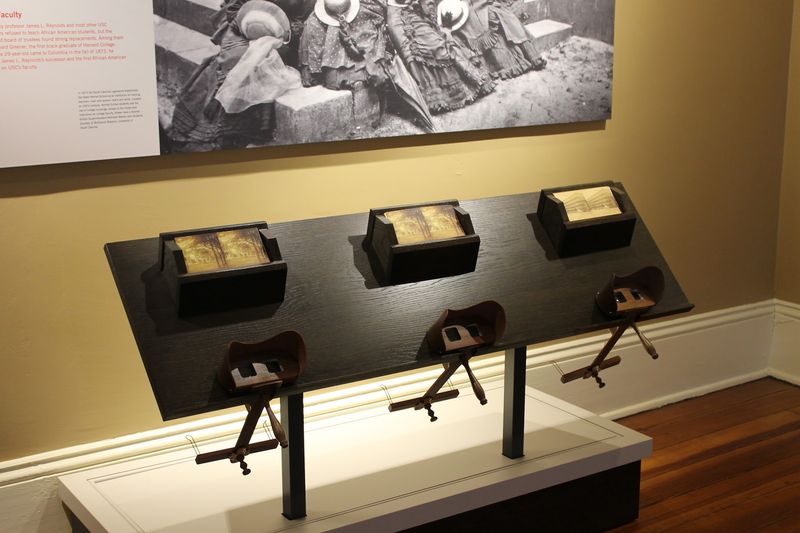
For a long time, the era was told through myths that painted it as a failure or a mistake. The exhibits here work to clear up those old ideas with facts, showing the real opportunities and challenges that formerly enslaved people faced as brand new citizens.
What keeps it from feeling heavy is the variety of ways to take it all in. There are hands-on interactive displays, audio pieces, and video segments, so you can learn by listening, watching, or touching instead of just reading signs.
I found myself lingering at a few stations longer than I planned.
Families with kids will appreciate this setup too. Younger visitors tend to connect better when they can press, listen, and explore, and the displays give them plenty of chances to do that.
It turns a tough subject into something they can actually talk about on the drive home.
Some parts of the story are hard to hear, and that is okay. Give yourself time to read, reflect, and chat with your guide.
Honest history can be uncomfortable, but walking away with a fuller understanding of your country feels genuinely rewarding.
Jessie Wilson’s Peaceful Garden
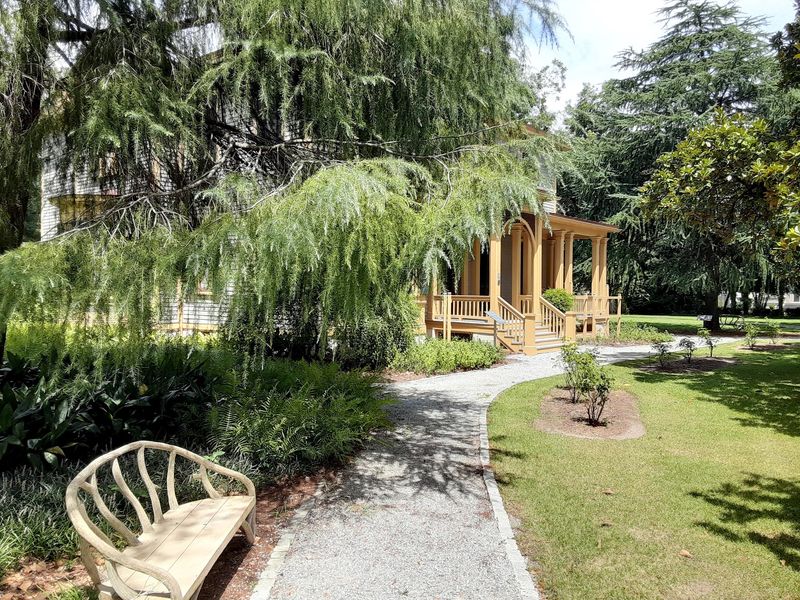
After all that history, the garden hit me like a deep breath of fresh air. The grounds were designed with Italian villa style in mind, and Jessie Wilson, Woodrow’s mother, is credited with designing the original garden.
I liked imagining her out here, choosing plants and planning paths while her family settled into their new Columbia home. A few older shrubs on the property may even date back to the Wilson years, which gives the green space its own quiet link to the past.
Here is the best part. The gardens are free and open to the public seven days a week, even on days when house tours are not running.
That makes them a lovely stop for a lunchtime stroll or a peaceful break between other sights downtown.
Bring a book, a sketchpad, or just your curiosity. The plantings are simple rather than flashy, which I found oddly relaxing, and there is something sweet about sharing a space a president’s family once enjoyed.
It also serves as a gentle reminder that daily life kept going during big historical moments. While laws and politics were changing all around them, families still tended flowers, sat outside on warm evenings, and looked for small bits of beauty.
The garden holds that feeling well, and it is the perfect spot to let everything you learned inside sink in.
Planning Your Visit to Hampton Street
A little planning goes a long way here, and I learned that the easy way by checking ahead. Guided tours of the house run on a limited schedule, usually in the early afternoon Wednesday through Sunday, with Mondays and Tuesdays closed.
Hours can shift, and the site has gone through renovation periods in the past, so it is smart to call Historic Columbia or check their website before you head over. Nobody wants to arrive and find the doors locked.
Make a day of it if you can. Historic Columbia also cares for the Hampton-Preston Mansion and the Robert Mills House nearby, and together these sites tell a connected story of the city before, during, and after Reconstruction.
The South Carolina State House is only a short drive away as well.
Kids tend to enjoy the visit more when they know a bit about Woodrow Wilson beforehand, so a quick chat in the car can spark great questions. Wear comfy shoes too, since you will want time to wander the garden after your tour.
I left feeling like I had found one of Columbia’s best-kept secrets, a place that trusts visitors with a complicated and important story. Put it on your list, and give it the time it deserves.
Address: 1705 Hampton Street, Columbia, SC 29201
