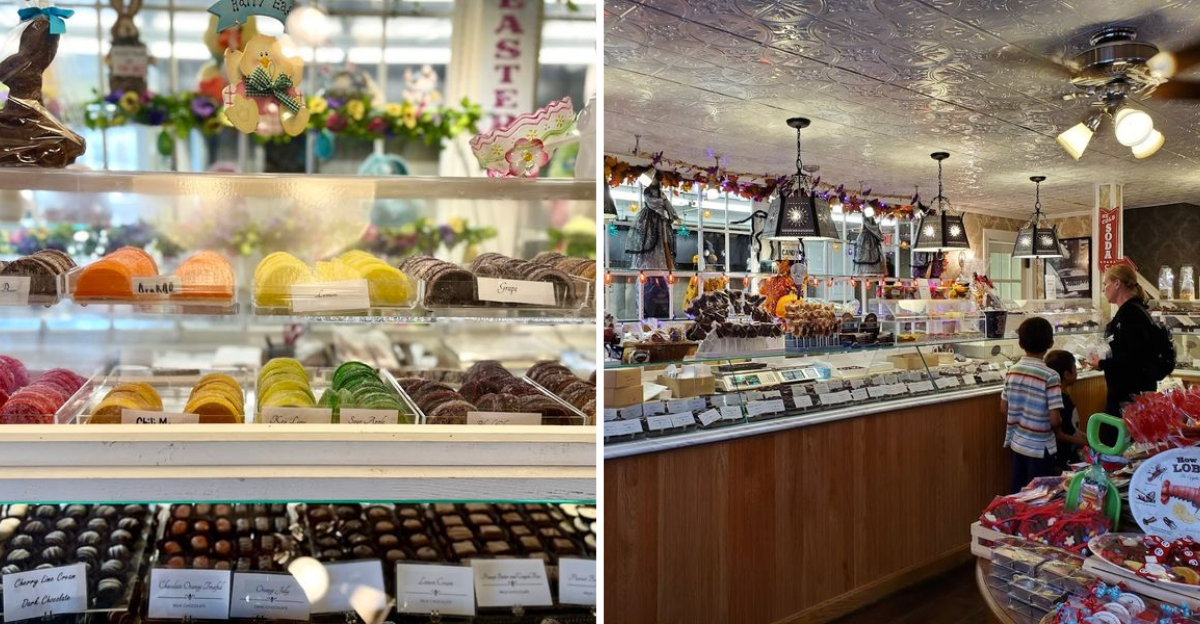
Massachusetts has a lot of history. Old buildings.
Famous battles. But this piece of history is sweeter.
America’s oldest candy company is still operating right here, doing what it has done for over two centuries. The recipes are old.
The equipment is older. And the candy tastes exactly like it did a hundred years ago.
No fancy rebranding. No trendy flavors. Just classic sweets made the same way generation after generation.
I took a tour and watched them pull taffy, wrap chocolates, and package mints using machines that have been running since your great grandparents were kids. The smell inside is incredible.
Sugar. Chocolate.
A little nostalgia. Massachusetts keeps its history alive in some delicious ways.
The Story Behind America’s Oldest Candy Company
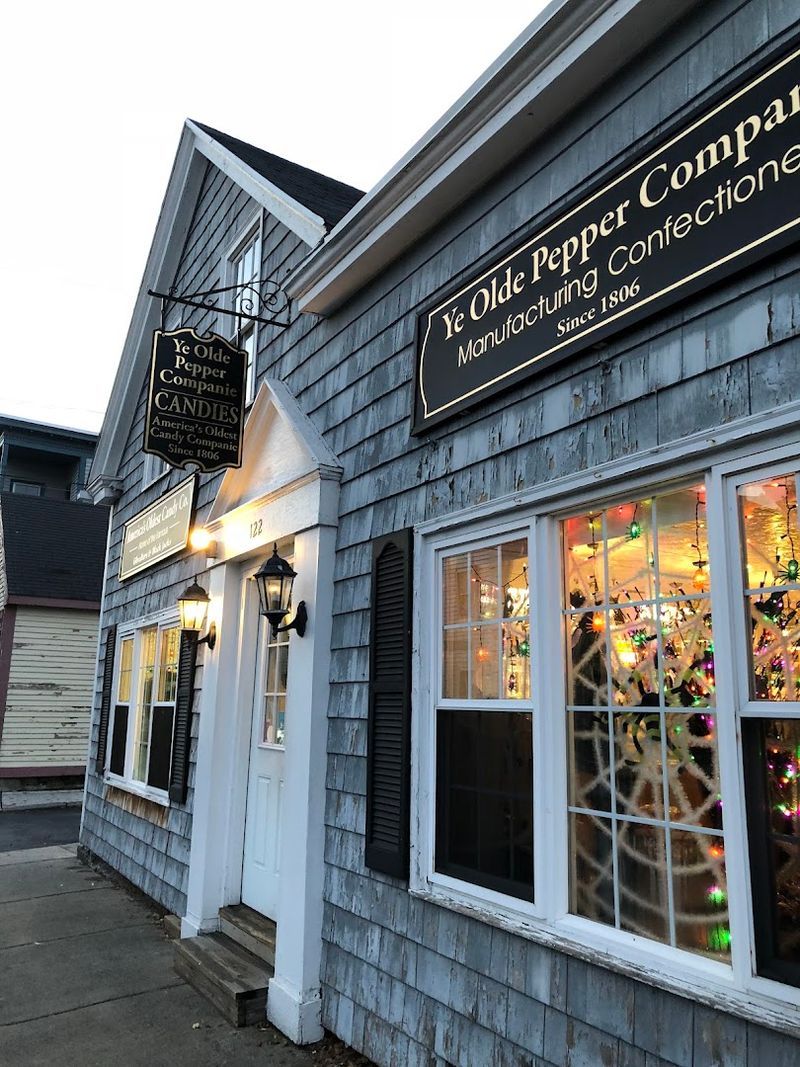
Some origin stories are so good they almost sound made up, but this one is completely real. Mary Spencer, an Englishwoman, arrived in Salem after being shipwrecked and found herself with very little to her name.
She started making and selling homemade boiled sugar candies on the streets of Salem in 1806, and from that humble beginning, an American institution was born.
Those original candies, called Salem Gibralters, are believed to be the first commercially sold candy in the entire country. That is a genuinely staggering claim, and yet it holds up under historical scrutiny.
The lemon-flavored hard candy she made by hand became beloved by locals almost immediately.
After Mary passed away in 1835, the business changed hands a couple of times before John William Pepper gave it the name it still carries today. The Burkinshaw family took over around 1910 and has kept the tradition alive ever since.
Bob Burkinshaw and his daughter Jackie Russell now represent the third and fourth generations of this extraordinary family legacy.
A Derby Street Address That Feels Like a Time Capsule
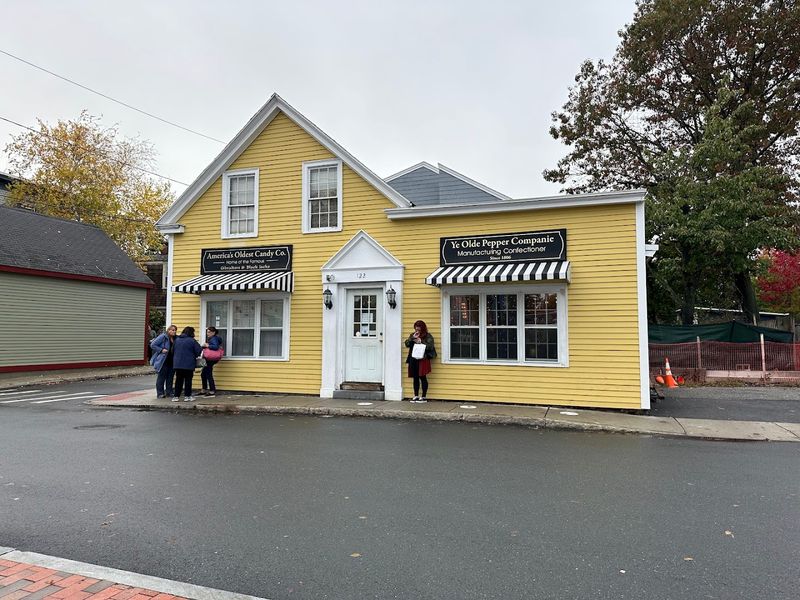
Derby Street in Salem is already one of those roads where history feels close enough to touch. The building at number 122 is a 19th-century grocery store that Ye Olde Pepper Candy Companie moved into back in 1972, and it fits the neighborhood like it was always meant to be there.
The architecture alone gives you pause. Old brick, weathered signage, and a storefront that looks like it belongs to a different era, all in the best possible way.
Salem draws visitors from all over the world, especially around Halloween, but this shop deserves attention in every season.
What makes the location feel special is how it anchors the street. Surrounded by other historic spots and close to the Salem waterfront, the shop sits at a kind of crossroads between tourism and genuine local culture.
It does not feel like a tourist trap at all. It feels like a real place that has simply been here longer than almost anything else around it, quietly doing its thing while the world changes outside its windows.
Salem Gibralters: The Candy That Started It All
Few candies carry as much historical weight as the Salem Gibralter. This simple boiled lemon-flavored sugar candy was the very product Mary Spencer sold on the streets of Salem over two hundred years ago, making it arguably the oldest commercially sold candy in American history.
That is a title no other sweet in this country can claim.
The texture is firm but not aggressive, and the flavor is clean and bright without being overpowering. It is the kind of candy that rewards patience, the sort you let dissolve slowly rather than crunch.
There is something almost meditative about eating one.
What makes the Gibralter even more remarkable is that the recipe has barely changed since the early 1800s. The same ingredients, the same basic process, the same result.
In a world where everything gets updated and reformulated, this candy just keeps being exactly what it always was. Picking one up and knowing that someone in 1806 tasted something nearly identical is a genuinely strange and wonderful feeling that no amount of modern candy can replicate.
Black Jacks and the First Stick Candy in America
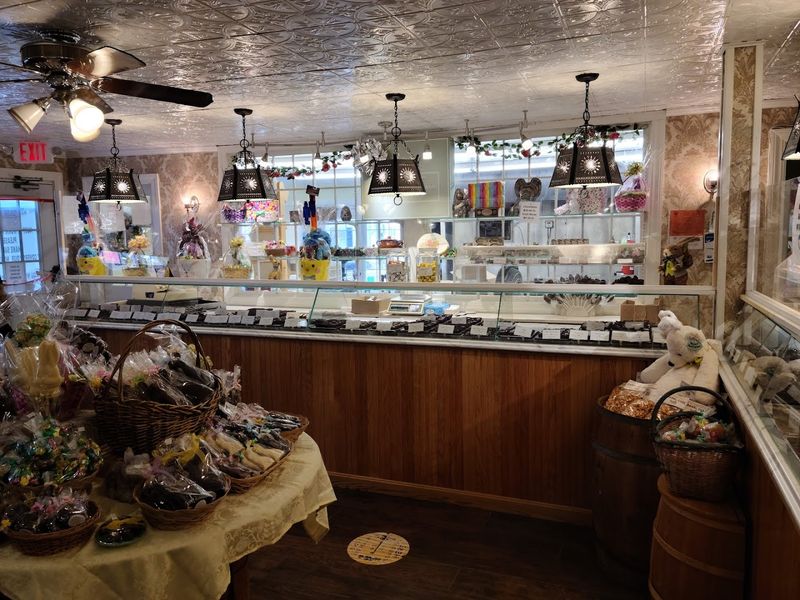
John William Pepper did not just put his name on the company. He also introduced one of its most iconic products, the Black Jack, a molasses stick candy that holds the distinction of being the first stick candy ever manufactured in America.
That is two first-in-America claims for one small Salem shop, which is honestly remarkable.
Black Jacks have a deep, rich molasses flavor that feels old-fashioned in the most satisfying way. The color is dark and the taste is bold, nothing like the bright sugary candies most people grew up with.
They are the kind of sweet that makes you slow down and pay attention.
Trying a Black Jack for the first time is a bit like tasting history directly. The flavor profile is rooted in an era when molasses was a staple ingredient and sweetness was something people savored rather than consumed by the handful.
Molasses candy never really went out of style here, and after one bite it becomes very clear why. It is a candy with genuine character, and character, it turns out, ages extremely well.
Handmade Candy in an Age of Factory Production
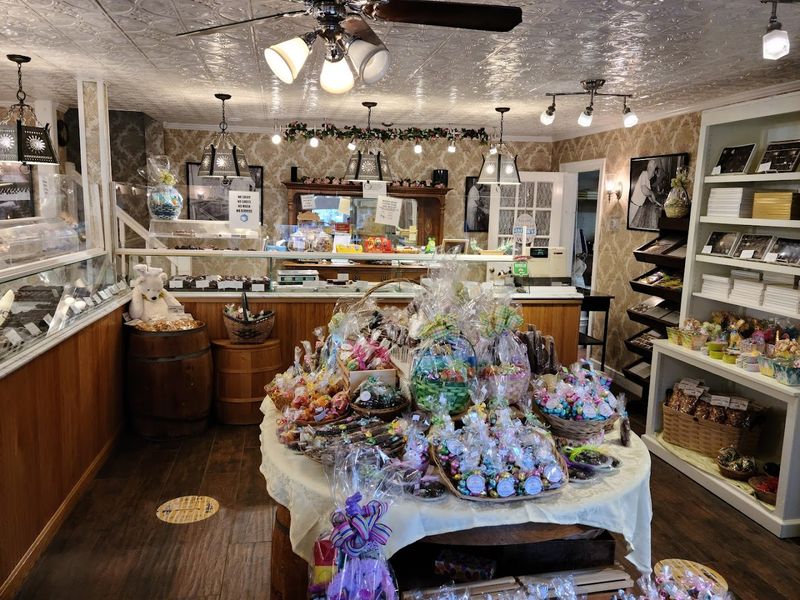
Most candy today is made by machines in facilities that process thousands of units per hour. Ye Olde Pepper Candy Companie operates on a completely different philosophy, one rooted in handcraft and original recipes that predate the Civil War.
Some of the equipment used in production actually dates back to the 1800s, which is either charming or astonishing depending on how you look at it.
Making candy by hand is slower, more labor-intensive, and leaves far more room for human touch. That touch shows up in the final product in ways that are hard to explain but easy to taste.
There is a slight irregularity to handmade candy that factory sweets simply cannot replicate.
The commitment to traditional methods is not just a marketing angle here. It is a genuine operating principle passed down through generations of the Burkinshaw family.
Keeping those methods alive takes real effort and real skill. Every piece of candy that leaves this shop carries the weight of that effort, and once you understand what goes into making it, even a simple hard candy starts to feel like something worth appreciating on a deeper level.
Beyond the Classics: A Full Spread of Old-Fashioned Sweets
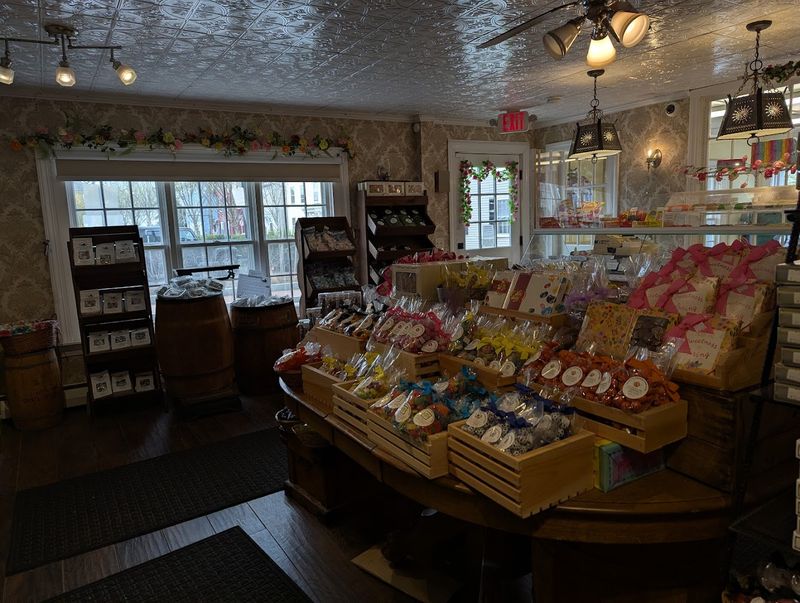
The historical candies get most of the attention, and fairly so, but the shop offers a much wider selection than most first-time visitors expect. Fudge, chocolate barks, patties, brittles, caramel corn, and saltwater taffy all share shelf space with the legendary Gibralters and Black Jacks.
It is a proper candy shop in every sense of the word.
Old-fashioned hard candy varieties like anise drops, butterscotch drops, horehound squares, and peppermint kisses line the shelves in a way that feels genuinely nostalgic. These are not trendy flavors designed to go viral.
They are flavors that have been beloved for generations and continue to earn their place.
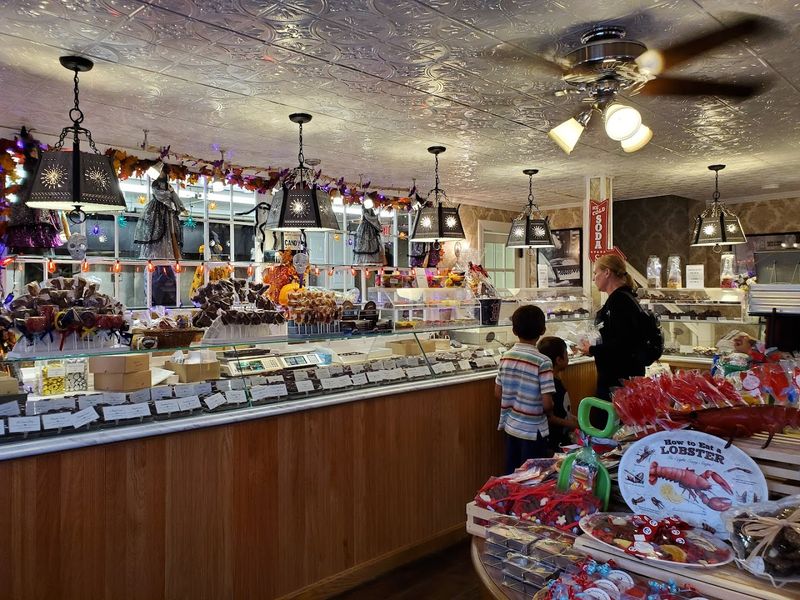
Browsing the full selection is part of the experience. There is no rushing through this shop, and the variety ensures that everyone finds something that speaks to them.
Kids gravitate toward the colorful jars while adults tend to linger near the fudge and the chocolates. The range makes it easy to leave with a bag full of completely different items on every visit, which is exactly the kind of place worth returning to.
The Burkinshaw Family Legacy and What It Means to Keep Tradition Alive
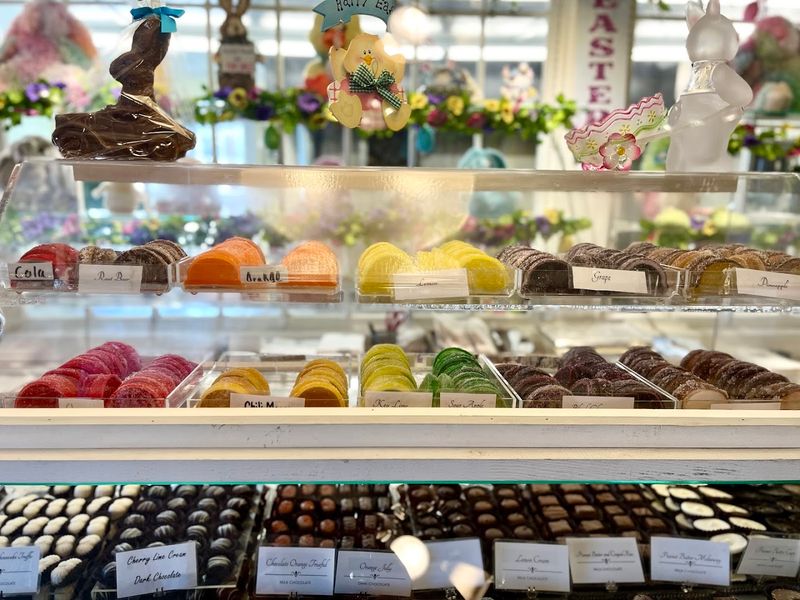
Running a business for over a century as a single family is no small achievement. The Burkinshaw family took over Ye Olde Pepper Candy Companie around 1910 when George and Alice Burkinshaw, who had previously worked for the original Pepper Company, acquired the business.
That connection to the company’s earlier life made the transition feel less like a change of ownership and more like a continuation.
Bob Burkinshaw and his daughter Jackie Russell now carry that legacy forward as co-owners, representing the third and fourth generations of family stewardship. There is something genuinely moving about a family that has dedicated this much of its identity to keeping old candy alive and relevant.
Family-run businesses carry a kind of accountability that larger corporations simply do not have. Every decision made here has a name and a face attached to it.
The recipes are not just formulas to be optimized. They are inherited responsibilities.
Knowing that the people making your candy are the same people whose grandparents made it before them adds a layer of meaning to the whole experience that no amount of clever branding could manufacture.
Why Salem Makes the Perfect Home for a Candy Shop This Old
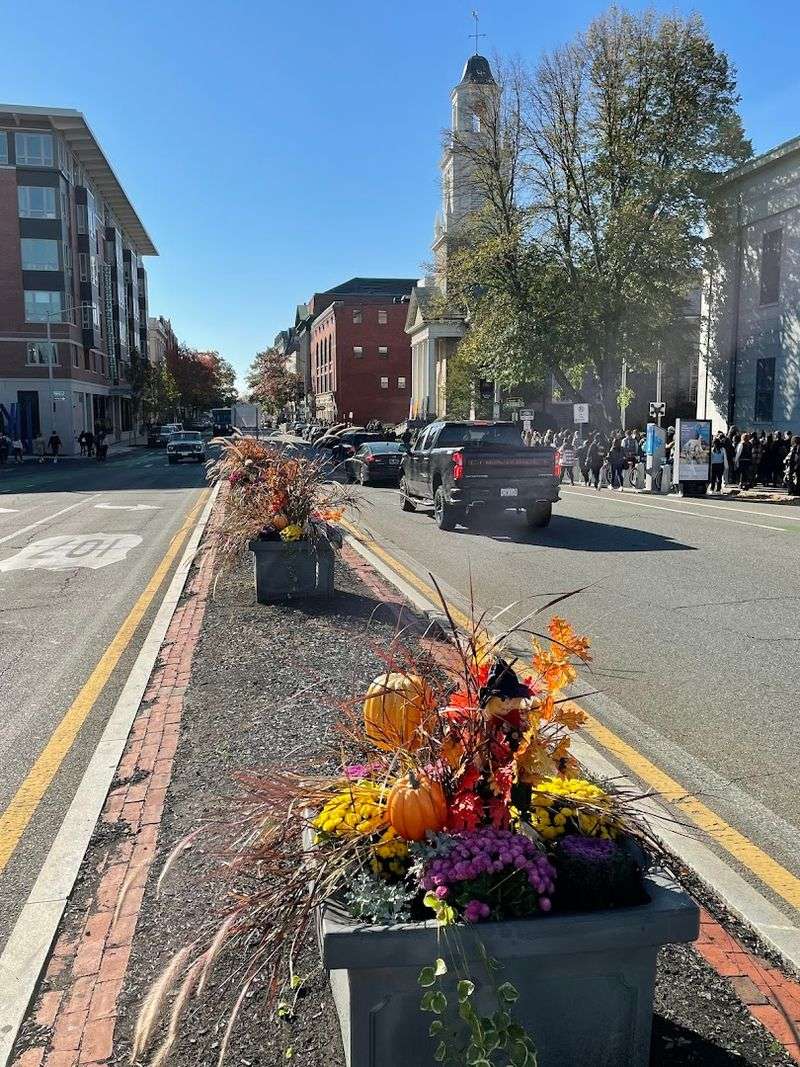
Salem is a city that wears its history proudly, sometimes dramatically, but always with a sense of pride in its long and layered past. It makes perfect sense that America’s oldest candy company would call this place home.
The city and the shop share a common thread: both have survived centuries and come out the other side still drawing crowds.
The waterfront location of the Derby Street shop puts it in the middle of one of Salem’s most historically rich corridors. The area around it includes maritime history, colonial architecture, and a cultural density that few American cities of its size can match.
A candy shop founded in 1806 fits right into that fabric.
Visiting Ye Olde Pepper Candy Companie is not just a sugar run. It is a piece of a larger Salem experience that rewards slow, curious exploration.
Whether you are a history enthusiast, a food lover, or simply someone who appreciates things that have stood the test of time, this shop earns its place on any Salem itinerary without even trying. Address: 122 Derby Street, Salem, Massachusetts.
