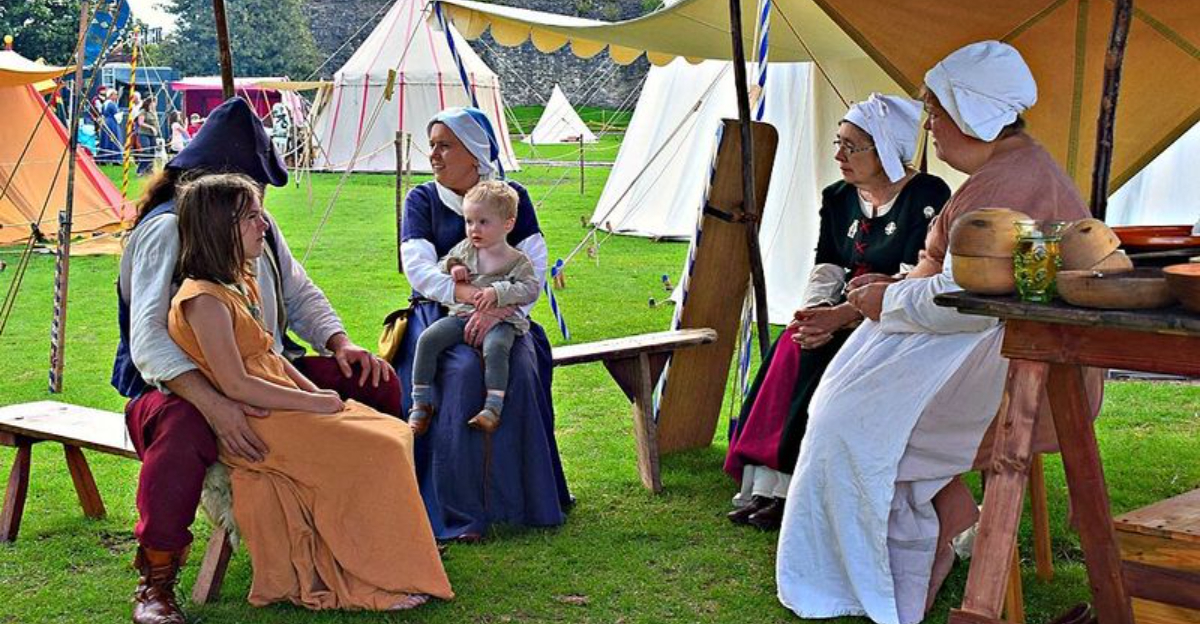
Tucked away in the heart of Illinois, far from the towering skyscrapers of Chicago and the bustling highways that slice through the Prairie State, lies a quiet world that seems frozen in time.
Amish Country in Illinois draws travelers seeking a slower pace, handcrafted goods, and a glimpse into a life guided by faith, family, and tradition.
Yet while visitors can purchase quilts, sample homemade pies, and tour scenic backroads lined with horse-drawn buggies, the deeper spirit of this community remains carefully guarded, shared only among those who live it daily.
Understanding this balance between welcoming curiosity and preserving privacy is key to truly appreciating what makes Illinois Amish Country so remarkable.
Arthur: The Gateway to Illinois Amish Life
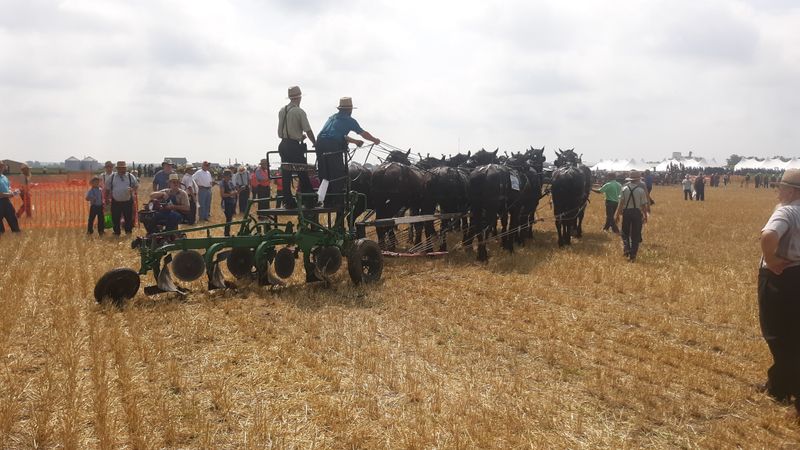
Arthur sits quietly in central Illinois, cradling the largest Amish settlement in the state within its gentle farmland embrace.
Rolling fields stretch endlessly under vast skies, punctuated by white farmhouses and red barns that dot the landscape like brushstrokes on a pastoral canvas.
When you arrive, the first thing you notice is the rhythm of life here moves differently.
Horse-drawn buggies clip-clop along County Road 500, their black silhouettes contrasting against golden wheat fields that shimmer in the summer breeze.
The town itself offers a charming main street where locally owned shops sell handmade furniture, intricate quilts, and jars of preserves that taste like bottled sunshine.
Visitors often stop at the Amish-run bakeries, where the scent of fresh bread and cinnamon rolls drifts through screen doors.
Yet beyond these welcoming storefronts, the true community life unfolds in private homes and church gatherings that remain closed to outsiders.
Families gather for barn raisings and quilting bees, their bonds strengthened through shared labor and faith.
The landscape around Arthur transforms with the seasons, from the vibrant greens of spring planting to the amber waves of autumn harvest.
Winter brings a hushed stillness, with smoke curling from chimneys and sleighs replacing buggies on snow-covered roads.
This seasonal rhythm connects deeply to Amish values of living in harmony with nature and God’s creation.
Arthur welcomes curious travelers with genuine warmth, but always with an unspoken understanding that some doors remain gently closed.
The Quiet Roads Where Buggies Still Rule
Driving through Amish Country requires a shift in expectations and speed.
The narrow roads that wind through Moultrie and Douglas counties were never designed for hurried travel.
Instead, they invite you to slow down, roll down your windows, and breathe in air scented with freshly turned earth and clover.
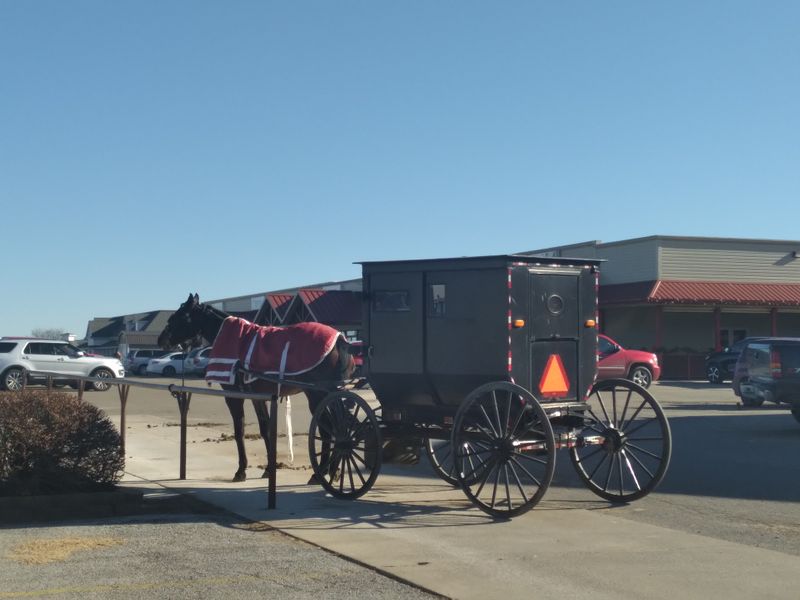
Black buggies appear around curves without warning, their orange safety triangles glowing in the sunlight.
Drivers quickly learn to maintain a respectful distance, matching the gentle pace of the horses that pull these simple carriages.
Children wave from buggy windows, their plain clothing and curious faces offering brief connections across vastly different worlds.
The roads themselves tell stories through their surroundings.
Corn grows tall on both sides, creating green corridors that rustle with secrets in the summer wind.
Farmhouses set back from the road display laundry lines heavy with dark trousers, white shirts, and colorful dresses flapping like flags of simplicity.
No electric wires connect these homes to the modern grid.
Instead, windmills spin lazily, pumping water the old-fashioned way.
Spring brings a particular magic to these roads, when wildflowers bloom along ditches and newborn foals test their wobbly legs in pastures.
Autumn paints the landscape in golds and russets, with pumpkin patches and corn shocks adding to the timeless scenery.
These roads offer more than transportation; they provide a moving meditation on what life looks like when technology takes a back seat to tradition and faith.
Handcrafted Treasures in Plain-Wrapped Shops
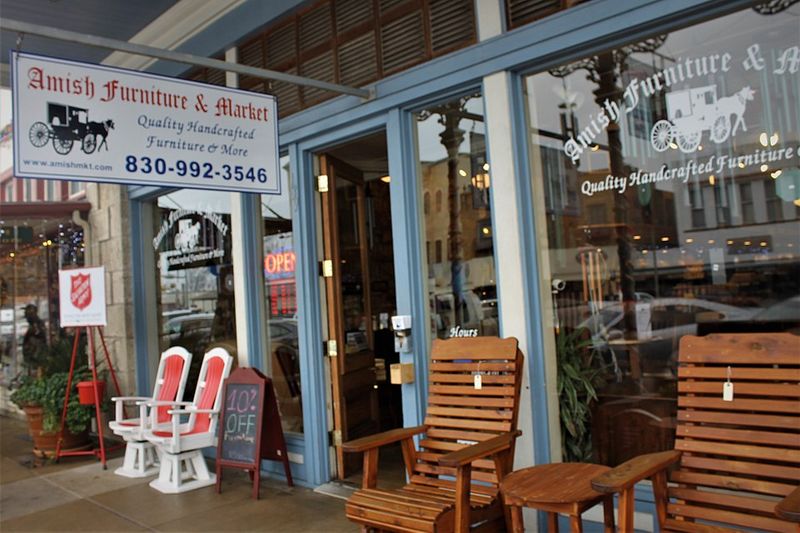
Walk into any Amish-owned shop in the area, and you immediately sense the difference between mass production and patient craftsmanship.
Every piece of furniture, every quilt, every wooden toy carries the fingerprints of its maker.
Oak rocking chairs gleam with hand-rubbed finishes that will last for generations.
Dining tables stretch long enough to seat entire extended families, their joints fitted with precision that requires no nails.
The shops themselves reflect Amish values through their simplicity.
No flashy signs or aggressive marketing tactics interrupt the peaceful atmosphere.
Instead, quality speaks for itself through smooth wood grain and stitches so tiny they seem impossible.
Quilts hang like textile art, their geometric patterns exploding with color against plain walls.
Each quilt represents hundreds of hours of work, often completed by multiple women gathered in community circles.
Patterns carry names passed down through generations: Wedding Ring, Log Cabin, Nine Patch.
Visitors can purchase these items, taking home tangible connections to a different way of life.
Yet what remains hidden is the spiritual dimension these objects hold for their makers.
Creating useful, beautiful things without pride or vanity forms part of Amish religious practice.
Work becomes worship when done with proper humility and dedication.
The money earned from sales supports families without dependence on government programs or modern employment systems.
This economic independence strengthens community bonds and preserves traditional ways against outside pressures.
Sunday Services Behind Closed Doors
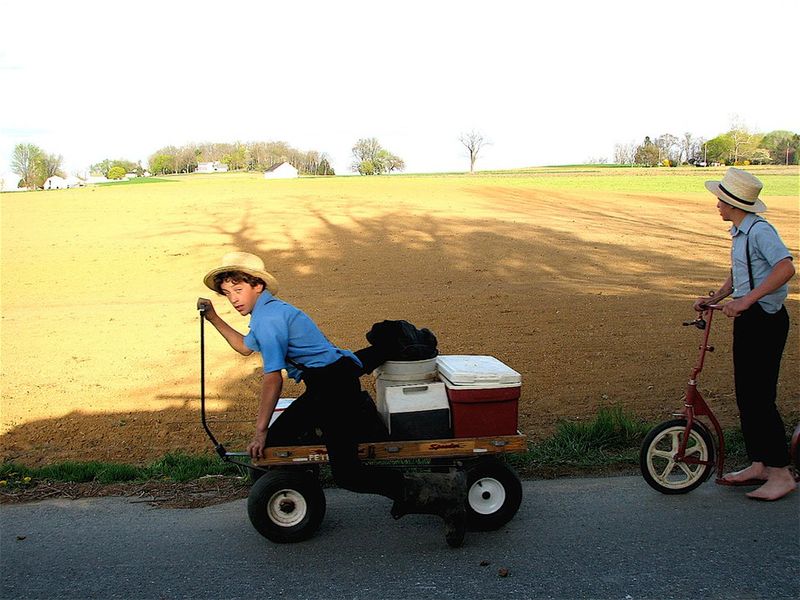
Every other Sunday, Amish families throughout the settlement gather for worship, but no church buildings mark these sacred occasions.
Instead, services rotate among family homes, with communities taking turns hosting.
Preparations begin days in advance as families clean their homes and barns to accommodate the congregation.
Benches stored in special wagons get transported from house to house, creating temporary sanctuaries in living rooms and workshops.
When Sunday morning arrives, buggies converge from all directions, filling yards and lining fence rows.
Men and women enter through separate doors, maintaining traditional gender divisions that structure Amish life.
Services last three hours or more, conducted entirely in Pennsylvania Dutch, the German dialect that preserves linguistic heritage.
Hymns sung without musical instruments create haunting harmonies that float through open windows on warm days.
These worship gatherings form the absolute core of Amish identity, and they remain completely closed to outsiders.
No amount of respectful curiosity grants entry to these sacred spaces.
The sermons, prayers, and fellowship that happen within these walls bind the community together more powerfully than any written constitution.
After services, families share a simple meal, strengthening social bonds through conversation and shared food.
Young people eye potential marriage partners under the watchful gaze of parents and elders.
Children play in yards, their games timeless and unplugged.
This hidden dimension of Amish life, invisible to tourists browsing shops on Saturday, represents the true heart that beats beneath the visible surface.
Seasons Marked by Planting and Harvest
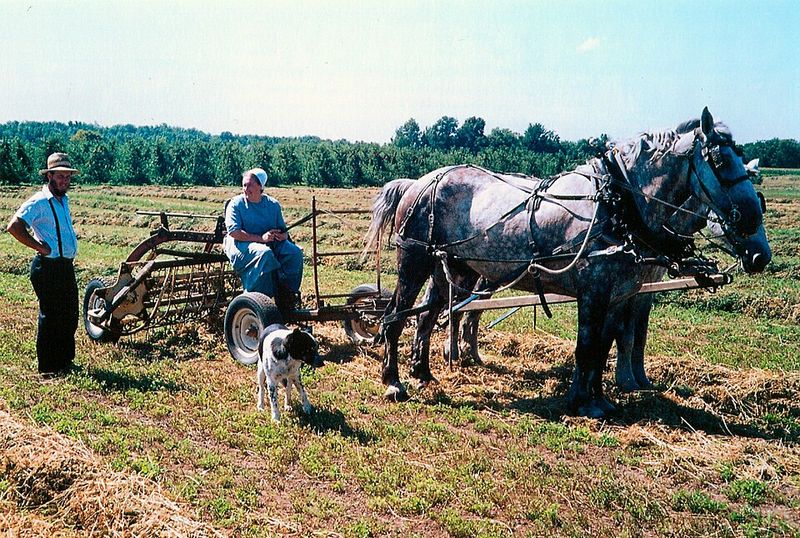
Agriculture forms the backbone of Amish life in Illinois, connecting families to land and tradition in profound ways.
Spring arrives with urgency as fields demand preparation for planting.
Teams of Belgian draft horses pull plows through dark soil, their massive muscles rippling under sleek coats.
Farmers walk behind their teams, hands steady on wooden handles worn smooth by generations of use.
The connection between man, animal, and earth creates a trinity that modern machinery cannot replicate.
Summer brings long days of cultivation, weeding, and tending crops that will feed families and livestock through the coming year.
Vegetable gardens explode with abundance as women and children harvest beans, tomatoes, and sweet corn.
Canning season transforms kitchens into production centers where mason jars line shelves like colorful soldiers.
Autumn harvest represents the culmination of a year’s labor and faith.
Corn gets picked and stored in cribs built to allow air circulation.
Hay bales dot fields like golden sculptures, waiting to be transported to barn lofts.
The entire community mobilizes during harvest, with neighbors helping neighbors in reciprocal arrangements that ensure no family struggles alone.
Winter provides relative rest, though animals still require daily care regardless of weather.
Men repair equipment and buildings, preparing for the cycle to begin again.
This seasonal rhythm, largely invisible to casual visitors, governs daily life more surely than any calendar or clock.
It connects Illinois Amish families to the same agricultural patterns their ancestors followed centuries ago in Europe and Pennsylvania.
The One-Room Schoolhouses Time Forgot
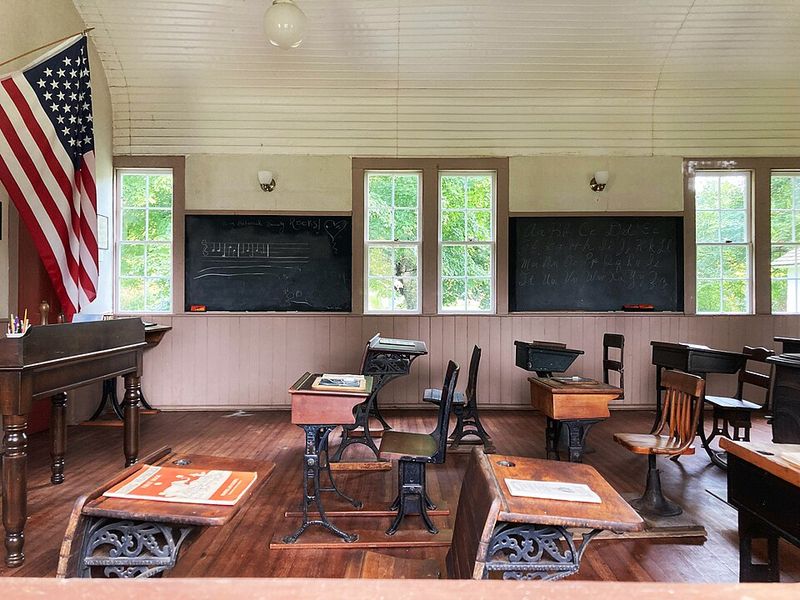
Education in Amish Country follows principles vastly different from public school systems that surround these communities.
Small, white schoolhouses dot the countryside, each serving twenty to thirty students from multiple grade levels.
Young women from the community, usually unmarried and in their late teens or early twenties, serve as teachers.
They receive no formal college training, but they understand intimately what Amish children need to know.
Reading, writing, arithmetic, and German form the core curriculum.
Science and history get taught through lenses that emphasize practical knowledge and faith-based understanding.
School days begin with prayer and hymn singing, grounding education in spiritual foundation.
Older students help younger ones, creating family-like atmospheres where cooperation matters more than competition.
Recess brings joyful chaos as children pour outside to play games that require no equipment beyond imagination and energy.
Baseball, tag, and jump rope entertain without screens or batteries.
Education ends at eighth grade, a decision upheld by Supreme Court ruling after Amish communities fought for the right to limit formal schooling.
Beyond eighth grade, young people learn trades and homemaking skills directly from parents and community members.
Boys apprentice in carpentry, farming, and blacksmithing.
Girls master cooking, sewing, gardening, and childcare.
This educational system, completely hidden from tourist eyes, preserves community values more effectively than any textbook.
It prepares children not for university or corporate careers, but for lives of faith, family, and service within their close-knit world.
Rockome Gardens: Where Tourism Meets Tradition
Near the town of Arcola, Rockome Gardens represents the complicated intersection between Amish life and tourist curiosity.
Originally created by an Amish man named Arthur Martin, the gardens featured intricate rock formations, flowering plants, and peaceful pathways.
For decades, it served as one of the few places where visitors could experience Amish craftsmanship and hospitality in a controlled setting.
The attraction included demonstrations of traditional skills like broom making and blacksmithing.
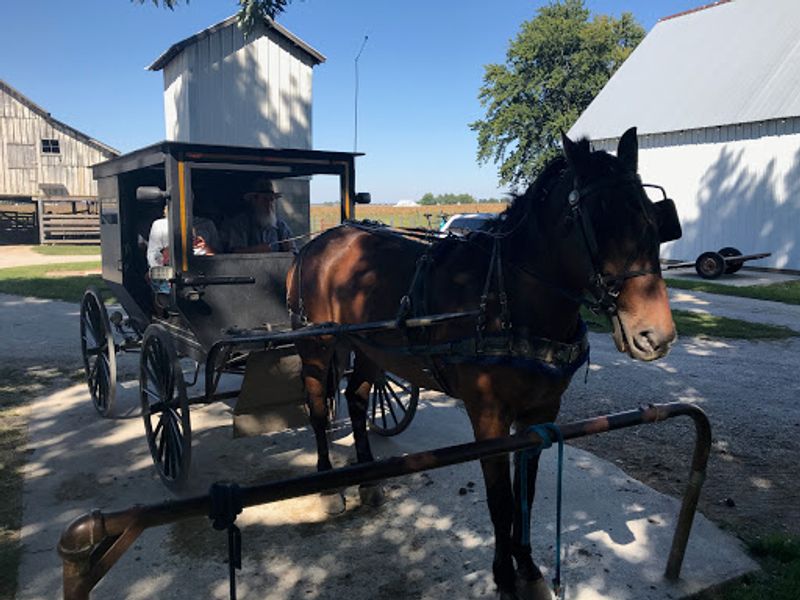
Buggy rides gave tourists a taste of slower transportation while guides shared carefully curated information about Amish customs.
Though the original gardens closed and later reopened under different management, the site illustrates an ongoing tension.
Amish communities benefit economically from tourist interest, yet they struggle to maintain boundaries that protect their privacy and values.
Some families embrace opportunities to sell goods and share limited aspects of their culture.
Others worry that commercialization threatens the very simplicity and separation from the world that defines Amish identity.
Rockome Gardens became a stage where carefully chosen elements of Amish life could be displayed while deeper spiritual and community practices remained safely offstage.
Visitors left feeling they had experienced something authentic, yet what they saw represented only the outermost layer.
The real Arthur Martin, the real families who live nearby, the real struggles and joys of maintaining faith in a modern world, all of that stayed hidden.
This pattern repeats throughout Illinois Amish Country, where welcome and wariness exist in constant balance.
The Language That Keeps Outsiders Out
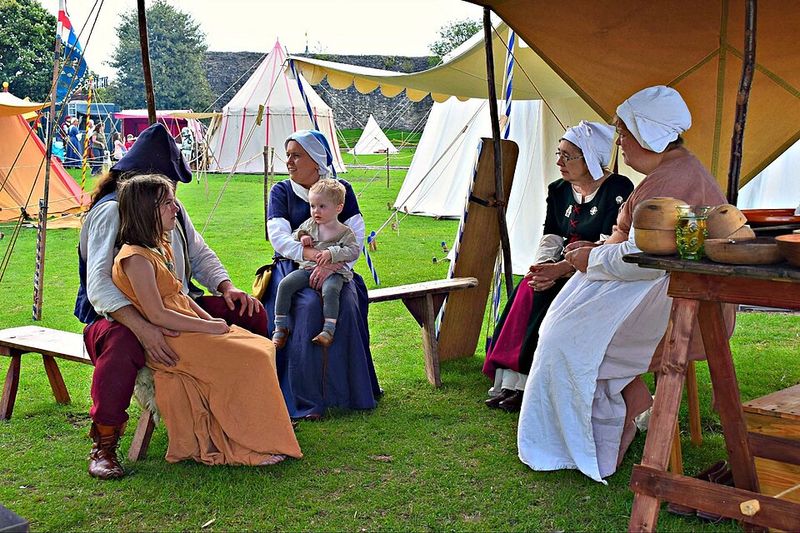
Pennsylvania Dutch serves as an invisible fence around the inner life of Illinois Amish communities.
This German dialect, brought to America by early Anabaptist settlers, functions as the primary language in homes and churches.
Children grow up speaking Pennsylvania Dutch exclusively until they begin school, where they learn English as a second language.
This linguistic separation creates a private world where conversations, jokes, prayers, and intimate family moments remain incomprehensible to outsiders.
Even when Amish people speak English with visitors, their thoughts and hearts still operate in their mother tongue.
Nuances of emotion, spiritual concepts, and cultural values that shape their worldview resist full translation.
The language connects Illinois Amish directly to their ancestors and to Amish communities across North America.
A family from Arthur can visit relatives in Pennsylvania or Indiana and immediately feel at home through shared dialect.
This linguistic unity strengthens bonds across geographic distances, creating a nation within a nation.
For visitors, the sound of Pennsylvania Dutch drifting from buggy windows or across farmyards serves as a gentle reminder of boundaries.
You can watch, you can purchase, you can even converse in English, but you cannot fully enter.
The language barrier is not hostile but protective, maintaining cultural integrity against the homogenizing pressures of mainstream American society.
Some words have no English equivalents, describing specifically Amish concepts of community, humility, and proper living.
Learning these words would require not just vocabulary study but a complete immersion into a worldview most visitors can barely imagine.
Barn Raisings: Community in Action
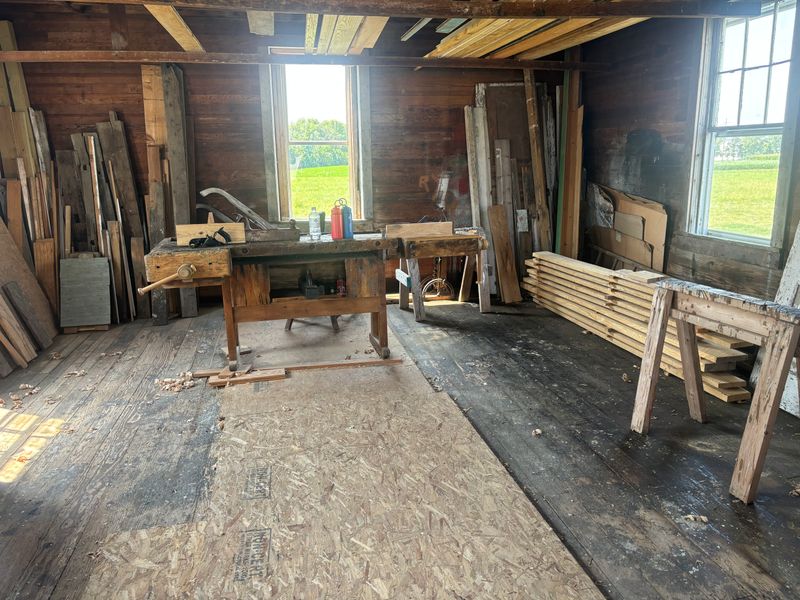
Few events reveal Amish values more dramatically than a barn raising, yet these remarkable displays of community cooperation happen largely away from tourist eyes.
When disaster strikes and a barn burns, or when a young couple needs a building for their new farm, the community responds with immediate, organized action.
Word spreads through the settlement via a communication network that requires no phones or internet.
On the appointed day, dozens of men arrive with tools, skills, and shared purpose.
The work begins at dawn, with experienced craftsmen directing younger men in a choreographed dance of cooperation.
Heavy beams rise into place through coordinated effort, each man knowing exactly when to push, pull, or brace.
By sunset, a complete barn stands where only a foundation existed that morning.
Women support the effort by preparing enormous meals that feed the workers throughout the day.
Tables groan under platters of fried chicken, bowls of mashed potatoes, fresh bread, pies, and cakes.
Children run underfoot, absorbing lessons about mutual aid and community responsibility that no classroom could teach.
These gatherings reinforce the Amish principle that individuals exist to serve the community, not the other way around.
No one receives payment for their labor.
No one keeps track of hours contributed versus hours owed.
Instead, an unspoken understanding prevails that everyone will both give and receive help throughout their lives.
This system of mutual aid provides security more reliable than any insurance policy, binding families together through reciprocal obligation and genuine care.
The Twilight Hours When Visitors Leave
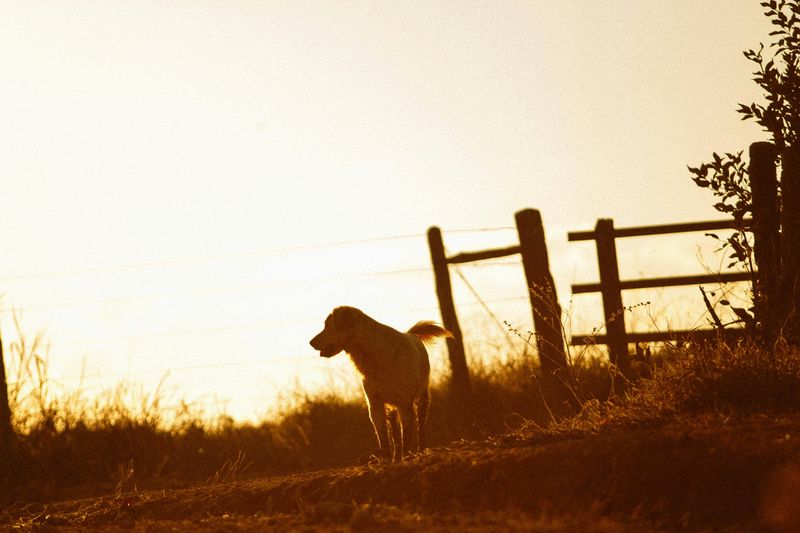
The truest moment to understand Illinois Amish Country comes not during busy tourist hours but in the quiet twilight after shops close and visitors depart.
As the sun sinks toward the western horizon, painting fields in amber and gold, the community exhales and returns to itself.
Families gather for evening meals, their tables lit by soft lamplight rather than harsh electric bulbs.
Conversations flow in Pennsylvania Dutch, recounting the day’s work, sharing concerns, offering prayers.
Children complete chores before darkness falls completely, feeding chickens, gathering eggs, ensuring animals have water for the night.
Without television or internet to distract them, families read together, play board games, or simply sit on porches watching stars emerge.
The absence of artificial light pollution allows the Milky Way to stretch across the sky in breathtaking clarity.
Young couples might take evening buggy rides, courting under the same stars their ancestors navigated by centuries ago.
Older folks rock gently in handmade chairs, their weathered hands finally still after a day of labor.
This is when the community truly lives, when the performance for outsiders ends and authentic life continues.
No cameras capture these moments.
No blog posts describe the particular quality of peace that settles over these farms when day transitions to night.
The laughter of children, the low murmur of adult conversation, the distant whinny of a horse, the rustle of corn in evening breezes, all of this comprises the hidden heart of Amish Country.
It exists not for visitors but for itself, sustained by faith, tradition, and the conscious choice to live differently in a world racing toward tomorrow.
Dear Reader: This page may contain affiliate links which may earn a commission if you click through and make a purchase. Our independent journalism is not influenced by any advertiser or commercial initiative unless it is clearly marked as sponsored content. As travel products change, please be sure to reconfirm all details and stay up to date with current events to ensure a safe and successful trip.
