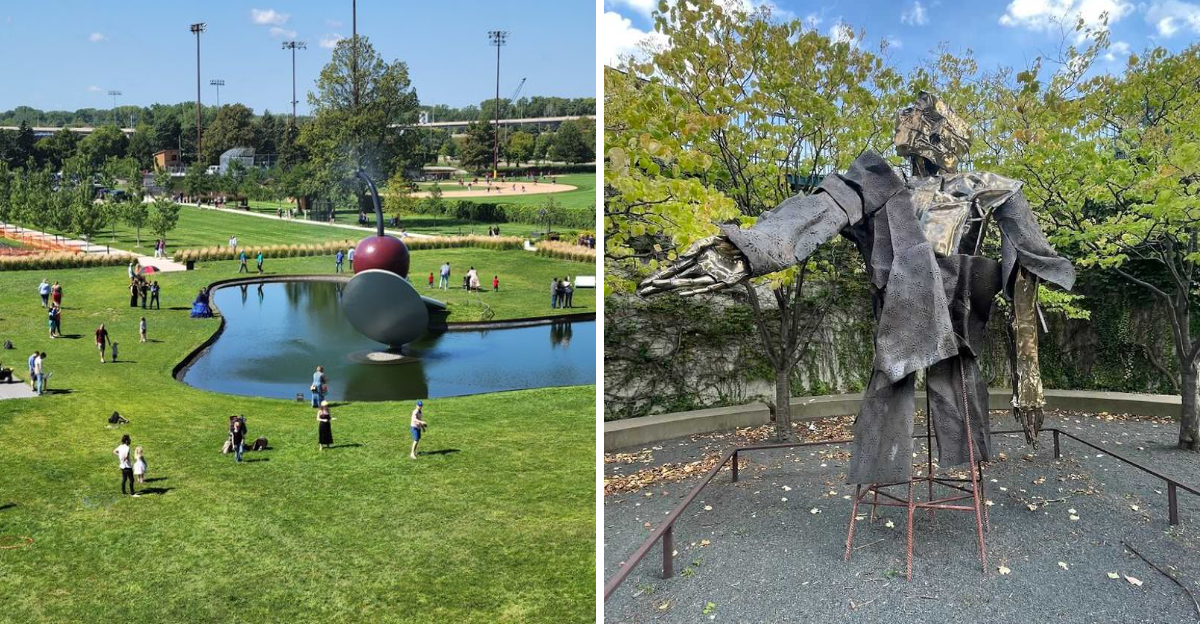
A giant blue chicken, a spoon with a cherry, and forty other mind bending sculptures spread across eleven sprawling acres. This garden is quirky, beautiful, and completely free to explore at your own pace.
You can wander through the open grounds and stumble upon pieces that make you laugh or think. The conservatory adds a tropical twist, bursting with lush greenery and colorful flowers all year round.
The arbor offers a shaded pathway where vines create a tunnel of dappled light. Modern artists from around the world have left their mark here in steel, bronze, and glass.
Families picnic on the lawn while kids run between the towering installations with pure joy. Couples pose for photos in front of the iconic cherry spoon, a Minneapolis landmark by now.
The space changes with every season, from snow dusted sculptures to blooming summer gardens all around. Minnesota knows how to blend art and nature seamlessly, and this place is a perfect example.
It feels fancy but costs nothing, proving that culture truly belongs to everyone.
The Sprawling 11-Acre Garden Grounds

Most outdoor art spaces feel either too cramped or too spread out to hold your attention for long. The Minneapolis Sculpture Garden manages to hit a rare balance, giving visitors enough room to wander without ever feeling lost.
The grounds cover 11 full acres, and the layout is designed to reward slow, curious walking rather than rushing from point to point.
Wide paved paths wind through open lawns and shaded sections, making the garden comfortable for all kinds of visitors. Families with strollers, joggers getting in an early run, and people quietly journaling on benches all share the space without crowding each other.
The Minneapolis skyline is visible from several spots within the garden, which creates a striking contrast between urban architecture and open green space.
On nice days, food trucks sometimes park nearby, adding a casual, neighborhood energy to the whole scene. Dogs are welcome on leash, and the well-maintained grounds make the entire visit feel effortless.
It is the kind of place that feels both designed and completely natural at the same time.
The Marjorie McNeely Conservatory
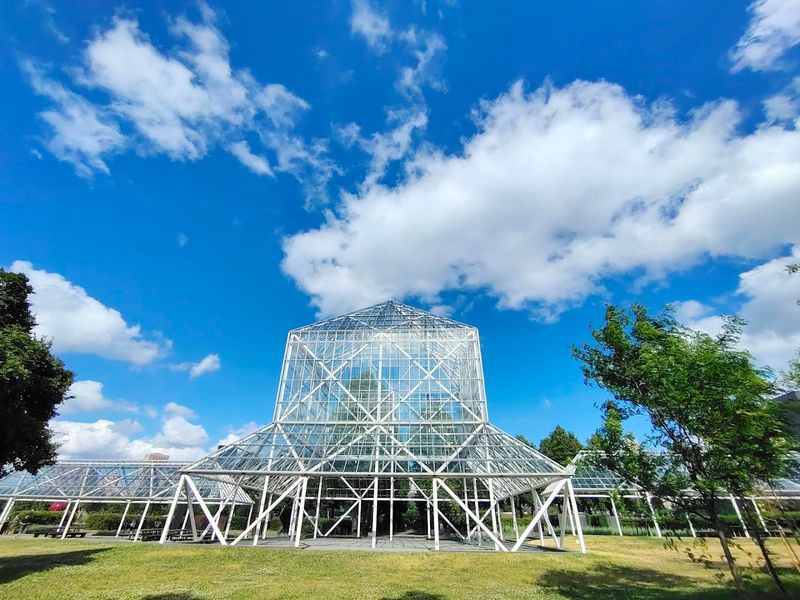
Tucked inside the garden grounds, the Marjorie McNeely Conservatory at Como Park is a short trip away, but the conservatory connected to the sculpture garden experience adds a completely different sensory layer to any visit. Glass and light define the atmosphere the moment you step inside.
The warmth hits you immediately, especially on a cool Minnesota morning when the outdoor air still carries a chill.
Tropical plants, flowering specimens, and carefully arranged botanical displays fill the interior with color and fragrance. It is the kind of space where time seems to slow down naturally.
The contrast between the bold, industrial scale of the outdoor sculptures and the delicate, living details inside the conservatory makes moving between the two feel almost cinematic.
Visitors often linger here longer than they originally planned, drawn in by the quiet and the greenery. The conservatory represents a thoughtful counterpoint to the hard materials of stone and metal outside.
Bringing a camera into this space is almost mandatory because every corner offers a genuinely beautiful composition worth capturing.
The Hahn/Cock Blue Rooster Sculpture
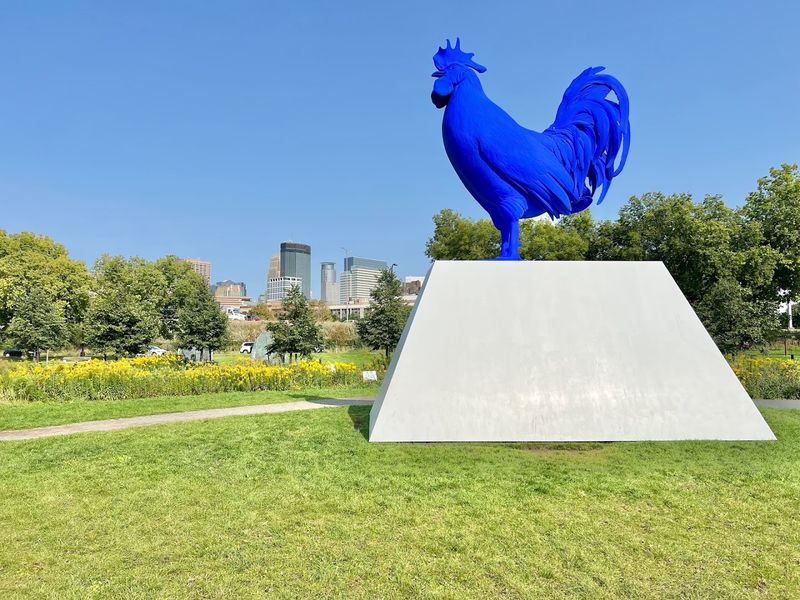
You will spot it from a distance before you fully process what you are looking at. The massive blue rooster known as Hahn/Cock stands with an almost confrontational confidence on the garden lawn.
Created by German artist Katharina Fritsch, the sculpture is a bold, electric shade of cobalt blue that reads differently depending on the light and time of day.
There is something genuinely funny about it, but also something commanding. It does not ask for your attention quietly.
The scale alone makes it impossible to ignore, and the color makes it feel like it arrived from a completely different visual universe than the surrounding greenery. That tension is part of what makes it so effective as public art.
Kids tend to love it immediately, often pointing and laughing before adults even have a chance to react. Adults find themselves photographing it from every possible angle, trying to capture why it works so well.
It is the kind of sculpture that does not need an explanation to make an impression.
The Arbor and Garden Architecture

Not every remarkable feature in this garden is a sculpture. The arbor structure woven through the garden grounds adds a quieter kind of beauty that sneaks up on you.
It frames certain views almost like a camera would, drawing your eye toward a sculpture or a stretch of lawn in a way that feels intentional and satisfying.
The garden architecture as a whole reflects a serious investment in how people move through outdoor spaces. Designers clearly thought about sightlines, pacing, and the relationship between built structures and open ground.
The arbor in particular creates a sense of enclosure without ever feeling confining, which is a genuinely difficult balance to achieve in landscape design.
Sitting near the arbor on a breezy afternoon, with dappled light filtering through the overhead structure, feels restorative in a way that is hard to put into words. It is the kind of spot that invites you to slow down and actually look at where you are.
The garden architecture earns its place alongside the sculptures as something worth noticing.
The Walker Art Center Connection
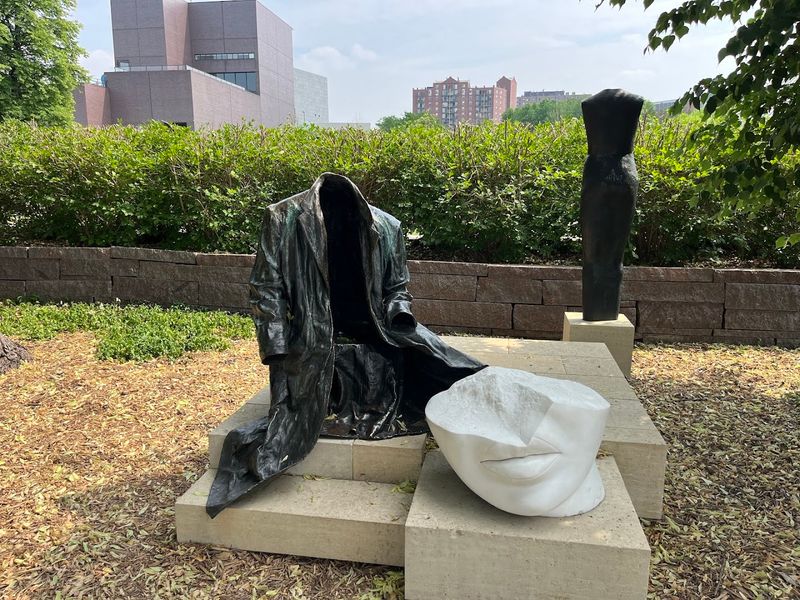
The Minneapolis Sculpture Garden did not appear out of nowhere. It was created as an outdoor campus of the Walker Art Center, one of the most respected contemporary art institutions in the entire country.
That connection shapes everything about how the garden is curated, maintained, and experienced.
The Walker opened its doors in 1927 and has spent decades building a reputation for bold, challenging, and genuinely exciting modern art programming. The sculpture garden, which opened in 1988, extended that ambition into open air.
Walking between the two spaces on the same visit gives you a fuller picture of what the Walker stands for as an institution.
The museum building itself sits right at the edge of the garden, making it easy to move between indoor galleries and outdoor sculptures in a single afternoon. Exhibits inside the Walker often speak directly to works you have just seen outside, creating a kind of ongoing conversation between spaces.
The whole complex feels like a single, generous idea about what a city can offer its residents.
The Iconic Spoonbridge and Cherry Sculpture
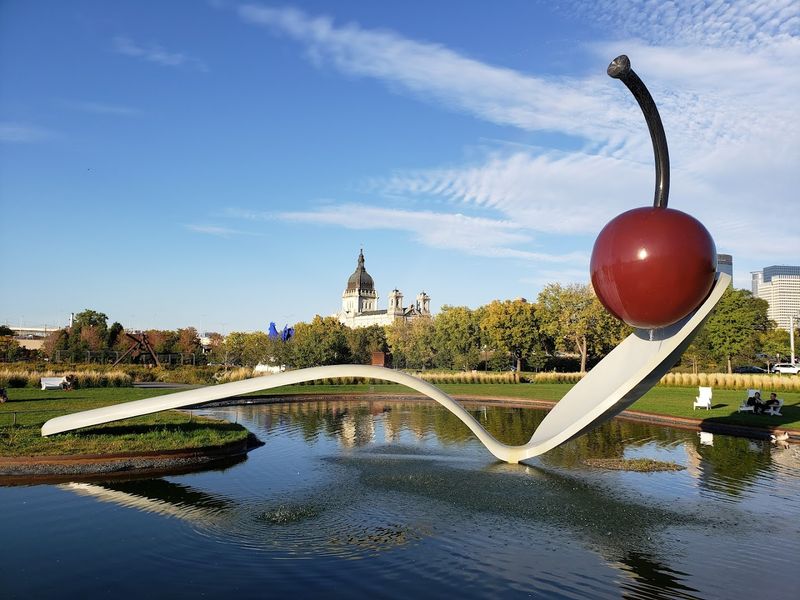
There is something genuinely joyful about rounding a corner and suddenly seeing a giant spoon arching over a reflecting pond. Spoonbridge and Cherry is the signature image of the Minneapolis Sculpture Garden, and it earns that title every single day.
The cherry at the tip of the spoon doubles as a working fountain, sending a gentle spray of water into the air on warm afternoons.
Created by artists Claes Oldenburg and Coosje van Bruggen, the sculpture was installed in 1988 and has been a beloved landmark ever since. The reflection it casts in the pond below adds a whole second layer to the experience.
Strangers who pass each other without a word will stop together just to stare at it.
Morning light hits the polished metal surface in a way that makes it almost glow. The surrounding pond attracts ducks, which adds an unexpectedly charming touch.
Over 40 Works by Notable Modern Artists
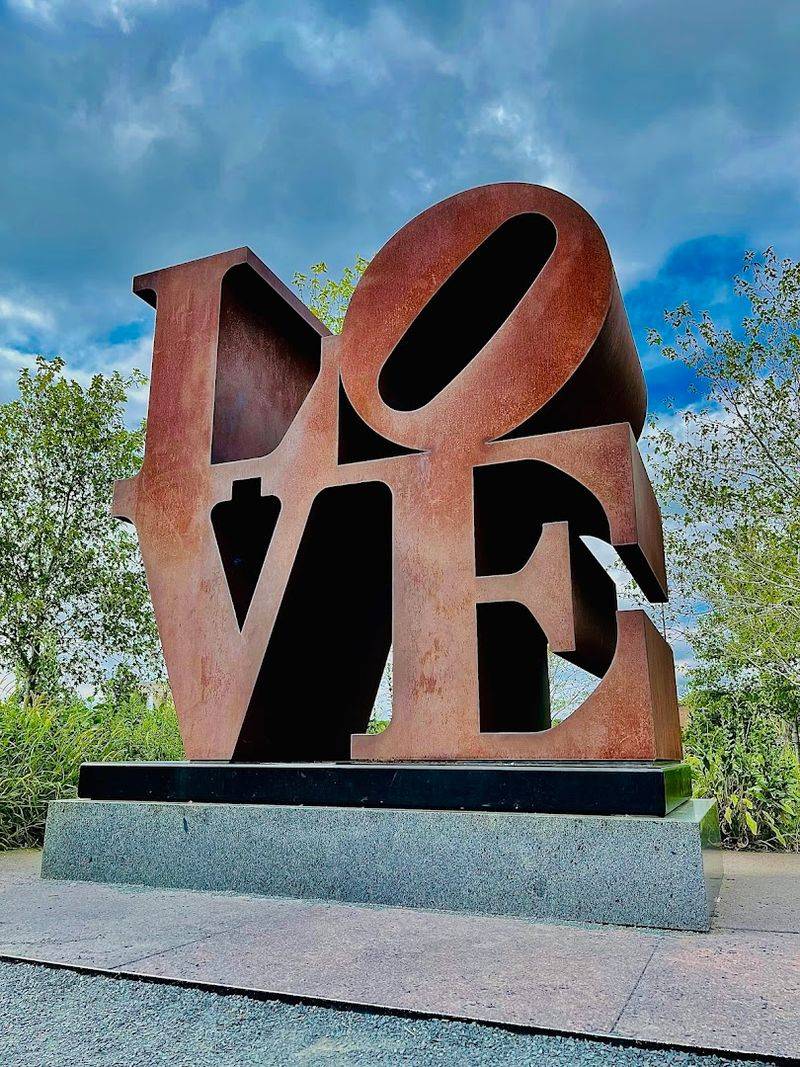
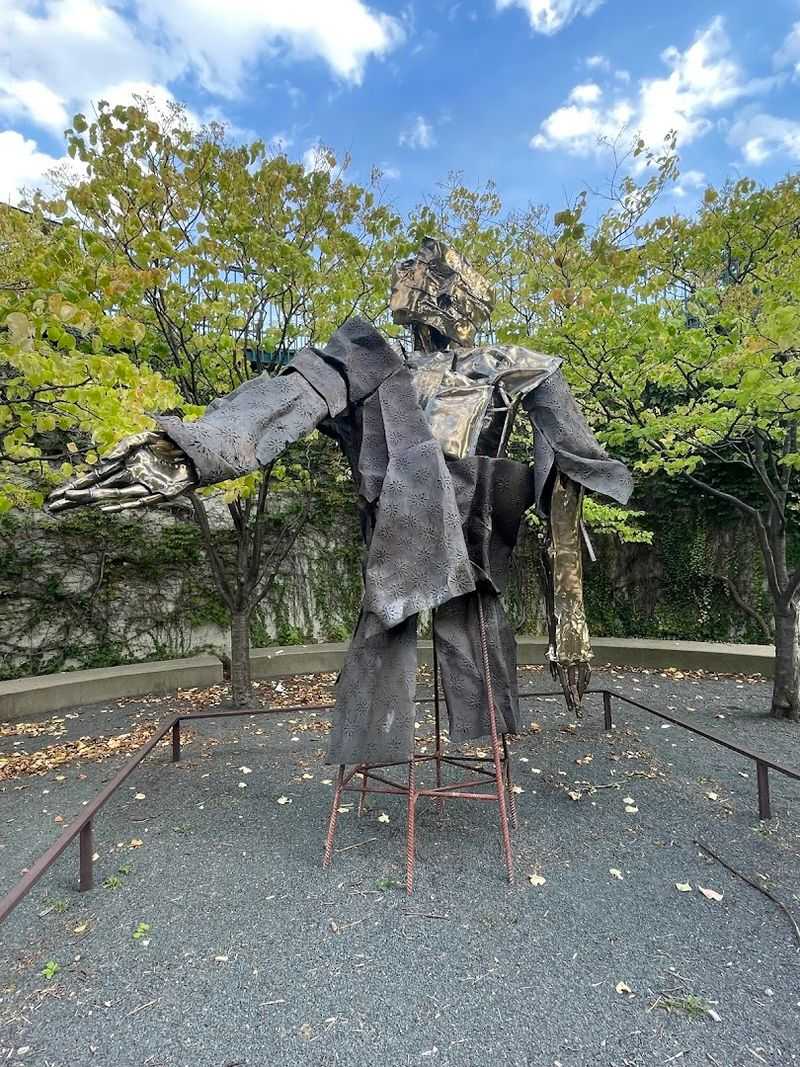
Forty sculptures spread across 11 acres means you are never more than a short walk from something unexpected. The collection at the Minneapolis Sculpture Garden spans a wide range of styles, materials, and moods, which keeps the experience feeling fresh from one end of the grounds to the other.
Some pieces are playful, some unsettling, and some quietly profound.
Artists represented in the garden include some of the most significant names in modern and contemporary art. Each sculpture comes with background information displayed nearby, so you can learn about the artist and the concept without needing a guidebook.
That accessibility is part of what makes the garden feel genuinely welcoming rather than exclusive or intimidating.
A few pieces tend to stop visitors cold in a way that is hard to predict in advance. A large spider sculpture, for example, triggers a physical response before any intellectual interpretation kicks in.
The garden trusts its visitors to sit with that discomfort and let the experience develop at its own pace.
The Blue and Yellow Pedestrian Bridge
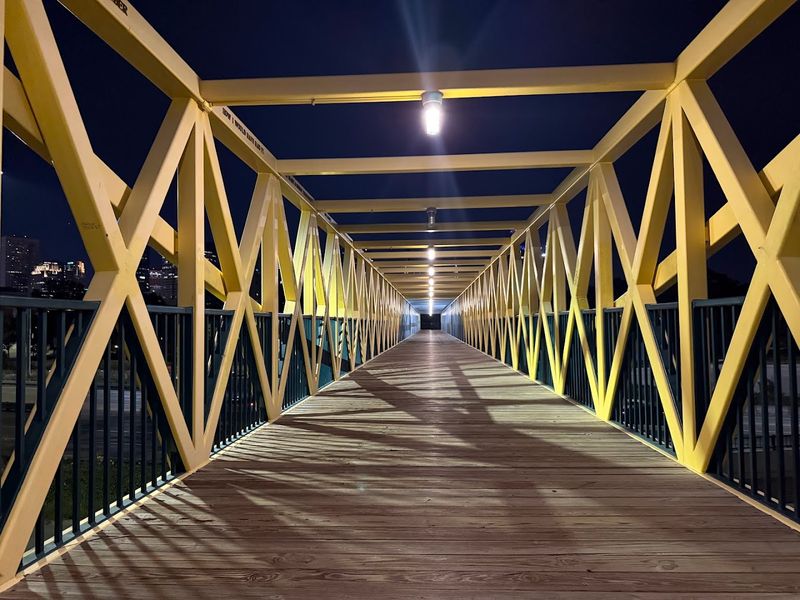
Crossing the blue and yellow pedestrian bridge for the first time is a small but genuinely memorable moment. The bridge connects the main garden grounds to the surrounding parkland, arching over a road below with a burst of color that feels almost celebratory.
It is the kind of architectural detail that makes you smile without quite knowing why.
The view from the top of the bridge is worth pausing for. You can see the garden stretching out in one direction and the city opening up in the other, which gives you a rare sense of where you are in relation to everything around you.
Several visitors mentioned having driven under this bridge many times before finally making the trip up to walk across it.
The bridge has also become a meaningful spot for people in other ways. At least one visitor got engaged at the base of its stairs, which adds a quietly romantic layer to what is already a visually striking structure.
It connects more than just two patches of land.
The Garden as a Free Public Space
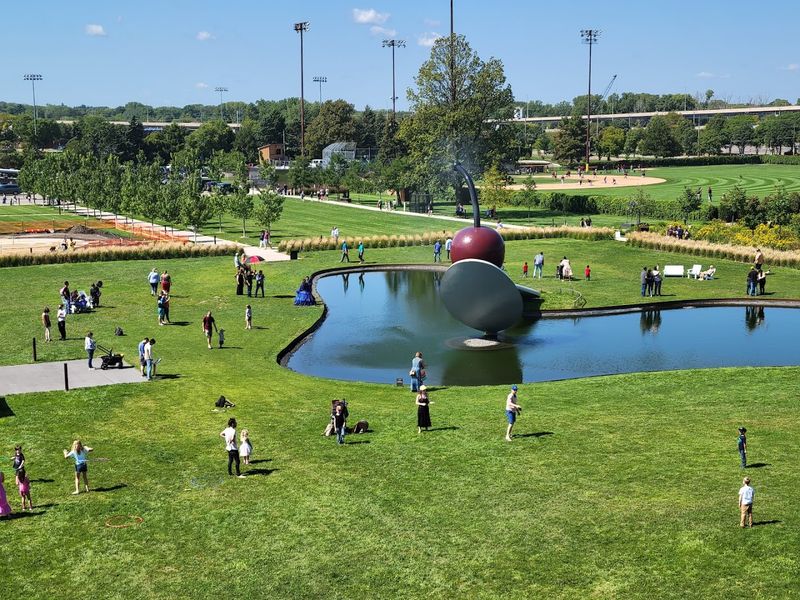
Free admission might sound like a minor detail, but it completely changes how a place feels. The Minneapolis Sculpture Garden is open to everyone, every day of the week, from 6 AM until midnight.
That openness invites a genuinely diverse mix of people who use the space in completely different ways throughout the day.
Early mornings bring joggers and dog walkers moving through the quiet paths. Afternoons fill up with families, tourists, students sketching sculptures, and people eating lunch on the grass.
By evening, the garden takes on a calmer, more reflective quality, with soft lighting illuminating the sculptures in a way that looks entirely different from the daytime experience.
Street parking meters are available around the perimeter, and a parking garage sits across the street for visitors arriving by car. The garden is also easy to reach on foot from nearby Loring Park and the Basilica of Saint Mary.
Visiting Tips and Practical Information
Getting the most out of a visit here takes only a little bit of planning. The garden can be explored fully in about 60 to 90 minutes at a relaxed pace, though many people end up staying longer once they settle into the rhythm of the place.
Comfortable walking shoes are genuinely useful because the paths cover a lot of ground.
Clean public restrooms are available on site, which is a small but meaningful convenience for families and longer visits. The garden is dog-friendly on leash, and the wide paths make it easy to navigate with a stroller or wheelchair.
On warm days, food trucks occasionally set up near the garden entrance, offering a convenient way to extend the afternoon.
The garden sits adjacent to the Walker Art Center and is a short walk from Loring Park, the Basilica of Saint Mary, and several other Minneapolis landmarks. Combining all of these into a single afternoon is entirely realistic.
Address: Minneapolis Sculpture Garden, 725 Vineland Pl, Minneapolis, Minnesota.
