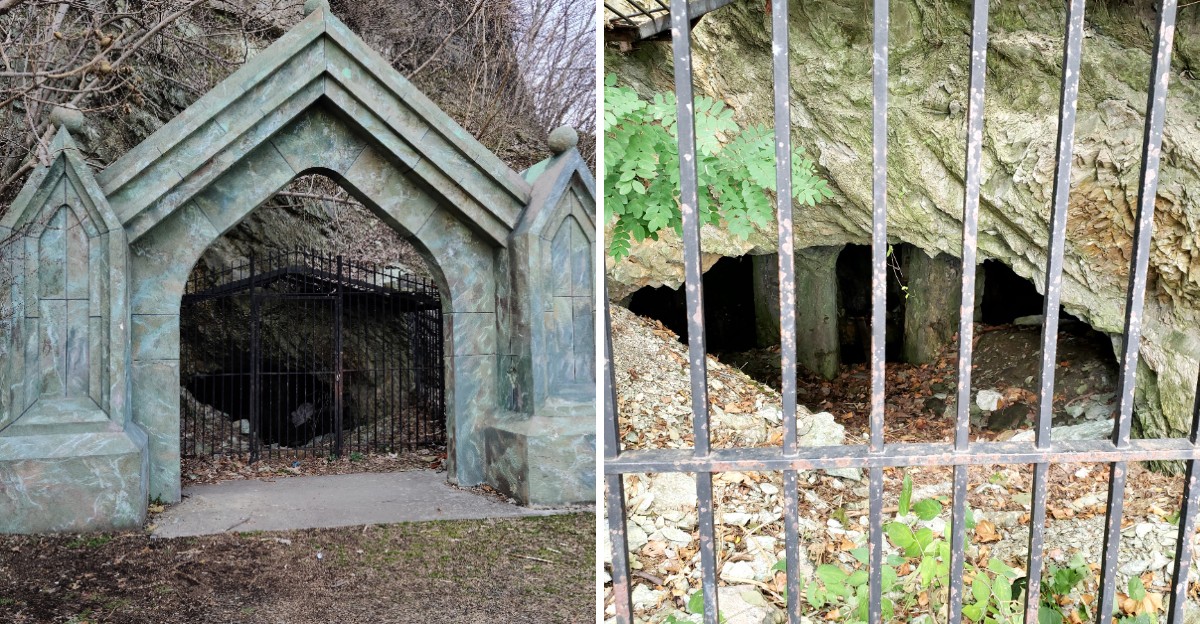
A cave does not usually vanish from a city.
This one practically did.
Built around a natural spring in the 1830s, the grotto eventually fell into neglect and disappeared beneath dirt, rubble, concrete, and decades of forgotten debris.
For years, it sat buried beneath a place people passed without realizing what was underneath.
Then the city dug it out.
That is the part that makes this New Jersey story feel almost unbelievable. A piece of local history went from public curiosity to hidden ruin and then back into view again.
Today, the cave remains one of those odd little reminders that cities are layered with stories.
Some are written in brick.
Others are waiting under the ground.
A Family Folly Carved Into the Cliff
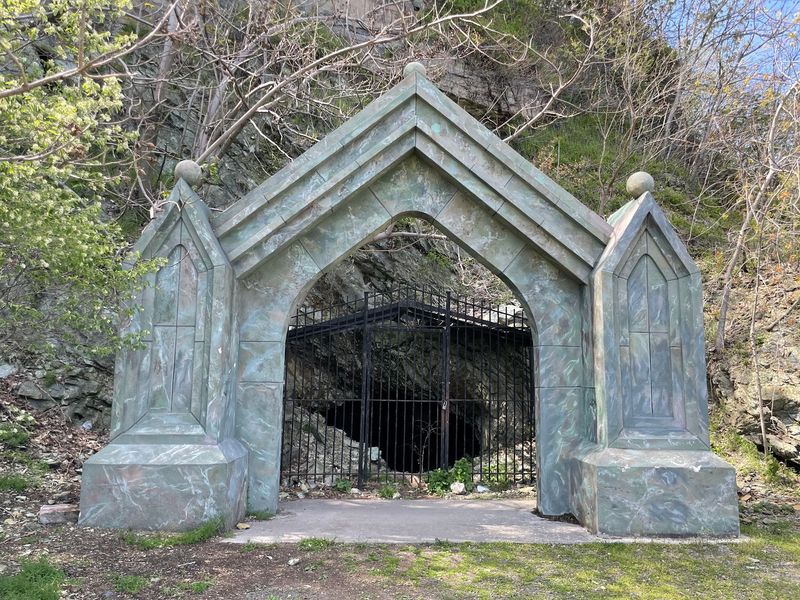
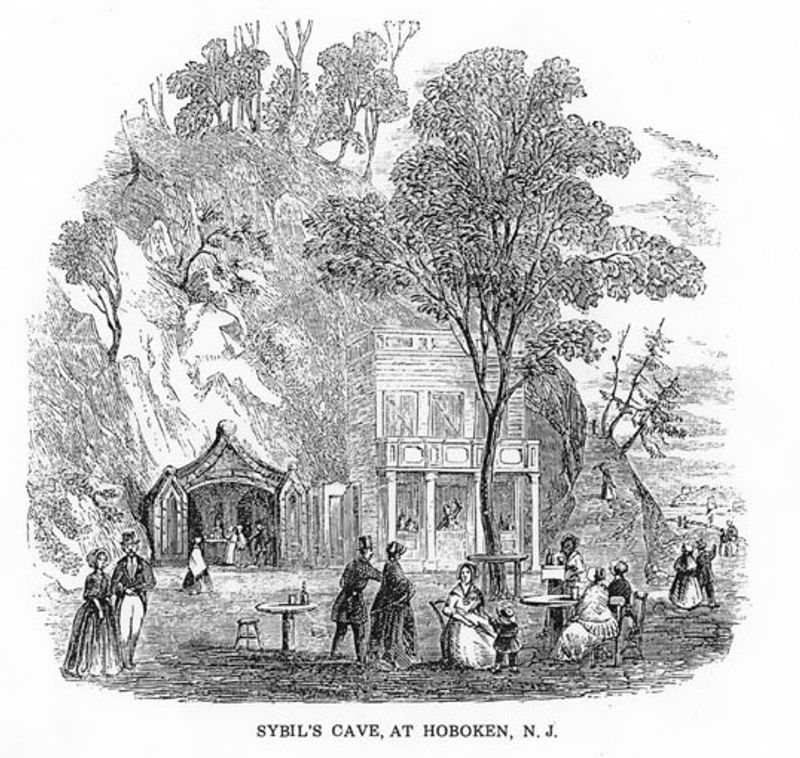
Some families build a garden shed. The Stevens family, who owned a huge stretch of land in Hoboken, went bigger and carved a grotto into the rocky hillside around a natural spring in 1832.
Back then, people loved something called a folly. A folly is a fancy structure built mostly for fun and beauty, not for any serious job.
Think of it as a playful decoration on a giant scale, meant to make a walk more exciting and give folks something to talk about.
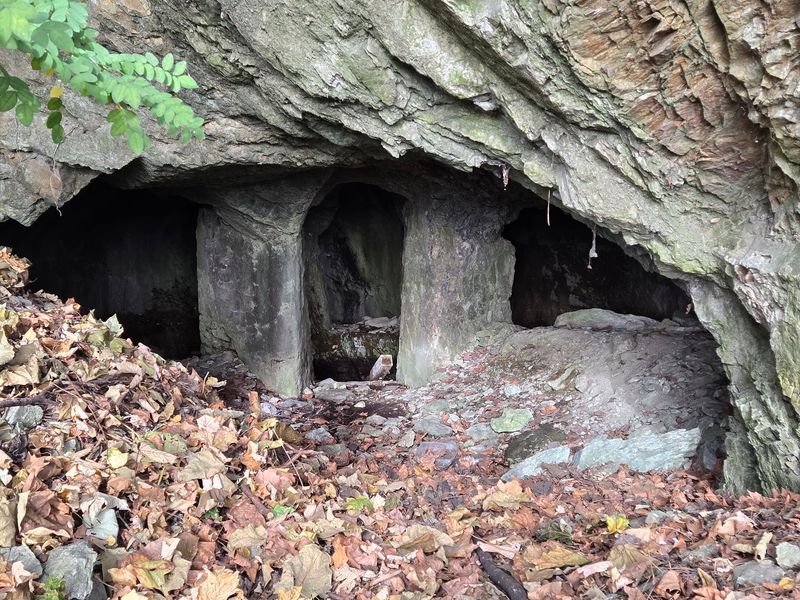
The cave was not formed by nature over thousands of years, so expecting stalactites will only lead to confusion. It was dug out by people who wanted to show off the cool spring tucked inside the cliff.
That detail matters, because it changes how you see the spot. Instead of a wild cavern, you are looking at an early tourist attraction built on purpose.
I find that kind of charming. It shows that people nearly two centuries ago craved shady escapes and little adventures just like we do today.
Knowing the backstory before visiting makes the small arch feel far more meaningful.
Gothic Arches and Old-Time Style
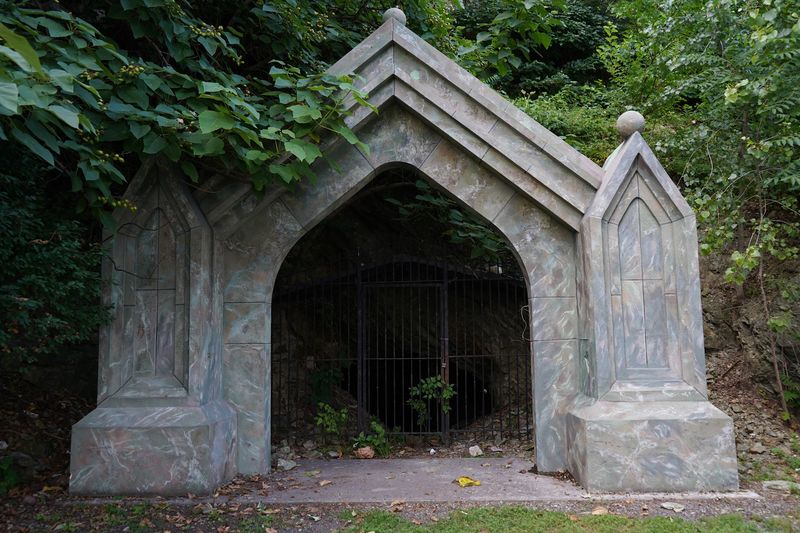
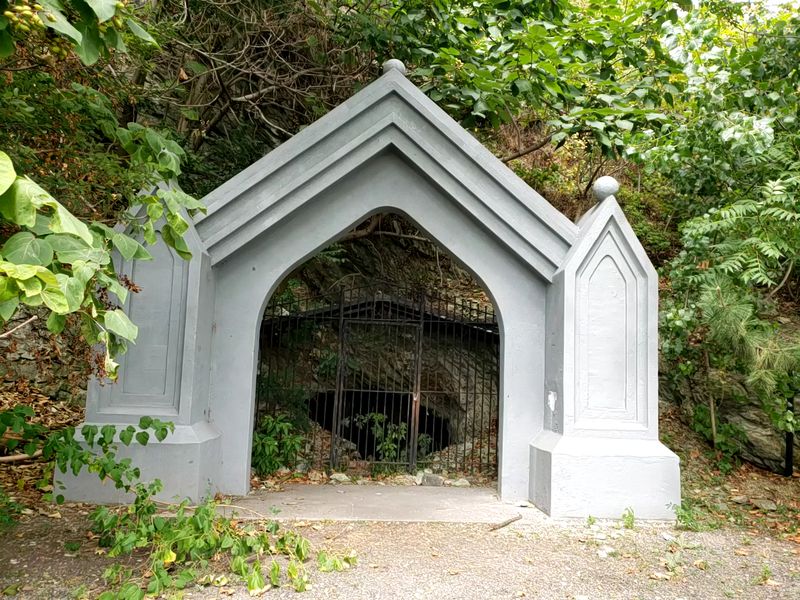
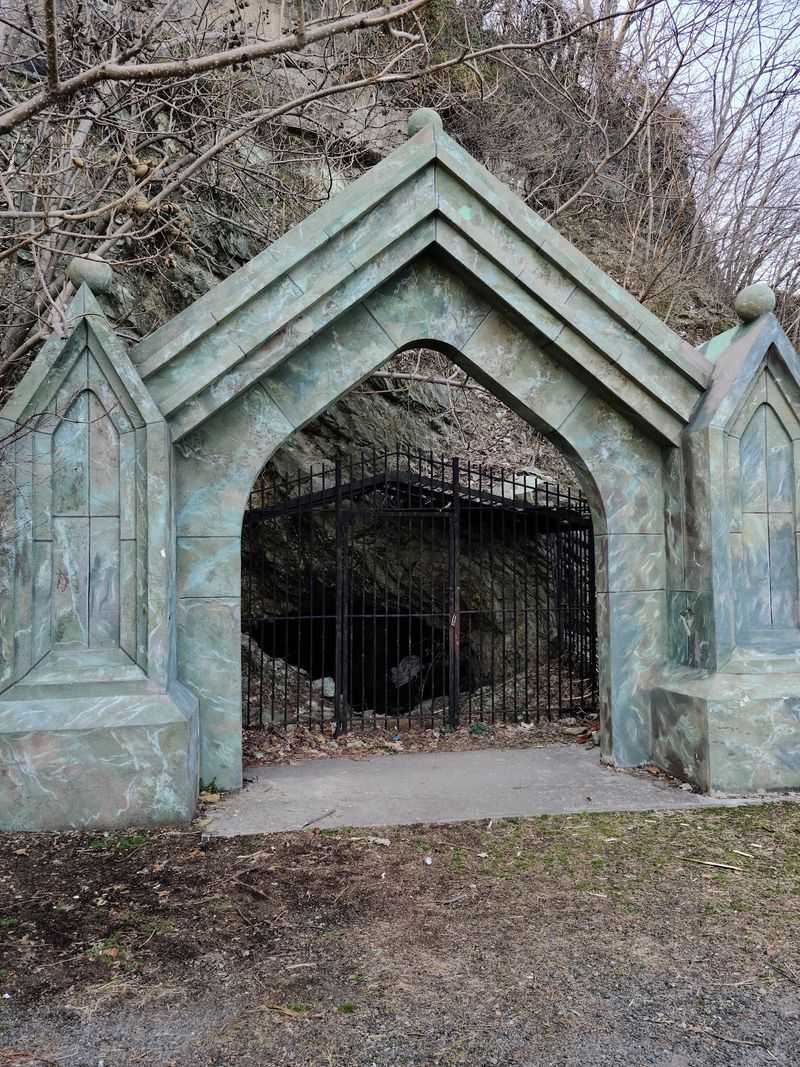
Pointy arches always make me feel like a castle is nearby. The original entrance to the cave was designed in a Gothic style, with that tall, peaked shape you might recognize from old churches and storybook towers.
Gothic design was very popular in the 1800s. It gave buildings a dramatic, slightly mysterious mood, which fit perfectly with a dark, cool opening in a rocky cliff.
Visitors would have spotted the arch from the path and felt pulled toward it, curious about what waited beyond.
For many years, the cave became a well-loved destination for day-trippers. The arch worked like a sign and a doorway at the same time.
It said, come over here, something special is inside.
When you visit today, take a moment to look closely at the shape and the stonework. Notice how the point draws your eyes upward and how the rock around it frames the opening like a picture.
Snap a photo from a few steps back so the cliff and greenery show too. That wider shot captures the old-time feeling much better than a tight close-up.
One Penny for a Cup of Spring Water
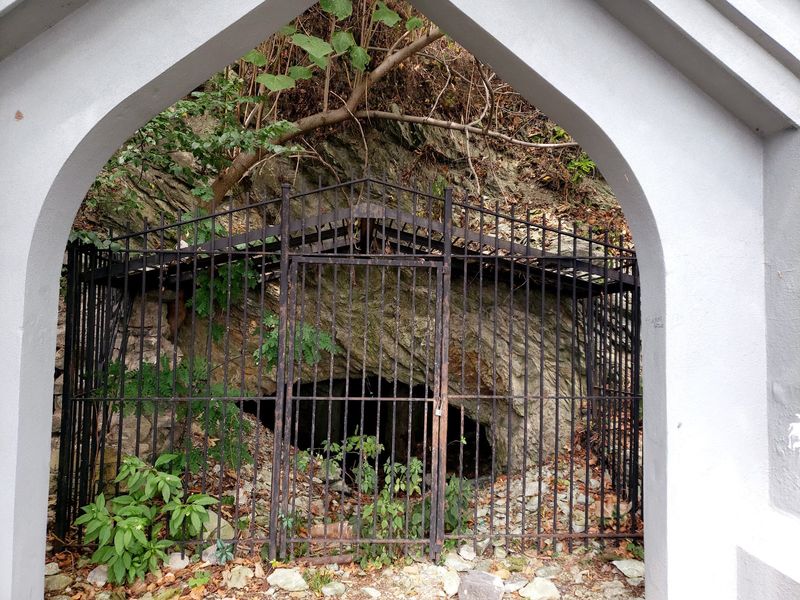
Imagine paying a single penny for a drink and feeling healthier afterward. That was the deal at the cave, where a table inside offered glasses of spring water to thirsty visitors.
The water was described as slightly impregnated with magnesia, a mineral people believed was good for the body. In the 1800s, plenty of folks trusted that natural springs could help them feel refreshed and strong.
A cool cup after a long, sunny walk along the river must have felt amazing.
Here is a fun way to picture it. No refrigerators, no bottled water, no vending machines.
A shady rock room with chilly water bubbling up from the ground would have been the fanciest refreshment stop around.
Sipping that water became a little ritual and a big part of why people kept coming back. It turned a simple hole in a hill into a social spot where friends and families gathered.
Today, nobody sells cups there, so bring your own water bottle for the stroll. It is a small, modern twist on the cave’s oldest tradition of staying refreshed by the river.
A Mystery That Never Got Solved
Not every chapter here is cheerful. In the summer of 1841, the body of a young woman named Mary Rogers was found near the cave, and the news spread across the country.
She was often called the Beautiful Cigar Girl because of where she had worked in New York. People were shocked, newspapers ran story after story, and everyone wanted answers.
Sadly, those answers never came, and the case remains unsolved to this day.
That tragedy changed how people saw the area. A place once linked with relaxing walks and cool water suddenly carried a darker shadow.
It is a reminder that history is not always neat or happy.
When visiting, treat the site with quiet respect. A real person lost her life, and her story deserves care rather than spooky jokes.
Reading a bit about the case before you go can help you understand why the spot still pulls in curious minds. Mysteries tend to stick around in our imaginations, and this one has lasted well over a century and a half without a final answer.
Edgar Allan Poe Takes Notice
Book lovers, this part is for you. The real-life mystery near the cave caught the attention of Edgar Allan Poe, the famous writer known for spooky poems and tales.
Poe used the case as inspiration for his detective story called The Mystery of Marie Rogêt. He moved the setting to Paris and changed the names, but the story closely followed what happened with Mary Rogers.
Poe was one of the earliest writers of detective fiction, so this tale holds a special spot in literary history.
Pretty wild, right? A small grotto on a riverbank helped shape a story still read in classrooms today.
If you enjoy reading, try a fun challenge. Look up the story, read it at home, and then visit Sybil’s Cave to see the real place behind the fiction.
Standing near the river after finishing the last page gives the setting a whole new layer. You might start noticing how writers borrow from real life, turning headlines into puzzles.
It is a great family activity too, sparking conversations about clues, fairness, and why some mysteries never get closure.
Buried and Forgotten for Decades
Things change fast in a growing city. As the 1800s wound down, the Hoboken waterfront shifted toward industry, with busy docks, factories, and far less interest in quiet springs.
The cave slowly lost its sparkle. By the 1930s, it was largely forgotten and reportedly filled in with building debris and dirt.
The once-proud Gothic entrance disappeared completely, hidden beneath layers of rubble.
Think about that for a second. People walked right past the spot for decades, never guessing a piece of history sat just behind the dirt.
This chapter teaches a useful lesson about cities. Old places can vanish not because anyone hates them, but simply because priorities change and nobody speaks up.
Many towns have lost treasures that way. Supporting local history groups, visiting small museums, and learning about your own neighborhood all help keep stories from being buried.
The cave’s long sleep shows how easy forgetting can be. Thankfully, it also sets up one of the best comeback stories along the whole Hudson River, which is exactly where things get exciting again.
Shovels Out, History Back
Here comes my favorite part. In the early 2000s, local history fans grew curious about the lost grotto and started searching for clues about where it was hidden.
Their interest paid off. In 2007, the City of Hoboken took on the big job of excavating and clearing the site.
Crews removed the old debris and brought the cave back into daylight after its very long nap.
That kind of project takes patience, planning, and a community that truly cares about its past. Digging into a hillside along a busy road is no simple chore.
Yet the city decided this little piece of history was worth saving.
The comeback shows how much a town can do when people pay attention to old stories. It also proves that lost things are not always gone forever.
Sometimes they are just waiting under a pile of dirt for someone to ask questions. When you visit, picture the cleared rock and imagine the moment workers first spotted the opening again.
That image alone makes the short walk over feel like a mini treasure hunt.
Archaeologists and a Spring That Keeps Flowing
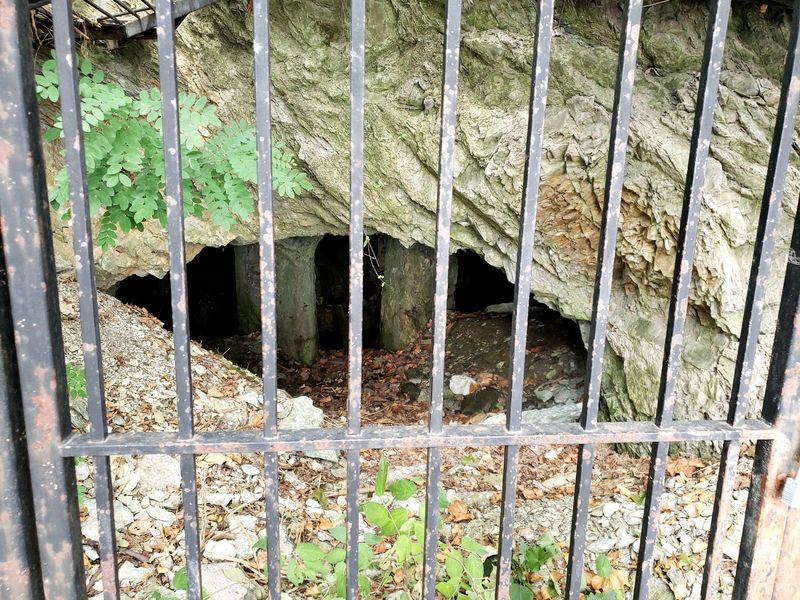
Science joined the story in 2009. With a grant from the New Jersey Historic Trust, the Hoboken Historical Museum began an archaeological investigation of the cave.
Experts carefully explored the interior to learn how it was built and how it changed over time. That research helps guide future care, making sure any work respects the site instead of harming it.
Archaeology is a bit like detective work, only with brushes, notes, and lots of patience.
And the spring? Still there.
The same natural water that first inspired the Stevens family continues to flow today.
One important tip though. The water is no longer considered safe to drink because of impurities, so admire it without tasting it.
Times have changed since the penny-cup days, and city runoff affects underground water. Even so, I love that the spring outlasted nearly two hundred years of construction, burial, and digging.
It is a quiet reminder that nature can hang on in surprising places, right beside roads, buildings, and crowds of joggers zipping along the river path.
Skyline Views by the Stone Arch

Turn around after looking at the arch, and the scenery steals the show. The cave sits at the base of the cliffs along Frank Sinatra Drive, facing the Hudson River and a sweeping Manhattan skyline.
This makes it a lovely stop on a waterfront walk or run. Leafy vines and trees around the site offer some shade on warm days, and river breezes keep things pleasant.
The nearby path is popular with walkers, joggers, and anyone craving fresh air.
Late afternoon is a sweet time to visit. The light gets warm, the buildings across the water glow, and photos come out beautifully.
Parking can be tricky in this area, so walking or using transit is usually easier. Plan to combine the stop with other nearby waterfront sights, since the cave itself is a quick visit.
Read up on the history before arriving so every detail clicks into place. Sybil’s Cave, located at Frank Sinatra Dr, Hoboken, NJ 07030, is a small but unforgettable piece of New Jersey history, once lost and now proudly back in view.
