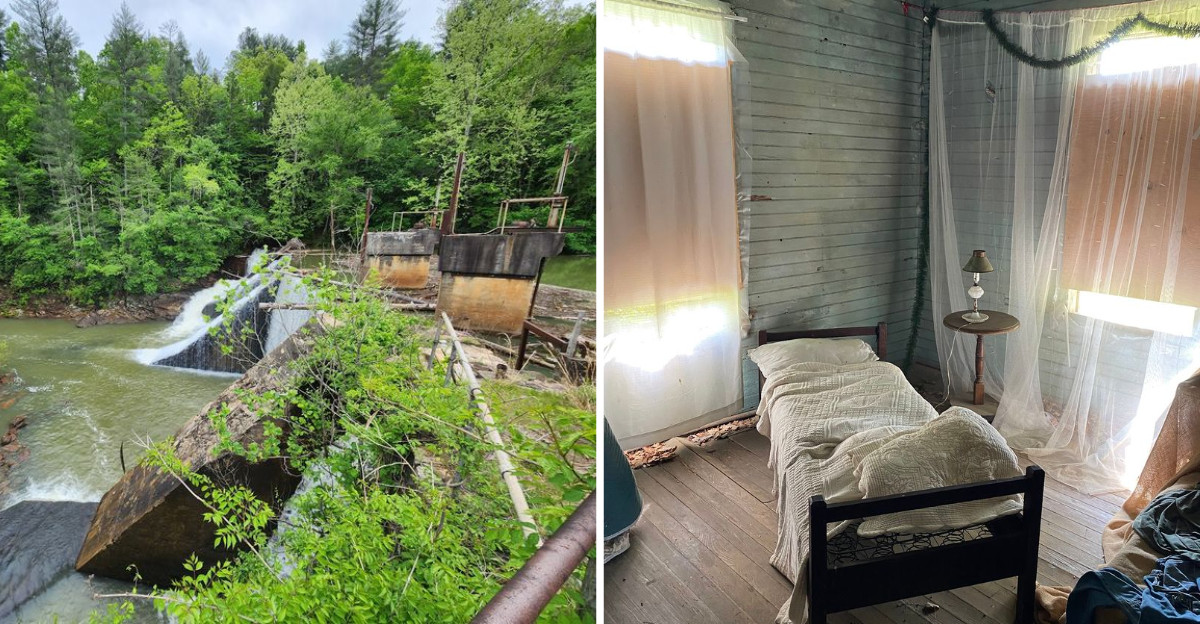
I had driven out past a small town expecting a roadside curiosity and found a whole village sitting in the trees instead, brick chimneys and sagging porches and a river running low behind it all.
Quiet settled over that North Carolina place in a way that made my own footsteps sound loud on the gravel.
It was a working cotton yarn community more than a century ago, and when film crews came looking for a district to stand in for a famous dystopian story, they barely had to change a thing. The detail stuck with me the entire visit.
Real people lived here, raised kids here, walked to the company store here, and the movie fame is honestly the smaller half of the story.
The mill closed decades ago, and the last families moved out long before the cameras arrived, but the houses still hold the shape of the lives that were lived in them.
By the time I left I cared far more about the families than the cameras.
The Village That Needed No Set Dressing
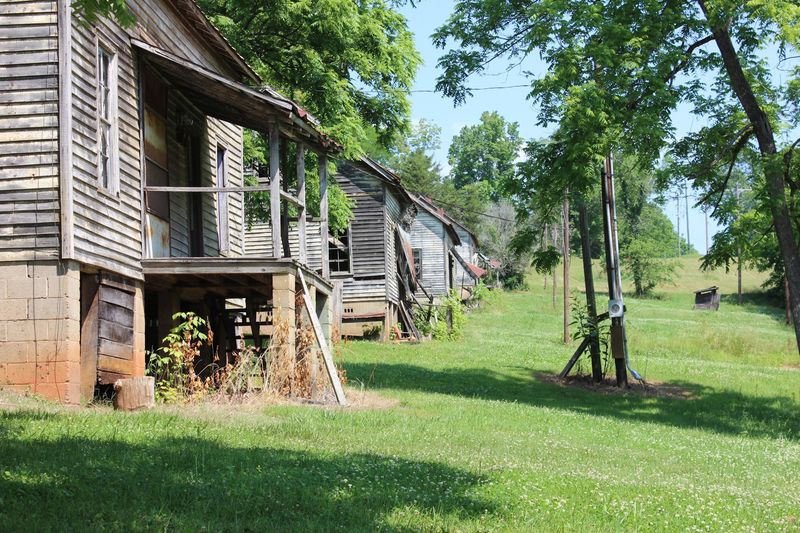
Film crews usually build what they need. Here, they mostly just showed up and started rolling.
The cottages along the main road were already gray and weather-worn, with tin roofs, sagging porch posts, and the kind of narrow wooden steps that creak just looking at them. That untouched quality is exactly why the production team picked this spot for District 12 in the first film, and filming wrapped in only about nine days.
I kept trying to spot where the movie ended and the real village began, and I could not. There is no fake facade, no plywood propped up behind a shell.
What you see is what mill families actually walked past on their way to a shift. Roughly twenty of the original thirty-five or so cottages still stand, spaced out in the way company towns were laid out, close enough for neighbors to hear each other, far enough for a garden.
My advice is to slow down here instead of racing to the famous spots. Look at the doorframes, the hand-cut boards, the way the hillside dips toward the water.
The whole place has a hush to it that photographs never quite capture. Once you notice that, the film connection becomes a bonus rather than the main event.
Katniss Everdeen’s Cottage, Also Known as House Number 16
House number sixteen is the one everybody photographs, and I get why. It is the cottage that stood in as Katniss Everdeen’s home, and it looks almost exactly the way it did on screen.
The porch, the plain siding, the shadowed doorway that felt so heavy in the film, all still there. Fans show up quietly, take a picture, and then just stand looking at it for a while.
What surprised me was how ordinary it feels up close. Small rooms, low ceilings, a footprint no bigger than a modern garage.
Real mill families squeezed into houses like this, sometimes with several children, and that reality hits harder than any fictional storyline. I found myself thinking about laundry lines and coal buckets instead of arenas.
Going inside is not allowed, and honestly you would not want to. Floors in the untouched homes are collapsing, and staying on the main road is both the rule and plain common sense.
Bring a zoom lens if you want detail shots of the windows and trim. Morning light softens the whole row nicely.
And if you visit with someone who has never seen the movies, they will still find it fascinating. The house tells its own story without help.
The Company Store That Turned Into Mellark’s Bakery
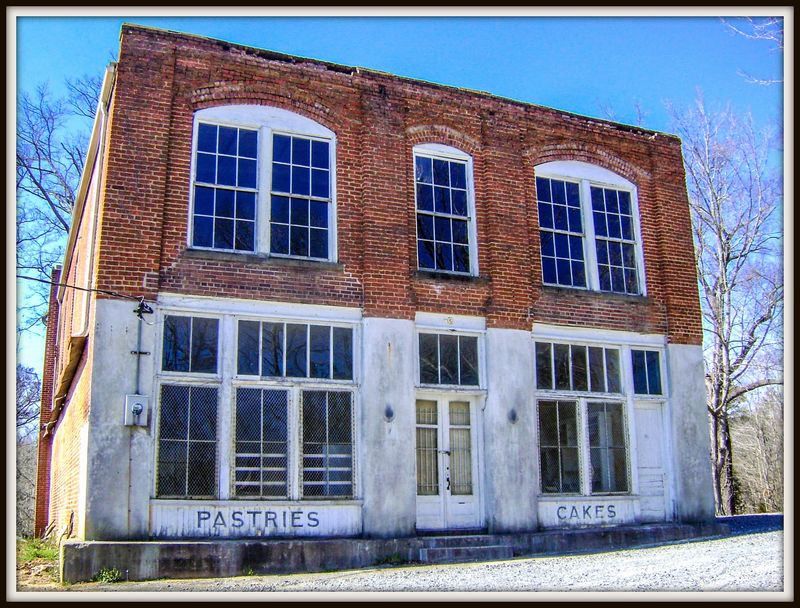
Of all the buildings, the brick company store is the one I circled twice. Two stories, solid, with a presence the wooden cottages simply do not have.
In the film it became Mellark’s Bakery, and that transformation is probably the most recognizable piece of the entire village. Standing in front of it, the shift between real history and movie history feels razor thin.
Before any cameras existed, the store did far more than sell goods. Between 1907 and 1917 it also served as a schoolroom and a gathering place for church services, which means the same walls handled arithmetic, hymns, and flour sacks.
That kind of multi-purpose thrift says a lot about how small communities functioned back then.
Guided tours are the best way to hear how the store operated, including how workers bought supplies and how central the building was to daily routine. The guides focus on the mill families first, which I appreciated.
Photographers should note the brickwork and the window arrangement, especially in late afternoon light. It reads beautifully in black and white.
Give yourself a few extra minutes on this corner. It is the emotional center of the village, movie or no movie.
Cotton Yarn, Water Power, and a Mill That Burned
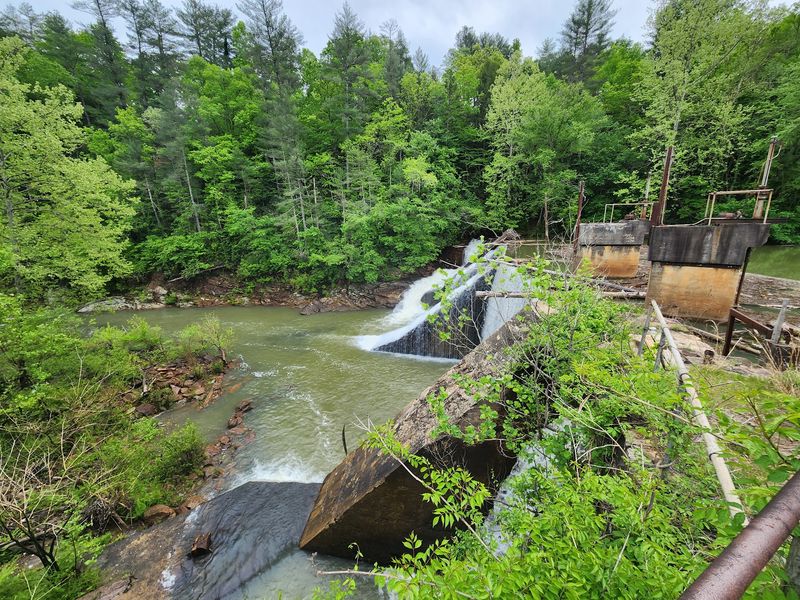
Here is the part that changed how I saw the whole valley. North Carolina’s The Henry River Manufacturing Company started up around 1901 to 1905, founded by the Aderholdt and Rudisill families, and it produced fine cotton yarns.
Water power ran the machinery first. Steam took over in 1914, and electricity arrived by 1926, which is a neat little timeline of American industry compressed into one riverbank.
The mill itself is gone. Operations ended in the late 1960s or early 1970s as overseas competition squeezed the business, and in 1977 fire destroyed the main mill building, believed to have started with a lightning strike.
Walking near where it stood, all that remains are foundations, the dam, and the sound of moving water.
I sat on a rock for a few minutes just listening. Something about the absence of the mill makes the surviving houses feel more fragile, like a set of teeth missing its front row.
If industrial history interests you at all, ask about the water and fire-protection systems the village was built with. Planned communities like this were surprisingly engineered.
The river still does exactly what it always did. Only the purpose changed.
Tours, Rules, and How to Actually Visit Without Falling Through a Floor
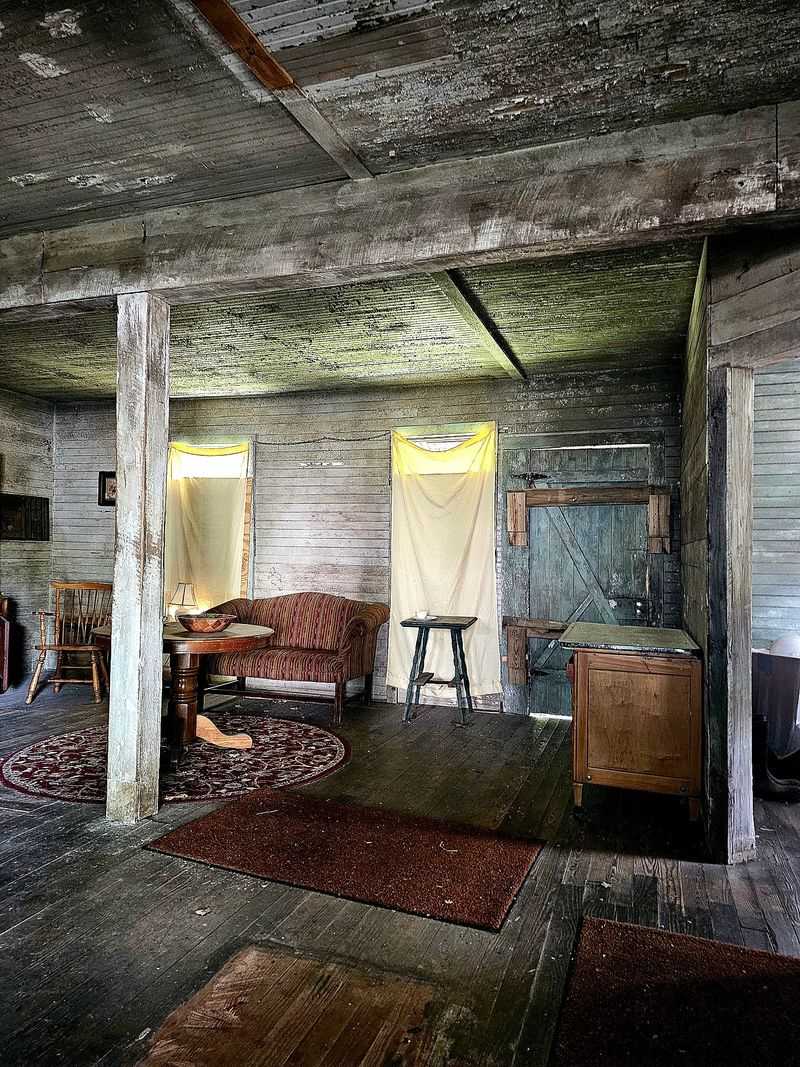
Practical stuff matters more here than at most attractions, mainly because half the buildings are genuinely unsafe. The village is open to the public, with self-guided exploring and guided historic tours that usually run about an hour.
I would take the guided option first. You learn which house is which, and you get context that no roadside sign could deliver.
Rules are straightforward. Stay on the main road, do not enter the untouched homes, and remember that collapsing floors are a real hazard rather than a scary-sounding disclaimer.
The property is also completely tobacco-free, including inside private vehicles, so plan accordingly.
Footwear made a difference for me. Gravel, uneven ground, and a little slope mean sneakers or light hiking shoes beat sandals every time.
Leashed, friendly dogs are welcome, which I thought was a nice touch for road-trippers traveling with a pup. Bring water, especially in summer, since shade comes and goes.
Beyond the standard tours, the village hosts special events and paranormal tours for people drawn to the after-dark side of things. Different mood entirely, same buildings.
Whatever you choose, treat it like someone’s home rather than a ruin. That mindset improves the visit enormously.
Sleeping Overnight in a Restored Mill House
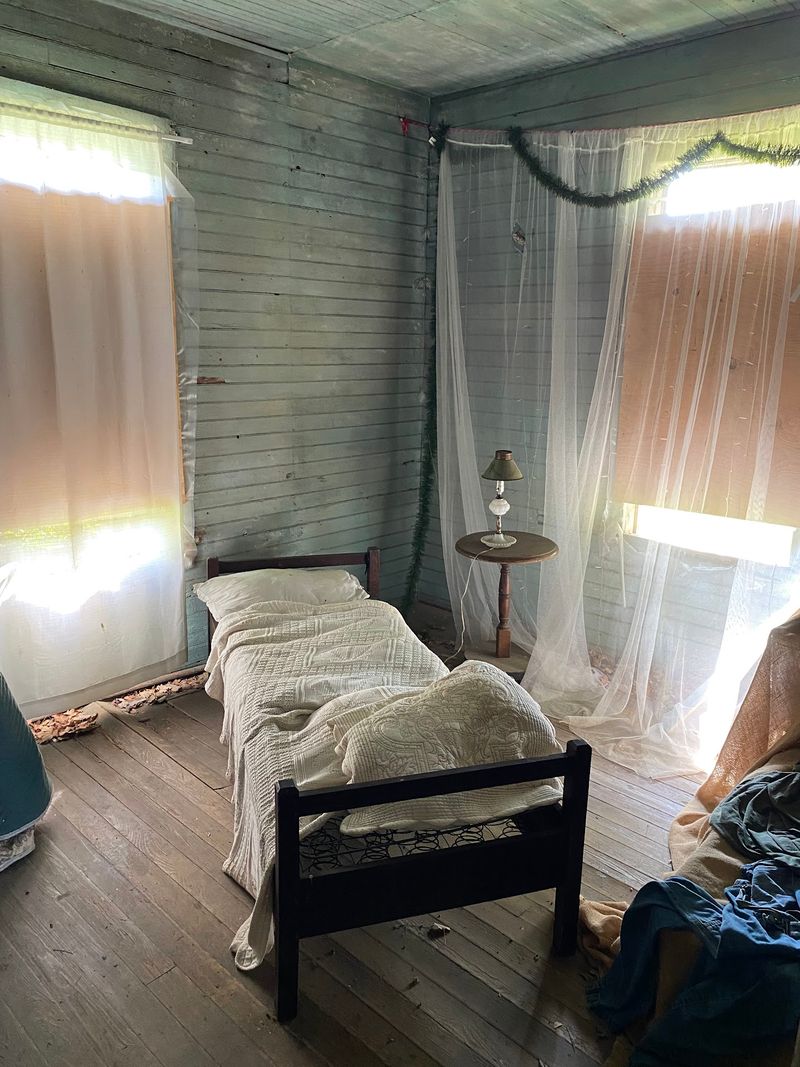
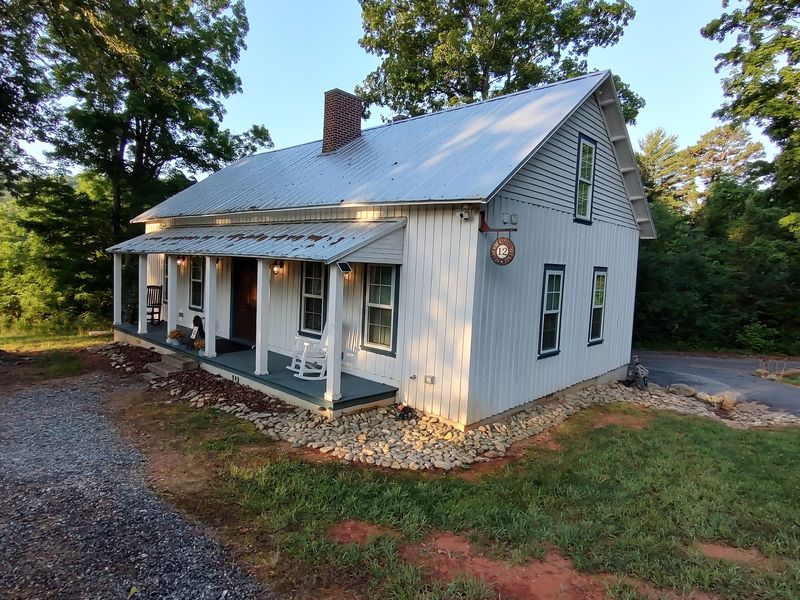
One cottage breaks the pattern completely. It has been renovated into overnight lodging with two rentable units, and seeing fresh paint and lit windows among all that weathered wood is genuinely startling.
I peeked from the road and felt a small pang of jealousy toward whoever was staying there.
Spending a night changes the experience in an obvious way. Day visitors get the tour and the photos, then drive off toward Hickory or Morganton for supper.
Guests get the village at dusk, when the light goes gold behind the trees and the river noise becomes the only soundtrack.
The restoration also proves something important. These houses are not doomed, they are just waiting for attention, and one finished example shows what careful work can accomplish.
For anyone planning a Hunger Games-themed trip, this is the closest thing to living inside the story without any theme-park nonsense.
Book well ahead, because two units fill up fast, especially around fall color season. Weekdays tend to be calmer if you want the grounds mostly to yourself.
Pack simply and expect quiet. That is the whole appeal, and it works better than any amenity list could.
Preservation, the National Register, and Why It Still Stands
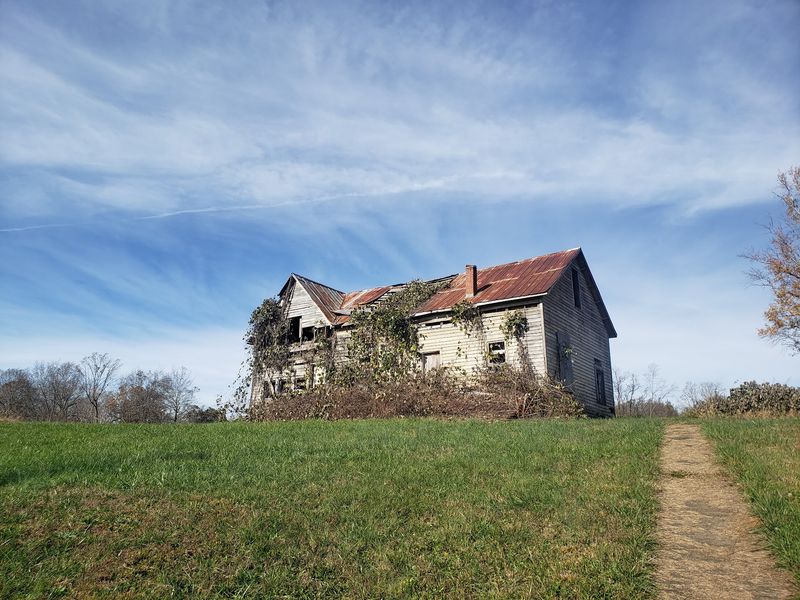
Abandoned places usually disappear. Roofs cave in, vines take over, and eventually somebody bulldozes the lot.
Henry River Mill Village came close to that ending. Then Calvin Reyes and his family purchased the property in 2017 with preservation as the goal, and in 2019 the village was added to the National Register of Historic Places.
You can feel that shift while walking around. Some buildings are stabilized, others are clearly next in line, and the overall sense is of work in progress rather than slow decay.
I liked that nothing has been overly polished. The honesty of the place is its best feature.
The film connection funds and fuels a lot of the interest, and the owners have leaned into that without letting it swallow the real history. One mill house was actually sacrificed for an explosion scene during production, which is a strange footnote in a preservation story.
Visiting supports the effort directly, so showing up matters. So does following the rules and not treating fragile structures like a playground.
Leaving, I kept looking in the mirror at those chimneys through the trees. A century of work, nine days of filming, and somehow both stories fit in one small valley.
Address: 4255 Henry River Road, Hickory, North Carolina 28602
