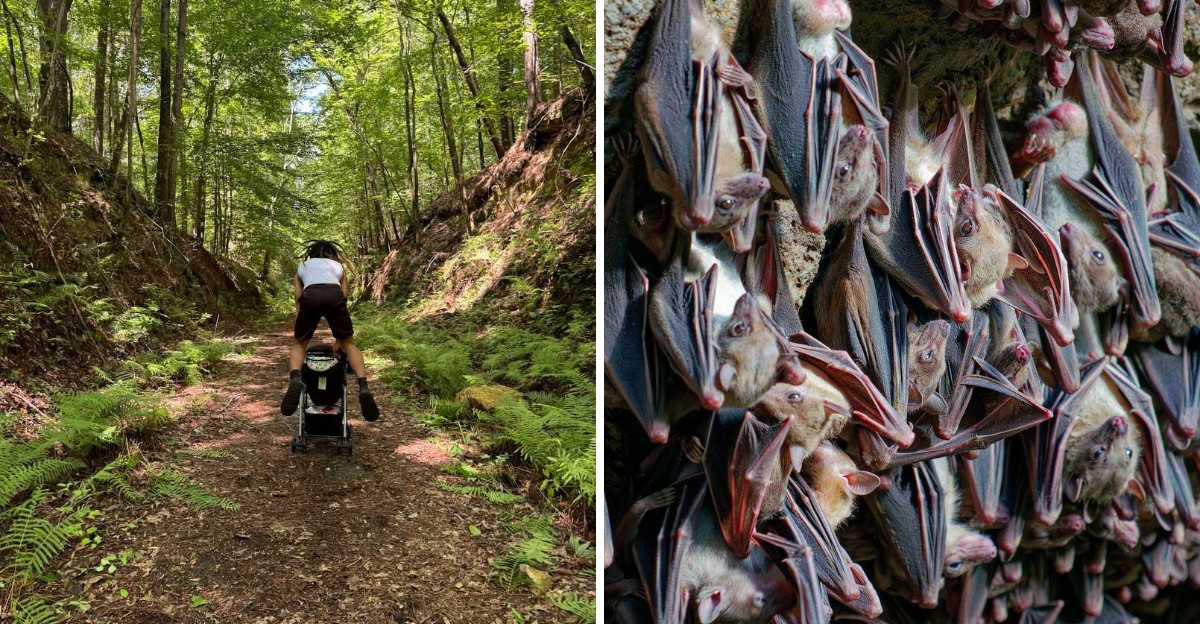
A wooden fence marks the end of the trail. Past it, darkness.
And thousands of bats that never got word the trains stopped running back in 1899. That’s when this tunnel was finished, back when steam engines were the loudest thing around for miles.
Now birds do most of the talking. The path leading in stays flat and smooth, easy enough for strollers, bikes, or wheelchairs without breaking a sweat.
Ferns crowd the shaded stretches where rail cars used to rumble through. Somewhere in Alabama, an old railroad town still hums with that same quiet energy, even though the tracks disappeared decades ago.
Bats get all the attention at the end, but honestly, the walk earns its own credit. Bring water.
This state has more forgotten tunnels than people realize, and this one still has tenants.
The 1899 Tunnel That Named A Whole Community
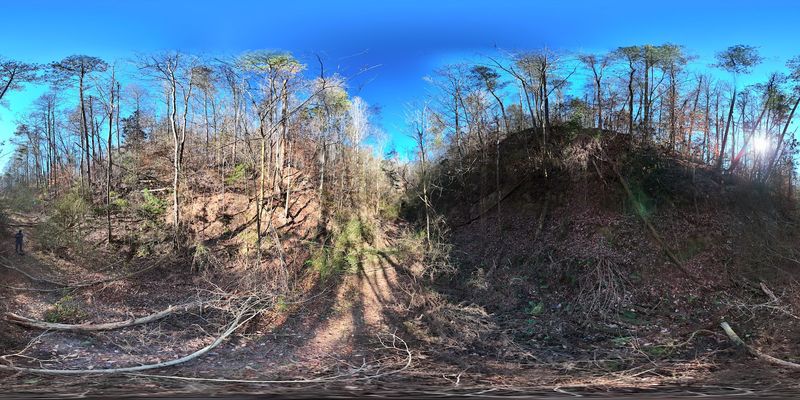
Four crews of 15 men each worked day and night, digging from both ends toward a meeting point deep in the earth. Local legend says they missed alignment by only a half inch.
Consider the tools of 1899 and that becomes genuinely impressive. No lasers, no GPS, just math, lanterns, and stubborn determination.
The finished bore stretches roughly 800 to 840 feet and wears a concrete lining along its length. Trains rolled through it for nearly a century before the line was abandoned around 1994.
Its presence gave the surrounding community of Tunnel Springs its name, which is about as direct as naming gets. Rural Alabama does not tend to overcomplicate things.
Reports describe a caved-in bank on the north end, which lets water pool inside and turns the interior into a dark, echoing, flooded space. Sound bounces strangely in there.
One important note for planning: the tunnel sits on private property and is not part of the public trail. The paved path currently dead-ends at a wooden fence, with the tunnel roughly 100 yards beyond it.
Entering requires permission from the landowner, so respect the boundary and enjoy the view from where the pavement stops. The story travels just fine across that distance.
An Old Railbed With A Second Life
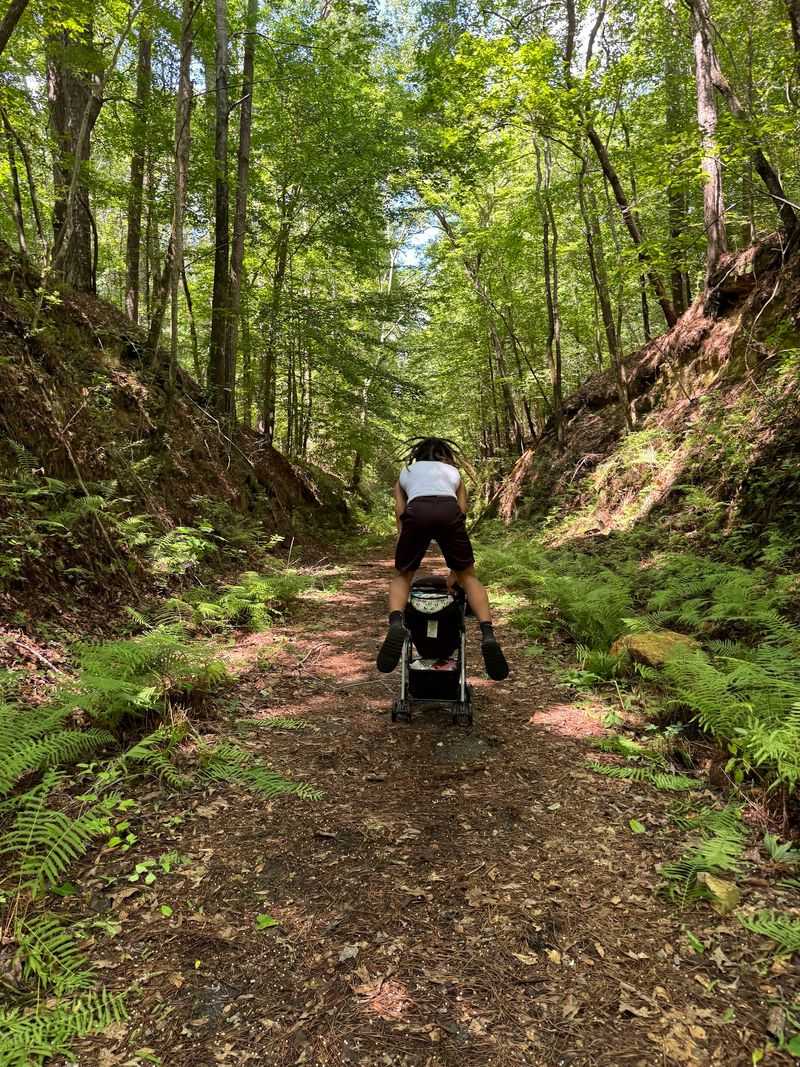
Trains once hauled timber and passengers along this exact route, part of the Louisville and Nashville Railroad system built in the mid-1800s. The rails came up, the ties disappeared, and asphalt took their place.
Today about 1.7 miles of finished path run through Monroe County, opened in sections starting back in 2018. The grade stays almost perfectly flat, because railroads never liked hills any more than hikers do.
That flatness is the quiet gift here. Strollers roll easily, bikes coast without effort, and wheelchair users can move the full length without fighting loose gravel or roots.
Rail trails across the country follow this same idea, turning forgotten corridors into public space, but few carry a story quite this specific. The old railbed still feels purposeful underfoot, straight as a ruler where nature would have curved.
Walkers, joggers, cyclists, and inline skaters all share the surface without much crowding. Plenty of days pass with only a handful of people out there.
Look closely at the edges and hints of the past show up: cuts through banks, subtle embankments, the way the forest pulls back in a perfect line. It reads like a map drawn by engineers over a century ago.
Small, well kept, and genuinely peaceful, the path proves that big experiences do not always need big mileage.
Thousands Of Bats Call The Dark Bore Home
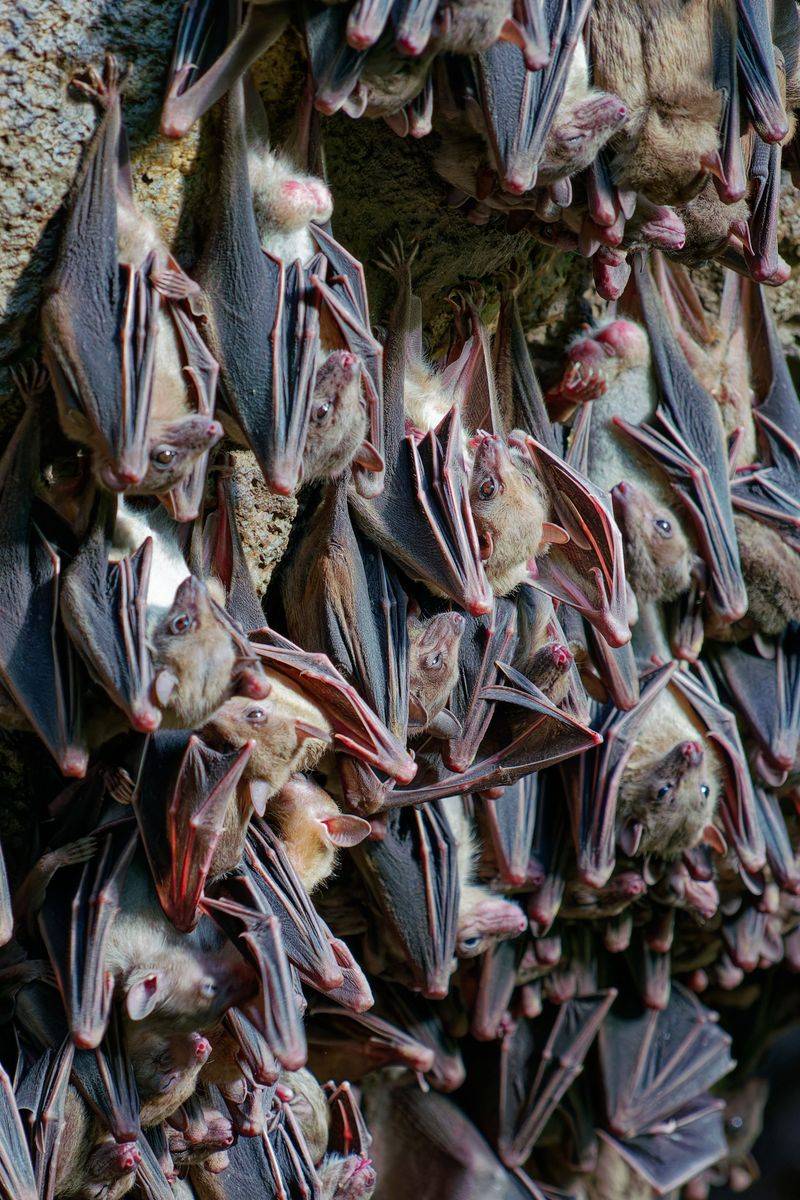
Cool, dark, and undisturbed, the abandoned tunnel checks every box on a bat’s wish list. Thousands of them roost inside.
Alabama’s Nongame Program biologists have documented the state’s largest known summer population of Brazilian free-tailed bats inside an abandoned railroad tunnel, which shows just how valuable these forgotten structures have become.
Old mines and caves serve similar roles across the Southeast.
Brazilian free-tailed bats, also called Mexican free-tailed bats, generally occupy such roosts from May through October before heading south for winter. Their migration abilities border on absurd, with recorded flight altitudes reaching 10,000 feet and speeds near 60 miles per hour.
Around dusk, bats leave their roosts to hunt insects, and a single colony can put away an enormous quantity of mosquitoes, moths, and crop pests. Nationwide, bats deliver pest control services valued at more than three billion dollars each year.
Free crop protection, delivered nightly, by animals most people never see.
Nearly every bat species in Alabama is listed with Highest, High, or Moderate Conservation Concern in the State’s Wildlife Action Plan. Habitat loss, pesticides, and White-Nose Syndrome all weigh on their numbers.
Keeping distance from roosts matters, since disturbance burns energy the bats cannot spare. Appreciating them from the trail is the kindest approach.
Fern Lined Shade And Forest Air
Summer heat in south Alabama has a reputation, and this path handles it better than most open routes. Large trees border much of the corridor, throwing shade across the asphalt for long stretches.
Ferns crowd the edges in thick green waves, so dense in places that they lean over the pavement. The effect is cool, green, and slightly jungly.
Mornings bring mist that hangs low between trunks, and the temperature dips noticeably once the canopy closes overhead. Late afternoon light slants sideways and turns the ferns almost gold.
Birdsong carries easily here because traffic noise barely reaches the trail. Woodpeckers, wrens, and the occasional hawk make themselves known.
Wildflowers pop up seasonally along the shoulders, and butterflies work the sunny gaps where the canopy thins. Deer tracks show in soft spots after rain.
Rural southwest Alabama does not get the attention that the Gulf beaches or the north Alabama mountains receive, which works in favor of anyone looking for quiet. The scenery here is understated rather than dramatic.
Bug spray is a genuinely good idea from late spring through early fall, since the same damp shade that feels wonderful also suits mosquitoes. A light long-sleeve shirt helps.
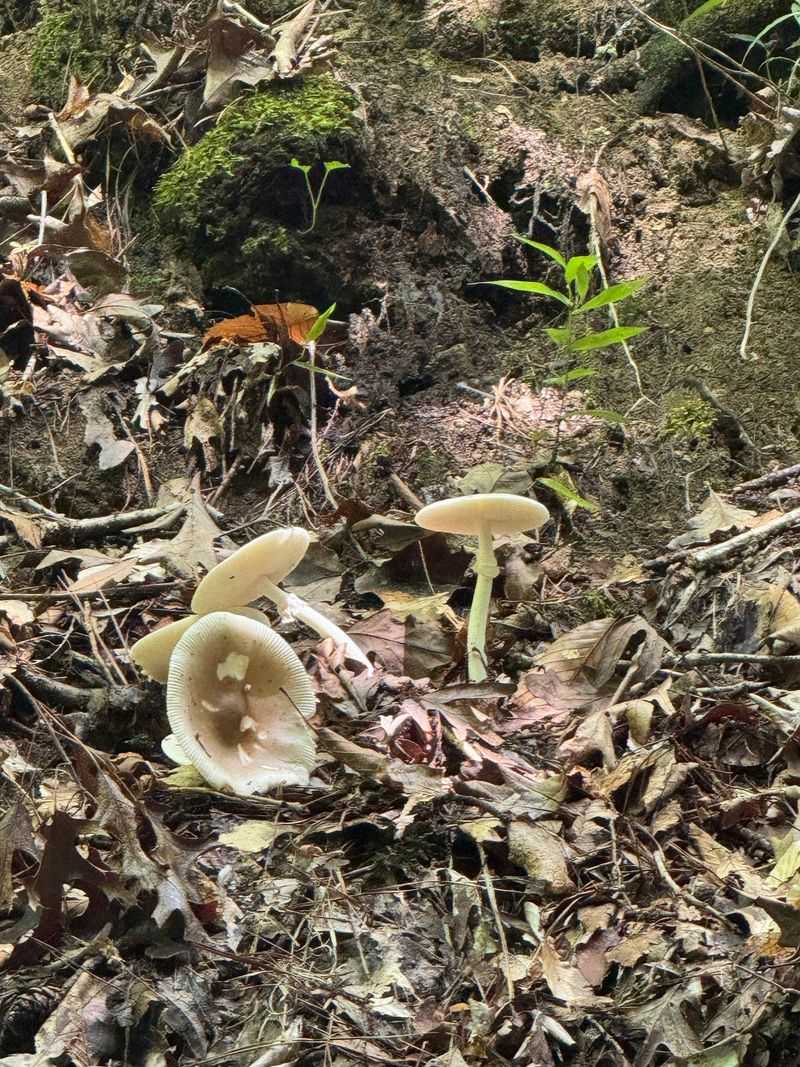
Slow walking rewards the eye. Mushrooms, mosses, and tiny details fill the gaps between the big trees.
Benches, Bike Racks, And An Easy Trailhead
Parking sorts itself out quickly here. The primary trailhead sits near the intersection of Nettles Road and State Route 21, with room for roughly a dozen vehicles.
Rest areas appear along the route, equipped with benches and bike parking, which makes the trail friendly for families who need frequent stops. Older visitors appreciate them too.
Hours run seven days a week, from 30 minutes before sunrise until 30 minutes after sunset. That schedule covers both the cool early light and the golden end of the day.
A few rules keep the place tidy: no camping, no fires, no hunting or fishing, and no firearms or fireworks. Straightforward and easy to follow.
Facilities stay minimal, so pack water and snacks before arriving. The nearest services are in Monroeville, about 13 miles south.
Cell service can be patchy in this part of Monroe County, which is worth knowing before relying on a phone for directions. Downloading a map ahead of time saves frustration.
Because the route is short, many visitors walk out and back for a total near three and a half miles. That distance suits a relaxed hour or so.
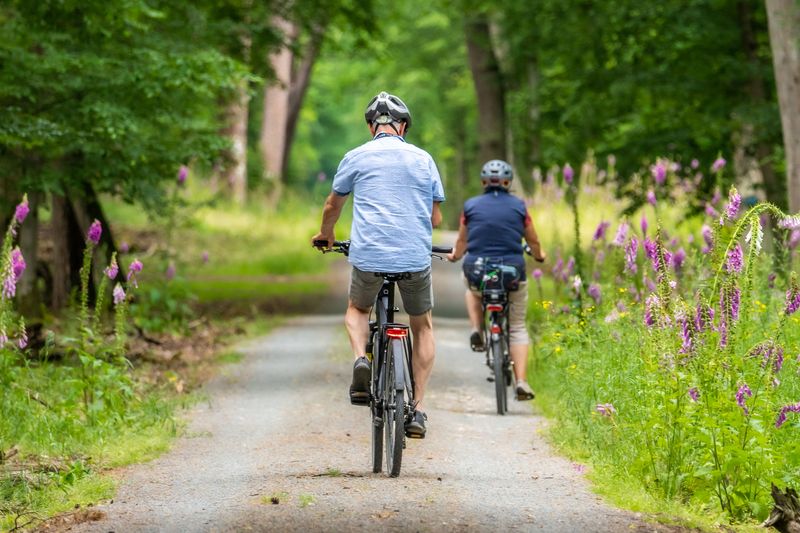
Bikes handle the surface beautifully. Smooth asphalt, no traffic, and zero steep climbs make it a confidence builder for young riders learning to pedal longer stretches.
Peterman And The Ghosts Of A Railroad Town

Railroads built towns, and Peterman was one of them. In the early 1900s, the depot and Railroad Street formed the busy heart of the community, with freight, mail, and passengers moving through daily.
Peterman, Alabama 36471, sits close enough to the trail to make a natural pairing for the drive in or out. Quiet streets, old buildings, and open country define it now.
The rhythm of a rail town is hard to imagine once the tracks are gone, but the layout still gives clues. Streets run parallel to where the line once passed.
Monroeville lies a short drive away and offers a literary claim to fame as the childhood home of Harper Lee, with a historic courthouse square worth a wander. Combining the two stops makes a full, satisfying day.
Small-town Alabama moves at its own speed, and rushing through misses the point entirely.
Gas up before heading out to the trail, since rural stretches between towns have few options. A cooler in the car is never a bad plan.
Photographers find plenty here: weathered wood, rusted metal, and the particular quality of light that falls across open farmland in the late afternoon. History sits in plain sight along these roads, waiting for anyone willing to look a little longer.
A Short Trail That Feels Bigger Than Its Mileage
Numbers alone undersell this place. Under two miles of pavement does not sound like much until the story underneath it comes into focus.
Every step follows a corridor carved by hand crews more than a century ago, past a tunnel that still shelters a living colony of bats. History and wildlife share the same address.
Families with young children find the length manageable, and nobody ends up carrying a tired kid for miles. That alone earns the trail loyal repeat visitors.
Runners use it for easy flat mileage without worrying about cars. Cyclists treat it as a low-stress warm-up.
Plans call for more trail in the future, since rails-to-trails projects tend to grow in phases as funding and land access allow. What exists now already delivers.
Go early for the coolest air and the best chance at spotting deer along the edges. Late evening brings insect noise that rises like a wall of sound.
Respect the fence at the end, carry out whatever gets carried in, and leave the bats undisturbed. Simple habits keep the place worth returning to.
Tunnel Springs will not fill an entire vacation, and it does not try to. Instead it offers a genuine slice of rural Alabama, the kind that sticks in memory long after flashier destinations fade.
