
Somewhere along the faded asphalt of Route 66, where the Texas Panhandle meets western Oklahoma, sits a ghost town that refuses to disappear completely.
Texola stands as a haunting monument to America’s highway past, a place where travelers still pull over despite its crumbling buildings and empty streets.
This tiny settlement in Beckham County once thrived as a vital stop for motorists crossing the plains, but when Interstate 40 bypassed the town in the 1970s, life here slowed to a whisper.
Yet something about Texola’s skeletal remains continues to draw curious visitors from around the world.
Walking through Texola feels like stepping into a sepia-toned photograph.
Weathered storefronts lean against the prairie wind, their paint peeling in ribbons that tell stories of busier times.
The population hovers around forty residents, making it one of Oklahoma’s smallest incorporated towns, but its cultural footprint stretches far beyond its borders.
Photographers, history enthusiasts, and Route 66 pilgrims regularly make the detour to witness this authentic slice of American decay.
There’s no gift shop or visitor center here, just raw history exposed to the elements.
What makes Texola remarkable isn’t what remains, but what it represents.
This abandoned place captures the bittersweet reality of progress, showing how quickly prosperity can vanish when highways redirect.
The town sits right on the Oklahoma-Texas state line, giving it a unique border town character that added to its historical significance.
For travelers seeking genuine Americana rather than polished tourist attractions, Texola delivers an unfiltered experience that resonates long after the visit ends.
Route 66 Heritage and Historical Significance
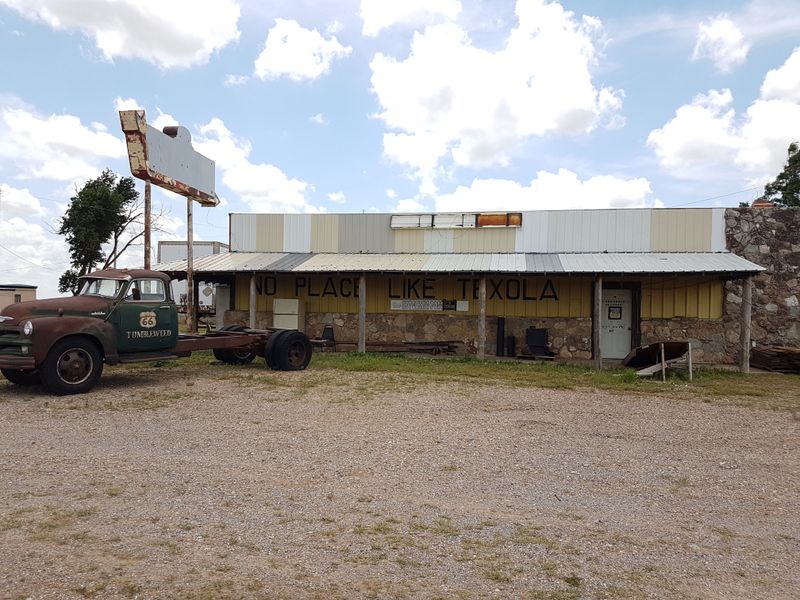
Texola’s identity is inseparable from the legendary Mother Road that runs through its heart.
Established in 1901, the town found its purpose when Route 66 was commissioned in 1926, transforming this border settlement into a necessary waypoint for travelers crossing between Oklahoma and Texas.
Gas stations, diners, and motor courts sprang up to serve the endless stream of vehicles heading west toward California or east toward Chicago.
For decades, Texola hummed with the energy of American migration and adventure.
The town’s golden era lasted until the interstate system arrived.
When I-40 opened in the 1970s, bypassing Texola by several miles, the economic lifeline was severed almost overnight.
Businesses closed, families moved away, and the population plummeted from several hundred to just a handful of stubborn holdouts.
What remains today is a perfectly preserved time capsule of mid-century roadside America, unvarnished by renovation or commercialization.
Visitors walking along the old highway alignment can still trace the path that countless travelers took during Route 66’s heyday.
Faded painted advertisements cling to brick walls, and rusted signs point toward services that vanished generations ago.
This authenticity is precisely what draws modern travelers.
Unlike restored Route 66 towns with themed gift shops, Texola offers something rarer: an honest look at what happens when history moves on.
Photographers find endless compositions in the contrast between decay and the endless Oklahoma sky.
History buffs recognize Texola as one of the few remaining unaltered Route 66 communities, making it invaluable for understanding how the highway shaped American culture and commerce during the twentieth century.
Abandoned Commercial Buildings Along Main Street

Main Street in Texola presents a haunting gallery of mid-twentieth-century commercial architecture in various stages of collapse.
Former gas stations, cafes, and motor courts line the roadway, their structures slowly surrendering to gravity and weather.
Roofs sag dramatically, walls lean at precarious angles, and windows gape empty like hollow eyes.
Each building represents someone’s dream, a business venture that once promised prosperity along America’s most famous highway.
One particularly photogenic structure is the remains of an old service station, its canopy still partially standing despite decades of neglect.
The building’s Art Deco influenced design hints at the optimism of the Route 66 era, when roadside architecture competed for motorists’ attention with bold shapes and bright colors.
Now stripped of paint and purpose, it stands as pure form against the landscape.
Weeds push through cracked concrete where cars once pulled up for fuel and service.
Another notable ruin is a former motel, its row of connected rooms still identifiable despite missing doors and windows.
Travelers once rested here after long days crossing the plains, but now only birds and small animals find shelter within its walls.
The building’s layout tells the story of roadside hospitality before chain hotels standardized the experience.
Each room opened directly to the parking area, allowing weary drivers to unload quickly and collapse into bed.
These structures aren’t cordoned off or protected, giving visitors an unusual level of access.
You can walk right up to the buildings, peer inside, and contemplate their stories.
This accessibility makes Texola special among abandoned places, though visitors should exercise caution around unstable structures and respect private property boundaries.
The Oklahoma Texas State Line Location
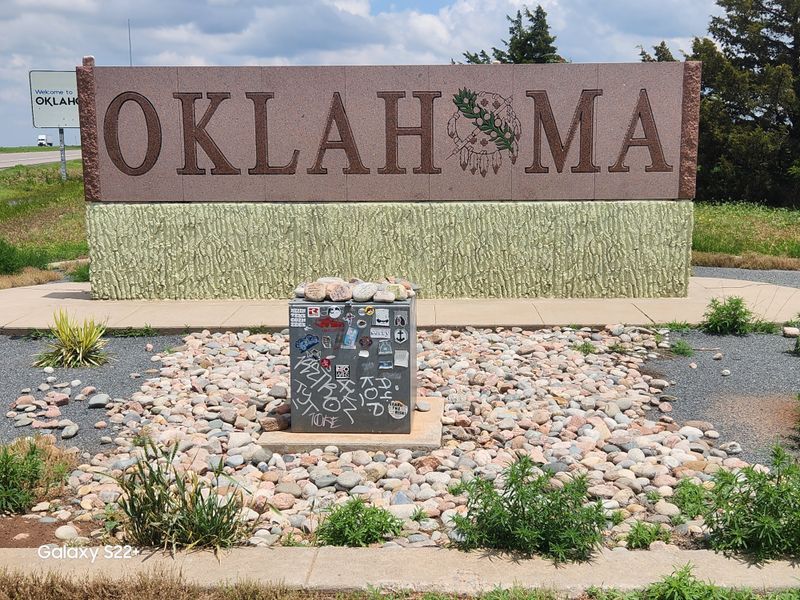
Texola occupies a unique geographical position straddling the Oklahoma-Texas border, giving it a dual identity that shaped its history.
The state line runs directly through town, making Texola one of the few communities genuinely split between two states.
This border location proved advantageous during Route 66’s heyday, as travelers often needed services immediately after crossing state lines.
Gas stations on the Oklahoma side could attract Texans heading east, while westbound Oklahomans would fill up before entering the Lone Star State.
The border position also created interesting legal and cultural dynamics.
Different tax rates and regulations between Oklahoma and Texas meant businesses could strategically locate on whichever side offered advantages.
This led to a competitive commercial environment where entrepreneurs on both sides of the line vied for the same customer base.
Some establishments even advertised their state affiliation as a selling point, appealing to state pride among travelers.
Today, the state line adds another layer of intrigue for visitors exploring the ruins.
Standing with one foot in Oklahoma and the other in Texas while surrounded by ghost town remains creates a surreal experience.
The border itself isn’t dramatically marked within town, but visitors can find the official state line markers nearby on the highway.
This geographic curiosity makes Texola memorable beyond its abandonment, distinguishing it from other dying Route 66 towns.
The twin-state nature also affected how Texola declined.
As population dwindled, questions arose about which state bore responsibility for maintaining infrastructure and services.
This administrative complexity may have accelerated the town’s abandonment, as neither state felt fully invested in preserving a community that technically belonged to both and neither.
The border that once brought prosperity became another obstacle to survival in the interstate era.
Weathered Signage and Vintage Advertising
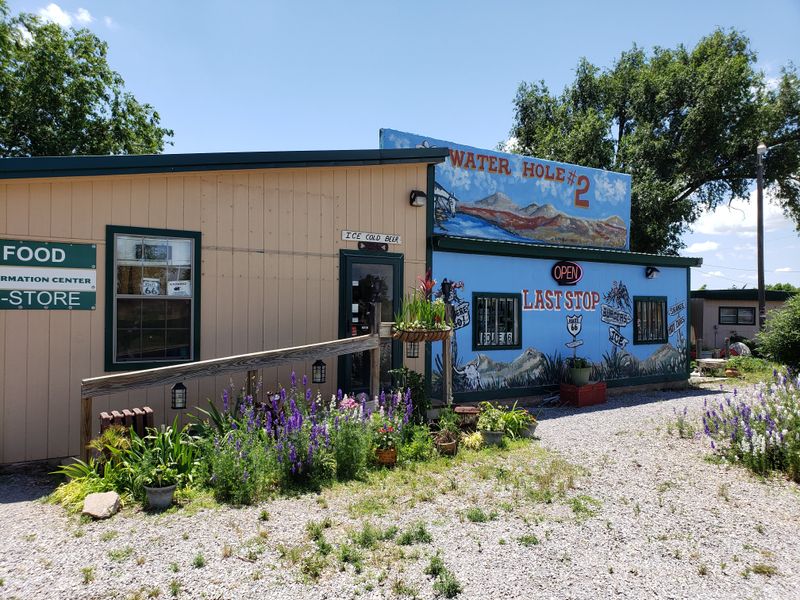
Among Texola’s most treasured relics are the faded signs and painted advertisements that cling stubbornly to building walls.
These ghostly images offer glimpses into the commercial landscape of mid-century America, when hand-painted signs were the primary marketing tool for roadside businesses.
Coca-Cola advertisements, gas station logos, and service announcements slowly fade into the brick and wood they were painted on decades ago.
Each year, weather erases a little more detail, making these signs increasingly precious to preservationists and photographers.
One remarkable example is a vintage motel sign that still stands, though barely, its metal frame twisted and lettering partially missing.
During Texola’s busy years, this sign would have been illuminated with neon, beckoning tired travelers to stop for the night.
Now it stands dark and skeletal, yet somehow still evocative of those neon-lit nights when Route 66 pulsed with cross-country traffic.
The sign’s Art Deco styling represents a particular moment in American design history that’s rapidly disappearing.
Painted wall advertisements prove even more ephemeral.
Some are so faded they’re barely visible except in certain lighting conditions, when shadows and sun angles suddenly reveal text and images that seem to materialize from the walls themselves.
These ghost signs, as they’re called by enthusiasts, document brands and businesses that often no longer exist.
They’re unintentional art installations, their deterioration creating abstract compositions that contemporary artists might envy.
Collectors and historians have documented Texola’s signs extensively, knowing that each passing storm and summer heat wave brings them closer to complete erasure.
Some visitors return annually to photograph the same signs, creating time-lapse records of their gradual disappearance.
This race against time adds poignancy to every Texola visit.
Prairie Landscape and Natural Setting

Texola’s abandonment allows the surrounding prairie landscape to slowly reclaim territory once dominated by human activity.
Native grasses push through parking lots, wildflowers bloom in building foundations, and the endless Oklahoma sky stretches unobstructed above the low-slung ruins.
This gradual rewilding creates a unique aesthetic where nature and decay intertwine.
Visitors accustomed to urban environments often find the vast openness disorienting at first, then deeply peaceful.
The high plains environment that surrounds Texola is harsh and unforgiving.
Summer temperatures regularly exceed one hundred degrees, while winter can bring ice storms and bitter cold.
Spring tornado season reminds everyone that this landscape doesn’t tolerate human structures lightly.
These extreme conditions accelerate building deterioration but also create dramatic weather displays that photographers cherish.
Storm systems rolling across the plains provide constantly changing backdrops for the static ruins.
The flat terrain offers unobstructed views in every direction, giving Texola an exposed, vulnerable quality.
There are no hills or forests to provide shelter, just endless grassland meeting endless sky.
This openness helps explain why early settlers built here despite the harsh conditions.
The railroad and later the highway needed flat, direct routes, and this landscape provided exactly that.
The same geography that enabled Texola’s creation now makes its abandonment feel even more stark and isolated.
Wildlife has returned to fill the vacuum left by human departure.
Hawks circle overhead hunting for prairie dogs and rabbits.
Coyotes den in abandoned buildings, and snakes sun themselves on crumbling foundations.
This ecological recovery demonstrates nature’s resilience and patience.
Given enough time, the prairie will erase all evidence that Texola ever existed, though that complete erasure remains many decades away.
Remaining Residents and Community Spirit
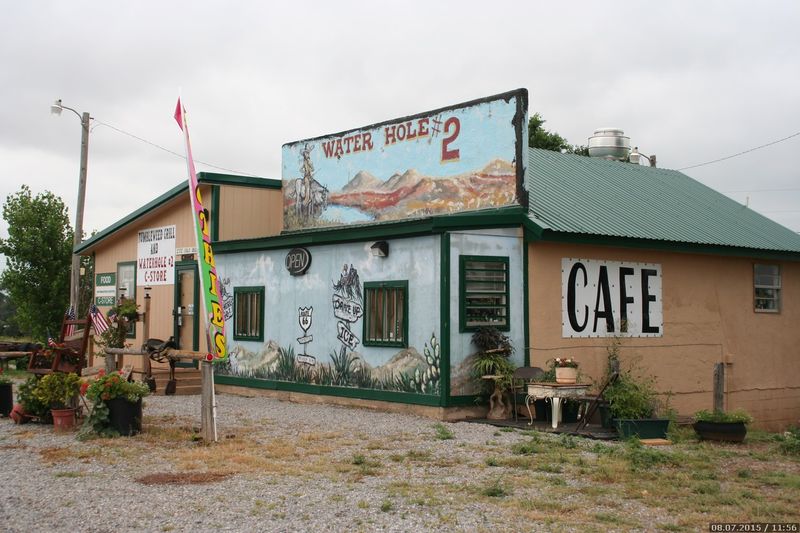
Despite appearances, Texola isn’t completely abandoned.
Approximately forty residents still call this place home, maintaining a determined community against considerable odds.
These holdouts live in the few maintained structures scattered among the ruins, creating a surreal contrast between occupied homes and decaying neighbors.
Their reasons for staying vary, from deep family roots to affordable property costs to simple stubbornness.
Meeting these residents offers visitors perspective that transforms Texola from curiosity to living community.
The remaining population tends to be friendly toward respectful visitors, understanding that Route 66 tourism provides one of the few economic benefits their town still receives.
Some residents have become informal ambassadors, sharing stories and history with curious travelers.
Others prefer privacy, and visitors should respect property boundaries and personal space.
The social dynamics of such a tiny community are complex, where everyone knows everyone and cooperation becomes essential for survival.
Texola still maintains minimal municipal functions.
The town has a mayor and holds elections, preserving democratic traditions even as the electorate shrinks.
This governmental continuity matters to residents who refuse to let their community be officially dissolved and absorbed into surrounding jurisdictions.
Maintaining incorporated status requires effort and organization that demonstrates remarkable civic commitment.
Life in Texola demands self-sufficiency and resilience.
Residents must travel to larger towns for most goods and services, as Texola has no grocery stores, gas stations, or medical facilities.
This isolation appeals to people seeking solitude and independence but would prove challenging for those requiring regular access to urban amenities.
The community’s persistence in the face of such challenges commands respect, reminding visitors that behind every ghost town statistic are real people making conscious choices about where and how to live.
Photography and Artistic Appeal
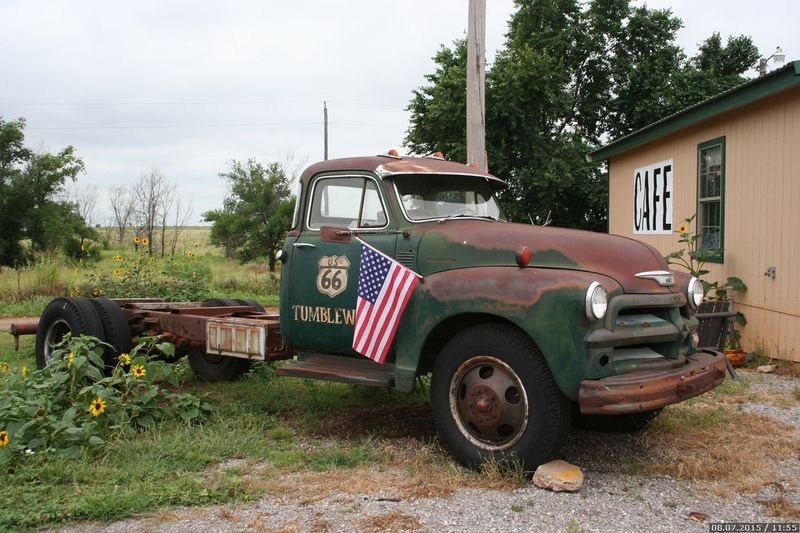
Texola has achieved cult status among photographers, particularly those specializing in abandonment, decay, and Route 66 subjects.
The town’s unrestored condition provides authentic material increasingly difficult to find as other communities renovate historic districts or demolish dangerous structures.
Every angle in Texola offers composition possibilities, from wide landscape shots emphasizing isolation to intimate details of peeling paint and rusted metal.
Natural light plays dramatically across the ruins throughout the day, creating constantly changing moods and shadows.
Professional photographers have published Texola images in books, magazines, and exhibitions worldwide, making this tiny Oklahoma town recognizable to audiences who couldn’t locate it on a map.
These images often emphasize the melancholy beauty of abandonment, using Texola as a symbol for broader themes of American decline, the passage of time, and nature’s persistence.
Some photographers return repeatedly, documenting seasonal changes and progressive deterioration across years or decades.
Amateur photographers find Texola equally rewarding.
The lack of crowds means you can work at your own pace without other people cluttering your frames.
The town’s compact size allows thorough exploration in a few hours, yet most photographers find themselves staying much longer, discovering new angles and compositions.
Mobile phone cameras capture Texola’s essence as effectively as professional equipment, making it accessible to casual visitors who simply want visual memories.
Artists working in other media also find inspiration here.
Painters set up easels along the roadside, capturing the ruins in watercolor or oil.
Writers use Texola as a setting for stories exploring isolation, memory, and loss.
Musicians have recorded albums inspired by the town’s atmosphere.
This artistic attention helps preserve Texola’s memory even as physical structures continue deteriorating, ensuring the town’s cultural significance outlasts its buildings.
Seasonal Visiting Considerations
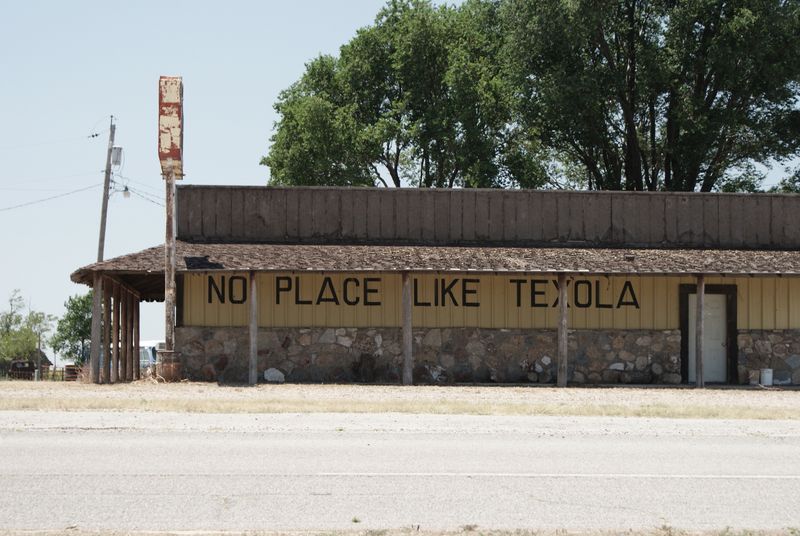
Texola’s appeal varies dramatically across seasons, with each time of year offering distinct advantages and challenges.
Spring brings wildflowers that soften the harsh landscape, adding color to photographs and creating a gentler atmosphere.
However, spring also means tornado season, when severe weather can develop rapidly on the plains.
Visitors should monitor weather forecasts carefully and have plans for seeking shelter if warnings are issued.
The dramatic skies that precede storms provide spectacular photography opportunities for those willing to accept some risk.
Summer visits require preparation for extreme heat.
Temperatures frequently exceed one hundred degrees, and shade is scarce among the ruins.
Bring abundant water, wear sun protection, and plan activities for early morning or late afternoon when temperatures moderate slightly.
The intense summer light can create harsh shadows in photographs, though sunset and sunrise offer gorgeous golden light.
Summer also brings occasional afternoon thunderstorms that provide brief relief from heat and create dramatic weather displays.
Fall emerges as perhaps the ideal visiting season.
Temperatures become comfortable, storm risks decrease, and the prairie grasses take on golden hues that complement the rust and decay of abandoned structures.
Clear autumn skies provide excellent visibility and beautiful light for photography.
Wildlife activity increases as animals prepare for winter, offering potential encounters with prairie species.
The lack of foliage means nothing obscures views or building details.
Winter visits appeal to hardy travelers seeking solitude.
Few tourists brave the cold, giving you the town essentially to yourself.
Snow occasionally dusts the ruins, creating striking visual contrasts between white precipitation and dark, weathered wood and metal.
However, winter weather can be dangerous, with ice storms and bitter cold requiring proper preparation.
The town offers no shelter or services, so visitors must be completely self-sufficient and prepared for emergencies.
Dear Reader: This page may contain affiliate links which may earn a commission if you click through and make a purchase. Our independent journalism is not influenced by any advertiser or commercial initiative unless it is clearly marked as sponsored content. As travel products change, please be sure to reconfirm all details and stay up to date with current events to ensure a safe and successful trip.
