A landscape architect got kicked out of Harvard for designing gardens that were too modern. Then he built a house that he refused to ever call finished.
He described it as neither landscape nor architecture, but both. He also called it neither indoors nor outdoors, but both.
I love that kind of stubborn confidence, especially when the result still stands decades later.
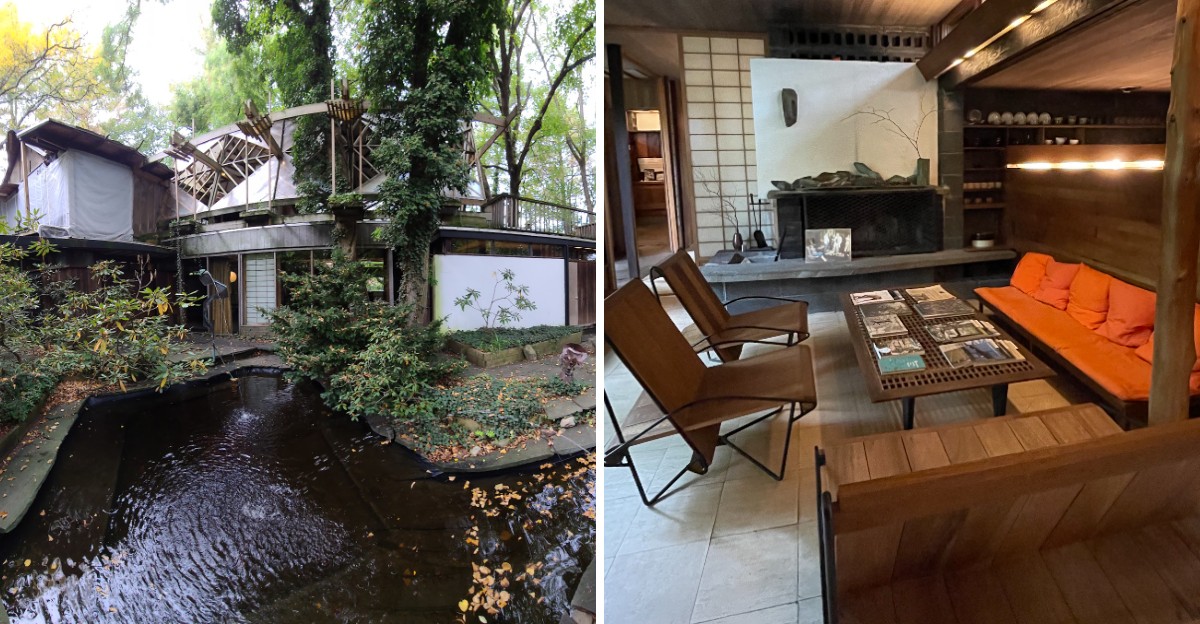
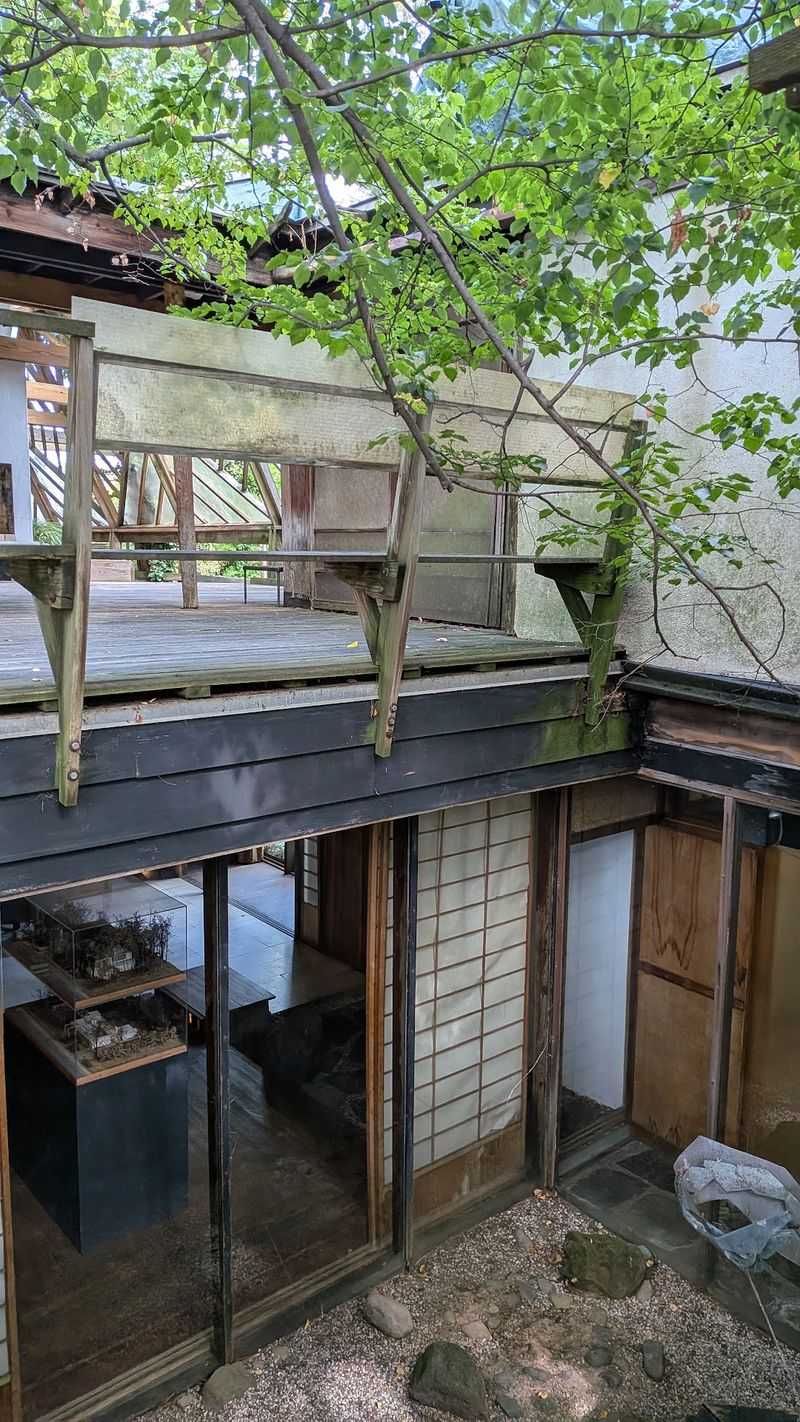
The place sits on a quiet residential street in New Jersey. Courtyards, pools, and gardens stitch three small interior spaces together.
A meditation pavilion perches up on the roof. Woven fences and fiberglass screens shape the views around every corner.
I can’t imagine living in a home that kept changing for nearly 40 years. Yet that was the whole point.
So what does a house look like when its owner treats it like a living experiment?
Meet The House That Was Never Supposed To Be Finished
Most homeowners dream of the day the construction ends. Landscape architect James Rose built his place in 1953 and basically never stopped tinkering.
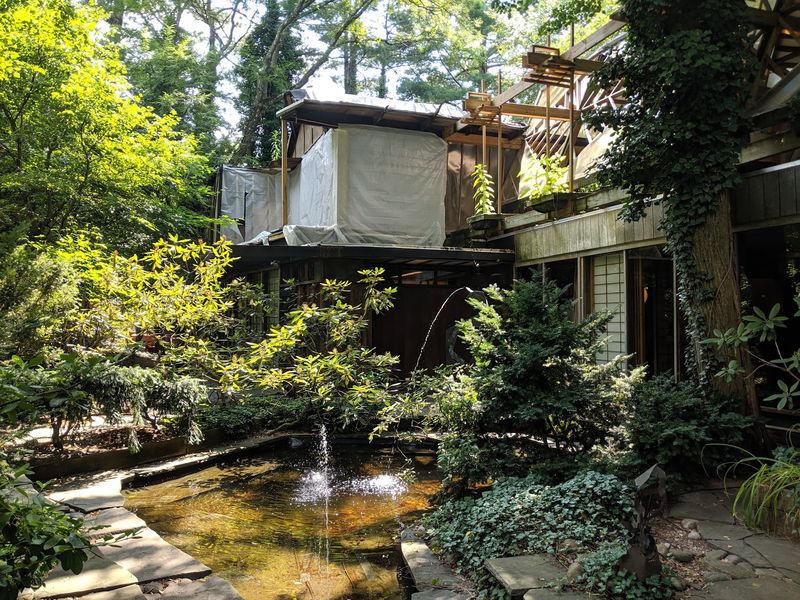
That home is now the James Rose Center for Landscape Architectural Research and Design. It served as both his residence and his studio for nearly four decades.
Rose treated it like a giant lab where buildings and plants could learn to get along.
His big idea was simple to say and tricky to pull off. He wanted a home that grew, matured, and renewed itself, the same way a garden does.
Walls, trees, and water all had a part to play.
Rose summed it up with a line that still sticks. He called the place neither landscape nor architecture, but both.
He said it was neither indoors nor outdoors, but both too.
That mindset makes the visit feel different from a typical historic house. You aren’t looking at a frozen time capsule with velvet ropes everywhere.
You’re looking at the leftovers of a creative process that kept moving.
Honestly, it’s a little comforting. If a famous designer never finished his house, maybe that half-done project at home is just philosophy in disguise.
Courtyards And Pools Do The Job Hallways Usually Do
Hallways are boring. Rose seems to have agreed, because he skipped the usual layout entirely.
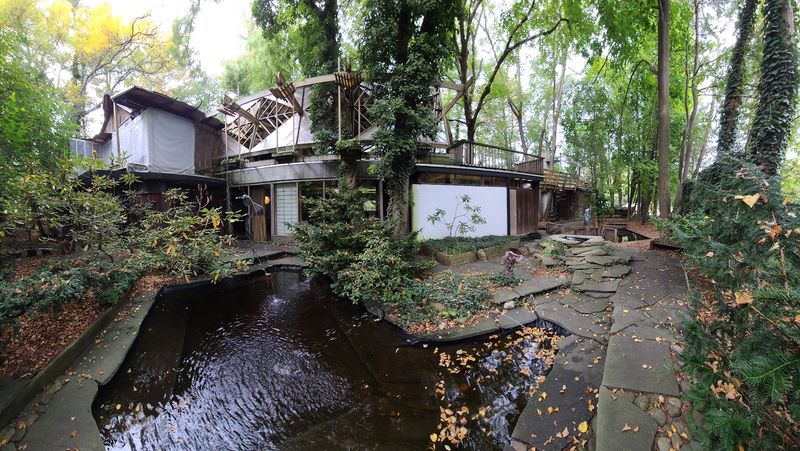
The house was conceived as three distinct interior spaces instead of one big box. Connecting them is what designers describe as a tightly choreographed connective tissue of courtyards, pools, and gardens.
In plain words, the outdoors becomes the path between rooms.
That choice changes how the whole place feels. Small rooms seem larger because the views keep spilling outside.
A garden is never just a backdrop sitting behind a window.
The setup also allowed for flexibility. Some areas could feel private and tucked away from the street.
Others opened up for gathering and soaking in the greenery.
For anyone planning a backyard project, there’s a sneaky lesson here. You don’t need acres of land to create a sense of space.
Thoughtful paths, water, and plants can make a modest lot feel like a series of rooms.
It’s the kind of idea that seems obvious once you see it. Then you start wondering why more houses don’t work this way.
Good luck looking at your own patio the same way afterward.
The Rule-Breaker Behind It Got Expelled From Harvard
In 1937, Harvard showed James Rose the door. His crime?
Designing landscapes that were too modern for a program still devoted to the formal Beaux-Arts style.
Rose refused to bend. Along with classmates Garrett Eckbo and Dan Kiley, he helped push landscape architecture into the modern era.
Those three names still pop up in design classes today.
Getting expelled might have ended a lesser career. For Rose, it seemed to sharpen his voice.
He went on to write about his ideas and build gardens that broke old rules about symmetry and order.
His Ridgewood home became the clearest example of that rebellious streak. He favored an improvised, ad hoc approach rather than rigid master plans.
Changes happened as ideas arrived, not because a blueprint said so.
There’s something inspiring about a rebel who turned out to be right. The design world eventually caught up with him.
Today his former home holds spots on both the state and national historic registers.
So the next time someone calls your ideas too different, remember this New Jersey story. Sometimes the expelled student ends up with the landmark.
Wood, Glass, And Concrete Block Never Looked This Calm
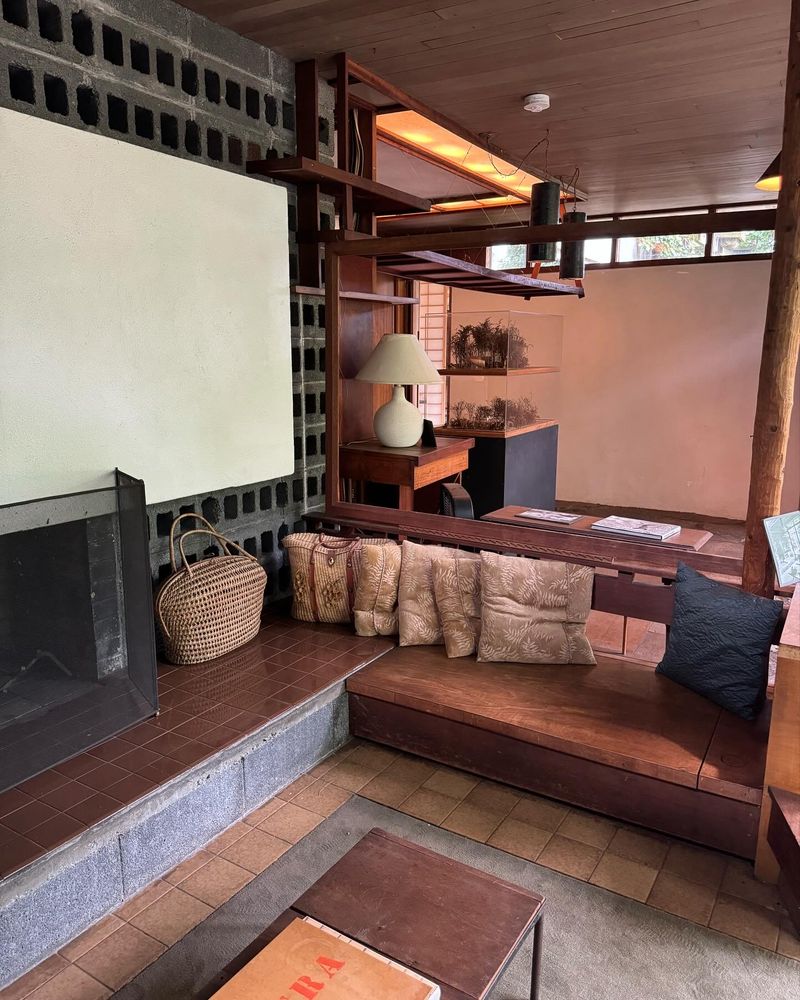
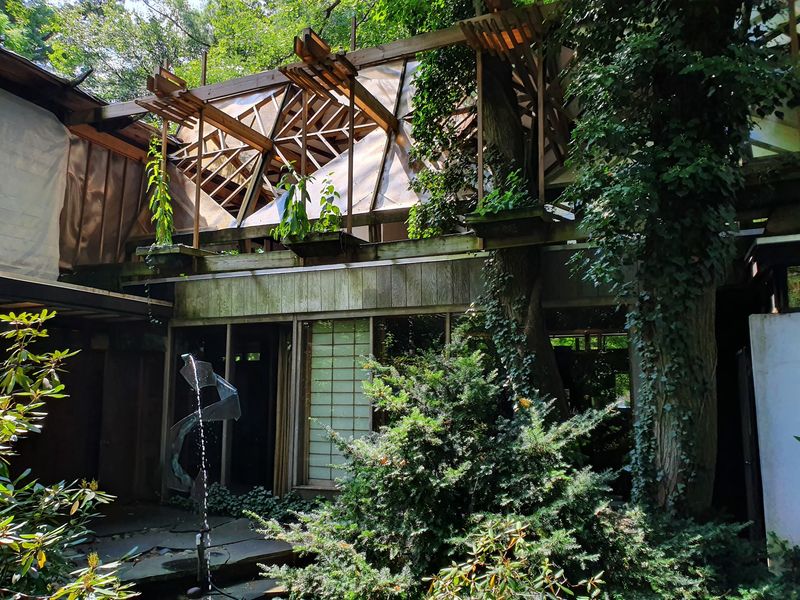
Concrete block is not usually the star of a beautiful home. Here, it shares the stage with exposed wood and lots of glass, and the trio works surprisingly well.
The materials are honest and simple. Nothing hides behind fancy trim or heavy decoration.
You can see how the structure is put together, which fits Rose’s modernist style.
Glass does a lot of heavy lifting in this design. It pulls the garden right into the rooms.
On the flip side, it lets the rooms feel like part of the garden.
A clear Japanese influence runs throughout the property. That shows up as a sense of calm and discipline in how spaces are arranged.
Clean lines meet natural textures, and the effect feels peaceful rather than cold.
Inventive fiberglass screens and delicately woven fences add another layer. They filter views and light instead of blocking them completely.
It’s a clever way to get privacy without shutting nature out.
If you love minimalist design, take notes on the textures. The mix of rough block, warm wood, and clear glass proves that simple materials can create a deeply relaxing space.
Head Up To The Roof For A Zen Surprise
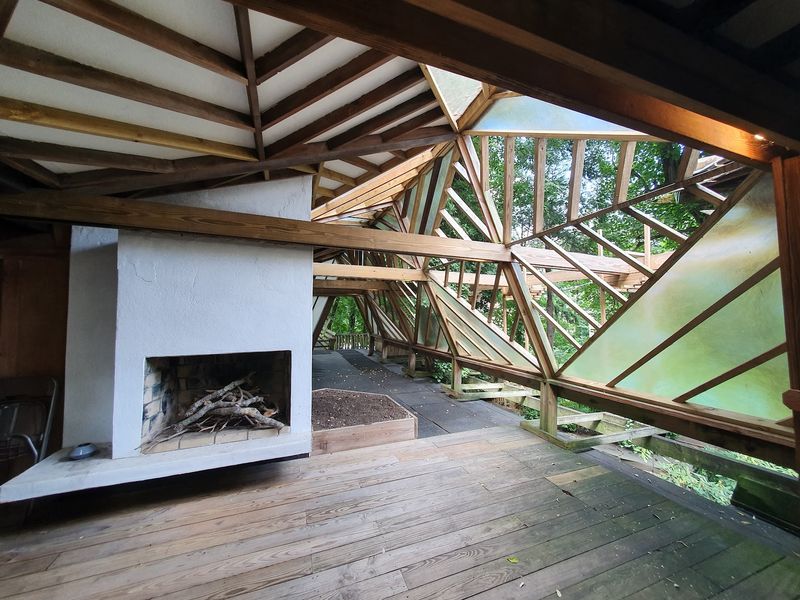
Most rooftops hold gutters and maybe a stray frisbee. This one holds a meditation pavilion.
Known as the Zendo, the Zen-inspired structure sits on the rooftop terrace of the house. It was added in the late 1960s or early 1970s, long after the original 1953 build.
That timing tells you a lot about how the home kept evolving.
The Zendo fits perfectly with the Japanese influence found across the property. Up there, the trees feel close enough to share the room.
It’s easy to see why some describe the whole place as a kind of treehouse.
The pavilion also shows Rose’s love of layering spaces. A house that already blurs inside and outside gains one more level of escape.
Quiet reflection gets its own address, right above the living areas.
The center has also hosted calming activities like yoga, which fits the spirit of the rooftop. Check the center’s calendar for current offerings before planning around one.
Honestly, it might give you rooftop envy. Few suburban homes in New Jersey can claim their own meditation retreat perched among the branches.
Old Materials Got Second Lives As Fountains And Art
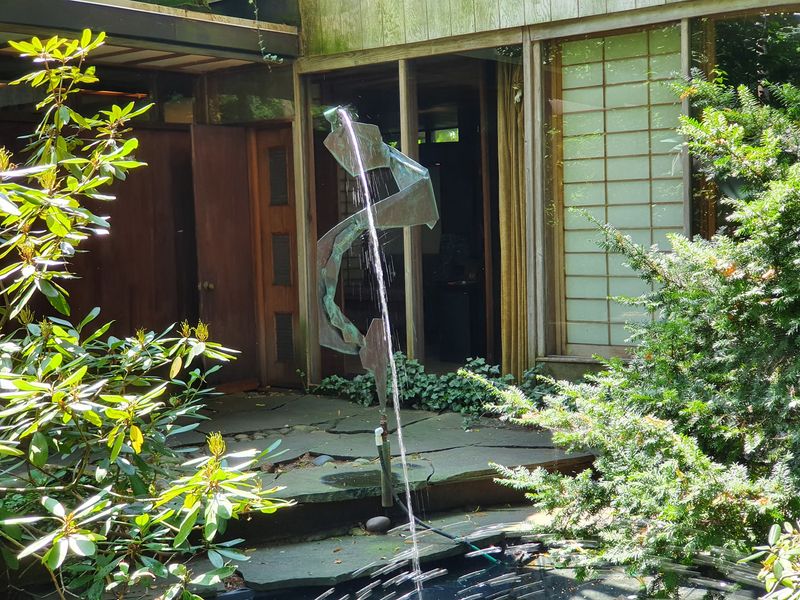
Rose had a word for his approach to change, and it was metamorphosis. The house and grounds were meant to shift, adapt, and transform over time.
That idea wasn’t just talk. Rose repurposed old materials into sculptural fountains around the property.
Things other people might toss became features that catch the eye and the light.
It’s an early example of creative reuse, decades before upcycling became trendy. Rose seemed to see potential in leftovers the way a gardener sees potential in seeds.
His process stayed flexible from start to finish. Instead of following a fixed plan, he adjusted the design as ideas and materials came along.
The result feels personal and a bit playful.
Here’s a practical takeaway for home gardeners. Before you haul old stone, metal, or wood to the curb, consider whether it could become something new outdoors.
A forgotten piece might become the focal point of your yard.
The center still carries this thinking forward today. Its guiding idea of preserving change sounds like a riddle at first.
Then you see the fountains and it starts to make perfect sense.
Book Ahead, Because These Tours Stay Small
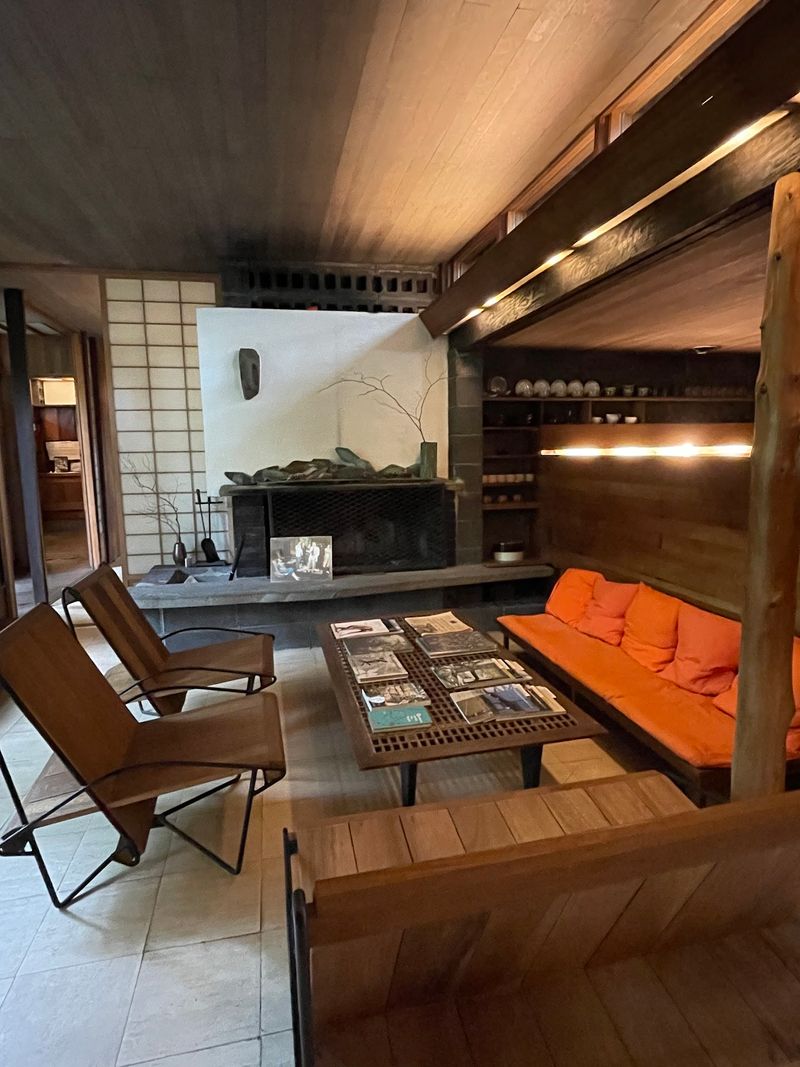
You can’t just wander in off the sidewalk. Access to the house and gardens is by guided tour only, and advance registration is required.
During its May-to-October visitor season, tours run on the hour with a maximum of 10 guests, but the center closed for 2026 on October 31 and plans to reopen in May 2027. That small size keeps things personal.
You’ll have room to ask questions without shouting over a crowd.
The guided portion lasts about 30 minutes. Afterward, guests are welcome to explore the house and gardens on their own.
That free time is perfect for lingering in your favorite corner.
Personal photography is encouraged, so bring a charged phone or camera. The play of light, water, and greenery practically begs for pictures.
Wear sensible shoes for this one. The property has uneven surfaces, raised tree roots, and stairs throughout.
Staff are available to help visitors, so reach out ahead if you have mobility concerns.
Tour schedules and ticket details can change by season. Check with the James Rose Center before you go so you aren’t left peeking over the fence.
Trust me, the inside is worth the planning.
Awards And Landmark Status Back Up The Buzz
Plenty of houses look cool. Far fewer earn a stack of official recognition like this one.
The property was listed on the New Jersey Register of Historic Places in 1997. Then in 2019 it joined the National Register of Historic Places.
It also received a 1999 American Society of Landscape Architects Centennial Medallion.
Beyond the honors, the James Rose Center works as a nonprofit landscape research and study foundation. Its mission keeps Rose’s ideas alive rather than simply keeping the building dusted.
The center offers public lectures and educational outreach programs. It champions his idea of the creative garden, where design is a living process.
Preserving change remains its guiding philosophy.
Students and design lovers have extra ways to get involved. The center offers internships for students, plus volunteer docent opportunities.
Leading tours here sounds like a dream gig for anyone obsessed with gardens.
I like that the legacy isn’t just about looking back. The center uses Rose’s home to teach new generations how to think about land and buildings together.
That’s a smart way to honor a rebel.
A Quiet Suburban Street Hides A Design Landmark
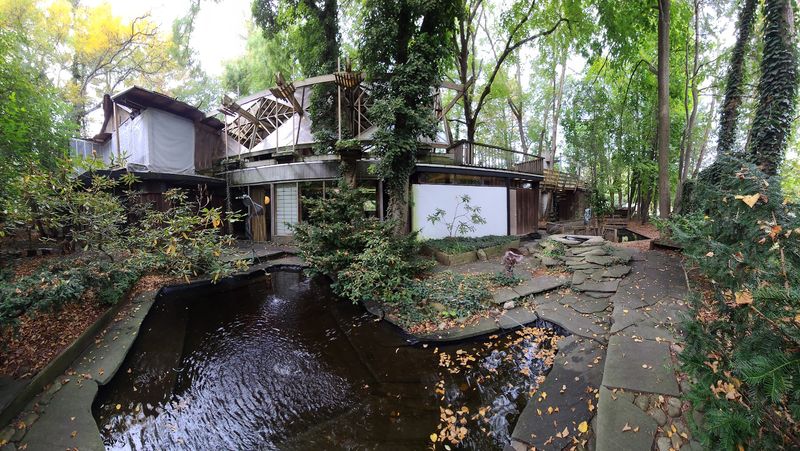
Drive past too quickly and you might miss it entirely. The James Rose Center sits on an ordinary residential street in Ridgewood.
The address is 506 East Ridgewood Avenue, Ridgewood, New Jersey 07450. Neighbors live right around it, so the setting feels calm and local.
That contrast makes the experimental design inside even more fun to discover.
Getting there is fairly easy for a day trip. Ridgewood is a short trip from New York City, which makes the visit practical for city folks craving greenery.
Parking takes a little attention. Watch the signs on the residential streets around the property, since rules may apply.
A respectful approach keeps everyone happy.
Ridgewood’s downtown has plenty of places to eat within walking distance. That makes it easy to pair your tour with a meal or a stroll.
Plan for a relaxed afternoon instead of a rushed stop.
Northern New Jersey has its share of attractions, but few combine history, art, and nature in one small lot. This one does it quietly.
Then it surprises you completely once you step past the fence.
