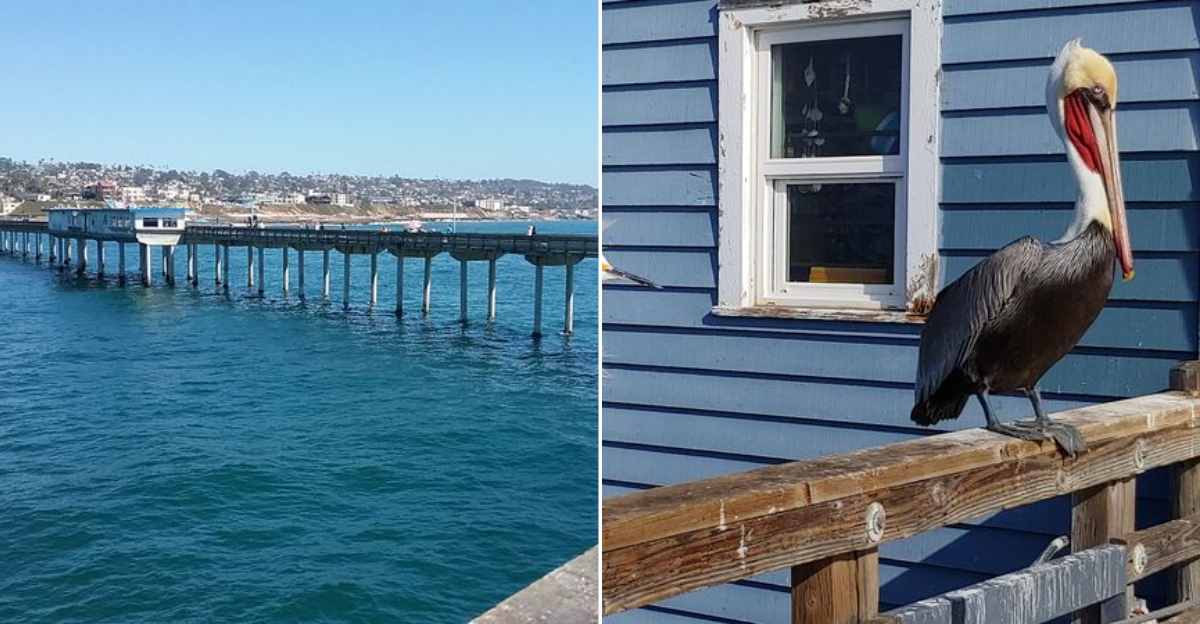
Why do some piers feel like more than a scenic stop the second you set foot on them? This iconic coastal pier in California answers that almost immediately.
The history gives it real weight, because this is not just a place people visit for a few ocean views and a quick walk before moving on. It feels like a landmark that has been part of local life for so long that the atmosphere carries its own kind of loyalty.
That is what makes it stand out. The ocean setting is obviously part of the appeal, but the real pull comes from the mix of tradition, memory, and everyday local attachment that still clings to the place.
You are not just walking along a well-known stretch of boards over the water. You are stepping into a piece of the coast that still feels active, beloved, and deeply tied to the people around it.
By the time you reach the end, it becomes very easy to understand why locals never seem to get tired of coming back.
The Oceanfront Setting Starts Doing The Work Right Away
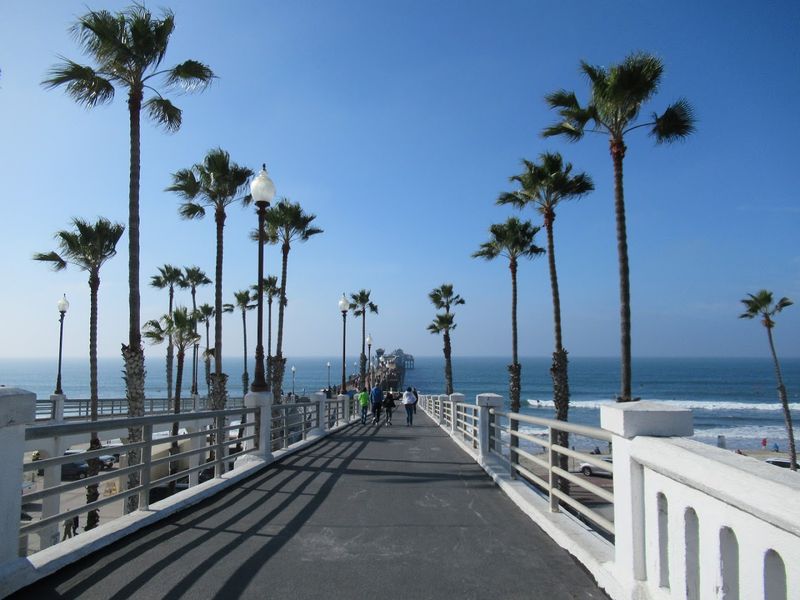
Before anything else, the ocean starts talking, and the pier simply gives it a longer microphone. Step onto Ocean Beach Pier, 1850 Ocean Front St, San Diego, CA 92107, and the shoreline opens like a door you already knew.
The breeze carries that easy California cadence, and suddenly the day slows without asking permission.
You look left toward the cliffs, you look right to the horizon, and the whole scene feels familiar even if you have never stood here before. The concrete under your shoes is unglamorous, but it holds the long view like a promise you can actually keep.
Gulls trace soft, messy lines over the water, and you catch yourself matching their pace without deciding to.
What makes it hit right away is how the pier invites you to walk into the middle of the ocean without fanfare. No rush, no performance, just a path to think, breathe, and keep moving.
If you needed a reason to be present, you suddenly have several, and none of them need to be explained.
Why This Pier Became Such A Big Part Of Ocean Beach
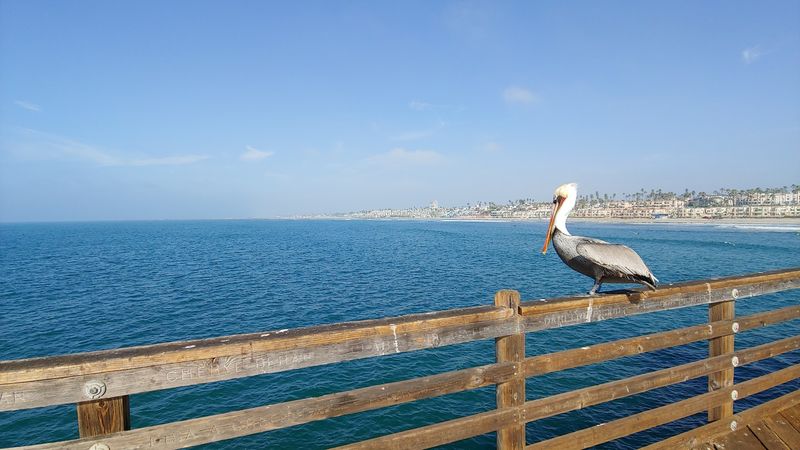
You can feel how this pier stitched Ocean Beach together, not with fancy moves but with everyday repetition. People walked it before work, after work, and between plans that never needed to be serious.
It held casual check-ins, quick waves, and those let’s-talk-while-we-walk conversations that quietly keep a neighborhood human.
The rhythm matters, right? You meet friends near the entry, drift toward the railings, and point at things you never name the same way twice.
On shore, shop windows and murals add color, but out here the palette is mostly water, sky, and whatever mood you brought along.
Over time, that repetition becomes glue. You start recognizing the regulars, the patient fishers, the photographers waiting for one more soft edge of light.
The pier doesn’t announce anything, but it keeps showing up, and Ocean Beach keeps answering, because the exchange feels honest and predictable in the best possible way.
Long Views, Salt Air, And A Walk Locals Never Got Tired Of
There is something about a long, uncomplicated walk that steadies your thoughts, and this pier understood that assignment beautifully. You step out, breathe deeper, and let the salt air reset the day.
The ocean throws a low hum under everything, and that background music does more than silence ever could.
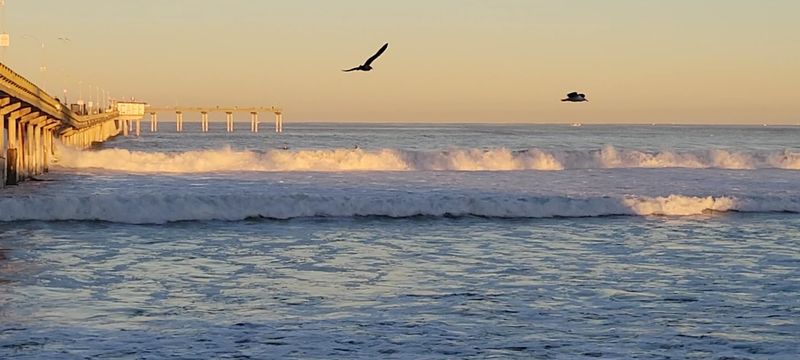
The view changes while you barely move. A swell rises and slides under your feet, surfers become tiny commas in the distance, and the horizon keeps rewriting itself.
You do not need a plan out here, because the walk provides structure without asking questions.
Locals never got tired of that trade. Take a lap, check the light, lean on the railing, nod at a neighbor, and keep going.
Even when California spins busy on shore, you can steal a measured pace on the boards, and somehow the day respects you more when you return to land.
The 1960s Landmark That Grew Into A San Diego Classic
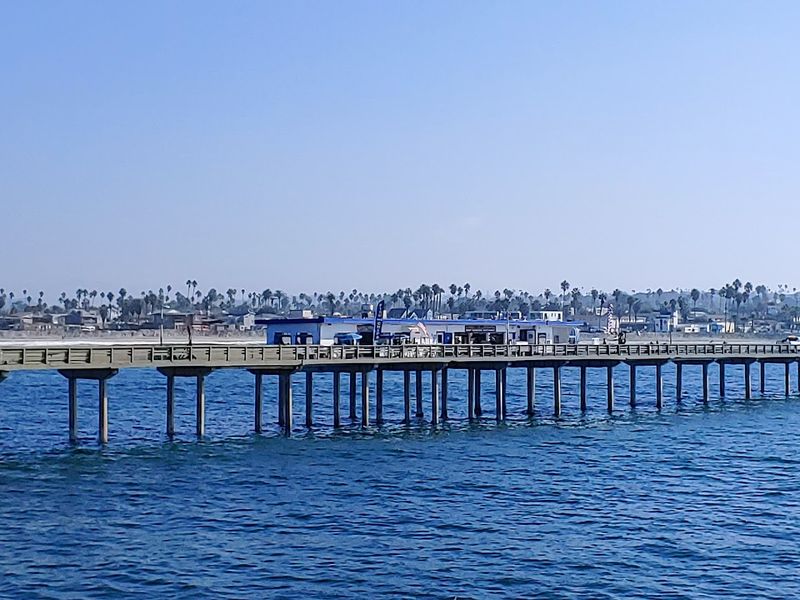
This pier started as a neighborhood project and ended up part of San Diego vocabulary, the kind of place you reference without thinking. Ask someone where to meet, and they say the pier like it is a compass setting.
It grew from local need into a landmark with the soft confidence of something used every day.
The lines are simple and stubborn, stretching across the water with a quiet endurance. You can picture early walkers testing the reach, measuring steps against the coastline, and realizing the view recalibrates patience.
That is how everyday infrastructure becomes emotional real estate, right?
Over seasons, the pier collected layers of memories without changing its tone. Your uncle tells a story, someone else swears a bigger one, and both feel true because the setting holds them.
That is what makes a San Diego classic in California terms, not hype, just repetition backed by salt and light.
Why The Fishing, Surf Views, And Sunsets Built Such Loyalty
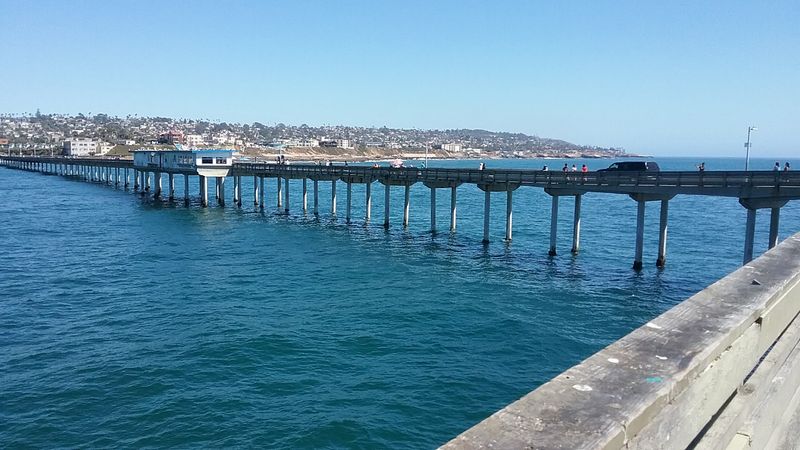
Walk out during late light and you will understand the loyalty. Anglers line the rail with calm focus, reading the water like a book they have already loved.
Below, surfers trace patient arcs, and it all folds into a sunset that decides the palette on its own timeline.
The ritual is what hooks you, no pun intended. Cast, wait, glance at the horizon, trade a few words, then settle back in.
Even if you do not fish, the rhythm rubs off, and you find yourself breathing with the tide like it was your idea.
Sunsets on this pier are their own sport. People share the rail without fuss, phone cameras come out, and the water throws colors you would never pick from a menu.
That shared hush lands differently in California, where the sky feels unembarrassed about going big, and the walk back becomes its own quiet celebration.
The Kind Of Place That Felt Bigger Than A Simple Pier
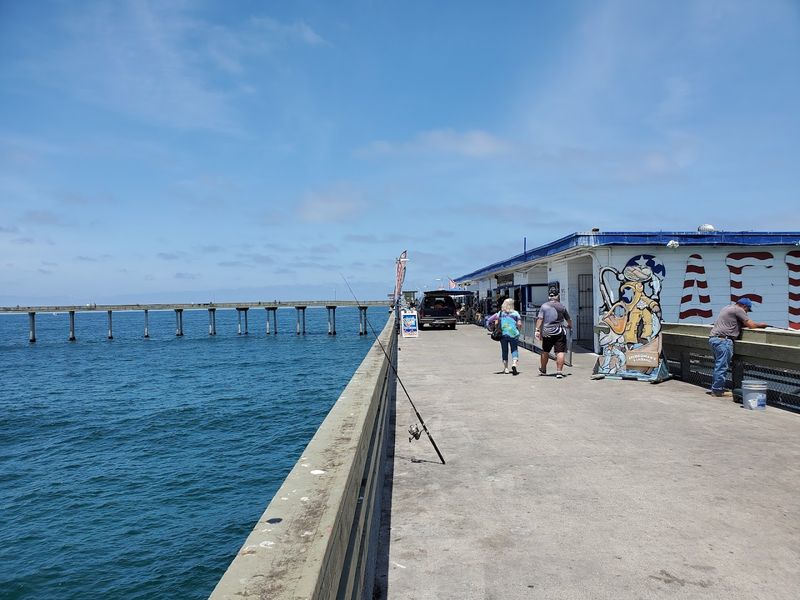
Some spots just refuse to stay inside their category, and this is one of them. Call it a pier if you want, but it behaves like a neighborhood plaza stretched into the sea.
You run into people you know, or people who feel like you could, and the space holds those small reunions naturally.
It is the scale that surprises you. Rather than crowding toward a single viewpoint, the length gives everyone room to find their own angle.
One person studies waves, another studies clouds, and nobody needs to compete because the ocean supplies more than enough material.
The feeling sticks. Later, when you think about San Diego or California in general, you picture this long arm reaching out and holding a conversation with the horizon.
It sounds dramatic until you return and realize the place keeps making the same point, gently and convincingly, every single time.
Storm Damage Changed The Story, Not The Affection For It
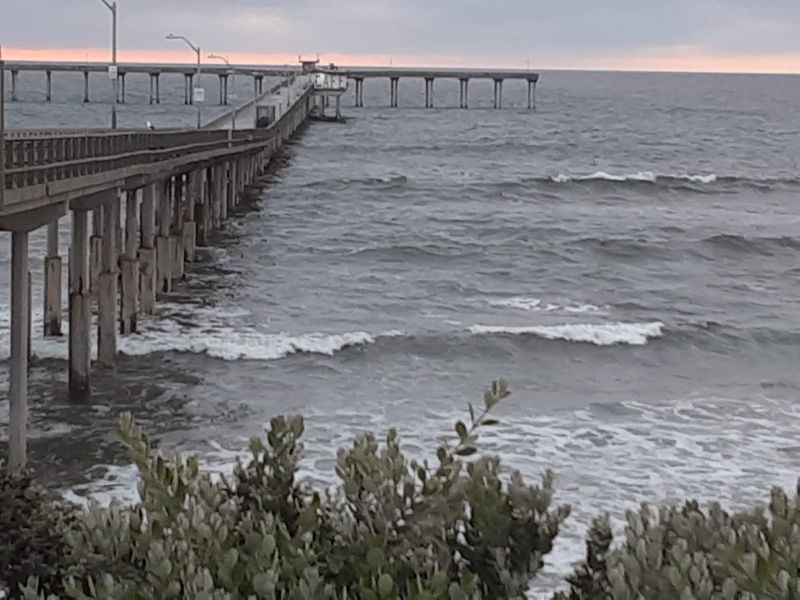
When storms took their swing, the conversation around the pier shifted, but the affection did not budge. You could hear it in the way people talked at the railings, swapping updates like neighbors watching a tough friend recover.
The ocean can be generous and blunt, and sometimes it reminds you of both truths at once.
Even with closures and repairs, the habit of coming back stayed alive. Folks still parked, still walked the edge, still checked how the water felt that morning.
There is comfort in seeing a place you love working through something, especially when you believe it will stand taller again.
That loyalty makes sense in California, where weather writes its own edits across the coast. The pier is part of that script, not outside it, and everyone knows the story is still unfolding.
You keep showing up because that is what you do when a landmark becomes family.
Why Locals Still Talk About What The Pier Meant To The Neighborhood
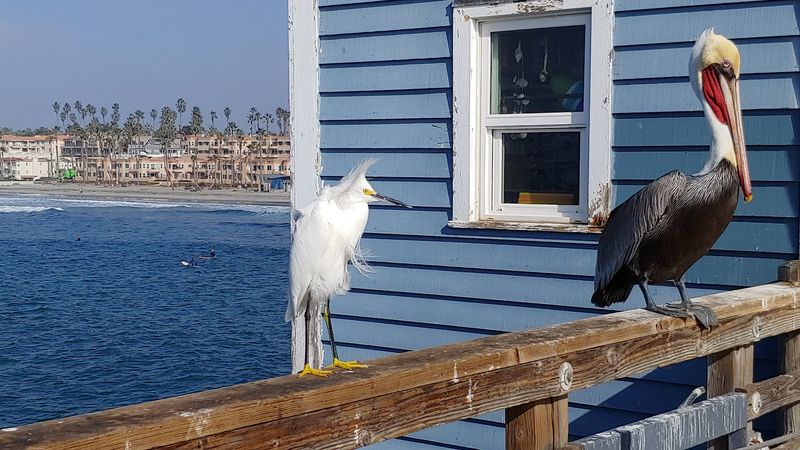
Ask anyone who spent time here and you will get a personal version of the same message. The pier anchored casual routines, soft plans, and those standing meetups that require almost no organization.
It is rare for concrete and railings to feel sociable, but that is exactly how this place worked.
You could measure the neighborhood heartbeat by watching who showed up. Parents pushing strollers, friends catching up, someone walking alone on purpose, and it all looked correct.
Nobody needed a special reason, because the pier supplied a steady reason without trying hard.
That is why people keep talking about it, even when they are standing on sidewalks a few blocks away. The stories do not fade because the habit did not end, it just rerouted.
In a city as wide as San Diego, having a dependable center like this makes the whole map feel smaller, kinder, and more manageable.
The California Pier That Still Feels Iconic Even In Transition
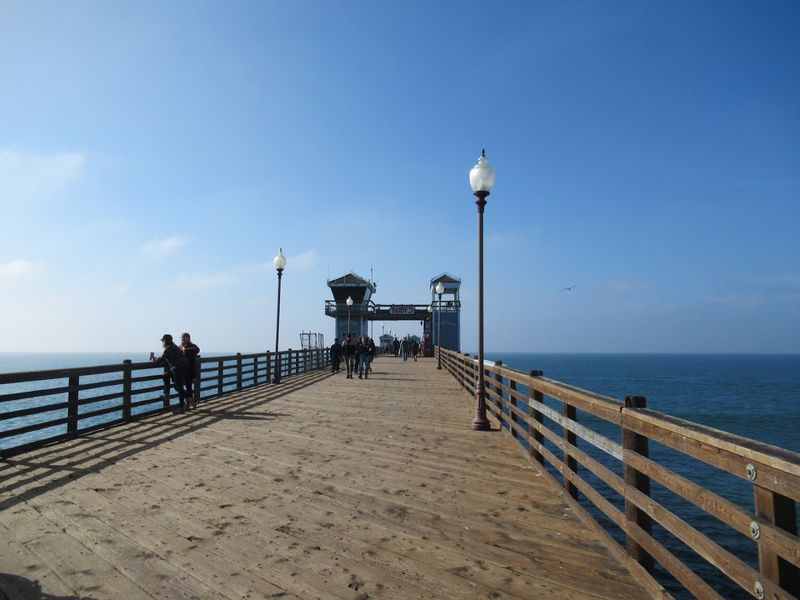
Even while it changes, the pier keeps wearing that iconic look like it was tailored. You see the long reach, the squared shoulders over the water, and the way people orbit the entrance just to feel close.
Transition is not a pause here, it is a different kind of presence.
Walk the shoreline and you will notice how it still organizes the view. Photographers aim toward it, conversations point toward it, and the coastline shapes itself around its outline.
It is not about being the biggest or flashiest, it is about being the one you trust to mark the day.
That trust is why this stretch of San Diego keeps drawing you back. California loves reinvention, but it also loves a good anchor, and this pier manages to be both.
Even in the in-between, it signals home, and that signal is loud enough to carry over waves.
Dear Reader: This page may contain affiliate links which may earn a commission if you click through and make a purchase. Our independent journalism is not influenced by any advertiser or commercial initiative unless it is clearly marked as sponsored content. As travel products change, please be sure to reconfirm all details and stay up to date with current events to ensure a safe and successful trip.
