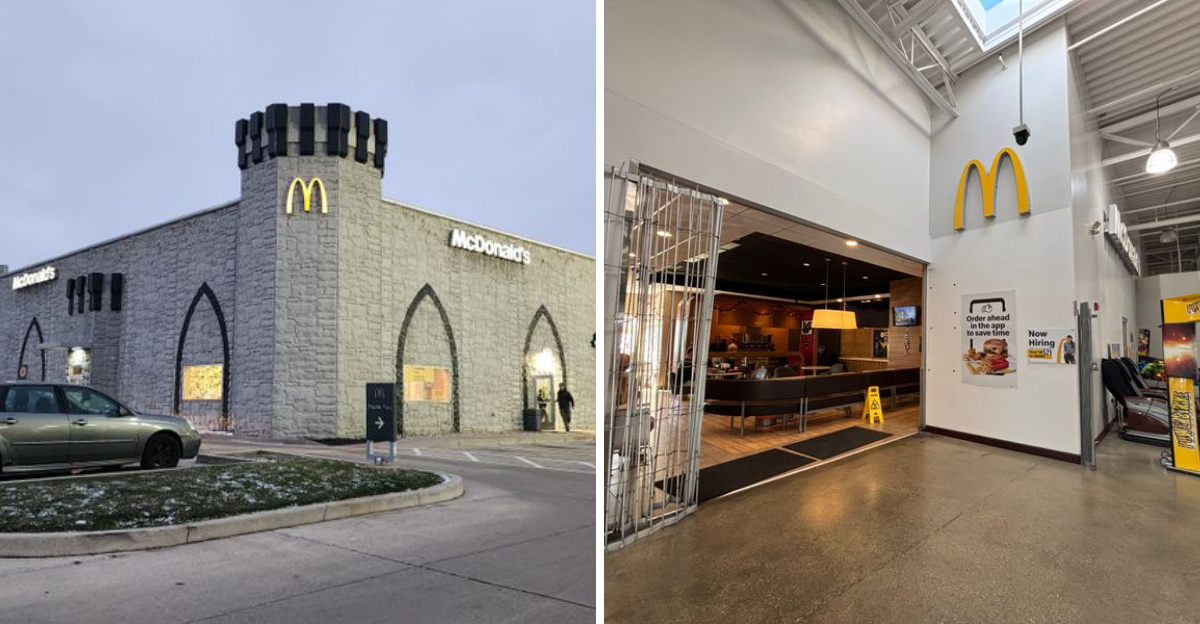
Tucked away along U.S. Route 20 in Goshen, Indiana, stands one of the most unusual fast-food restaurants in America.
This McDonald’s doesn’t look like your typical golden arches location with its standard red and yellow design. Instead, it resembles a fairytale fortress complete with stone turrets, castle walls, and medieval architectural details that make drivers do a double-take as they pass by.
The building has become something of a local landmark and roadside attraction, drawing curious travelers and architecture enthusiasts who want to see this quirky blend of fast food and fantasy. Located at 18423 US-20, this castle-themed McDonald’s shares its space with other businesses in a unique truck stop complex.
Whether you’re a McDonald’s fan, a lover of unusual architecture, or just someone who appreciates the weird and wonderful roadside attractions that make American highways interesting, this medieval-inspired restaurant offers plenty of surprises. Behind its enchanting exterior lies a story of creative design, practical business decisions, and the ongoing challenges of running a distinctive establishment in northern Indiana.
The Castle Design Was Built to Stand Out Along a Busy Highway
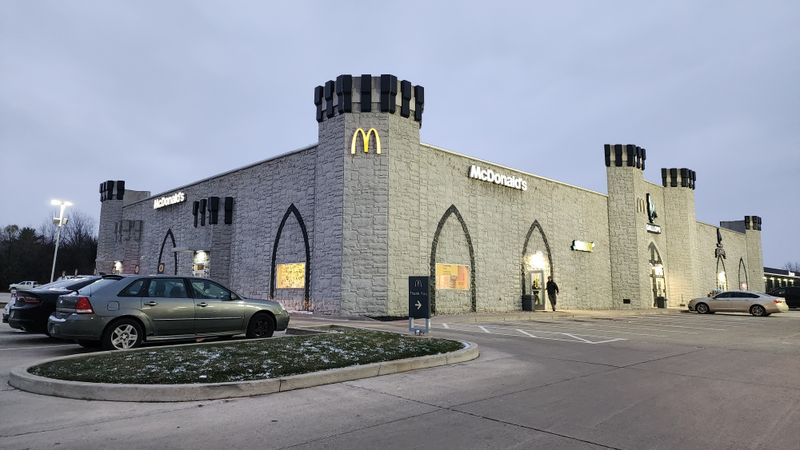
When developers planned this McDonald’s location along U.S. Route 20, they wanted something that would catch the attention of travelers passing through Goshen.
The highway sees considerable traffic from people traveling between Chicago and destinations in Ohio and beyond, making it prime real estate for businesses hoping to attract road-weary customers. Rather than constructing another forgettable building, the designers chose a medieval castle theme that would be impossible to miss.
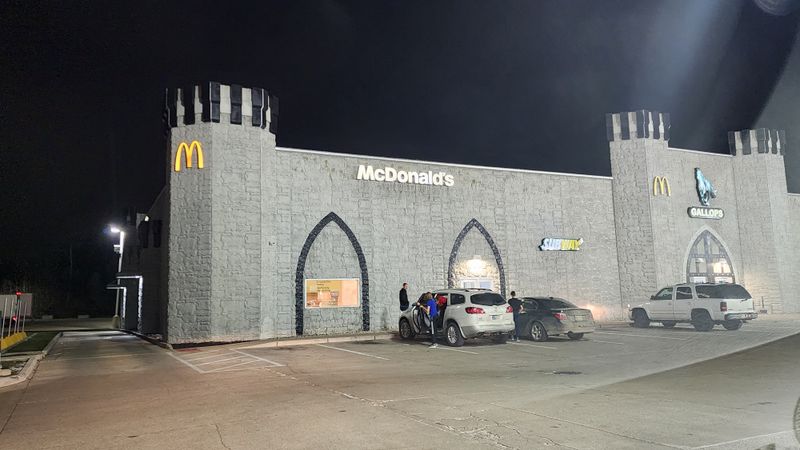
The exterior features gray stone-like walls, turrets with pointed roofs, and architectural elements that evoke European castles from centuries past. The building’s facade successfully creates the illusion of a fortress, complete with battlements and decorative stonework.
This eye-catching design serves a practical purpose beyond mere aesthetics; it functions as a three-dimensional billboard that advertises itself to thousands of passing motorists daily.
Castle-themed restaurants and buildings enjoyed popularity during certain periods of American roadside architecture history. This Goshen location taps into that tradition while giving McDonald’s a unique identity in the area.
The design demonstrates how franchise businesses sometimes allow creative freedom when it benefits local market positioning.
For travelers making long journeys across Indiana, the castle provides a memorable landmark and convenient stopping point. The distinctive architecture has helped the location become more than just another fast-food restaurant—it’s transformed into a recognizable waypoint that people remember and reference when giving directions or planning road trips through northern Indiana.
It’s Part of a Multi-Business Truck Stop Complex
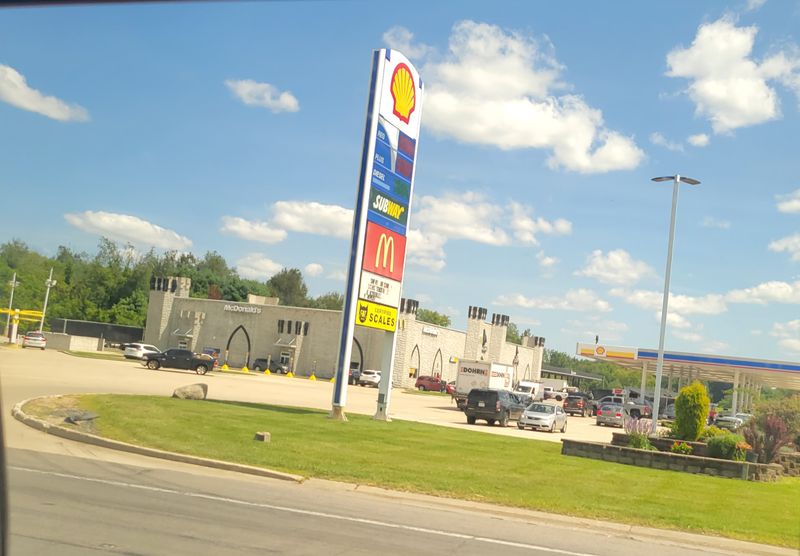
The castle building doesn’t house only a McDonald’s; it’s actually part of a larger truck stop complex that includes multiple businesses under one roof. Inside the castle walls, you’ll find a Subway restaurant, a liquor store, and the McDonald’s all sharing the same expansive space.
This multi-vendor setup is common at truck stops catering to travelers who want various options and conveniences in one location.
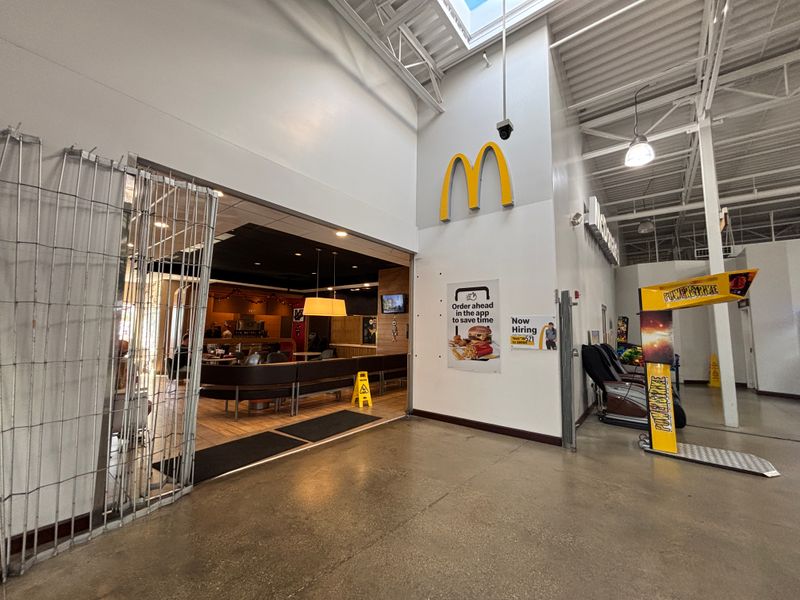
The interior layout resembles a warehouse more than a traditional medieval castle, with different businesses occupying their designated corners and walls. Arcade games and claw machines are scattered throughout the entry area and near the restrooms, adding an entertainment element for families traveling with children.
This hodgepodge arrangement creates an unusual atmosphere where the fantasy exterior gives way to a more utilitarian interior design.
Truck stops like this one serve an important function along major highways, providing essential services for both commercial truck drivers and regular travelers. The combination of food options, beverages from the liquor store, and basic amenities makes it a one-stop destination for people who want to minimize stops during long drives.
However, this multi-purpose setup also presents challenges for maintaining consistent quality and cleanliness across all areas.
The shared-space model means that McDonald’s customers might encounter people visiting the other businesses, creating a more diverse crowd than you’d find at a standalone restaurant. This arrangement reflects the realities of highway commerce, where maximizing the utility of prime real estate often trumps creating a refined dining atmosphere.
The Location Has Struggled With Service and Staffing Issues
Despite its charming exterior, this McDonald’s has faced significant operational challenges that have affected customer experiences. With an overall rating of just 2 stars from over 520 reviews, it ranks among the more problematic McDonald’s locations in the region.
Many customers report frustrations with long wait times, understaffing, and difficulties getting assistance from employees.
Several reviews mention that customers are required to use ordering kiosks rather than placing orders with a person at the counter. While kiosks have become standard at many McDonald’s locations, problems arise when the machines malfunction or when customers unfamiliar with the technology need help but can’t get staff attention.
One reviewer noted waiting over 20 minutes for food after ordering, only to receive cold items that clearly weren’t freshly prepared.
Staffing appears to be an ongoing issue, with multiple customers observing that one or two employees are trying to handle counter orders, drive-through service, and food preparation simultaneously. This creates bottlenecks and leads to frustrated customers who feel ignored or dismissed.
The challenges seem particularly acute during evening hours when the location should still be adequately staffed given its operating hours of 5 AM to midnight daily.
Management issues also surface in customer feedback, with several reviews specifically mentioning rude or unhelpful behavior from managers. These problems suggest systemic issues beyond normal fast-food service hiccups, pointing to deeper challenges with training, staffing levels, and operational oversight at this particular franchise location.
The Castle Building Has Become an Unexpected Photo Opportunity

Even customers who had negative experiences inside often acknowledge that the building itself is “really really cool to look at from the outside,” as one reviewer put it. The castle has become an Instagram-worthy roadside attraction that draws people who might not otherwise stop at a McDonald’s.
Social media posts featuring the unusual architecture have helped spread awareness of this quirky location beyond the immediate Goshen area.
Photography enthusiasts and fans of unusual architecture make special trips to see and photograph the castle. The building represents a slice of Americana; those wonderfully weird roadside attractions that make cross-country travel interesting and memorable.
In an era when most fast-food restaurants follow standardized corporate designs, places like this castle stand out as relics of a more creative approach to commercial architecture.
The contrast between the medieval exterior and the modern fast-food interior creates an amusing disconnect that people find entertaining. Visitors often express surprise when they walk through castle-like doors expecting themed decor inside, only to find a typical McDonald’s setup with contemporary furnishings and equipment.
This gap between expectation and reality has itself become part of the location’s quirky appeal.
For road trip enthusiasts and collectors of unusual Americana, the Goshen castle McDonald’s has earned a spot on lists of must-see roadside attractions in Indiana. It joins other architectural oddities like giant roadside sculptures, novelty-shaped buildings, and themed restaurants that give American highways their distinctive character.
Even if the food and service don’t impress, the building itself delivers entertainment value.
Cleanliness Has Been a Recurring Complaint From Visitors
Beyond service issues, cleanliness problems have plagued this location according to numerous customer reviews. Multiple visitors describe the bathrooms as “the most disgusting” they’ve seen in a long time, with clear signs of neglect and inadequate maintenance.
These reports span different time periods, suggesting ongoing rather than isolated incidents.
The soda fountain area has also drawn complaints, with one customer noting that dried soda was splattered all around the machine in a way that indicated it had been sitting there for hours without anyone cleaning it. This kind of visible neglect affects the entire dining experience and raises concerns about food safety and general hygiene standards.
When public areas show obvious signs of poor maintenance, customers naturally wonder about conditions in the kitchen.
The large, warehouse-like interior space presents maintenance challenges that a smaller, traditional McDonald’s layout wouldn’t face. With multiple businesses sharing the building and common areas like restrooms and entryways, responsibility for cleaning these spaces may fall through the cracks.
The scattered placement of arcade games and claw machines also creates additional surfaces and corners that collect dirt and require regular attention.
Cleanliness standards are particularly important for food service establishments, where health department regulations set specific requirements. While there’s no indication this location has faced official health violations, the customer feedback suggests that day-to-day maintenance doesn’t meet the expectations people have for a national chain restaurant.
These issues damage the brand’s reputation and drive away customers who might otherwise appreciate the convenient highway location.
The Location Serves a Strategic Purpose on a Major Travel Route
Geography explains much about why this castle exists where it does. U.S.
Route 20 is one of America’s longest highways, stretching from Oregon to Massachusetts. The section running through Goshen serves travelers moving between Chicago and cities in Ohio, Pennsylvania, and beyond.
This makes the location strategically valuable for capturing highway traffic.
Goshen itself is a city of about 35,000 people in Elkhart County, an area known for its large Amish and Mennonite populations and its recreational vehicle manufacturing industry. The local economy benefits from both residents and the steady stream of travelers passing through on Route 20.
Businesses along this corridor compete for the attention of motorists who might otherwise drive straight through without stopping.
The truck stop model makes particular sense in this context. Commercial truck drivers need places to rest, eat, and take breaks during long hauls, and a facility offering multiple food options plus other amenities serves this market well.
Regular travelers appreciate the convenience of handling multiple needs in one stop rather than searching for separate locations for food, drinks, and restrooms.
However, serving highway travelers creates different operational challenges than serving a local customer base. Highway customers are typically one-time visitors who won’t return regularly, which may reduce incentives for maintaining high service standards.
Local residents, on the other hand, need a reliable nearby option and will notice patterns of poor service or cleanliness. This location must balance serving both audiences, and based on reviews, it struggles to satisfy either group consistently.
Corporate McDonald’s Responds to Complaints But Local Issues Persist
A pattern emerges when reading through the many negative reviews: McDonald’s corporate responds to nearly every complaint with a standardized message directing customers to share additional details through the company’s feedback website. These responses demonstrate that corporate monitors the location’s online reputation and wants to project concern about customer experiences.
However, the sheer volume of complaints and their consistency over time suggest that corporate interventions haven’t resolved the underlying problems.
Franchise operations create a complex relationship between the McDonald’s corporation and individual restaurant owners. While corporate sets standards and provides support, day-to-day operations fall to franchise owners who must manage staffing, training, and maintenance within their budgets.
When a location consistently underperforms, corporate has limited direct control beyond working with the franchisee to implement improvements or, in extreme cases, terminating the franchise agreement.
Some positive reviews do appear among the negative ones, indicating that experiences vary depending on factors like time of day, which employees are working, and how busy the location is. One customer noted that changes seemed to have improved the operation, with hot, fresh food and less rude staff than previously encountered.
These glimpses of better performance suggest the location is capable of meeting standards when properly managed and staffed.
Dear Reader: This page may contain affiliate links which may earn a commission if you click through and make a purchase. Our independent journalism is not influenced by any advertiser or commercial initiative unless it is clearly marked as sponsored content. As travel products change, please be sure to reconfirm all details and stay up to date with current events to ensure a safe and successful trip.
