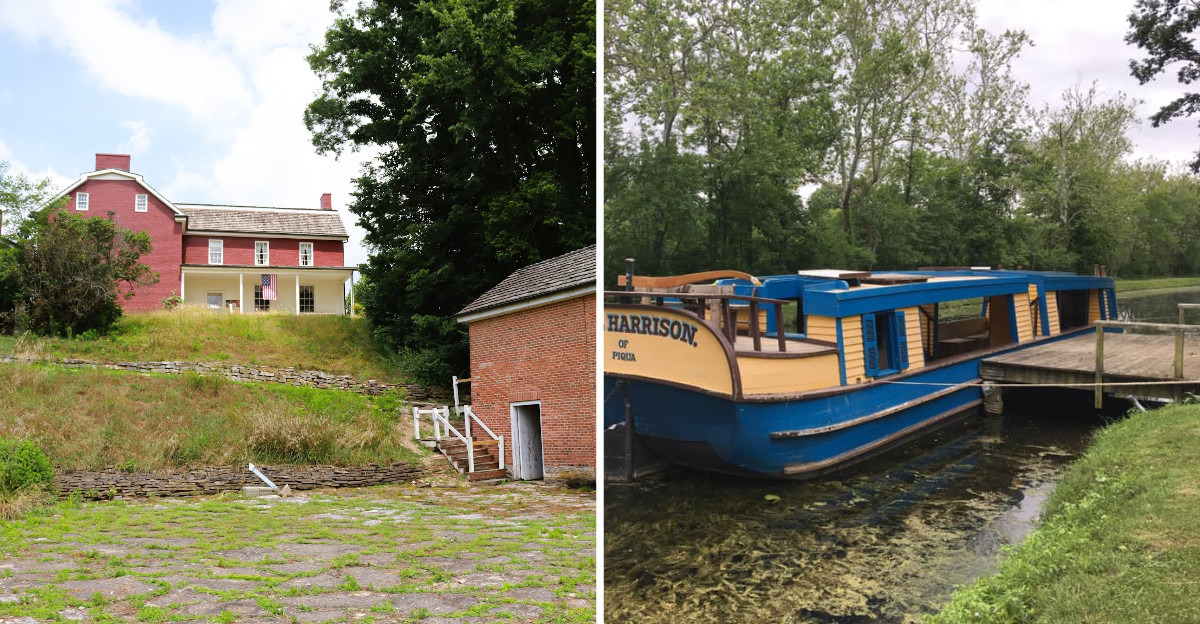
Corn fields open up and a tall brick farmhouse sits on a rise, looking like it has been waiting for company. The road narrows on a bright weekday morning in Ohio, and a quick history stop turns into most of a day.
Down the hill, a mule team pulls a wooden canal boat along a watered stretch of the old canal, moving at a pace that slows your own breathing. This same farm served as the only Federal Indian Agency in the state, which means two very different chapters of frontier life happened on one piece of ground.
Barn cats roam the property, goats graze near an ancient earthwork, and a museum shaped like an old blockhouse holds the stories. By the time the visit ends, the reason people drive hours for an afternoon here becomes obvious.
History feels close enough to touch, and the mules keep pulling, unhurried and steady.
The Brick Farmhouse on the Hill
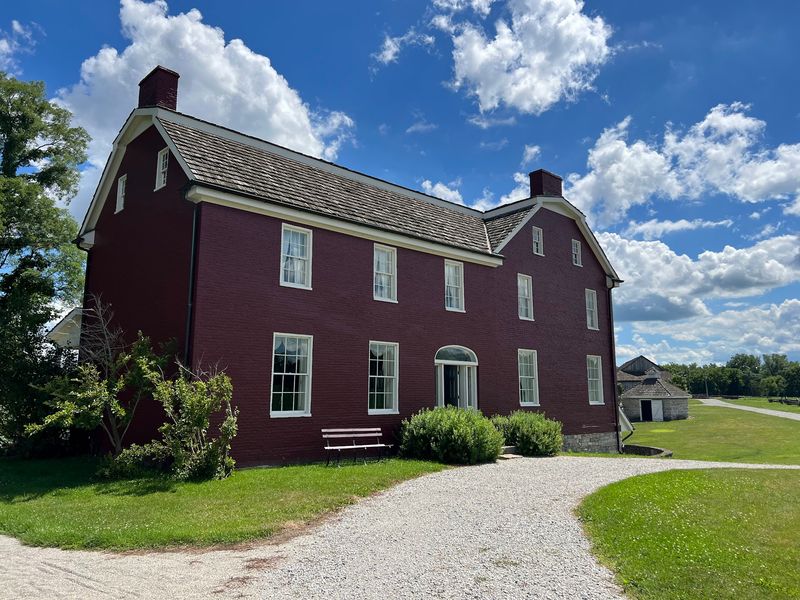
My first good look at the Johnston House came from the driveway, where the three-story brick front rises above the grass like something that wandered in from a city street. Finished in 1815, it was an unusual sight on the Ohio frontier.
Most families around here were still living in log cabins at the time. Colonel John Johnston built something meant to last.
The bricks came from clay dug on the property and fired in kilns nearby, which I think is the detail that sticks with people. You are looking at a house made almost entirely from the land it sits on.
Restoration work brought both the inside and outside back to how things looked in 1829, and the furnishings match the period. A docent walked me through the office where Johnston handled negotiations, and the rooms felt lived in rather than staged.
John and Rachel Johnston raised a large family here while the same building served as a government post. Ask about the summer kitchen and the downstairs work spaces, since those explain daily life better than any label ever could.
Tours run during open hours, and the guides genuinely enjoy answering questions.
Riding the General Harrison Behind a Mule Team
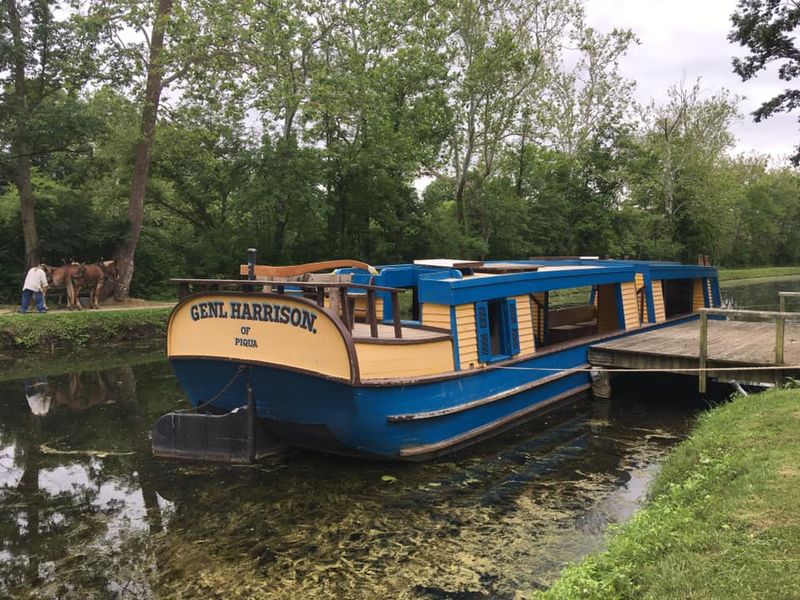
Nothing prepared me for how quiet a mule-drawn boat is. The General Harrison of Piqua is a 70-foot replica of the mixed cargo boats that once worked Ohio’s canals, and it moves at roughly four miles an hour without a single engine sound.
The mules do the work from the towpath. You just sit on a bench and watch Ohio slide by.
Crew members in period clothing narrate the trip, and the one on my ride knew the canal system inside out. Rides last somewhere around half an hour, sometimes a bit longer, and they cover a restored one-mile section of the Miami and Erie Canal.
From the water you get a different angle on the farmhouse up on its hill, which was no accident. The family could watch canal traffic from their windows.
I spotted turtles sunning on logs and geese guarding a nest along the bank. Kids on the boat with me were leaning over the rail trying to see the mules, and honestly, so was I.
Check ride times when you arrive, since they are scheduled rather than continuous.
The Indian Agency That Operated From a Family Home
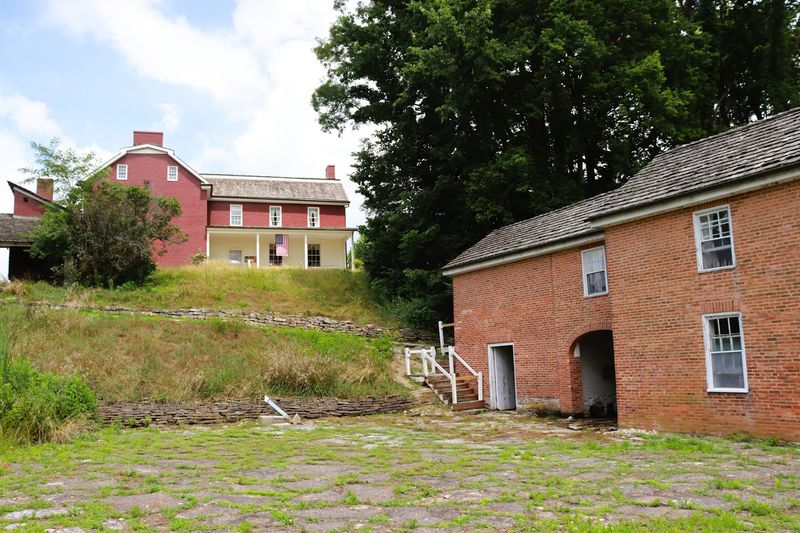
Here is the part that surprised me most. This working farm doubled as the Piqua Indian Agency starting in March 1812, making it the only Federal Indian Agency in Ohio at the time.
Government business happened in one room while children ran through the next.
John Johnston held the post of Federal Indian Agent for western Ohio from 1812 until 1829. During those years he dealt regularly with Shawnee, Wyandot, Seneca, Delaware, and Lenape representatives, handling everything from political matters to trade arrangements.
He was known as someone both Native leaders and his white neighbors could talk to, which mattered enormously during the War of 1812. The docent stationed in the office explained how trade goods were stored on site and distributed from the farm.
The story does not end comfortably. Johnston was later involved in negotiations that removed Ohio tribes to lands west of the Mississippi, and the site does not soften that.
Hearing it told plainly, in the actual room where discussions took place, hit harder than reading it anywhere else. That honesty is a big part of why this stop stays with you afterward.
A Watered Stretch of the Miami and Erie Canal
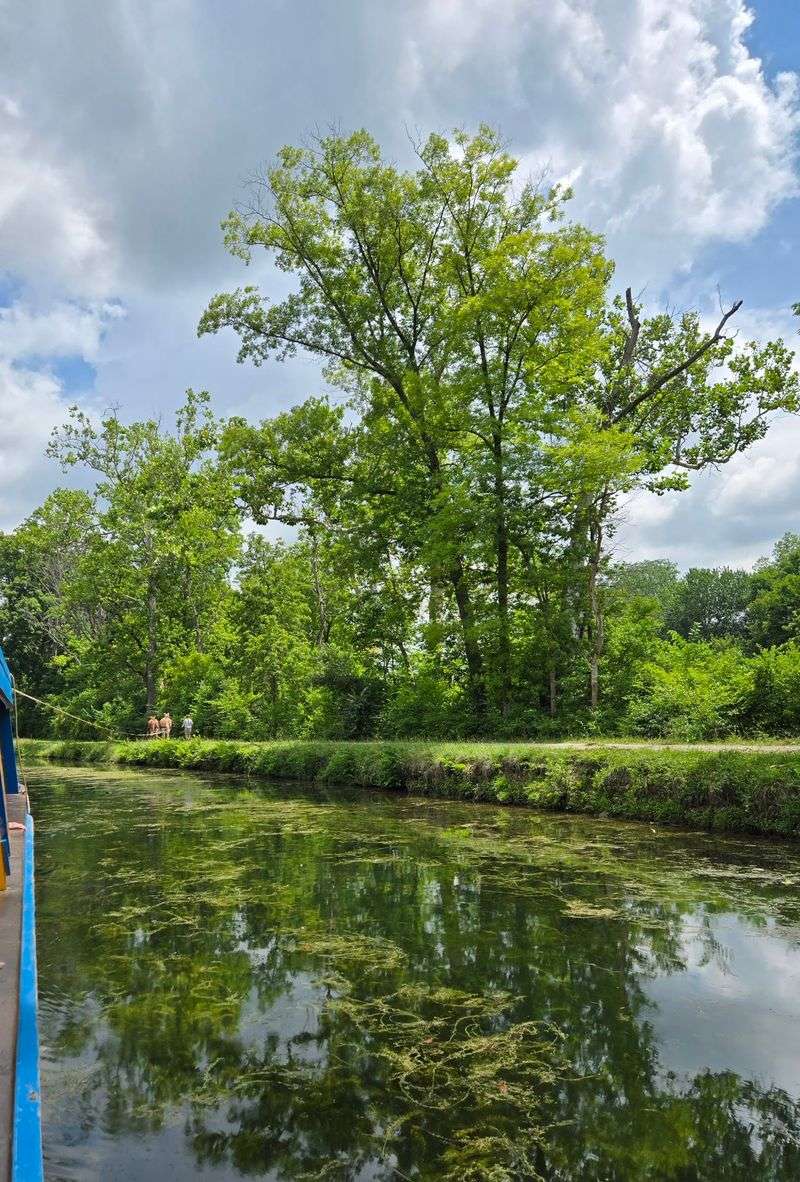
The canal looks so peaceful now that it takes some imagination to picture it busy. When it was running, the Miami and Erie stretched 274 miles and connected Toledo all the way down to Cincinnati.
Ohio built close to 1,000 miles of canals between 1825 and 1845.
Johnston had a hand in that too. He was one of seven original Ohio Canal Commissioners, helping plan and oversee the construction of the network.
For farmers in this region, the canals meant they could finally ship grain and goods cheaply enough to make a profit, and imported items arriving in Piqua got cheaper as well. Whole towns grew because of these waterways, and plenty of them shrank again once railroads took over.
Walking the towpath is free-feeling and easy, with water on one side and trees leaning in overhead. Redbuds were blooming along the bank when I visited, and I kept stopping to watch dragonflies skim the surface.
If canal history grabs you, drive a couple of miles north afterward to see the Lockington Flight of locks. The two sites together give you the full picture.
Inside the Woodland Indian and Canal Museum
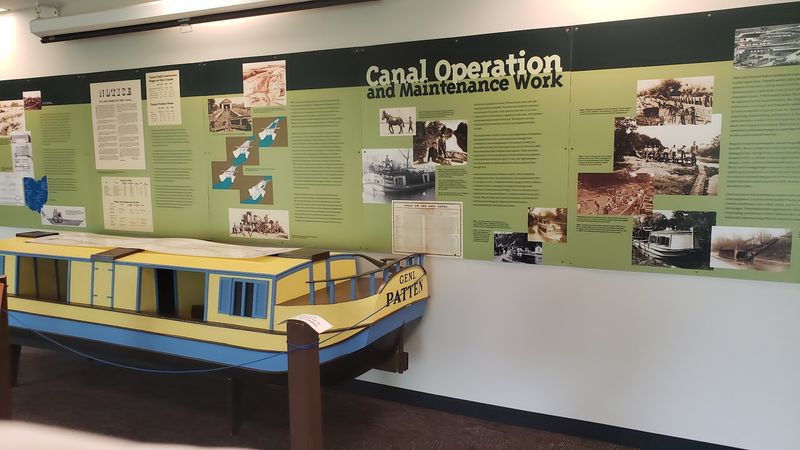
The museum building itself is a nod to history, designed to echo the blockhouse style of Fort Piqua, an eighteenth-century supply post. Inside, it pulls together two stories that most places would split into separate buildings.
Native history sits alongside canal history, and the pairing makes sense once you understand the timeline.
Exhibits trace the Eastern Woodland peoples who lived across this region, including material about the Pickawillany village site that dates to 1747. There is also an exhibit created by the Eastern Shawnee, and I appreciated that it makes clear Native nations are present-day communities rather than just historical subjects.
The canal galleries explain how the system was built, how it worked, and why it eventually faded. Reading that section before or after the boat ride really improves the experience, since the displays and the narration back each other up.
Kids get hands-on activities, dress-up clothing, and a drum that my ears tell me sees plenty of use. Plan at least forty minutes here, more if you read every panel.
Staff at the desk are generous with directions and happy to point out what else is open that day.
The 1808 Log Barn, Springhouse and Cider House
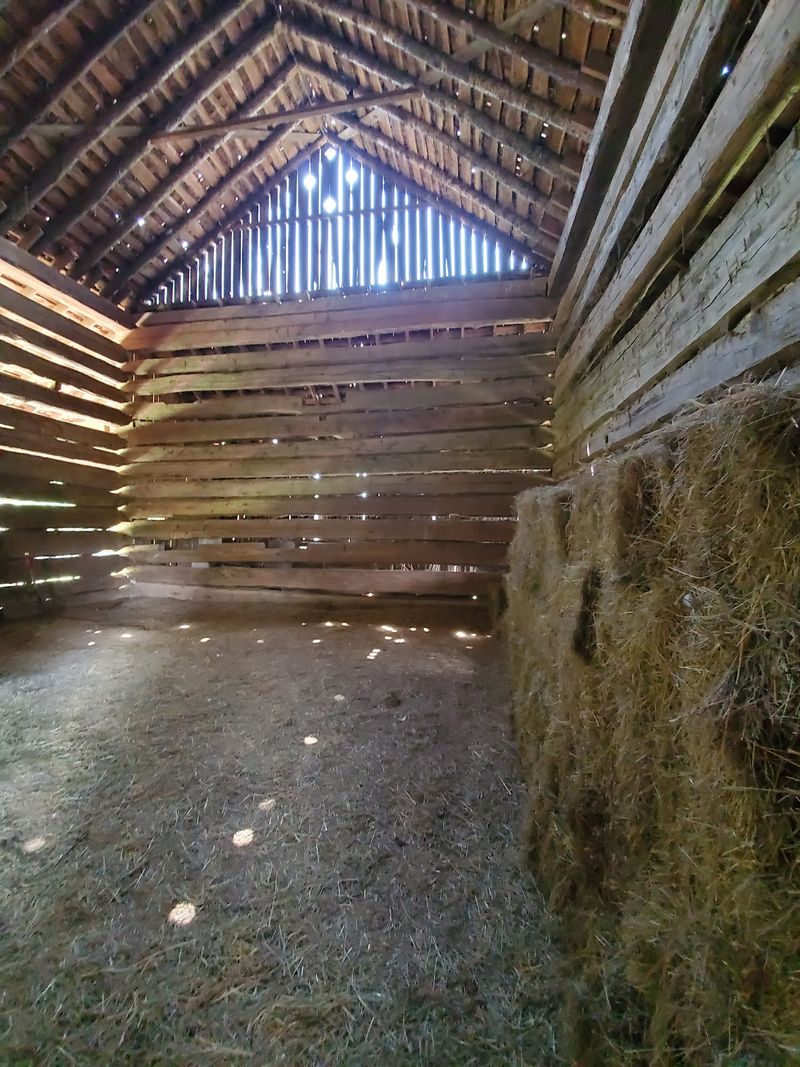
Barn lovers, this one is for you. The double-pen log barn dates to 1808 and is considered one of the oldest log barns still standing in Ohio, which you can feel in the thickness of the timbers.
It sheltered livestock and also stored trade goods during the agency years.
Goats made their opinions known while I was poking around, and Amos the ox watched me from his spot without breaking his chewing rhythm. Cows grazed out back, and a barn cat named Nub decided to escort me all the way to the museum, apparently a habit of his.
The springhouse, built somewhere between 1808 and 1815, is bigger than I expected at two full stories. Cold spring water still pours through it, clear and genuinely chilly, and it once kept milk and food from spoiling.
A 1828 cider house rounds out the cluster, showing how the family pressed their own apples each fall. Spinning and weaving demonstrations sometimes happen in the courtyard nearby.
Wear shoes you do not mind getting dusty, because these buildings are spread across open ground.
An Adena Mound and 250 Acres to Wander
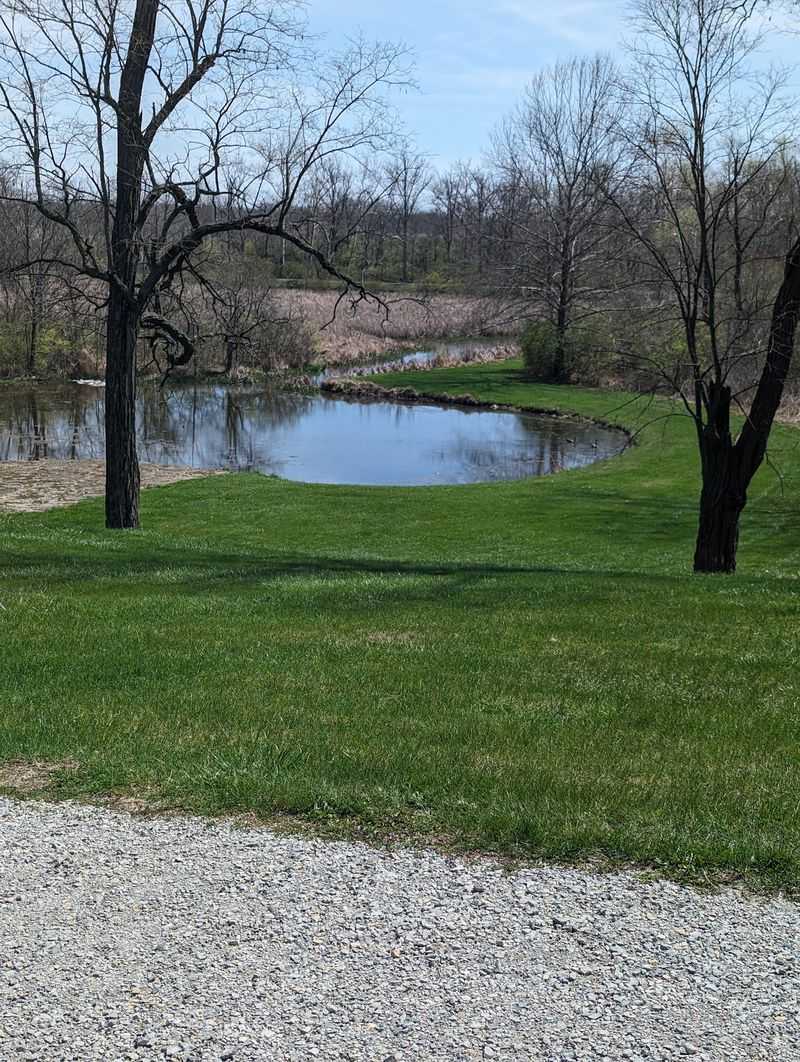
Long before Johnston laid a single brick, people were already building here. An Adena mound and earthwork sit on the property, quiet evidence of cultures that shaped this land thousands of years earlier.
The site as a whole covers roughly 250 acres and interprets about 2,000 years of Ohio history.
That scale is what turns a quick stop into a real afternoon. There is room to walk, trails to follow, and wide open lawn that drew crowds for eclipse viewing in recent years.
Hours run Monday through Friday from 9 am to 2 pm, with weekend programming and events at certain times of year, so calling ahead at 937-773-2522 saves disappointment. The site is part of the Ohio History Connection, and members get admission included.
Much of the visit happens outdoors, which means sun, insects, and uneven ground in summer. Strollers and wheelchairs can find the terrain tricky in places.
Bring water, a hat, and curiosity. Between the mound, the barn, the boat, and the house, few places in Ohio stack this many eras into one walk.
Address: 9845 N Hardin Rd, Piqua, Ohio
