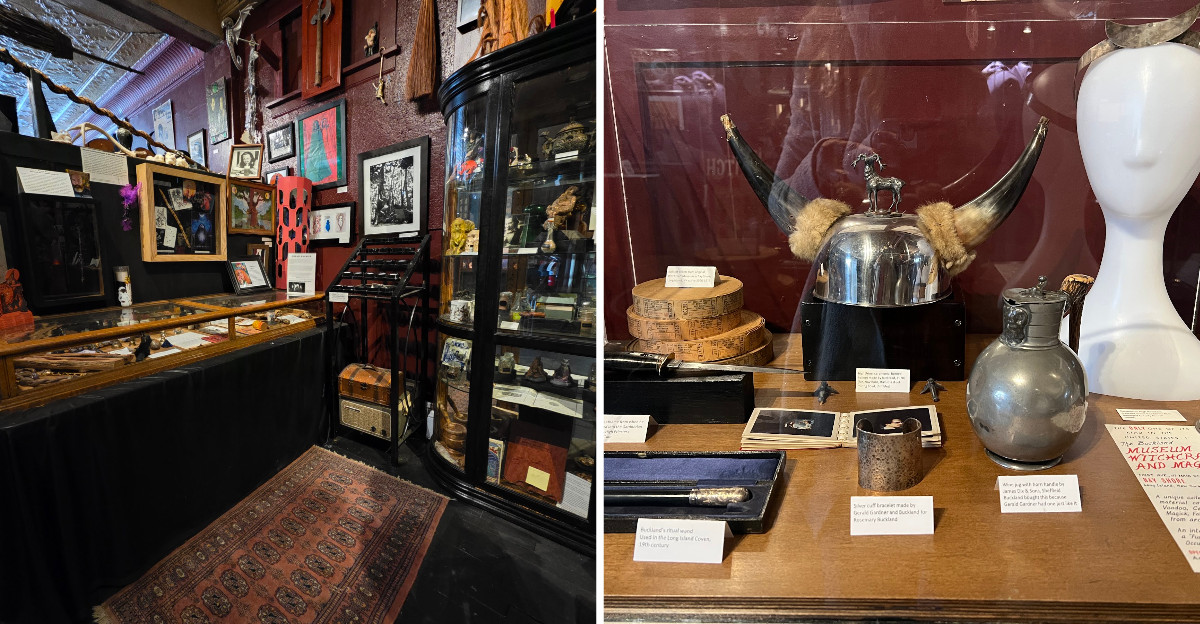
Incense drifts through a small shop on a gray Ohio afternoon. The front door opens into a space that smells softly of something ancient, and right away this feels unlike any ordinary museum stop.
Behind that shop waits a single room crowded with carved roots, ceremonial robes, tarot decks, and objects once owned by famous names in modern witchcraft. The whole story began in 1966, when a man set a few magical items on shelves in a basement far away.
It became the first museum of its kind in the United States, and it wandered through several states before landing in Ohio. I left with a head full of stories, a few new questions, and a real appreciation for how much history can fit inside one dimly lit room.
The place is small, but the weight of its collection lingers long after the door closes. Walking through, the quiet feels heavy with secrets.
A Basement Hobby That Made History
Picture a few shelves in a quiet suburban basement, and you have the humble start of this whole adventure. Back in 1966, Raymond Buckland began arranging magical artifacts in his Long Island home, turning a hobby into something nobody in America had tried before.
His spark came after he visited Gerald Gardner’s famous witchcraft collection on the Isle of Man. Gardner is often called the father of modern Wicca, and seeing his treasures clearly lit a fire in Buckland.
Soon he wanted a collection of his own, one that treated folklore and magic with the careful eye of a researcher.
I love that the idea was never about scaring people. Buckland took an anthropological approach, which simply means he wanted to study how people around the world used magic in daily life, ritual, and belief.
That fresh angle caught attention fast, and the little basement museum grew into a real destination. It became the first museum of its kind in the United States, which is a pretty wild title for something that started next to a furnace.
Knowing this backstory before you visit makes everything inside feel more personal. You are not just seeing objects, you are seeing one man’s lifelong passion project still going strong.
How an Airline Job Filled the Shelves
Here is a fun twist I did not expect. Raymond Buckland worked for British Airways, and that job turned out to be the secret ingredient behind his growing collection.
Flying for work gave him chances to pick up artifacts from many corners of the globe. Pieces arrived from different cultures and traditions, and before long the basement shelves were packed with well over 500 items.
The museum quickly drew attention from big names in media. During its first decade in New York, it showed up in The New York Times, Look Magazine, Cosmopolitan, and Esquire, and it was even the subject of a television documentary.
Things got even more impressive when The Metropolitan Museum of Art asked to borrow some of Buckland’s pieces for special exhibits. Think about that for a second, since objects from a basement collection ended up inside one of the most famous museums on the planet.
When I looked at the global mix of items in Cleveland, this travel history finally clicked for me. The variety is not random, because it reflects years of journeys and a curious mind always on the lookout.
My tip is to notice where each object comes from as you browse. Tracing those origins feels a bit like following Buckland’s old flight paths across the map.
A Collection That Kept Moving
Some collections stay put for a century, but this one packed its bags again and again. After its Long Island years, roughly from 1966 to 1973, the museum followed Buckland to New Hampshire, where it stayed open until 1976.
Next came Virginia, with the collection on display there from 1977 to 1979. Then life got busy for Buckland, whose writing and lecturing schedule kept him on the road.
The artifacts went into storage, hidden away from visitors for years. It is a little sad to imagine robes and carvings sitting quietly in boxes, waiting for someone to open them again.
A short comeback happened in New Orleans in 1999, giving fans a brief glimpse. After passing through several hands, the collection reached Toni Rotonda in 2015, the High Priestess of the Temple of Sacrifice, a coven Buckland himself co-founded in Columbus, Ohio.
That connection gave the story a beautiful full-circle feeling. Rotonda now owns the artifacts, and her care brought the museum back to life in its modern form.
Hearing about all these moves made me appreciate how lucky we are to see these pieces at all. Plenty of old collections simply disappear, but this one kept finding its way home.
Settling Into Old Brooklyn
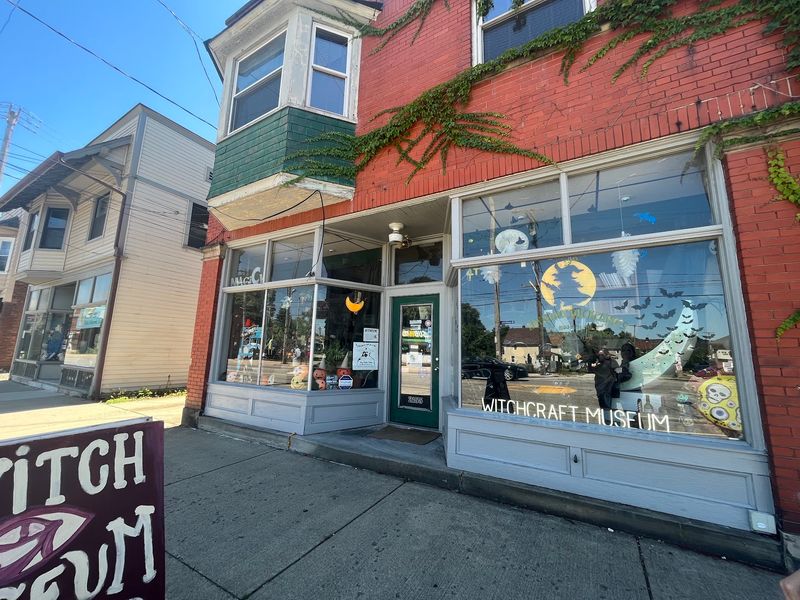
Cleveland became the next chapter in 2016, when the collection arrived in the city. The museum first opened its doors in the Tremont neighborhood in 2017, giving locals their first look.
Two years later, in 2019, it moved to its current spot on Broadview Road in Old Brooklyn. I liked this location right away because it feels relaxed and neighborly, not like a tourist strip.
Steven Intermill serves as director, and from what I saw, he clearly knows the stories behind nearly every object. Visitors often mention his friendly guiding style, and the staff seemed happy to answer questions from curious newcomers and longtime fans alike.
Getting there is simple. There is parking behind the building, reached by a little driveway to the left of the shop, and street parking out front works well when the lot fills up.
The museum keeps steady hours most days of the week, with later evenings on Fridays and Saturdays. Buying tickets online ahead of time can save you a little hassle at the door, especially on busy weekends around Halloween.
Plan on about an hour, though some visitors linger much longer. Honestly, I could have stayed twice as long and still missed a few treasures tucked into corners.
Robes, Horned Helmets, and Mandrake Roots
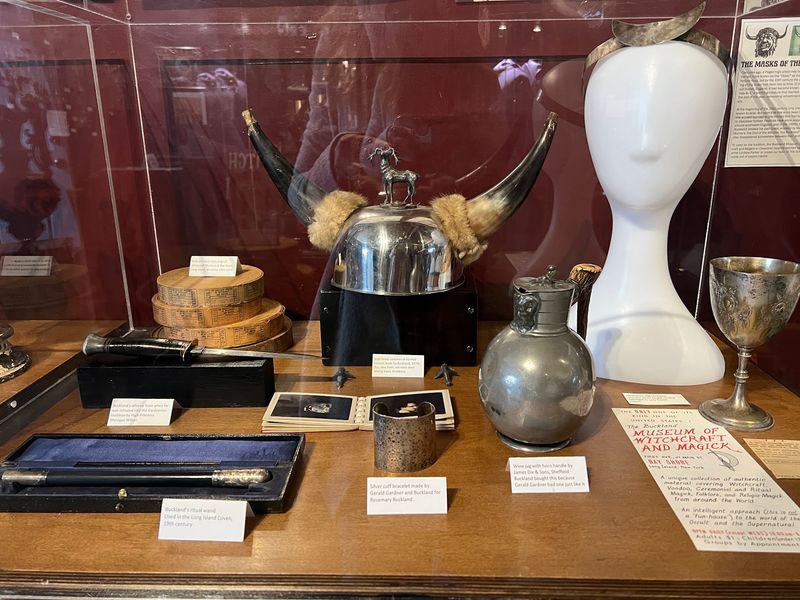
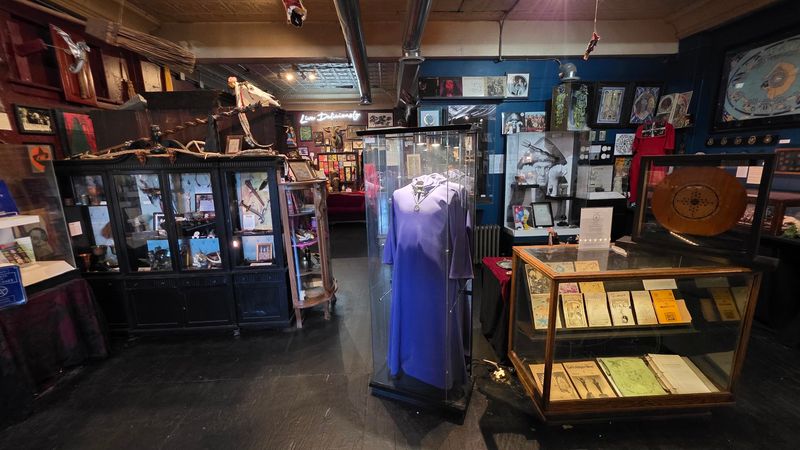
My eyes went straight to Raymond Buckland’s own ceremonial robe, and it carries real weight once you know its story. Nearby sits a high priest horned helmet, plus crescent moon headdresses once used by Raymond and his wife Rosemary in their practices.
The collection holds more than 600 authentic artifacts, so every glance reveals something new. Personal items from Gerald Gardner’s collection are here too, linking the museum to the very trip that inspired Buckland.
Then come the truly ancient pieces. Egyptian ushabti figures, small funerary figurines meant to serve the passed ones in the afterlife, rest quietly in their case.
Fun fact time: the museum also displays rare alruna, which are carved mandrake roots. Mandrake has a long history in European folklore, and these twisted little carvings look almost alive.
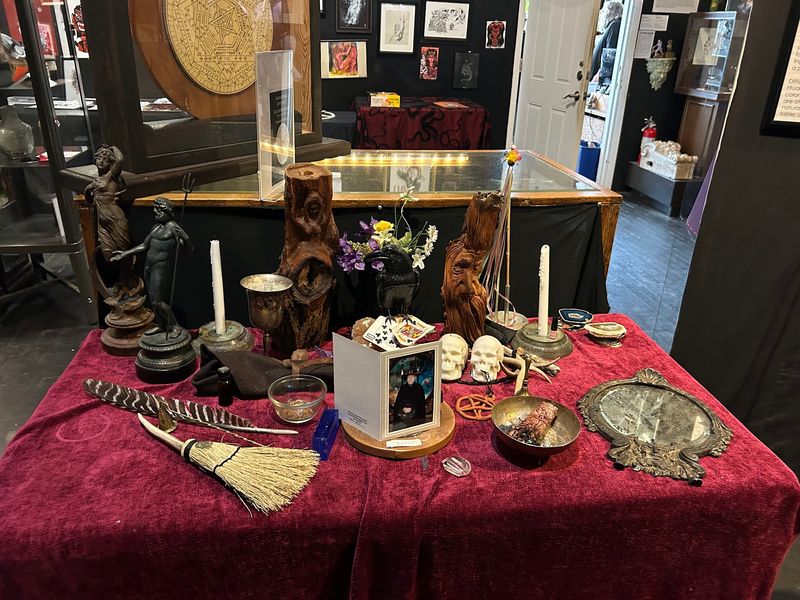
Items tied to Aleister Crowley, Sybil Leek, and Anton LaVey round out the famous names. You will also spot tarot decks, jewelry, staffs donated by well-known witches, an imitation hand of glory, and even occult-themed board games and records.
A smart move is to pick three objects that grab you and read every word on their signs. That small habit turned a quick browse into a much deeper visit for me.
One Dim Room, Endless Little Stories
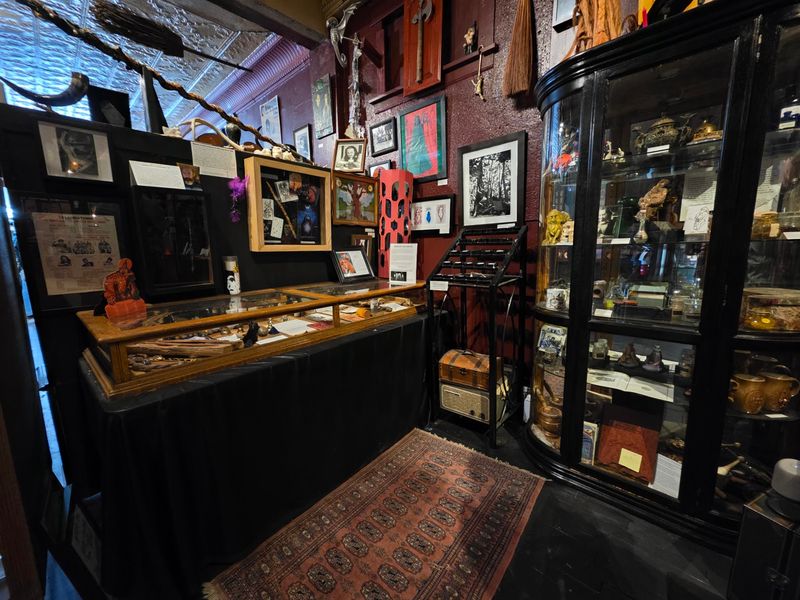
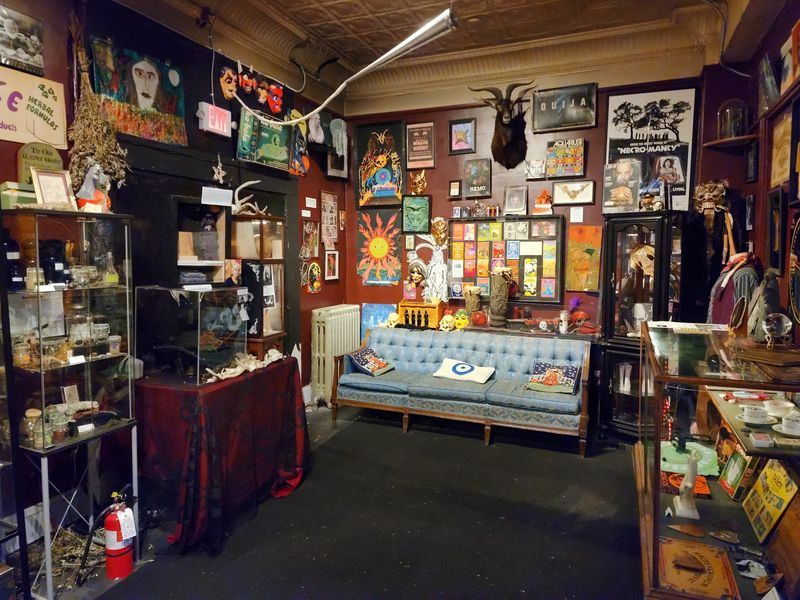
Honestly, I was surprised by how much fits into a single room. Tables and display cases fill the space, mixing Buckland’s original pieces with newer additions that keep the museum fresh.
The lighting stays low, and that choice works beautifully. Each object seems to glow a little, which makes you lean closer and slow down.
Nearly every item comes with a sign explaining what it is and why it matters. I appreciated that the goal is learning, not shock, because the museum works hard to clear up old stereotypes about witches and sorcerers.
A faint, musky scent of incense drifts in from the front shop. It wraps the whole visit in a cozy kind of mystery, the type that makes you whisper without meaning to.
One old curio cabinet packed with tarot decks stopped me for a long while. The artwork on those cards ranges from delicate to downright bold, and comparing styles became a mini game.
Look for the vintage psychedelic handbills from the Fillmore, too, along with Brion Gysin’s dream machine. Those pieces show how magic and art mixed into pop culture during the 1960s, the same decade the museum was born.
Crystals and Books on the Way Out
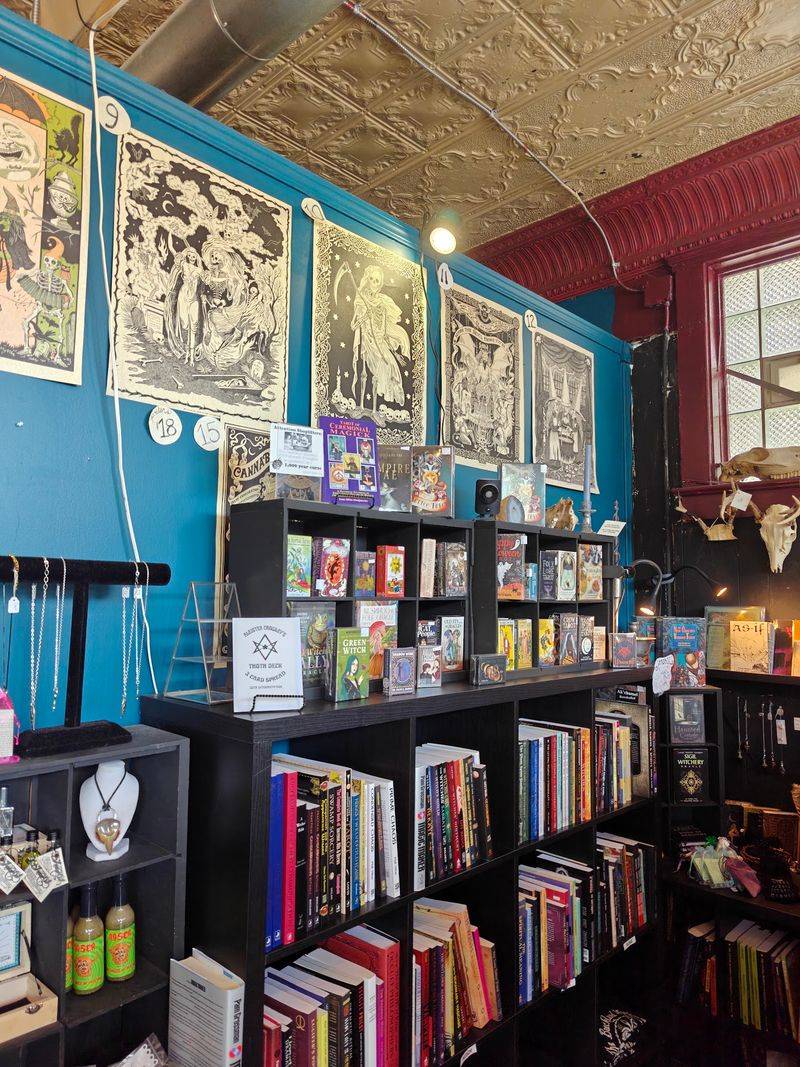
Leaving empty-handed proved nearly impossible for me. The small gift shop near the entrance feels like a friendly bookstore crossed with a treasure chest.
Shelves hold new and used books on mysticism, tarot, occultism, and the history of witchcraft and Wicca. A sparkling crystal selection catches the light, and I spent far too long turning stones over in my hands.
Jewelry, posters, and t-shirts add even more options, many inspired by the museum itself. There are also beautifully designed folk horror zines, which make a quirky souvenir you probably will not find elsewhere.
Book lovers should know the shop also buys books. That detail made me smile, since it keeps the shelves changing and gives local readers a fun reason to drop by again.
Beyond shopping, the museum hosts community groups and workshops, so the space stays lively year-round. Regulars mention that fresh exhibits and newly added artifacts show up often, which rewards repeat visits.
My advice is simple: browse the museum first, then hit the shop. Seeing the history up close helps you choose a book or charm that actually means something to you.
Address: 2155 Broadview Rd, Cleveland, Ohio 44109
