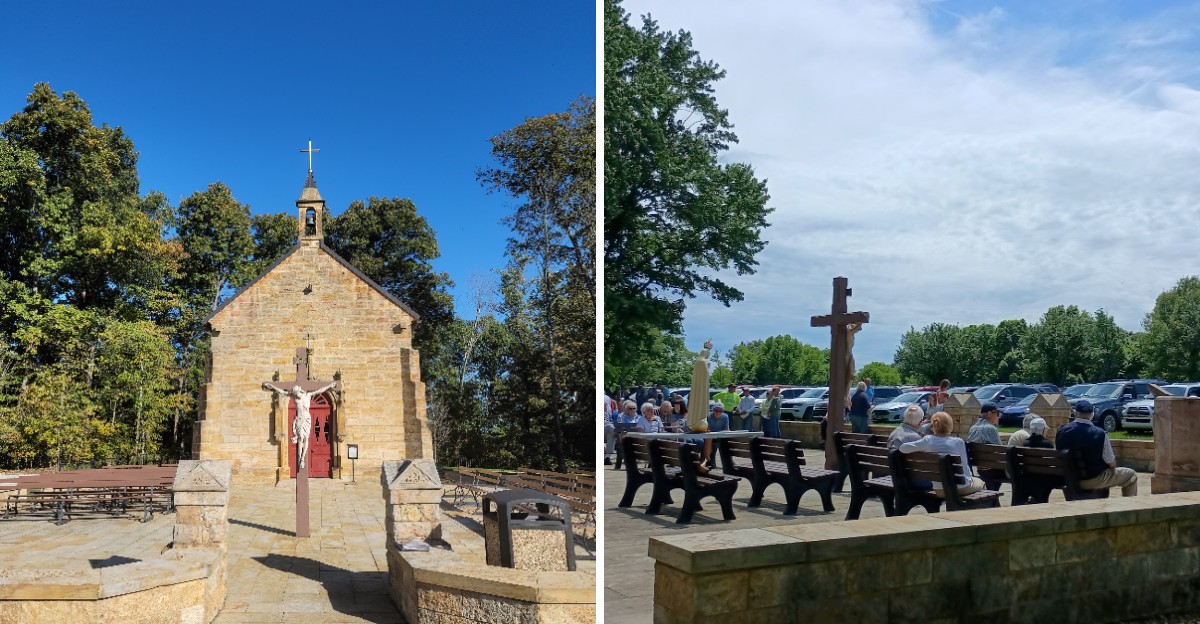
Some historic buildings are famous for how much they contain. This chapel is memorable for how little it needs.
Sandstone walls. A few wooden pews.
Painted surfaces inside. A carved statue from Switzerland.
That is the basic arrangement, and somehow it works. The chapel has stood on its southern Indiana hillside since 1870, using stone taken directly from the ground beneath it.
Its appearance brings to mind a small Swiss mountain sanctuary, despite the surrounding landscape being unmistakably Midwestern. The view beyond the chapel does plenty of work too, with the valley rolling away in shades of green.
It is a simple place with a surprisingly international story.
Built From the Hill Beneath It
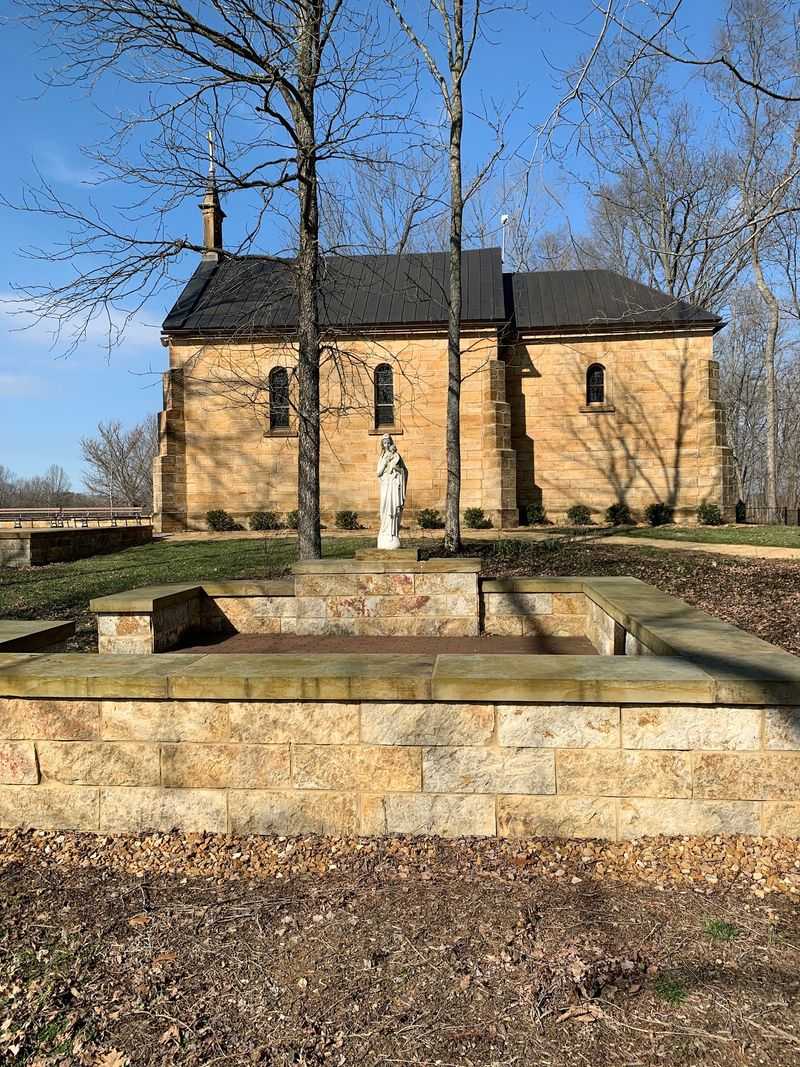
Run a hand along the outer wall and the stone feels gritty, warm, and a little uneven. That texture tells a story.
The sandstone used for the chapel was quarried right from the hill where it stands, so the building and the land are literally made of the same stuff.
Construction wrapped up in 1870, but the spot was special long before that. As early as 1857, a simple image of Our Lady of the Immaculate Conception hung on an oak tree here, marking a wayside shrine for travelers and locals passing by.
People kept coming. Eventually, the tree shrine grew into a permanent stone home.
Using local rock was practical for builders in the 1800s. It also gave the chapel its rustic charm, since the color shifts with the weather and time of day.
Morning light makes it look pale and soft, while late afternoon turns it a deep golden tan.
Geology fans will enjoy spotting the layers and tiny marks in each block. Sandstone forms from ancient sand pressed together over a very long time, so the walls are basically a piece of Indiana history stacked by hand.
A quick tip for visitors is to walk all the way around the outside before heading in. Each side catches the light differently, and the back offers a quieter view framed by trees.
The 2016 and 2017 restoration even included careful tuck-pointing, so the stonework looks sharp and sturdy today.
A Little Bit of Switzerland on an Indiana Hill
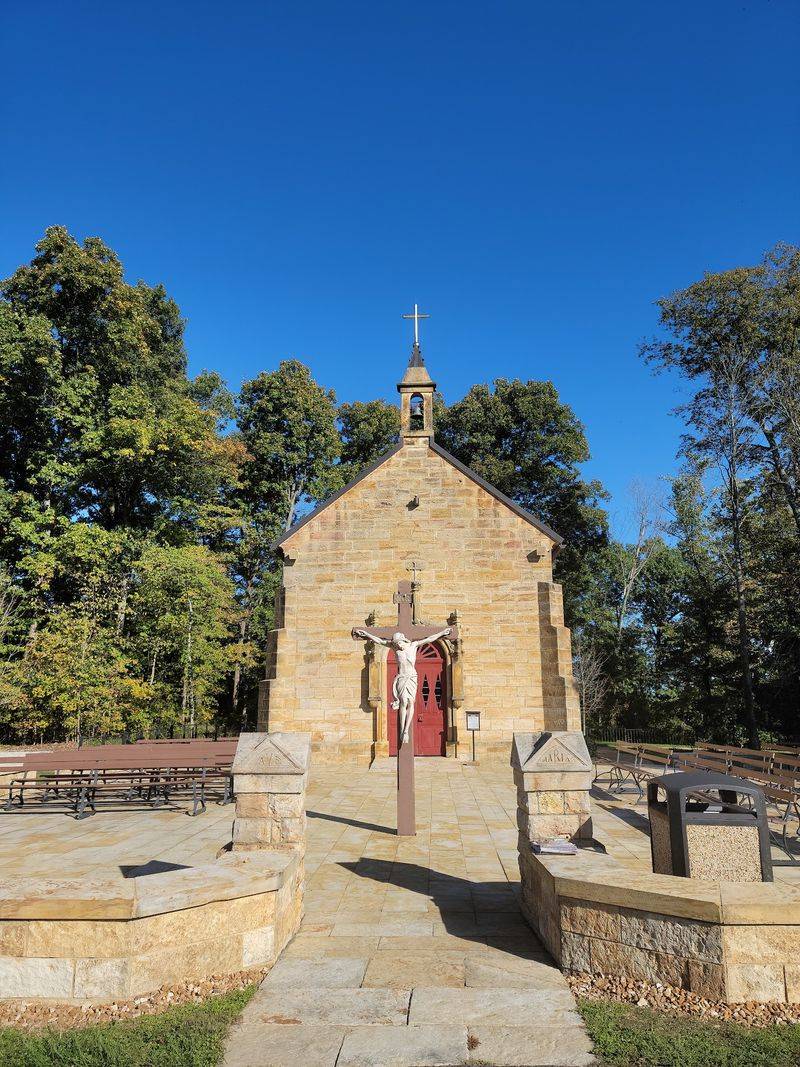
Swiss monks have a knack for picking good hills. Back in 1854, Benedictine monks from Einsiedeln Abbey in Switzerland founded Saint Meinrad Archabbey nearby, and their homeland shaped everything they built.
The little chapel on this hilltop is one of the best examples of that old-world touch.
Rough sandstone walls, a simple shape, and a tucked-away setting give the shrine a look that feels far more Alpine than Midwestern. Picture a mountain chapel in a postcard.
Now swap the snowy peaks for Indiana oak trees, and that is pretty close to the real thing.
The name has deep roots too. Monte Cassino honors the famous abbey in Italy founded by Saint Benedict around 529 AD, the place that helped shape monastic life across the Western world.
So one small Indiana building carries ties to both Switzerland and Italy at once, which is a lot of passport stamps for a chapel this size.
Finding it is part of the fun. The shrine sits at 13312 Monte Cassino Shrine Road in St Meinrad, IN 47577, just a short drive from the main Archabbey campus.
A small parking area waits right beside the building, so there is no long trek required.
Bring a camera. The contrast between the honey-toned stone and the deep green woods makes for photos that look borrowed from a European travel magazine, and nobody back home will guess the picture was taken in Indiana.
The Winter Prayer That Stopped an Epidemic
January of 1871 was a scary time in St. Meinrad. Smallpox swept through the village, and families, monks, and students all worried about who might get sick next.
There were no modern vaccines handy, so the community turned to faith.
Together they started a novena, which is a prayer said over nine days, asking Our Lady of Monte Cassino for help. The novena began on January 5.
According to the shrine’s history, not a single new case of smallpox appeared from that day on. For a small town under that kind of pressure, the change felt like a miracle.
Gratitude stuck around. Every year near January 13, the last day of that first novena, students from Saint Meinrad still make a pilgrimage up the hill to say thank you.
More than 150 years later, the tradition keeps going strong.
Knowing this story changes how the chapel feels. Those wooden pews are not just old furniture.
They sit in a space where a frightened community once found hope, and that weight lingers in a gentle, comforting way.
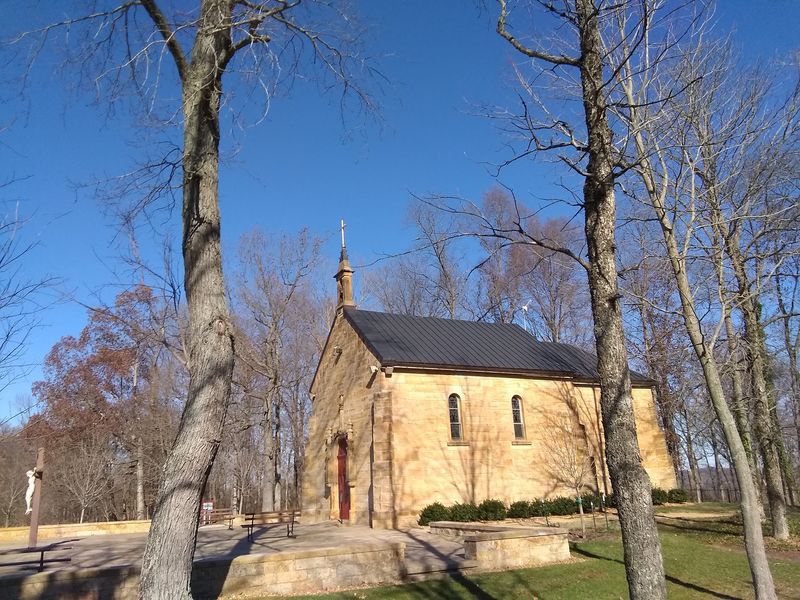
Winter visitors get an extra treat. Bare trees open up wider views of the valley, and the quiet of a cold morning makes the history feel extra close.
Dress warmly, wear good shoes for possible ice, and take a moment to picture those 1871 pilgrims climbing the same slope.
Painted Walls That Will Make Jaws Drop
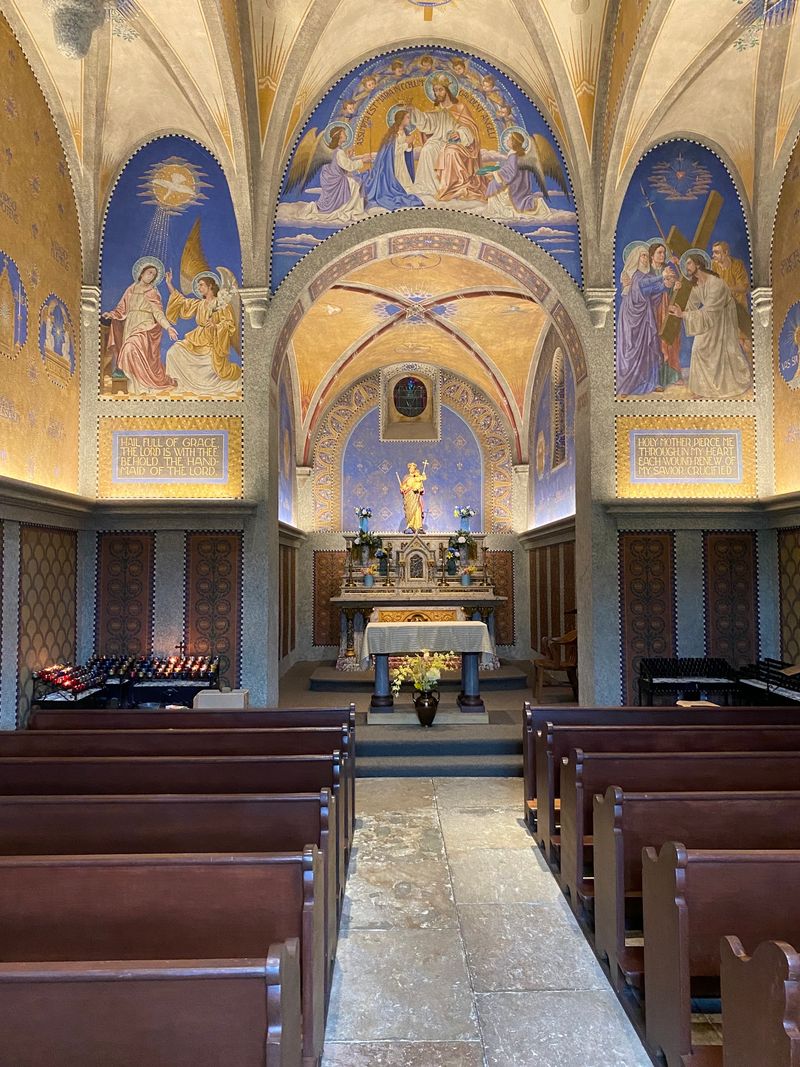
From the outside, nobody would guess what waits through the door. The chapel looks humble and plain, then suddenly color is everywhere.
Walls and ceiling are covered in paintings, with titles of Our Lady written around the room like a soft, glowing crown.
Above the altar stands the star of the show. A carved wooden statue of Mary holding Jesus, made in Switzerland, watches over the small room.
The carving is detailed enough that it pays to step close and study the faces and folds of the robes.
Not long ago, these paintings had faded. During a restoration in 2016 and 2017, art specialists carefully brought the murals back to their original bright colors.
Crews also added better lighting and a heating and cooling system to protect the artwork from Indiana’s sticky summers and chilly winters.
Here is a fun fact. The chapel holds only a handful of pews, which makes it feel personal rather than grand.
Every detail is within arm’s reach, almost like a jewelry box that people can sit inside.
Plan to slow down once inside. Sit in a pew, let the eyes travel from the floor to the ceiling, and try to read each painted title.
Keep voices low, since others may be praying, and photos should be taken respectfully. Ten quiet minutes here can feel surprisingly refreshing.
Benches, Gardens, and That Anderson Valley View
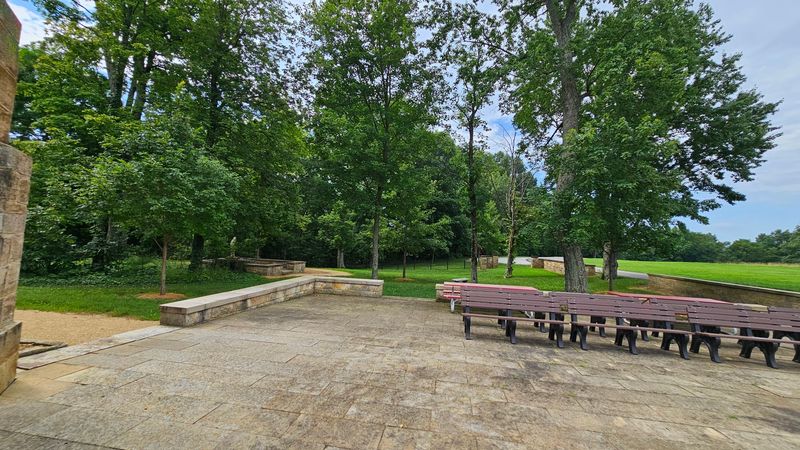
Leaves crunch, birds chatter, and the whole Anderson Valley spreads out below the hill. Few spots in southern Indiana offer a view this calm.
The shrine sits high enough that the trees open up into a wide, rolling scene of fields and forest.
Fall is the showstopper season. Come October, the hills turn red, orange, and gold, and the sandstone chapel looks like it was painted into the scene on purpose.
Spring brings fresh green leaves and wildflowers, while summer offers deep shade on hot afternoons.
The grounds got some lovely upgrades in recent years. A new sandstone patio and comfy benches give visitors a place to rest.
Nearby, a prayer garden with fresh landscaping, fencing, and a stone path invites a slow, thoughtful stroll.
Pack light. A water bottle, a jacket for breezy days, and maybe a small notebook are all anyone needs.
Some people sketch the view, some journal, and some simply sit and do nothing at all, which is honestly an underrated hobby.
The shrine welcomes guests daily from about 6 AM to 6 PM, so sunrise and late afternoon visits are both possible. Early mornings often bring mist drifting through the valley.
Golden hour, on the other hand, warms up the stone and makes every photo glow. Either choice wins.
Saturday Mass and Sunday Rosary Walks
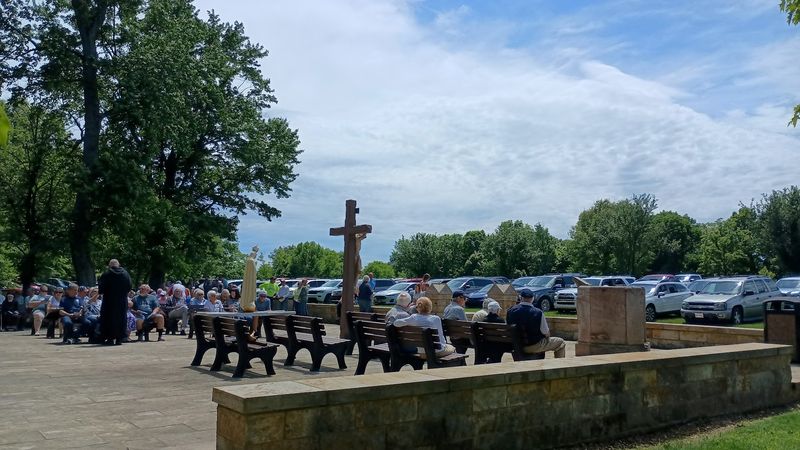
Quiet visits are lovely, but the shrine also comes alive with shared worship. Each Saturday, a Benedictine monk from Saint Meinrad Archabbey leads Mass inside the chapel.
With so few pews, the service feels close and personal.
May and October bring something special. Those months are traditionally devoted to Mary, and public rosary pilgrimages take place each Sunday.
The hour-long gathering opens with a hymn and a sermon, then moves outside into a rosary procession around the grounds.
Picture a line of people walking slowly under the trees, voices rising and falling together in prayer. Everything wraps up with the Litany of the Blessed Virgin.
Families, church groups, and solo travelers all join in, and newcomers are welcome.
Not Catholic? No problem.
Visitors of many backgrounds stop by simply for the peace and beauty, and the shrine is open to anyone looking for a calm moment. Respectful curiosity is always fine.
A few practical tips help. Arrive a little early for Sunday pilgrimages because the parking area is small.
Comfortable shoes are smart for the outdoor procession, and a light layer helps on cooler October afternoons.
Make a Day of It at Saint Meinrad Archabbey
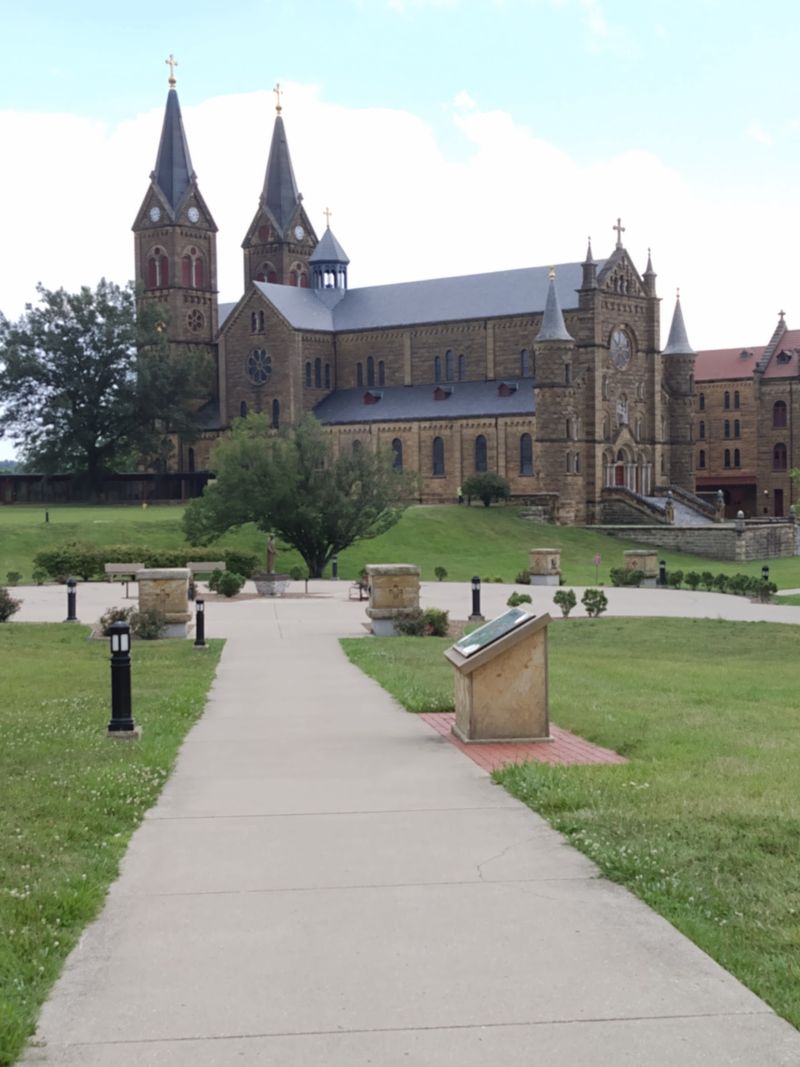
Leaving right after the shrine would be a mistake. Just down the road, Saint Meinrad Archabbey spreads across a huge 2,500-acre campus.
Founded in 1854 by those same Swiss monks, it is one of only two archabbeys in the United States.
Monks still live, work, and pray here every day. Guests can join them for prayer services in the Archabbey Church, a towering sandstone building over a century old.
Hearing the monks chant together is a memory that sticks.
Self-guided walking tours let visitors explore at their own pace. Nature lovers should try the mile-long Marian Shrine Trail, which winds past the Stations of the Cross and ends at another shrine to Mary.
It is an easy, peaceful hike for most ages.
Art fans can browse exhibits in the library gallery. The campus gift shop sells books, inspirational gifts, and goodies made by monks and nuns, which make thoughtful souvenirs.
Anyone craving a longer escape can book a monk-led retreat at the Guest House and Retreat Center.
A smart plan looks something like this. Start at Monte Cassino Shrine in the morning light, then head to the Archabbey for a tour, a trail walk, and an afternoon prayer service.
By sunset, that little sandstone chapel on the hill will feel like an old friend.
