Hebrew letters carved into two stones have sparked arguments since the 1860s. One stone is shaped like a keystone, and the other shows a robed figure beside a short version of the Ten Commandments.
Both sit inside an Ohio museum, a brick building in a historic village, where visitors stand in front of the case far longer than they planned. The story touches ancient mounds, a hopeful surveyor, and a nation fighting over big ideas about who people are.
Reading every label twice becomes necessary, because the details are as puzzling as the objects themselves. Ohio keeps this mystery in plain sight, and it rewards anyone curious enough to stop.
The stones have survived decades of debate and doubt, and they still draw questions from every visitor who leans in. This small museum deserves a spot on any road trip, not because it solves the mystery, but because it lets you sit with it.
A Brick Museum Hiding in Roscoe Village
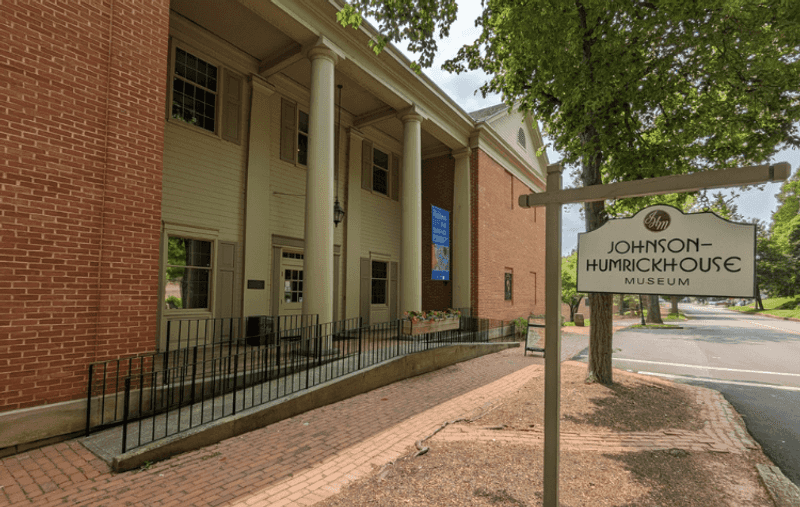
My first clue that this trip would be special came from the street itself. Historic Roscoe Village is a restored canal town from the Ohio and Erie Canal days, and its brick sidewalks and old storefronts set a slow, easy pace.
Right in the middle of it stands the Johnson-Humrickhouse Museum, a solid brick building that looks calm and confident. It opened in 1931, and it is nationally accredited, which is a big deal for a museum in a town this size.
From outside, you might guess it holds a few local keepsakes. Inside, it is a lot bigger than it looks.
Plan your visit around the hours, since the museum is usually open from noon to 4 PM and closed on Mondays.
Getting around is simple for everyone. There are ramps at the front and an elevator to the upper floor, so strollers and wheelchairs are welcome.
I liked pairing the museum with a stroll along the village streets, peeking into shops and canal-era buildings before heading inside. That mix of fresh air and old history made the whole afternoon feel relaxed and full at the same time.
Meeting the Keystone and the Decalogue Stone
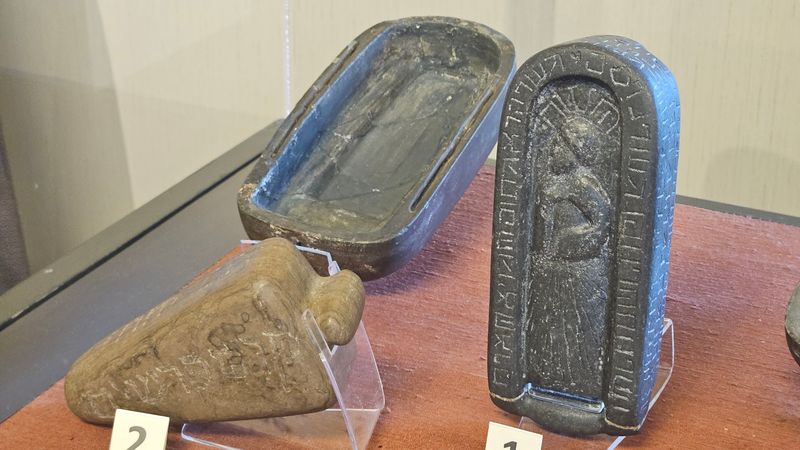
Honestly, the stones are smaller than I imagined. That made them more interesting, not less, because you lean in close to read the carved letters.
Known together as the Newark Holy Stones, the group includes a few pieces. The Keystone gets its name from its wedge shape, like the top stone in an arch, and it carries Hebrew writing.
The Decalogue Stone is the showstopper, with a robed figure that some believe is Moses, framed by a shortened version of the Ten Commandments. A two-piece sandstone box was made to hold the Decalogue Stone snugly, and a small stone bowl rounds out the set.
Take your time with the case. Look at the edges of the letters and the way the figure is carved, then compare the two stones side by side.
One tip I would share with any visitor is to read the labels before forming an opinion. The museum explains what each object is, where it was said to be found, and why experts question it.
Knowing those basics first makes every detail on the stones jump out. You start noticing things like letter shapes and tool marks that you would otherwise miss completely.
David Wyrick and the Mounds Near Newark
Back in 1860, a surveyor named David Wyrick reported a find that would follow him forever. Digging near Newark, Ohio, he said he uncovered the Keystone at the Newark Earthworks, and later, in 1867 era reports, the Decalogue Stone turned up at the Jacksontown Stone Mound.
Those locations matter a lot. The Newark Earthworks are among the largest collections of earthen structures built by the Hopewell culture, a Native American society that thrived from about 100 BC to AD 500.
Picture huge walls and shapes made of soil, built by hand across wide fields.
So imagine the shock of Hebrew writing coming out of mounds tied to an ancient American people. That clash is the heart of the whole puzzle.
Here is a fun way to make the story feel real. Newark sits roughly an hour from Coshocton, so a day trip can connect the stones with the land they supposedly came from.
Seeing the scale of the earthworks helped me understand why people in the 1800s got so excited about anything found there. Those mounds already felt mysterious to settlers, and a carved stone with Bible verses only added fuel to their wild guesses.
Why the Arguments Never Really Ended
Few objects can start a friendly debate at a dinner table like these can. Some people in the 1800s saw them as proof that travelers crossed the ocean long before Columbus, and some linked them to the Lost Tribes of Israel.
Scholars pushed back quickly. Language experts noticed that the Hebrew letters looked modern rather than ancient, which was a huge warning sign.
Other supposed finds from the Newark area were later shown to be fakes, and a local dentist even claimed he had carved and planted some of the later stones.
Then there is the time period. The 1860s were full of fierce arguments over slavery, and science was often used to back one side or another.
Some researchers think the stones were made to support monogenism, the idea that all humans came from a single pair, which was sometimes used against slavery.
What I took away is a lesson about evidence. A find can feel exciting, but clues like letter style, location, and timing tell the deeper story.
Most archaeologists today believe the stones are forgeries, yet the reasons someone might create them still spark lively conversations. That question of motive keeps people coming back.
A Prism on Ohio in 1860
Something surprised me in the best way here. Instead of hiding a famous possible hoax, the museum puts it front and center and explains it openly.
The staff accepts the scientific view that the stones are likely forgeries. But they treat them as a window into Ohio in 1860, not 100 AD.
Museum leaders have said that staying neutral would be wrong, since what a museum says or skips can affect how people see Native American history.
That approach changes the whole feel of the exhibit. You stop asking only whether the stones are real and start asking who made them, why, and who could be hurt by the story.
An iPad kiosk makes this easy to explore. You can zoom in on close-up photos of the stones and see Google Earth views of the places where they were reported found.
The kiosk also links to nearby displays about how life in Ohio changed in the late 1800s. I spent a good while tapping through it, and it helped me connect the dots between the carvings and the people living through those tense years.
Kids who like screens will enjoy it too.
Flint Blades and Ancient Ohio Craft
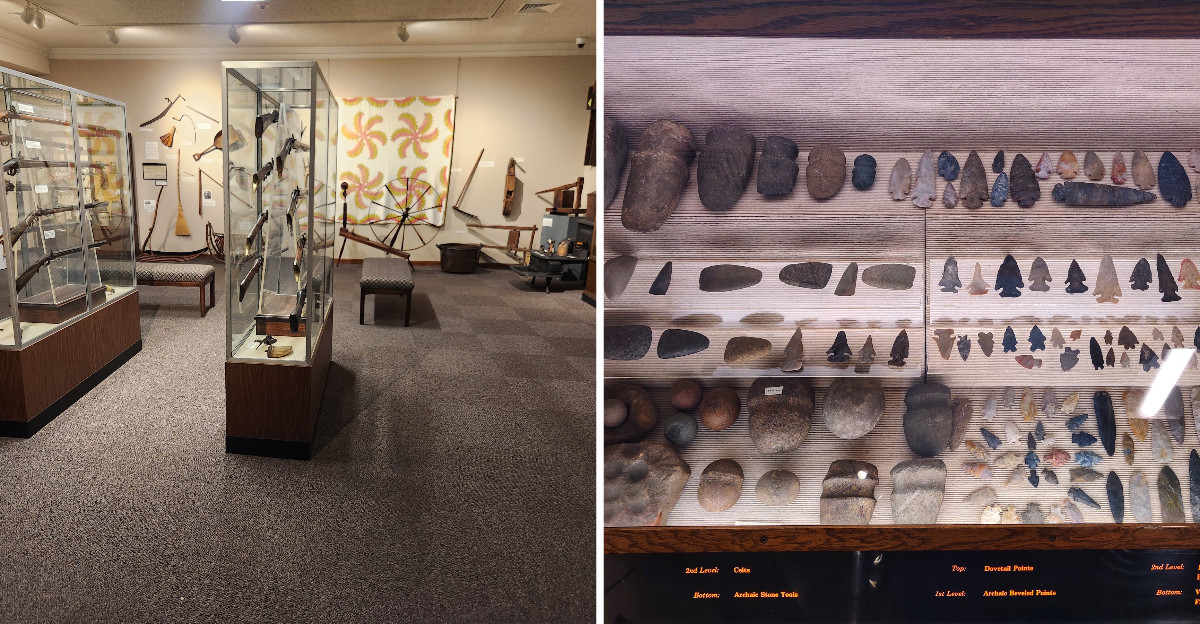
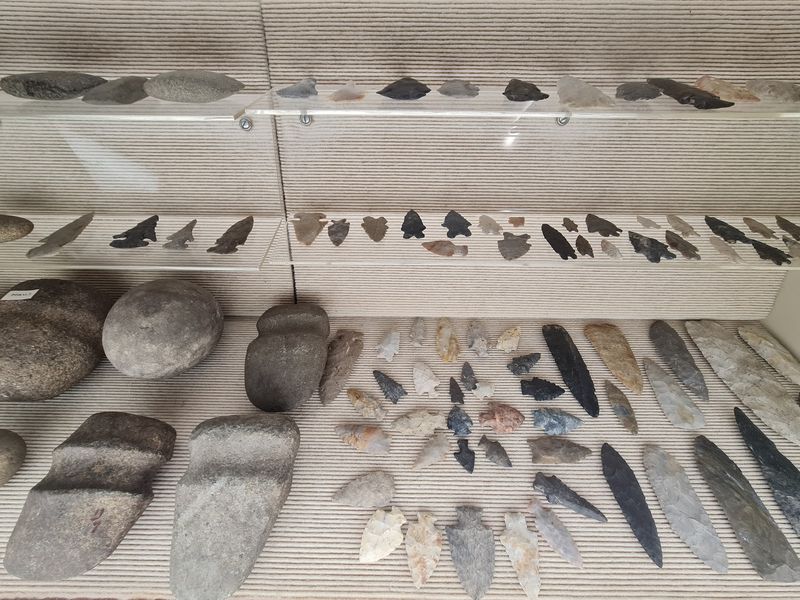
Did you know a plumber made one of the coolest discoveries in this museum? In 1963, he dug up 342 blades made from Coshocton black flint, now called the Rothenstein Cache.
Those blades date back about 2,000 years to the Adena culture. They are unfinished, which means someone gathered them and stored them, maybe planning to shape them later.
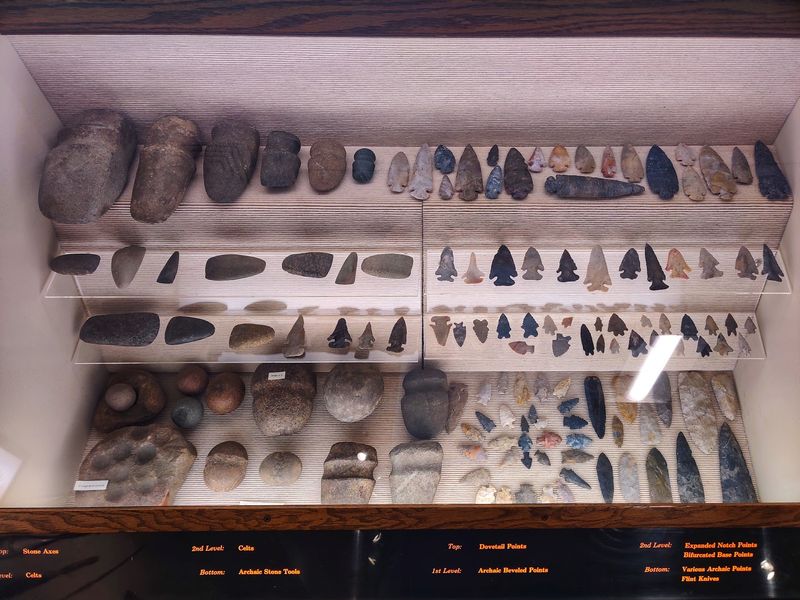
Seeing them lined up in rows gives you a real sense of how much skill and effort went into stone tools.
The Native American Gallery holds far more than that. Stone points and tools trace Ohio’s earliest peoples, including Adena and Hopewell times.
There are pieces from across North America as well.
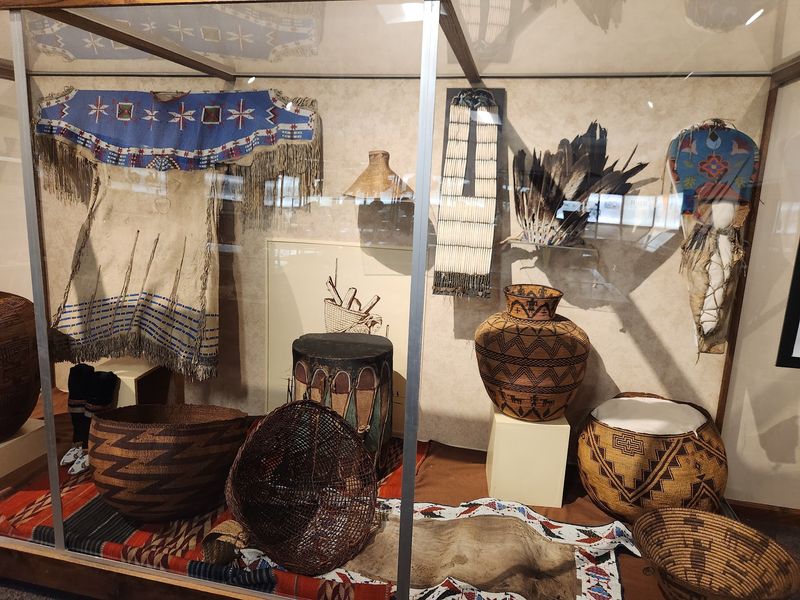
My favorite corner held the baskets and beadwork, which are counted among the finest in the country. The tiny beads are stitched in patterns so tight you have to stop and stare.
After puzzling over the Holy Stones, this gallery felt grounding, because it shows the real people who built those mounds and made beautiful things with their hands. I also noticed a thoughtful message about returning looted artifacts to their rightful homes, which added real respect to the space.
Samurai Armor, Pioneer Rifles, and Two Curious Brothers
Two brothers who loved to wander are the reason this place exists at all. John and David Johnson grew up in Coshocton in the mid-1800s, traveled widely, and gathered more than 15,000 objects, which they gave to their hometown to honor their parents.
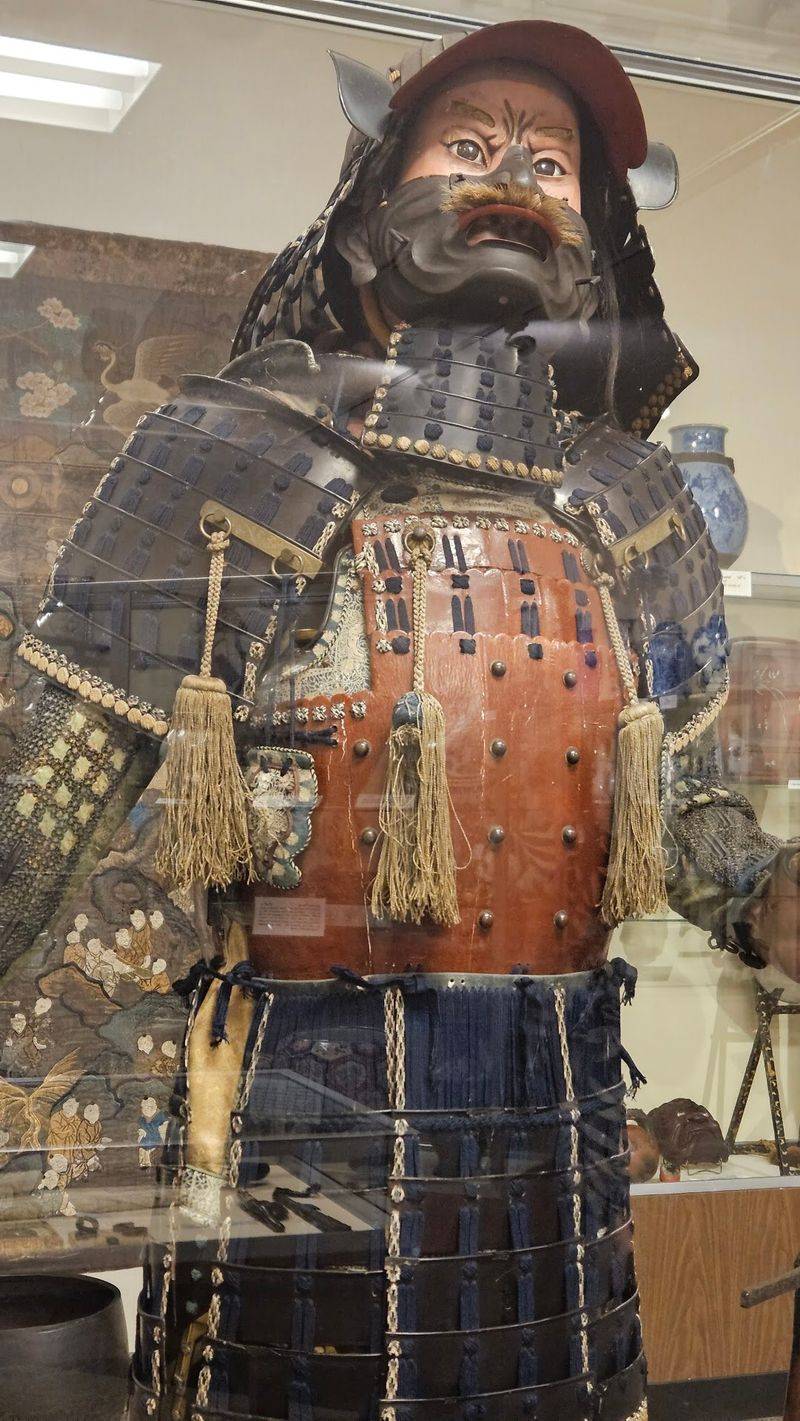
Upstairs, the Asian Gallery is a real treat. Samurai armor and swords stand near Chinese and Japanese lacquerware, delicate ceramics, and jade carvings that glow under the lights.
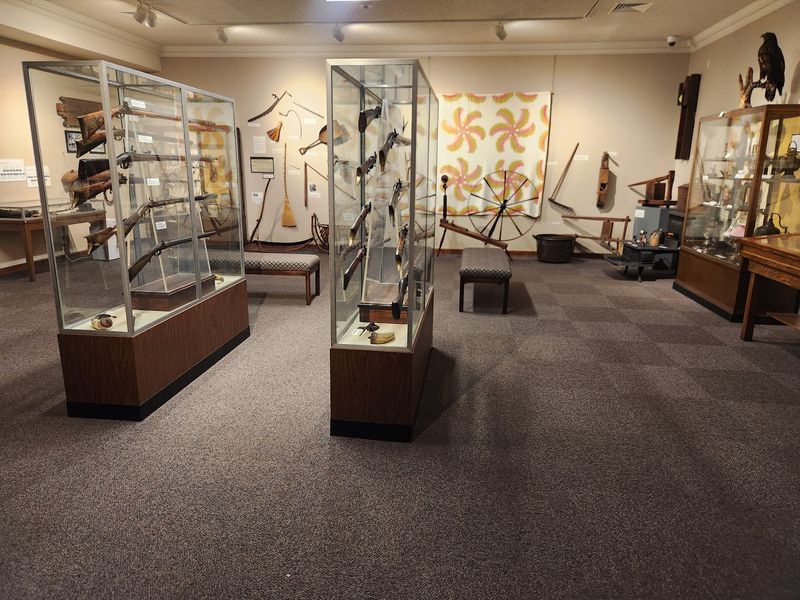
Back downstairs, the Historic Ohio gallery shifts gears. A pioneer cabin setup, old tools, furniture, and longrifles from the late 1700s and 1800s show how early settlers lived.
I kept wondering how anyone shaped those rifle barrels by hand so long ago.
Coshocton is also known as the birthplace of advertising art, and the museum’s collection of old ads is surprisingly fun to browse. The Golden Gallery adds European and American furniture, porcelain, glass, textiles, and dolls.
Families should grab the kids’ scavenger hunt, since most items are look-only. Give yourself one to two hours to see it all comfortably.
Address: 300 North Whitewoman Street, Coshocton, Ohio
