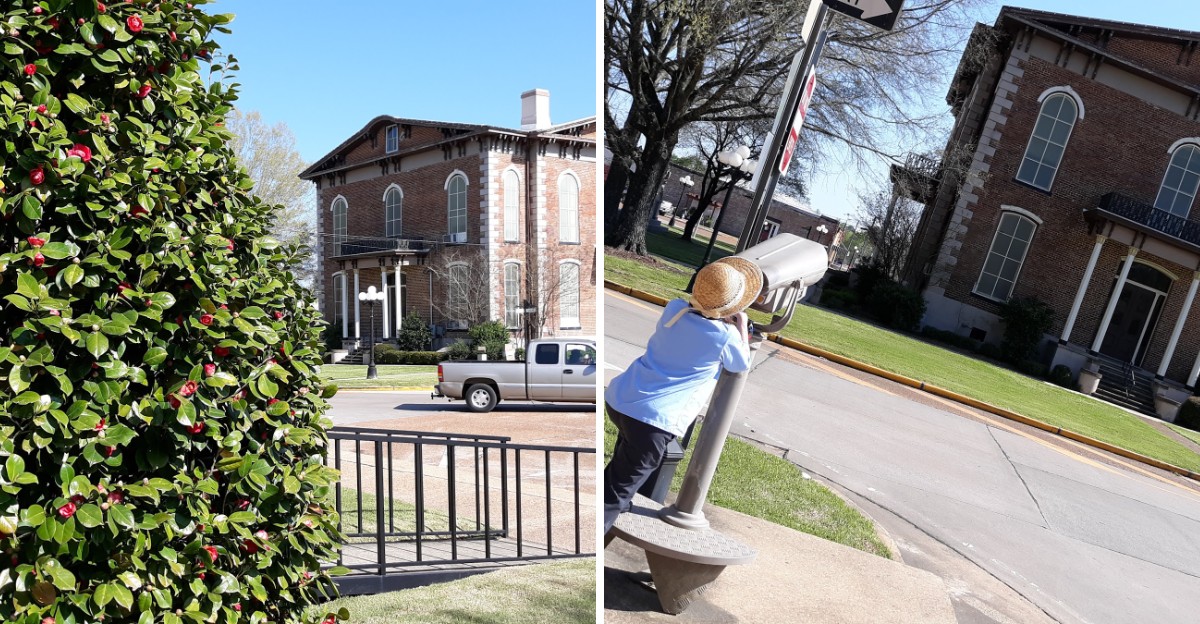
A window should not have a fan club. Yet this one has kept people looking up for generations.
The attraction is a faint, human-looking face in an attic pane of an old Alabama courthouse. Known as the “Face in the Window,” the image has been part of local folklore for well over a century, inspiring visitors to squint at the glass and compare what they see.
It is easy to understand why the legend has lasted: the shape is unusual, the setting is historic, and no ghost story needs everyone to agree on the explanation. The courthouse itself has survived war, fire, and storms, giving curious visitors plenty of real history to consider alongside the mystery.
Take a clear afternoon, find a good viewing angle, and allow a little time for the debate to begin.
A Face That Stares Back From the Garret
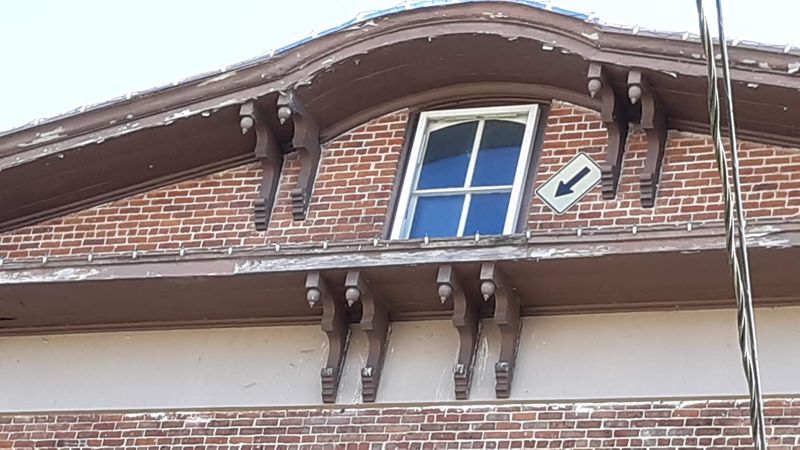
Plenty of courthouses have pretty windows, but only one in Alabama seems to have a window that looks back. Up in the garret of the Pickens County Courthouse, a single pane shows markings that many people say form the shape of a frightened human face.
The image is linked to a man named Henry Wells, and it has become one of the most famous ghost stories in the state.
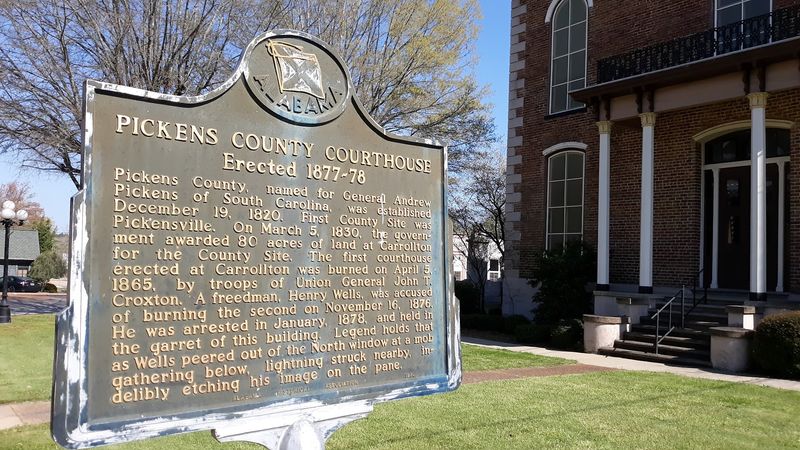
According to the popular tale, Wells was held in the attic in 1878 after being accused of burning the earlier courthouse. A crowd gathered below during a fierce thunderstorm.
Legend says he shouted that he was innocent and promised to haunt his accusers, and then lightning flashed and burned his features into the glass forever.
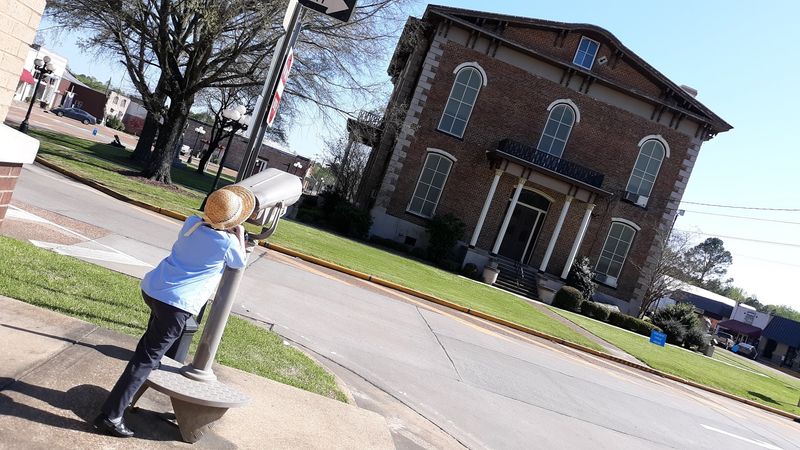
Spotting the face takes a little patience. Head to the north side of the building and look up toward the small window near the roofline.
Some people see it right away. Others need a minute and a bit of help from a friend pointing upward.
Here is the odd part. From inside the building, the pane reportedly looks like plain, ordinary glass, while the face only shows up from outside.
That twist makes the window feel like a riddle with no easy answer.
Bring binoculars or a camera with a good zoom lens. Bright daylight usually makes the details easier to pick out, so plan a visit before late afternoon shadows roll in.
Third Time Is the Charm on Courthouse Square
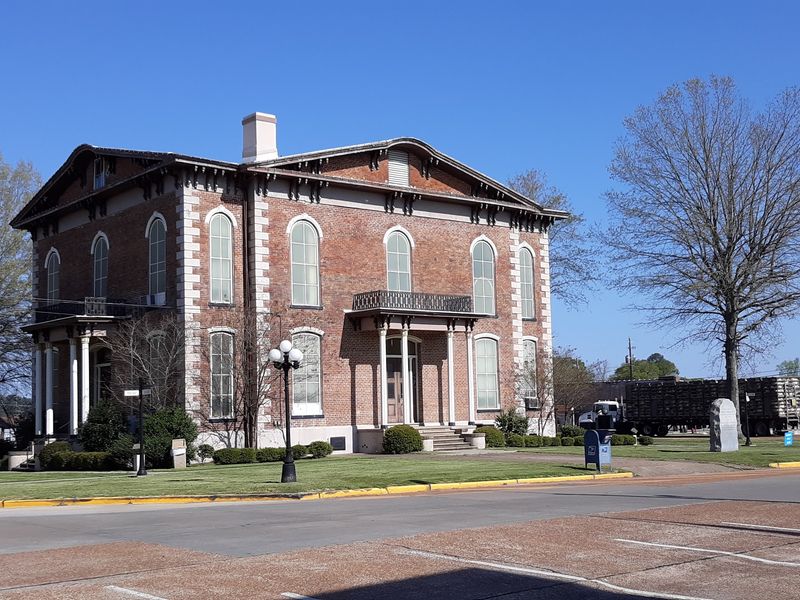
Some buildings get one shot at history. Carrollton needed three tries to get its courthouse to stick, and the story behind that is almost as gripping as the ghost.
The first courthouse went up in 1840. On April 5, 1865, during the final weeks of the Civil War, Union troops under General John T.
Croxton burned it to the ground. The town rebuilt, finishing a second courthouse in 1872, but that one burned too on November 16, 1876.
Suspicions of arson swirled, and the fire happened during a time of heavy political and racial tension in the Reconstruction South.
Workers began the current building in 1877 and wrapped it up in early 1878. That is the sturdy structure still standing today.
Knowing it rose from the ashes twice gives the place a stubborn, never-give-up kind of charm.
A quick lap around the building helps put the timeline in perspective. Picture the same patch of ground holding three different courthouses in under forty years.
Quite a lot of drama for one small square.
History fans can look for the marker placed by the Alabama Historical Association in 1974. It sums up the fires, the rebuilding, and the legend in a few tidy lines.
Reading it on site adds real context before or after hunting for the face in the window, and it makes a handy photo for remembering the trip.
Italianate Good Looks Worth a Slow Stroll
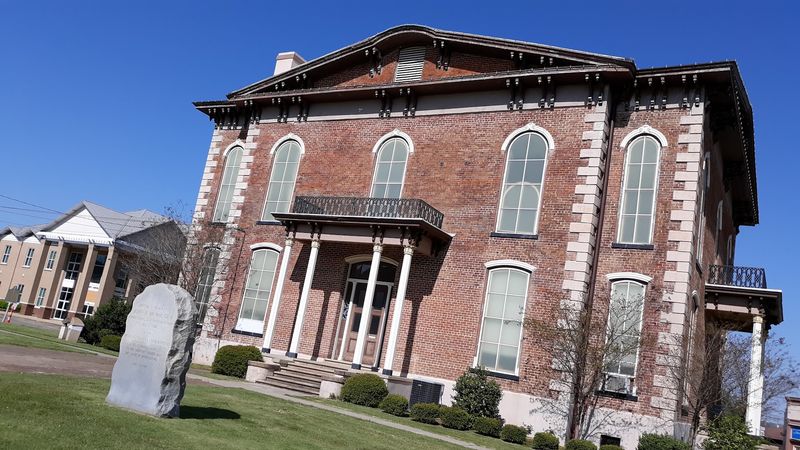
Forget the ghost for a minute. The building itself deserves a long, admiring look, because it is a handsome example of 19th century Italianate design.
The two-story courthouse is made of buff-brown brick and stone. Tall arched windows line the walls, each one framed with neat stone trim.
The corners carry stone accents too, giving the whole structure a solid, dignified posture that seems to say it plans to stay put for a long while.
Italianate style was popular in America during the mid to late 1800s. It borrowed ideas from Italian country villas, with rounded windows and balanced shapes.
Seeing it in a small Alabama town feels like a surprising little treat.
A renovation between 2010 and 2011 helped keep the building in good shape. That care shows in the crisp lines and the way the brick still glows warmly when the sun hits it.
Late morning light tends to bring out the colors nicely.
For a fun challenge, try counting the arched windows on each side. Then step back across the square and notice how the shape changes from different angles.
Kids often enjoy sketching the outline in a notebook, which is a sneaky way to slow down and actually see the details.
Architecture lovers can easily spend half an hour here without getting bored. It is a building that rewards a second and third look.
Where Legend and the Record Books Disagree
Ghost stories rarely come with footnotes, yet this one has plenty. Old newspaper accounts tell a different version of what happened to Henry Wells, and comparing the two makes a visit far more thought-provoking.
According to records from the time, Wells was shot in January 1878 while trying to escape arrest for robbery. He died from his wounds soon after.
Reports say he confessed to burning the courthouse, though that confession may have been forced.
Then comes the real head-scratcher. Historical documents suggest the garret windows were not installed until February or March 1878, after Wells had already died.
So how could his face end up on glass that did not exist yet?
Some historians believe the legend blends two separate events. One was the shooting of Wells.
The other was the lynching of a man named Nathaniel Pierce in September 1877. Both happened during a painful period right after Reconstruction ended.
Knowing this does not make the window less interesting. If anything, it adds weight.
The face becomes a reminder of real people who lived through injustice and fear in the post-war South.
Visitors who enjoy puzzles can read up on both versions before arriving. Standing in front of the building with that knowledge turns a spooky photo stop into a serious moment of reflection, and that layered feeling is what makes the courthouse unforgettable.
The Pane That Refuses to Quit
Stubborn might be the best word for that window. Over the years, stories have piled up about efforts to get rid of the face, and none of them seem to work.
Some accounts claim people tried scrubbing the glass clean. Others say the pane was replaced, only for the face to show up again.
Whether those tales are fully accurate or not, they have helped turn the window into a legend with serious staying power.
The most famous anecdote involves a hailstorm. As the story goes, hail smashed every other windowpane in the courthouse but left the one with the face perfectly untouched.
Spooky? Absolutely.
Convenient for a ghost story? Also yes.
Writer Kathryn Tucker Windham shared the tale in her book 13 Alabama Ghosts and Jeffrey, which introduced the face to generations of young readers. Many people first heard about Carrollton through those pages, and some travel here just to see the window from the book.
Reading that book before a trip is a fun idea, especially for families. It sets the mood without being too scary for younger kids.
Once on site, take a moment to think about how many storms that tiny pane has weathered since 1878. Glass is fragile.
This piece seems to have other plans. Snap a picture, then compare it with older photos online to see if the face looks the same.
Small Town Charm Around the Square
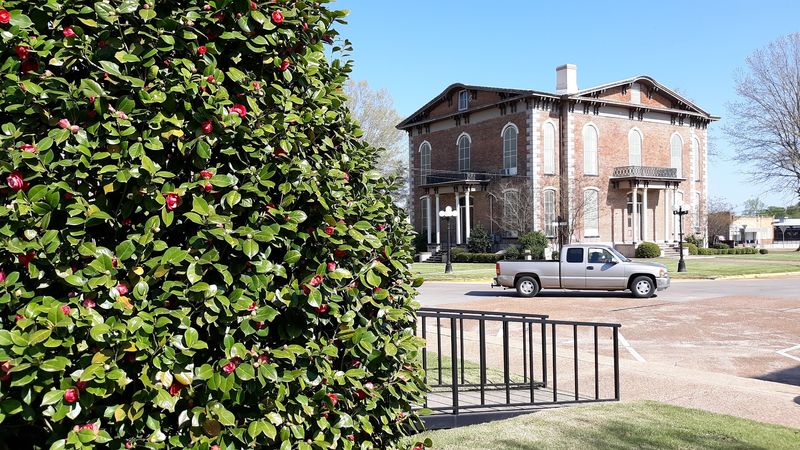
Life moves at an easy pace in Carrollton, and that is part of the appeal. The town serves as the county seat of Pickens County, a mostly rural area of timbered hills and rolling plains in west-central Alabama.
The courthouse sits right in the middle of the square, so everything naturally circles around it. A slow stroll around the block gives a real sense of the place.
Birds chatter in the trees. Cars roll by without hurry.
Nobody seems rushed.
Keep in mind that this is a working building, not a museum. County government and court business still happen inside, so be respectful of people coming and going.
Photos from the sidewalk and square are the best way to enjoy the outside without getting in anyone’s way.
Weekdays tend to be busier because of court business, while quieter times make photography easier. Comfortable shoes are a smart choice for wandering the square.
A short visit here feels a bit like flipping through an old family album. The streets carry stories, and the courthouse stands at the center of them like a proud grandparent.
Taking time to soak in the calm before or after spotting the face makes the trip feel complete instead of rushed.
Extra Adventures Waiting in Pickens County
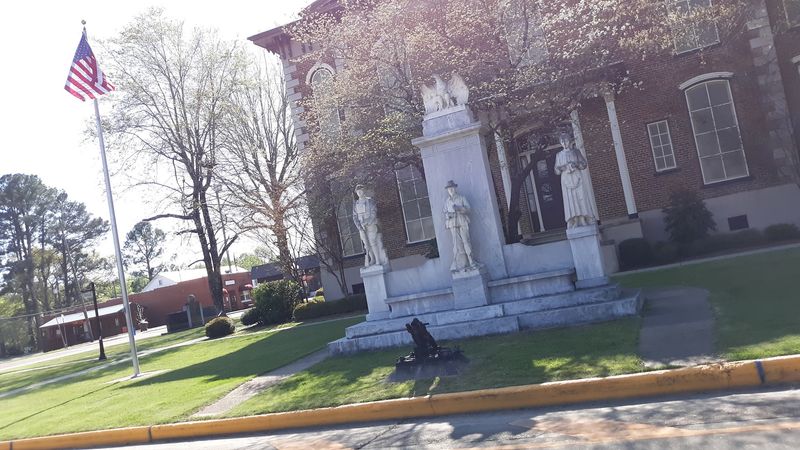
After staring at a ghostly window, located at 1 Courthouse Square, Carrollton, AL 35447, a little fresh air and more history can round out the day nicely. Pickens County has some surprising spots within an easy drive of Carrollton.
The Aliceville POW Museum in nearby Aliceville tells a fascinating World War II story. During the war, the town hosted one of the largest German prisoner of war camps in the country.
Many soldiers from Field Marshal Erwin Rommel’s Afrika Korps were held there after their defeat in Tunis.
Over in Pickensville, the Tom Bevill Visitors Center and Museum explains life in the Tombigbee River Valley. It is also home to the USS Montgomery, one of the few steamboats listed on the National Register of Historic Places.
The museum is wheelchair accessible, which makes it a good stop for all kinds of travelers.
Outdoor fans have choices too. Pirates Cove Marina is open year-round and offers fishing, hiking, and boat launches.
Shark Tooth Creek Outdoor Adventures lets visitors hunt for fossil shark teeth, plus camp, fish, swim, and canoe by appointment.
Finding a shark tooth in Alabama? That alone makes a great story at the dinner table.
Pairing the courthouse with one or two of these stops turns a quick photo trip into a full weekend. Together they show how much history, mystery, and natural beauty fit into one quiet corner of the state.
