Speeding carriage drivers once got locked up in a tiny jail inside an Ohio cemetery, which sounds like a tall tale until you see the building for yourself. That quirky detail pulled me to a place that kept me wandering for hours.
Swans glide across quiet ponds, giant old trees spread their branches over stone monuments, and the roads curve slowly through hundreds of acres. The grounds stretch across 733 acres, so the next bend always brings something unexpected.
This is a working cemetery, a National Historic Landmark, and a sprawling arboretum all at once. Walking the paths, the quiet feels different than most places.
History, nature, and a touch of humor share the same space. The little jail still stands, a reminder that even cemeteries have their oddities.
Here is what I learned while wandering the grounds, starting with that famous lockup.
A Silver Giant Hiding in the Ohio Countryside
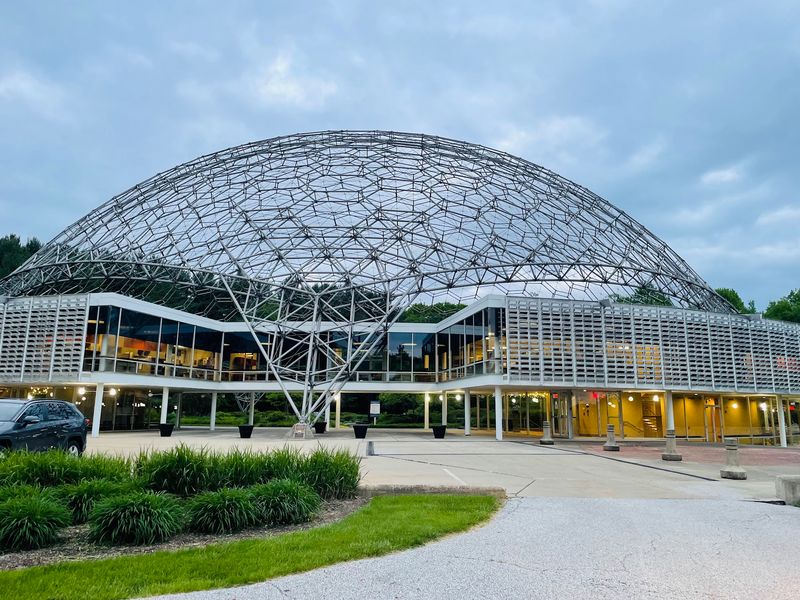
My first glimpse came through a gap in the trees, and I honestly slowed the car down. A huge silver lattice was floating over the grass like a net made of light.
The dome sits on the Materials Park campus in Russell Township, about 25 miles east of Cleveland. Most people expect farms and woods out here, and that is exactly what surrounds it.
That contrast is part of the magic, because nothing nearby prepares you for something so bold and modern.
It rises 103 feet into the air, which is roughly as tall as an 11-story building. Its width is listed at about 274 feet, though a few sources say closer to 250.
Either way, you need to step way back on the lawn to fit the whole thing into one photo.
Here is a helpful tip from my visit. Park, then take a slow loop around the outside before going closer.
The shape changes as you move, and the lattice seems to shift from solid to see-through depending on your angle.
Bring sunglasses on bright days too. Aluminum loves to bounce the sunshine right back at you, and the glare can be surprisingly strong around midday.
Counting 65,000 Pieces (Or Trying To)
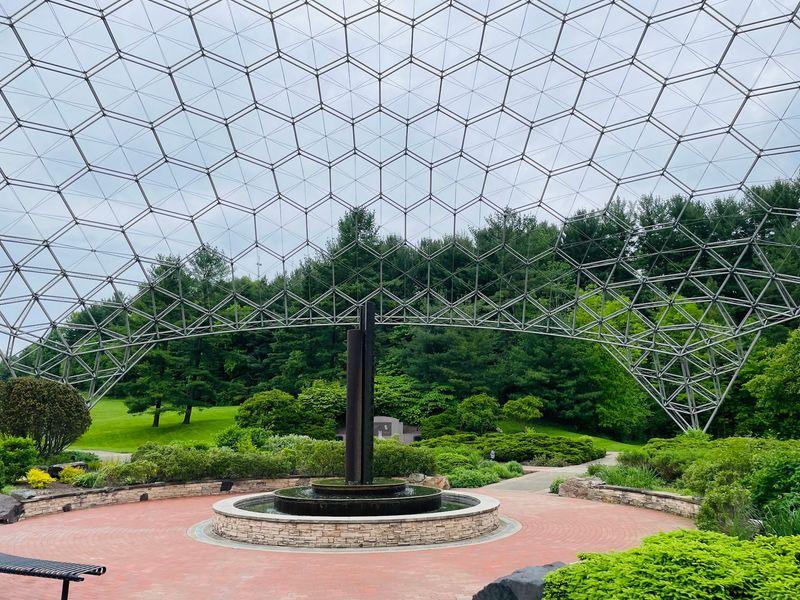
I tried to count the hexagons once. I gave up after about thirty seconds and just laughed at myself.
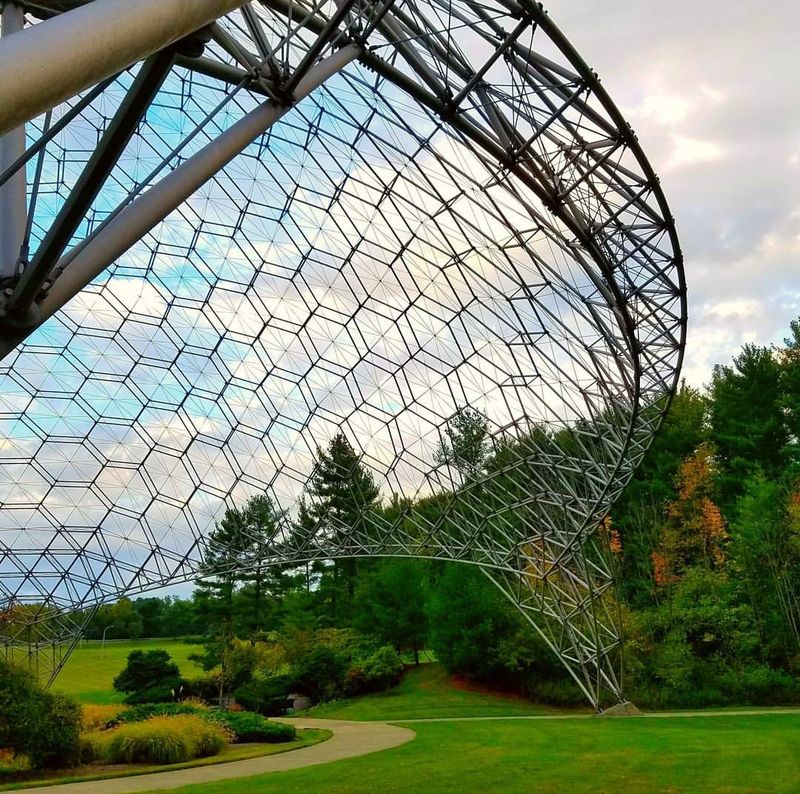
The dome is built from roughly 65,000 individual parts, and that number feels even bigger when you stand under it. Workers bolted together extruded aluminum tubing and tension rods into repeating hexagon shapes.
Stretched end to end, all that tubing and rod adds up to around 13 miles of metal.
Up close, you can see how each piece connects to its neighbors. Every tube helps share the load, so no single part has to do all the work.
Engineers sometimes call this design a triacon truss, which is a fancy way of saying the triangles and hexagons team up to stay strong.
Aluminum was a smart pick for a group that celebrates materials. It is light, tough, and does not rust the way iron does, so it handles Ohio rain and snow pretty well.
Fun fact for curious kids and grown-ups alike: the whole dome weighs 80 tons, yet it looks almost delicate. Try lying on the grass and looking straight up through the pattern.
The pieces line up into stars and spirals that make great photos.
No Roof, No Problem
Rain started sprinkling while I was underneath, and I just stood there and let it fall through the gaps. That is the funny truth about this dome, since it was never meant to keep anybody dry.
Many people call it the largest open-air geodesic dome in the world. The designers wanted a structure that let the sky in instead of shutting it out.
Their big idea was to bring nature and technology together, so trees, clouds, and sunlight are all part of the view.
Without a roof, the mood changes with the weather. On sunny days, the lattice throws crisscross shadows across the ground like a giant stencil.
Cloudy afternoons turn the metal soft gray, while winter snow can outline every hexagon in white.
My advice is to visit more than once if you live nearby. Each season gives the dome a new personality, and you will notice details you missed before.
Morning and late afternoon light worked best for my photos. The shadows stretch long and dramatic then, and the metal glows warmer.
Midday is bright and sharp, which is great if you want crisp, clear patterns against a deep blue sky.
The Famous Minds Behind the Design
Some places carry a big name in their story, and this one carries two. Inventor R.
Buckminster Fuller, who made geodesic domes famous, worked on the design with Cleveland architect John Terence Kelly.
Construction took place in 1958, and the dome was formally dedicated in September 1959. Back then, the world was excited about space, science, and new materials.
A shining metal dome in the Ohio woods fit that hopeful spirit perfectly.
Fuller loved shapes that did a lot with very little. Geodesic domes spread weight across their whole surface, which lets them cover huge spaces using less material.
That is why this one can be so wide without any columns cluttering the inside.
The dome was also meant to stand as a symbol. It shows how people have learned to shape and master metals and materials, which is exactly what the members of ASM International study.
Knowing the history made my visit feel richer. Before you go, look up a few old photos of the dome being built.
Then compare them with what you see in person, and you will appreciate how well this 1950s dream has held up through decades of Ohio weather.
Five Pylons Holding Up 80 Tons
Look for the feet. That was the tip that changed how I saw the whole structure.
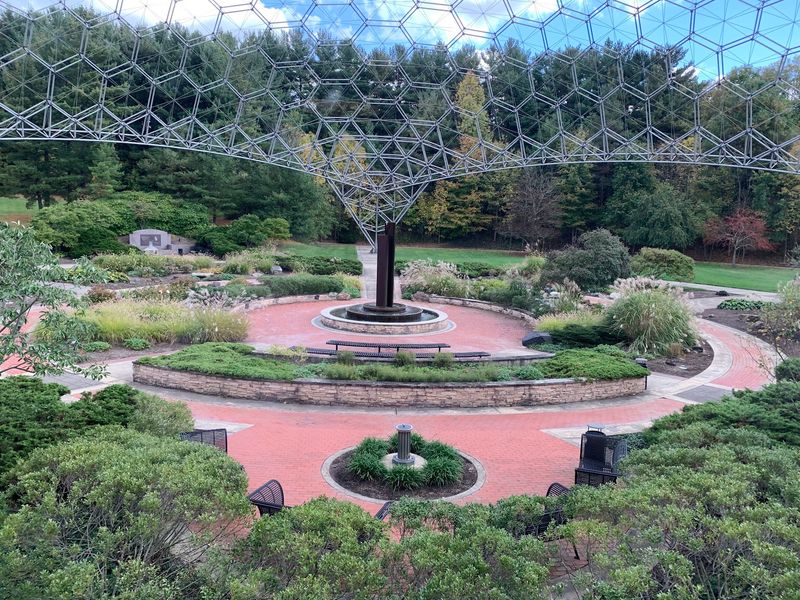
There are no posts or beams inside the dome. Instead, the entire 80-ton weight rests on just five concrete-filled pylons around the edge.
Those pylons are driven as deep as 77 feet into the earth, which is deeper than most houses are tall.
Once you spot them, you start to wonder how so few supports can do so much. The secret is the lattice itself, because the tubes and rods share the load and pass it down toward those five strong points.
It is a little like how a group of friends can lift a heavy table together when everyone grabs a corner.
Kids especially love this part. Ask them to guess how many supports hold up the dome before you point them out, and most will guess way more than five.
I spent a while just circling from one pylon to the next. Seeing how the curved metal meets the solid concrete made the engineering feel real instead of abstract.
It is a quiet, easy lesson in physics that you can absorb simply by strolling around the grounds.
Rocks, Blooms, and a Fountain in the Mineral Garden
I came for metal and ended up crouching next to rocks. The mineral garden at the center of the campus caught me completely off guard in the best way.
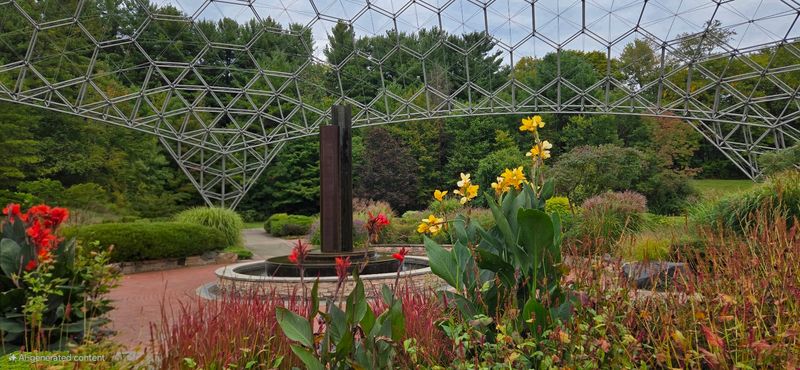
Called the Eisenman Gardens, this circle stretches about 100 feet across and sits inside a larger 400-foot piazza. More than 60 labeled specimens of raw mineral ores are scattered through it.
Reading the little labels feels like a treasure hunt, since many of these rocks are where everyday metals begin.
Plants soften the scene nicely. Over 70 kinds of flowering trees, perennials, and shrubs grow around the stones, so spring and summer bring bursts of color.
A fountain adds a gentle splash that makes the whole space calmer.
Families with curious kids should plan extra time here. Pick a mineral, read its name, then guess what metal might come from it.
It turns a stroll into a mini science lesson without anyone feeling like they are in school.
The garden also ties everything together. You start with raw ore at your feet and finish with a gleaming aluminum dome overhead, which shows the full journey from earth to engineering in one peaceful spot.
A Headquarters Wearing a Steel Sun Shield
Curving along part of the piazza, the headquarters building looks almost shy beside the dome. Give it a second look, though, because it has clever tricks of its own.
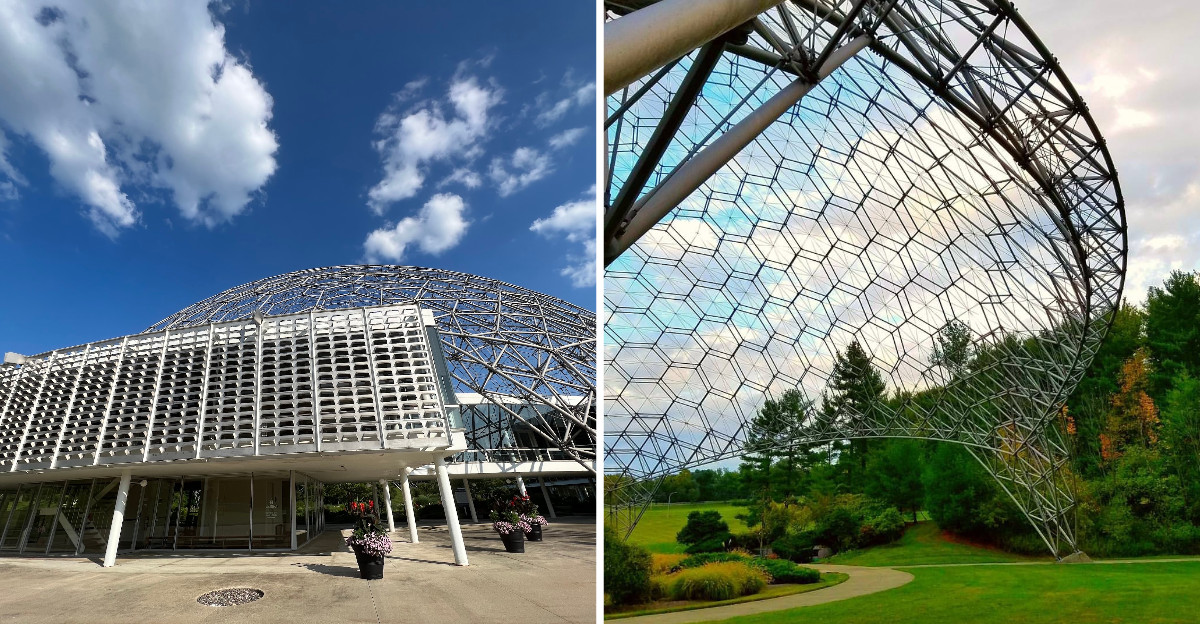
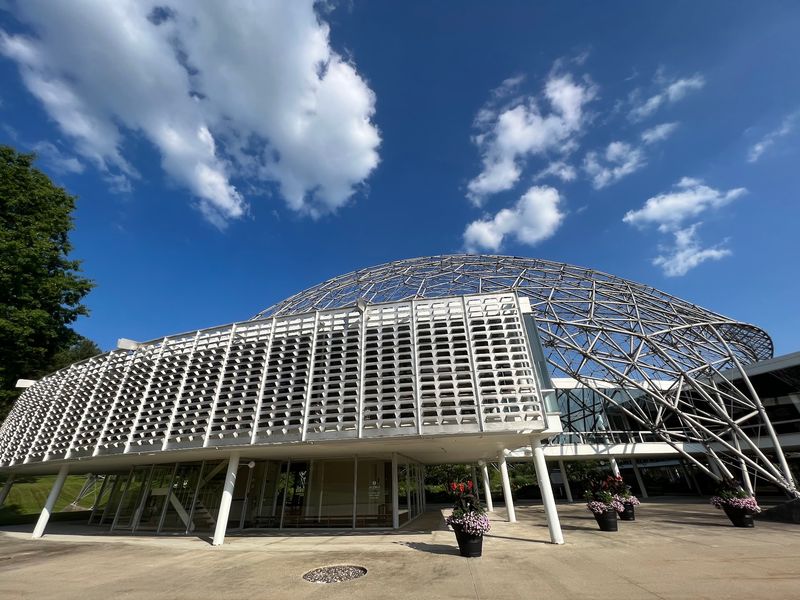
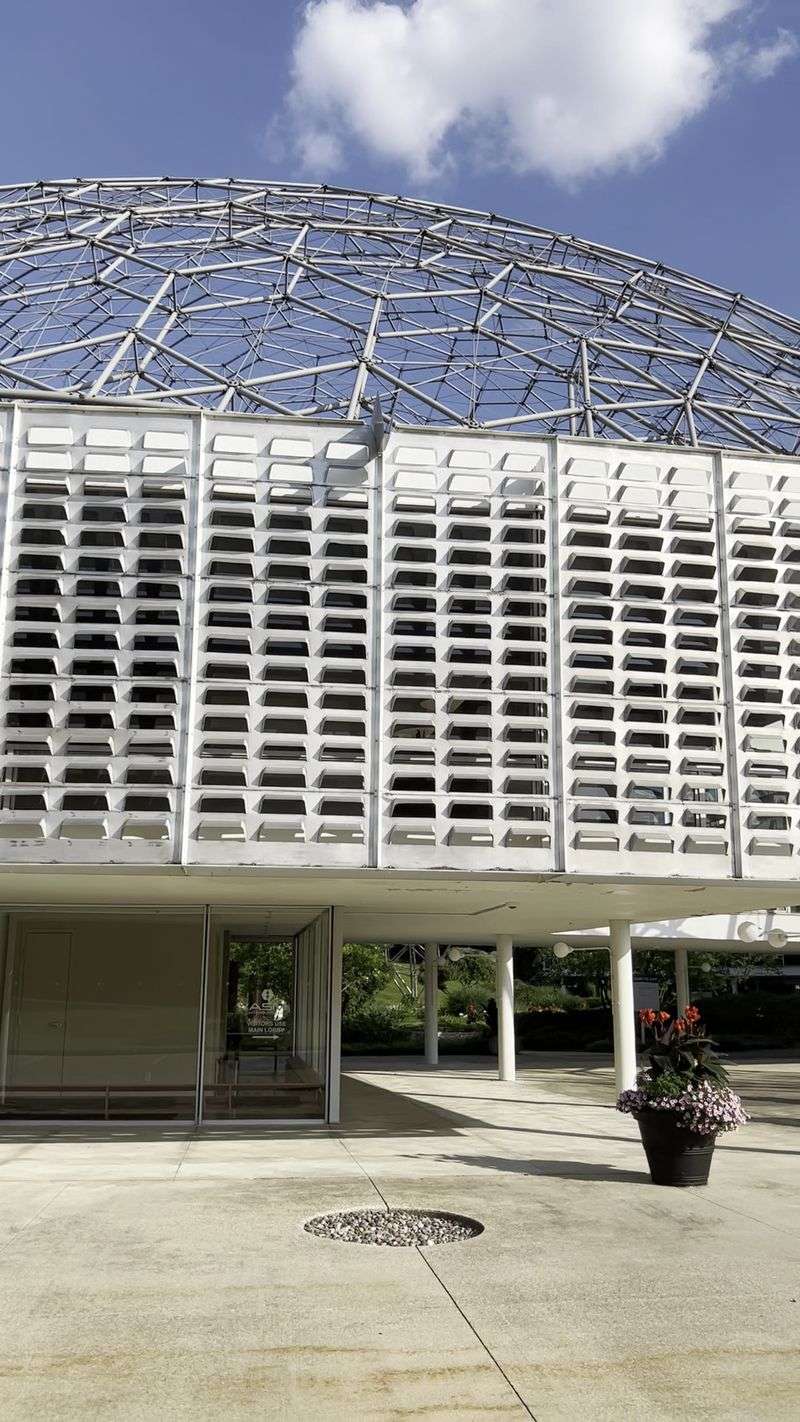
It is a three-story, semi-circular concrete building that wraps around about two-fifths of the piazza edge. The building stands on its own and does not touch the dome at all.
On its western side, a satin stainless steel sun shield stretches 390 feet long and 13 feet high.
That shield holds about 4,000 small louvers, each roughly one foot by five inches. They block the strong afternoon sun while still letting people inside enjoy the view.
Even the roof gets creative, with large areas covered in grass.
The building is closed to the public, so admire it from the grounds. Visitors can explore the gardens and campus free of charge, Monday through Friday from 7 AM to 6 PM.
There are no public restrooms, so plan a stop before arriving.
The whole complex joined the National Register of Historic Places in 2009, and a major restoration followed around 2010 and 2011. It is a respectful place of work, so keep voices low and enjoy the quiet.
Address: 9639 Kinsman Road, Materials Park, Ohio 44073
