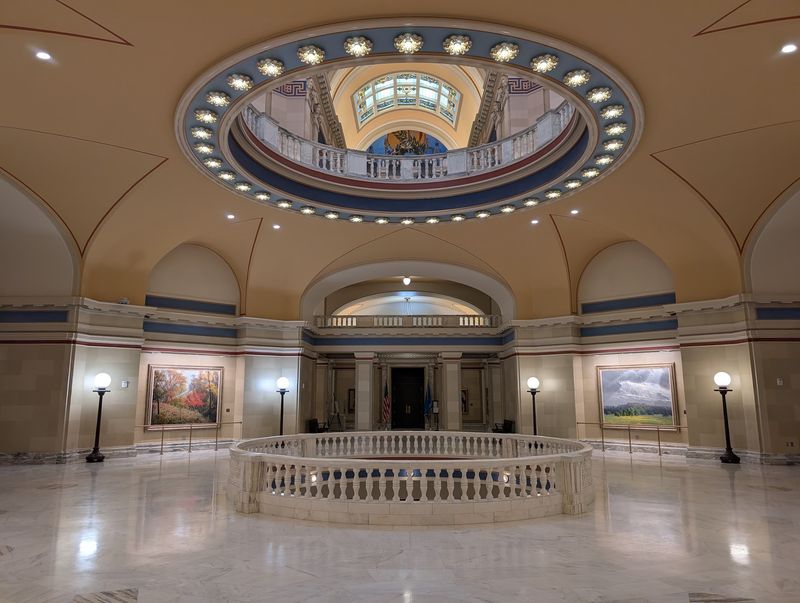
Some of the best afternoons in Oklahoma start with a simple plan to stop in for a quick look and end with a sore neck from staring straight up. I walked through the front doors expecting marble hallways and a few portraits, maybe a quick photo before lunch.
Instead I found swirling color overhead, art tucked into every corner, and a cafe downstairs serving plates big enough to share. Best of all, it did not cost a single dollar to get in.
A Grand Old Building With Its Doors Wide Open
Picture a building where lawmakers debate, couples say their vows, and road-trippers stop to snap photos, all under the same roof. That mix is exactly what you get at the Oklahoma State Capitol, the working home of state government in Oklahoma City.
Plenty of people assume a government building means locked doors and stiff hallways. Here, the opposite is true.
Entry is free, the halls are open to the public most days, and staff members are known for going out of their way to help curious visitors find their bearings.
Visitors often describe the place as spotless, with polished marble and not a speck of dust in sight. Some who have toured capitols in other states say this one stands among the cleanest and most colorful they have seen.
A traveler from Austria who works in politics back home even made a point of stopping by during a visit with friends.
For Oklahomans, there is a quieter reason to go. Every bill, every debate, and every bit of state history runs through these rooms.
Families who have never stepped inside may be surprised by how welcoming it feels, and how much there is to look at once they do.
Oil Wells, Old Plans, and a Dome That Waited
Here is a fun bit of trivia for your next family road trip: the Capitol sits right on top of an oil field. A working well was found within the gardens, and it picked up a sweet nickname along the way, the Petunia Well, thanks to the flower beds around it.
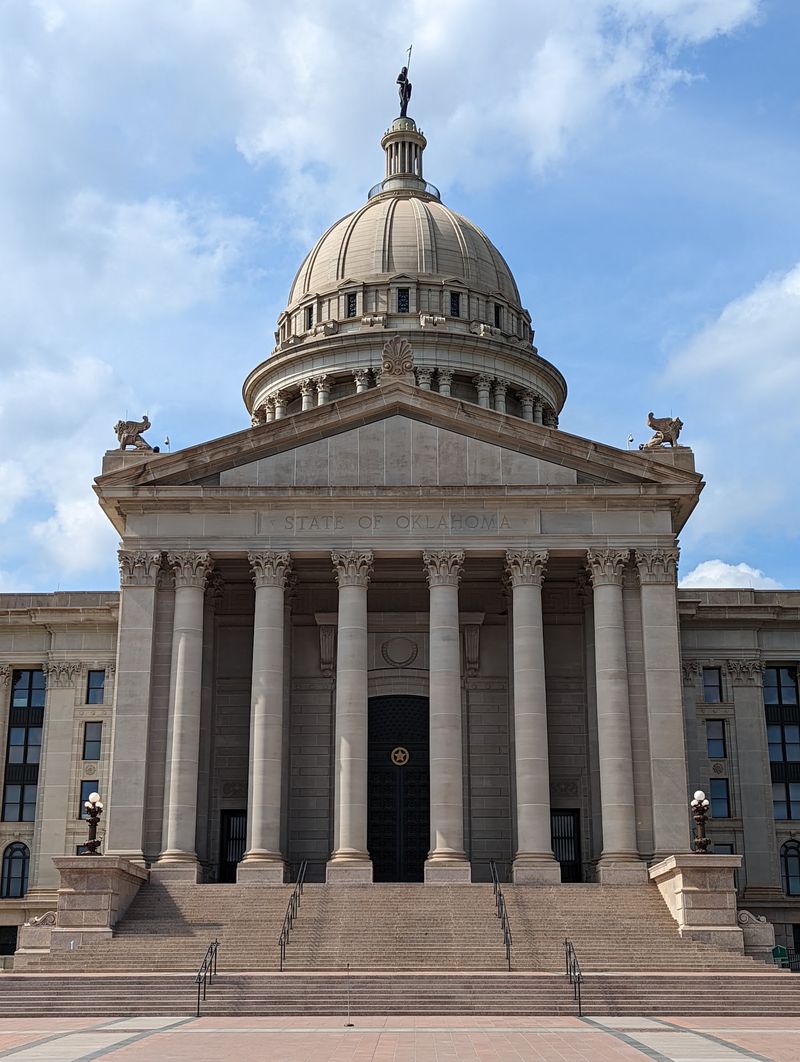
Construction wrapped up in 1917, giving the building more than a century of stories. Its Greco-Roman design, with tall columns and stately lines, was meant to look serious and lasting.
Yet something big was missing for decades.
The dome did not arrive until 2002. For generations, Oklahomans knew a capitol without its crown, which makes the finished dome feel like a long-promised gift finally delivered.
Grandparents who remember the flat-topped years often enjoy pointing out the difference to younger relatives.
Recent remodeling work has refreshed much of the interior too. Longtime visitors returning after the updates mention how much the art collection and history displays have grown.
Some of the objects uncovered during renovation now sit on display downstairs, so the building is literally showing off pieces of its own past.
Few places tie oil, government, and statehood together so neatly under one roof.
Color Swirling High Above the Rotunda
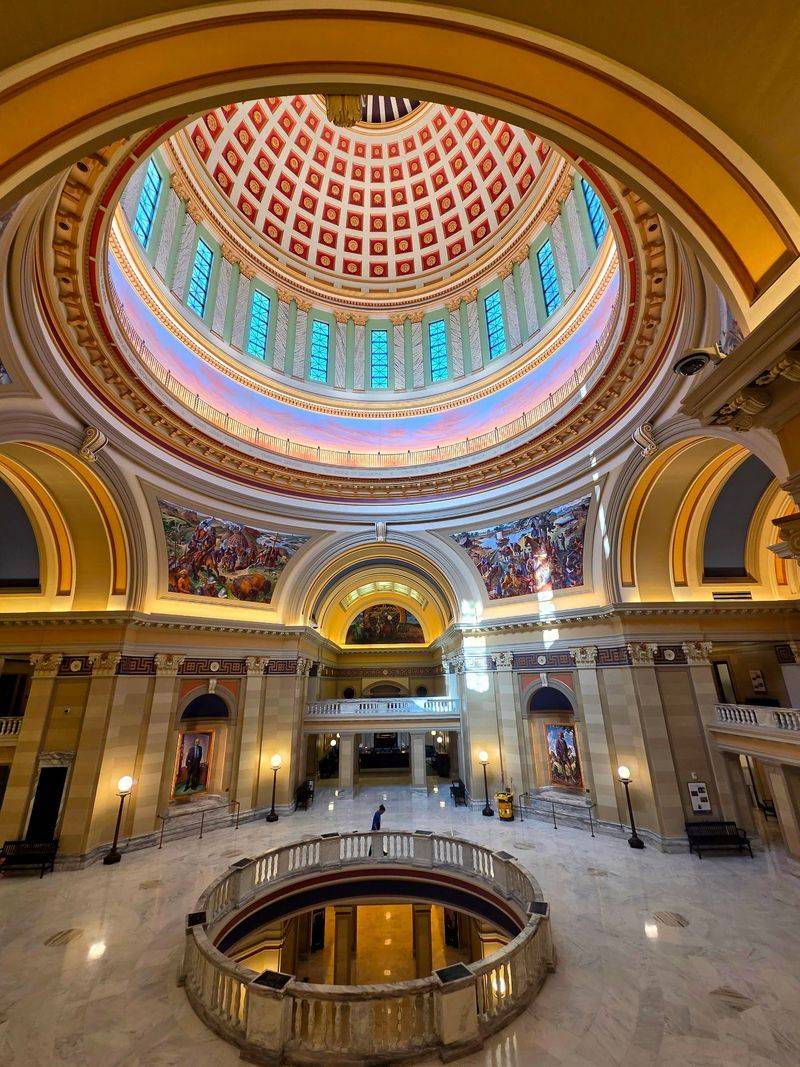
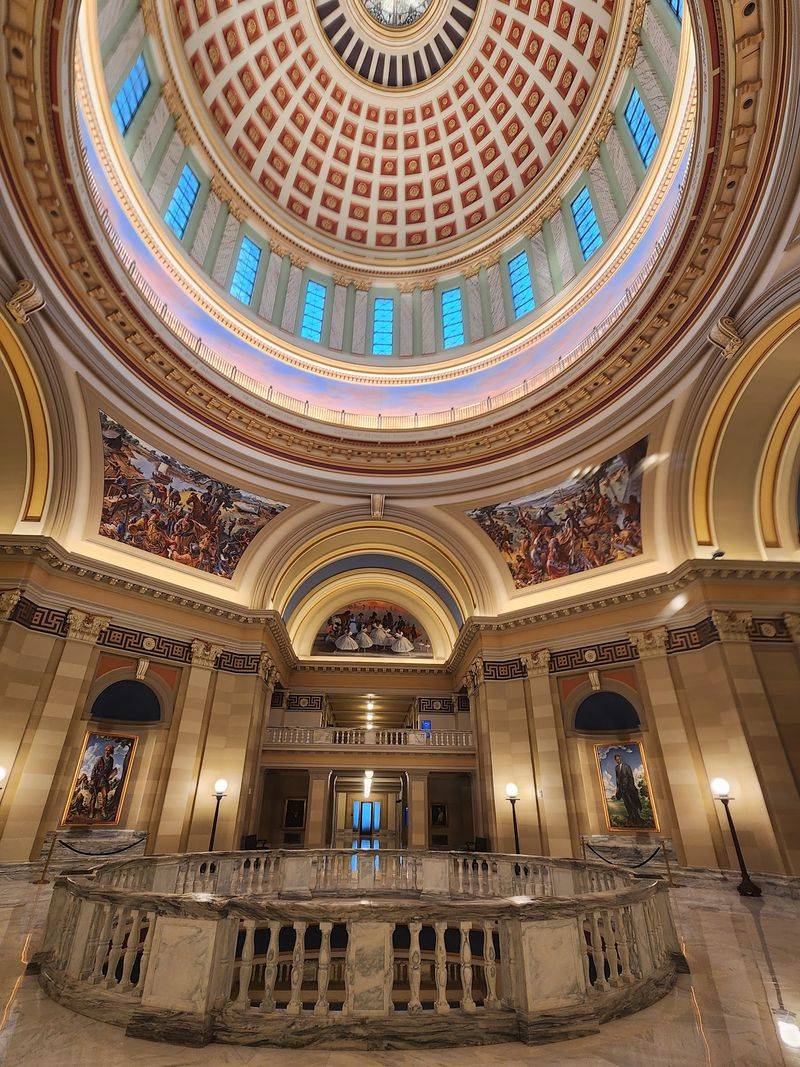
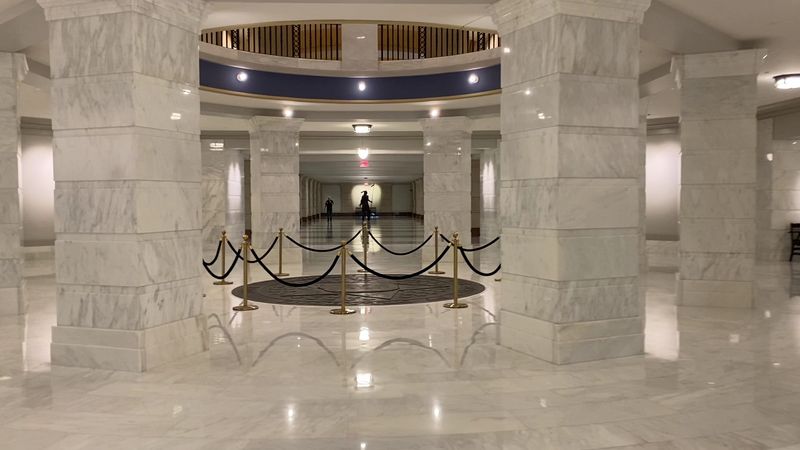
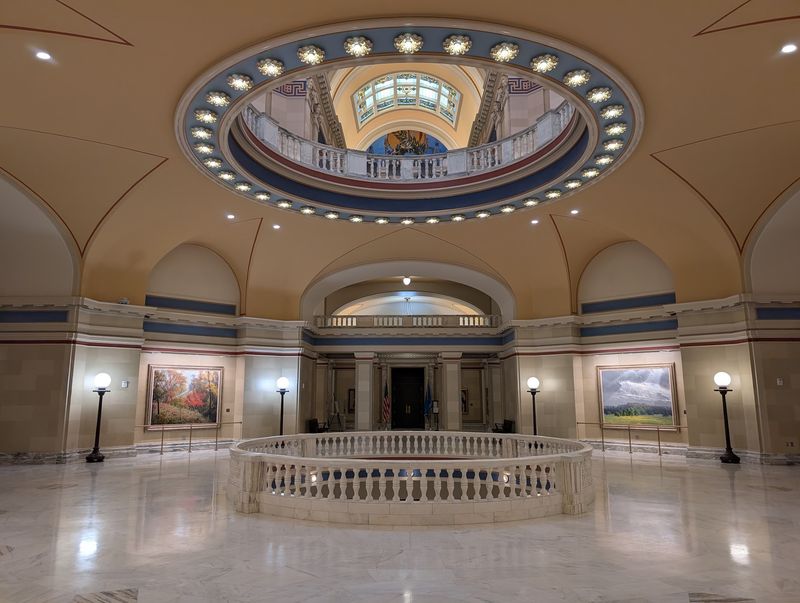
Tilt your head back. That is the first instruction anyone should give a newcomer standing in the rotunda, because the view straight up is the real showstopper.
Travelers who have visited around twenty state capitols say this is the most colorful dome they have seen. From the lower level, the effect feels almost magical, with rings of color and detail rising toward the top.
The exact center is marked right in the floor, so you can stand on the spot and line up the perfect photo.
Outside, the dome carries its own crown. A 17-foot bronze statue of a Native American figure, known as The Guardian, stands on top, watching over the city.
Down at the corners, carved chimeras keep company with the rooftop, and folks often mistake them for gargoyles or griffins. One visitor especially loved the lions perched along the roof.
Take your time with the climb, too. Walking up to the fourth floor gives fresh angles on the dome and the artwork lining the upper hallways.
Bring a phone with plenty of storage space.
Kids tend to love the floor marker game. Ask them to find the center without looking down, then check how close they got.
Paintings, Sculpture, and Fabric Art on Every Floor
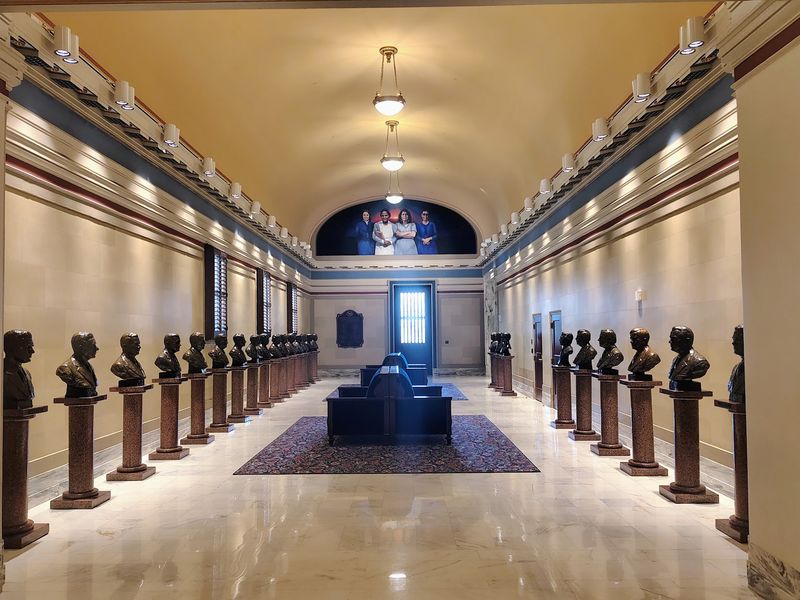
Art lovers, brace yourselves. The halls here hold so much work that visitors regularly lose track of time wandering from one piece to the next.
The range surprises people. There is historical art, modern art, sculpture, wearable art, and fabric art, all sharing space in the marble corridors.
One road-tripper summed it up by saying each piece seemed just as stunning as the last.
Portraits and photographs of notable Oklahomans add a hometown touch. Spotting a familiar face or name from your own corner of the state can feel like a little reunion.
The collection also tells the larger story of the land, including its Native American roots and its oil boom years.
Outside, the sculpture continues. One visitor spent about twenty minutes on the grounds photographing statues before even heading in.
After hours, the Bicentennial monument with its water fountain makes a relaxing spot to sit for a bit.
Plan for at least a couple of hours if art is your thing. A group of friends who wandered all four floors said two hours felt about right, and they still wanted more.
Comfortable shoes help. Marble floors are beautiful, but they are not kind to tired feet.
The Little Museum Downstairs
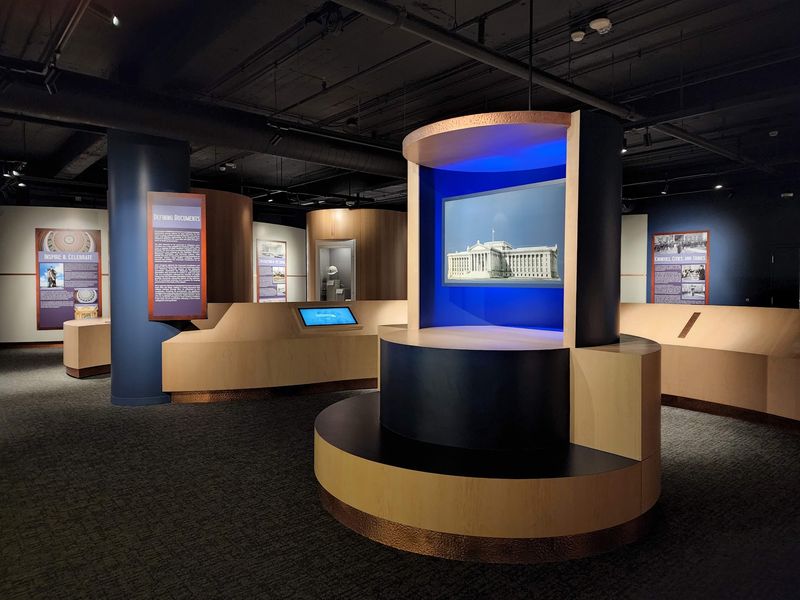
Tucked away on the ground floor sits a small museum that many visitors almost miss. Ask a staff member for directions if you cannot spot it, because it is worth the hunt.
Admission is free, just like the rest of the building. Most people spend 30 to 45 minutes inside, reading about how the Capitol came together and how Oklahoma grew into statehood.
Some exhibits show objects that turned up during renovation work, giving you a peek at what was hiding in the walls and floors.
The displays also cover the history of the land itself. Native American heritage, the oil industry, and the road to statehood all get attention, which makes the museum a handy primer for kids studying Oklahoma history in school.
Visitors often call it particularly well done for its size.
Right nearby, a gift shop sells postcards and small souvenirs. Stocking up on a few cards costs very little and makes a sweet keepsake for grandkids or a fun way to track a state capitol bucket list.
Free literature about the building is easy to find as well. Grab a few pages on the way in, and the rest of your walk will make a lot more sense.
Lunch at Clara Belle’s on the Ground Floor
Hungry after all that looking up? Good news, you do not have to leave the building to eat.
Clara Belle’s restaurant sits on the ground floor near the south entrance, down on the basement level. Visitors describe it as affordable and delicious, with large portions that easily fill up a hungry road-tripper.
For a family watching the budget, that kind of value matters.
Breakfast is a hit with early arrivals. One group raved about the vegetarian omelette and a cup of Moroccan mint tea before heading upstairs to explore.
Others stop in for lunch, making it a natural midpoint between the morning tour and an afternoon of wandering.
A smart plan that regulars suggest goes like this: catch the 11 a.m. guided tour, then head downstairs to eat. You get the history lesson and a hot meal without ever moving the car.
Eating inside a working capitol has its own charm, too. You might share the room with staffers on break or folks in town to talk with their representatives.
It feels less like a tourist stop and more like grabbing a plate at a busy hometown cafe that just happens to sit beneath a famous dome.
Hours, Free Tours, and Parking Tips
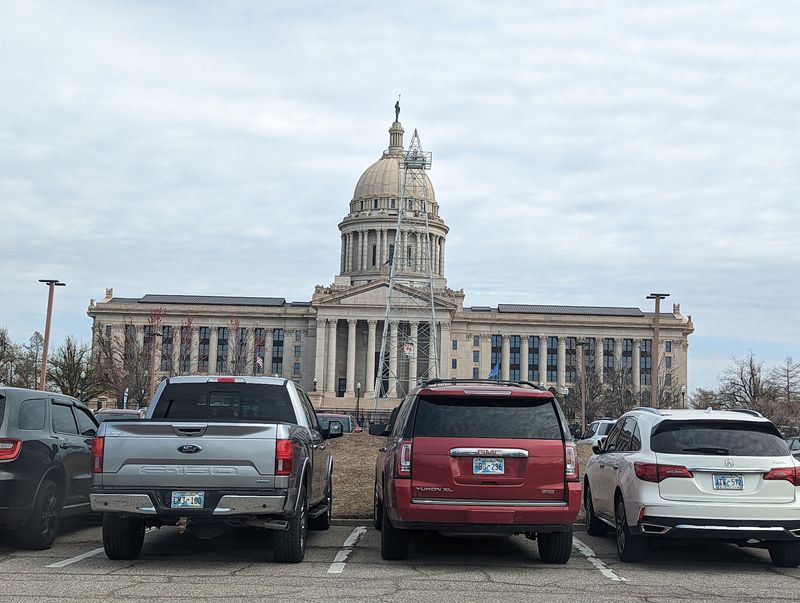
Ready to plan? The Capitol sits at 2300 N Lincoln Blvd in Oklahoma City, an easy trip for anyone driving in from Tulsa or the surrounding towns.
Doors typically open 7 a.m. to 7 p.m. Monday through Friday and 9 a.m. to 4 p.m. on Saturday, with Sundays closed.
Hours can shift, so calling 405-521-3356 before a long drive may save a headache. Evening visits are possible on weekdays, which is handy for travelers passing through late.
Guided tours usually run at 11 a.m. and 1 p.m., and they are free. One group of seven booked a scheduled tour and called it well worth the trip.
Self-guided wandering works just fine too.
Parking is generally easy, often right out front, though some visitors say the public lot and correct entrance can be tricky to find. Avoid the numbered spaces, since those are reserved and cars parked there may be towed.
Expect a metal detector at the entrance. Leave pocketknives and similar items in the car, and the security line usually moves quickly.
When the legislature is in session, the lower floors can get noisy and crowded, so weekdays outside session may feel calmer.
Why Every Oklahoman Should Look Up at Least Once
Some trips earn a spot on the family calendar every year. A visit here might not need to be yearly, but it certainly deserves at least one afternoon in every Oklahoman’s life.
Consider the math. Entry is free, tours are free, the museum is free, and a filling lunch downstairs will not break the bank.
Few outings in the state deliver this much beauty and history for so little money.
The building suits a wide crowd. History buffs get statehood stories and oil-field trivia, art fans get four floors of work, and kids get a colorful dome and a floor marker to hunt for.
Couples have even held wedding ceremonies here, praising the timeless setting. Route 66 Passport holders can check off another stop while they are at it.
What lingers most, according to many visitors, is the warmth of the people. From tour guides to officers to a friendly man sweeping the stairs, folks inside seem genuinely glad you came.
So next time you are near the capital city with a free afternoon, swing by. Walk in, find the center of the rotunda, and look up.
Chances are you will leave with a stiff neck and a full camera roll.
