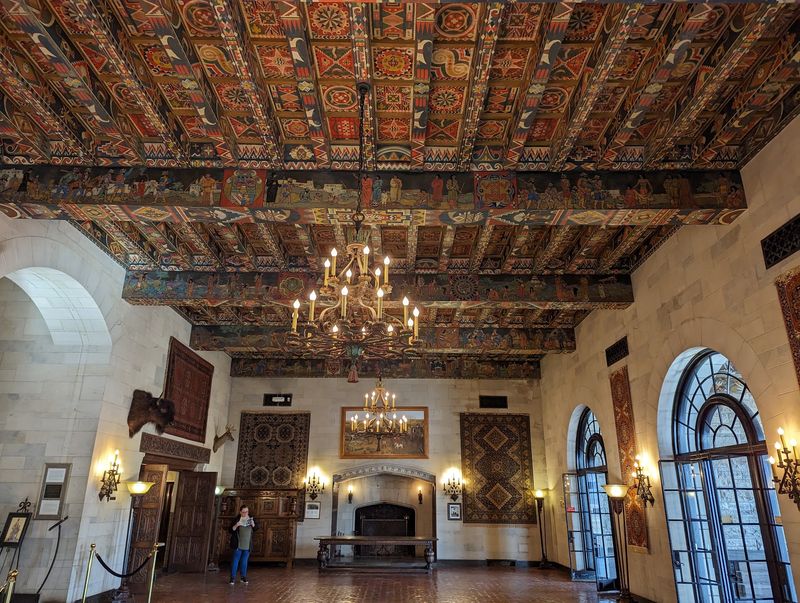
Somewhere north of the wheat fields in Oklahoma, a limestone villa sits on a rise of prairie grass like it wandered off from Florence and never found its way home. I expected a stuffy roped-off house museum and instead walked into rooms that felt like the family had just stepped out for the afternoon.
Gold leaf overhead, hand-carved walnut at eye level, and a story about a man who once held a slice of the world’s oil and then lost nearly all of it. If you have driven past the sign and kept going, you have been missing one of the strangest, most beautiful buildings in the state.
A Limestone Villa Parked on the Open Prairie
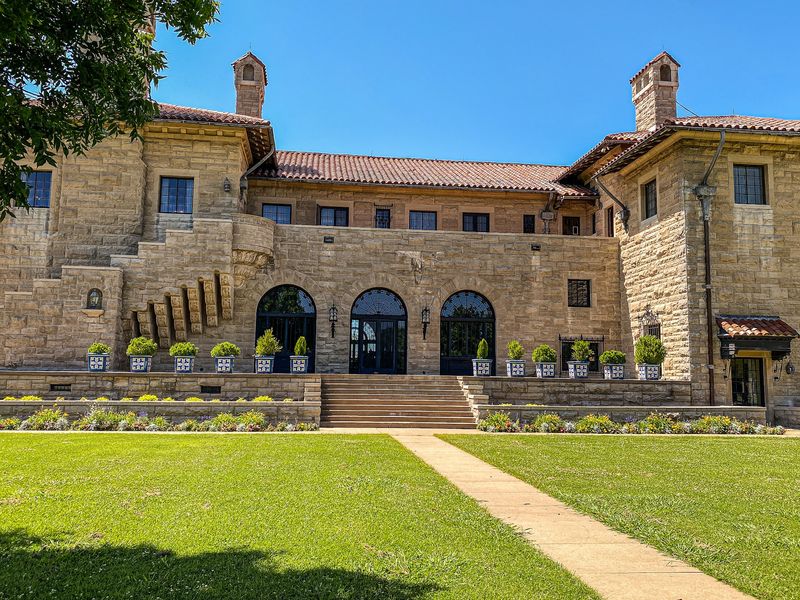
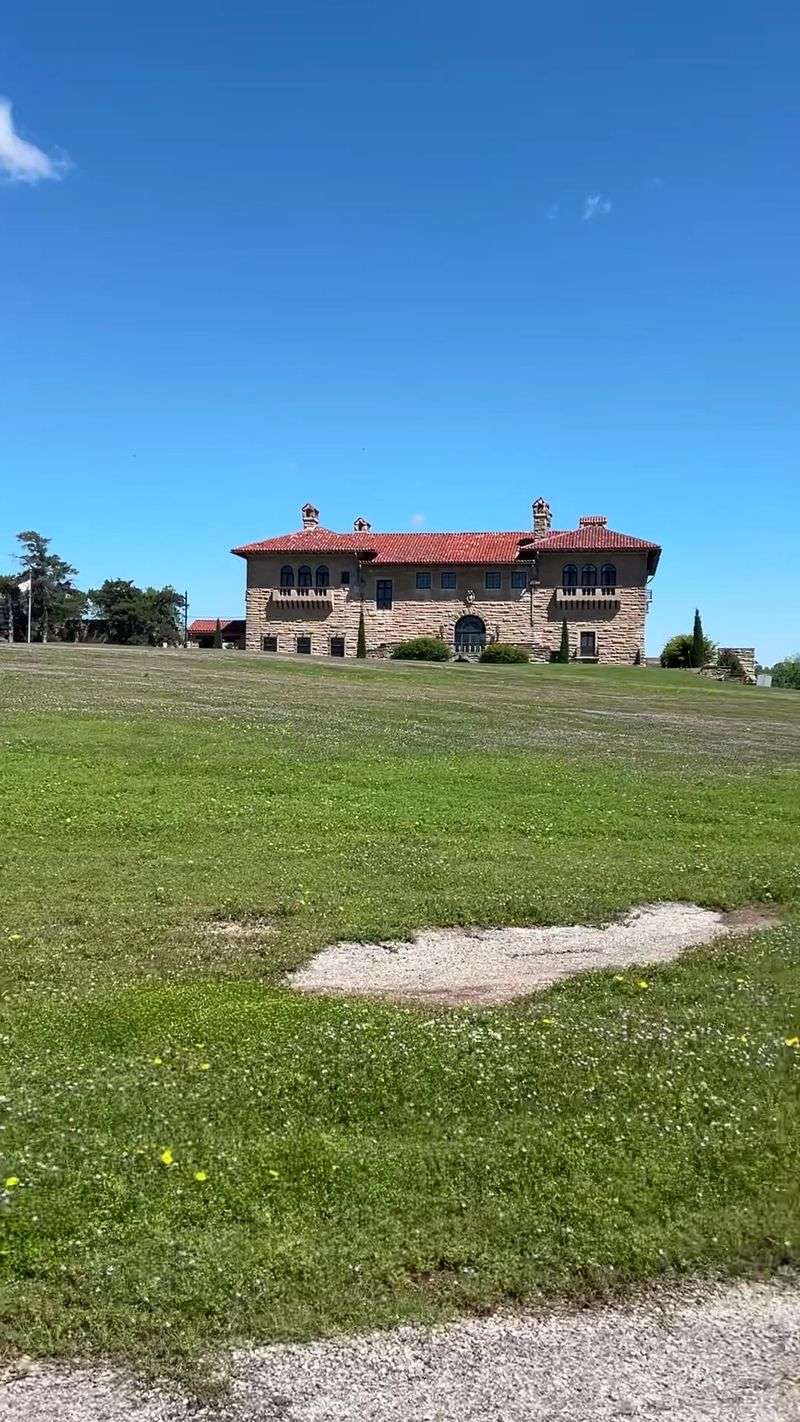
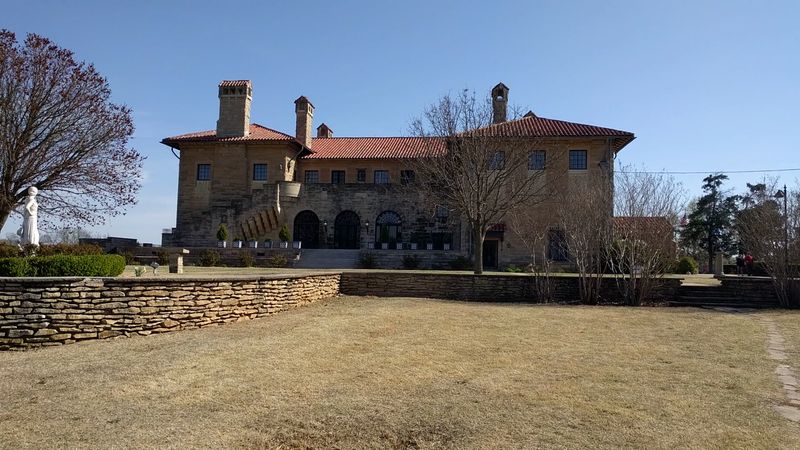
Drive to 901 Monument Road in Ponca City and the landscape does something unexpected. Flat northern Oklahoma farmland gives way to lawns, statuary, and a four-level limestone villa that looks like it was airlifted from Tuscany.
Locals call it the Palace on the Prairie, and the nickname has stuck for close to a century. Officially it is the E.
W. Marland Mansion and Estate, a National Historic Landmark that now operates as a museum open to anyone willing to make the drive.
The numbers are hard to picture until you are standing there. Fifty-five rooms.
Roughly 43,561 square feet spread across four floors. Walls built from light-colored rusticated limestone that was quarried right on the property, which is a detail that always gets a reaction from first-time visitors.
What surprises most people is how modest it looks from the driveway compared to what waits inside. Visitors regularly mention that the exterior undersells the scale, and that the interior seems to unfold room after room after room.
It is a museum, an event venue, and a public park all at once, and the grounds alone draw folks who never buy a ticket.
The Man Who Held a Tenth of the World’s Oil
Ernest Whitworth Marland was not born into Oklahoma money. He arrived, drilled, and at his peak controlled an estimated ten percent of the world’s oil reserves through the Marland Oil Company, a figure that still stops people mid-sentence on the tour.
He went further than business. Marland served as a U.S.
Congressman and then as Oklahoma’s tenth Governor, making his story a genuine piece of state history rather than just a rich man’s house.
Then came 1928, the same year his mansion was completed. A hostile takeover stripped him of the company he had built, and the man who commissioned a $5.5 million home found himself unable to keep it.
The family lived in the finished mansion only a handful of years before moving into a smaller studio elsewhere on the estate. In 1941 the property sold for $66,000, a number that tells the whole arc better than any paragraph could.
Guides handle the reversal with care, and guests often say the family’s story is what lingers longest, more than the chandeliers or the marble. Riches and reversal, all inside one lifetime.
Florence by Way of Ponca City
Blame a trip to Italy. Marland toured Europe, fell hard for the Palazzo Davanzati in Florence, and came home determined to build something in that spirit on the Oklahoma plains.
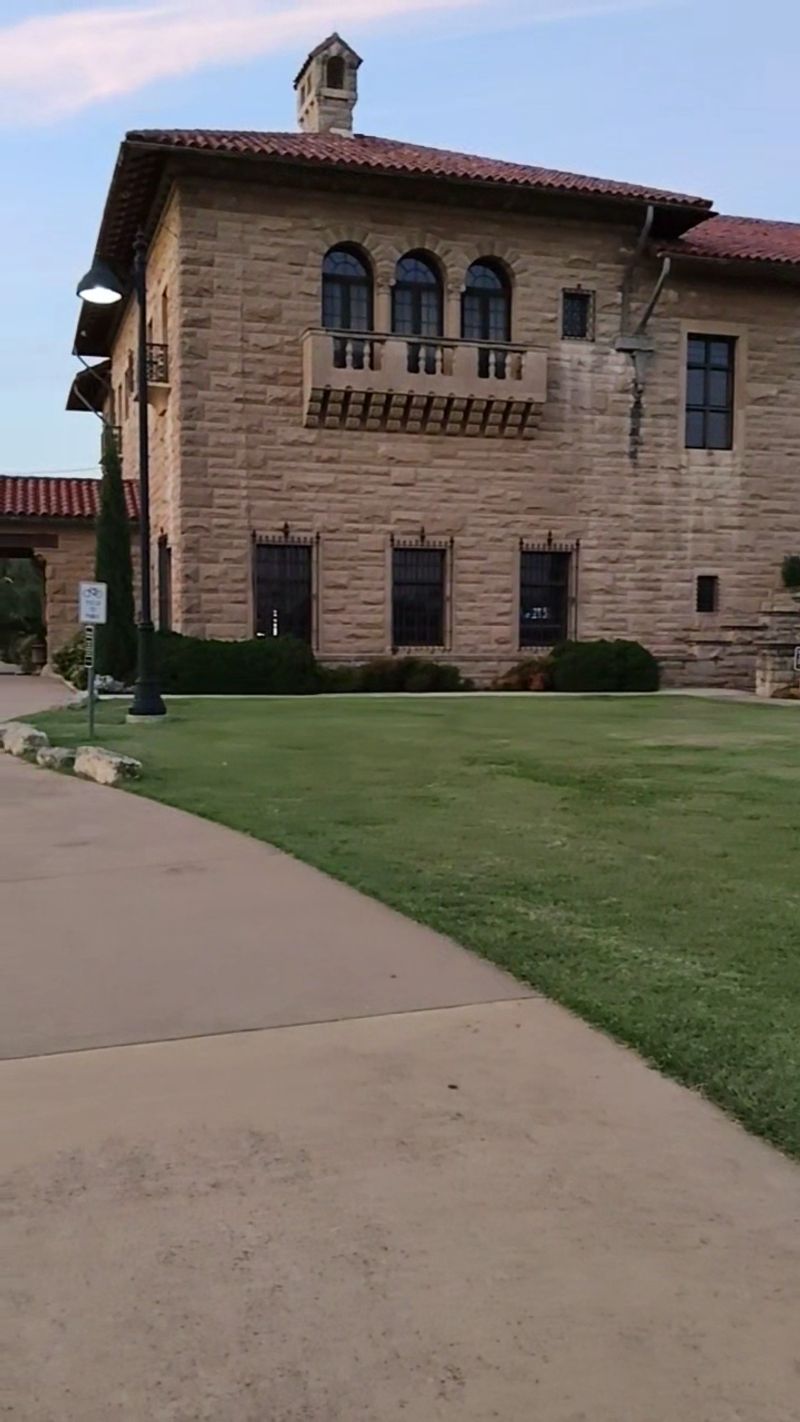
Architect John Duncan Forsyth took the assignment and ran with it between 1925 and 1928, producing an Italian Renaissance villa that somehow does not look ridiculous surrounded by prairie. Craftsmen were brought in from Italy to handle the detail work, and it shows in places most house museums would have skipped.
Look up along the exterior and you will find carved gargoyles, owls, and jackals watching the lawn. They are easy to walk past if nobody points them out, which is one small argument for taking the guided tour.
Inside, the borrowed-from-Europe theme continues. Bookshelves are crowned with oversized seashell designs, copied from the ones in the Oval Office, which is the sort of odd fact that makes a tour worth the ticket.
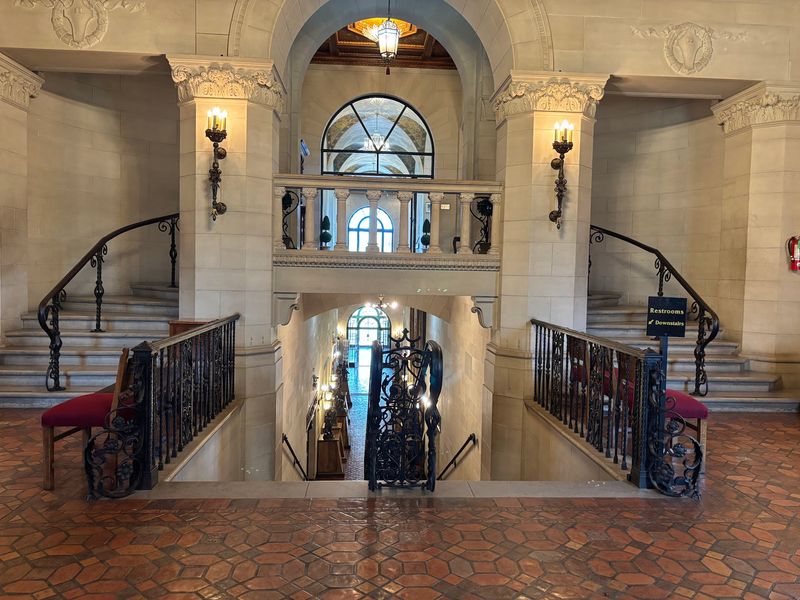
Guests frequently remark that the building feels more European palace than Midwestern landmark, and standing in the entry hall, that comparison stops sounding like an exaggeration.
Gold Leaf Ceilings and Waterford Crystal
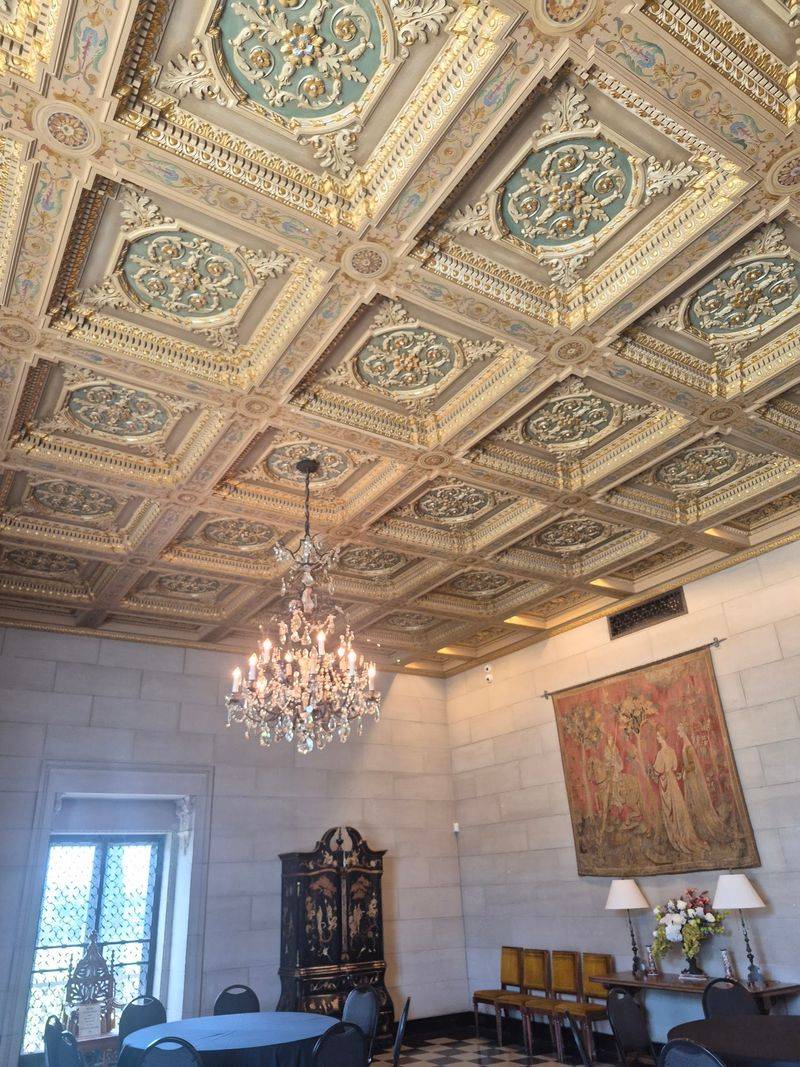
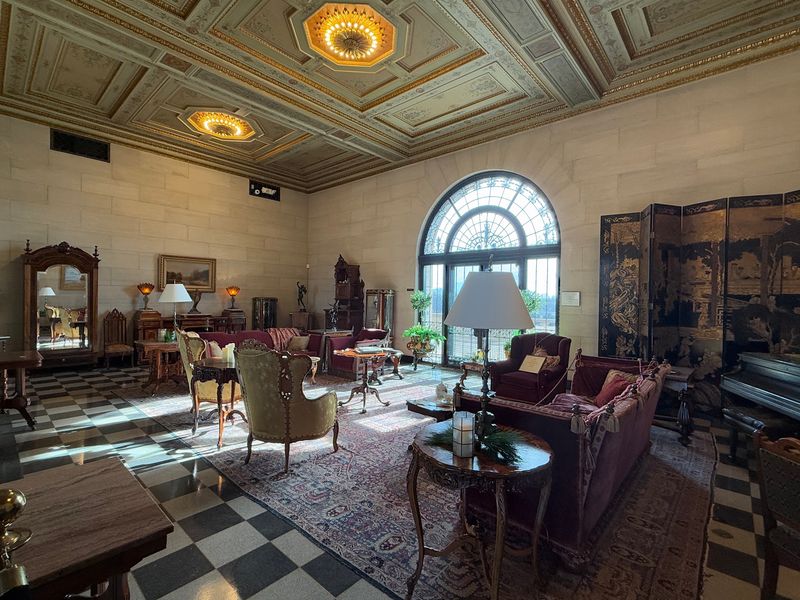
Necks get sore here, and everyone laughs about it. The ceilings are the headline attraction, painted and covered in gold leaf, with one of them valued at more than $1.9 million on its own.
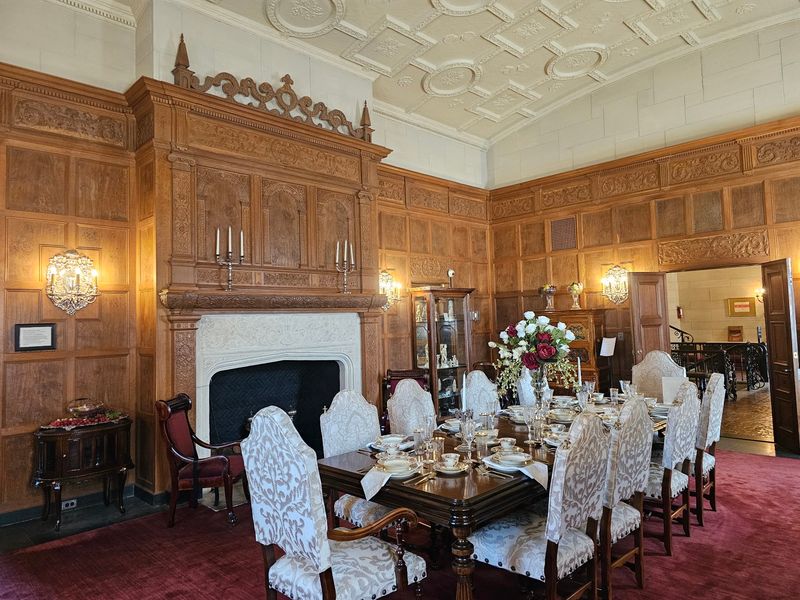
Waterford crystal chandeliers hang beneath them. Hand-carved walnut paneling wraps the walls of the principal rooms, warm and dark and softening what could easily have felt cold.
Lydie Marland’s bedroom is the room people describe most often afterward. Done in Louis XV style, it features imported lime-wood panels carved by hand and a fireplace of Italian pink marble that looks almost edible in afternoon light.
Art fills the rest of the space. Paintings, sculpture, and small decorative flourishes tucked into corners mean that nearly anywhere you look, something is competing for attention, which is exactly how repeat visitors describe it.
What keeps the place from feeling like a jewelry box is the furniture. Original and period pieces sit where they would have sat, so the rooms read as lived-in rather than staged, and that impression is the single thing guests mention most.
Eleven Shower Heads and a Leather-Lined Elevator
Forget the chandeliers for a second. The gadgets are what make jaws drop, because Marland loaded this house with technology that barely existed in 1928.
The master bath contains eleven shower heads. Nearby sits what is believed to be the first electric sauna installed in the United States, which is a genuinely bizarre thing to encounter in northern Oklahoma.
Elsewhere there is an automatic dishwasher, a dumbwaiter for hauling food between floors, and an elevator lined in leather. Central heating and cooling ran through the place when most Oklahoma homes were making do with a fan and an open window.
Hidden passages and tunnels thread through the estate too, and the secret tunnel gets brought up by visitors often enough that it has become part of the mansion’s folklore.
Tour guides tend to linger on this stuff because it reframes the whole house. Marland was not only buying beauty, he was buying the future, and much of what he installed still sits in place for guests to inspect nearly a hundred years later.
Grounds, Gardens, and the Long Walk Around
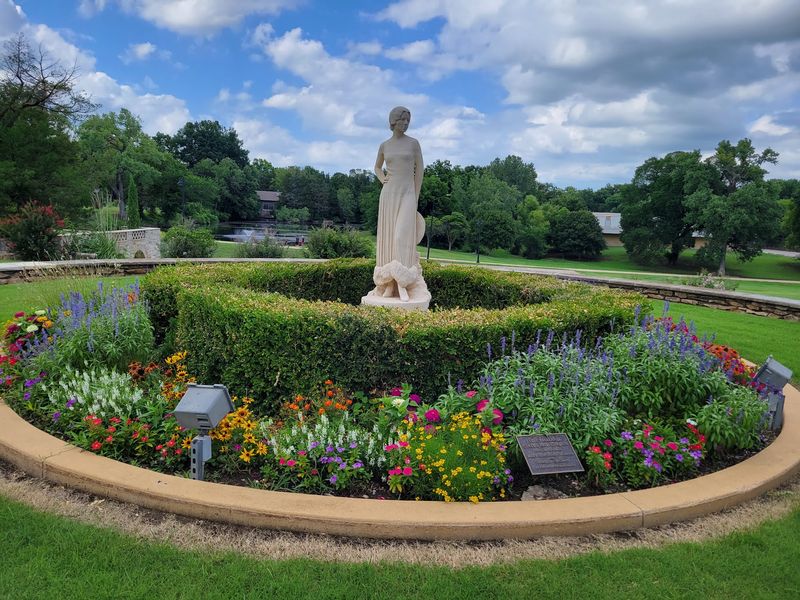
Ticket or no ticket, the grounds are open, and plenty of folks come just for that. A full loop around the building lets you see the villa from every angle, which photographers say is half the appeal.
Statues dot the lawns. There is a pond with ducks, flower beds that shift with the season, and enough shade to make an unhurried walk pleasant on most spring and fall afternoons.
Graduation season turns the place into an outdoor studio. Cap-and-gown portraits happen all over the property in May, and nobody seems to mind sharing the paths.
The estate holds more than the main house. A chapel sits on the property, along with the smaller residence connected to Lydie Marland, and guided tours often include buildings that self-guided visitors will not reach.
One honest note from regulars: the old swimming pool has not been restored to its former condition, and several people wish it had been.
Oklahoma heat and wind are real factors from June through August, so morning visits tend to be far more comfortable for a long outdoor wander.
Guided Tour Versus Booklet in Hand
Two ways to see it, and the choice genuinely changes the visit. Self-guided tours come with a printed booklet, letting you set your own pace through the public rooms.
Guided tours cover more ground. Docents open rooms that stay roped off otherwise, and the walk typically runs about an hour and a half with stories, dates, and family details woven in.
Visitors overwhelmingly recommend the guided option. Staff knowledge comes up constantly in conversation, and several people note that the house means much more once someone explains what you are looking at.
Budget generously either way. Some guests spend two and a half hours drifting through and still feel rushed, because the small details reward slow looking.
Downstairs on the bottom floor sits the Petroleum Hall of Fame, an extra stop that surprises people who came only for the architecture.
A practical tip worth passing along: the guided tour involves a lot of standing. Anyone with mobility concerns may want a rolling walker with a seat, and an elevator is available inside for moving between floors.
Weddings, Portraits, and a Building Still in Use
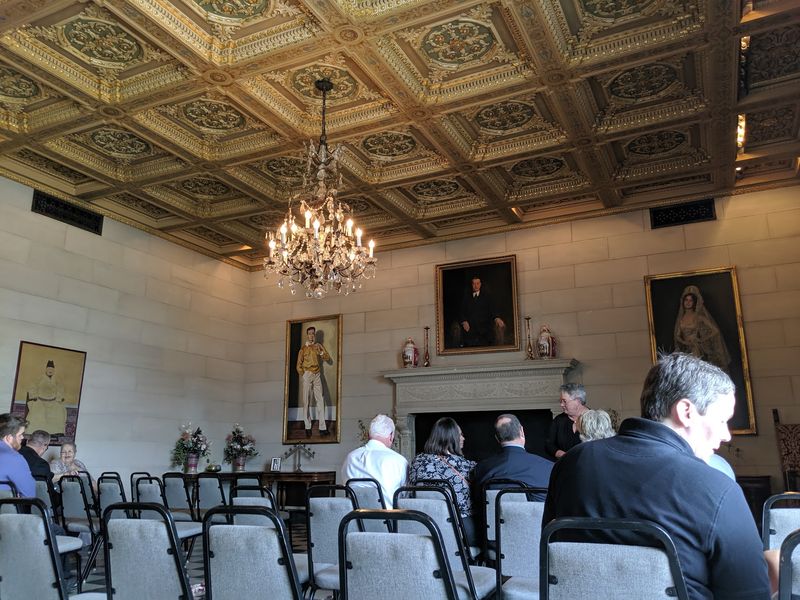
Here is the part that keeps this from being a museum frozen under glass. The mansion books weddings, receptions, and private events year-round, and Ponca City residents still use it for milestone celebrations.
Couples love it for obvious reasons. Grand entertaining rooms, dramatic staircases, arched windows, and outdoor settings mean a photographer can shoot a dozen distinct backdrops without leaving the property.
Wedding parties come up constantly in visitor conversations, often paired with praise for the events staff who handle the planning side. One bride described the building as among the best preserved in the state, and coordinators across the region echo that.
Portrait sessions happen too. Seniors, families, and engagement shoots all rotate through, particularly in spring when the gardens fill in.
What this ongoing use does for the casual visitor is subtle but real. Rooms that host living celebrations do not develop that stale, untouched atmosphere common in historic homes, which is part of why the place still reads as lived-in rather than embalmed.
Anyone planning an event should contact the mansion directly at 580-767-0420 for availability and current rates.
Hours, Ticket Prices, and Getting There
Plan around the calendar first. Doors open Monday through Saturday from 10:00 a.m. to 5:00 p.m., with the last self-guided tours starting at 3:30 p.m.
Sundays are closed.
Major holidays are also closed, including Memorial Day, July 4th, Labor Day, Thanksgiving, Christmas Eve, Christmas Day, New Year’s Day, Martin Luther King Jr. Day, and Easter. Hours can shift, so a quick call to 580-767-0420 before a long drive is smart.
Admission stays reasonable. Adults pay $12, seniors 65 and older pay $10, and children ages 6 through 17 are $5.
Several groups get in free. Kids under 6, military personnel, and first responders are admitted at no charge, and Ponca City residents with proof of residency also enter complimentary.
Ponca City sits in north central Oklahoma, roughly an hour and a half to two hours from either Oklahoma City or Tulsa, which puts it squarely in weekend-trip range. Parking on the estate is straightforward.
A gift shop operates on site, though a few guests wish the selection were larger.
Stretching the Trip and a Final Word
One stop rarely fills a whole day, so pair it. The Pioneer Woman Museum sits a short drive away, making an easy second stop for anyone already in town.
History-minded travelers should also seek out the Marland Grand Home, the oil man’s first Ponca City residence. It now houses the American Indian Museum, with artifacts representing six area tribes, and it offers a very different window into the region than the villa does.
Together those three stops turn a drive from Oklahoma City or Tulsa into a satisfying full day without much backtracking.
As for the mansion itself, it earns the trip. The combination of genuine craftsmanship, strange early technology, and a family story with real weight makes it stick in your memory longer than most house museums manage.
Bring comfortable shoes, allow at least two hours, and take the guided tour if your schedule permits. Whether you go for the gold ceilings, the tunnels, or just a quiet walk around the pond, the Palace on the Prairie holds up beautifully.
