A set of stone steps rises against an old cemetery wall, a quiet invitation to leave the present behind. Beyond that wall, a trail winds through a forgotten landscape where a bustling frontier town once stood.
This was once the capital of a nation, a thriving crossroads of trade and culture before it faded into silence. Now, only crumbling foundations and scattered ruins remain, half-hidden beneath the grass.
The path leads you past these remnants, each one a whisper of the lives that were lived here. Interpretive signs along the way help piece together the story of a place that time almost erased.
It is a short walk, but the weight of history makes it feel much longer. In Oklahoma, even the quietest trails can lead to the most profound discoveries.
The Cemetery You Walk Through First
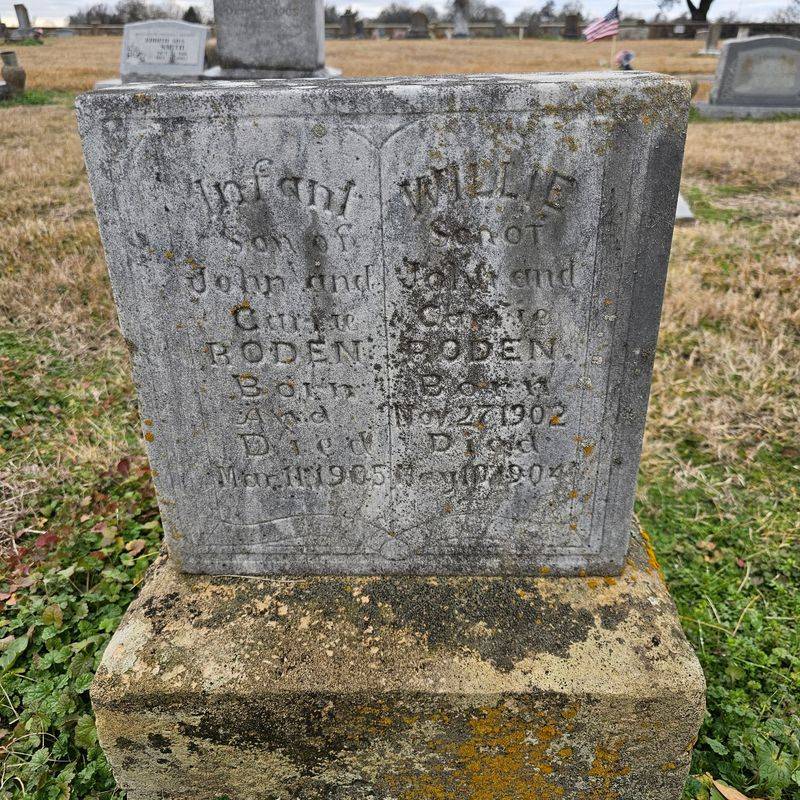
Most trails begin at a parking lot with a wooden sign, but this one begins among headstones, and that sets the mood before you take twenty steps. The Fort Towson Cemetery sits at the front of the property, and the only way to reach the Doaksville trail is to walk right through it.
You will see rows of white military markers along with older, weathered stones that belong to soldiers, settlers, and Choctaw families connected to the frontier post nearby. It feels quiet in a way that makes you lower your voice without anyone telling you to, and I think that is a good frame of mind for what comes next.
Take your time here instead of rushing toward the trailhead, because the names and dates carved into the stone are part of the same story you are about to walk into. Some markers are legible and some have softened into nothing, which tells you plenty about how long this ground has been used.
Wear decent shoes even for this first stretch, since the grass can be uneven and the ground shifts around the older graves. Oklahoma weather does what it wants out here, so a hat and water are smart even on a short walk like this one.
Stairs Built Right Over The Stone Wall
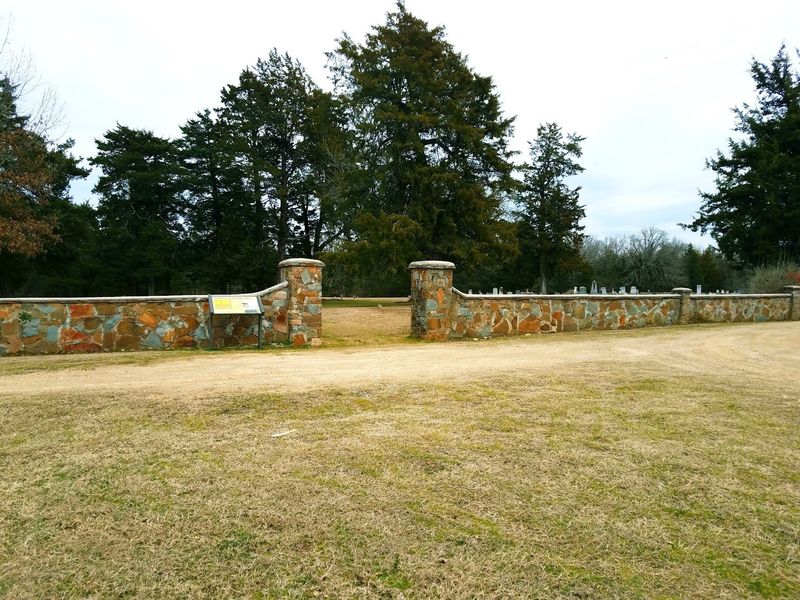
Here is the part that made me laugh out loud when I first read about it. At the very back of the cemetery there is a low stone wall, and instead of a gate, somebody built stairs that go up one side and down the other, so you literally climb over the boundary to reach the trail.
Crossing it feels weirdly ceremonial, like you are stepping out of one century and into another one. On the far side, the mowed cemetery grass gives way to a dirt path that heads off into the trees, and the whole atmosphere changes within a few yards.
You can find the trailhead and cemetery at Red Road, Fort Towson, OK 74735, tucked just off the main highway through town. Signage is modest, so pay attention to your turns rather than assuming a big entrance will announce itself.
The stairs are simple and sturdy, but they are still stairs over a wall, so watch your footing if the stone is damp. If you are bringing kids along, they will probably think this is the best part of the whole outing, and honestly they would not be wrong about that.
Once The Biggest Town In The Choctaw Nation
Picture a place with stores, a hotel, blacksmiths, a jail, and streets full of people, and then picture all of it gone except the outlines. Doaksville grew into the largest town in the Choctaw Nation, and for a stretch of time it was one of the busiest commercial spots in this whole corner of the region.
Traders, farmers, soldiers from the nearby fort, and Choctaw families all did business here, which made it far more than a lonely outpost on a map. Goods moved in and out constantly, and the town had the kind of energy you would expect from a real hub rather than a wide spot in the road.
What gets me is how completely it faded. Railroads went elsewhere, the fort closed, business drifted toward other towns, and eventually the buildings came down or fell in on themselves.
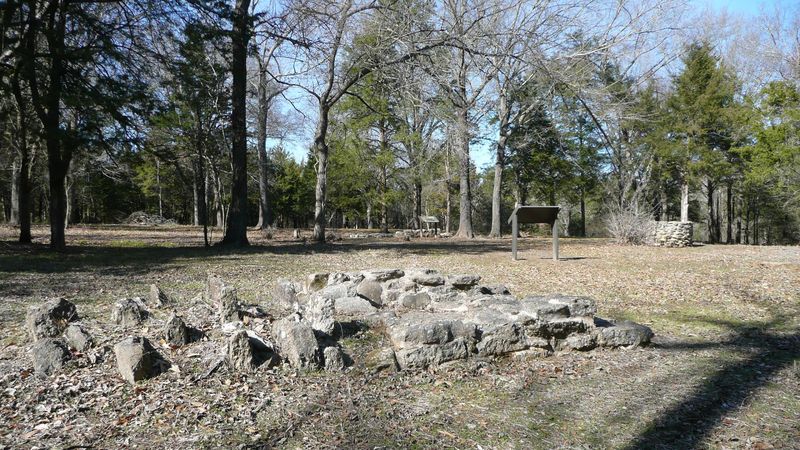
Standing in the clearing today, you mostly see trees, low stone remnants, and interpretive signs marking where things used to stand. It takes a minute for your brain to accept that a town of that size sat right here in Oklahoma, and then the whole place starts feeling a lot larger than it looks.
How A Trading Post Turned Into A Town
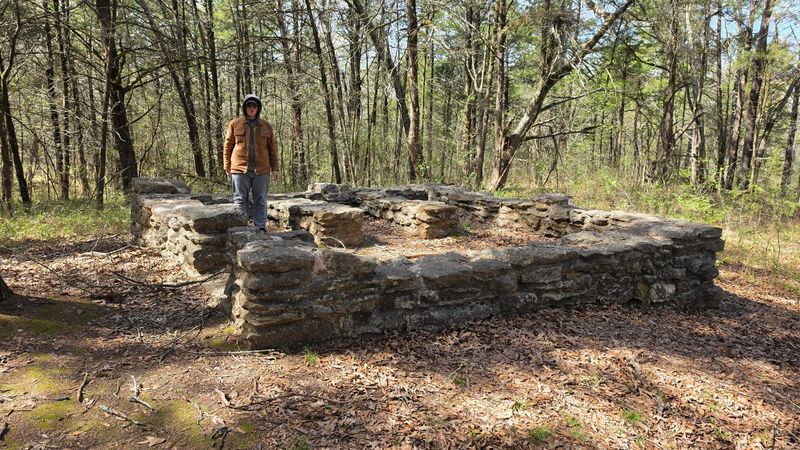
Every town starts somewhere, and Doaksville started as a trading post set up by Josiah S. Doaks in the early part of the eighteen twenties.
That single business turned out to be the seed for everything that followed, which is a pretty good reminder of how frontier towns actually formed.
Traders needed a place where roads met and where goods could be moved by water, and this spot checked both boxes. Once people had a reliable place to buy and sell, homes and other businesses gathered around it naturally.
Doaks gave the settlement its name, and the community kept growing as Choctaw families relocated into the area and the nearby military post brought in steady traffic. Within a fairly short span it went from a store to a genuine town with a street grid and civic buildings.
Reading the signs along the trail helps you trace that progression, because they point out where different businesses and homes were located. I like walking it with that origin story in my head, since it turns a bunch of stone outlines into something you can almost picture, wagons and all, out here in rural Oklahoma.
When This Ground Served As A Capital
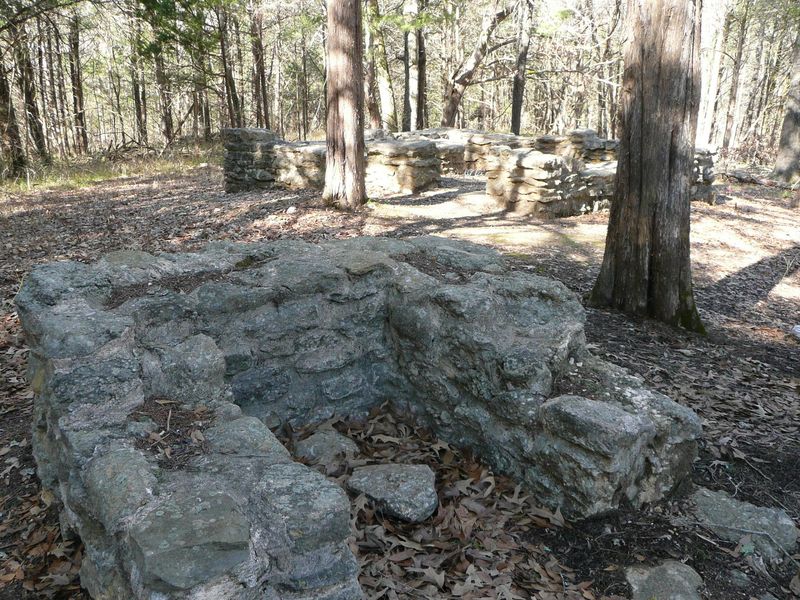
Trading hub is impressive enough, but Doaksville went further than that and actually served as the capital of the Choctaw Nation for a stretch of time. Government business happened here, decisions got made here, and people traveled here because it mattered.
That detail changes how the site feels once you know it. A quiet trail through the trees is one thing, but a quiet trail through a former national capital is something else entirely, and it makes you slow down and look around more carefully.
Choctaw leaders, treaties, courts, and community life all intersected in this area, which means the history here is political and cultural and personal all at once. It is not just frontier commerce, it is governance and identity.
The interpretive panels along the walk touch on this, and I would read them fully instead of skimming, because they connect the ruins to the people who built and used them. If you want more depth, the visitor center materials fill in the background nicely.
Walking away from it, you start seeing Oklahoma differently, especially the parts of its story that existed long before statehood arrived and reshaped the map.
Foundations, Wells, And A Long Gone Jail
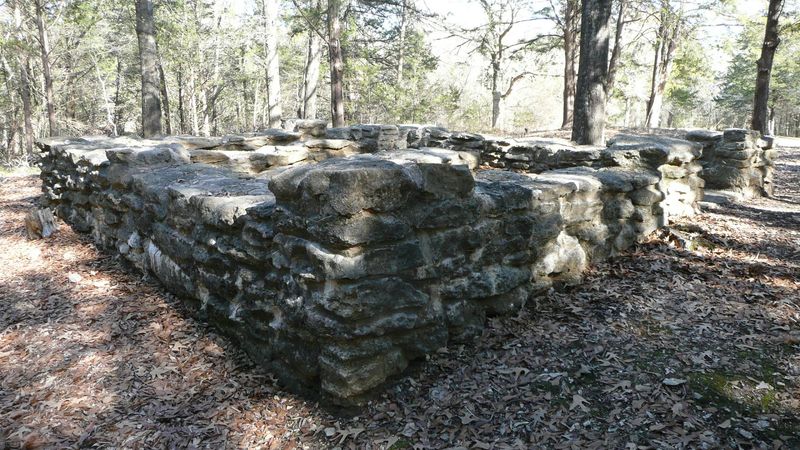
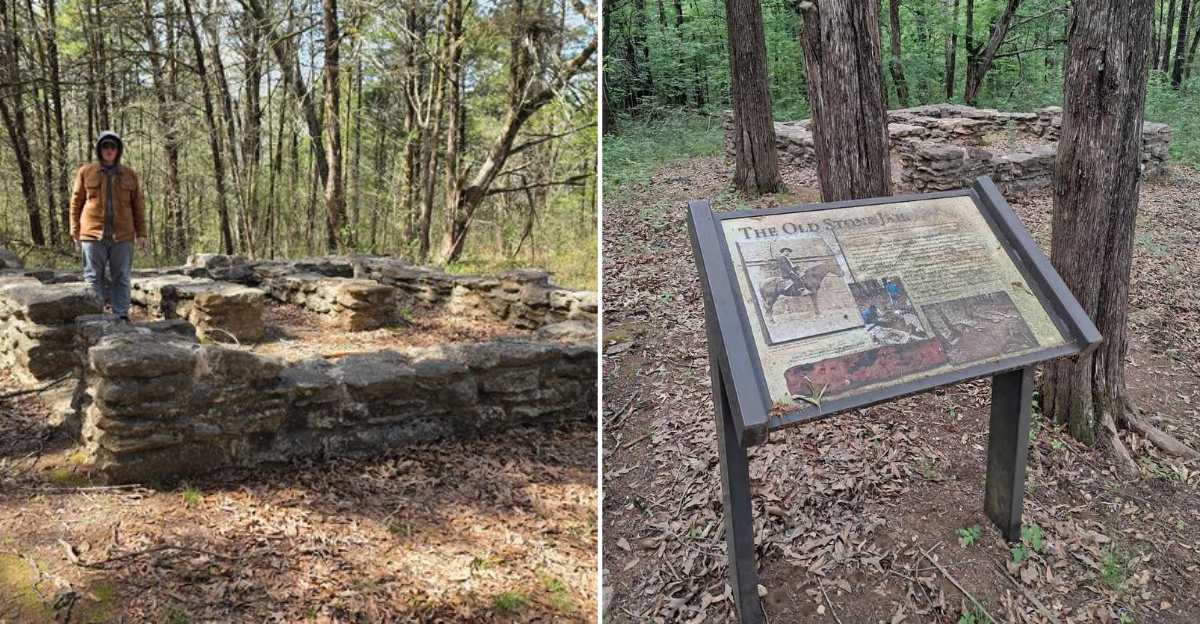
Archaeologists have done real work out here, and the results are what make the trail worth walking rather than just reading about. Excavations have uncovered foundations from a whole range of structures, including a jail, a hotel, wells, and various stores and homes.
Some of what you see is low stone that barely rises above the grass, and some of it is marked so you understand what you are looking at. Without the signs you might walk right past a significant spot, which is exactly why the interpretive markers matter so much here.
Wells are my favorite part of sites like this, because a well means somebody lived here day after day, hauling water for cooking and washing and animals. That is ordinary life, not just headline history.
Do not climb on or move any of the stonework, since this is a protected archaeological site and those remnants are fragile. Photographs are fine and encouraged, and honestly they look better than you would expect once you frame the foundations against the trees.
Give yourself enough time to stand still at a few spots, because rushing through means you miss the details that make the town feel real.
Crossroads, Wagons, And Red River Steamboats
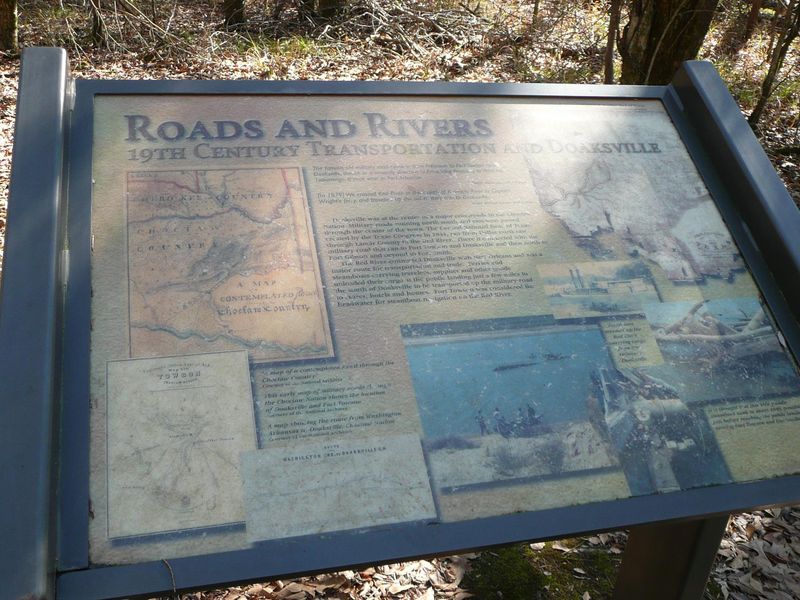
Location did all the heavy lifting for this town, and once you understand the geography the whole rise and fall makes sense. Doaksville sat where several important roads came together, and the Red River nearby gave it access to steamboat traffic.
Water transport was the big deal back then, because moving heavy freight overland was slow, expensive, and rough on wagons. Being able to load and unload goods from boats connected this corner of the region to markets far downriver and beyond.
Cotton, supplies, tools, and household goods all flowed through, and merchants here served a wide area rather than just the immediate neighborhood. That is why the town could support a hotel and multiple businesses instead of just a single store.
When transportation patterns shifted and rail lines went other directions, the same geography that built the place stopped helping it. Towns that depended on river and road crossings often faded quickly once the routes changed.
Thinking about it while you walk gives the empty clearing a completely different weight, and it explains why so many once busy spots across Oklahoma exist now only as foundations and interpretive signs.
Signs That Fill In The Blank Spaces
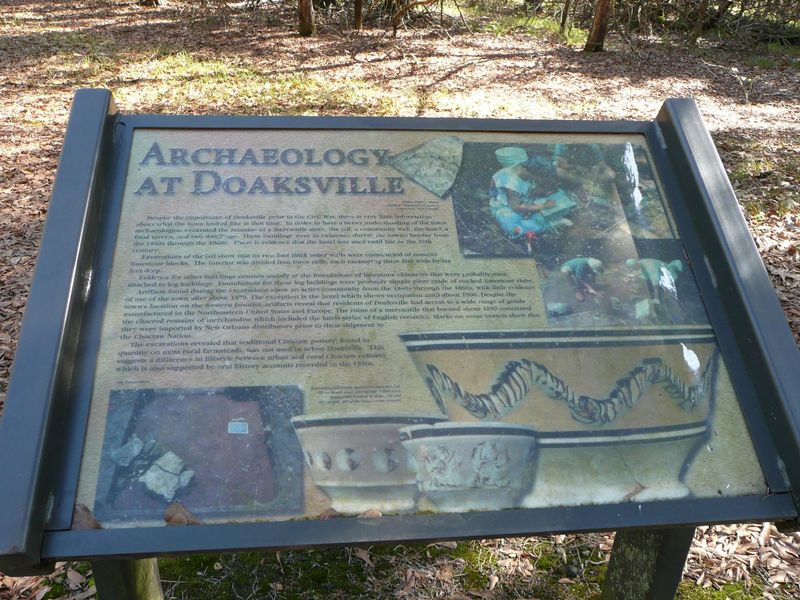
Ruins without explanation are just rocks, and that is exactly why the interpretive signs along this trail earn their keep. The loop runs roughly three quarters of a mile, and panels are spaced along it to tell you what stood where.
Each one gives you a little context about a business, a home, or a civic building, and together they rebuild the town in your head as you walk. It is a bit like assembling a puzzle where the pieces are scattered across a wooded path.
I would read every single one rather than picking and choosing, because the story builds as you go and the later signs land better once you have the earlier ones. Skipping ahead makes the whole thing feel like scattered trivia instead of a narrative.
The distance is manageable for most people, though the surface is natural rather than paved, so expect roots, dirt, and uneven spots. Sturdy shoes make a real difference here.
Plan for more time than the mileage suggests, since stopping to read and look around is the entire point. Rushing a trail like this one defeats the purpose completely.
Stop At The Visitor Center Before You Wander
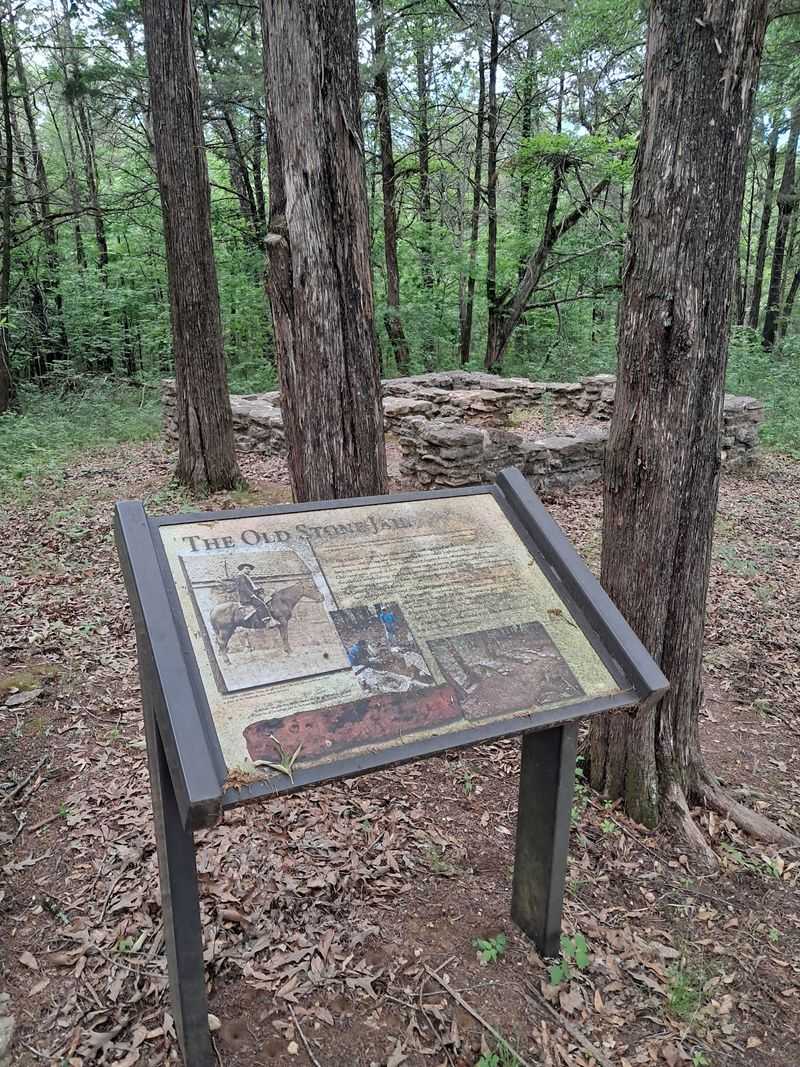
Here is my one piece of practical advice that will improve your whole visit. The Oklahoma Historical Society maintains the Doaksville site, and the nearby Fort Towson Historic Site visitor center has a booklet about the trail that you can pick up before heading out.
That booklet fills in details the trail signs cannot fit, and having it in hand makes the walk far richer. The staff there can also tell you about current trail conditions, which matters after heavy rain.
The archaeological site is open during daylight hours, so plan a morning or afternoon visit rather than showing up near dusk. The terrain can be rugged in spots, and you really do want good light for reading signs and watching your footing.
While you are there, the Fort Towson grounds are worth exploring too, since the fort and the town were part of the same world and the stories overlap constantly. Seeing both in one trip makes each one make more sense.
Bring water, bug spray in warm months, and a camera, and give yourself an unhurried afternoon in this quiet corner of Oklahoma. It rewards patience more than anything else.
