Water echoed somewhere below my boots the day I climbed down into a crack in the earth in northern Ohio, a sound that changed the way I think about the farm fields I have driven past for years. None of them ever hinted that a river was moving quietly under my tires, but that changed when I descended into the cave.
The water runs cold and clear, roughly 110 feet down, and it belongs to a groundwater system that stretches for miles beneath the corn and soybeans.
What pulled me in was not just the cave itself, but the idea that this same water can rise, spill out through sinkholes, and run across the surface toward the lake after a heavy storm, a reminder of how little we see of what lies beneath the land we travel over.
I came for a one-hour tour and left thinking about geology for the rest of the week. Places that feel a little raw and unpolished tend to earn their spot on the map, and this one certainly does.
The Crack in the Earth Two Boys Found While Chasing a Rabbit
Back in June 1872, two Ohio boys named Peter Rutan and Henry Homer were out rabbit hunting with their dog when the ground basically swallowed the chase. The dog went after the rabbit, both vanished into a fissure, and the boys found something far bigger than dinner.
I love that the origin story is so ordinary. No expedition, no survey crew, just kids and a stubborn dog in a farm field.
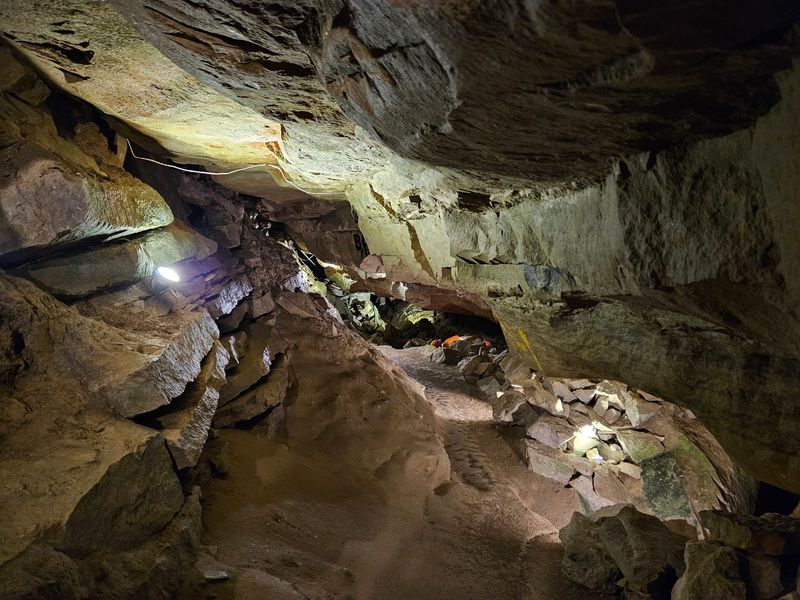
What they stumbled onto is not a typical dripstone cave carved slowly by trickling water into rounded rooms. It is a solution collapse formation, sometimes called a breakdown cave, that developed along major fractures in rock laid down during the Devonian and possibly Silurian periods.
Translation for the rest of us: the earth cracked, huge blocks shifted, and the gaps between them became passageways. Walking through feels less like a tunnel and more like squeezing between broken puzzle pieces the size of cars.
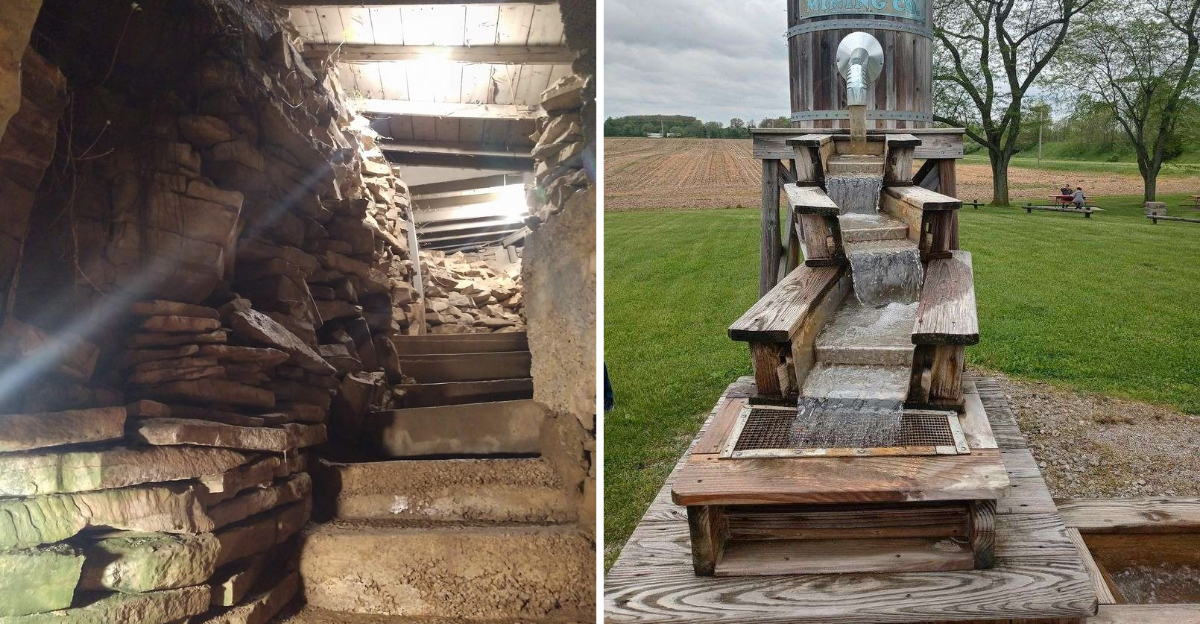
Standing at the top of the entrance stairs, I kept thinking about how many people have walked past ordinary ground without knowing what sits underneath.
Meeting Ole’ Mist’ry River Down on the Seventh Level
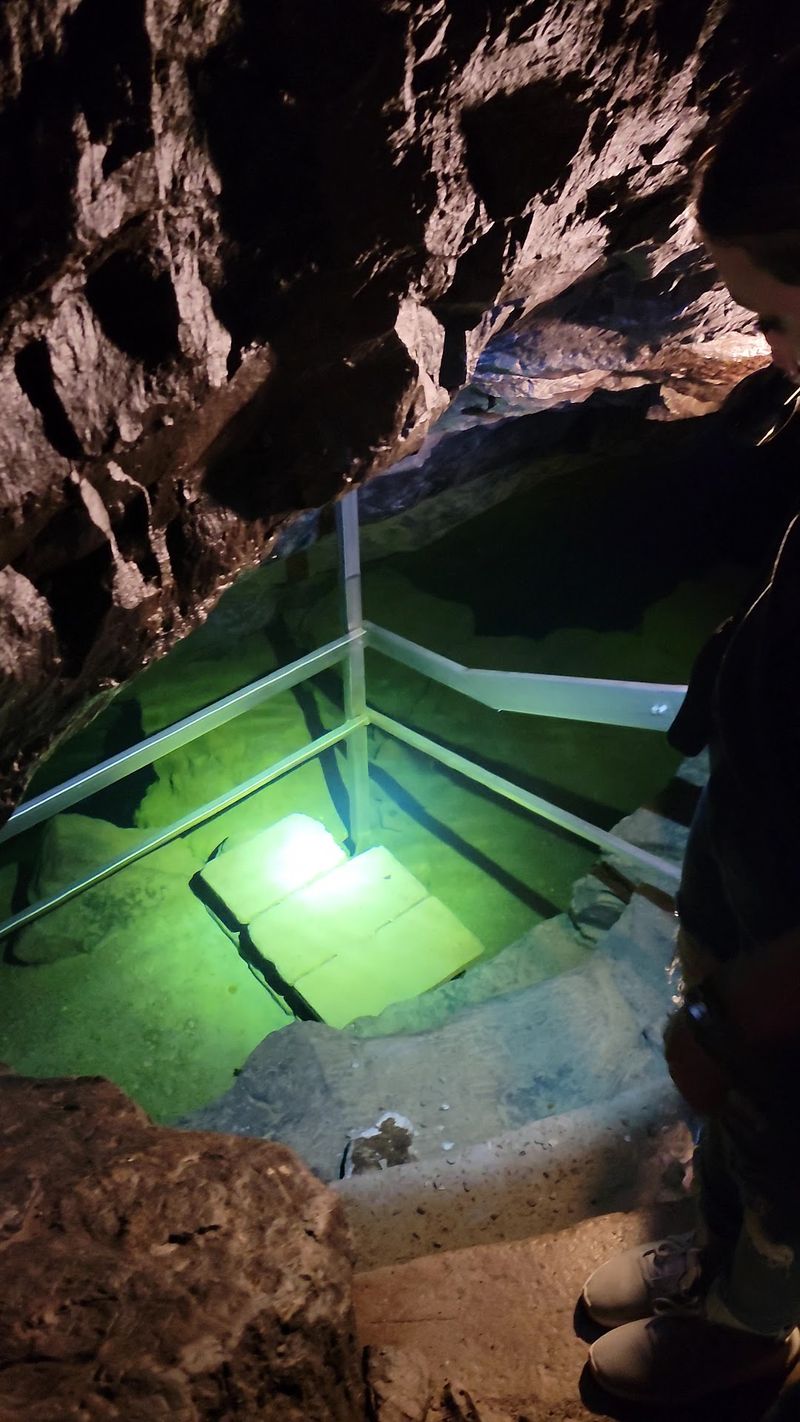
Roughly 110 feet below the surface, the passages open onto water that looks almost fake in how still and clear it sits. That is Ole’ Mist’ry River, and it is the reason a lot of people make the drive out here in the first place.
A Bellevue lawyer named Don Bell found it in 1931 after uncovering a series of hidden passageways that led down toward the sound of moving water.
The temperature of that river holds steady at about 48.9 degrees Fahrenheit year round, and the water is clean enough to drink. Guides will tell you it is part of the larger groundwater system feeding the whole region, not some isolated puddle sitting in a hole.
Here is the catch worth knowing before you go. The seventh level is only reachable when water levels drop, which usually means later in the summer or into fall.
My group topped out at level six, and honestly, I did not feel cheated. I just wrote down a reason to come back.
When Rain Turns Sinkholes Into Fountains Across the Farmland
On July 4, 1969, about nine inches of rain fell on this area in roughly four hours. What happened next sounds made up until you understand how the plumbing works down there.
Water inside the cave rose as much as 130 feet in two days, climbing all the way to the entrance level.
Once the underground system saturates completely, hydrostatic pressure has nowhere left to push. Sinkholes that normally swallow rainwater flip into fountains and start pushing water back out onto the fields.
Temporary rivers form across thousands of acres of farmland, heading north toward Lake Erie until the pressure eases. So the answer to where the underground river goes is not poetic guesswork.
During big floods, it literally surfaces in low woods and field edges before running off.
Guides explain the water level markers as you descend, and it reframes the whole tour. You stop seeing a cave and start seeing a giant natural drain that occasionally runs backward.
Steep Rock Steps, Tight Squeezes, and Why Shoes Matter
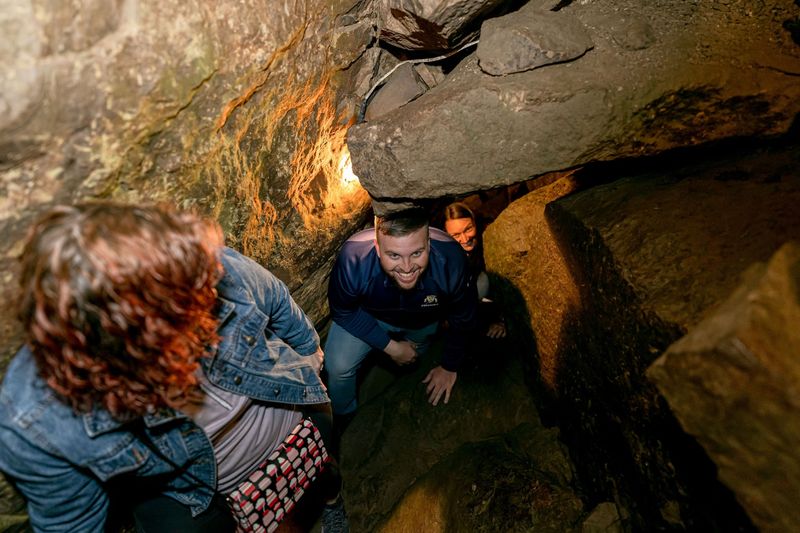
Fair warning from someone who bumped a helmet-free head more than once: this is a hands-on cave. The steps are cut rock, damp in places, and several stretches have no handrails at all.
Tall visitors regularly end up bent nearly double, chin toward knees, shuffling under low ceilings.
Solid closed shoes with grip make an enormous difference. Sneakers with worn soles turn the slick spots into a comedy routine you would rather skip.
Leave the purse and backpack in the car if you can, since both hands get used constantly for balance. Keeping three points of contact with the rock is genuinely useful advice, not just something guides say for liability.
Temperature down there hovers in the low fifties no matter how brutal the July heat is topside, so a jacket or hoodie earns its place.
Folks with knee trouble, serious claustrophobia, or mobility limits should think carefully. Staff are patient and kind about it, but the passages themselves do not negotiate.
Guides Who Actually Know Their Rock
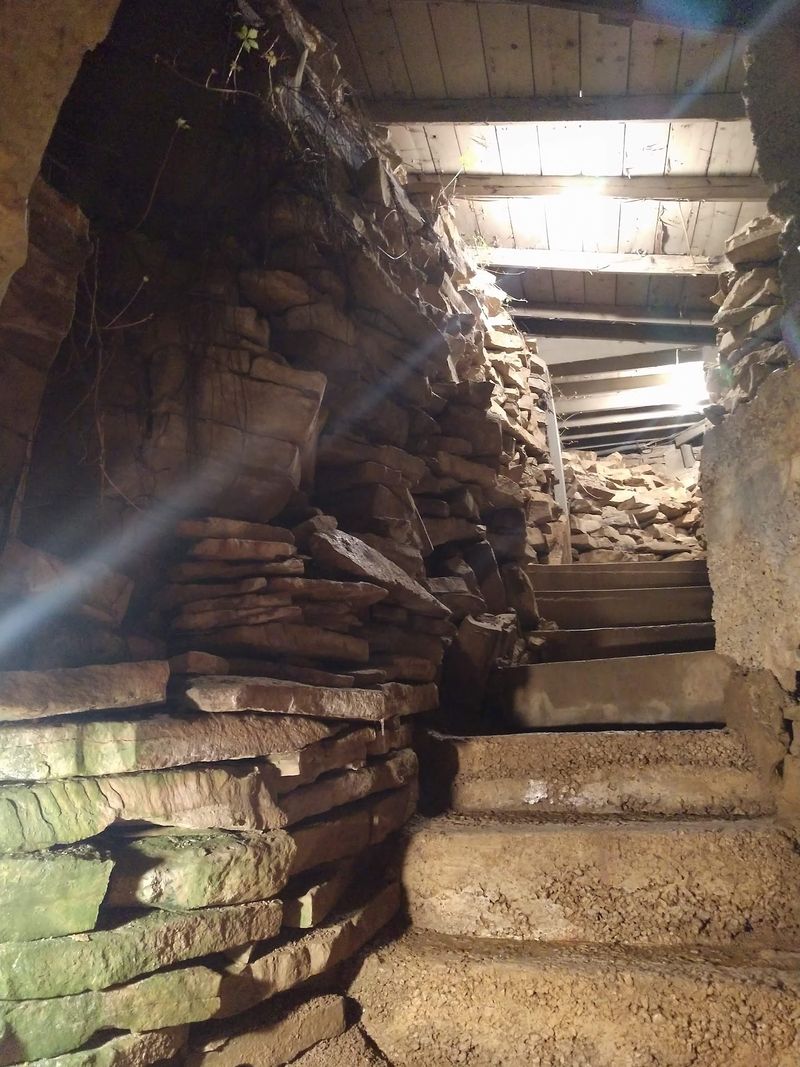
Something I did not expect: the guides here carry the whole experience. Ours moved through the fracture geology, the 1872 discovery, and the flood history without ever sounding like a script on repeat.
Questions got real answers, including the ones from a nine year old about whether anyone had ever gotten stuck.
Tours run about an hour and stay small enough that you can actually hear what is being said. That matters in a cave where sound bounces strangely off angled blocks of stone.
The property has stayed in the same family for generations, and that shows up in the tone. It feels less like a corporate attraction and more like people showing you something they genuinely care about.
Guides also point out details you would walk right past alone, like tiny mineral formations clinging to ledges or the marks left by past high water.
Mine even recommended a place to eat afterward, which I appreciated more than I expected after all that climbing.
A Labyrinth of Broken Puzzle Pieces
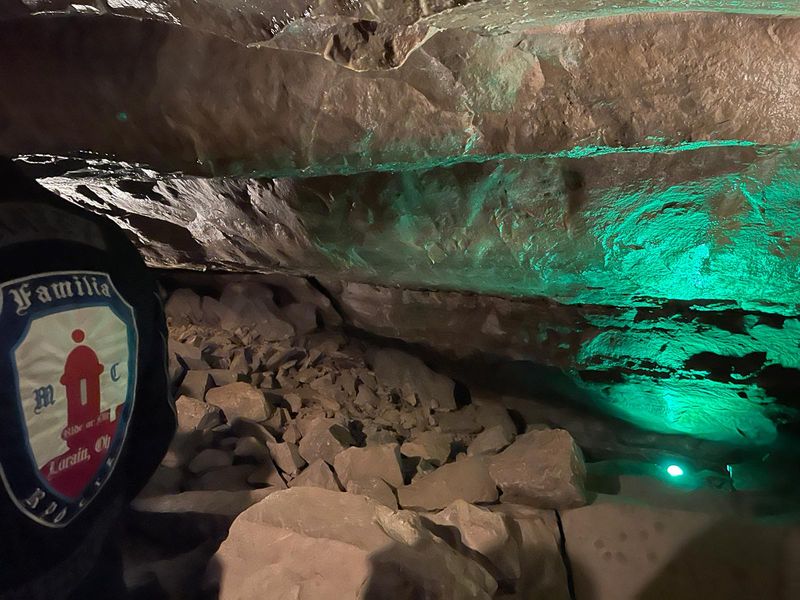
Walking through Seneca Caverns is nothing like touring a smooth, polished cave with handrails and paved walkways. This place feels raw and unfinished, as if the earth cracked open yesterday and the passageways are still settling into place.
The rock faces are jagged, the angles are sharp, and the ceiling dips low in ways that force you to pay attention to every step. I liked that about it.
It felt honest, like the cave was not trying to impress anyone.
The formations here are not the delicate stalactites you see in postcards. They are massive slabs of limestone and dolomite that have shifted and collapsed over time, creating a labyrinth of chambers and crevices.
You crawl through gaps that barely fit your shoulders and emerge into rooms the size of a living room. The whole place feels like a giant puzzle that nature is still solving, piece by piece.
I came out covered in dust and grinning, which is exactly how a good cave tour should end.
The Sound of Water and the Weight of the Earth
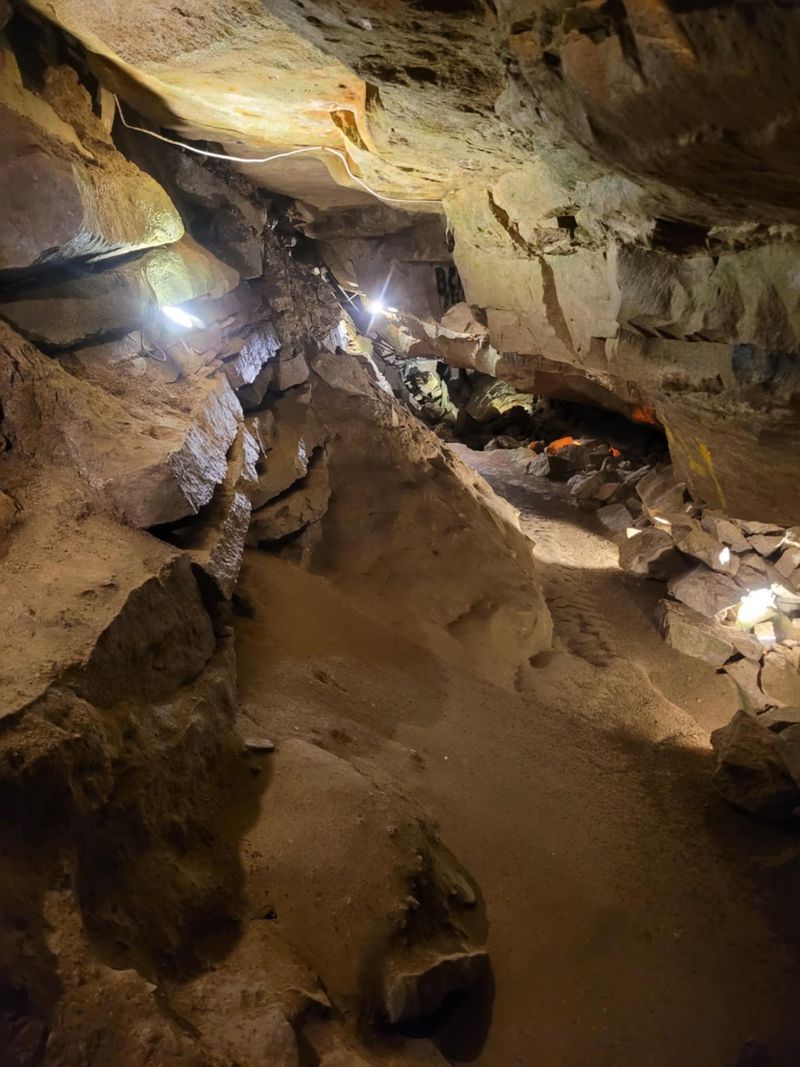
Standing deep underground, with rock pressing in from all sides and the faint sound of running water somewhere below, I felt a strange kind of peace settle over me. The silence down there is not empty.
It is filled with the drip of water, the occasional creak of shifting stone, and the echo of your own breathing bouncing off walls that have stood for millions of years. You forget about phones, schedules, and the world above.
The cave demands your full attention, and it rewards that focus with something rare, a moment of complete presence.
I found myself stopping in the middle of a passage just to listen. The water sounds different down here, clearer and more deliberate, as if it is the only thing that truly matters.
That feeling stayed with me long after I climbed back up into the daylight.
There is something grounding about being in a place that existed long before you arrived and will remain long after you leave. It is a reminder that the world does not revolve around us, and sometimes that is exactly what you need to hear.
Gem Mining, the Gift Shop, and Sunlight Afterward
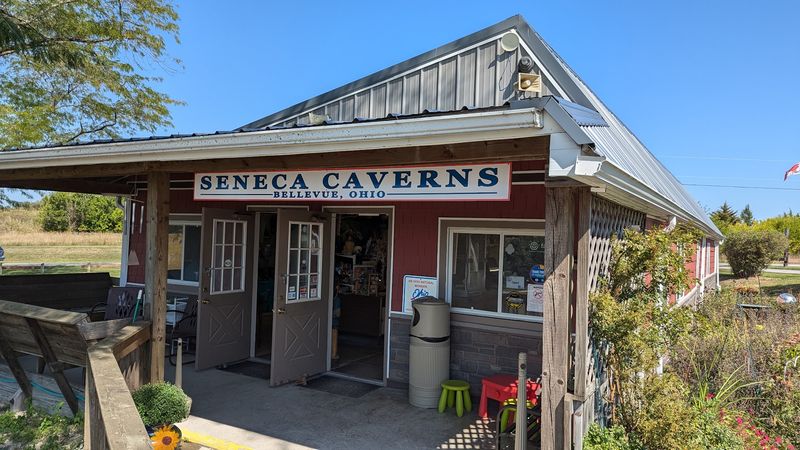
Coming back up into daylight is its own small event. Your eyes adjust, your legs remember they exist, and the picnic area suddenly looks like the best idea anyone ever had.
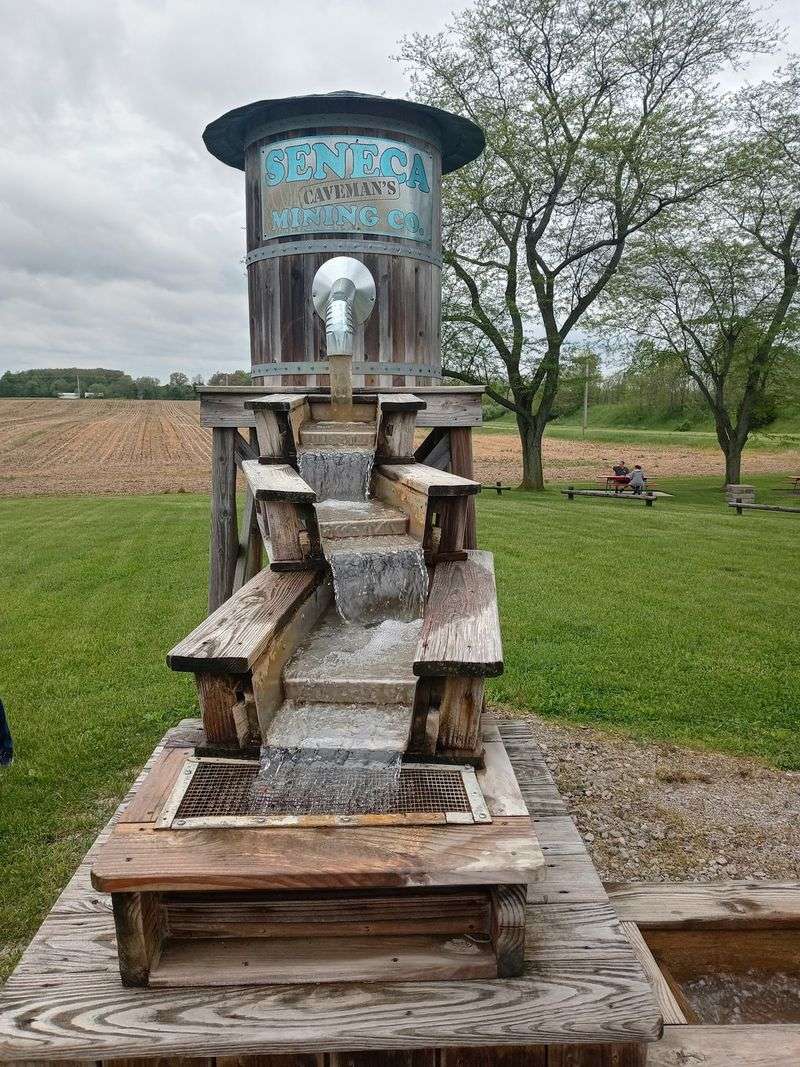
Outside the entrance sits a sluice where you can wash a bag of rough material through screens and pull out gems.
Kids lose their minds over this part, and plenty of adults quietly do too. Bags come with real specimens, and people regularly turn up chunks of amethyst or a purple geode big enough to need two hands.
The gift shop is better stocked than I anticipated, heavy on crystals, fossils, and rocks rather than generic souvenirs.
Practical note: restrooms on site are portable units, so plan accordingly. Hand wipes are worth packing, because cave rock leaves your palms damp and gritty.
Between the tour, the mining trough, and browsing indoors, most visitors spend around two hours here. It fills an afternoon without feeling stretched thin.
Address: 15248 E Township Rd 178, Bellevue, Ohio 44811
