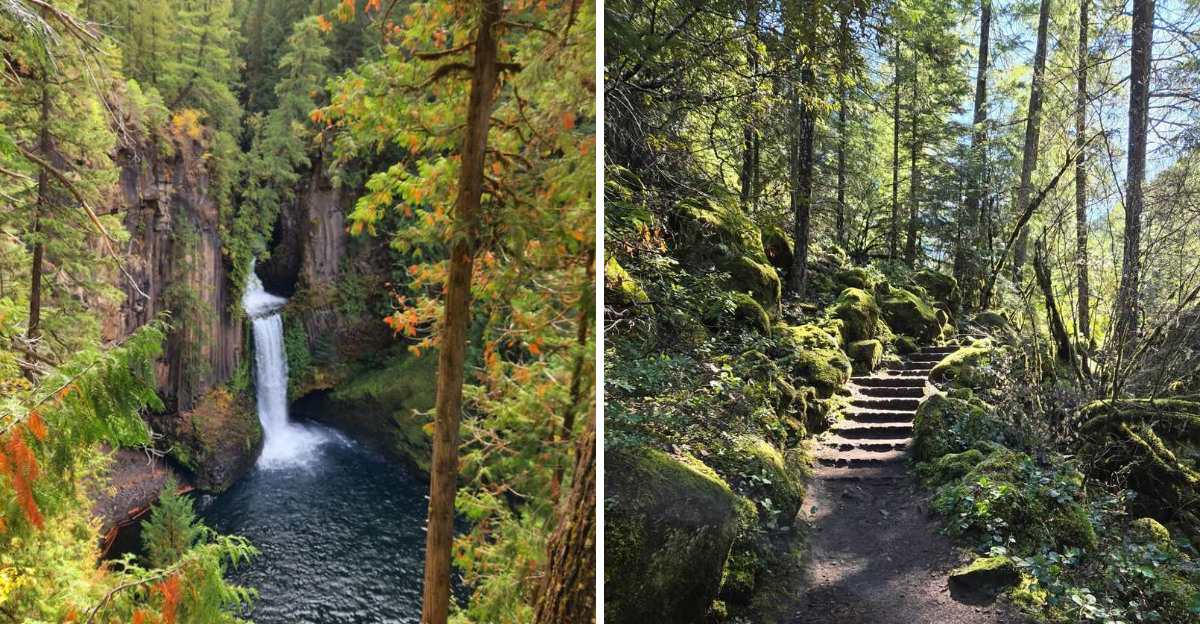
Photos rarely do this waterfall justice. On a map, it looks like a minor stop, barely worth the detour. Standing in front of it tells a completely different story.
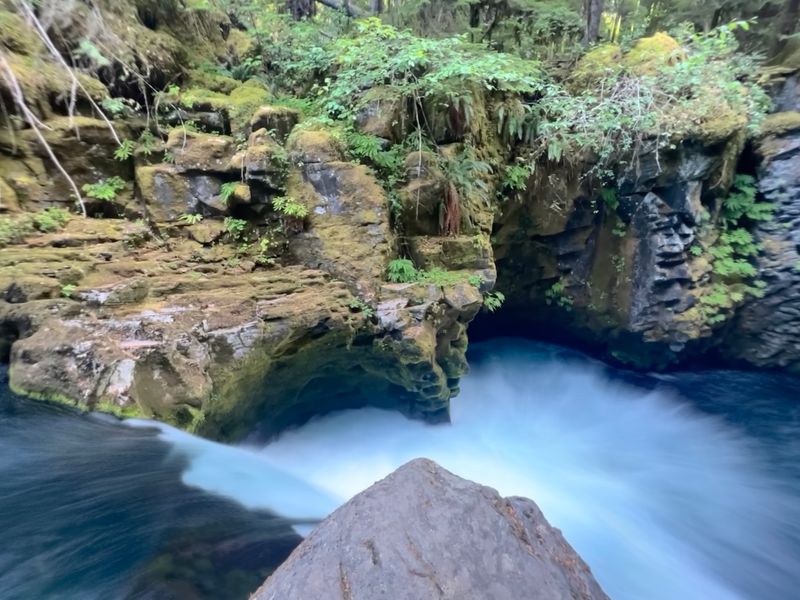
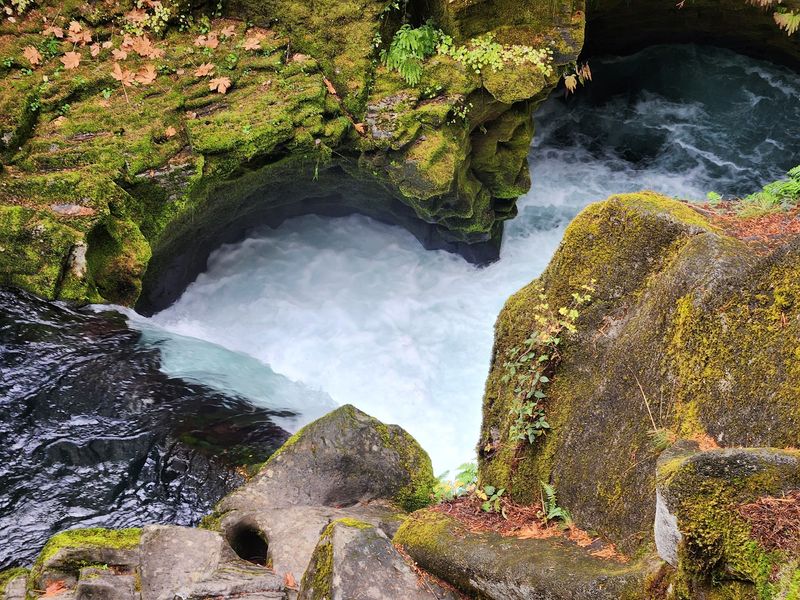
Water drops in two dramatic tiers, crashing through a basalt canyon that seems carved specifically for maximum impact. The short hike getting there barely prepares you for the reveal, trees parting suddenly to expose something far larger than expected.
Oregon has taller, more famous waterfalls getting all the attention in guidebooks. This one quietly outshines plenty of them once you’re actually standing there. Oregon locals often bring first time visitors here specifically to watch their reaction, knowing exactly how the scale surprises everyone.
Some places look unremarkable on paper. This waterfall exists purely to prove paper wrong.
The Wooden Pipe That Greets You First
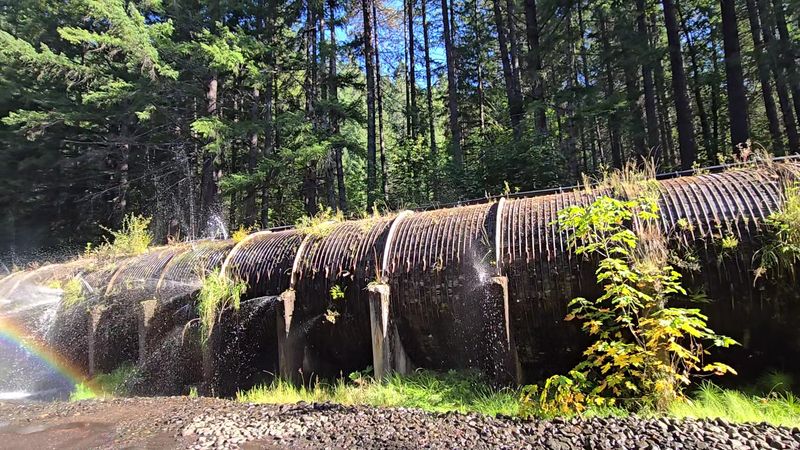
Nobody expects the parking lot to be interesting, and yet the very first thing visitors notice at Toketee is a giant wooden pipeline running alongside the trailhead. It is built from long wooden staves held together with metal bands, and it sprays fine jets of water from dozens of tiny gaps.
Visitors joke that it offers a free car wash, which is not far from the truth on a breezy day.
The pipe carries water for a hydroelectric project downstream, and it has been part of the landscape here for decades. Its mossy, dripping surface makes an oddly beautiful photo, especially when light catches the mist.
Take a minute here before heading down the trail. It sets the tone for the whole visit, a reminder that this corner of the Umpqua National Forest mixes wild scenery with quiet human history.
Parking is limited and fills quickly in summer, so arriving early helps. Restroom facilities exist near the lot, though they are basic, so plan accordingly before setting out.
A Half Mile Trail That Punches Above Its Weight
Short trails often feel like a warm-up, but this one earns attention from the first bend. The path runs roughly four tenths of a mile each way, curling above the North Umpqua River through old growth firs and cedars thick with moss.
Roots, rocks, and packed dirt make up much of the surface, so sturdy shoes beat sandals every time.
Along the way, small openings in the trees reveal glimpses of green water sliding through the gorge below. Several benches and flat spots invite a pause, and plenty of visitors linger there longer than they planned.
Round trip walking time usually lands somewhere between twenty and forty-five minutes, depending on how often the camera comes out. Families with young kids manage it regularly, though little ones need supervision near the drop-offs.
What makes the walk memorable is the constant sound of moving water. It builds gradually, and by the final stretch it turns into a low, steady roar that pulls you forward.
Those Famous Stairs, Nicknamed And Notorious
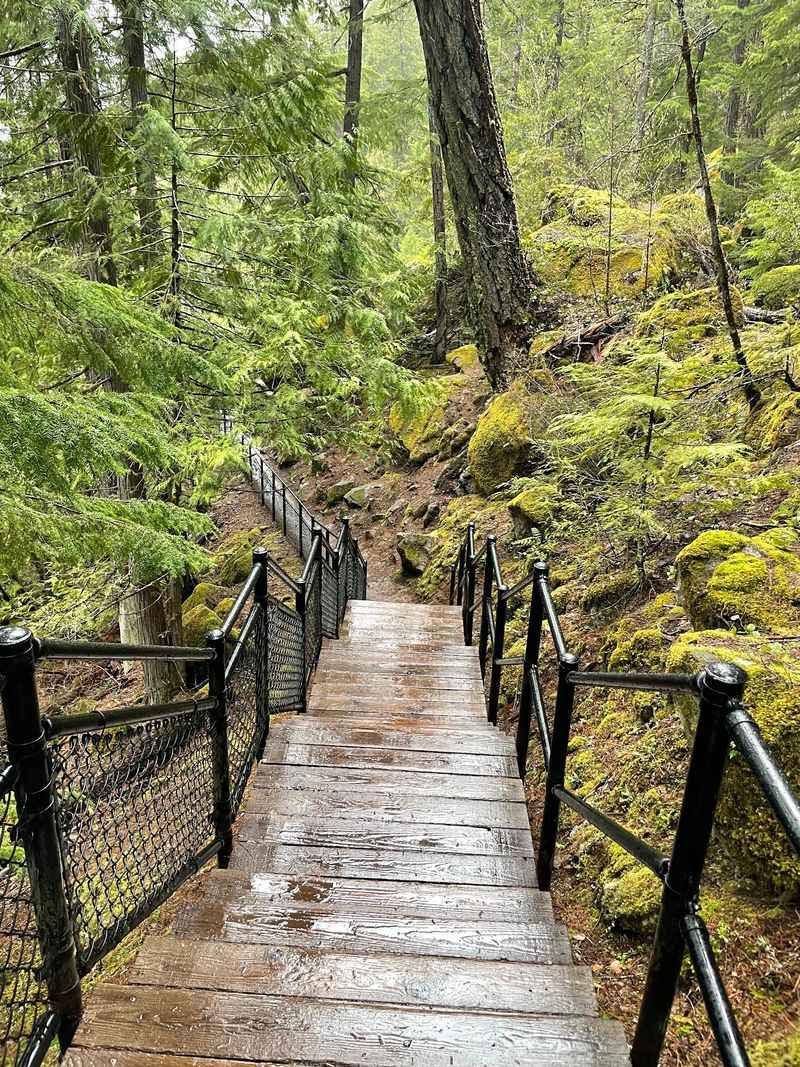
Regulars have given the staircase here a few colorful nicknames, and once you climb back up, you understand why. Roughly two hundred steps carry hikers down toward the viewing platform, built from a mix of wood planks and stone. Going down is easy. Coming back is where the legs speak up.
Handrails run along most sections, which helps a lot on damp mornings when the boards get slick. Forest crews have rebuilt and reinforced much of the structure in recent years, and the improvements show in how solid it feels underfoot.
Anyone with knee trouble should take breaks on the landings, and there is no shame in that. Plenty of people stop halfway to catch their breath and admire the ferns growing straight out of the canyon walls.
Trekking poles make the return climb noticeably easier. Bring water too, since the effort sneaks up on you even though the total distance stays modest.
Turquoise Water That Looks Almost Unreal
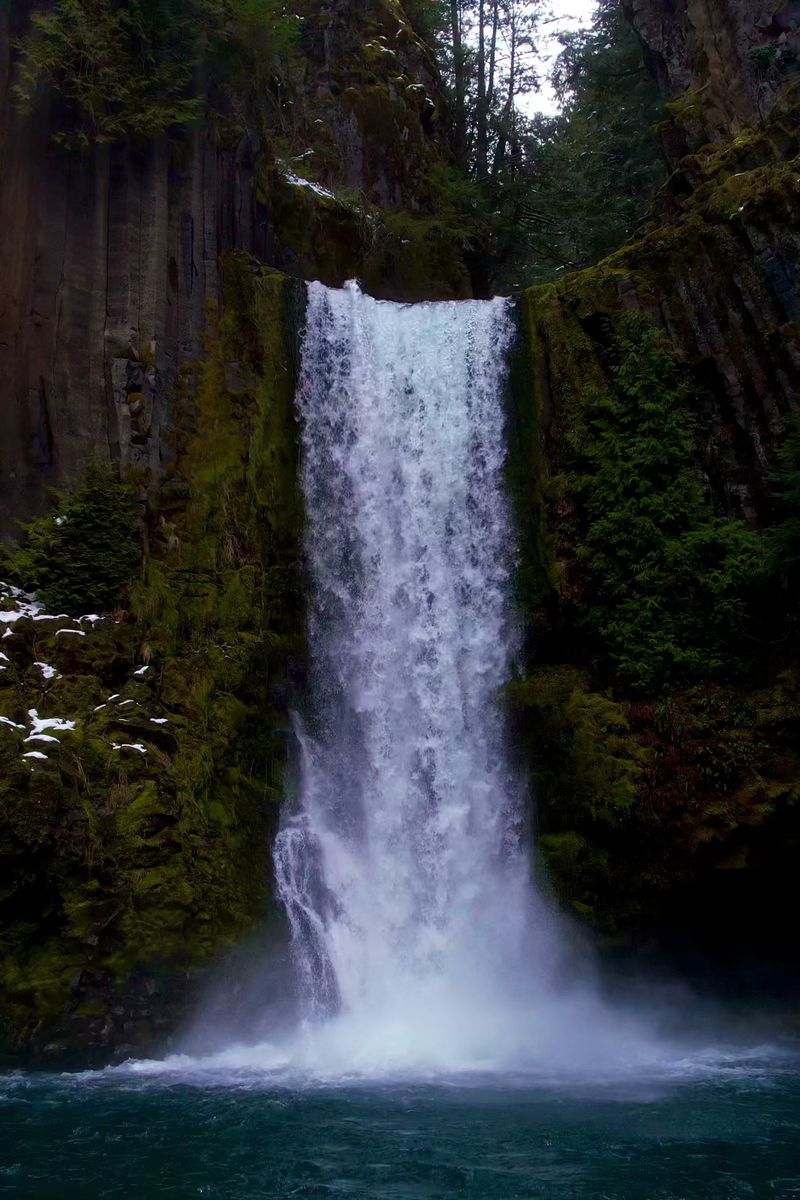
Color is what stops most people mid-sentence at the platform. The pool below the falls glows a bright turquoise blue, the kind of shade usually associated with tropical coastlines rather than a fir forest in southern Oregon. Photos rarely do it justice, though everyone tries anyway.
That vivid tone comes from a combination of depth, clean spring-fed water, and light bouncing off the pale rock beneath the surface. On sunny afternoons the effect intensifies, while overcast days shift the water toward a deep jade green. Both versions look wonderful, just different.
Upstream, the river carves through a narrow slot before spilling over, and the calm sections above the drop show the same striking clarity. Watching the water change character within a few dozen feet is part of the fun here.
Late spring often brings the strongest flow, thanks to snowmelt feeding the system. Summer visits reveal a gentler curtain of water and, in exchange, the clearest blue tones of the year.
Columnar Basalt Walls Shaped Like Organ Pipes
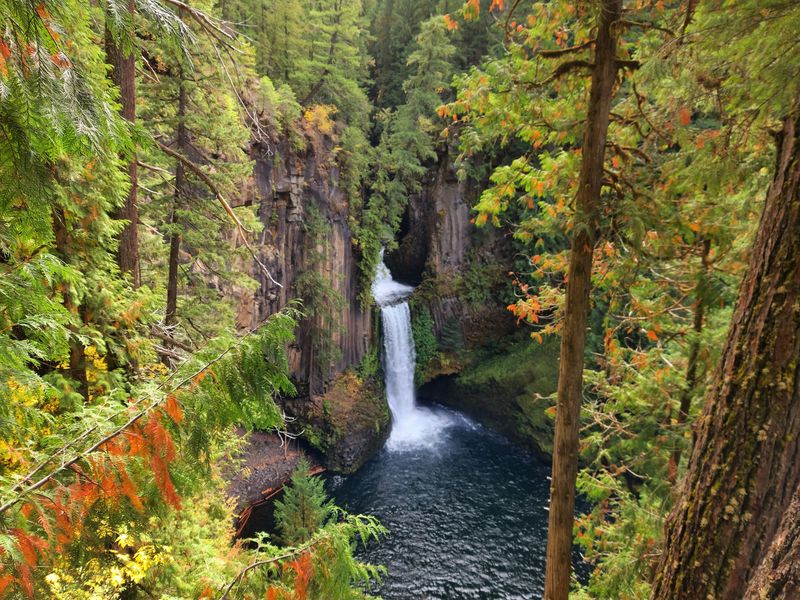
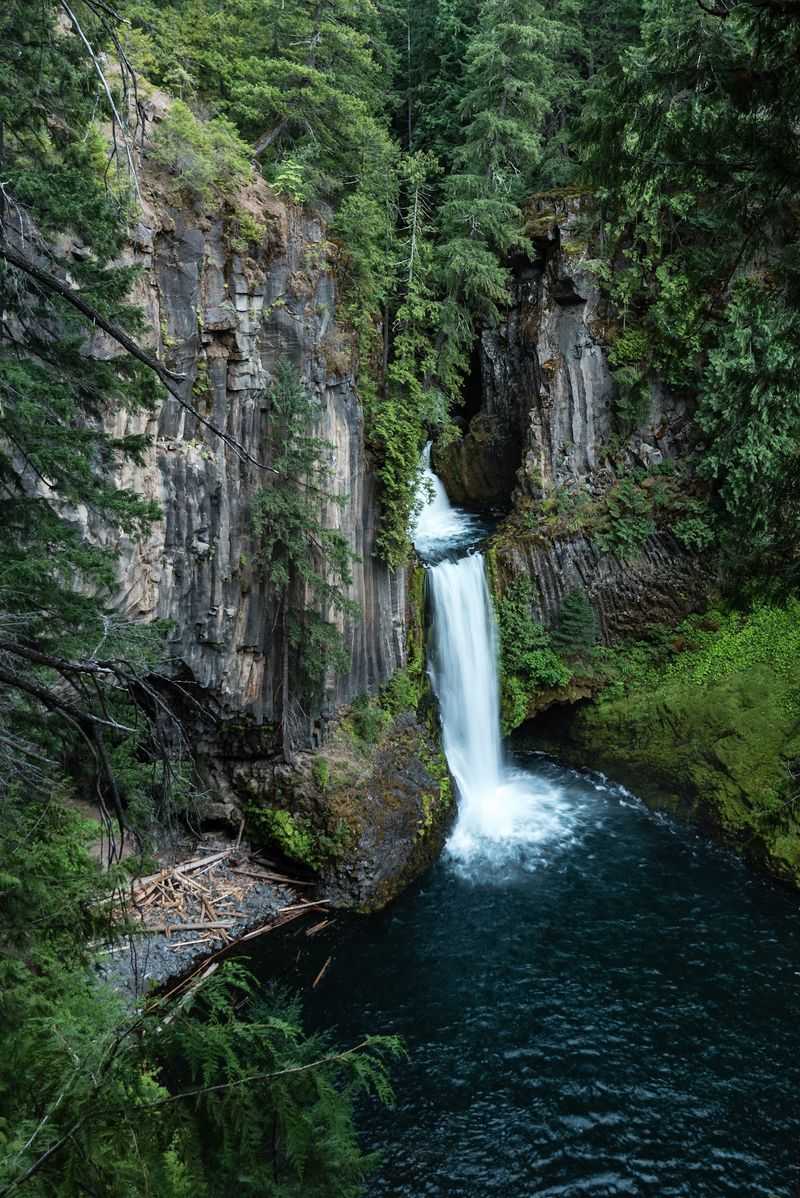
Geology fans get a real treat at this stop. The waterfall drops through an amphitheater of columnar basalt, tall hexagonal pillars formed when ancient lava flows cooled and cracked into neat vertical shapes. They stack up like a pipe organ carved by accident.
The lava that created these columns came from volcanic activity in the Cascades, and the North Umpqua River has spent thousands of years cutting through it. The result is a curved rock bowl that frames the falls almost perfectly.
Look closely and you will spot ferns and small shrubs rooted in the cracks, thriving on constant spray.
Toketee means something close to graceful in the Chinook trading language, a name that fits both the water and the stone around it. The upper tier drops around forty feet, then the lower tier plunges roughly eighty more into that blue pool.
Seeing the two tiers stacked inside the rock walls is what makes this waterfall unlike others in the region.
The Viewing Platform And What It Does Not Show
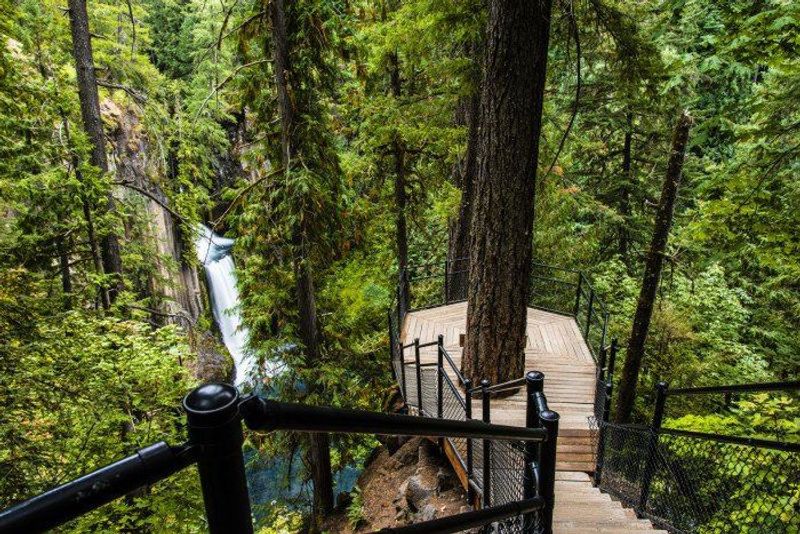
At the end of the stairs sits a compact wooden deck perched above the canyon, and it delivers the classic postcard angle. The view frames both tiers of the falls with basalt columns rising on either side. It is also smaller than many expect, so patience helps during busy hours.
Some visitors feel a little surprised that the trail ends here rather than at the water’s edge. The platform sits well above the pool, which means the scale reads differently than it does from below.
Still, the vantage point is genuinely excellent for photography, especially in morning light when shadows soften.
Give other groups room and take turns at the railing. Most people stay only a few minutes, so a good spot usually opens up quickly.
Bring a wide lens if you have one, since the falls and rock walls stretch beyond a standard phone frame. A tripod is unnecessary and awkward in the tight space.
Why The Scramble To The Base Is Not For Everyone
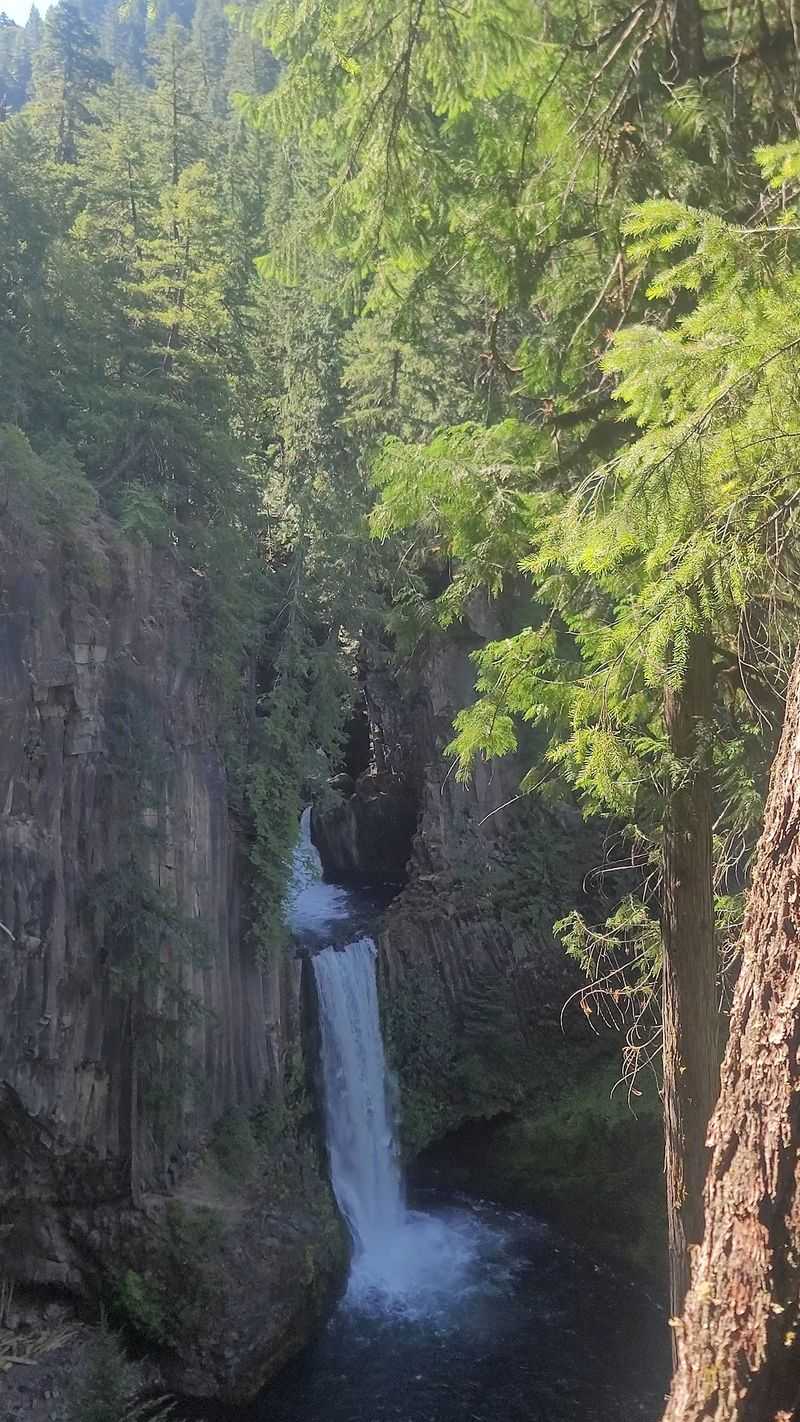
Word travels about an unofficial route down to the base, and it deserves an honest description. The descent involves a near-vertical dirt slope, loose rocks, and a few knotted ropes left by previous hikers. It is genuinely steep. Not a casual detour.
Those who make it down describe a completely different experience, standing at river level with mist on their faces and an unobstructed view of both tiers. The Forest Service does not maintain this route, and injuries happen here every season. Wet weather turns the slope treacherous.
Anyone considering it should have solid footwear with real tread, comfort with heights, and enough upper body strength for the climb back out. Going alone is a poor idea.
For most visitors, the platform view is the smart choice, and it is still spectacular. Skipping the scramble costs nothing in enjoyment, especially with children, pets, or anyone unsure about rough terrain along for the walk.
Seasons Change The Whole Personality Of This Place
Timing matters more here than the map suggests. Spring brings snowmelt and a thundering flow, with wildflowers scattered along the trail edges and the forest smelling like wet cedar. The staircase can be slippery then, so tread carefully.
Summer draws the biggest crowds, particularly midday, but the water reaches its most vivid blue and the trail dries out nicely. Arriving before mid-morning usually means a quieter platform and easier parking.
Autumn might be the sleeper favorite. Vine maples turn gold and red against the dark basalt, and the air carries that crisp bite that makes the climb back up feel easy.
Winter access depends entirely on road and snow conditions along Highway 138, and sections can close after storms. Checking forest conditions before driving out saves a wasted trip.
Whatever the season, mornings tend to offer the best light and the calmest atmosphere. Rain gear is never a bad addition in this part of Oregon.
Nearby Stops That Round Out The Drive
Making a day of it turns a quick stop into something better. The North Umpqua Highway strings together a whole series of waterfalls, and several sit within a short drive of this trailhead. Watson Falls, one of Oregon’s tallest, is only a few minutes away and requires a similarly brief walk.
Umpqua Hot Springs lies nearby too, reached by a rough road and a steep footpath. Crater Lake National Park sits within reasonable driving distance, which makes this a natural pairing for road trippers heading east.
Cell service disappears in stretches along the highway, so download maps in advance. Gas stations are sparse, and filling up in Roseburg or Glide before the drive is wise.
Pack snacks and water, since there are no shops at the trailhead itself. Dogs are welcome on the trail when leashed, and plenty of hikers bring them along for the short loop through the trees.
Small Details Worth Slowing Down For
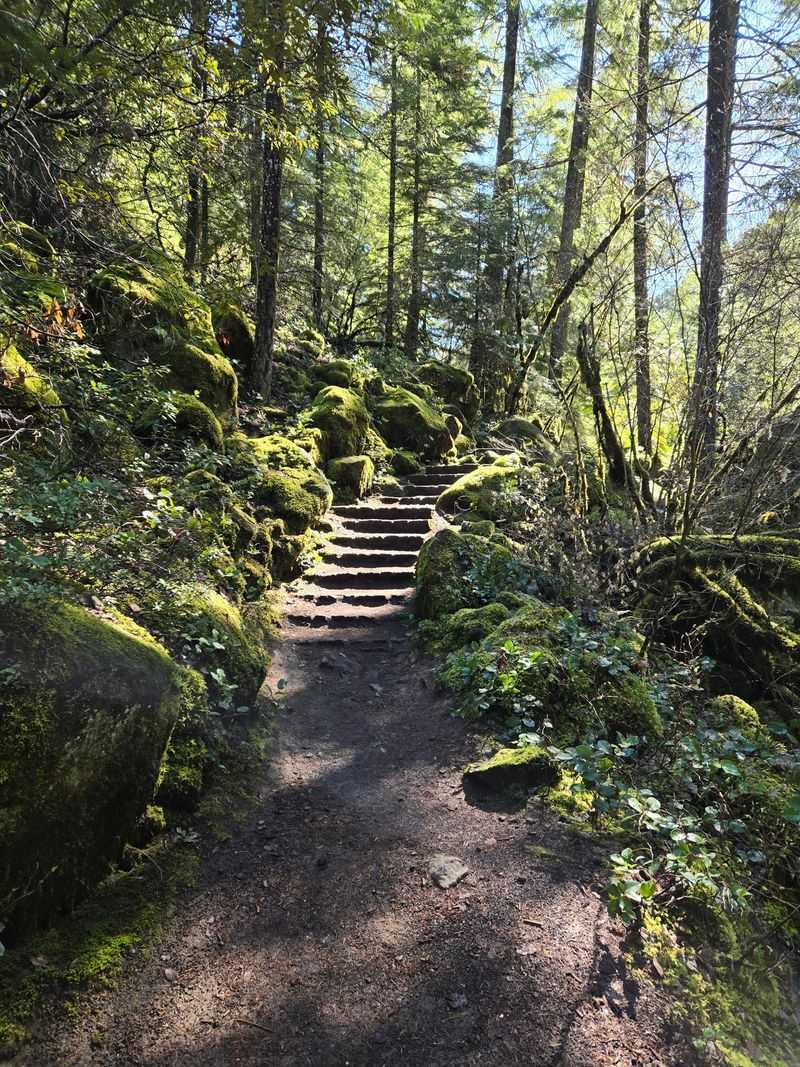
Rushing to the platform means missing half of what makes this walk special. Butterflies often drift along the sunlit sections of trail, and moss drapes over fallen logs in thick green blankets. Side channels of the river gurgle just off the path, easy to overlook if you keep your eyes forward.
A smaller cascade tucked away from the main route rewards anyone willing to pause and listen. Many hikers report spending more time there than at the headline attraction, simply because it feels private. Little pockets along the way work well for a snack break or a few quiet minutes.
Pack out everything you bring, stay on established paths, and let the ferns keep their footing. The forest recovers slowly from shortcuts.
You will find the falls at Idleyld Park, OR 97447, United States, managed by the Umpqua National Forest, and it rewards visitors who treat a tiny dot on the map like a destination worth their whole afternoon.
