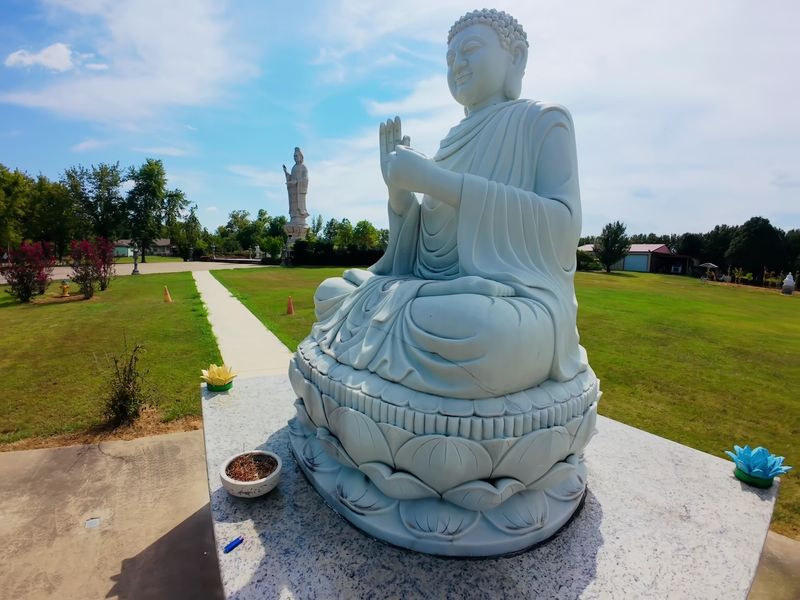
I pulled off a quiet road in Oklahoma expecting maybe five minutes of looking, and I stayed for well over an hour. A towering stone figure watched over rows of trees, little statues peeked from the shade, and nobody asked me for a dime.
It felt like finding a secret someone had left the gate open for on purpose. If you think you have seen everything your corner of the state offers, this spot might change your mind.
A Temple Garden on the Edge of Tulsa
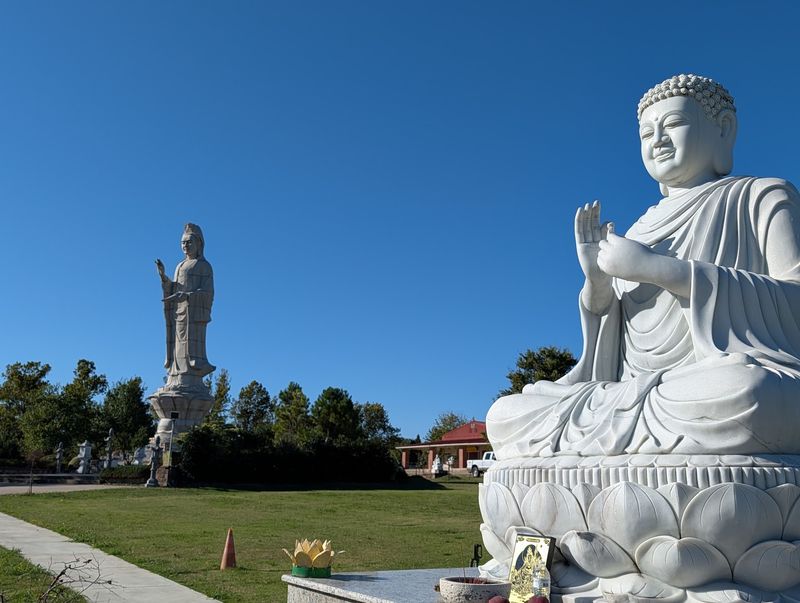
Picture a stretch of road on the east side of Tulsa, then suddenly a giant serene face rising over the treetops. That is Chua Tam-Bao, also known as Tam Bao Buddhist Temple, and its garden is open for anyone to stroll through without paying a cent.
The temple sits at 16933 E 21st St, Tulsa, OK 74134, on property that stretches across about 17 acres. Roughly 10 of those acres have been shaped into a peaceful, forest-like landscape.
Visitors often describe the place as a pocket of calm that feels nothing like the city around it.
You do not need to be Buddhist to visit. The grounds welcome people of every background, whether you come to meditate, take a slow walk, or simply admire some remarkable stonework.
Several longtime guests say they return again and again just to clear their heads.
Expect statues tucked among the trees, a small pond with a wooden bridge, and a sense of quiet that settles in quickly. It is a religious space first, so the mood leans respectful rather than touristy.
For families, retirees, and curious road-trippers, it makes an easy and memorable stop that costs nothing but a little gas and an open mind.
Roots Planted by Vietnamese Refugees in 1993
Back in 1993, a group of Vietnamese Buddhist refugees started something special on this patch of Oklahoma ground. They had built new lives far from home, and they wanted a place to practice their faith and gather as a community.
The beginnings were humble. One longtime visitor fondly recalls when the main house served as the altar, followed by a move into a barn alongside three statues.
Little by little, the community added more, including restrooms, extra land, and wave after wave of newly planted trees.
Fundraising had a personal touch too. That same visitor remembers an interest-free loan program where supporters could forgive their loan and have their name placed on a brick.
It is the kind of grassroots effort Oklahomans tend to admire, neighbors pitching in to build something lasting.
Today the result is a garden filled with more than 400 trees and dozens of meaningful statues. Knowing that history adds weight to every step you take on the paths.
You are not just visiting a pretty landscape, you are walking through decades of patience, gratitude, and hard work from a community that put down roots in Tulsa and kept growing.
Quan Am, the Giant of Compassion
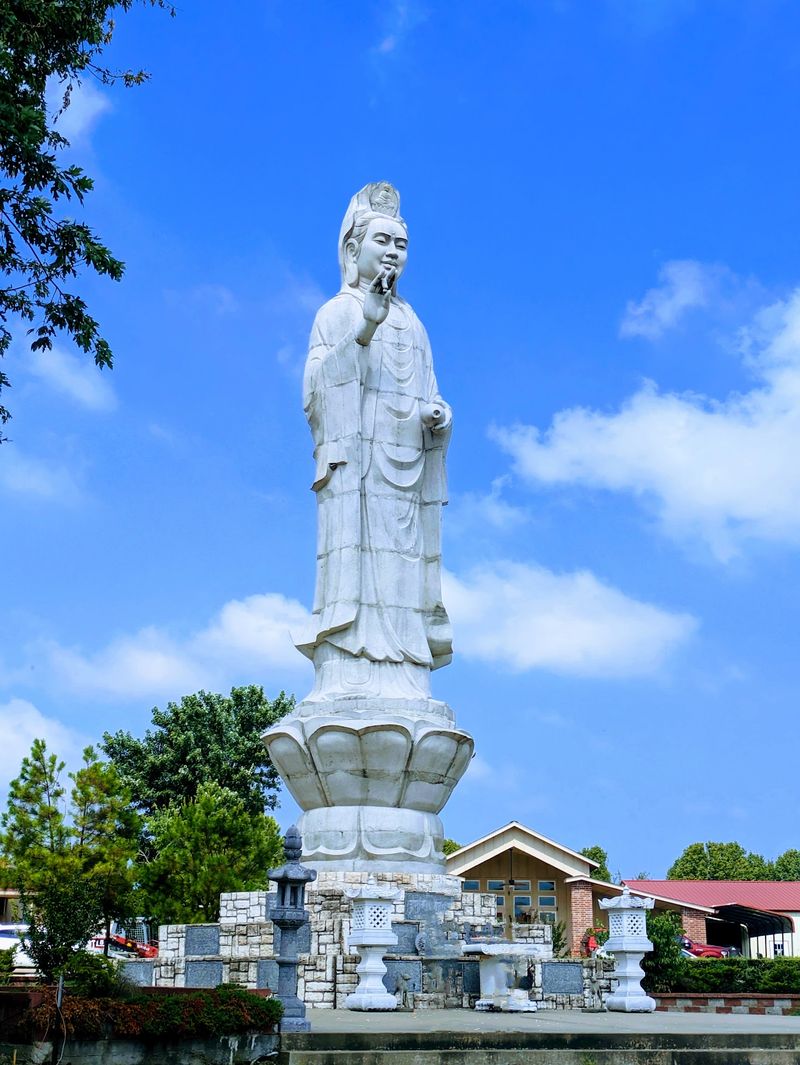
Two hundred tons of granite. Let that number sink in for a second, because it is the backbone of the most striking sight on the property.
Standing around 57 feet tall, the statue of Quan Am, also called Kuan Yin, is said to be the tallest Buddhist deity statue in America. Sources list its height a little differently, somewhere between nearly 50 and 59 feet, but nobody argues about the impact.
Its weight is reported at about 400,000 pounds.
Quan Am represents mercy, compassion, kindness, and love. The statue went up around 2010 and 2011, and it carries a heartfelt message.
Part of the reason the Vietnamese community built it was to say thank you to the United States for welcoming them.
Visitors mention spotting the figure from the road, almost as if it is inviting them to pull in. Up close, the scale feels gentle rather than overwhelming.
Bring a camera, but also take a minute to just stand there and look up. Please note the posted signs asking guests not to climb on the statue, a simple request that helps keep this treasure beautiful for everyone who follows.
Eighteen Arahan Along the Paths
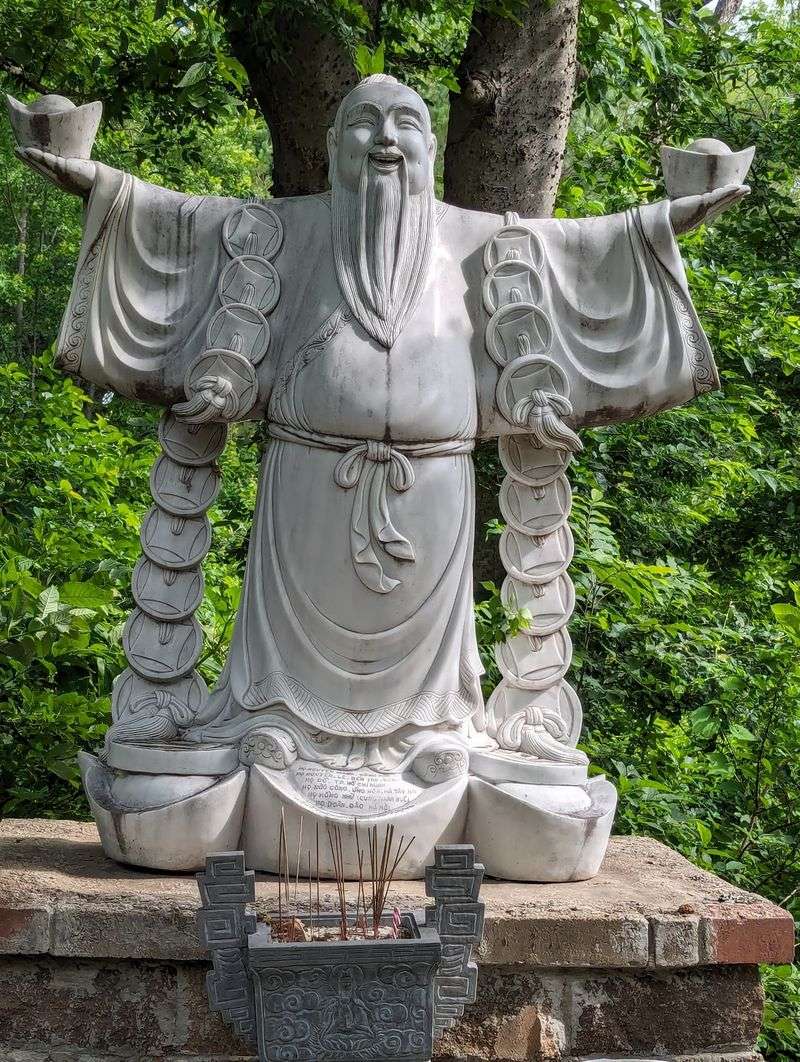
Count them as you go and you will land on eighteen. Lined up across the grounds are statues of the arahan, figures who stand for the virtues Buddhists hope to reach in their own lives.
Each one has its own personality. Some look calm and thoughtful, others seem almost playful, and kids tend to enjoy comparing their faces and poses.
It turns a simple walk into a bit of a treasure hunt.
The arahan are tied to history and teaching, so they are more than decoration. They are reminders of qualities like patience and wisdom, the sort of traits most of us could use a little more of on a busy Monday.
Beyond these eighteen, you will find many other forms of the Buddha scattered throughout the garden. One recent visitor described discovering all sorts of different statues and versions of the Buddha while wandering.
The temple also has plans to add more statues and sacred pieces over time, so return visits may reveal something new.
Take it slowly here. Rushing past means missing the small details carved into each figure, and those details are where the real charm lives.
Over 400 Trees and a Forest Feel
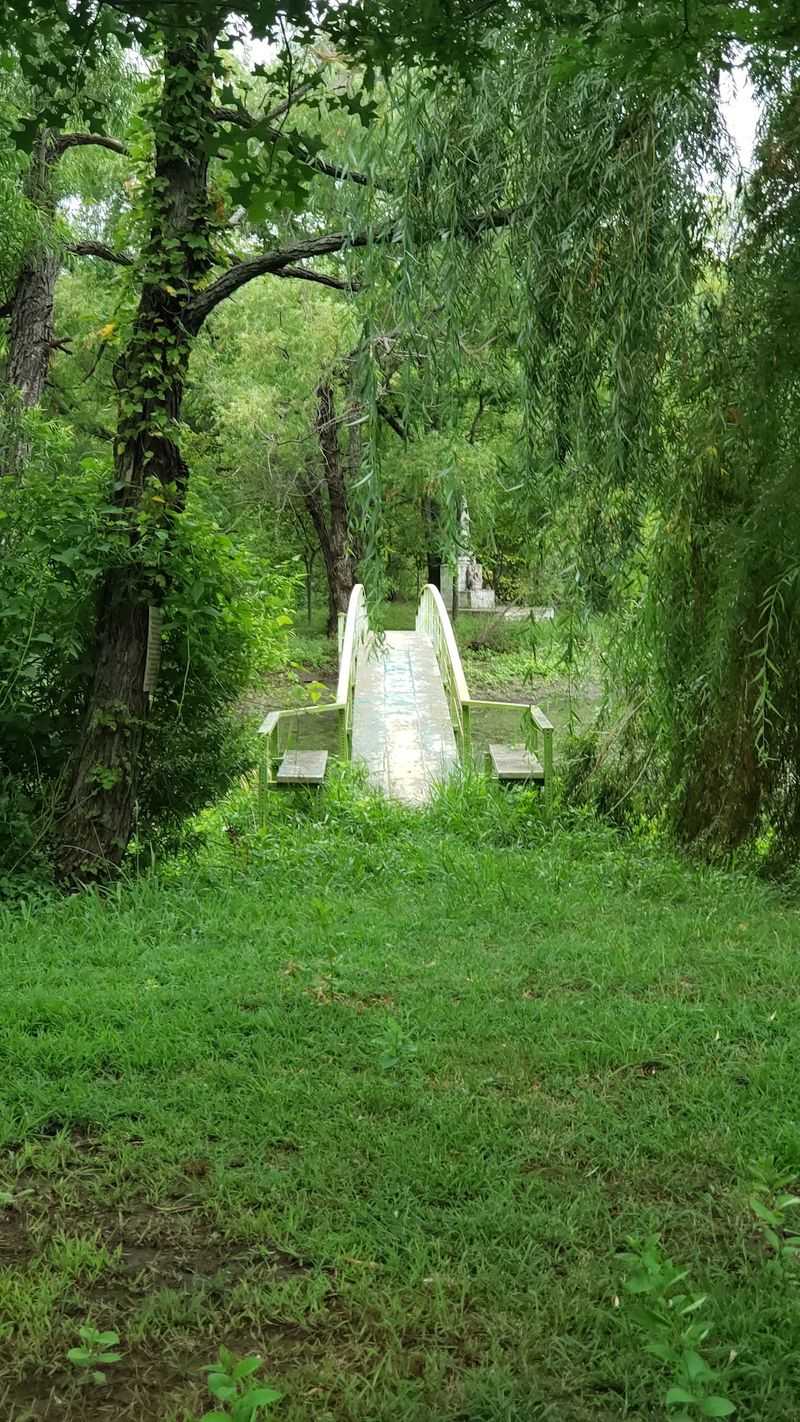
Shade is a big deal in Oklahoma, and this garden delivers plenty of it. More than 400 trees of different kinds fill the cultivated acres, giving the grounds the feel of a quiet woodland.
Walking under the canopy, the noise of the city seems to fade. One visitor said it felt like it was not in Tulsa or even close.
Another called it a hidden spot in the city that takes you right out of the city, which sums it up nicely.
The trees did not appear overnight. Community members planted them over the years, adding more as the property grew.
That slow, steady effort shows in how natural the landscape feels now.
Statues peek out between trunks and branches, so part of the fun is turning a corner and finding another figure resting in the green. In spring, fresh leaves brighten the paths.
Fall can bring warmer colors, and even winter has a stark, peaceful beauty.
Summer heat can still be intense, though, so plan morning or early evening walks during the hottest months. Bring water, wear comfy shoes, and let the trees do their job of cooling you down.
The Pond, the Bridge, and the Little Island
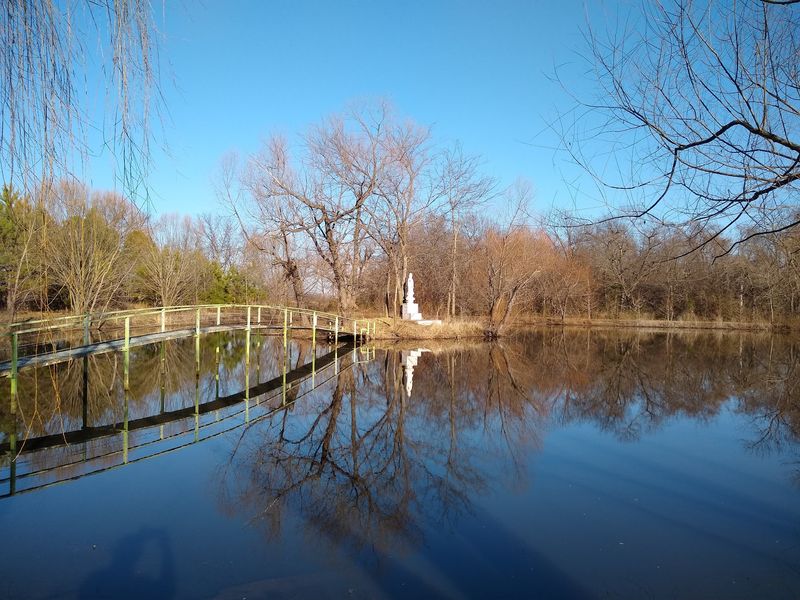
Water has a way of slowing everyone down. Near the back of the grounds, a small pond adds a soft, reflective spot to the garden.
A wooden bridge crosses toward an island, and visitors frequently mention it as a favorite feature. It is the sort of scene that makes you want to sit and watch the surface ripple for a while.
Families with little ones will want to keep hands held near the edge.
Heads up, though. One recent visitor shared that the bridge to the island was closed for repairs during their trip, with hopes it would reopen soon.
Conditions can change, so do not be surprised if a section is roped off when you arrive.
Even with the bridge closed, the pond area remains lovely to view from the shore. The reflections of trees and sky create a nice photo spot, especially in gentle morning light.
Some guests use this corner as a meditation space, finding the water calming. Others simply rest for a few minutes before heading back along the paths.
However you spend your time here, it is easily one of the most peaceful pockets on the whole property.
Meditation, Sunday Services, and Open Doors
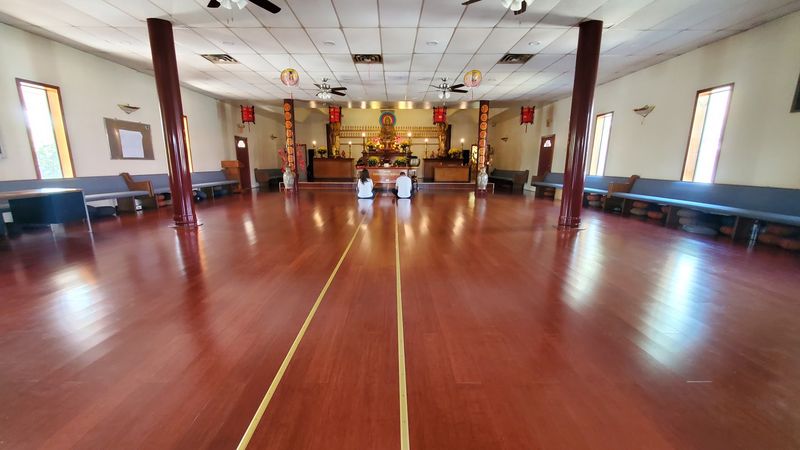
Curious about meditation but nervous to try? The folks here seem to make it easy.
A regular visitor shared that there is an English language service on Sundays at 9 AM, and anyone interested can simply show up. Another newcomer said they enjoyed the meditation even more than expected and felt everyone was kind beyond the usual politeness.
After a couple of Sundays, they felt like they had found a home.
The temple is cared for by an abbot and nuns, according to visitors, and their attention shows across the grounds. Sources note that the temple doors often remain unlocked for those who want to meditate or chant.
That said, experiences vary. Some guests found buildings closed during their visit, and one noted that buildings are generally off limits unless a service is happening.
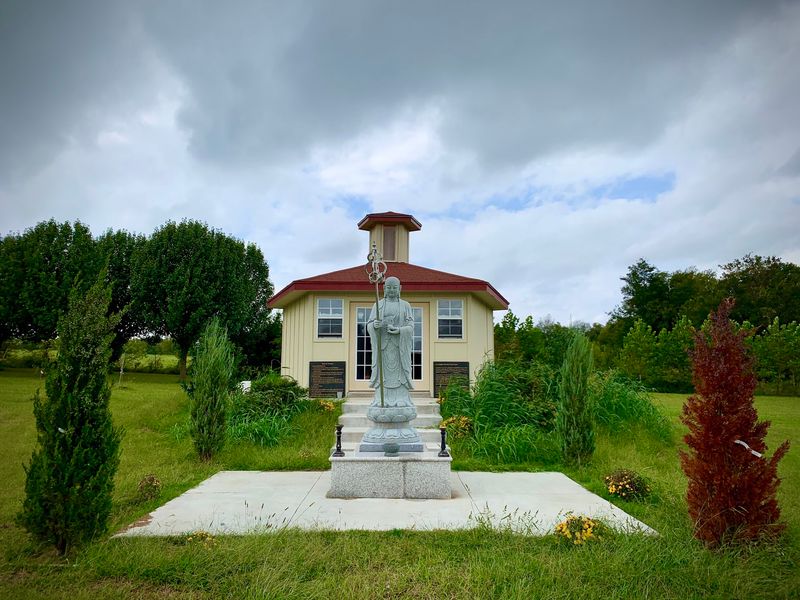
A meditation structure on the grounds was closed during another recent trip.
The safest plan is to treat the garden as your main destination and consider any indoor time a bonus. If joining a service matters to you, calling ahead at 918-438-0714 or checking ducquanam.com may help you confirm the schedule before making the drive.
Respectful Etiquette for First-Time Guests
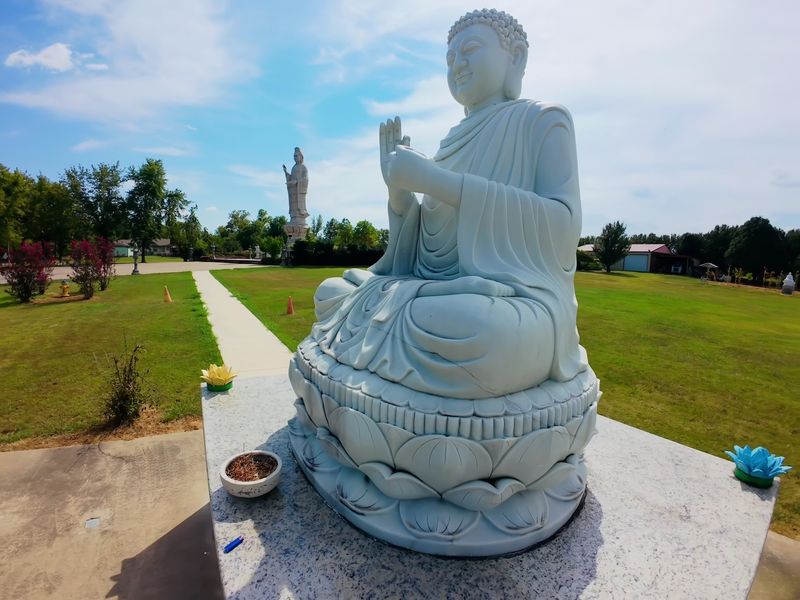
Good manners go a long way, and they matter even more on sacred ground. Signs around the property remind guests that this is a private religious space.
The requests are simple. Do not climb on the statues, be considerate, and keep the peace.
Sadly, some visitors have noticed others ignoring those signs, which can damage the stonework and spoil the calm for everyone else.
A few easy habits help:
Speak softly, especially near anyone meditating. Keep kids close and explain that the statues are special, not playground equipment.
Stay on paths and avoid touching delicate pieces.
Visitors often appreciate that nobody hovers or pressures them while they explore. One longtime guest loved that no one talks to you as you walk, leaving you free to think.
That freedom works best when everyone respects it.
Dress comfortably but modestly, and if a service is underway, observe quietly or join in with an open heart. Pick up any trash you bring.
The temple community shares this land generously with the public, and a little courtesy is the best way to say thanks. Treat it like visiting a friend’s home and you will be just fine.
Quiet Moods, Honest Quirks, and a Friendly Dog
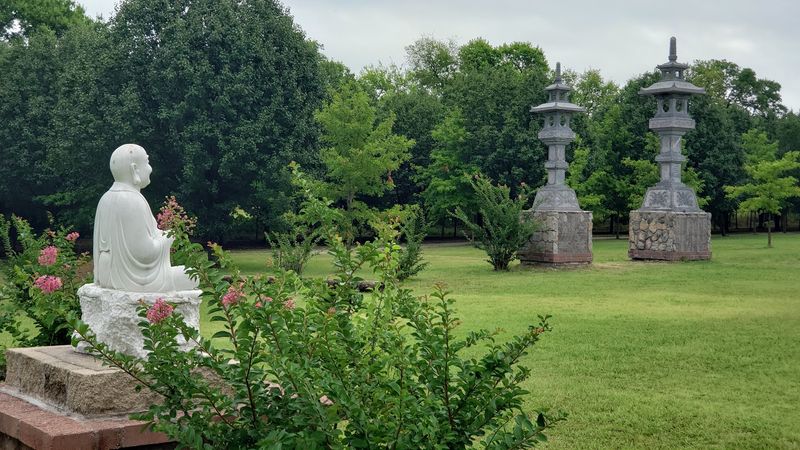
Every place has its quirks, and part of the charm here is how unpolished it can feel. This is a working community temple, not a manicured theme park.
Some visitors have noted lumber, poles, old displays, and dirt piles around parts of the property, especially near the main statue a few years back. Others found nobody on site to chat with.
Still, nearly everyone agrees the overall setting stays beautiful and serene.
Then there is Lucky. One guest described a dog by that name as a lovely companion on the grounds who would lead you to all the good spots.
No promises he will greet you, but it is a sweet detail.
Neighbors are interesting too. A Hindu temple sits right next door, separated by a fence, which one visitor playfully grumbled about.
So who will love this? Folks seeking stillness, families wanting a free outing, photographers, and anyone curious about other cultures.
One guest called it one of the coolest places they had visited in a while. If you need guided tours and gift shops, look elsewhere.
If you want quiet and real character, you are in the right place.
Hours, Cost, and Getting There
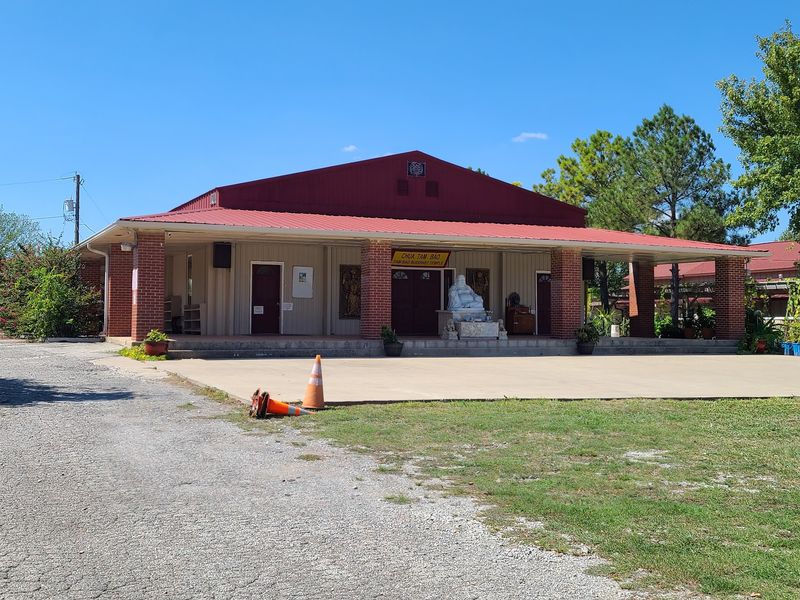
Free. That is the best number in this whole article, and it applies to wandering the garden any day of the week.
Listed hours run 8 AM to 7 PM daily, Monday through Sunday. Visitors generally describe the grounds as open during daytime hours, though one guest arrived during listed times and found things locked.
Gates and buildings may vary, so a quick call to 918-438-0714 can save frustration.
Find the temple at 16933 E 21st St, Tulsa, OK 74134, out on the eastern side of town. Coming from downtown Tulsa, plan for a short drive.
From Oklahoma City, it is roughly a two-hour trip, an easy day outing when paired with lunch somewhere along the way.
Watch for that giant statue rising over the trees, a pretty reliable landmark as you approach.
Planning tips:
Spring and fall offer the most comfortable walking weather. Summer afternoons can be hot, and Oklahoma wind and storm season deserve a check of the forecast.
Bring water, sunscreen, and good shoes. The website ducquanam.com may share updates, although some content may be in Vietnamese.
Allow at least an hour to explore without rushing.
Why This Garden Deserves a Spot on Your List
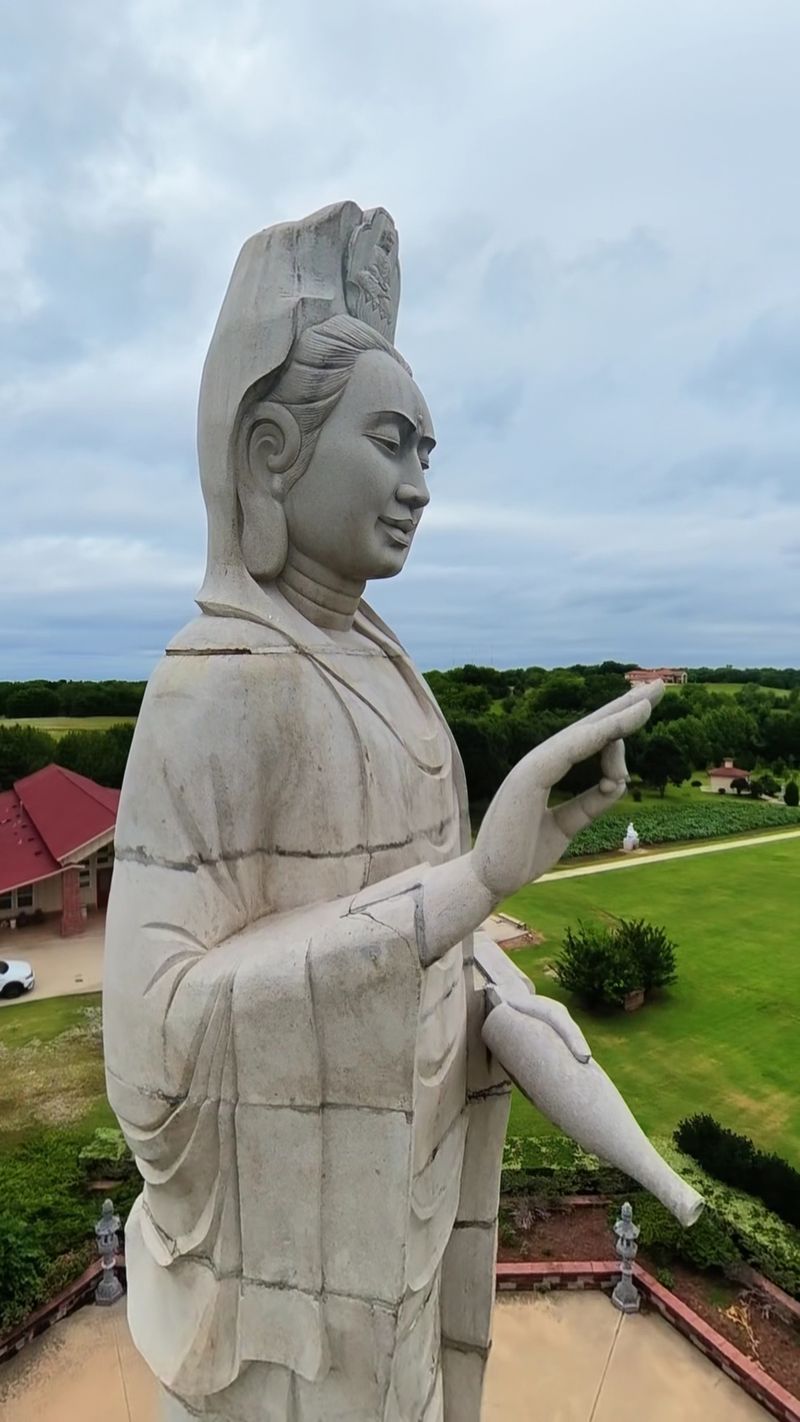
Some outings cost a fortune and leave you tired. This one costs nothing and often leaves people lighter than when they arrived.
Chua Tam-Bao offers a rare mix for Oklahoma: a 57-foot symbol of compassion, eighteen arahan statues, a pond with a wooden bridge, and hundreds of trees planted by a community that built something from scratch. It is living culture, shared openly with neighbors of every faith.
Is it perfect? Not quite.
Buildings may be closed, repairs happen, and you might not meet a single person. Yet those small hiccups barely dent the experience for most visitors, who keep describing it as a gift to Tulsa.
One guest put it simply, saying they always leave feeling peaceful. That feeling is hard to find, and even harder to find for free.
So the next time you need a quiet afternoon, a fresh family adventure, or a reason to show out-of-town relatives something unexpected, point the car toward East 21st Street. Walk slowly, follow the rules, and look up at that towering face of kindness.
Chances are you will be planning a return trip before you even reach the parking lot.
