Illinois has some of the most stunning buildings in America. From soaring skyscrapers to historic homes, these structures showcase incredible design and engineering. Whether you love modern glass towers or classic stone buildings, Illinois offers architectural wonders that will leave you speechless.
1. Willis Tower: Chicago’s Sky-High Icon
Standing tall at 1,450 feet, this Chicago landmark held the title of world’s tallest building for nearly 25 years after its 1973 completion. Originally called the Sears Tower, it features distinctive bundled tube construction that revolutionized skyscraper design.
The observation deck, Skydeck Chicago, features glass boxes called The Ledge that extend 4.3 feet from the building, allowing brave visitors to stand suspended above the city with nothing but transparent glass beneath their feet.
Each year, over 1.7 million visitors experience this architectural giant’s breathtaking views spanning four states.
2. Frank Lloyd Wright’s Robie House: Prairie Style Perfection
Nestled in Chicago’s Hyde Park neighborhood, the Robie House represents the pinnacle of Frank Lloyd Wright’s Prairie School architecture. Completed in 1910, this residential masterpiece features dramatic horizontal lines, overhanging eaves, and stunning art glass windows that create a harmonious connection with the surrounding landscape.
Wright designed everything in the home, from furniture to light fixtures, creating a completely integrated living environment. The open floor plan was revolutionary for its time, eliminating traditional room divisions.
The Robie House narrowly escaped demolition twice before being designated a National Historic Landmark in 1963.
3. Marina City: The Corncob Towers
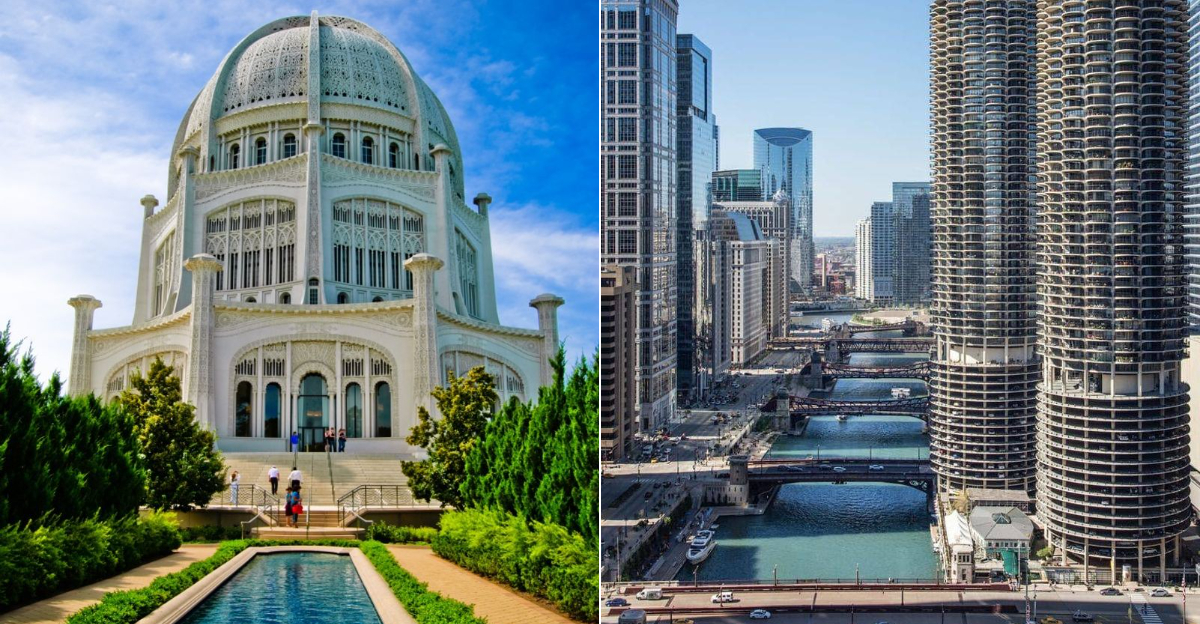
Rising from the Chicago River’s edge, Marina City’s twin 60-story towers resemble giant corncobs with their unique circular balconies. Completed in 1967 by architect Bertrand Goldberg, these mixed-use structures pioneered the concept of urban residential living when downtown areas faced population decline.
Each tower contains parking for 450 cars in the lower floors, creating a fascinating spiral pattern visible from the street. Above the parking levels, apartments feature pie-shaped rooms and semicircular balconies that offer panoramic city views.
Marina City appeared on the cover of Wilco’s album “Yankee Hotel Foxtrot” and starred in numerous films, including a famous car chase in “The Hunter.”
4. Baha’i House of Worship: Lacy Dome of Light
Gleaming white against the sky in Wilmette, this temple looks like it’s made of delicate lace. Completed in 1953 after decades of construction, it remains the oldest surviving Baha’i House of Worship worldwide and the only one in North America.
The dome features intricate concrete latticework that allows sunlight to filter through, creating an ethereal interior atmosphere. Nine entrances symbolize major world religions, reflecting the Baha’i belief in unity.
Gardens with fountains surround the temple, forming a peaceful sanctuary. The innovative quartz-embedded concrete gives the building its distinctive brilliant white appearance that has withstood decades of harsh Illinois weather.
5. Aqua Tower: Rippling Glass Wonder
Architect Jeanne Gang created this rippling masterpiece that seems to flow like water frozen in time. Completed in 2009, Aqua’s undulating balconies create a stunning visual effect while serving practical purposes – they break up wind forces and provide shade for the floors below.
The 82-story mixed-use skyscraper stands out among Chicago’s rectangular towers with its organic, sculptural quality. No two floor plans are identical, giving residents unique living spaces.
Gang’s design made history as the tallest building designed by a woman at the time of its completion. The structure’s flowing appearance changes dramatically depending on viewing angle and lighting conditions.
6. Dana-Thomas House: Wright’s Springfield Gem
Hidden in downtown Springfield sits one of Frank Lloyd Wright’s most complete and best-preserved early works. Built in 1904 for socialite Susan Lawrence Dana, this 12,000-square-foot house contains more than 100 pieces of original Wright-designed furniture, art glass, and light fixtures.
The sprawling 35-room mansion features 250 art glass doors, windows, and light panels that create a kaleidoscope of color throughout the interior. Wright’s signature geometric designs appear everywhere, from built-in cabinetry to intricate ceiling details.
Unlike many of Wright’s later homes, the Dana-Thomas House includes large entertainment spaces reflecting its original owner’s love of hosting elaborate social gatherings.
7. Farnsworth House: Floating Glass Pavilion
Architect Ludwig Mies van der Rohe created this revolutionary glass house along the Fox River in Plano. Completed in 1951, the weekend retreat consists of a single glass-enclosed space elevated above the ground on steel columns, creating the illusion that it’s floating above the meadow.
Floor-to-ceiling glass walls blur the boundary between interior and exterior, making nature the home’s primary decoration. The minimalist design features just a few carefully placed interior partitions that never touch the ceiling or exterior walls.
Despite its simple appearance, the house incorporates complex engineering solutions to handle seasonal flooding from the nearby river while maintaining its ethereal floating quality.
8. Tribune Tower: Gothic Skyscraper With Global Fragments
Looking like a medieval cathedral stretched toward the sky, this Neo-Gothic skyscraper on Michigan Avenue was completed in 1925 after winning an international design competition. The Tribune Tower’s distinctive buttresses and ornate crown make it instantly recognizable in Chicago’s skyline.
What makes this building truly unique are the 150+ fragments from famous structures worldwide embedded in its exterior walls. You’ll find pieces of the Great Wall of China, the Pyramids, the Taj Mahal, and even the World Trade Center incorporated into the facade.
The lobby features inscribed quotes about freedom of the press, reflecting the building’s original purpose as headquarters for the Chicago Tribune newspaper.
9. Inland Steel Building: Midcentury Modern Masterpiece
Gleaming with stainless steel and glass, this 1958 skyscraper was Chicago’s first post-World War II downtown building. Architects Skidmore, Owings & Merrill created a revolutionary design by placing all structural columns on the building’s perimeter and positioning elevators in a separate tower.
This innovative approach created completely column-free interior floors – a game-changer for office design. The exterior’s brushed stainless steel panels reflect changing light conditions throughout the day, giving the building a dynamic appearance.
The Inland Steel Building’s honest expression of materials and structure made it an icon of midcentury modernism and earned it a spot on the National Register of Historic Places.
10. Glessner House: Richardson Romanesque Fortress
Standing in stark contrast to its neighbors since 1887, this fortress-like mansion challenged Victorian conventions with its radical design. Architect Henry Hobson Richardson created a revolutionary home that turns its back to the street, with few windows facing outward and a private courtyard hidden within.
The exterior’s massive granite blocks and rounded arches create a medieval castle appearance that shocked Chicago society. Inside, however, the home features surprisingly modern, open spaces filled with natural light from the courtyard-facing windows.
The Glessner House pioneered the idea of designing from the inside out, prioritizing family comfort over street-facing formality – a concept that would influence residential architecture for generations.
Dear Reader: This page may contain affiliate links which may earn a commission if you click through and make a purchase. Our independent journalism is not influenced by any advertiser or commercial initiative unless it is clearly marked as sponsored content. As travel products change, please be sure to reconfirm all details and stay up to date with current events to ensure a safe and successful trip.
