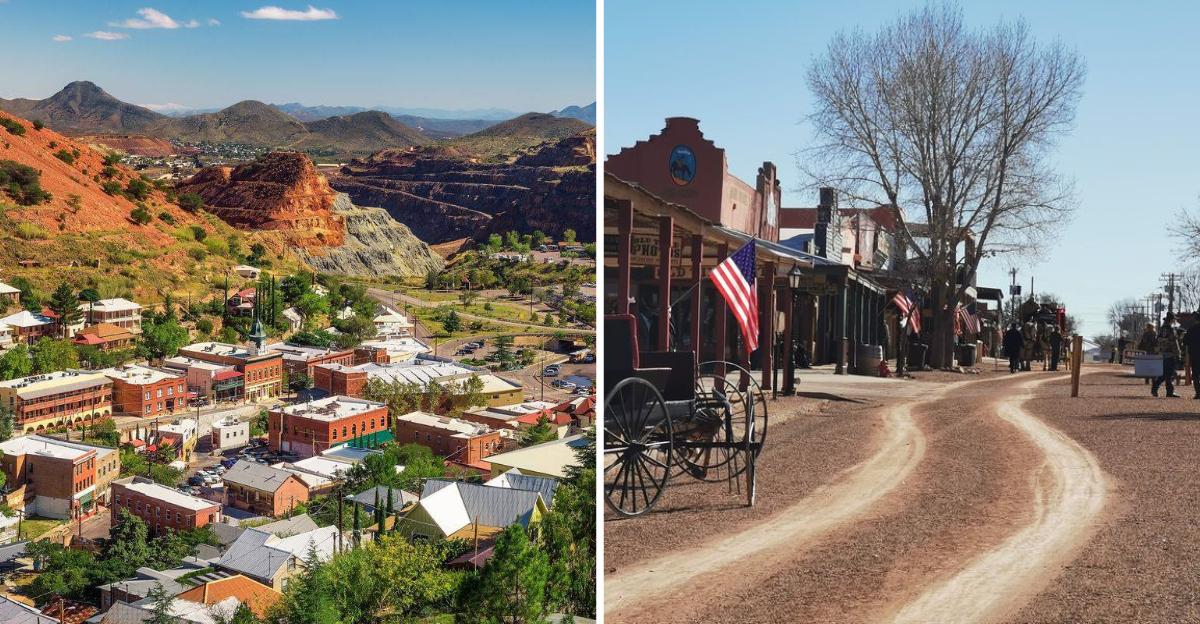
That first drive across Arizona surprised me, mostly because the scenery kept changing every hour or two. One minute I was surrounded by saguaros and sunbaked rock, and the next I was under tall pines with cool air coming through the windows.
What I love most is how many of the best moments cost almost nothing, just a walk down an old main street or a quiet hour beside a mountain lake. These ten towns stretch from the southern grasslands up to the red rock country and the canyon lands near the Utah line.
Each one holds onto its own story, whether it grew from copper, cattle, or the old highway that once carried families west. I spent a morning in one town watching a blacksmith work in an open-air forge, and an afternoon in another floating on a lake so still it reflected the peaks like glass.
The state has a way of rewarding the curious traveler who is willing to slow down and look. Pack a cooler, keep the tank full, and let the road show you a side of the Southwest that feels honest and unhurried.
1. Globe, Copper Roots and Mountain Shadows
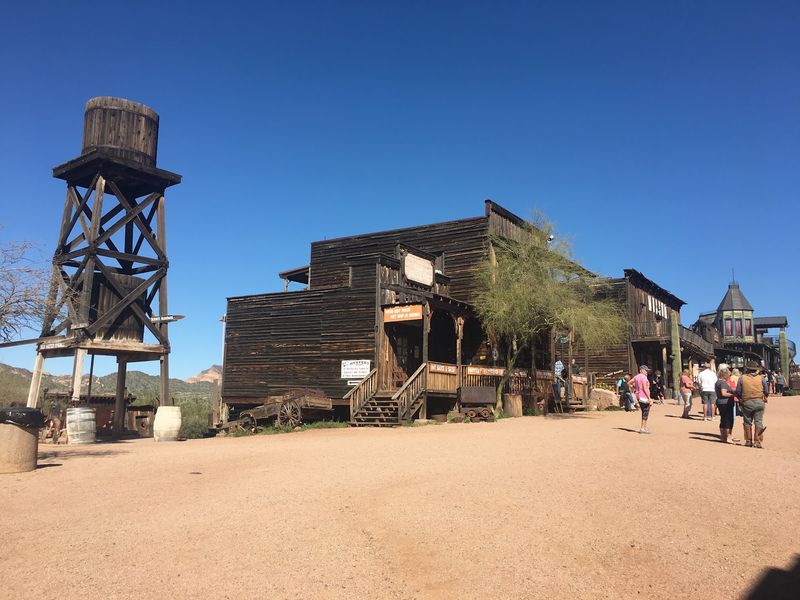
My first hour here was spent doing nothing but looking up at old brick facades, and honestly that was enough. The desert plains give way to the foothills of the Pinal Mountains, so the air feels drier down low and softer up high.
Gila County built this place on copper, and the evidence sits everywhere you turn. The old Mine Rescue Service Station now holds the county historical museum, packed with mining tools and stories of the Native peoples who came long before.
Besh Ba Gowah Archaeological Park was the surprise for me, with its partly rebuilt Salado pueblo rooms and quiet botanical gardens tucked alongside.
Walkers should try the Stairizona Trail, a route that threads through neighborhoods using old public staircases and passes murals along the way. Old Dominion Historic Mine Park adds dirt paths winding past rusted machinery left behind.
Drive out toward the Salt River Canyon Scenic Route for cliffs that drop away without warning. Roosevelt Lake sits nearby too, wide and calm, good for a slow afternoon.
Folks here seem genuinely fond of both their history and their mountains, and that mix gives the town its steady, unhurried feel.
2. Show Low, Pine Air in the White Mountains
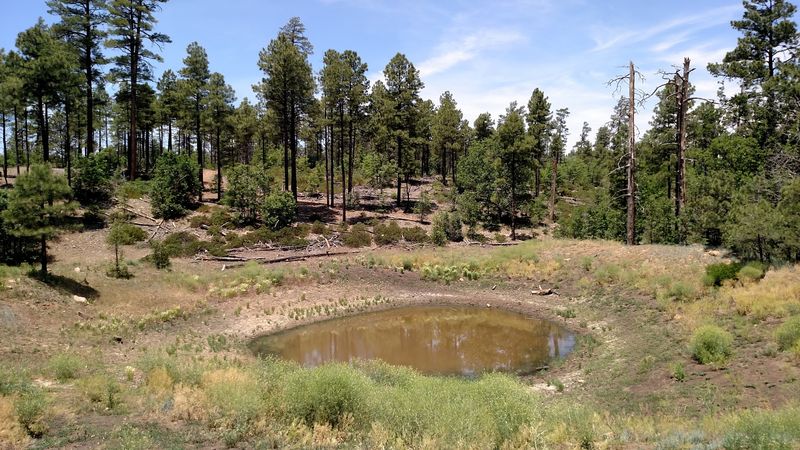
Rolling up into the White Mountains, I had to shut off the air conditioning and crack a window instead. The temperature drop is real, and after miles of hot lowland driving it feels like a reward.
Pines stand thick around town, and water shows up more often than you would expect in Arizona. Fool Hollow Lake, Show Low Lake, and Rainbow Lake all sit close enough to visit in a single day, each one good for fishing or simply sitting on the bank doing very little.
Trail options run from short to serious. The Show Low Bluff Trail gives a quick stretch of the legs, while the wider White Mountain Trail System and the paths along the Mogollon Rim open up longer hikes, bike rides, and horseback routes.
Apache-Sitgreaves National Forest wraps around all of it, millions of acres of woods where elk and deer wander through without much concern for visitors.
Downtown keeps a small-town rhythm, with shops and cafes where conversation comes easily. Every season here brings something different, which is why people keep coming back year after year.
3. Prescott, A Mile High and Full of Stories
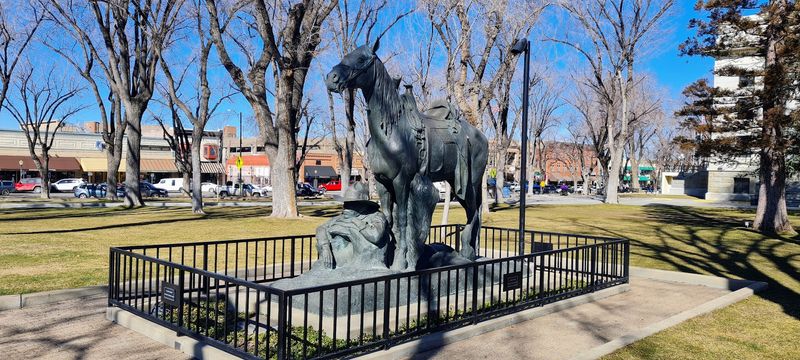
Something about the smell of ponderosa pine mixed with old brick keeps pulling me back to this one. Locals call it Everybody’s Hometown, and after an afternoon on the plaza I understood why.
Sitting a mile above sea level, the town gets four honest seasons, which still feels novel in a state most people picture as pure desert. Granite peaks, clear creeks, and open meadows ring the edges of it all.
Downtown holds a stretch of historic buildings now filled with boutiques, galleries, and bookstores worth losing an hour inside. The granite courthouse anchors the center, shaded by American elms and wide lawns where people spread out blankets.
Sharlot Hall Museum keeps documents and objects from the days when this was the territorial capital, including artifacts tied to the Yavapai and Havasupai peoples.
Prescott National Forest offers more than 400 miles of trail for hiking, mountain biking, and riding.
Over 700 homes and businesses here appear on the National Register of Historic Places, so even a random walk through a side street turns into a small history lesson.
4. Bisbee, Painted Houses on a Steep Hillside
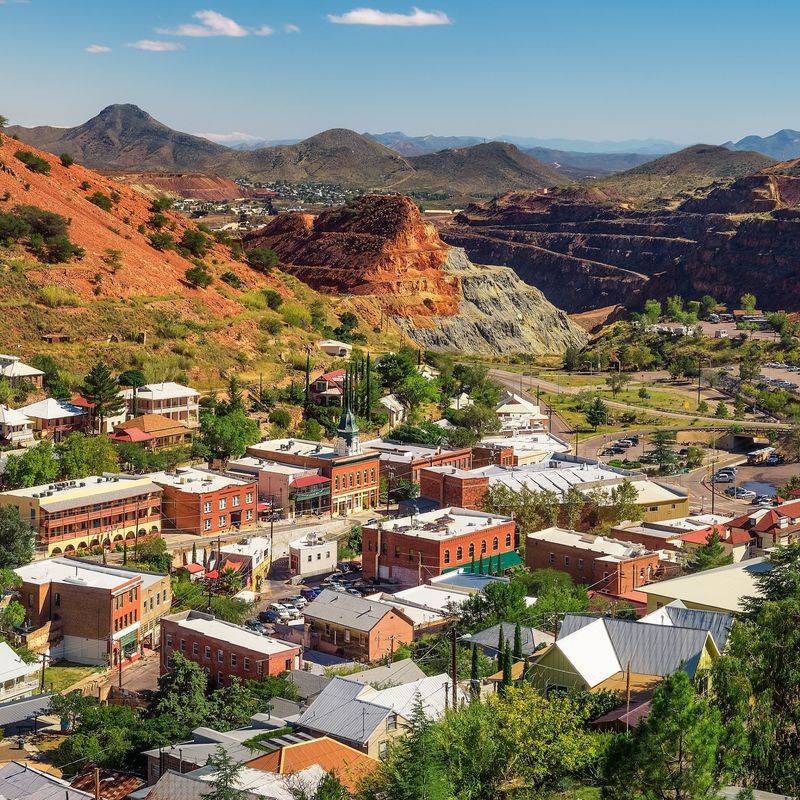
Nothing prepared me for how vertical this town is. Houses stack up the hillsides of the Mule Mountains in shades of turquoise, mustard, and rose, and the streets bend in ways no city planner would allow today.
When the mines shut down, artists moved in and kept the place alive instead of letting it fade into a ghost town. That decision shaped everything you see now.
Crooked streets hide galleries, antique shops, and storefronts showing work by regional artists. Murals appear in alleys where you least expect them, adding color to already colorful terrain.
Legs willing, the historic staircases that inspired the Bisbee 1000 Stair Climb are open to anyone, and the views from the top pay you back for the effort.
The Bisbee Mining and Historical Museum lays out how copper built this hillside city. South of town, viewpoints look down into the enormous Lavender Pit, a reminder of just how much earth got moved here.
Hikers head into the Mule Mountains, and birdwatchers make for the San Pedro Riparian National Conservation Area nearby, where the species list runs impressively long.
5. Jerome, The Town That Clings to a Hill
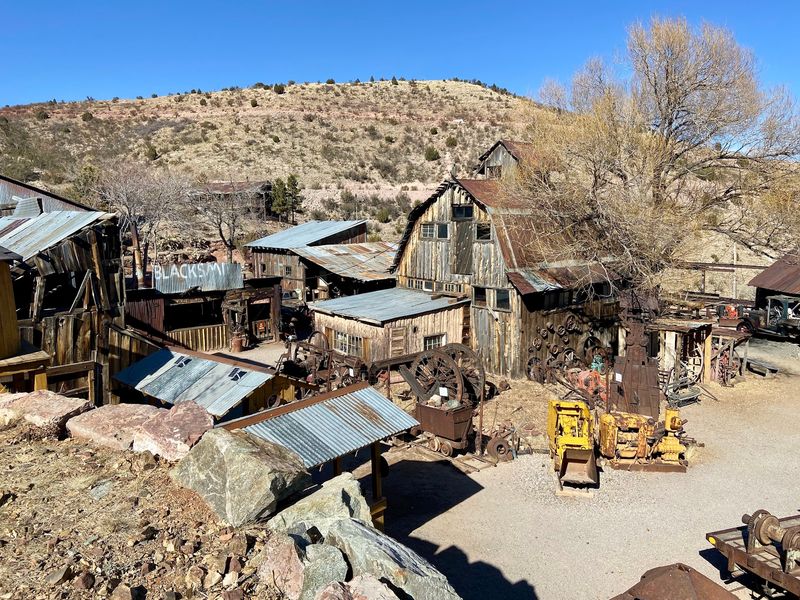
Driving the switchbacks up Cleopatra Hill had me gripping the wheel a little tighter than usual, and then the Verde Valley opened up below and I forgot all about it. Buildings here seem to hang onto the slope by sheer stubbornness.
Copper made this town, and for a while its reputation earned it the nickname of the wickedest town in the West. These days artists, historians, and hikers have taken over.
Getting around on foot means steep sidewalks, narrow stairways, and paths that connect one level of town to another. I kept stopping in galleries and small shops set inside buildings that once served mining crews.
Jerome State Historic Park occupies the Douglas Mansion, where full-size mining equipment and old photographs explain the boom years and the long bust that followed.
The Jerome Art Center fills a former high school, its old classrooms now studios for painters, sculptors, and printmakers.
What sticks with me is how the place reinvented itself without erasing what came before. Few towns in Arizona wear their past so plainly and still feel this alive.
6. Tucson, Saguaros, Canyons, and City Energy
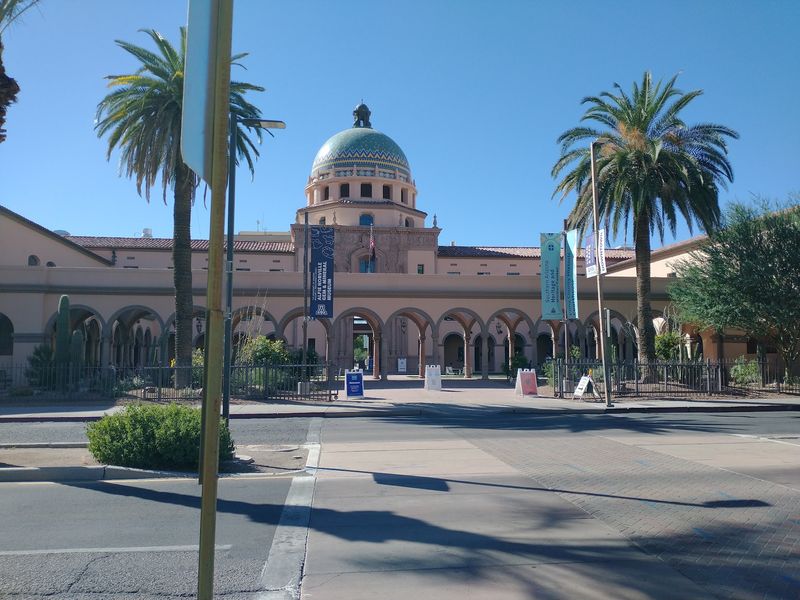
Saguaros lined the road on my way in, hundreds of them standing like an audience, and the city just kept unfolding underneath the mountains. Southern Arizona shows off here without trying too hard.
Saguaro National Park splits into east and west districts, each with scenic drives and trails suited to whatever energy you have that day. Spring brings wildflowers that turn the desert floor unexpectedly bright.
Sabino Canyon sits in the Santa Catalina Mountains, greener and shadier than the surrounding desert, with water running through it after good rains.
For a real change of climate, the Mount Lemmon Scenic Byway climbs from cactus country into cool pine forest in under an hour of driving. The pullouts along the way are hard to resist.
The Arizona-Sonora Desert Museum works as zoo, natural history museum, and botanical garden all at once, and it taught me more about this ecosystem than any book had.
Tohono Chul Park and the Tucson Botanical Gardens offer quieter, shadier spaces for wandering.
Between the food, the culture, and the desert itself, this city rewards curious travelers more than almost anywhere else in the state.
7. Page, Slot Canyons and a Bend in the River
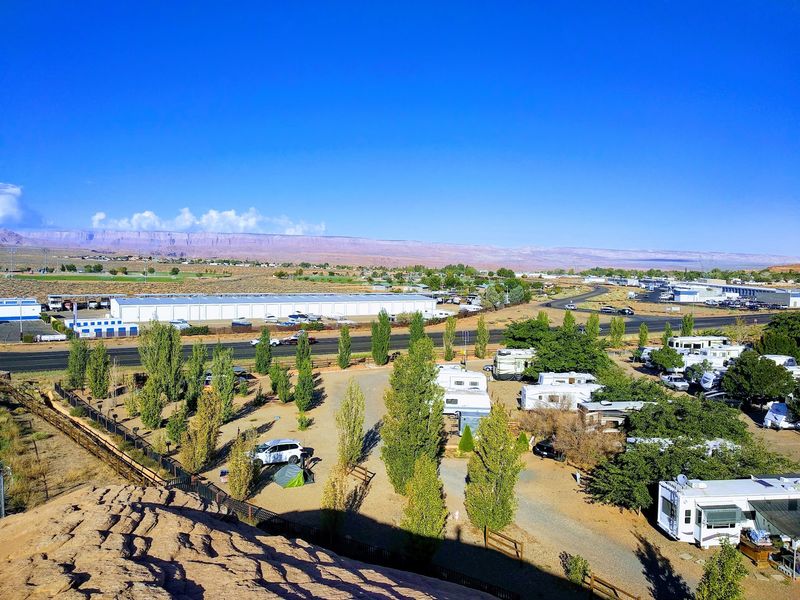
Northern Arizona goes wide and empty on the drive up here, and that emptiness is part of the thrill. You can feel something enormous waiting just out of sight.
Slot canyons carved into Navajo sandstone are the main draw. Antelope Canyon draws crowds for good reason, its walls curving overhead while light drops through in narrow beams.
Waterhole Canyon and Canyon X deliver similar sculpted passageways with fewer people around, which made my visit feel more personal.
A short drive from town, Horseshoe Bend shows the Colorado River swinging through a nearly 270-degree curve about a thousand feet below the rim. The walk out is manageable for most people, and the payoff is immediate.
Lake Powell sits behind Glen Canyon Dam, its blue water reaching back into countless side canyons that kayakers and boaters can explore for days.
This town also serves as a doorway to Vermilion Cliffs National Monument and Grand Staircase-Escalante National Monument, both wild and enormous.
Sunrise and sunset are when the sandstone really performs, so I would plan around those hours if you can.
8. Cottonwood, Riverbanks and Old Town Charm
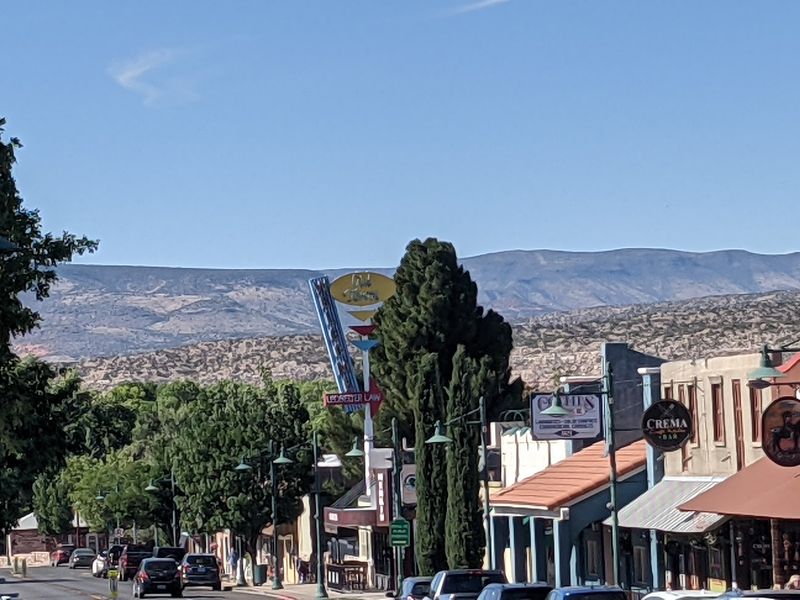
Big cottonwood trees along the Verde River were the first thing I noticed, their leaves rattling in the breeze like scattered applause. The pace slows down here almost automatically.
Sitting in the Verde Valley, the town blends Old West buildings with a friendly, unhurried community feel. People say hello on the sidewalk and mean it.
Historic Old Town runs along one walkable main street lined with shops, galleries, and small eateries. I liked studying the architecture, since many buildings still show their original brickwork and signage.
Dead Horse Ranch State Park sits just outside, with trails for hiking, spots for fishing, and shady stretches where birdwatchers set up along the river.
The Verde River itself invites kayaking and lazy floating, and seeing the canyon walls and desert greenery from water level changes your whole sense of the place.
Tuzigoot National Monument is close by, an ancient hilltop pueblo built by the Sinagua people, with views stretching across the valley.
Cottonwood ends up being the kind of stop travelers plan for one night and then wish they had given two.
9. Tombstone, Boardwalks and Frontier Legends
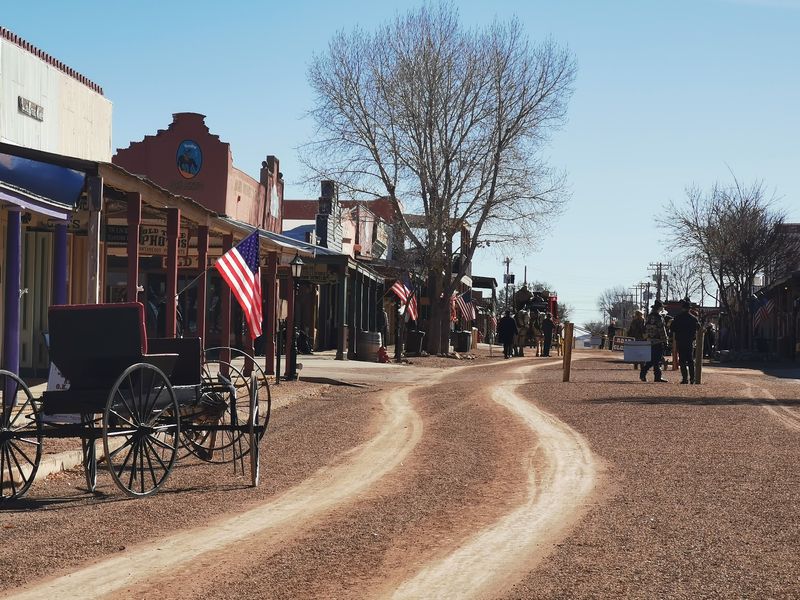
Boots on wooden boardwalks make a sound you do not forget, hollow and a little theatrical. Dust drifts down Allen Street, and people in period clothing pass by like they belong there, which in a way they do.
Known as the town too tough to die, this place keeps its 1880s identity front and center rather than tucking it away in a museum case.
Reenactments of the gunfight at the O.K. Corral bring the Wyatt Earp and Doc Holliday stories to life for anyone who grew up on Westerns.
The Bird Cage Theatre still stands with its original fittings, and Boothill Graveyard offers a quieter, more sobering look at the people who lived and died on this frontier.
Tombstone Courthouse State Historic Park fills an 1882 red-brick building, now a museum covering mining and ranching history in detail.
Stagecoach and trolley tours roll along the dirt streets, and some tours drop visitors underground into the original silver workings that started it all.
Corny in spots, sure, but I found myself grinning the whole way through.
10. Williams, Route 66 Nostalgia Under the Pines
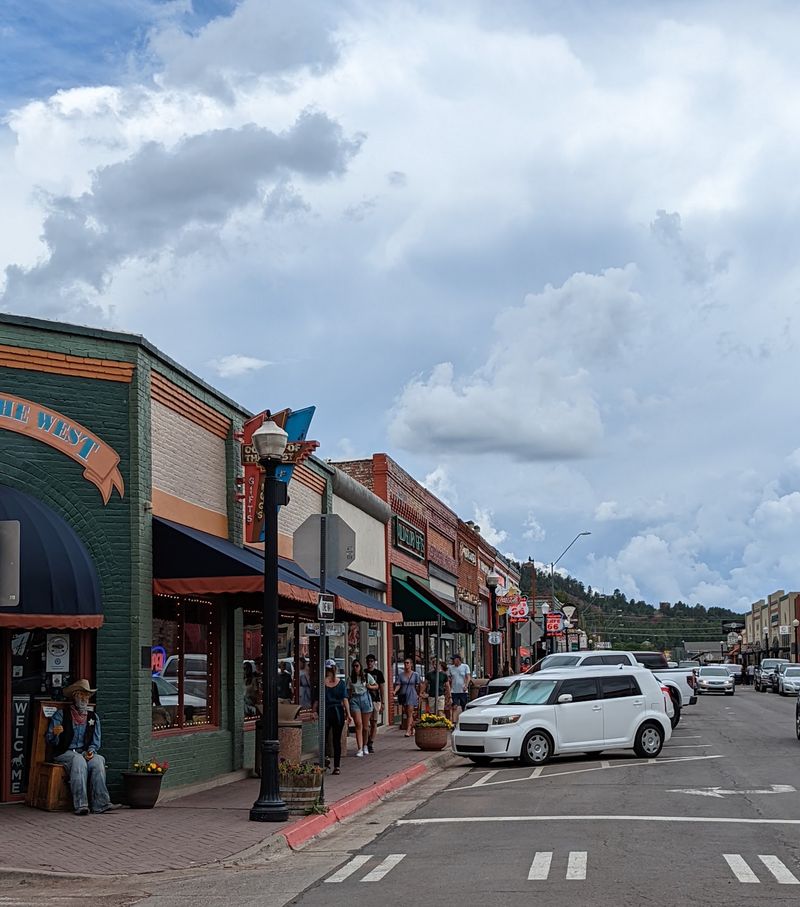
Neon buzzing to life at dusk was my favorite moment in this town, all that old chrome and glass glowing against the pines. Route 66 runs right through, and nobody here lets you forget it.
Perched above 6,700 feet inside the Kaibab National Forest, the town carries the nickname Gateway to the Grand Canyon while holding onto plenty of character of its own.
The Historic Downtown District covers six square blocks, preserving vintage storefronts, classic diners, and retro service stations from the golden years of American road trips.
Outside the neon glow, the forest takes over. Seven fishing lakes sit within reach, including Kaibab Lake, Dog Town Lake, and White Horse Lake, each one good for a still, quiet afternoon.
Trails climb Bill Williams Mountain and drop into Sycamore Canyon, giving hikers real elevation and long views over the high country.
Most travelers pass through on their way north to the canyon rim, and that is fair enough. Give it an extra evening though, and this old railroad town shows you why people bothered stopping here in the first place.
