Elephants once spent their winters in Indiana. That was the detail I could not stop thinking about as I wandered through a collection of old circus barns in the middle of the countryside.
The buildings look humble now, but they once helped keep massive traveling shows alive during the harshest months of the year. Inside, I found hand-carved wagons, glittering costumes, faded posters, and tiny circus models packed with details I kept leaning closer to see.
Some pieces looked like they had stories of their own. What made the visit even better was seeing how much care still goes into preserving everything.
This is not the kind of museum where the past feels sealed behind glass. The circus history here is still being pieced together, one weathered building and forgotten artifact at a time.
If you have ever wondered what the golden age of the big top really looked like, this place has plenty to uncover.
A National Historic Landmark Hiding In A Farm Field
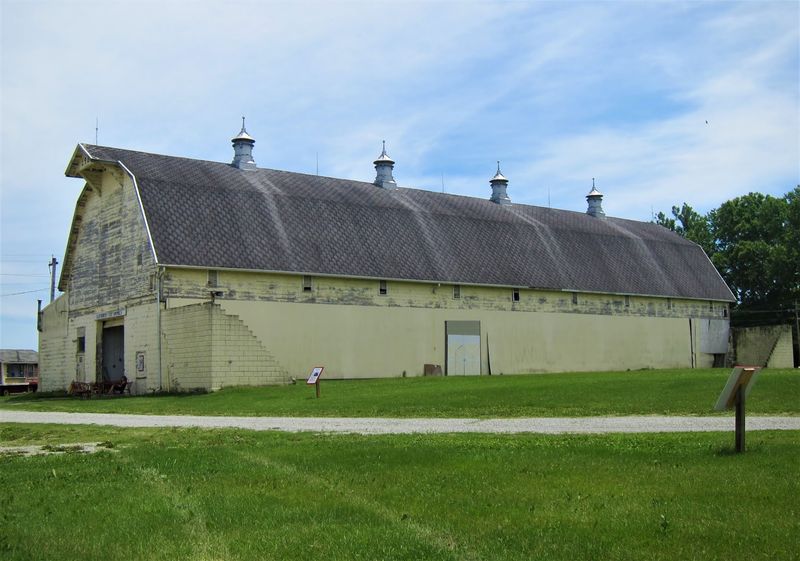
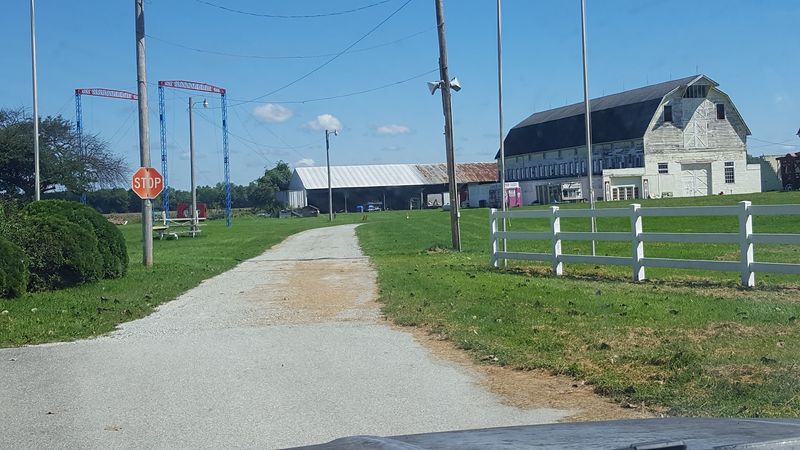
Gravel crunches under your tires as you turn down the lane, and then the barns appear, long and low against the Indiana sky. These are not replicas.
They are the surviving buildings of the old Wallace Circus and American Circus Corporation Winter Quarters, a site now recognized as a National Historic Landmark.
Ben Wallace set up his circus winter quarters on this property back in the early 1890s. The American Circus Corporation took over in 1921 and put up many of the structures still standing today, most of them raised in 1922.
What really got me was learning that Ringling Brothers operations used these grounds until 1944. Hundreds of workers, performers, and animals spent their off-season right here, repairing wagons and rehearsing acts before heading back out on the rails.
Very few circus buildings from that era survived anywhere in the country. Knowing that made the peeling paint and worn timber feel valuable rather than shabby.
One practical tip from my own fumbling arrival: the office building out front is not the check-in spot. Take the gravel road just before it, which leads to the gift shop and entrance.
Standing in the middle of that field, with wind moving through the grass, I could almost hear the noise this place once made. Quiet now, but heavy with history.
Hand-Carved Circus Wagons That Look Like Rolling Sculpture
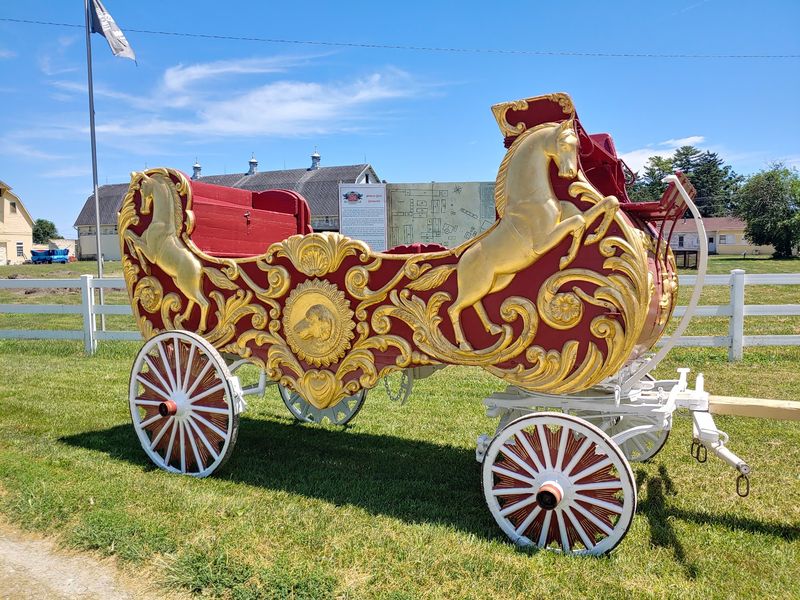
Gold leaf, carved lions, curling scrollwork. The circus wagons parked inside these barns were built to stop traffic, and they still do that job beautifully more than a century later.
The star of the collection is the 1887 Sig Sautelle Band Chariot, a rare carved clamshell band wagon. What makes it extra special for Peru is who built it: the Sullivan and Eagle wagon company, a local outfit right here in town.
I spent a long time just circling that one wagon, spotting details I had missed from the other side. The carving depth is wild when you get close.
Other wagons in the collection show different jobs from circus life, including animal cages and transport pieces that once rolled off railcars and down small-town main streets. Some gleam from careful restoration work.
Others sit patiently waiting their turn, wood exposed, paint ghosted away by decades.
Honestly, I liked seeing both. The unfinished ones make the restored ones feel earned.
Volunteers here work steadily on these pieces, and the guides will happily explain what stage each wagon is in. If you have any interest in woodworking, painting, or old craftsmanship, bring your camera and plan for extra time.
The parade may be long over, but the floats survived.
The Miniature Circus That Swallows An Hour Of Your Day
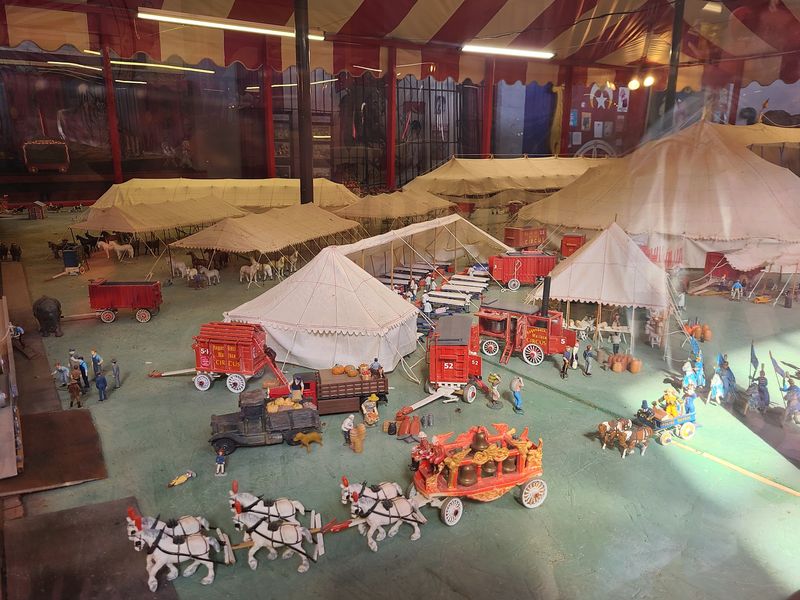
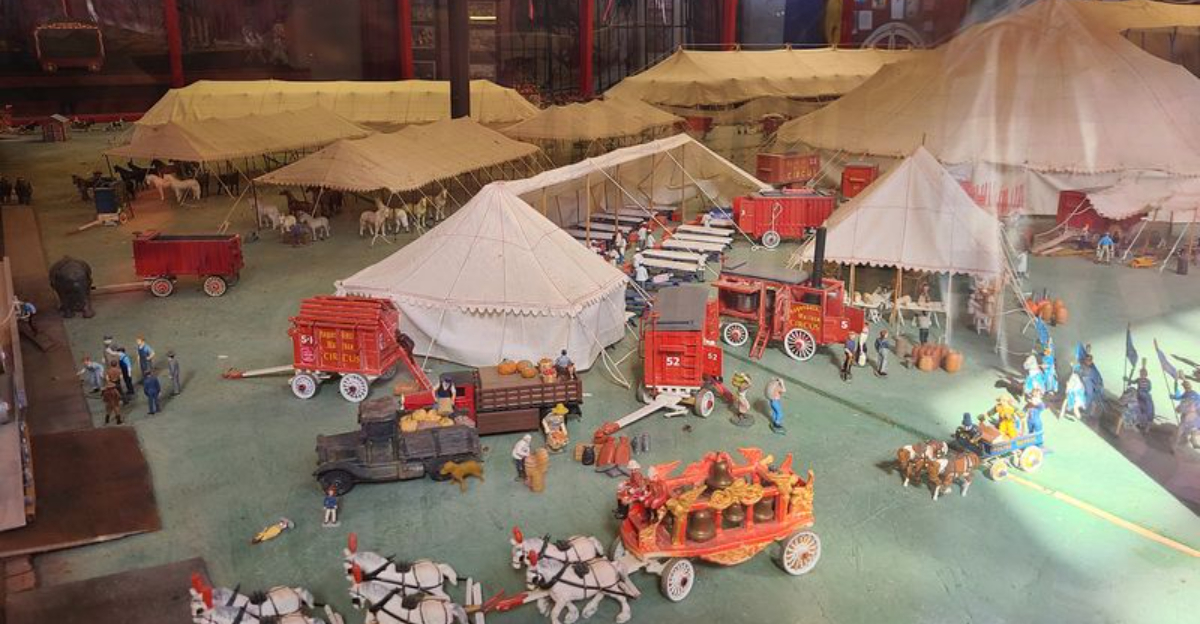
Tiny tent stakes. Tiny rope lines.
Tiny horses harnessed to tiny wagons, all arranged like a town that set itself up overnight.
The museum’s miniature replica of the 1934 Hagenbeck-Wallace circus is the kind of exhibit that makes adults lean in closer than kids do. I watched a man trace the layout with his finger, muttering about where the cookhouse would have been.
Every element reflects how a traveling show actually organized itself, from the big top down to the sideshow rows and back lot. Seeing it laid out flat finally helped me understand how much planning went into a single day of performances.
Peru is also home to the Circus Model Builder’s Museum and Hall of Fame, housed on the same grounds. That collection displays more intricate models built by people who study circus history with real devotion.
Scale modeling might sound like a niche hobby, and sure, it is. But the craftsmanship crosses over into art pretty fast.
Bring reading glasses if you use them. Seriously, the small details reward slow looking, and I nearly missed a row of hand-painted banners because I rushed past.
Of everything I saw here, the models are what I described first when friends asked about the trip.
Costumes, Posters And Paper That Survived The Road
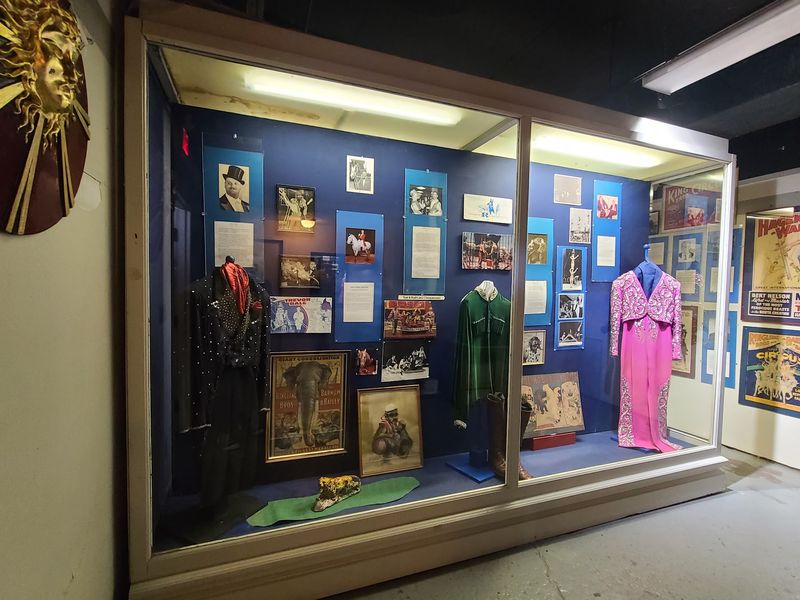
Sequins do not age quietly. They catch whatever light is in the room and throw it right back at you, which is exactly what happened when I walked past a row of costumes still shaped by the performers who wore them.
Beyond the wardrobe cases, the collection holds posters, photographs, films, route cards, and route books. Those route books turned out to be my unexpected favorite.
They list town after town, day after day, showing exactly how relentless a circus season was. Reading a page of them tells you more about the work than any grand poster ever could.
The lithograph posters bring the color, all bold reds and impossible promises printed in enormous type. Some advertise acts that sound almost unbelievable now.
What I appreciated was how the exhibits explain the backstage side of things, including how acts were developed and how equipment was designed and built. The glitter was the product.
The workshop made it possible.
Photographs fill in the human faces, showing crews, families, and animal handlers between shows. It reminded me that these were working people with routines and skills, not just performers under spotlights.
Give yourself time in these rooms. The small paper items are quiet, and easy to walk past, but they hold the real texture of circus life.
Meeting The Legends Of The Big Top, Including A Peru Native
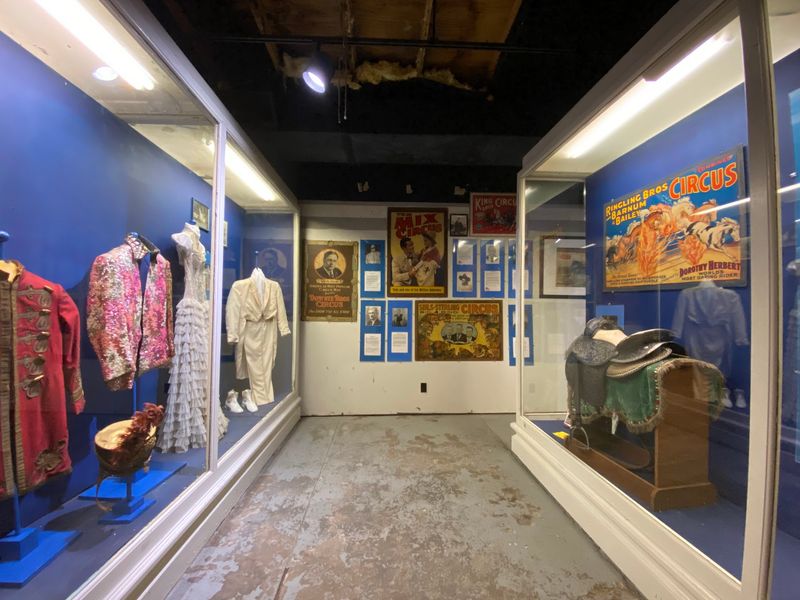
Emmett Kelly. Lou Jacobs.
Otto Griebling. Names that once meant instant recognition, honored here alongside animal trainers, aerialists, and the business minds who built traveling empires.
The Hall of Fame portion of the museum recognizes people who shaped what the circus became, and the clowns get particular attention. Griebling has a hometown connection too, since he came from Peru itself.
I did not expect the plaques to hold my interest as long as they did. The stories behind them are what pulled me in.
Our guide explained careers and specialties in a way that made these figures feel like craftspeople rather than characters. Some spent decades perfecting a single routine, refining timing down to a breath.
Animal trainers and performers from earlier eras are represented as well, giving a broader picture of how many different skills a show required. Riders, wire walkers, musicians, managers.
Ask questions here. The volunteers and guides genuinely enjoy going deeper, and my visit got noticeably better once I stopped reading silently and started talking.
There is also a local legend about an elephant named Charlie that people bring up often. I will not spoil it, but do ask someone on staff for the real story.
You will leave with at least one name you want to look up later.
Guides Who Know Every Corner Of The Property
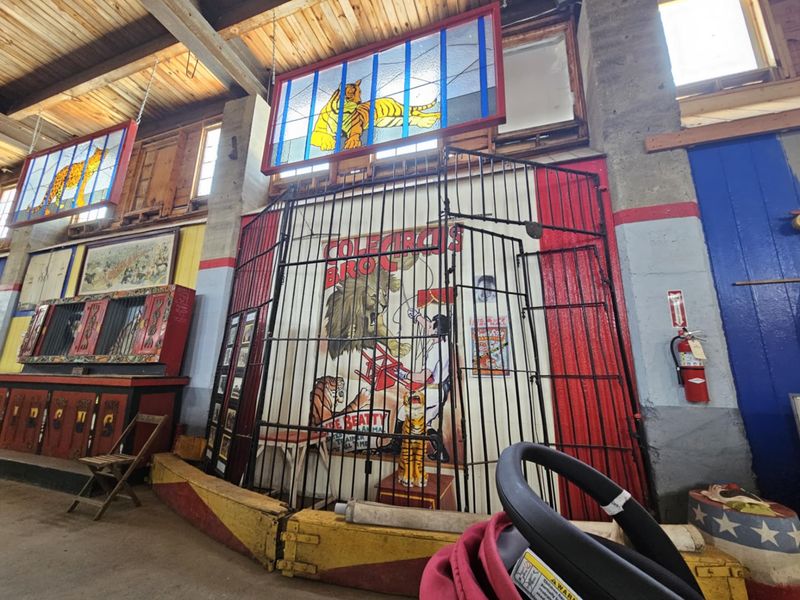
My tour felt less like a museum walkthrough and more like being shown around someone’s family history. That is the real advantage of visiting a place run largely by volunteers who care.
Guides here can tell you which building housed which animals, what a particular cage was used for, and why a specific wagon matters. Details that no plaque would ever fit.
Restoration is constant, and staff will tell you plainly what is finished and what is still in progress. I found that honesty refreshing.
Rather than hiding works in progress, they explain the process, including how long a single wagon can take. Saving the object comes first, and the polish comes whenever hands and time allow.
Small groups mean you can ask whatever pops into your head. I asked about railcar loading and got a full explanation of how tightly everything had to fit.
The gift shop doubles as the entrance and is worth a browse, with circus-themed items you will not find in typical museum stores. Several visitors mention finding unusual gifts there, and I understand why.
If you are the type who normally skips guided tours, make an exception here. The objects are interesting on their own, but the stories are what turn a quick stop into a memorable afternoon in Peru.
Planning Ahead Makes All The Difference
Here is the one piece of advice I would hand any traveler heading this direction: call before you go. Hours shift with the season, and some months operate by appointment only.
Visitors who arrive during the off-season sometimes find exhibits covered for winter protection. Staff will often accommodate tours if you reach out ahead, though you may not see everything.
Aim for the regular open season if you can, when the full property and displays are accessible and volunteers are around. Peru sits in the middle of northern Indiana farmland, making it an easy detour if you are driving between Indianapolis, Kokomo, or Fort Wayne.
Remember that entrance detail. Skip the front office and follow the gravel road just before it to reach the gift shop where check-in happens.
Wear shoes you do not mind getting dusty, since the grounds include gravel paths and old barn floors. The buildings are more than a century old, so expect some rough edges and cool, dim interiors.
Allow at least a couple of hours. I planned on forty minutes and stayed far longer, which is usually the sign of a good stop.
Address: 3076 E Circus Lane, Peru, Indiana
