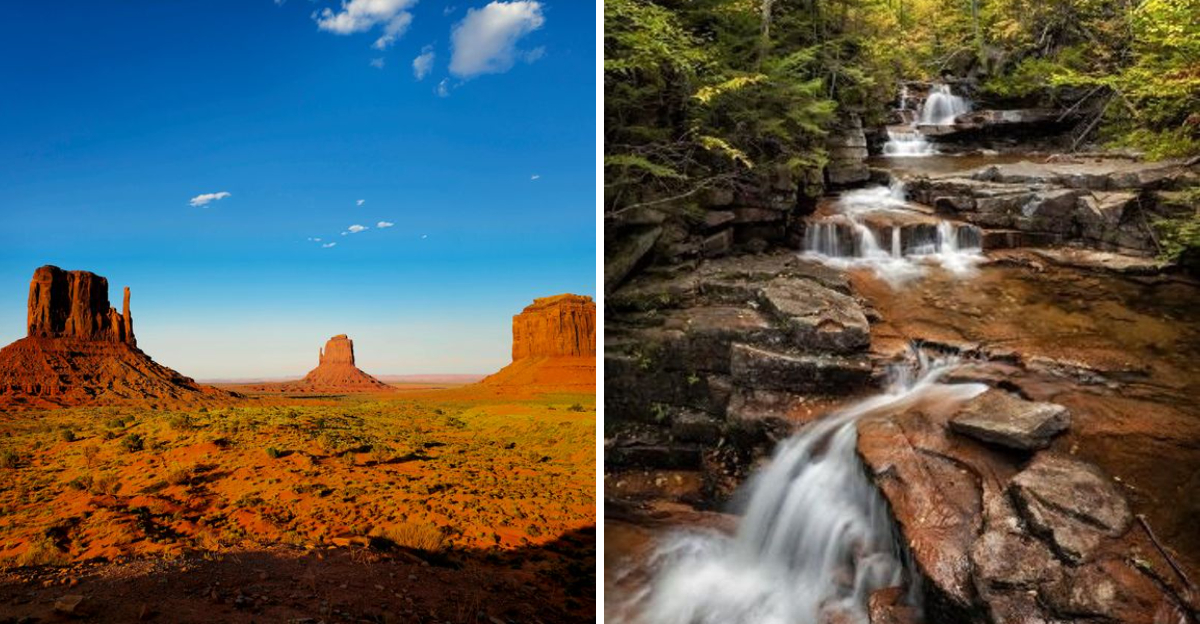
Arizona stands as one of the most geographically diverse states in America, where towering mountain peaks meet scorching desert valleys in a stunning display of natural variety.
From alpine forests blanketed in snow to sun-baked sand dunes, the landscape shifts dramatically as you travel across this remarkable state.
Three major geographic zones, the Colorado Plateau, the Transition Zone, and the Basin and Range, create these incredible contrasts that make Arizona unlike any other place.
Understanding these regions helps you appreciate how climate, elevation, and geology work together to shape such wildly different environments within a single state’s borders.
Whether you’re fascinated by ancient canyons, volcanic peaks, or vibrant desert ecosystems, Arizona delivers breathtaking landscapes that showcase nature’s ability to create endless variety.
1. Sonoran Desert
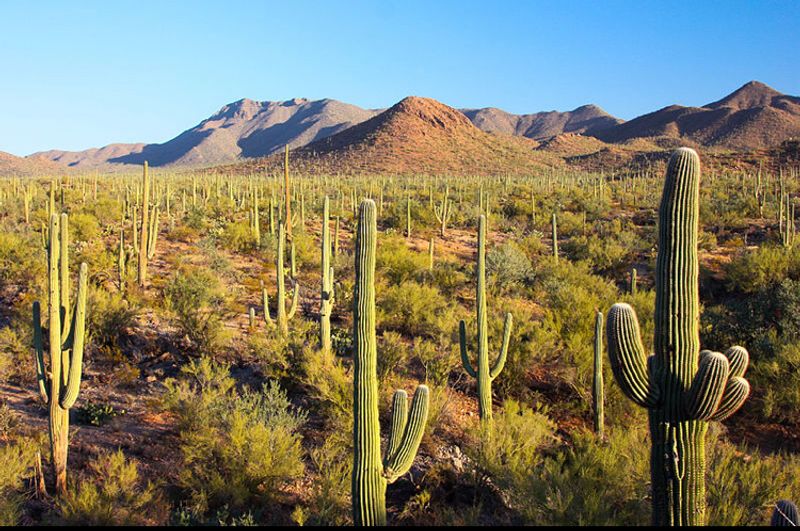
Stretching across southern and central Arizona, the Sonoran Desert creates one of the most recognizable landscapes in the American Southwest.
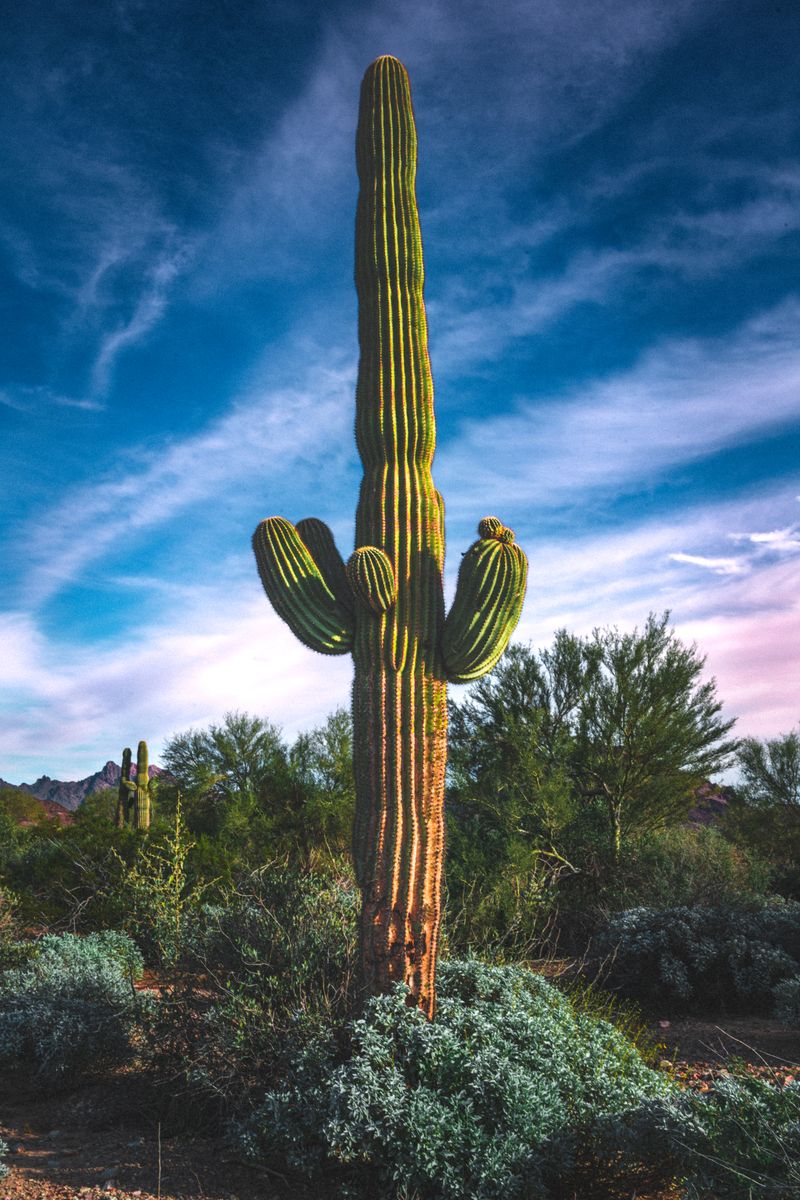
Saguaro cacti stand like silent sentinels across the terrain, their arms reaching skyward in poses that seem almost human.
This desert receives more rainfall than many other arid regions, which explains why it supports such diverse plant and animal life.
Mountain ranges rise unexpectedly from flat basin floors, creating what scientists call “sky islands” where cooler temperatures support different ecosystems.
These isolated peaks harbor plants and animals found nowhere else on the desert floor below.
Temperatures here can soar during summer months, yet winter brings surprisingly mild weather that attracts visitors from colder climates.
The Sonoran Desert proves that deserts aren’t lifeless wastelands but thriving ecosystems adapted to harsh conditions.
Wildflowers blanket the landscape after winter rains, transforming the brown earth into a colorful carpet.
Javelinas, roadrunners, and Gila monsters call this desert home, each perfectly suited to survive the extreme environment.
The address for Saguaro National Park, which protects this ecosystem, is 3693 S Old Spanish Trail, Tucson, AZ 85730.
Exploring this region reveals how life finds remarkable ways to flourish even in seemingly impossible conditions.
2. Grand Canyon
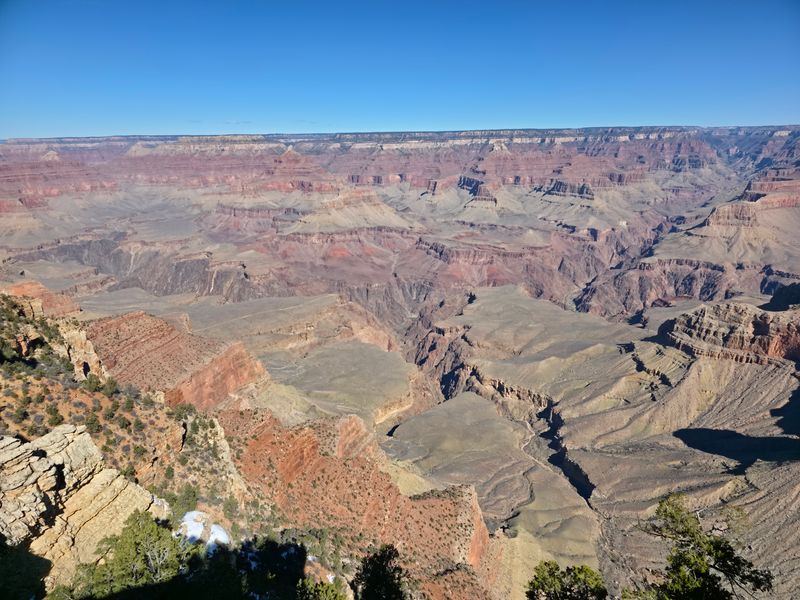
Carved over millions of years by the relentless Colorado River, the Grand Canyon stands as one of Earth’s most impressive geological features.
Rock layers exposed in the canyon walls tell a story that spans nearly two billion years of planetary history.
Each colored band represents a different geological period, creating a natural timeline visible to anyone standing at the rim.
The canyon plunges more than a mile deep in places, revealing horizontal strata that were once buried deep underground.
Erosion works constantly here, slowly widening and deepening this massive chasm with every passing century.
Visitors standing at the edge often struggle to comprehend the sheer scale of what lies before them.
The Colorado Plateau’s elevation keeps rim temperatures cooler than the desert floor far below.
Hiking from rim to river means descending through multiple climate zones, each with distinct plant communities.
Ravens soar on thermal currents rising from the canyon depths, while California condors have been successfully reintroduced to these skies.
The Grand Canyon National Park address is Arizona 86052, USA, located in the northwestern part of the state.
Few places on Earth offer such a profound perspective on geological time and the power of natural forces.
3. Mogollon Rim
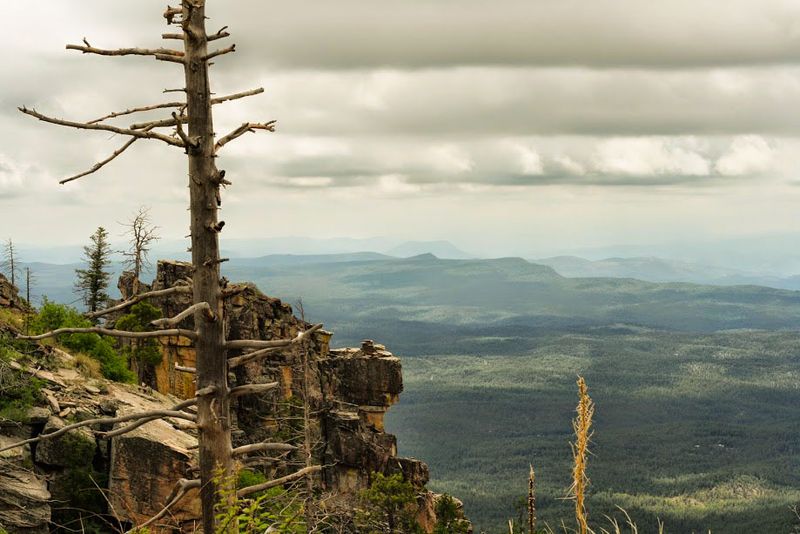
Rising like a massive wall across central Arizona, the Mogollon Rim marks where the Colorado Plateau abruptly ends.
This escarpment stretches for hundreds of miles, creating a boundary between high country and lower desert regions.
Limestone and sandstone form the rim’s foundation, eroded into dramatic cliffs that tower over the landscape below.
Ponderosa pine forests blanket the plateau above, their sweet vanilla scent filling the air on warm afternoons.
The sudden elevation change creates distinct climate zones, with cooler temperatures and increased precipitation at higher elevations.
Wildlife thrives in these forests, including elk herds that migrate seasonally between rim country and lower elevations.
Black bears wander through the pines, while mountain lions patrol the rugged terrain in search of prey.
Streams tumble over the rim’s edge, creating waterfalls that feed the valleys below.
Recreation opportunities abound here, from hiking and camping to fishing in cold mountain streams.
The Mogollon Rim’s address is Arizona 85541, USA, accessible through various forest roads and highways.
Standing at the rim’s edge, you can see how Arizona transforms from high plateau to lower desert in a single dramatic drop.
This geographic feature influences weather patterns across the entire region, forcing storms to release moisture as they climb.
4. San Francisco Mountain
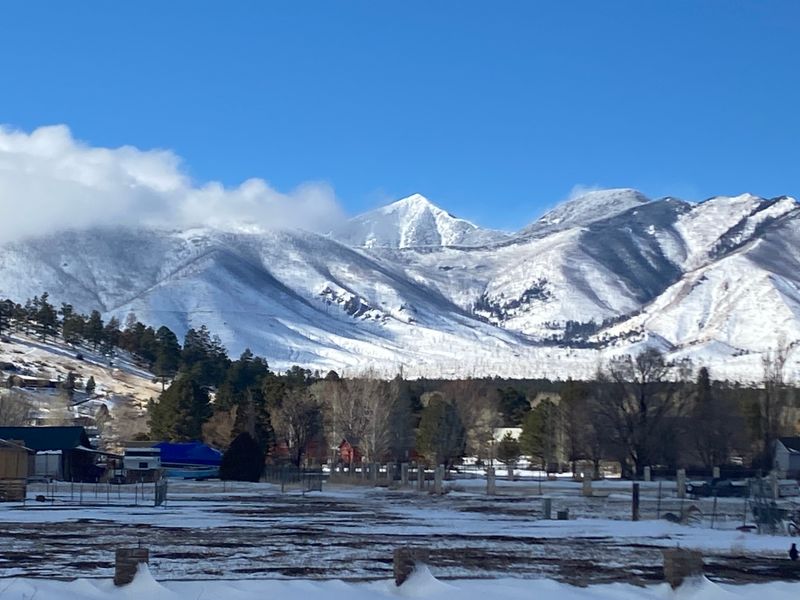
Ancient volcanic forces created the San Francisco Peaks, which now dominate the skyline near Flagstaff.
Humphreys Peak rises as the highest point in Arizona, reaching an elevation where alpine conditions prevail year-round.
Snow blankets these peaks during winter months, creating Arizona’s premier destination for winter sports enthusiasts.
The mountains formed from volcanic activity that ceased thousands of years ago, leaving behind a collapsed caldera.
Alpine tundra exists above the tree line, hosting plants normally found much farther north.
Bristlecone pines cling to rocky slopes, their twisted forms shaped by relentless winds and harsh conditions.
These peaks hold sacred significance for multiple Native American tribes who have inhabited the region for generations.
The elevation creates a climate completely different from the desert lowlands just a few hours’ drive away.
Aspen groves paint the mountainsides gold each autumn, attracting photographers and leaf peepers from across the Southwest.
Wildlife adapted to high elevations, including mountain chickadees and Clark’s nutcrackers, make their homes here.
The San Francisco Mountain address is Arizona 86001, USA, located just north of Flagstaff.
Standing on these peaks offers a perspective few imagine exists in Arizona, where alpine meadows replace desert cacti.
5. Painted Desert
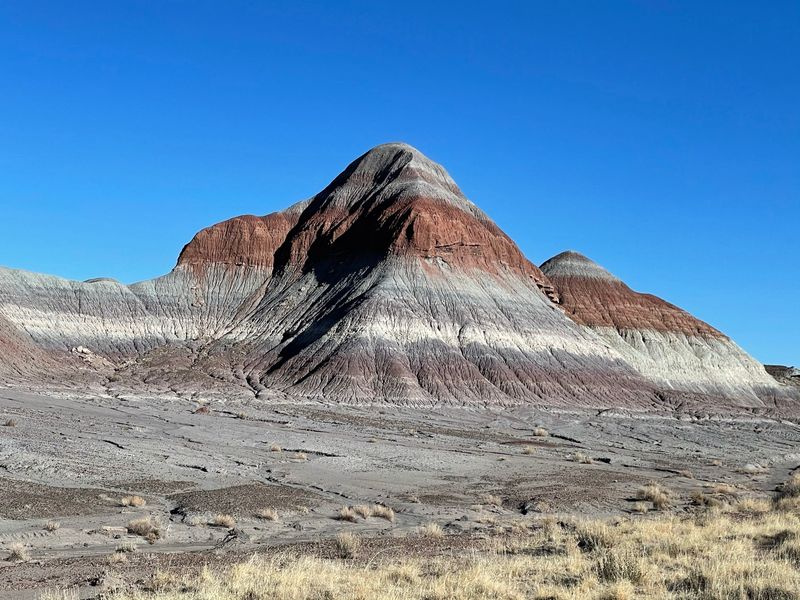
Horizontal bands of color streak across the Painted Desert’s badlands, creating one of nature’s most vivid displays.
Siltstone and shale erode into rounded mounds and sharp ridges, each layer revealing a different mineral composition.
Iron, manganese, and other minerals create the spectacular color palette that shifts throughout the day as light changes.
Sunrise and sunset bring out the most intense hues, when low-angle light enhances every subtle variation.
This landscape formed from ancient river deposits that accumulated when the region had a completely different climate.
Fossils from creatures that lived millions of years ago occasionally emerge from these colorful layers.
The Petrified Forest National Park protects much of this area, where ancient trees turned to stone lie scattered across the ground.
Sparse vegetation struggles to gain a foothold in the soft, easily eroded soil.
Thunderstorms can transform dry washes into raging torrents within minutes, constantly reshaping the terrain.
The Painted Desert address is Arizona 86031, USA, located in the northeastern part of the state.
Walking through this landscape feels like stepping onto another planet, where familiar desert features take on surreal colors.
Photographers arrive from around the world hoping to capture the otherworldly beauty that defines this unique region.
6. Red Rock Country
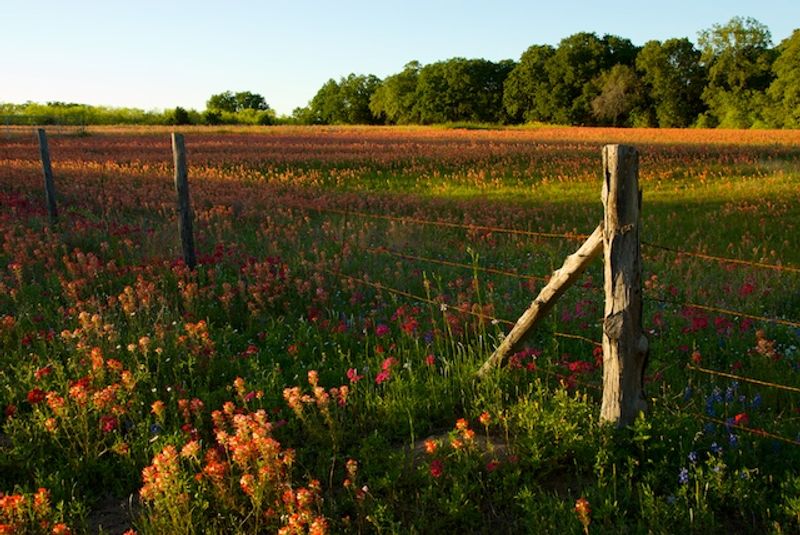
Sedona sits at the heart of Red Rock Country, where iron-rich sandstone has weathered into spectacular formations.
Towering buttes and monoliths rise hundreds of feet above the valley floor, their surfaces glowing brilliant orange-red in sunlight.
Cathedral Rock, Bell Rock, and Coffee Pot Rock have become iconic symbols recognized worldwide.
The contrast between rust-colored stone and deep green juniper and pine creates visually stunning landscapes.
Elevation changes bring cooler temperatures and increased moisture, supporting vegetation that couldn’t survive in lower deserts.
Oak Creek flows through the region, its year-round water creating riparian habitats that support diverse wildlife.
Artists and spiritual seekers have long been drawn to this area, claiming the landscape possesses special energy.
Hiking trails wind between formations, offering close-up views of the sculpted sandstone.
The rocks appear to change color throughout the day, from pale pink at dawn to deep crimson at dusk.
Red Rock Country encompasses areas around Sedona, Arizona, accessible from State Route 179 and State Route 89A.
Millions visit annually to experience landscapes that seem almost too perfect to be natural.
Erosion continues its patient work, slowly reshaping these formations just as it has for millions of years.
7. White Mountains
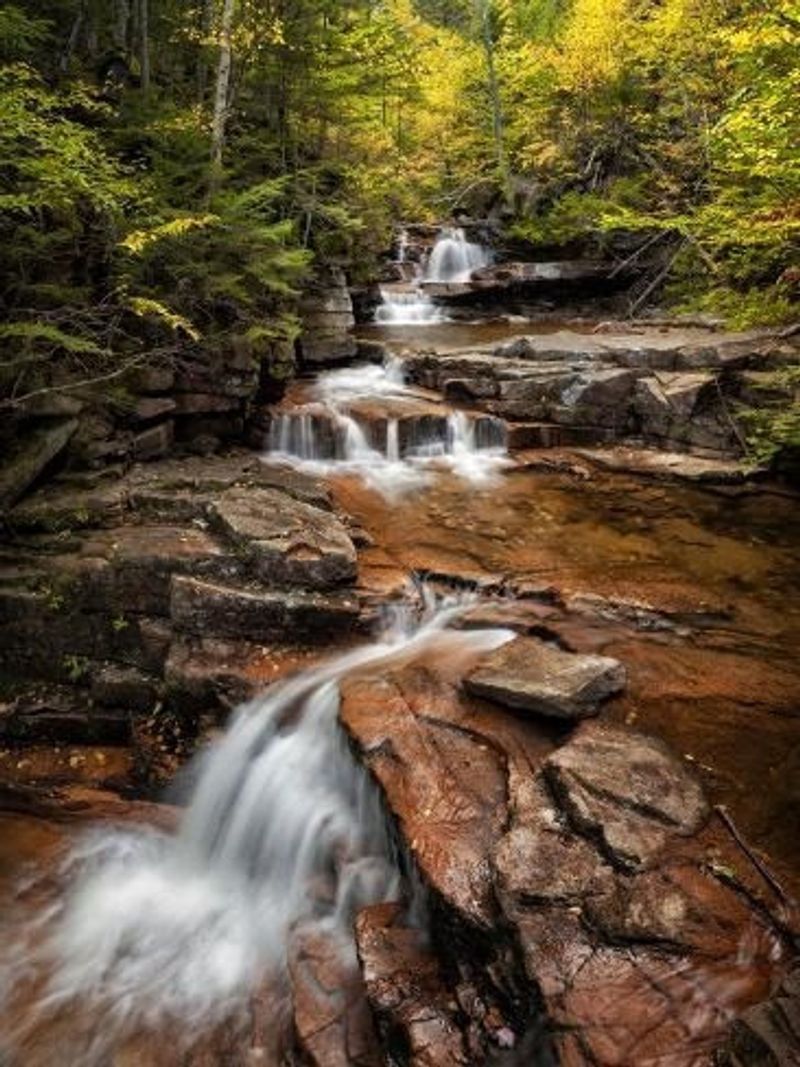
Eastern Arizona’s White Mountains offer a completely different world from the stereotypical desert landscape most people imagine.
Mountain lakes reflect surrounding forests, their cold, clear waters home to trout that thrive in high-altitude conditions.
Streams tumble down mountainsides, creating perfect habitat for anglers seeking rainbow, brown, and Apache trout.
Winter transforms the region into Arizona’s premier skiing destination, where snow accumulates to depths that surprise first-time visitors.
Sunrise Park Resort operates on the White Mountain Apache Reservation, offering winter sports with a distinctly Southwestern character.
Aspen and spruce forests cover the slopes, providing habitat for elk, deer, and black bears.
Summer brings mild temperatures that offer relief from the scorching heat of lower elevations.
Wildflower meadows burst into color during the brief growing season, attracting butterflies and hummingbirds.
The region’s elevation keeps temperatures comfortable even during the hottest months elsewhere in Arizona.
Small mountain communities dot the landscape, serving as gateways to wilderness areas and recreational opportunities.
The White Mountains address is Arizona 85941, USA, located in the eastern part of the state.
Experiencing this region shatters preconceptions about what Arizona landscapes look like, proving the state’s remarkable diversity.
8. Arizona Strip
North of the Grand Canyon lies Arizona’s most isolated region, a landscape few visitors ever explore.
The Vermilion Cliffs rise in dramatic steps, each layer a different shade of red, orange, and cream.
These cliffs form a natural staircase ascending the Colorado Plateau, created by different rock layers eroding at varying rates.
Pronghorn antelope bound across vast grasslands, while California condors soar overhead after being reintroduced to the region.
Accessing this area requires long drives on unpaved roads, keeping visitor numbers low and preserving its wild character.
The landscape feels untouched, as if you’ve stepped back to a time before human development altered the land.
Geological forces have sculpted rock into fantastic shapes, including the famous Wave formation that photographers dream of capturing.
Permits limit access to sensitive areas, protecting fragile formations from excessive foot traffic.
Spring brings wildflowers to slopes that appear barren most of the year.
The Arizona Strip encompasses areas north of the Grand Canyon, accessible from Highway 89A and various unpaved roads.
Solitude defines this region, where you can travel for miles without seeing another person.
Experiencing the Arizona Strip reveals a side of the state that remains largely unchanged by modern times.
9. Monument Valley
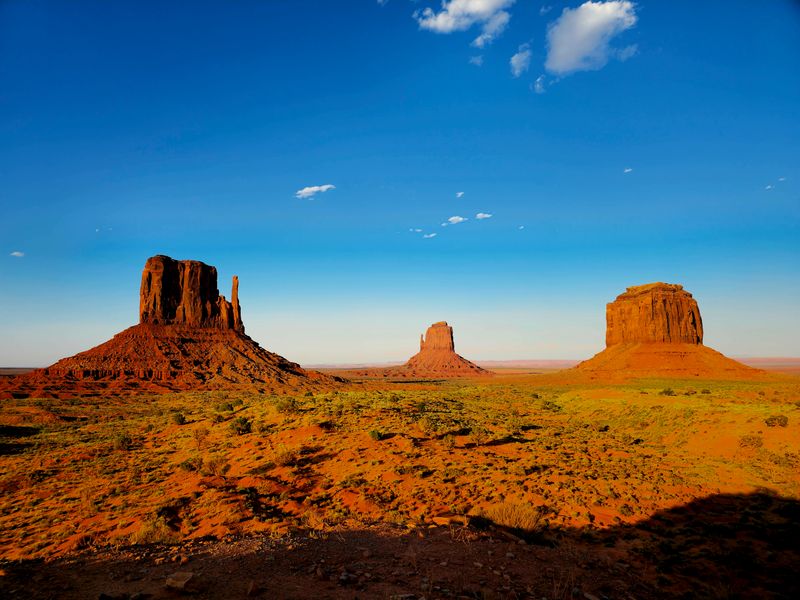
Straddling the Arizona-Utah border, Monument Valley has become the quintessential symbol of the American West.
Massive sandstone buttes tower hundreds of feet above the valley floor, their vertical walls seemingly defying gravity.
The Mittens, Merrick Butte, and other formations have appeared in countless films, making them instantly recognizable worldwide.
Navajo Nation manages this sacred landscape, offering guided tours that share cultural perspectives alongside geological information.
The flat valley floor emphasizes the dramatic height of the buttes, creating compositions that seem almost too perfect.
Sunset transforms the red sandstone into glowing sculptures, while sunrise brings softer, more subtle colors.
Wind and water erosion created these monuments over millions of years, slowly removing softer rock and leaving resistant towers behind.
Dust devils dance across the valley floor during hot afternoons, adding movement to the seemingly static landscape.
Traditional Navajo hogans dot the valley, reminding visitors that this is not just scenery but someone’s homeland.
Monument Valley address is Arizona, United States, accessible via U.S. Route 163 through the Navajo Nation.
Few landscapes capture the imagination quite like Monument Valley, where nature’s architecture creates unforgettable vistas.
Photographers arrive before dawn, hoping to capture the magical light that makes these formations appear to glow from within.
10. Yuma Desert
Southwestern Arizona’s Yuma Desert represents one of the hottest and driest regions in North America.
Temperatures regularly exceed extreme levels during summer months, creating conditions that challenge even desert-adapted organisms.
Sand dunes shift and reshape with every windstorm, creating an ever-changing landscape that never looks quite the same twice.
This region receives minimal rainfall, making it one of the sunniest places on Earth.
Vegetation becomes increasingly sparse as you travel west, with only the hardiest plants surviving the harsh conditions.
Creosote bushes space themselves evenly across the landscape, each claiming enough territory to access limited water resources.
The Colorado River once flooded regularly here, supporting riparian forests that have largely disappeared following dam construction upstream.
Wildlife activity concentrates during cooler nighttime hours when desert creatures emerge to hunt and forage.
Kangaroo rats, sidewinders, and desert tortoises have evolved remarkable adaptations allowing them to thrive where others would perish.
The Yuma Desert address is Arizona 85365, USA, located in the state’s southwestern corner.
Experiencing this region reveals just how extreme Arizona’s geographic contrasts can be, from alpine peaks to scorching desert lowlands.
Few visitors venture into this harsh landscape, but those who do gain appreciation for life’s tenacity in the face of extreme conditions.
Dear Reader: This page may contain affiliate links which may earn a commission if you click through and make a purchase. Our independent journalism is not influenced by any advertiser or commercial initiative unless it is clearly marked as sponsored content. As travel products change, please be sure to reconfirm all details and stay up to date with current events to ensure a safe and successful trip.
