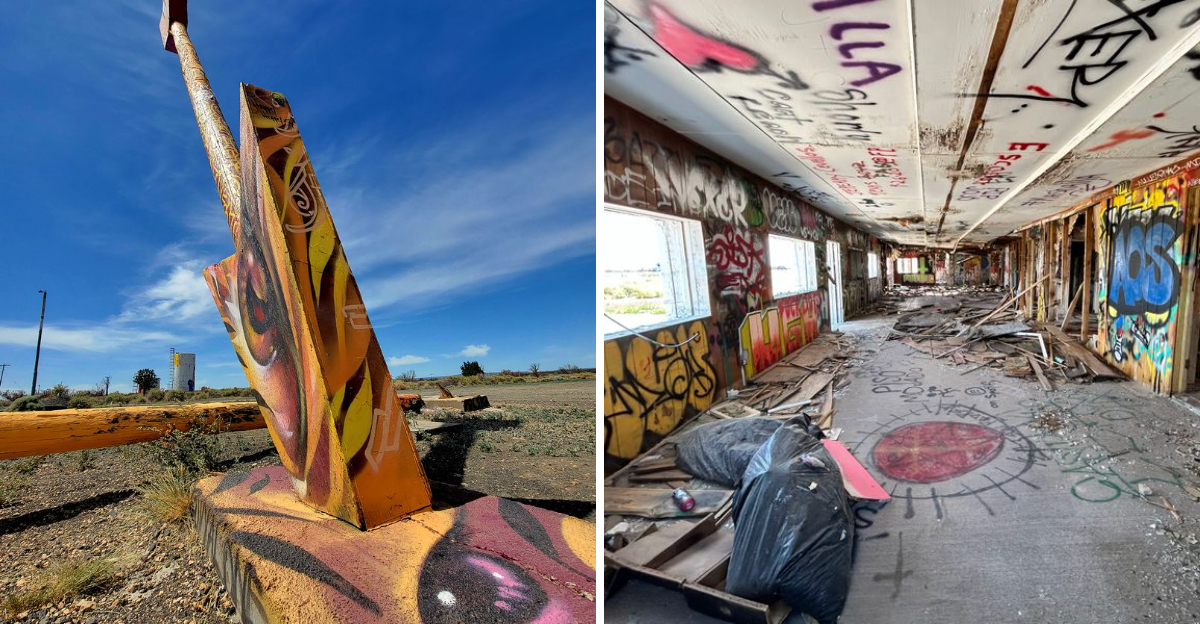
Once a bustling stop along Route 66, the Twin Arrows Trading Post now sits quietly in the Arizona desert.
Its giant arrows still pierce the sky, but the buildings crumble with time and graffiti.
Travelers who wander off the highway discover a quirky mix of nostalgia and decay.
The site whispers stories of road-trip diners, souvenir stands, and the golden age of car travel.
Today, it’s a photogenic relic where history and imagination collide in the dust.
The story behind the giant arrows
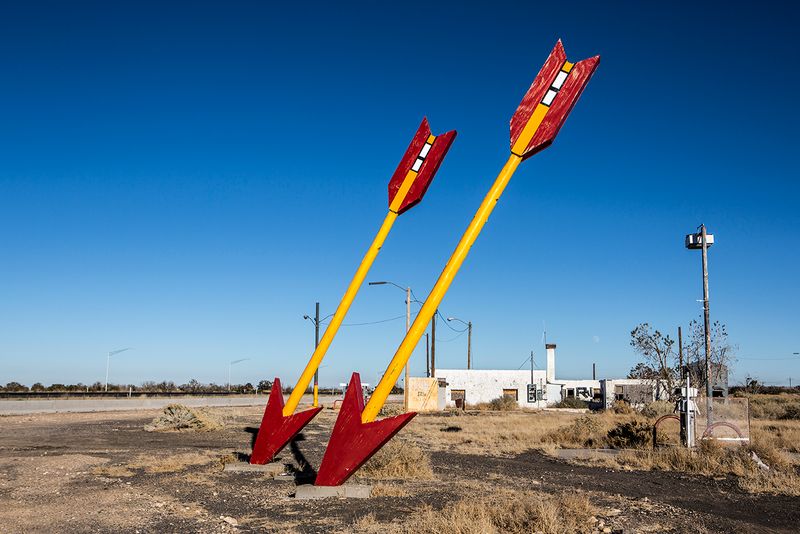
You meet the Twin Arrows in the open light, and their scale immediately reframes the landscape with a playful yet solemn stake in the ground.
The monumental sticks look like props from an old roadside dream, and their bright paint has faded into a palette that matches the wind and sun.
You feel the old Route 66 energy shift under your feet, and the past becomes a living presence rather than a distant idea.
The arrows were installed as eye catching beacons for a trading post that once sold gas and souvenirs, and they remain the unmistakable landmark you expect to see.
Their survival through storms and long winters tells you how deeply they were built, and how carefully local caretakers have patched them.
You notice fresh screws and occasional bracing, and you understand that decay here is slowed by quiet hands rather than halted by grand budgets.
Your sense of Arizona history sharpens as you realize how many travelers measured progress by these arrows, and how many stories began at this turnout.
The structure itself is not a park or a museum, and the open hours reflect an unfenced site that breathes with the highway.
You look toward the horizon where Flagstaff rises beyond the pinyon, and the arrows seem to aim at time rather than distance.
You take a photo that frames the posts like a sundial, and the shadow lines sketch the passing day with simple clarity.
The ground crackles under your shoes with cinders and glass, and you step carefully without disturbing what remains.
You leave with a new respect for the way Arizona keeps its icons, and you promise yourself to handle the place with care.
A brief timeline of the trading post
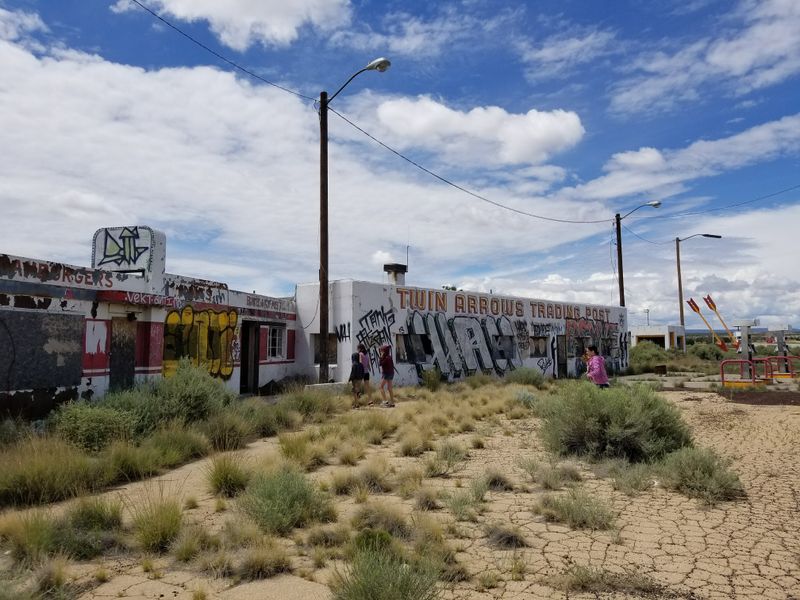
You picture the early days when a modest service station grew beside Route 66, and the arrows arrived to pull eyes and wheels toward the pumps.
The decades rolled as families paused for fuel, postcards, and snacks, and the roadside economy hummed with predictable rhythm.
You can almost hear the cash register clicks layered under the drone of passing engines, steady as a metronome of travel.
Interstate 40 changed the flow and the cadence, and the frontage shifted from main stage to quiet edge.
The trading post tried to adapt with new signage and longer hours, and the arrows continued to signal hope from the shoulder.
Eventually the buildings closed to regular business, and the site slipped into a slower cycle of weather and watchful visitors.
You see boarded windows that mark the pivot from commerce to memory, and you read the walls like a ledger of time.
Arizona travelers kept stopping for photos and stories, and caretakers occasionally patched wood and paint to protect the silhouette.
The Google Maps pin today recognizes the place as a historical landmark, and the open hours reflect its unfenced nature.
Reviews note the condition and the pull of nostalgia, and you understand how a location can earn loyalty without selling anything.
The present moment folds the past into your visit, and the arrows remain the timeline anchors that stitch decades together.
You step away aware that preservation here depends on respect, and your choices become part of the continuing record.
How to find it without missing the exit
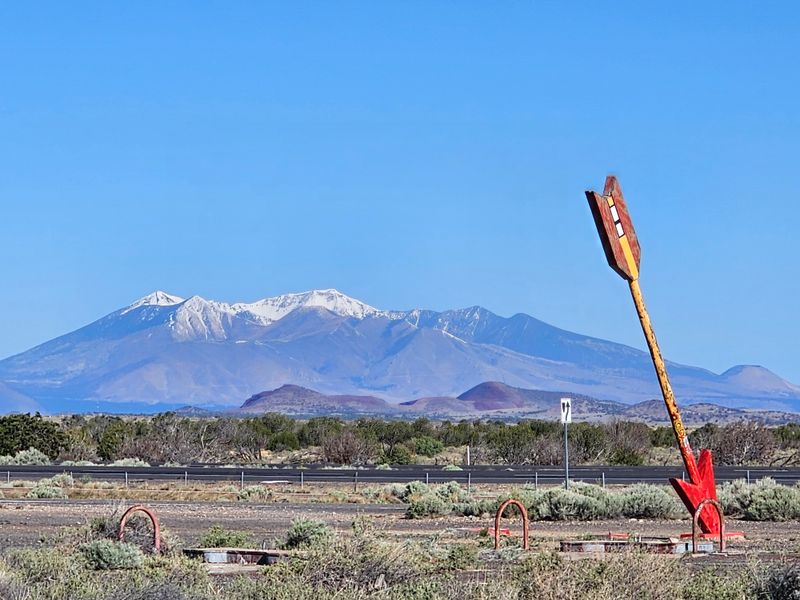
You set your map to the coordinates and watch for the open desert bench east of Flagstaff, and the arrows suddenly rise like aimed spears.
The interchange is straightforward from I-40, and the service road offers simple access with wide gravel shoulders.
You slow early to keep dust low and to avoid surprising other visitors, and you pull in with a gentle arc toward stable ground.
Your phone reception is usually solid near this corridor, and offline maps can still guide you if a brief dead zone appears.
You scan for posted signs and current barriers, and you follow the most worn approach that keeps you off fragile soil.
Parking is informal and self managed, and you leave enough space for other cars to turn without tight maneuvers.
You keep the arrows in sight as a natural waypoint, and you note the wind direction before opening your door against gusts.
The open setting means weather can change quickly, and you plan a short walk with layers in case clouds gather over the San Francisco Peaks.
Arizona light can be bright even in winter, and the high elevation sun calls for sunglasses and simple sun protection.
You keep your steps on durable surfaces like compacted dirt and old asphalt, and you avoid vegetation that stabilizes the ground.
Leaving is easy if you swing wide and rejoin the service road at a shallow angle, and you check mirrors for fast moving traffic.
You mark the return route on your map before the last photo, and your exit feels calm because you prepared the small details.
What you will actually see on site
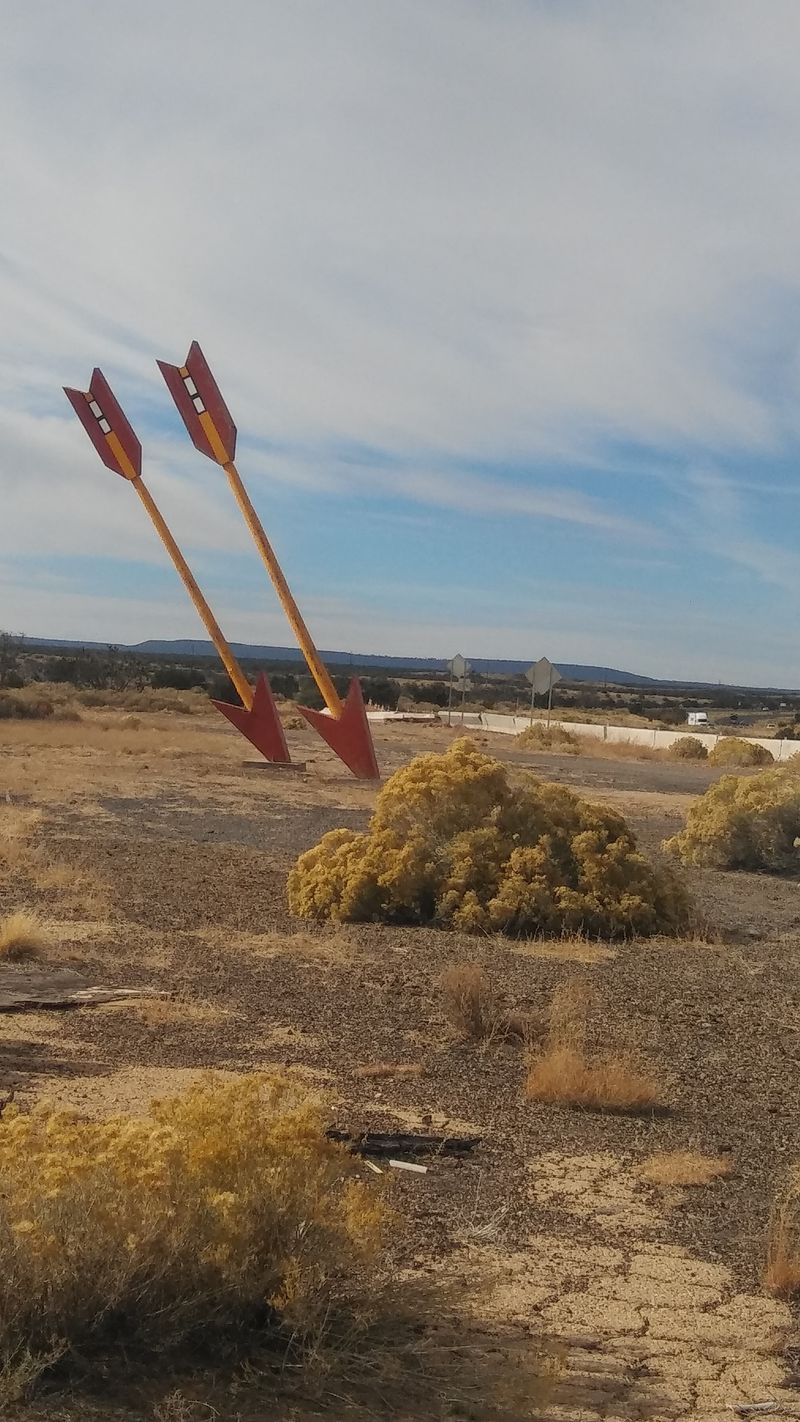
You arrive to a cluster of weathered buildings, and the arrows tower above a scatter of concrete pads and uneven asphalt.
Windows are boarded or missing, and doors show layers of hardware that hint at cycles of repair and closure.
Graffiti has come and gone in patches, and the latest paint tells its own short chronology across the walls.
The ground carries nails, splinters, and glass, and you step with patience to protect feet and camera gear.
You spot brackets and lag bolts on the arrows, and the fasteners shine where recent maintenance kept them steady.
Sunlight throws sharp shadows under the rafters, and your eye follows the geometry like a study in line and angle.
A faint smell of creosote and dust drifts through the lot, and the wind turns the space into a shifting soundtrack.
Interpretive signs are sparse or absent, and you build context from memory, guidebooks, and the stories people share online.
The mood is not curated like a museum, and that rawness makes the place feel more like a living chapter than a sealed exhibit.
Arizona sky fills every frame you compose, and the colors swing from deep cobalt to pale silver depending on the hour.
You will not find restrooms or staffed facilities, and you plan your visit accordingly with simple self sufficiency.
You leave with sand on your shoes and a camera roll of textures, and you feel the weight of roadside history settle in.
Safety and respect in an unfenced landmark
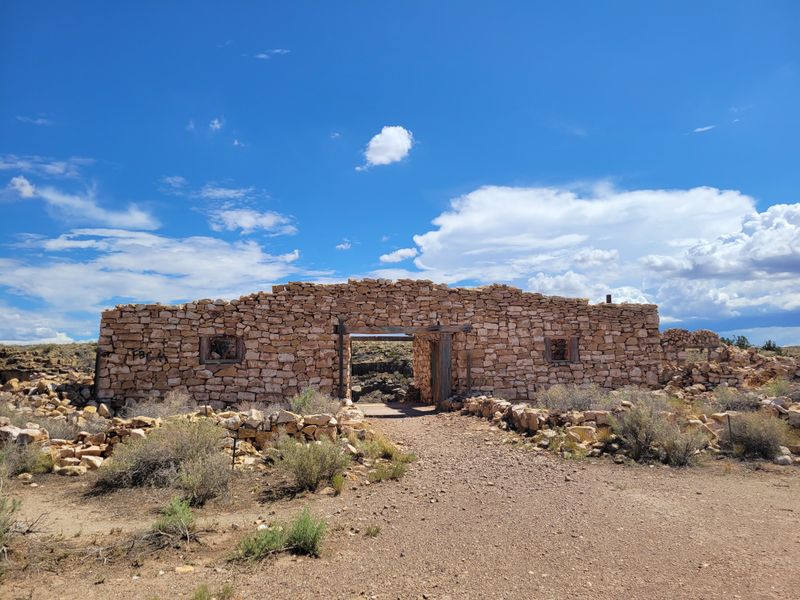
You approach the structures with caution, and you accept that these are ruins with shifting edges and hidden weak points.
Boards can wobble where nails have loosened, and roofs may hold rot that you cannot see from below.
You keep a safe buffer from walls that lean or sound hollow, and you avoid climbing or pushing on anything that resists.
The ground hides hazards like nails and metal shards, and closed toe shoes make every step more confident.
You carry a small light for shaded corners, and you never enter enclosed spaces that look unstable or locked.
Your respect extends to wildlife that may shelter here, and you give space to lizards or birds that dart along the beams.
You pack out trash and leave no marks, and you treat the arrows as artwork rather than playground equipment.
The site is open around the clock, and you plan daylight visits for visibility and easy navigation.
If you explore near sunset, you keep an eye on footing and distance, and you rotate toward your car before the light fades.
Arizona weather can swing from warm to brisk quickly, and water plus a hat make a small difference that feels big.
You travel with a friend when possible, and you set a simple time check so someone expects your return.
Your presence becomes part of preservation when you move gently, and the landmark remains stronger because you chose care.
Photography tips for the arrows and ruins
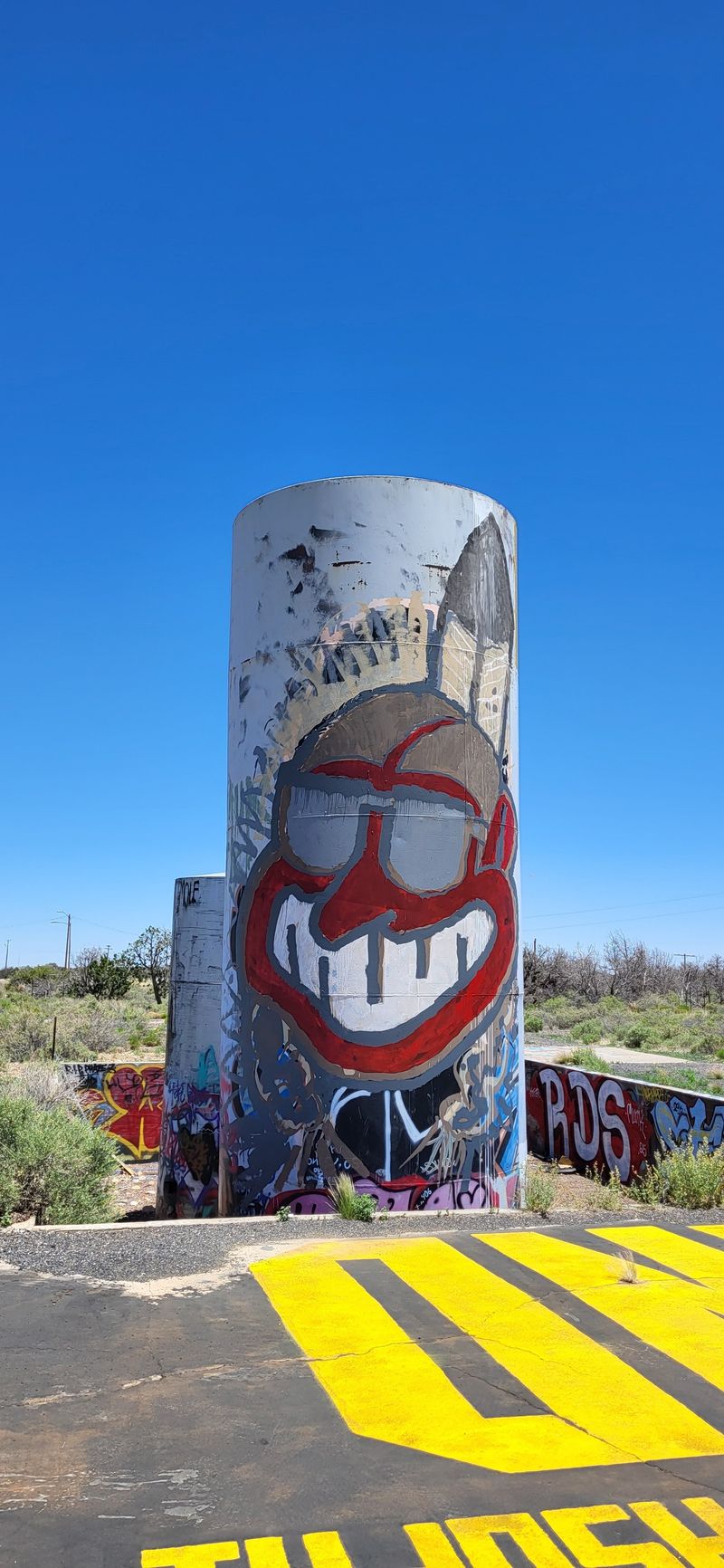
You time your arrival for golden hour when the arrows carve sharp diagonals, and the ruins glow with warm edges.
Side light reveals wood grain and chipped paint, and a small reflector can bounce a gentle highlight onto details.
You frame with leading lines from cracked asphalt, and the arrows land in rule of thirds positions with room to breathe.
A wide lens captures the relationship between structures and sky, and a longer focal length isolates textures for abstracts.
You try a low angle near the concrete pads, and the posts loom like sculptures against an uncluttered horizon.
Clouds transform the scene with quick drama, and you bracket exposures to hedge against high contrast desert light.
Reflections in a shallow puddle after rain can double the arrows, and you step around water to keep fragile soil intact.
Monochrome conversions emphasize the grain and cracks, and color holds the story of faded reds and soft yellows.
You keep people out of frame to respect privacy and focus on place, and you tidy compositions by watching for stray poles.
Arizona skies reward polarizers in midday, and you remove the filter near sunset to keep natural warmth.
A small microfiber cloth clears dust from lenses quickly, and a sealed bag protects gear when gusts kick up.
You shoot a final wide establishing view for context, and then a tight detail that becomes the memory anchor.
Route 66 context and nearby vistas
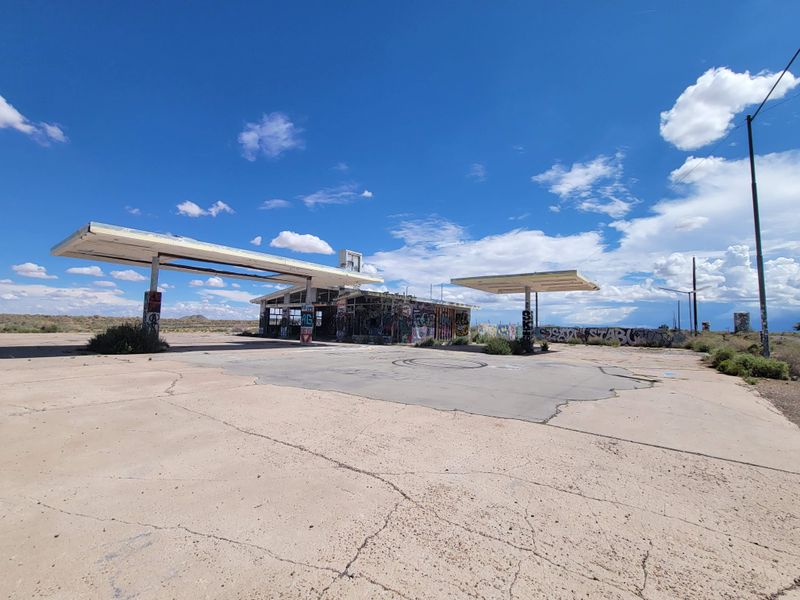
You step back from the arrows and feel the corridor of Route 66 stretching like a narrative thread across the plateau.
The San Francisco Peaks rise to the west with seasonal snow, and their profile gives every photo a crisp sense of place.
You sense how this stop once fit the rhythm of service stations and cafes, and you map the journey in your head.
Old alignments weave beside the interstate in fragments, and you read the land for clues like culverts and broken curbs.
Wind sifts across the grass and cinders, and the sound mirrors the long hum of highway travel in your memory.
You notice how the arrows point into open sky rather than at a building, and the symbolism feels intentional now.
Arizona history lives in these shoulder spaces where commerce faded, and the remains still hold hospitality as an idea.
The desert turns every object into a sundial, and the ruins mark time with shadow edges that move minute by minute.
You bring patience to the scene and let the light settle, and details emerge that you missed on first glance.
Nearby pullouts offer broad views of the plateau, and you keep your stop short so the site stays quiet for others.
You read a few reviews that mention big skies and solitude, and the notes match what you feel standing here.
You carry the roadway myth with care as you leave, and the horizon keeps telling the story after you are gone.
Legends, rumors, and what we can confirm
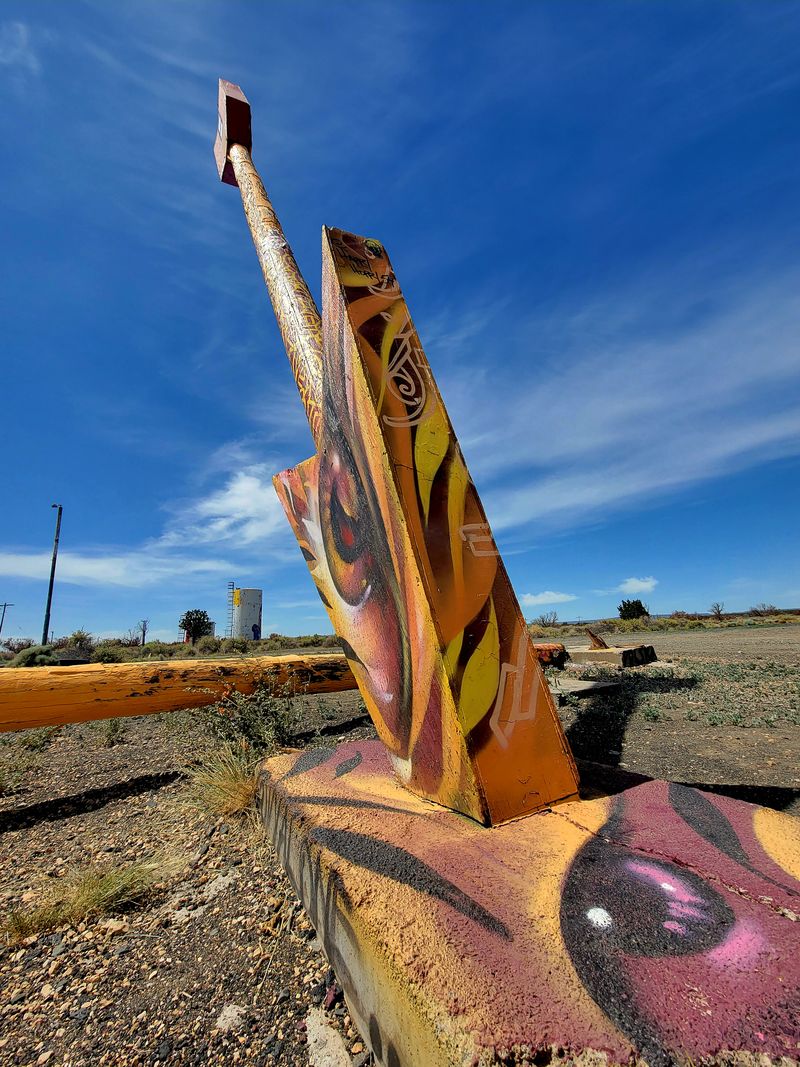
You will hear stories that the arrows once spun in the wind, and those tales add color even if they remain unverified.
Some visitors claim hidden rooms still hold forgotten trinkets, and such rumors are best treated as fiction without proof.
A few posts online suggest long lost neon once crowned the site, and no clear photos have surfaced to confirm that detail.
What you can verify today is the scale of the arrows, and the current condition maintained by occasional caretaking.
Public listings show the landmark open at all hours, and recent reviews track small changes like fresh paint patches.
Historic images document the trading post during busier decades, and they match the footprint you see when you walk around.
You separate myth from memory by checking dates, and you look for consistent descriptions that repeat across sources.
Arizona roadside lore often blends fact with theater, and this site attracts both with equal magnetism.
You share stories with a clear label when they are rumors, and you honor the real timeline that travelers can witness now.
Neighbors sometimes mention efforts to stabilize the arrows, and that aligns with visible hardware and bracing.
Your curiosity remains part of the fun when handled gently, and respect for the site keeps the legends from overshadowing truth.
You leave room for wonder while staying grounded, and the ruins offer both if you listen closely.
Best times and weather strategies
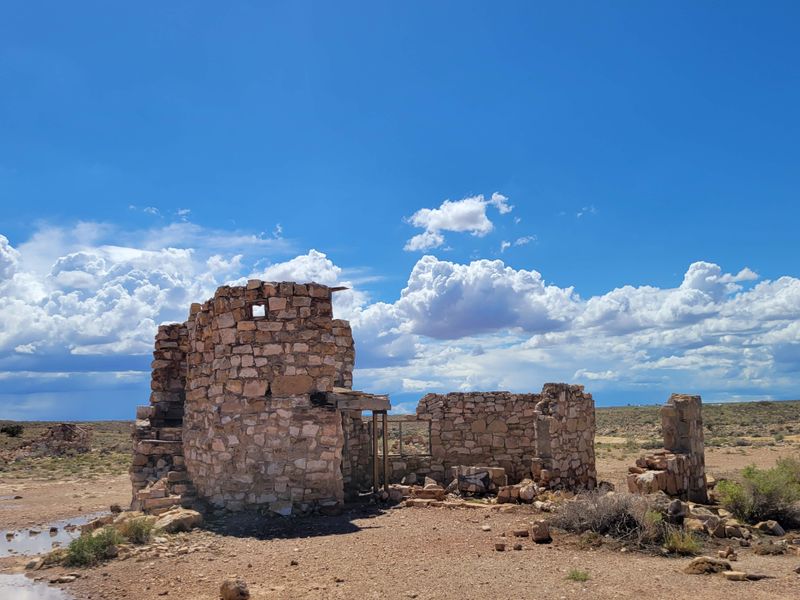
You plan spring visits for mild temperatures and clear light, and the desert sometimes surprises with small blooms near the pads.
Summer brings fast building clouds that can deliver dramatic monsoon skies, and you give storms space while watching for lightning.
Autumn slants the sun low across the wood grain, and evenings become comfortable for slow walks with a camera.
Winter can dust the arrows with snow, and the contrast against blue sky turns every angle into a crisp tableau.
Mornings tend to be calmer wind wise, and the soft light flatters textures before midday contrast takes over.
Late afternoon builds those long shadows you crave, and the golden hour draws out color from faded paint.
Arizona elevation keeps temperatures cooler than desert lowlands, and layers help when clouds push shade across the site.
You check forecasts carefully before long drives, and you allow extra time if roads are slick from rain or snow.
Sun protection matters even on cool days, and water plus a brimmed hat makes the experience smoother.
You always secure loose items when gusts pick up, and you protect tripods with a low stance to avoid tipping.
Cloudless nights can be cold quickly, and you wrap up visits before darkness complicates footing.
Your timing becomes part of your photos and memories, and the arrows reward patience in every season.
Practical tips and nearby essentials
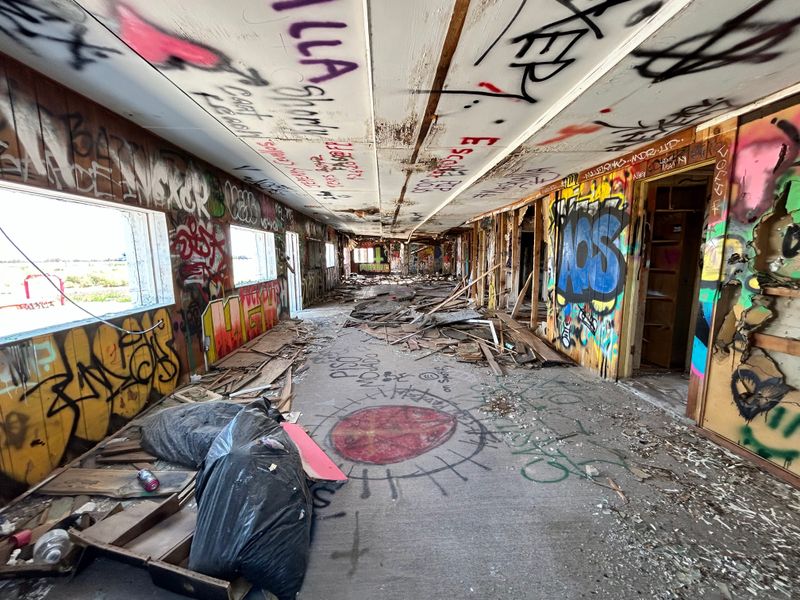
You arrive prepared because services on site are nonexistent, and your trunk holds water, sunscreen, and basic first aid.
Gloves help when moving debris from a frame, and sturdy shoes make slow exploring more enjoyable.
You carry a small trash bag to pack out litter, and your respect keeps the landmark looking cared for.
Cell coverage is generally reliable here, and offline maps serve as a quiet backup in case of hiccups.
You consider fuel and snacks before leaving Flagstaff proper, and you keep your stop efficient so others can enjoy space.
Shade is limited across the lot, and a hat plus sunglasses make bright hours gentler on eyes.
Your plan includes extra time for photographs, and you work in short loops so you do not retrace every step.
Arizona trips often straddle changing weather, and you adjust layers as the wind shifts across the plateau.
You keep pets leashed and away from hazards, and you check paws for burrs before getting back in the car.
A simple toolkit like a multitool and tape solves small surprises, and you avoid intrusive fixes on the structures themselves.
The visit feels richer when you read a brief history beforehand, and context turns details into stories you can point to.
You leave the site cleaner than you found it, and the next traveler benefits from your quiet care.
Dear Reader: This page may contain affiliate links which may earn a commission if you click through and make a purchase. Our independent journalism is not influenced by any advertiser or commercial initiative unless it is clearly marked as sponsored content. As travel products change, please be sure to reconfirm all details and stay up to date with current events to ensure a safe and successful trip.
