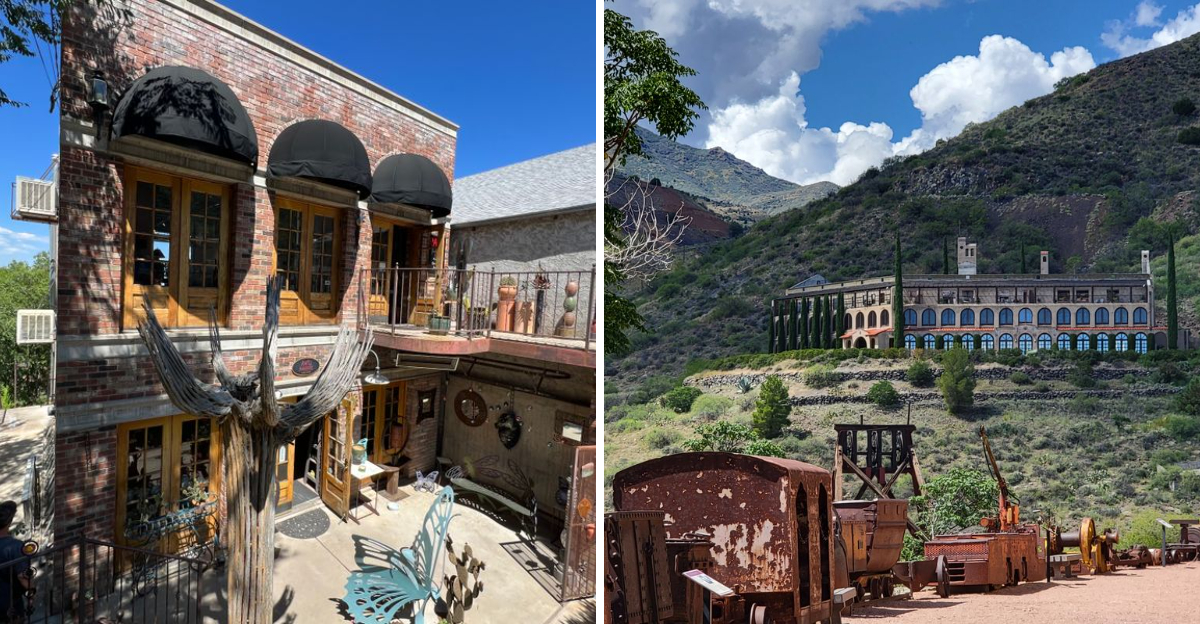
Perched high on Cleopatra Hill, Jerome invites you to wander narrow streets where mining grit meets creative flair.
The town’s copper boom memories linger in brick facades, while studios and galleries pulse with new energy.
Each block reveals a conversation between industrial past and modern imagination.
You will find a walkable treasure box that feels both rooted and refreshingly alive.
The following list unpacks how a former camp became one of Arizona’s most magnetic art towns.
Jerome State Historic Park and Douglas Mansion
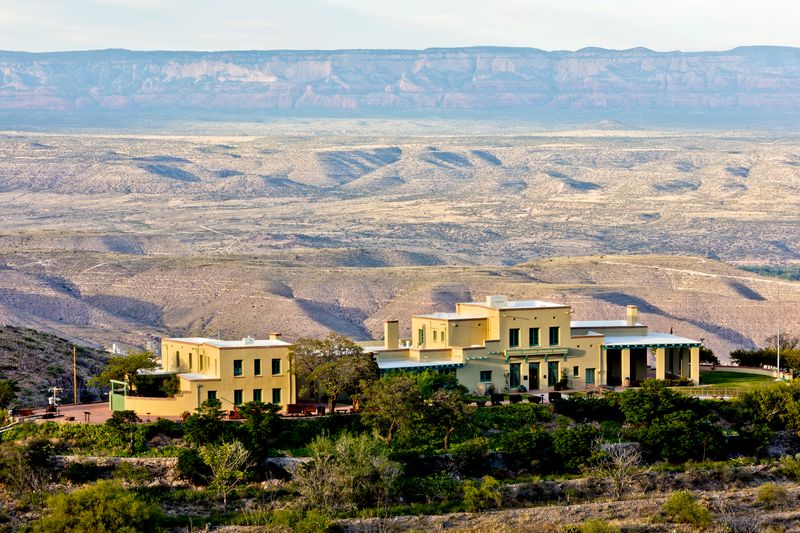
Start at Jerome State Historic Park, where Douglas Mansion anchors the story of copper wealth and community ambition.
The mansion overlooks the Verde Valley with wide porches and large windows that frame the layered geology below.
Inside, you explore mining artifacts, family photographs, and scale models that map tunnels once threading beneath the hill.
Exhibits explain how ore moved from claim to smelter, giving context to foundations and tailings you notice around town.
Panels detail the Douglas family’s role in engineering, hospitality, and civic life during the town’s busiest decades.
Short films and maps help you place buildings along Main Street into a broader timeline of growth and reinvention.
From the terrace, you can trace switchbacks that once carried trucks and miners up steep grades to work and shops.
The setting makes it easier to imagine sirens, shift changes, and nights when the hillside glowed with work lights.
Docents share insights about safety systems and ventilation that kept deep operations running in tight, hot spaces.
You also learn how water scarcity shaped planning in this dry stretch of central Arizona.
The grounds include signage about stone types used in foundations and stairways that still contour the townscape today.
Look for subtle design touches that balanced elegance with the practical needs of a company outpost.
Photography is welcome, and exterior angles capture texture, color, and the mansion’s stately profile.
Benches under shade trees offer a calm pause after museum rooms and narrative rich displays.
This stop sets a useful baseline for everything else you will see in Jerome’s shops, studios, and streets.
It shows how Arizona history, geology, and entrepreneurial energy fused, then pivoted toward preservation and arts.
Jerome Historic Mine Museum on Main Street
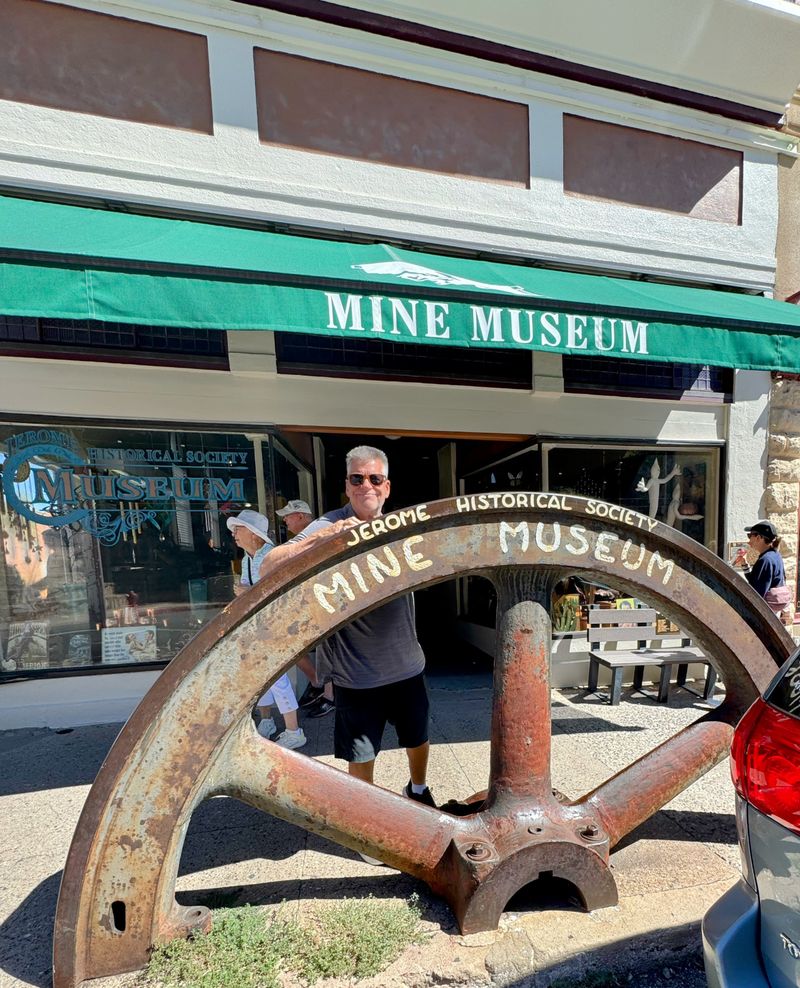
The Jerome Historic Mine Museum gives you a compact, lively primer on the town’s rise, collapse, and artistic return.
Displays pack ore samples, tools, and photographs into a space that feels like a conversation with the past.
You can trace wage books, union notices, and gear that reveal daily routines and the cost of extracting copper.
Panels explain how companies balanced profits with safety as slopes shifted and shafts deepened under pressure.
Stories about immigrant crews show how language, foodways, and skills crossed continents to meet local geology.
Kids enjoy hands on elements that invite touching minerals and watching simple mechanisms demonstrate lifting power.
Staff answer questions about where to spot surviving headframes and retaining walls around the hillsides.
They also point you toward public viewpoints where you can see the footprint of former works from above.
The museum’s location on Main Street situates you among galleries that carry the next chapter of local creativity.
As you step outside, you hear music, chatter, and the steady hum of visitors discovering new pieces.
The museum does not overwhelm, yet it covers enough detail to ground your walk with real context.
Photos of shift teams and equipment lines make scale clear when compared to today’s quiet streets.
Take a moment to match exhibit maps with businesses occupying repurposed structures nearby.
That comparison highlights resilience and the thoughtful reuse that characterizes this corner of Arizona.
By the time you finish, you will read brickwork and stair runs like chapters written in iron and stone.
The museum becomes a springboard to appreciate how art and memory coexist in Jerome’s compact core.
Audrey Headframe Park and glass platform
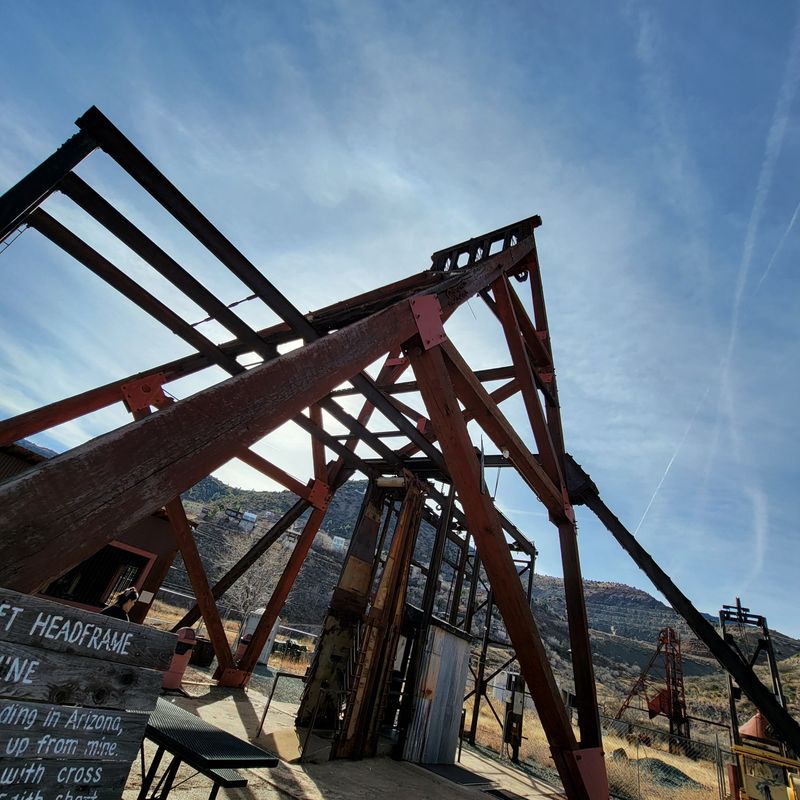
Audrey Headframe Park invites a closer look at the engineering that once powered Jerome’s deepest shaft.
A steel frame rises over the site, with a glass platform that lets you look down into the dark vertical drop.
The view, controlled for safety, communicates depth better than any diagram or historic photo ever could.
Interpretive panels describe hoist systems, cables, and the tonnage that moved daily during peak production years.
You gain appreciation for calculations required to keep loads steady while beds of rock shifted below.
The park layout keeps pathways simple so you can linger and study from different angles without crowding.
Sunlight glints on metal, and the surrounding hills remind you of how the operation fit the larger landscape.
From here, you can imagine noise, grit, and communication signals that once coordinated teams above and below.
Modern railings and tempered glass provide reassurance, making the vertigo feel thrilling rather than alarming.
Nearby benches let you catch your breath and review diagrams that plot connections to other works.
The stop pairs well with a museum visit so facts translate into the physical sense of distance and weight.
It also bridges the past with present day curiosity that draws artists to explore form and structure.
Sketchers often settle here to capture lines, shadows, and geometry that define this corner of Arizona.
Photographers will find dynamic compositions that shift as clouds slide across the high desert sky.
Listen for wind moving through the frame, which adds atmosphere to the visual drama.
You leave with a visceral memory that strengthens your understanding of Jerome’s mining backbone.
Contemporary galleries along Main Street
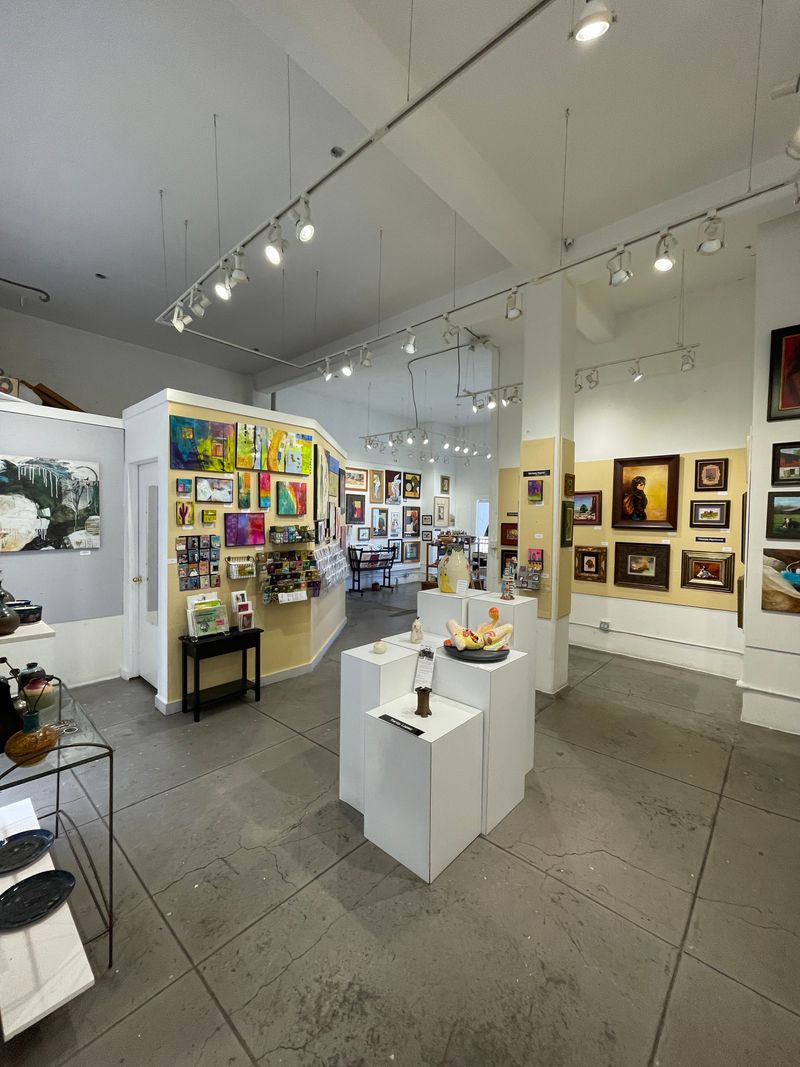
Main Street links a string of galleries where painters, sculptors, and makers show work shaped by light and elevation.
Windows frame abstract canvases, desert toned ceramics, and metal pieces that echo the town’s industrial geometry.
You can linger without hurry, since shopkeepers welcome questions about process, sources, and materials.
Many studios integrate salvaged timbers or brick, letting textures converse with new color and clean lines.
Shows rotate often, so repeat visits reveal fresh themes that track seasons and community events.
Some artists live nearby and relish talking about how monsoon clouds influence palette and mood.
Others arrive from around Arizona, bringing interpretations of canyons, mesas, and urban scenes.
It is easy to connect pieces with the hills, skies, and structures you just walked past outside.
Prices range widely, and you will find postcard prints beside finely crafted one of a kind works.
Emphasis on handwork creates a natural link between mining era grit and contemporary craft discipline.
Friendly staff often share maps pointing to murals and public art tucked into side stairways.
Look for collaborative shows that pair photographers with poets or metalworkers with glass artists.
Even brief conversations can deepen a sense of place and introduce new ways of seeing the town.
Natural light floods many spaces, making browsing pleasant even during warm afternoons.
The whole scene feels conversational, grounded, and proudly local without becoming insular.
You walk away with inspiration, and possibly a small piece that ties you to Jerome’s creative pulse.
Jerome Grand Hotel, hilltop landmark
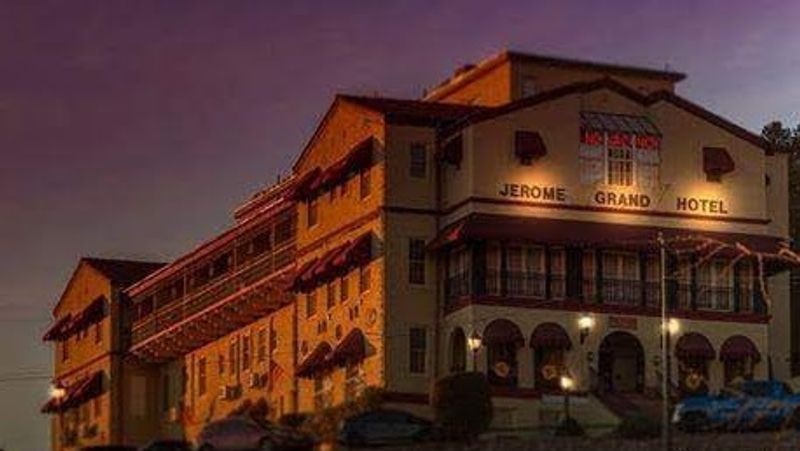
The Jerome Grand Hotel rises above town with a commanding view and a distinctive mission revival silhouette.
Built as a hospital in the 1920s, the structure now hosts guests who want history baked into every hallway.
Public areas display photographs and artifacts that illustrate healthcare and mining life during intense production years.
The lobby’s polished wood and vintage fixtures create a mood that fits the town’s careful preservation ethos.
Staff maintain a calm pace and share background on renovations that balanced safety with authenticity.
Rooms vary in layout, and many capture long views over the Verde Valley that glow at sunset.
Visitors sometimes talk about unusual noises and stories from the building’s past, labeled as local lore.
You can enjoy the atmosphere even without an overnight stay by entering public spaces during open hours.
Elevator rides add a small thrill, since the lift echoes with the building’s earlier clinical design.
Seating areas make comfortable waypoints between gallery strolling and museum stops around town.
Parking sits on terraced levels, reminding you of how every flat surface here required planning and labor.
Respectful photography is welcomed in common areas that showcase period details and restored finishes.
This landmark helps you read the skyline and orient while exploring the narrow, bending streets.
The building’s profile becomes a reference point anywhere you stand along Jerome’s stepped sidewalks.
Its presence tells a story about adaptation at the heart of central Arizona’s small mountain towns.
You leave with the feeling that heritage and hospitality can complement each other without strain.
Jerome Artists Cooperative Gallery
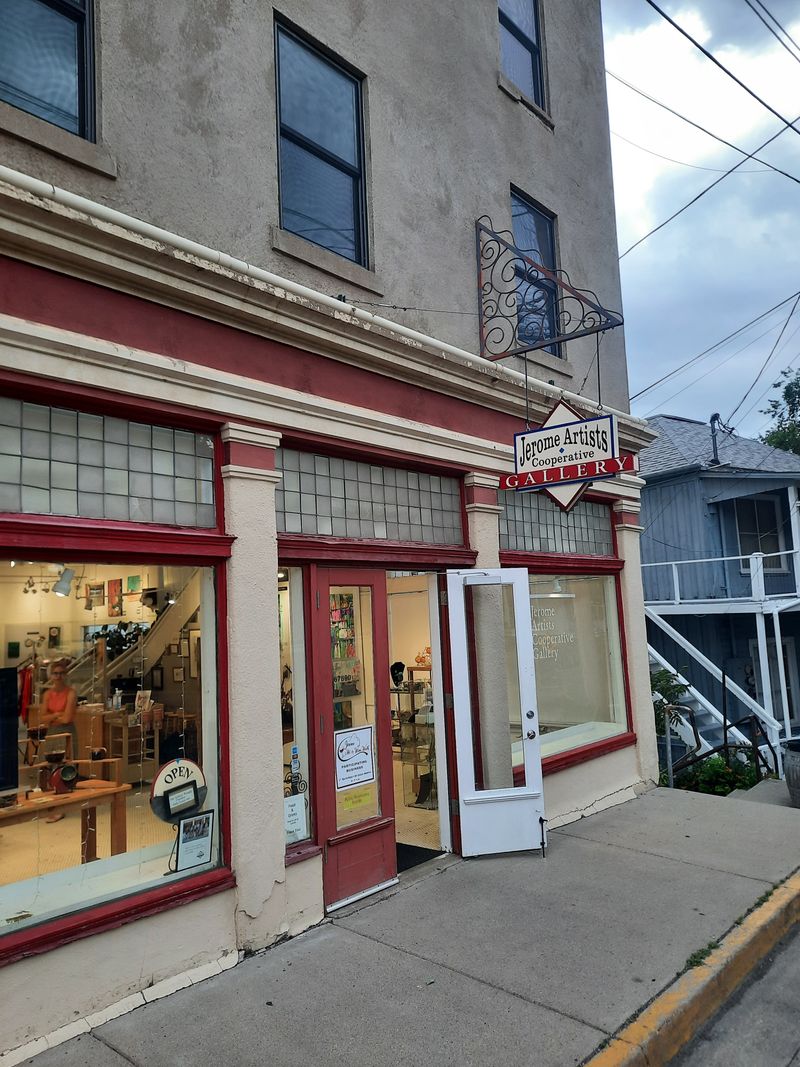
The Jerome Artists Cooperative Gallery operates as a member run space where local creators curate and staff the floor.
You meet artists at the desk who speak candidly about techniques and challenges behind the pieces on display.
Rotating shows keep the mix energetic, with painting, jewelry, fiber, and mixed media sharing the stage.
The building’s bones show through in exposed beams and brick that add warmth without stealing attention.
Labels include short statements that describe inspiration drawn from canyons, storms, and quiet winter mornings.
Prices remain approachable, making it easy to support makers while traveling through Jerome.
Hours shift seasonally, so checking ahead helps you plan a smooth route along Main Street.
The layout invites a slow loop that returns you to favorites for a second look before deciding.
As a cooperative, the gallery invests in local outreach and occasional demonstrations for visitors.
Conversations feel relaxed, and there is room to stand back to absorb larger works without crowding.
Natural light keeps colors crisp, while task lamps highlight fine details and texture on smaller pieces.
The space functions like a community hub where ideas cross pollinate among painters and sculptors.
You sense continuity from mining era teamwork to modern collaboration centered on art making.
That spirit reflects broader Arizona values of resourcefulness and respect for landscape scale.
A purchase here feels personal because you met the creator and learned the story behind the work.
You step out feeling connected to the creative heartbeat that keeps Jerome lively year round.
Scenic stairways and hillside viewpoints
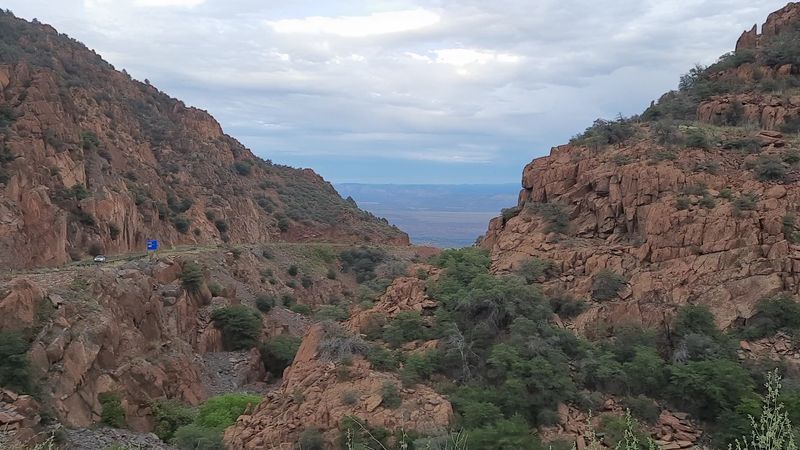
Jerome’s hillside stairways function as both workout and tour, linking pockets of history with big sky views.
Stone walls, iron railings, and concrete steps reveal decades of patching that tell their own quiet stories.
As you climb, the town unfolds in layers, with rooftops stepping down toward the Verde Valley.
Small landings let you pause and scan for headframes, murals, and adaptive reuse in old storefronts.
These paths suit photography focused on geometry, shadow lines, and the contrast between plant life and masonry.
You will notice how engineering met terrain to keep residents connected before cars dominated the streets.
Morning light keeps temperatures comfortable, especially during warmer months in central Arizona.
Wayfinding is intuitive if you take your time and follow the obvious stairs that link main levels.
Locals often recommend footwear with grip since grades can feel slick after rain.
You can combine stair routes with museum and gallery stops to break up climbs with creative pauses.
Benches appear at good intervals so you can rest and enjoy shifting angles on the town.
Even a short walk offers insight into how vertical living shapes daily rhythms and neighborly ties.
Look for informational plaques that explain names, dates, and reasons certain stair runs were built.
You may hear music drifting up from street performers that adds brightness to the quiet steps.
These walkways embody Jerome’s character, practical, resilient, and oriented toward the horizon.
You finish with stronger legs and a clearer mental map of how the town holds together.
Jerome State Historic Park trails and gardens
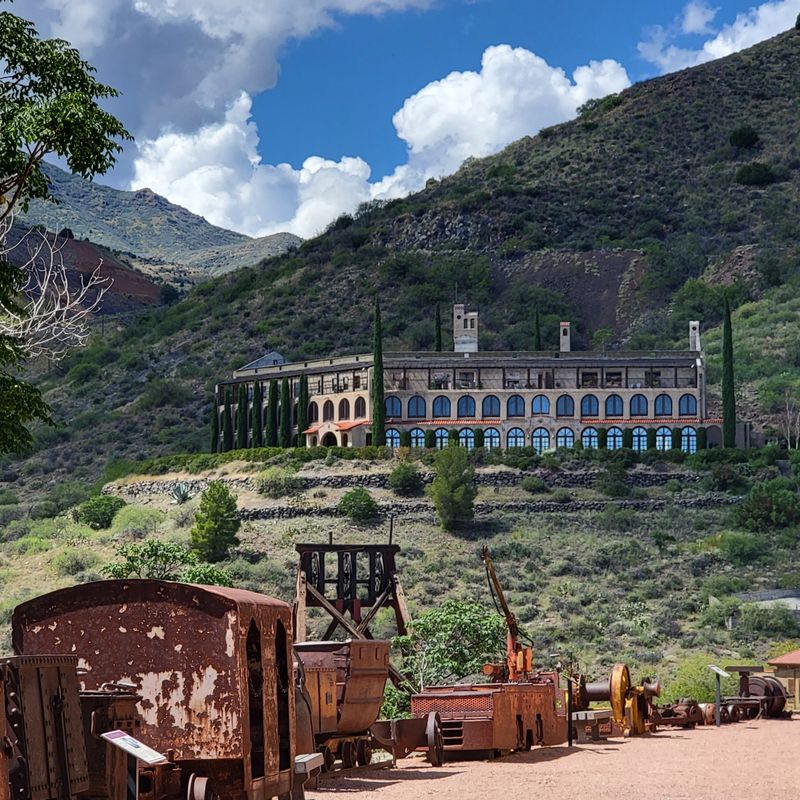
Beyond the museum rooms, the park’s gardens and short trails reveal native plants adapted to rocky soils.
Interpretive signs identify species and describe how roots find water in thin, well drained layers.
Birdsong adds a soft soundtrack that contrasts with the heavy equipment history inside the mansion.
Benches placed under shade trees invite you to rest and scan for hawks riding thermals.
Paths are gentle, making this a good cooldown after climbing Jerome’s steep public stairways.
You can spot stonework techniques that kept terraces intact during hard rains and sudden runoff.
Views open toward the Verde Valley, giving a wide sense of space that artists often chase on canvas.
Seasonal blooms attract pollinators that add movement and color to the muted desert palette.
Photographers appreciate the contrast between soft leaves and the mansion’s clean lines and angles.
The gardens underscore how residents planned around drought cycles in this part of Arizona.
Short walks here help families with mixed energy levels enjoy the park at an easy pace.
Interpretation links plant use to household needs when far flung supply lines were expensive.
Listen for wind threading branches, which makes a gentle companion to distant town sounds.
You leave with a richer understanding of how landscape shaped daily choices beyond mine shifts.
This calm corner balances the vigorous narrative of industry with a restorative sense of place.
The setting shows that heritage and habitat can share space without crowding each other.
Jerome’s creative events and small festivals
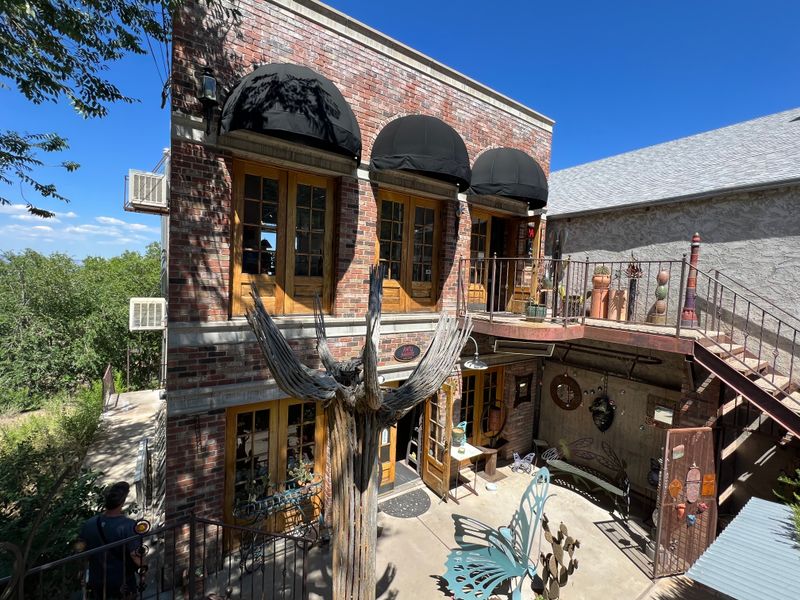
Jerome hosts small festivals that celebrate art, music, and community ties in intimate street settings.
Booths line sidewalks with makers showing prints, ceramics, and jewelry while musicians keep a gentle rhythm.
Schedules shift year to year, so it helps to check the town calendar before planning a weekend.
Events are sized to fit winding streets, which keeps flow manageable and conversation easy.
You will meet artists you saw in galleries and others who set up pop up displays.
Some happenings include studio tours that open workspaces otherwise quiet during regular hours.
Families appreciate friendly volunteers who guide visitors toward rest spots and viewpoint pockets.
Local stories sometimes surface, labeled as lore, about performances in unusual hillside venues.
Photography remains welcome, especially wide shots that capture the town’s layered architecture.
Artists collaborate across mediums, pairing sound with visual pieces that reference mining textures.
These gatherings show how Jerome continues to evolve without losing its small town identity.
Conversations often spark plans for future murals, classes, and cross gallery partnerships.
Visitors leave with a sense that creative energy here is steady rather than trendy.
The setting, anchored in central Arizona, lends bright light and crisp air to outdoor programs.
Even brief attendance can add dimension to a weekend of museums and scenic strolls.
You come away feeling included in a town that treats art as everyday conversation.
Tuzigoot National Monument day trip context
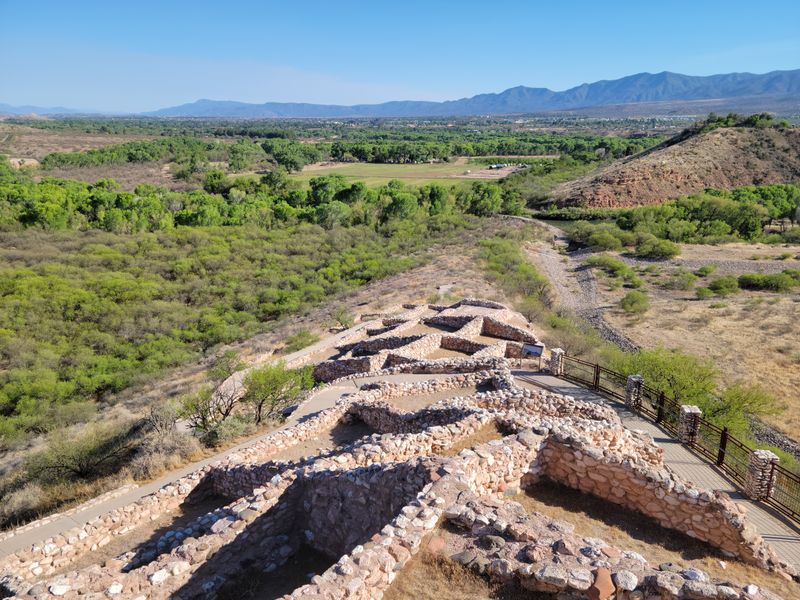
From Jerome’s terraces you can look east toward Tuzigoot National Monument and feel the region’s deeper timeline.
The hilltop pueblo adds context for how people organized life and storage using careful stone masonry.
While Tuzigoot sits outside town, it shapes conversations about continuity, adaptation, and resource use.
Museum panels in Jerome sometimes reference the broader Verde Valley to situate mining within longer arcs.
You can plan a day that pairs galleries with a drive to the monument for balanced perspective.
This combination places modern creativity beside ancestral craftsmanship in a way that feels respectful.
Views from Jerome help you picture river corridors that supported travel, farming, and trade.
Back in town, artists often cite landscape lines echoing distant ridges in their compositions.
The comparison underlines how community making changes tools but holds on to core needs.
It also highlights why Arizona’s varied elevations produce distinct building choices and material palettes.
Interpretation at both places encourages thoughtful walking and patient looking rather than rushing.
You might notice how light shifts across the valley and carries color into galleries later.
Even without leaving Jerome, simply naming Tuzigoot expands your sense of place and time.
That awareness enriches how you read bricks, beams, and stairways shaped by different eras.
The day ends with a clearer thread tying geology, water, and artistry across the Verde Valley.
You carry that thread into conversations with makers who call this hillside town home.
Jerome’s adaptive reuse and preserved facades
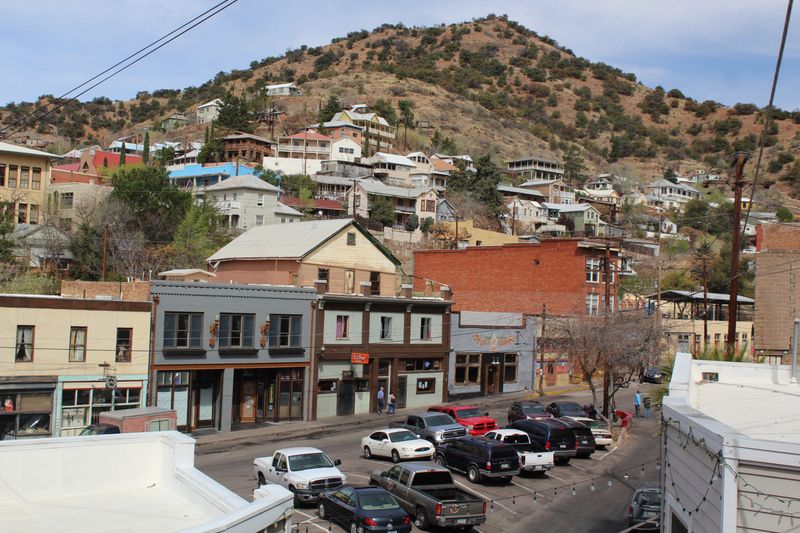
Walking Jerome is a study in adaptive reuse that turns former company spaces into studios and small businesses.
Brick facades hold vintage signage while interior layouts switch from industrial to welcoming retail.
Stability depends on careful reinforcement that preserves character without sacrificing safety or access.
Owners embrace layered textures, letting patched mortar and old beams share the stage with fresh paint.
Many storefronts keep transom windows that draw daylight deep into long, narrow rooms.
You can often glimpse remnants of rails or hooks that once moved goods along the back walls.
Design choices echo a culture that values practicality and story in this Arizona hillside town.
Wayfinding stays intuitive because original doors and stairs still guide how people flow through space.
Plaques describe dates, original purposes, and changes that brought buildings back to life.
Photographers find endless angles where shadow meets brick, and signage anchors color against sky.
Merchants happily explain how upgrades work around quirks like slopes, tight alleys, and narrow entries.
At night, soft lighting smooths textures while preserving the town’s quiet, reflective tone.
This approach keeps history visible while making room for contemporary craft and service.
You leave appreciating how reuse can protect identity while supporting today’s needs.
The model offers lessons that travel well to other small communities across the Southwest.
It proves that patience and care can turn yesterday’s infrastructure into tomorrow’s creative stage.
Dear Reader: This page may contain affiliate links which may earn a commission if you click through and make a purchase. Our independent journalism is not influenced by any advertiser or commercial initiative unless it is clearly marked as sponsored content. As travel products change, please be sure to reconfirm all details and stay up to date with current events to ensure a safe and successful trip.
