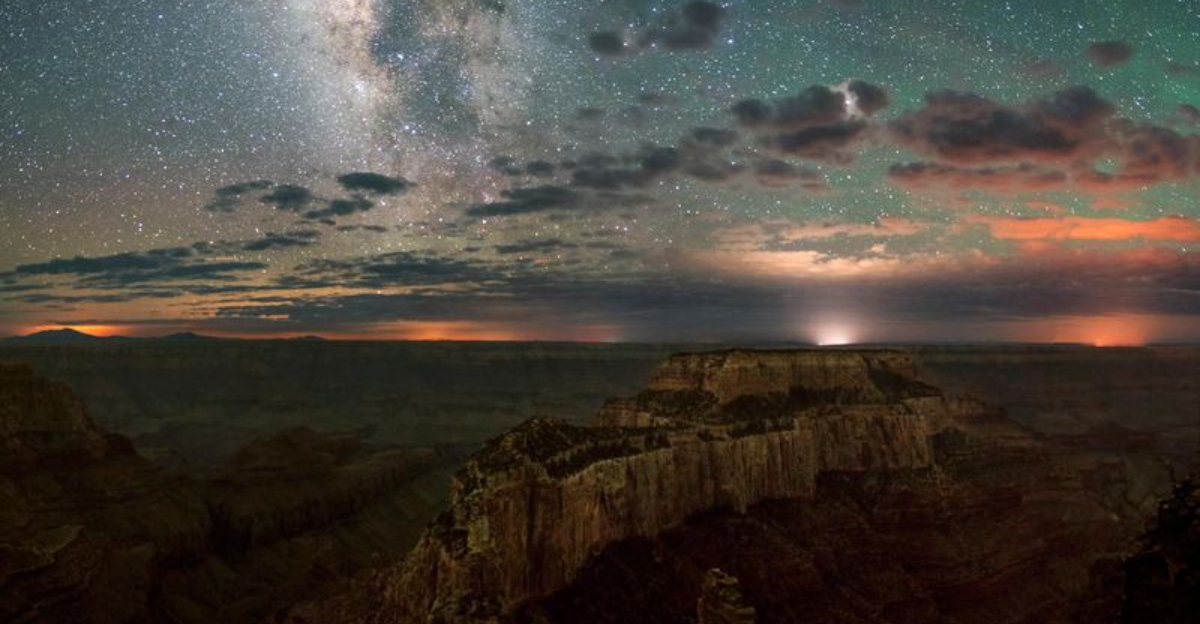
As the sun dips below the horizon, Arizona’s deserts reveal a hidden world of nocturnal wonders. Under a blanket of stars, travelers can explore canyons, sand dunes, and historic towns in ways the daytime sun never allows. Cooler air, quiet trails, and brilliant constellations create immersive adventures for photographers, stargazers, and night explorers. This guide unlocks ten transformative night experiences redefining desert travel across the Grand Canyon State.
Flagstaff’s Dark Sky Legacy
Flagstaff, the world’s first International Dark Sky City, turns astronomy into an accessible, hands-on adventure. Streetlights are shielded, skies are inky, and the Milky Way often stretches horizon to horizon. At Lowell Observatory, visitors peer through historic and modern telescopes, enrich night shoots with guided programs, and learn practical tips for astrophotography.
Downtown, night-friendly businesses keep energy high without drowning the stars. For the best views, arrive during new moon weeks, acclimate to altitude, and pack layers for crisp mountain air. Photographers should scout compositions by day, then return with red headlamps and fast lenses.
Rangers and docents share constellation stories that deepen the experience. In Flagstaff, science meets wonder: the cosmos above the ponderosa pines feels both intimate and infinite, reshaping what a night out can mean.
Grand Canyon Under the Milky Way
After sunset, the Grand Canyon becomes a cathedral of shadow and starlight. Rim overlooks like Mather, Yavapai, and Desert View transform into foregrounds for the Milky Way, while silence amplifies canyon winds and distant owl calls. Summer’s Star Party brings rangers, astronomers, and telescopes to public pads, making galaxies feel within reach.
Practicalities matter: check moon phases, bring warm layers, and arrive early to secure safe, low-traffic viewpoints. Photographers favor ultra-wide lenses, interval shooting, and careful light discipline. Ranger-led night walks illuminate geology by starlight and share ancestral stories tied to the sky.
For accessibility, shuttle-served overlooks reduce driving in darkness. As meteors stitch across the chasm, the canyon’s scale becomes visceral – an unforgettable fusion of cosmic spectacle and earth’s ancient architecture.
Sedona Moonlight and Vortex Nights
Sedona’s red rock cathedrals glow silver under the moon, creating dreamlike routes along Cathedral Rock, Bell Rock, and Airport Mesa. Strict lighting keeps skies dark, while local guides offer vortex-focused night walks that blend geology, energy lore, and quiet meditation.
Photographers capture saguaro-studded silhouettes and sandstone fins under star trails – best during new moon, though bright moonlight can sculpt dramatic textures. Safety first: stick to marked trails, bring traction for slickrock, and use red-light headlamps to preserve night vision. Many trailheads have limited parking after dark; plan rides or earlier arrivals.
For a mindful finish, stargaze from Crescent Moon Picnic Area as Oak Creek murmurs nearby. Sedona’s nighttime mix of mysticism and natural theater invites travelers to slow down, breathe, and let the rocks tell their luminous story.
Kitt Peak Night Observing Programs
Southwest of Tucson, Kitt Peak National Observatory hosts the world’s largest collection of optical telescopes, turning desert nights into cosmic classrooms. Public programs guide visitors through constellation lore, telescope etiquette, and hands-on viewing of nebulae and planets. At 6,800 feet, skies are steady and dark; bring jackets and hydrate.
Photography enthusiasts should plan for tripod shots outside program areas and favor fast primes for sky-scapes. Reservations sell out, especially around new moon weekends. The drive up is winding – arrive before dusk and depart with patience after programs conclude. Guides balance deep science with accessible storytelling, making photons from distant galaxies feel personal.
As the dome shutters slide open, the Sonoran Desert below disappears, and the universe becomes the main attraction – vast, crisp, and exquisitely close.
Oracle and Chiricahua Dark Sky Sanctuaries
Oracle State Park and Chiricahua National Monument offer lesser-known, wonderfully dark nightscapes. Oracle’s International Dark Sky designation brings guided star walks, while Chiricahua’s hoodoos rise like guardians in silhouette against constellations. The remoteness means minimal light pollution and deep quiet – perfect for astrophotography and mindful hiking.
Plan logistics: limited services after dark, variable cell coverage, and cooler temperatures even in summer. Bring layered clothing, extra water, and marked offline maps. Rangers occasionally host astronomy talks and nocturnal wildlife programs. Photographers should scout hoodoo compositions at dusk, then return with trackers or short exposures to preserve rock detail.
In these sanctuaries, coyotes chorus and meteors flash – reminders that true desert nights are as alive as they are serene, renewing the traveler’s sense of scale and wonder.
Desert Night Hikes and Wildlife Safaris
When temperatures drop, the Sonoran Desert stirs: elf owls chatter, bats loop over saguaros, and foxes pad across sandy washes. Guided night hikes in Phoenix Mountains Preserve, Saguaro National Park, and local preserves introduce safe navigation, soundscapes, and ethical wildlife viewing. Wear closed-toe shoes, carry two light sources, and avoid bright beams to protect animal behavior.
Guides teach desert scent tracking, responsible herp-spotting, and plant adaptations revealed by flashlight angles. Photographers can capture silhouettes against the city’s soft glow or aim for macro shots of night-blooming flowers. Always stay on signed trails and respect seasonal closures.
With patience, you’ll witness a living tapestry that daytime heat conceals – alert eyes, rustling prickly pear, and constellations pinned above, transforming the desert into a low-light safari.
Dawn and Dusk Balloon Flights
Hot air balloons lift from Phoenix and Scottsdale as night fades or returns, drifting over desert mosaics during the blue hour. These flights capture the magic transition: Venus brightens, then a blush of sunrise reveals riverbeds and saguaro forests.
Pilots time takeoff for stable conditions and soft winds; book reputable operators with safety briefings and weather flexibility. Photographers should favor lightweight telephotos for wildlife, wide angles for balloon clusters, and fast shutter speeds during low light. After landing, many companies offer celebratory desert breakfasts.
Dress warmly, secure loose items, and bring a soft case for gear. Watching burners flare against the dim sky is cinematic – an elegant way to bridge night and day while discovering the desert’s contours without the midday blaze.
Stargazing Camps and Sky Domes
Desert camping under Arizona’s stars trades resorts for cosmic luxury. From dispersed sites on BLM lands to specialty stays like Clear Sky Resorts near Valle, travelers sleep beneath galaxy-splashed ceilings. Transparent or panoramic-roofed domes invite meteor-watching from bed, while traditional camps deliver minimalist quiet and Milky Way arcs.
Pack cold-rated sleeping bags, windproof layers, and red lights. Observe Leave No Trace, and secure food against curious wildlife. Photographers can build time-lapse sequences, paint foregrounds subtly, and track stars with portable mounts.
On moonless nights, the sky becomes an observatory; on bright moons, hoodoos and dunes gain sculptural drama. Either way, desert slumber resets your rhythm to celestial time.
Culture, Night Markets, and Ghost Tours
Arizona’s nights aren’t only about stars – they’re cultural mosaics. Tucson’s evening tours weave frontier history with neon-lit murals and culinary stops, while seasonal night markets showcase local artisans, live music, and Sonoran flavors.
In Bisbee and Jerome, ghost walks layer mining lore with atmospheric alleyways and moonlit rooftops. Choose tours with small groups and knowledgeable guides, and wear comfortable shoes for historic districts’ stairs. Cap the night at a rooftop in Phoenix or a starlit patio in Tucson, ordering mesquite-grilled fare or green chile specialties.
Photography thrives on contrasts: warm street light against cool desert sky, long exposures capturing ambient life. These nocturnal circuits connect people, place, and palate – an urban counterpoint to the wild night outside.
Border Deserts and Galaxy Vistas
Near Arizona’s western and southern edges, vast tracts evoke a Joshua Tree-style experience: sparse development, big horizons, and skies clean enough to read the galaxy’s spine. Remote BLM lands and wildlife refuges offer minimal light pollution, ideal for Milky Way panoramas and meteor showers.
Check access roads, carry extra water and a paper map, and share your plans – services can be scarce. Moon calendars dictate the mood: new moon for deep-sky drama, crescent for balanced land-sky detail. Compose with lonely ocotillo, wind-sculpted dunes, or volcanic fields as foregrounds.
Respect fragile crusts and protected habitats. Out here, the desert’s night feels primordial – silence layered with starlight, redefining travel as a dialogue between vast space and the traveler’s careful footsteps.
Dear Reader: This page may contain affiliate links which may earn a commission if you click through and make a purchase. Our independent journalism is not influenced by any advertiser or commercial initiative unless it is clearly marked as sponsored content. As travel products change, please be sure to reconfirm all details and stay up to date with current events to ensure a safe and successful trip.
