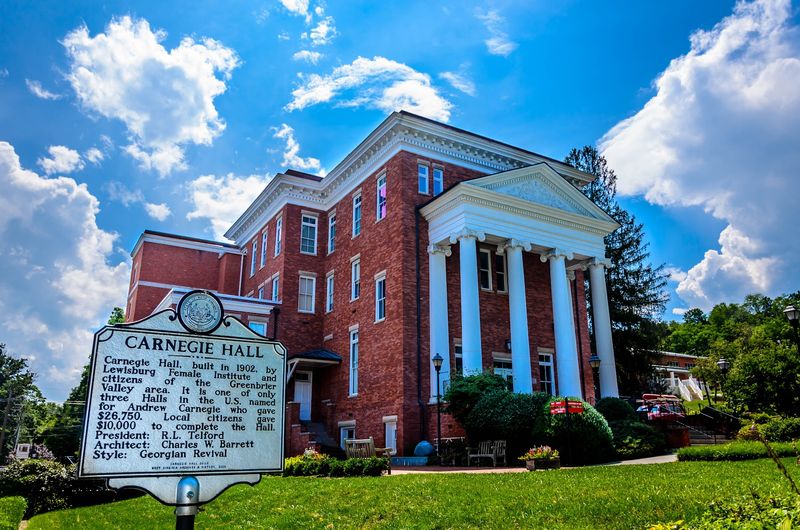
Some of the best finds in West Virginia hide in plain sight, tucked along a quiet street you might drive right past on the way to lunch. I went looking for a good meal and a slow afternoon, and instead found a century-old hall carrying a name you would expect to see in lights in a much bigger city.
Long before movie stars and red carpets, places like this were where small towns gathered for music, art, and a night out together. Once you learn its story, you may never think of a hometown stage the same way again.
A Famous Name on a Small-Town Street
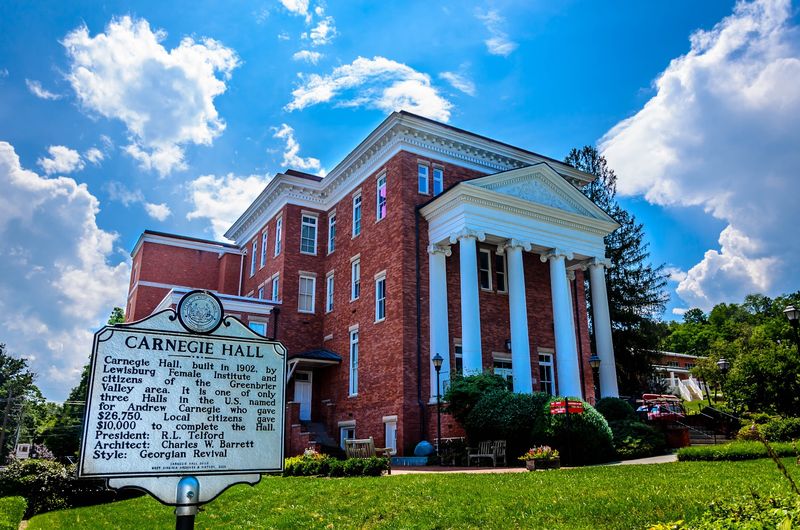
Drive into the heart of Greenbrier County and you might not expect to find a name usually linked with big-city concert stages. Yet there it sits on Church Street in Lewisburg, a handsome historic building known as Carnegie Hall.
Locals treat it as a regional performing and visual arts center, and it wears that job with quiet pride.
So what actually happens inside? Quite a lot, as it turns out.
The hall presents concerts, art exhibitions, films, and classes, which means one week might bring a chorale performance and the next might feature a gallery full of fresh work from local artists.
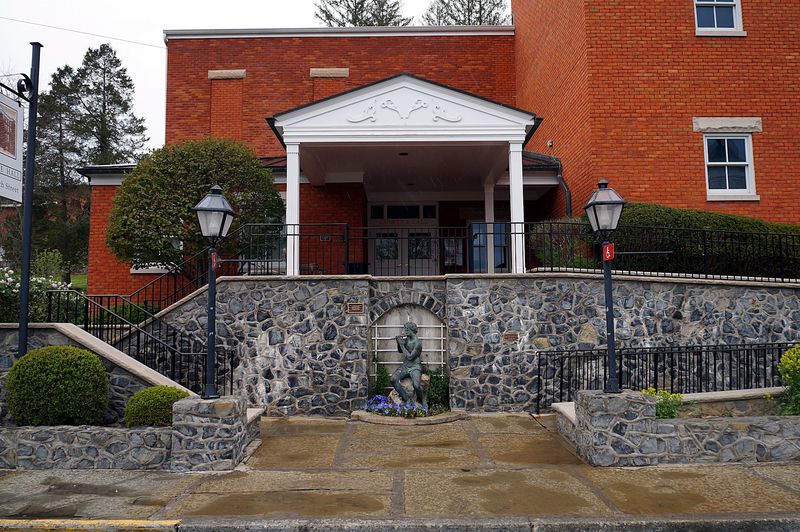
Visitors who wander over often describe a well-kept building on historic grounds, with plenty of character baked into every corner. Some folks arrive for a ticketed show, while others simply stop to admire the architecture and end up staying longer than planned.
For West Virginians who remember when the local hall was where everybody gathered on a Saturday night, this place may feel familiar in the best way. It carries that old hometown spirit, the kind that made small-town stages the center of community life long before streaming and multiplexes.
The difference here is that the doors are still open and the music is still playing.
Roots Reaching Back to 1902
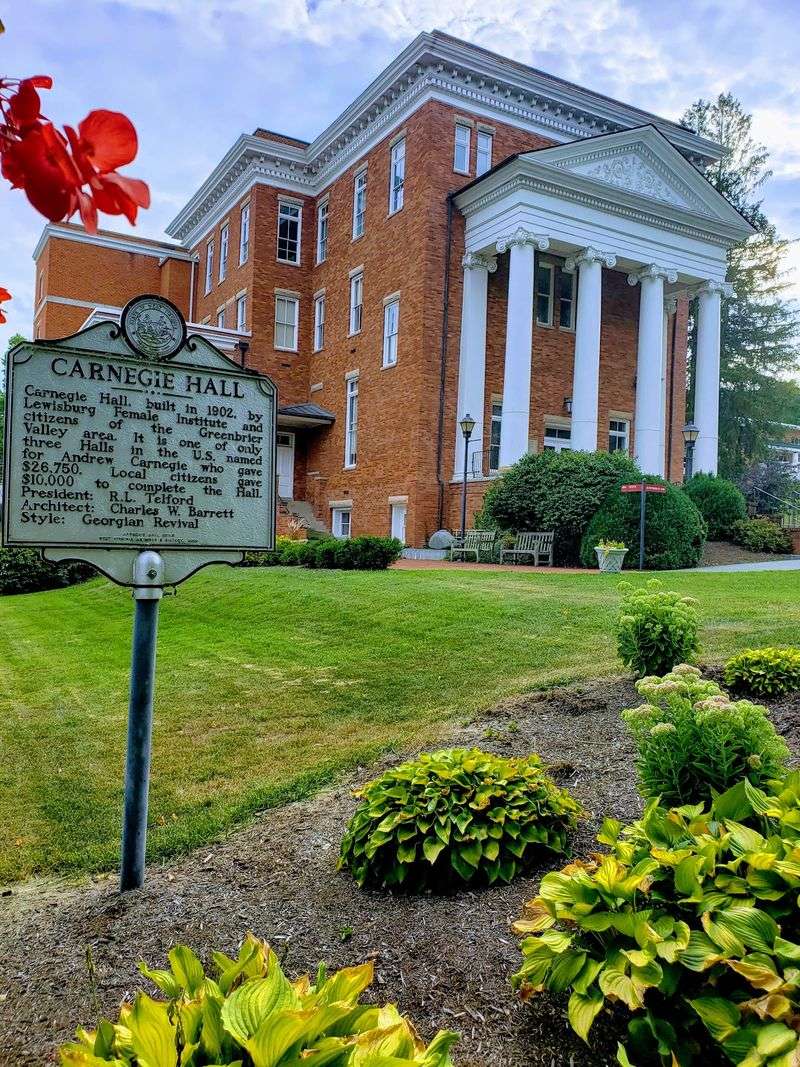
Picture Lewisburg around 1902. Horses and wagons were still a common sight on many West Virginia roads, and Hollywood was little more than a quiet stretch of California farmland that nobody connected with movies.
That is the year visitors point to as the start of this building’s story.
Halls bearing the Carnegie name are generally tied to the generosity of steel magnate Andrew Carnegie, who helped fund libraries and cultural buildings across the country around the turn of the century. Evenings in that era often meant gathering by lamplight or the glow of early electric fixtures, and a stately hall like this one would have been a real point of civic pride.
More than a century later, the structure still stands, and people keep noticing how well it has been cared for. Guests mention the historic grounds and how the building holds its age gracefully rather than hiding it.
That longevity matters to folks here. Plenty of grand old buildings in small West Virginia towns have faded over the decades, so seeing one still hosting audiences feels like a small victory for everyone who values the good old days.
It also gives younger generations a chance to sit where their great-grandparents may once have sat.
One of the Rarest Stages Around
Here is a bit of trivia worth sharing at the next family reunion. According to visitors who have toured the building, Lewisburg’s Carnegie Hall is one of only a handful of Carnegie Halls still standing.
Some guests say it is one of three in the United States, while others have heard it described as one of just four left in the world.
Whatever the exact count, the rarity is part of the charm. Most people hear the name and immediately picture the famous New York stage, so discovering one in a small mountain town tends to catch travelers off guard.
One visitor could hardly believe a Carnegie Hall existed in little old Lewisburg, and that mix of disbelief and delight is common.
That surprise factor is a big reason people stop in even when nothing is scheduled. The building is open to walk through, and several visitors mention getting an informal tour from a friendly staff member who shared the history and pointed out details they might have missed.
For West Virginians, this is the kind of hometown bragging right that never gets old. Bring out-of-state relatives here and watch their faces when you tell them exactly where they are standing.
Acoustics Worth the Drive
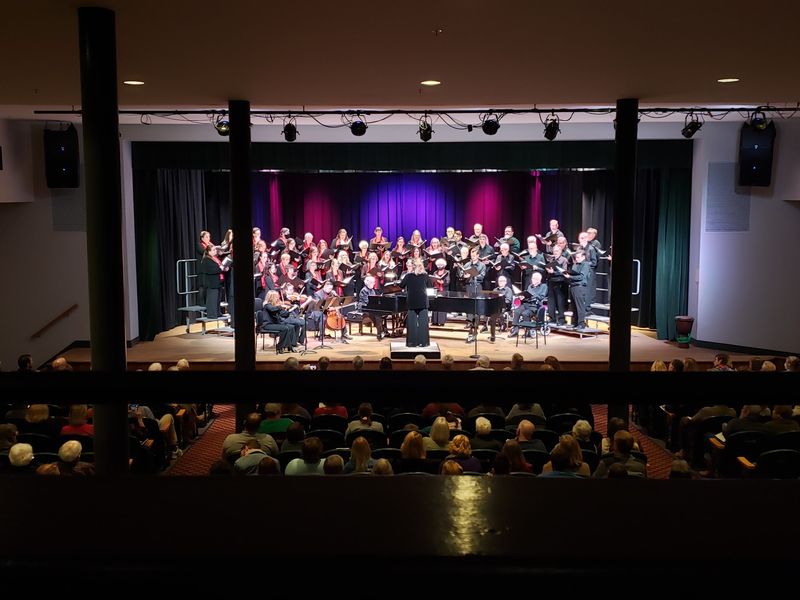
Sound is where this old hall really earns its keep. Concertgoers repeatedly praise the acoustics, noting that musicals, stage performances, and concerts come through clearly and richly, whether you sit down front or tucked farther back.
One patron who attends a regular series called the sound fantastic even after a remodel, which suggests the building’s natural strengths were protected during updates. Another guest who has seen several concerts and stage productions said the quality and professionalism of the performers matched the excellent sound of the room itself.
Irish music seems to find a happy home here too. A guest who caught the group Danu said the tunes were so vivid they made you want to wander through Ireland yourself.
Chorale concerts also earn warm mentions, with at least one listener deciding to make a yearly tradition of attending.
Why do older halls often sound so good? Builders in that era frequently shaped rooms with live performance in mind, since there were no speakers or microphones to lean on.
Whether by design or happy accident, the result here is a space where voices and instruments can truly breathe.
If you have only heard live music in gyms or big arenas, the difference may genuinely surprise you.
Seats, Sightlines, and a Balcony Perch
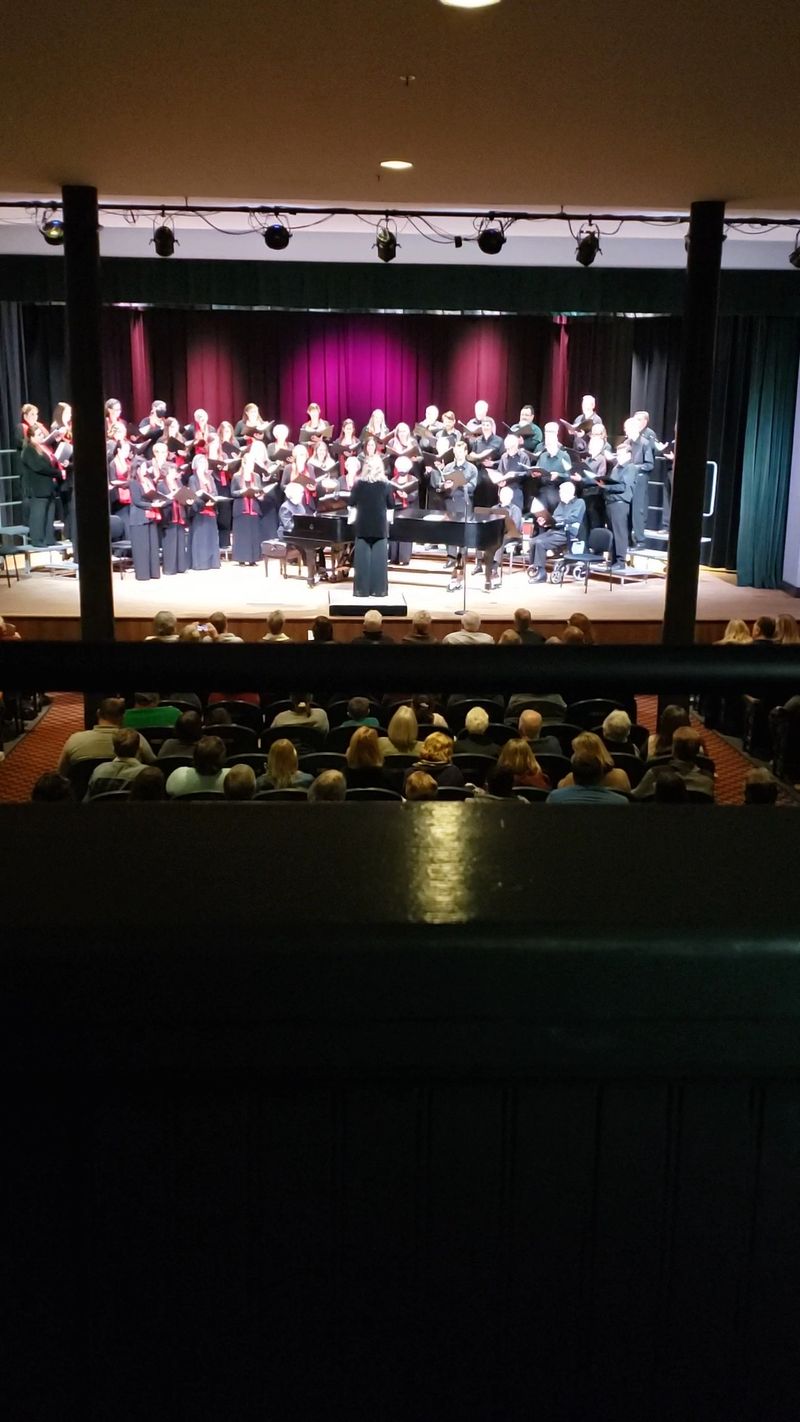
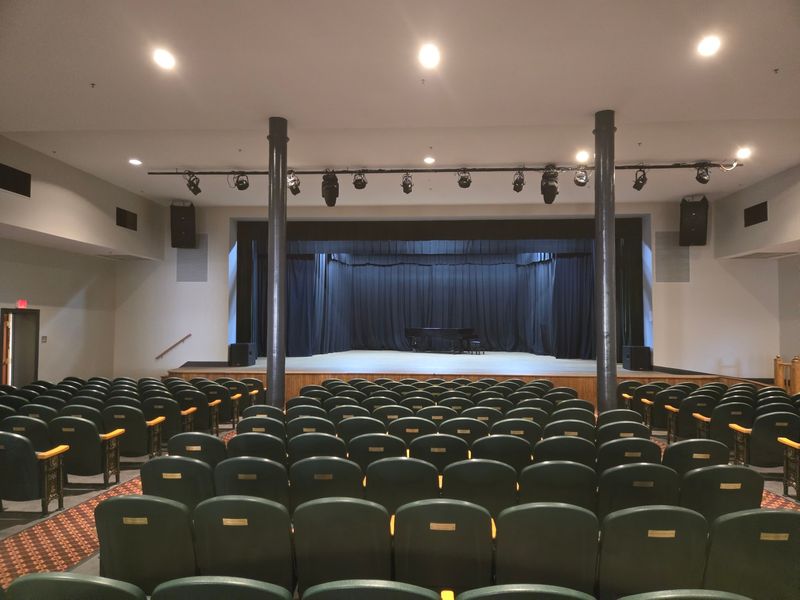
Nobody enjoys craning around a tall hat or a pillar for two hours. Fortunately, most guests say the seating at Carnegie Hall is comfortable, with plenty of elbow and leg room, and some go so far as to say every seat in the house is a good one.
In fairness, the building does have support columns, a common feature in halls of its age. One regular once noted that sightlines could suffer depending on where you sat, but after remodeling work around 2023, that same visitor reported the view had improved dramatically.
Even while sitting beside a pole for a series, they still called the room a great venue.
The balcony is another option worth considering. One chorale fan watched from upstairs and enjoyed it so much that the outing became an annual event.
The elevated angle offers a lovely look at the stage and the character of the room at the same time.
A practical tip: when buying tickets, ask about column placement if clear sightlines matter to you. Staff members are known for being genuinely helpful, so a quick question can make a good evening even better.
Guests also describe the building as extremely clean, which never hurts.
Gallery Walls and the Old Stone Room
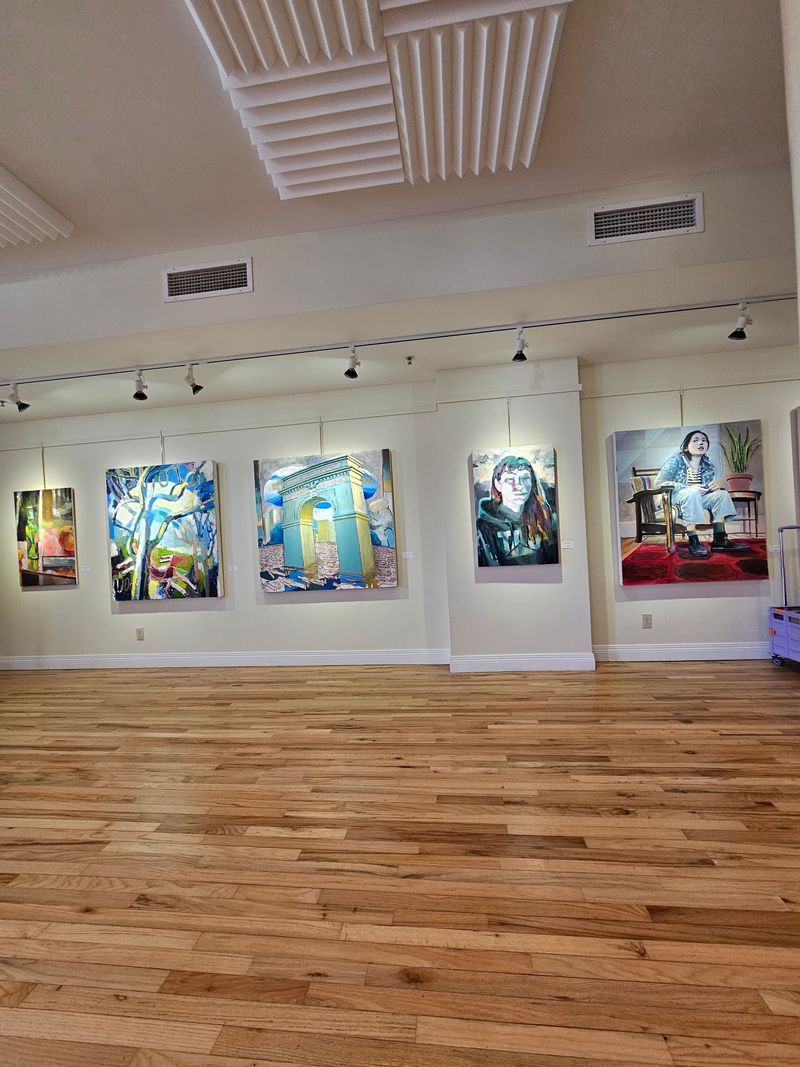
Artwork is actually the topic visitors bring up most often, which may surprise anyone who assumed this was only a concert venue. The walls and galleries showcase exhibitions throughout the year, and guests frequently use the word beautiful when describing what they found.
Don’t skip the Old Stone Room art gallery. Visitors who have poked around the building single it out as a must-see, and the name alone hints at the kind of old-world texture you can expect.
Exhibits by local artists rotate through, giving the space a fresh feel from one visit to the next.
At one point, the hall also hosted displays connected to the West Virginia Music Hall of Fame, a treat for anyone who grew up humming mountain tunes on the porch. Exhibits change over time, so check what is currently on view before you go.
There is something special about seeing work by neighbors and regional talent hanging inside a historic landmark. It keeps the building rooted in the community rather than feeling like a museum frozen in time.
Art lovers traveling with folks who prefer music can easily split the difference here. Browse the galleries by day, then come back for an evening performance, and everyone leaves happy.
Music on the Lawn
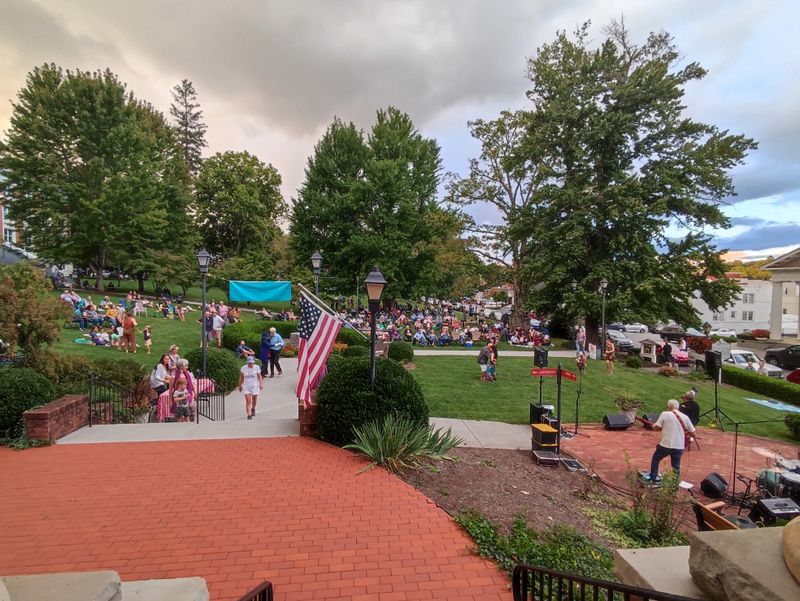
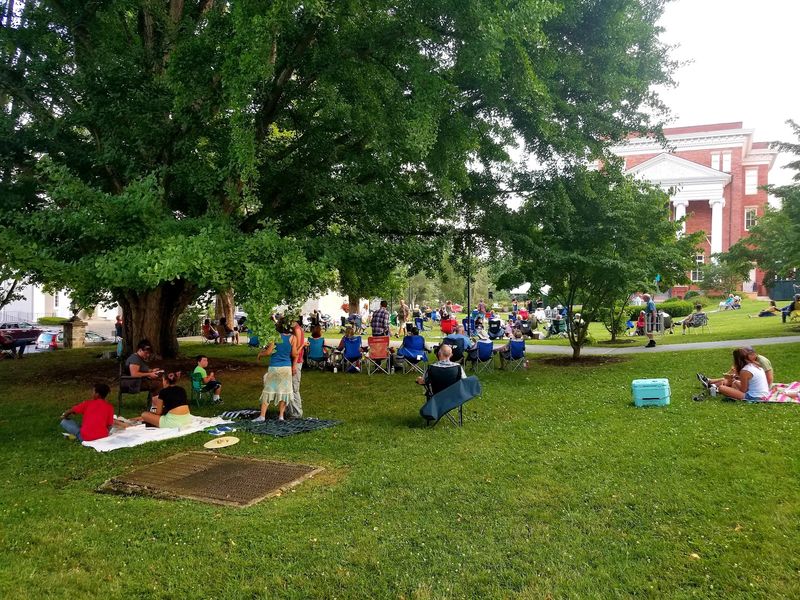
Warm evenings in the Greenbrier Valley have a way of pulling people outdoors, and Carnegie Hall leans right into that. One recent visitor singled out the outdoor music on the lawn as a highlight, praising the performances that spill out onto the grass when the weather cooperates.
There is also a music festival that draws repeat attendees. A guest who has gone a few times already said they hoped to make it back even more often this year, which says plenty about the atmosphere.
Lawn concerts carry a different mood than a seated indoor show. Kids can wiggle a bit, grandparents can settle into a relaxed spot, and friends can chat between songs without anyone shushing them.
It feels a lot like the summertime gatherings many West Virginians remember from church lawns, town squares, and county fairs.
The setting helps, too. Visitors describe the building as sitting on well-kept historic grounds in a pleasant neighborhood, so the backdrop for an outdoor set is about as charming as it gets in a small town.
Schedules vary by season, so peek at the hall’s website for upcoming outdoor events. Arriving a little early gives you time to stroll the grounds before the first song begins.
A Welcoming Vibe for Every Generation
Small, intimate, and welcoming is how many guests would describe the feel here. Vibe comes up again and again in visitor comments, along with praise for the friendly people who staff and host events.
A local couple who has attended shows for years said the folks working the hall are fantastic and genuinely helpful, and they plan to keep returning for years to come. That kind of loyalty from neighbors tells you more than any brochure could.
Families get something out of the place as well. Classes for kids are part of the programming, so young ones can explore art or performance in a setting with real history behind it.
Retirees looking for cultural outings close to home may appreciate having concerts, films, and exhibits under one roof.
The neighborhood adds its own charm. Visitors mention a community college, churches, old cemeteries with Civil War history, and good places to eat nearby, making it easy to turn a show into a full afternoon or evening out.
One traveler admitted Lewisburg keeps surprising them, and that sentiment fits. Whether you are a lifelong music fan, a curious history buff, or someone who just wants a pleasant night away from the television, the hall has room for you.
Planning Your Visit
A little planning goes a long way. The galleries are reportedly open Monday through Friday from 10 a.m. to 4 p.m., according to a visitor who arrived on a Saturday and found them closed, so weekday daytime is your best bet if art is the main goal.
Performances follow their own calendar, and ticket prices vary by event. Since hours and pricing can change, the most reliable move is checking the official website at carnegiehallwv.org before making the drive.
Accessibility gets good marks. One regular noted that getting into the building, the auditorium, and the restrooms is free of obstacles, which matters for older guests and anyone using a mobility aid.
If you visit when nothing is scheduled, you may still be able to step inside and look around. Several travelers mention walking through the building, and at least one enjoyed a personal tour from a kind staff member who shared its history.
Finding the hall is simple once you reach Lewisburg, since it sits right on Church Street among churches and historic homes. The exact address is 611 Church St, Lewisburg, WV 24901.
Pair your visit with a meal at one of the nearby spots visitors mention, and you have the makings of a relaxed, memorable day trip.
Why the Old Hall Still Shines
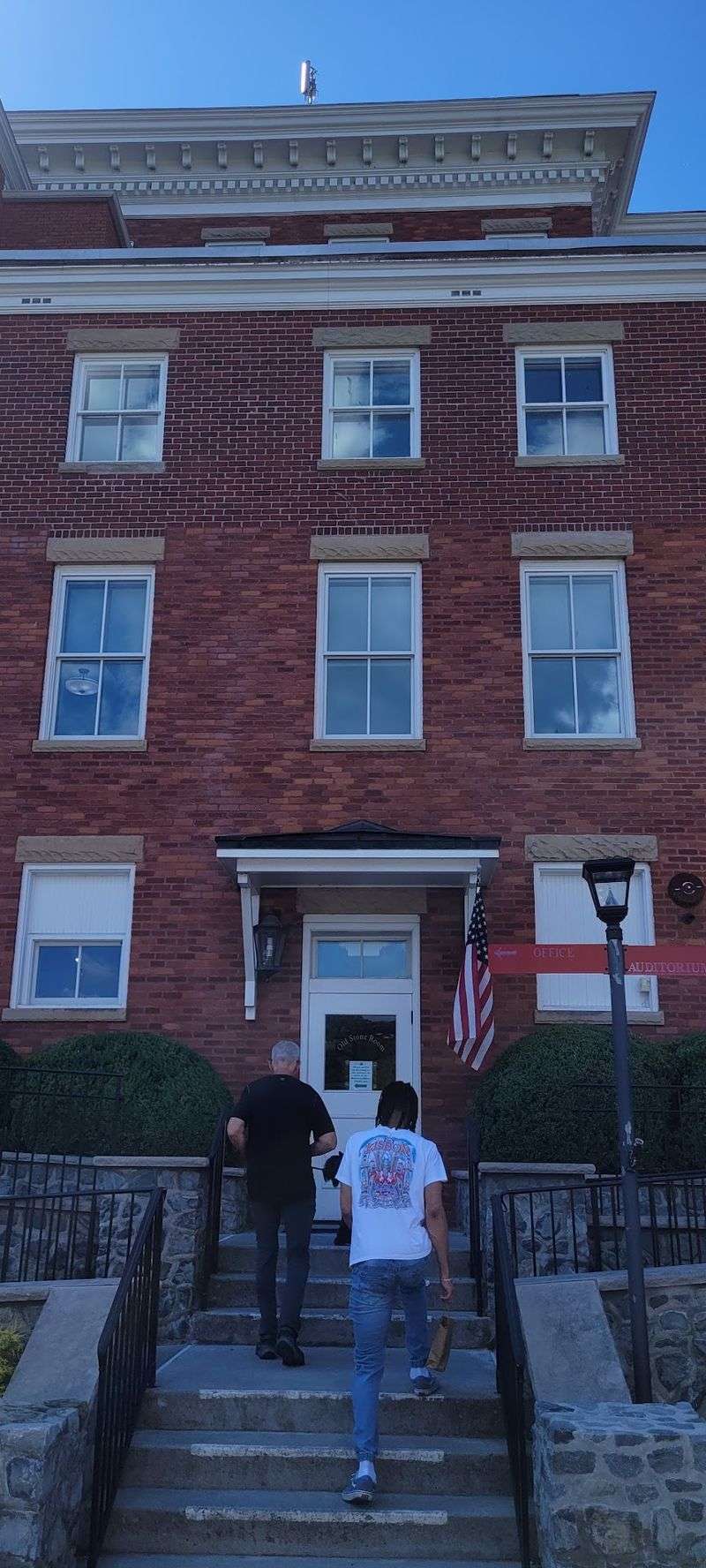
Some places earn their reputation with flashy signs and big marketing budgets. Carnegie Hall earned its by simply standing tall since 1902, keeping its doors open, and giving folks a reason to gather.
After looking at everything this hall offers, the picture is pretty clear. You get acoustics that performers and audiences both appreciate, rotating art from local talent, a charming gallery in the Old Stone Room, outdoor lawn concerts, and staff who treat visitors like old friends.
Add in the rare Carnegie name, and it is hard to think of a more distinctive cultural stop in this corner of West Virginia.
Is it perfect? A support column can still block part of a view, and weekend travelers hoping to browse the galleries may need to plan around weekday hours.
Those are small quibbles next to what people consistently describe as a beautiful, well-loved venue.
For locals, it is a reminder that some of the best evenings happen right down the road. For visitors, it is proof that small-town West Virginia still holds a few surprises worth the trip.
So grab a friend, check the calendar, and go see what is happening at Carnegie. Then share your own memories of the hall with the folks back home.
