Some of the best afternoons start with a door that doesn’t look like much from the sidewalk. You pull it open in downtown Oklahoma, expecting an office lobby, and instead your neck tilts back at a ceiling painted like something out of an old movie palace.
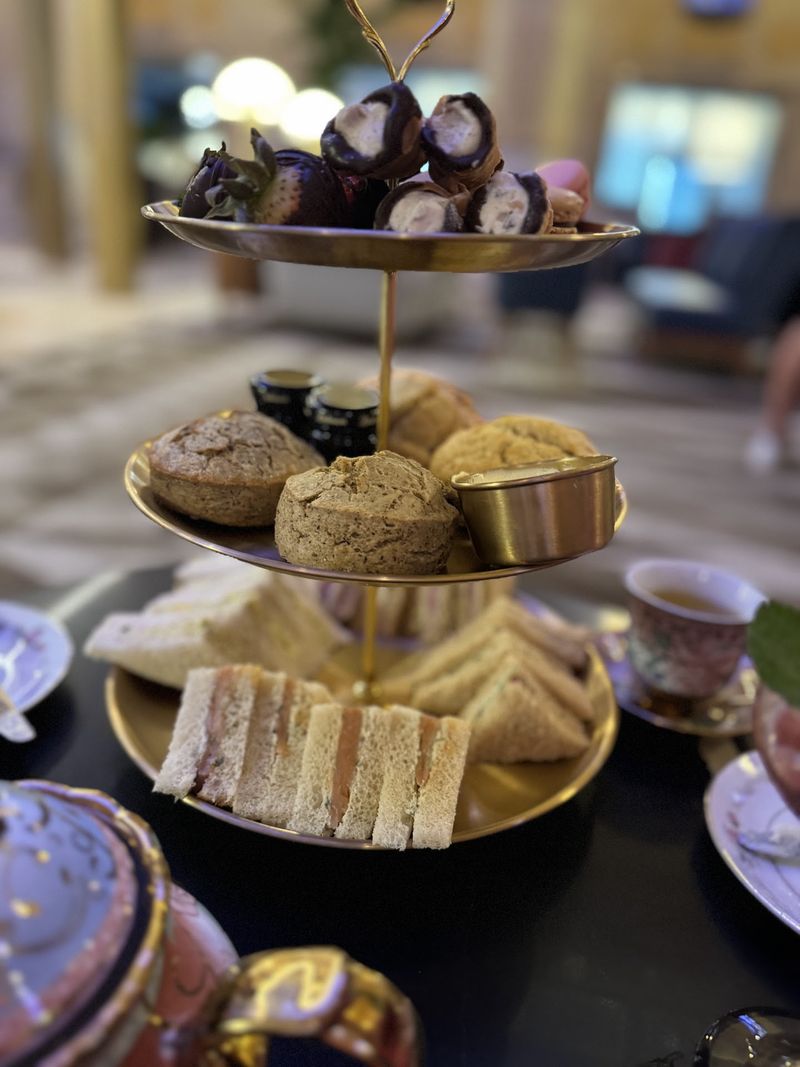
Then a three-tiered stand lands on your table, stacked with warm scones, clotted cream, and tiny sweets you want to photograph before you eat. It’s the kind of surprise that makes you text a friend halfway through the first pot of tea.
A Tearoom Tucked Inside Oklahoma City’s First Skyscraper
Walk north on Robinson Avenue in downtown Oklahoma City and the First National Center rises above you like a stone monument to the 1930s. Inside, at 120 N Robinson Ave, sits The Great Hall, a food and drink destination built into the building’s restored Great Banking Hall.
The address alone tells part of the story. This tower opened in 1931 as the city’s first skyscraper, and the enormous room where tellers once counted deposits now functions as a public lobby with tables, service, and a three-tiered afternoon tea.
Nothing about the setup feels stuffy, despite the grandeur. You can wander in, look up at the decorative painted ceilings, and decide whether you’re staying for a pot of tea or just soaking up the architecture for a few minutes.
For Oklahomans used to driving past this building without a second thought, the reveal is genuinely startling. A room this ornate, open to anyone, sitting quietly in the middle of a working downtown block, is the sort of thing you tell relatives about later.
It’s roughly a 90-minute run from Tulsa, closer from Norman or Edmond.
From 1931 Deposits To Afternoon Tea Service
Ninety-some years is a long run for any building, and the First National Center has worn several hats. Constructed in 1931, it was the tallest thing on the Oklahoma City skyline and a symbol of the city’s confidence during a rough stretch of American history.
Banks came and went. The building eventually fell quiet, its ceilings dimmed by decades of use, until an extensive restoration brought the whole complex back into service as a mixed-use destination.
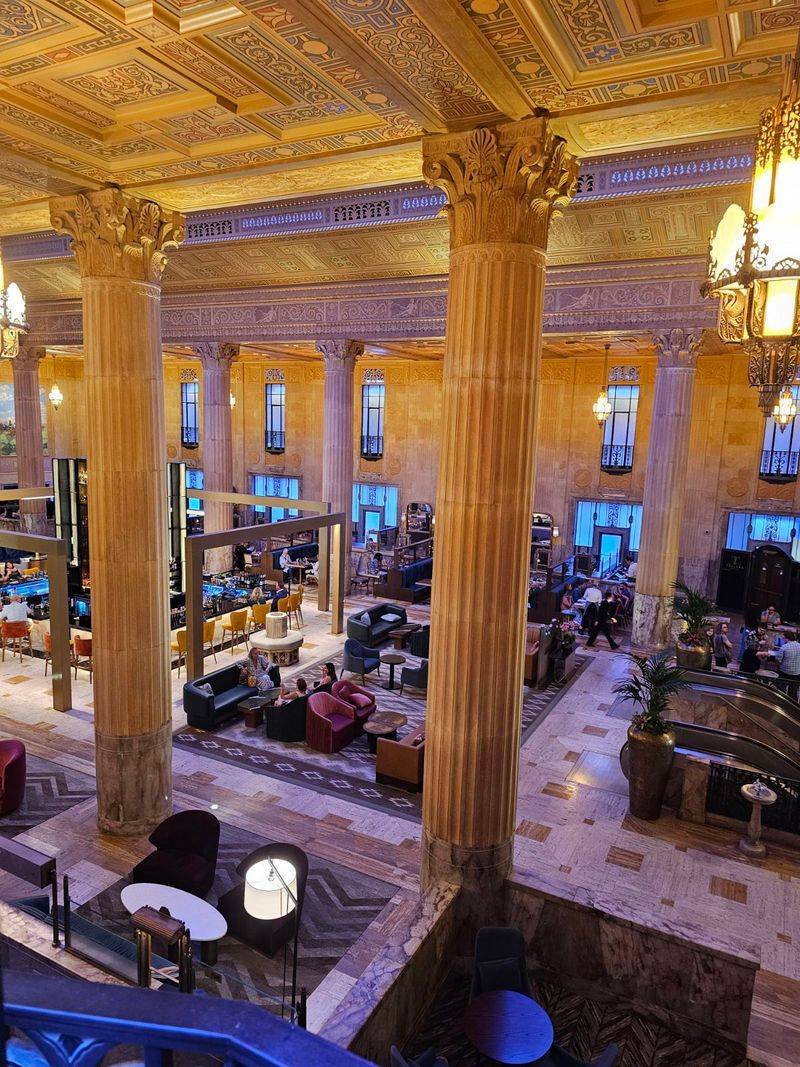
Crews preserved what mattered: the original terrazzo floors, the archways, the columns, and those hand-decorated painted ceilings that most people photograph before they even sit down. Neoclassical grandeur is not a phrase Oklahomans throw around often, but it fits here.
What makes the place work is the contrast. A room built to project financial seriousness now hosts birthday parties, mother-daughter outings, and anniversary celebrations over tea and scones.
Visitors consistently mention the restoration itself as a highlight, calling the space stunning before they say a word about the food. That reaction tells you something about how carefully the old details were handled.
The Painted Ceilings And Terrazzo Floors Overhead And Underfoot
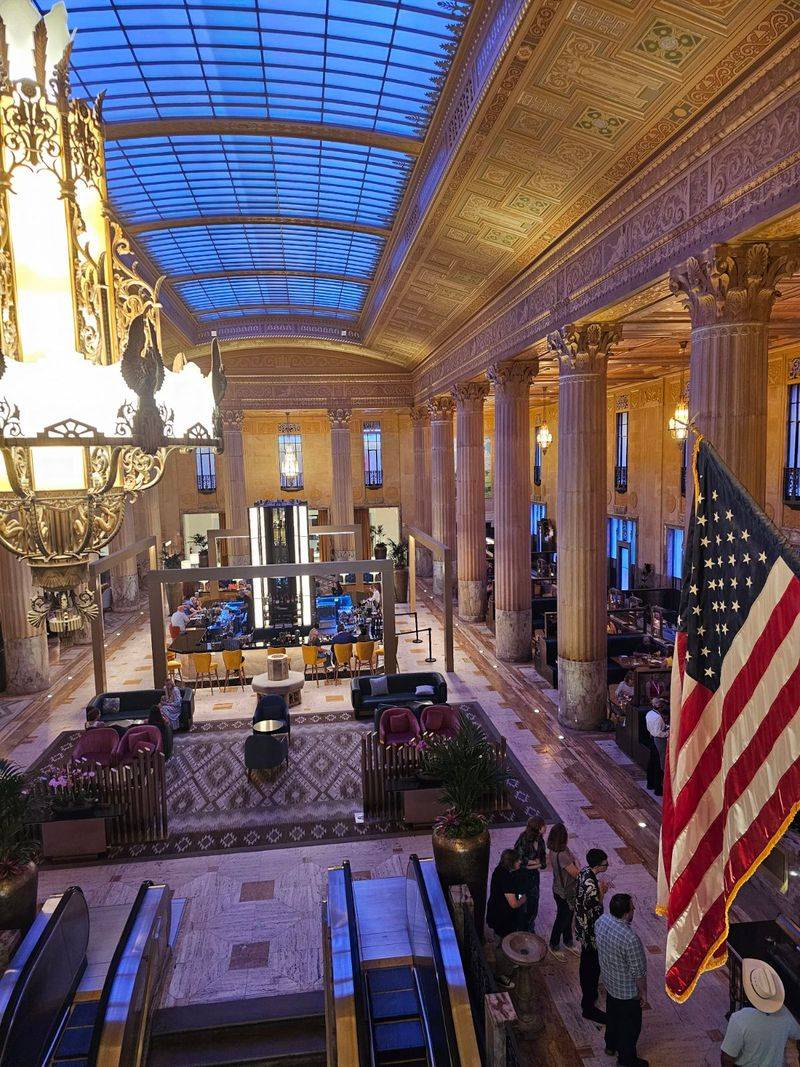
Look up first. The painted ceilings in the Great Banking Hall are the kind of detail that stops conversation mid-sentence, with intricate patterns and gilded accents stretching across a span that feels closer to a cathedral than a cafe.
Underfoot, the original terrazzo floors have been polished back to life. Running your eyes along the borders, you can trace the geometry that 1930s craftsmen laid by hand, section by section.
Columns, archways, and tall bronze-framed windows fill in the rest. The proportions are what get you: the room is genuinely enormous, so even a full house never feels crowded.
One practical note that comes up from guests is seating. Some tables sit out in the open expanse, which is spectacular for photographs but can feel a bit like a conference setup rather than a cozy corner nook.
If intimacy matters more to you than sweeping views, it may be worth asking about table placement when you book. And yes, more than one visitor has pointed out that even the restrooms are worth a look.
Warm Scones, Clotted Cream, And Mandarin Jam
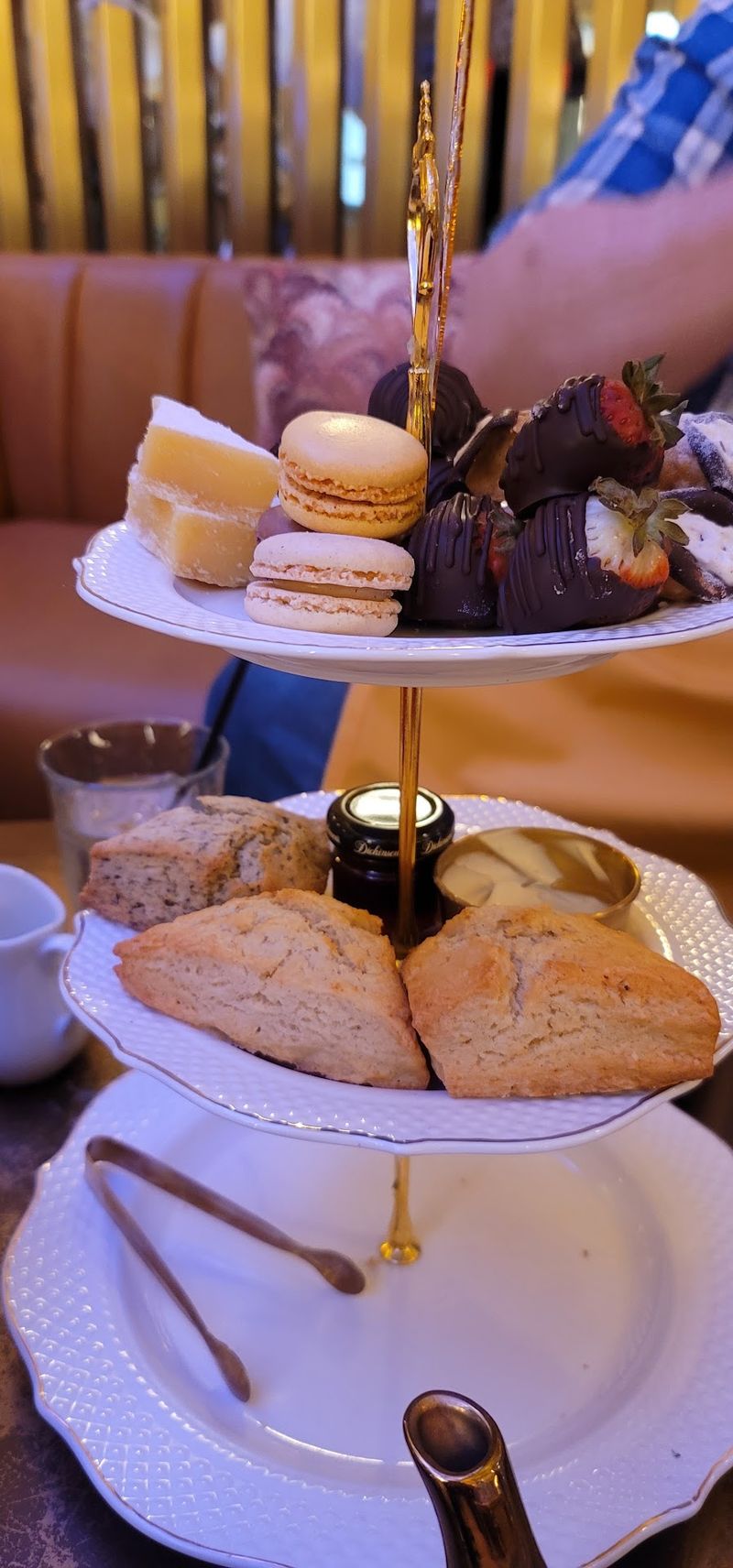
Scones are the whole reason many people book, and they tend to be the strongest item on the stand. The versions served here often carry notes of vanilla and lemon, arriving warm enough to soften the cream on contact.
Alongside them come clotted cream and a bright mandarin jam. Guests who know their tea traditions have singled out the clotted cream as properly done, which is not a given this far from the English countryside, and the jam earns steady praise too.
Portions run on the dainty side. Expect a small number of scones per person rather than a bottomless basket, so if you’re sharing with a friend you may end up splitting flavors between you.
Feedback on the scones has varied over time, with some earlier visitors finding them plainer than expected. Recipes and kitchens change, and more recent comments lean positive on both the scone and its accompaniments.
Eat them first while they’re warm. That’s the move, and anyone who has let a scone go cold at the bottom of a tier will tell you the same.
Savory Bites And Sweets Stacked Three Tiers High
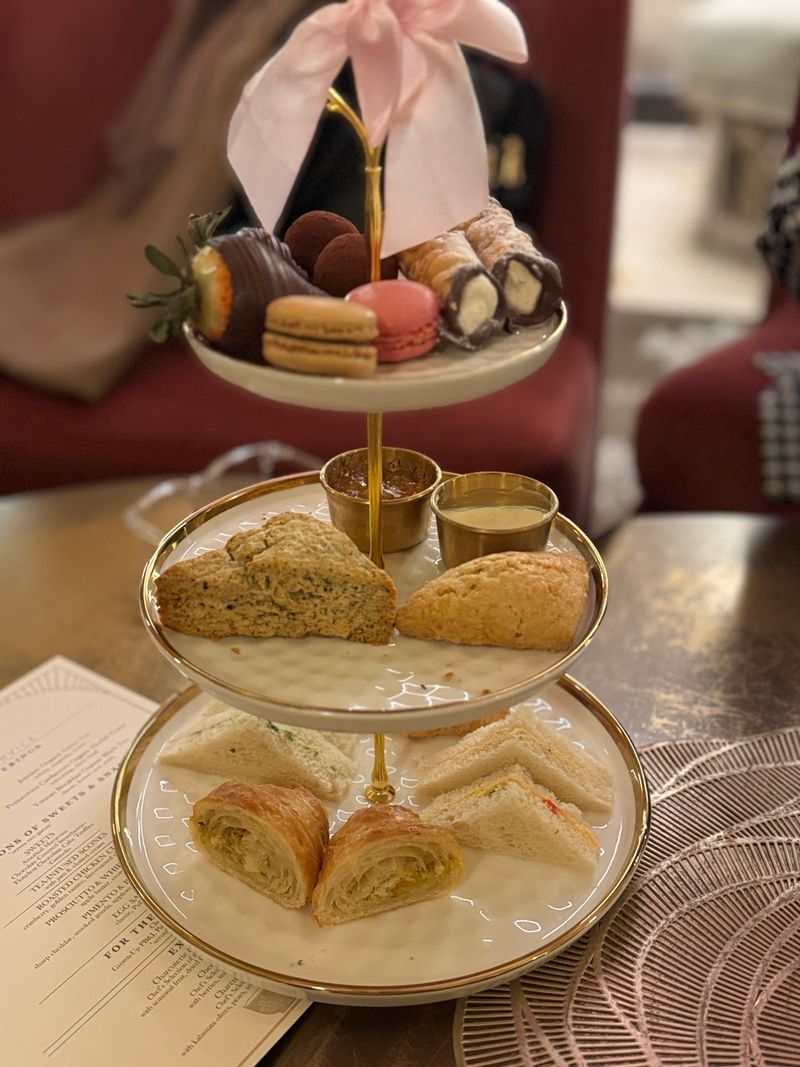
Three tiers arrive at once, and the stand does most of the talking. The savory level can include things like lavender goat cheese biscuits, caprese skewers, and fig and brie tartlets, small enough to finish in two bites.
Sweets fill the upper tiers. Depending on the season you might find macarons in several colors, airy cream puffs, salted caramel tarts, or a playful funfetti creation tucked between them.
Menus rotate, with themed teas appearing at different points through the year, so a winter visit and a spring visit rarely look identical. Holiday decorations in the hall get their own round of compliments.
Portion philosophy here is one of each item per person. Several guests have said they were surprised at first, then found themselves comfortably full before reaching the top tier.
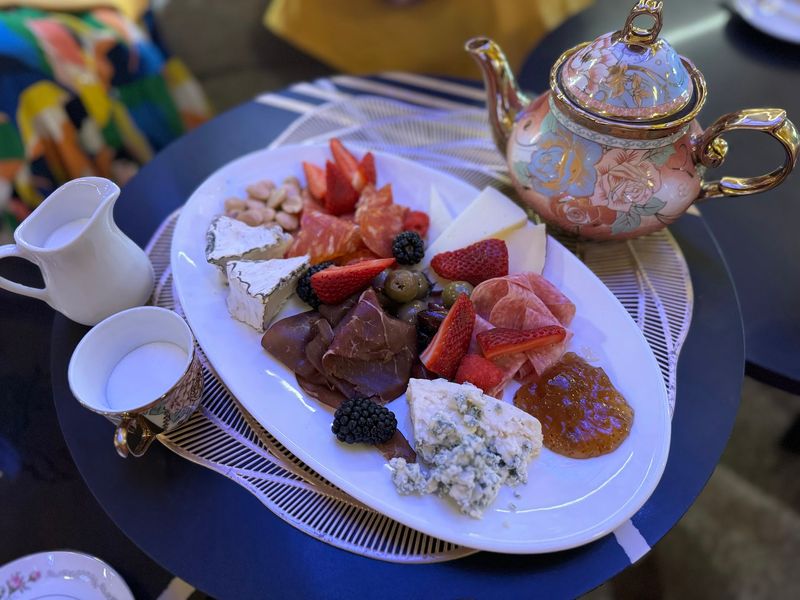
A separate charcuterie and cheese board is also available if you want something beyond the set menu. Reports on the board have been mixed, so the tea stand itself is probably the safer order for a first visit.
Pots Of Tea, Refills, And Options For Younger Guests
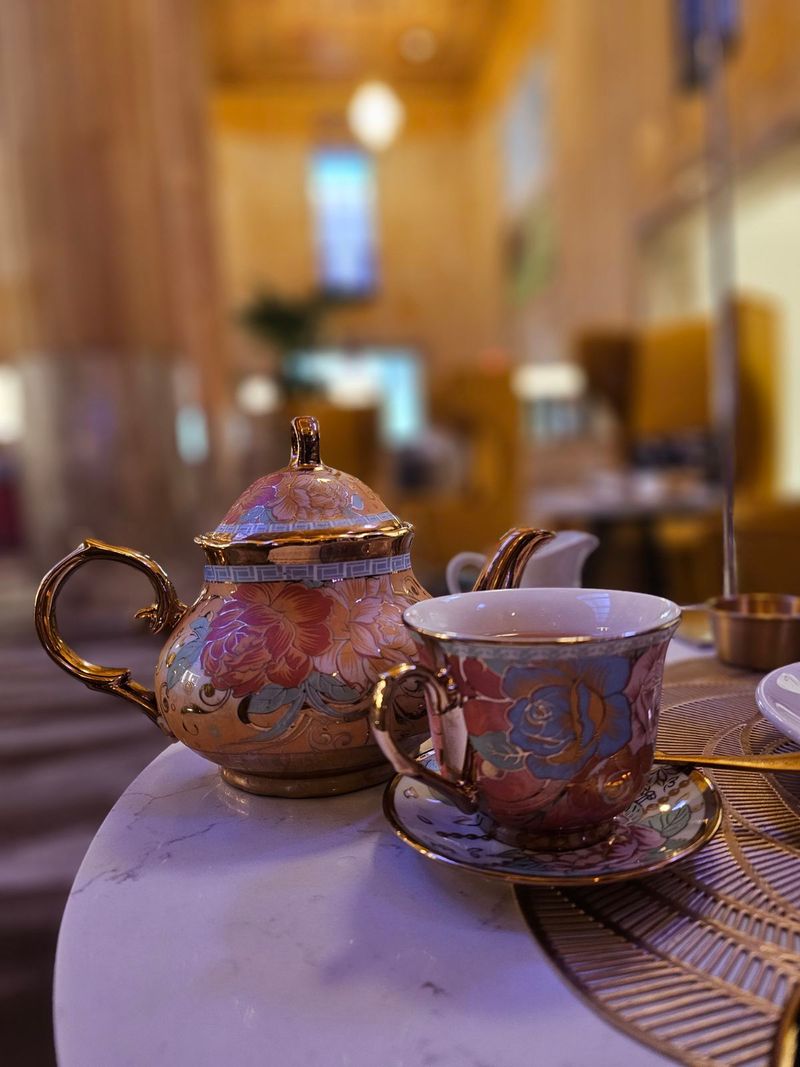
Tea selection is where the experience quietly shines. Guests pick from a range of loose-leaf options, and earl grey and jasmine green both get repeat mentions from people who clearly know their cup.
Refills and flavor swaps appear to be part of the deal. One party described working through four pots across a long, unhurried afternoon without ever feeling nudged toward the door.
Kids are welcome, and there’s a children’s price around $30 that includes the tiered service at a scale suited to smaller appetites. Non-tea options like blood orange lemonade keep younger guests happy.
Dietary needs get handled with real care, based on what guests report. Gluten-free and allergen-conscious diners have described the kitchen building custom platters for them rather than simply removing items from the standard menu.
One small heads-up worth carrying in: ask specifically for tap water if that’s what you want, since bottled still and sparkling may be offered first and billed separately. Asking upfront saves a surprise at the end.
Booking, Pricing, Hours, And Downtown Parking Notes
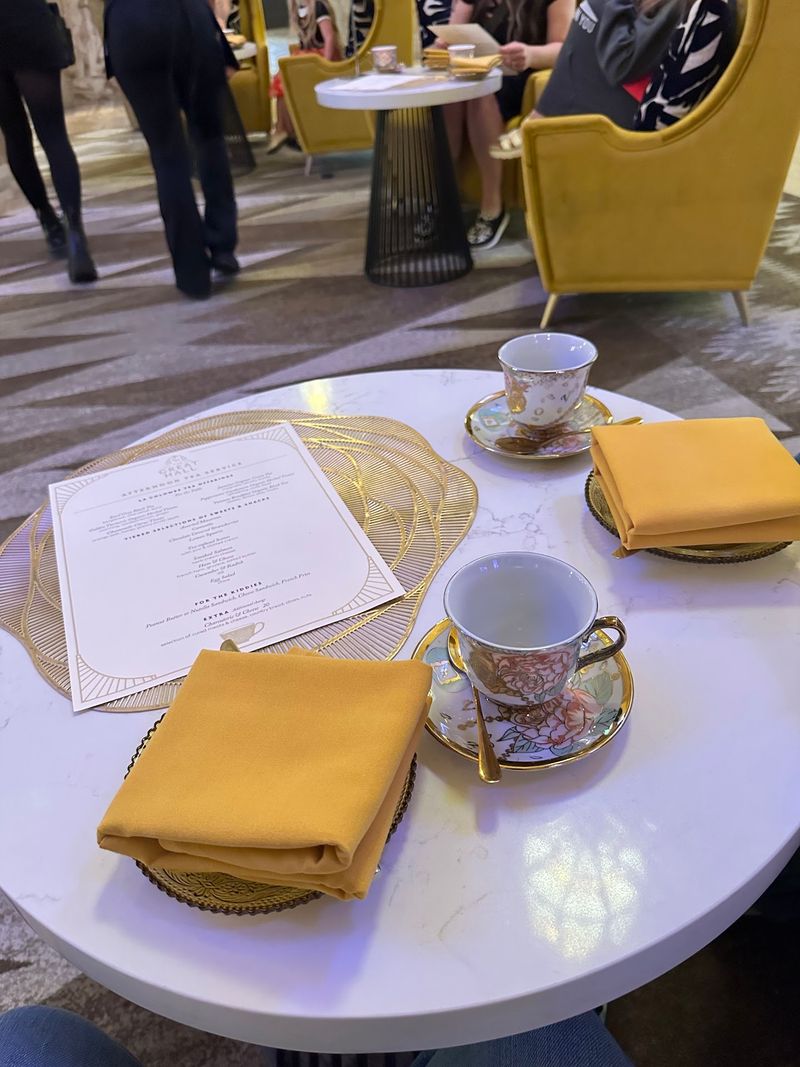
Reservations are the sensible route. Afternoon tea typically runs Friday through Sunday, with seatings generally landing in the early afternoon window between roughly 1 p.m. and 4 p.m.
Adult pricing sits around $55, with children near $30. That puts a two-person outing in the neighborhood of $110 before gratuity, which is a special-occasion number rather than a casual weeknight one.
Gratuity is worth understanding in advance. Several guests have reported an automatic service charge of about 20 percent applied regardless of party size, so build that into your budget before you book.
The venue itself keeps longer general hours, opening at 10 a.m. daily and running to 11 p.m. most nights, with midnight closings on Friday and Saturday. Tea service, though, follows its own weekend schedule.
Parking is standard downtown fare: paid garages and metered street spots within a short walk of 120 N Robinson Ave. Weekend rates are usually gentler than weekday, and hours and prices can shift, so confirm through the venue before you drive in.
Who Should Make The Drive, And What To Expect
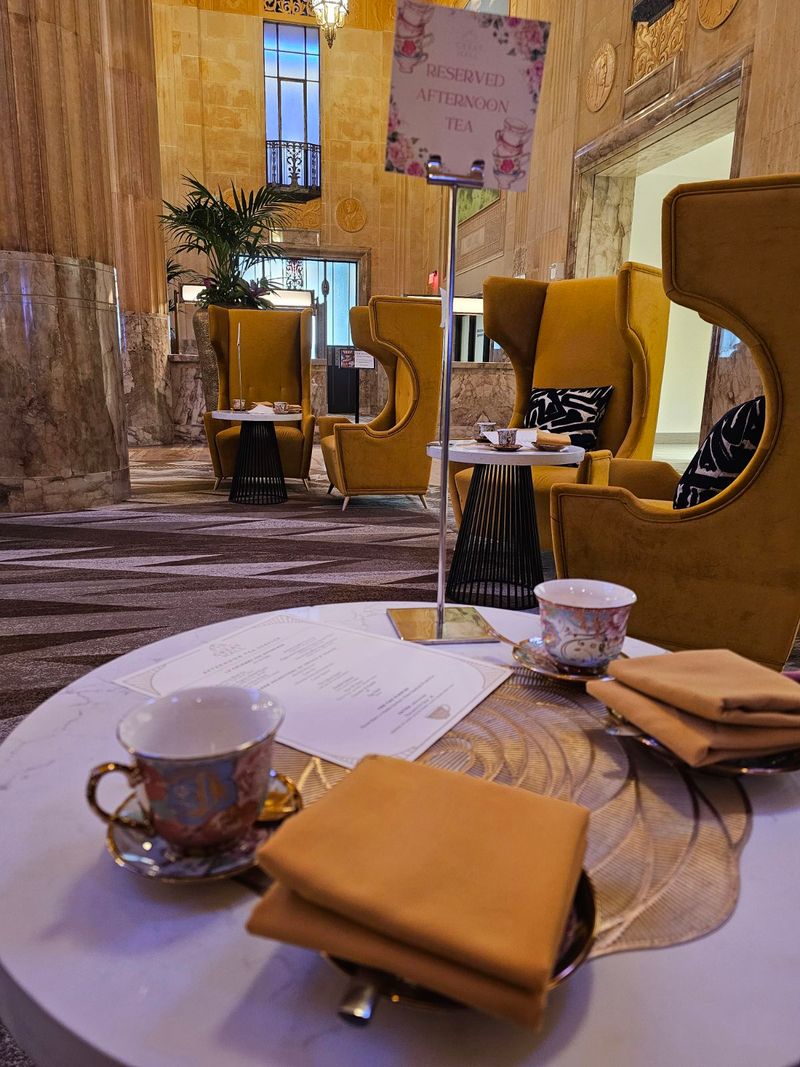
Picture the outing before you commit. A grandmother and granddaughter in good shoes, a pair of friends celebrating something, a mother-daughter afternoon that ends with far too many photos: those are the groups who leave happiest.
Strengths are clear. The room is spectacular, the tea itself draws steady compliments, the clotted cream is the real thing, and the kitchen works hard around dietary restrictions when asked.
Weaknesses have shown up too, mostly around pacing and service consistency during busy weekends and private events. Food feedback has swung both directions across the years, so set expectations on the experience first and the plate second.
Practical advice for a smooth visit: book ahead, flag any celebration when you reserve, ask about table placement, request tap water plainly, and check the current menu since seasonal themes change what lands on the stand.
Worth the drive? For a once-in-a-while treat inside a building Oklahoma City nearly lost, yes.
Just go for the architecture and the ritual, and let the scones be the bonus they usually are.
