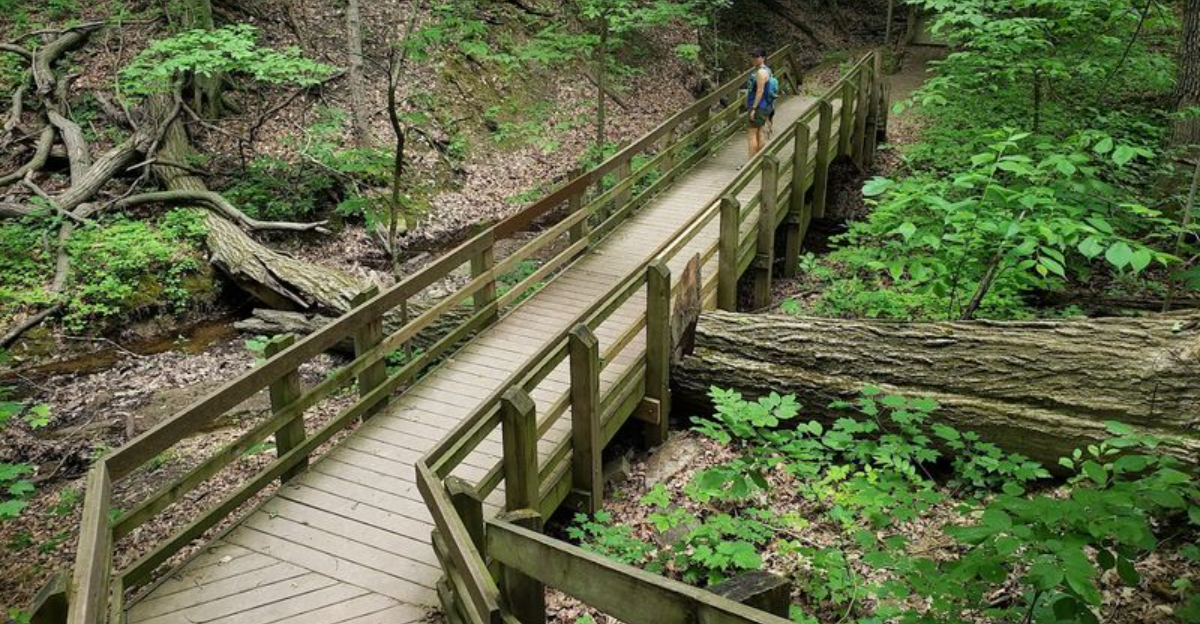
Spring in Indiana brings something magical to the trails.
The wildflowers start popping up everywhere, the trees get their leaves back, and the weather is just right for being outside without sweating through your shirt.
If you’re new to hiking or just want some easy walks to shake off the winter blues, Indiana has plenty of beautiful spots that won’t leave you gasping for air or needing a rescue team.
These eight trails offer stunning views, interesting history, and the perfect chance to enjoy nature without feeling like you’re training for a mountain expedition.
1. Heron Rookery Trail (Indiana Dunes National Park)
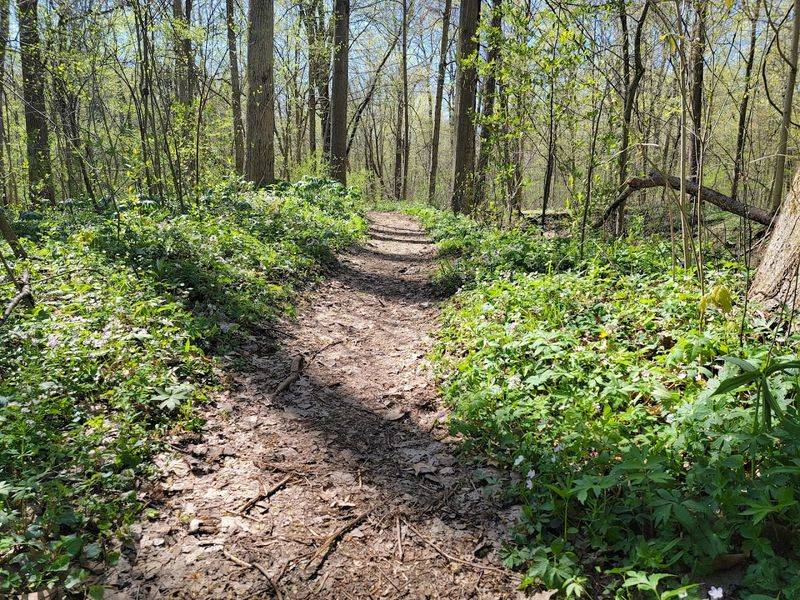
Walking along the Little Calumet River feels like stepping into a nature documentary. The Heron Rookery Trail stretches 3.3 miles out and back, giving you plenty of time to soak in the scenery without committing to an all-day adventure.
Spring transforms this trail into a wildflower wonderland that’ll make you want to bring a camera. Trilliums, spring beauties, and marsh marigolds carpet the forest floor in whites, pinks, and yellows.
The river winds alongside you, reflecting the newly green trees and occasionally revealing a heron standing perfectly still, waiting for fish.
The trail stays relatively flat, which makes it perfect for folks who want a real hike without the knee-killing climbs. You’ll cross a few wooden bridges and walk through different ecosystems, from wetlands to oak forests.
Birds are everywhere in spring, with warblers singing from the branches and woodpeckers hammering away at dead trees.
Wear waterproof boots if it’s been rainy because some sections can get muddy. The mosquitoes also wake up in spring, so bug spray isn’t a bad idea.
Pack some snacks and take your time. There are spots along the river where you can sit on fallen logs and just watch the water flow by.
The parking area fills up on nice weekends, so arriving early gives you a better chance at peace and quiet.
2. Ogle Lake Trail 7 (Brown County State Park)
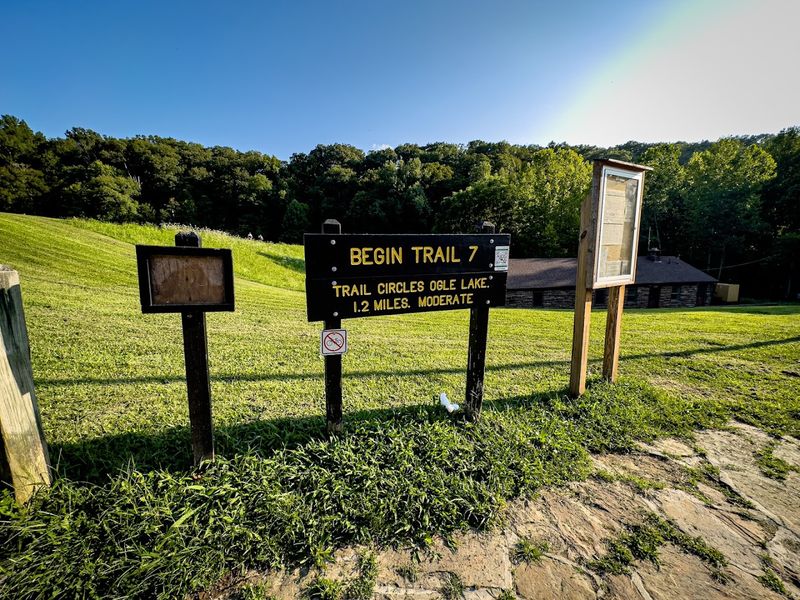
Brown County explodes with color in spring, and Ogle Lake sits right in the middle of all that beauty. This 1.2-mile loop circles the lake, keeping things easy and scenic the whole way around.
The trail hugs the shoreline, giving you constant views of the water. Ducks paddle around, turtles sun themselves on logs, and if you’re lucky, you might spot a great blue heron stalking the shallows.
The path is well-maintained and mostly level, making it accessible for almost anyone who can walk a mile or so.
Spring brings migrating birds through the area, so birdwatchers love this trail. Bring binoculars if you have them.
The trees leaf out in different shades of green, and wildflowers dot the understory. There’s something peaceful about walking next to water, especially when the lake is calm and mirrors the sky.
Brown County State Park charges a small entrance fee, but it’s worth every penny. The park has tons of other trails if you want to explore more, plus picnic areas and a nature center.
Ogle Lake Trail works great as a warm-up hike or a gentle afternoon stroll. The loop means you end up right back where you started, which is perfect if you’re not great with directions.
Families with kids do well here because the distance isn’t overwhelming and there’s plenty to look at along the way.
3. Hemlock Cliffs Trail (Hoosier National Forest)
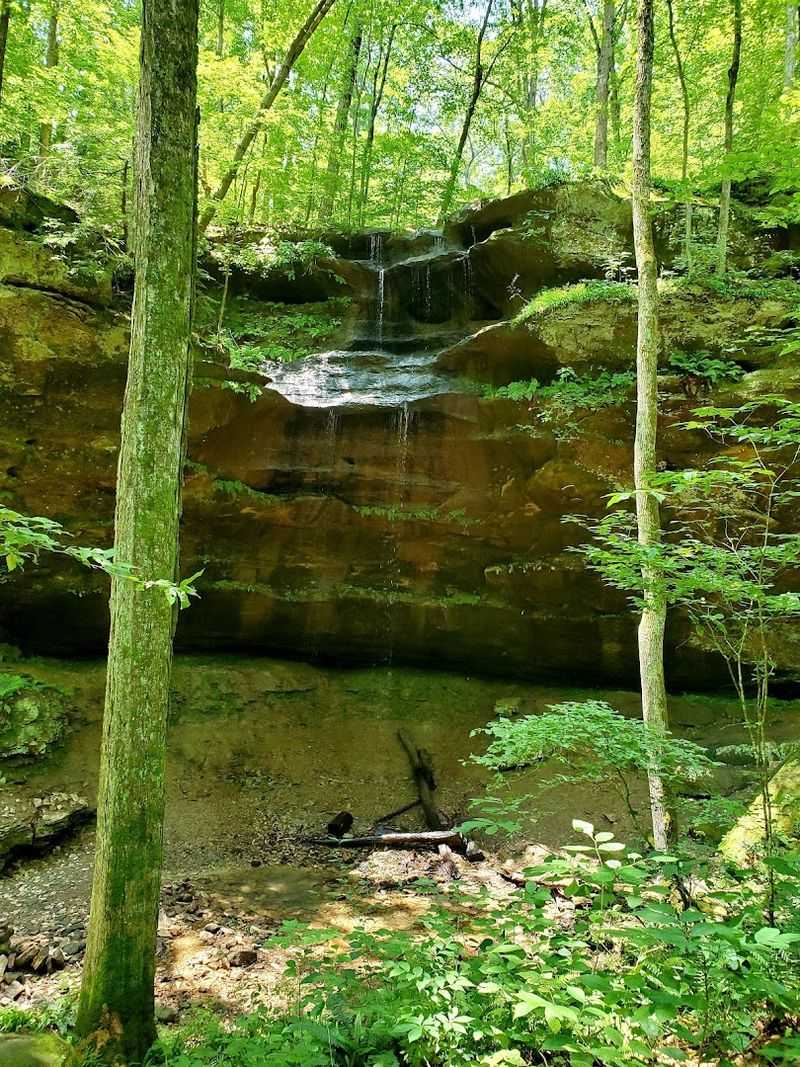
Hemlock Cliffs feels like you’ve been transported to a different state altogether. This 1.2-mile loop packs more dramatic scenery into a short distance than seems fair, with towering sandstone cliffs and waterfalls that really come alive in spring.
The trail descends into a box canyon where hemlock trees create a cool, shaded environment. Sandstone walls rise up on both sides, streaked with minerals and carved by centuries of water.
In spring, snowmelt and rain send water cascading over the cliffs in thin, silvery ribbons. The sound of falling water echoes off the rock walls, creating a soundtrack that makes you forget about everything else.
There are stairs and some uneven sections, so watch your footing, especially when things are wet. The rocks can get slippery near the waterfalls.
But the trail isn’t technically difficult, just requires a bit of attention. You’ll cross small wooden bridges and walk along the base of the cliffs, getting perspectives that make you feel tiny.
Hemlock Cliffs is in southern Indiana, a bit of a drive from major cities, but absolutely worth the trip. The parking area is small, so weekends can get crowded.
Weekday mornings offer the best chance for solitude. Bring a light jacket because the canyon stays cooler than the surrounding forest.
This trail shows off a side of Indiana that surprises people who think the state is all flat farmland.
4. Trail 2 (Indiana Dunes State Park)
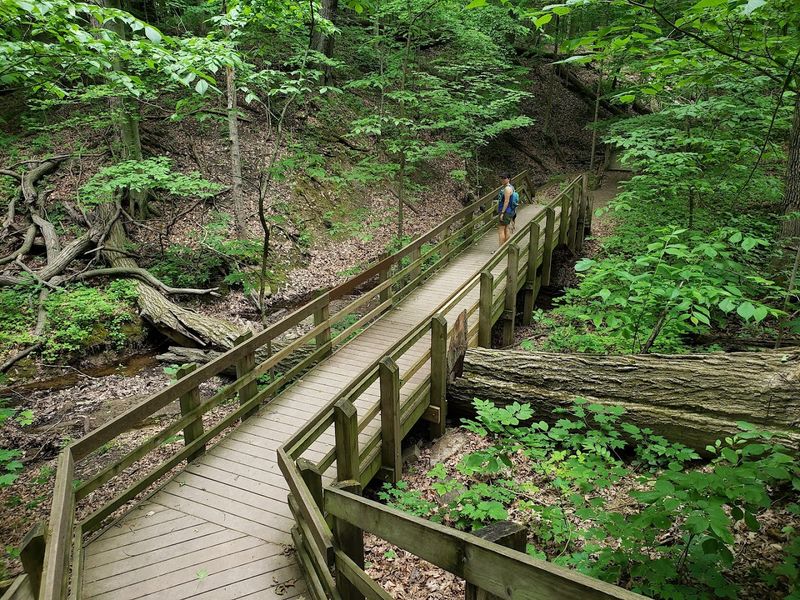
Trail 2 at Indiana Dunes State Park gives you a completely different hiking experience than climbing sand dunes. This 3-mile loop takes you through the Great Marsh on an accessible boardwalk that stays flat and easy the entire way.
The boardwalk keeps your feet dry while you walk through wetlands filled with cattails, marsh grasses, and spring wildflowers. Birds are the main attraction here.
Red-winged blackbirds perch on reeds, calling out their distinctive songs. Swans glide through the open water.
If you’re quiet and patient, you might see muskrats swimming or turtles basking in sunny spots.
Spring is ideal for this trail because the marsh comes alive after winter. New growth pushes up through the water, frogs start their evening concerts, and migrating birds stop by to rest and feed.
The flat terrain makes this trail perfect for people who can’t handle hills or rough paths. Wheelchairs and strollers can navigate the boardwalk sections easily.
Indiana Dunes State Park requires an entrance fee, but the park offers beach access, other trails, and facilities that make it a great day trip destination. Trail 2 connects to other paths if you want to extend your hike.
Bring sunscreen because parts of the trail are exposed with little shade. The marsh reflects light and can be brighter than you expect.
This trail proves that you don’t need mountains or dramatic elevation changes to have a beautiful hiking experience.
5. Oppenheim Woods Trail (The Nature Conservancy)
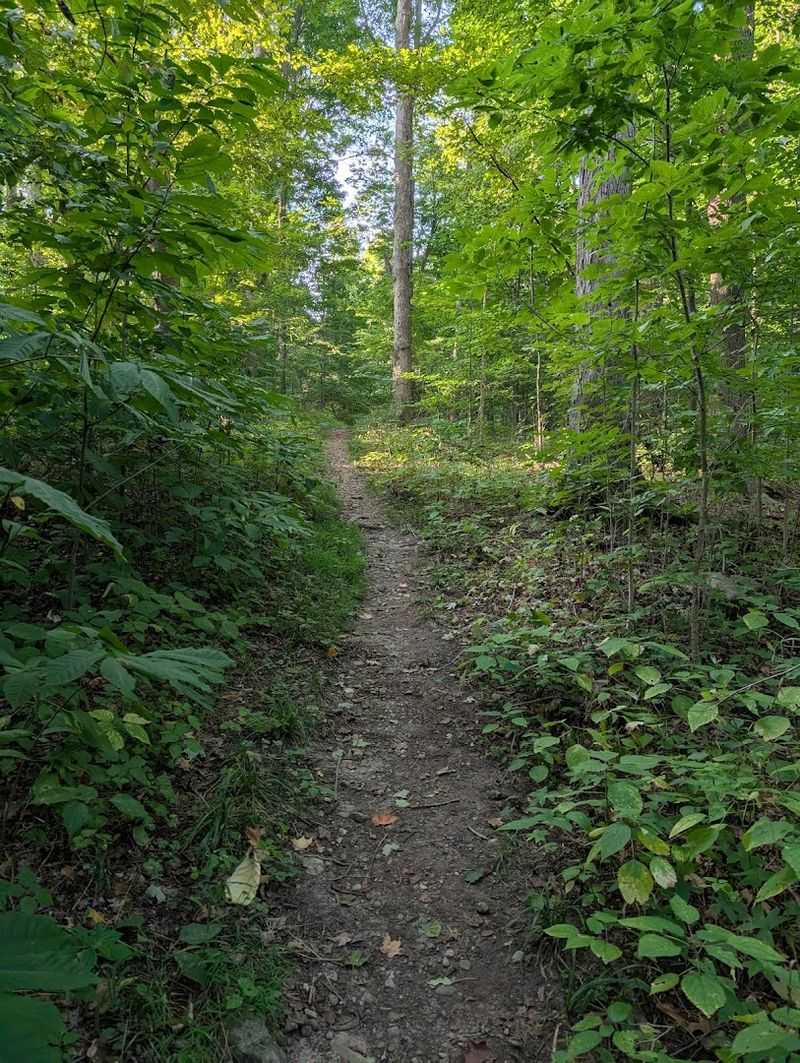
Oppenheim Woods in April and May becomes one of Indiana’s most stunning natural displays. This 1.4-mile loop trail winds through a forest where the ground literally disappears under a carpet of wildflowers.
The spring ephemeral wildflowers here are legendary among nature lovers. Trilliums, bloodroot, hepatica, spring beauties, and Virginia bluebells create a patchwork of whites, pinks, and blues that stretches as far as you can see through the trees.
The flowers bloom before the tree canopy fills in, taking advantage of the sunlight that reaches the forest floor. Walking through feels magical, like discovering a secret garden that only appears for a few weeks each year.
The trail itself is easy, with gentle terrain and a well-marked path. You’ll want to take your time here, stopping frequently to admire the flowers and take photos.
The Nature Conservancy manages this property specifically to protect these wildflower populations, so stay on the trail and resist the urge to pick anything.
Timing your visit is important because the peak bloom window is relatively short. Late April is usually prime time, but checking The Nature Conservancy’s website or social media can give you current conditions.
The parking area is small and the preserve is popular during bloom season, so arrive early. Bring a wildflower identification guide if you’re interested in learning what you’re seeing.
This trail offers a hiking experience that’s more about stopping and looking than covering distance, which is a nice change of pace.
6. South Overlook Trail (Eagle Creek Park)
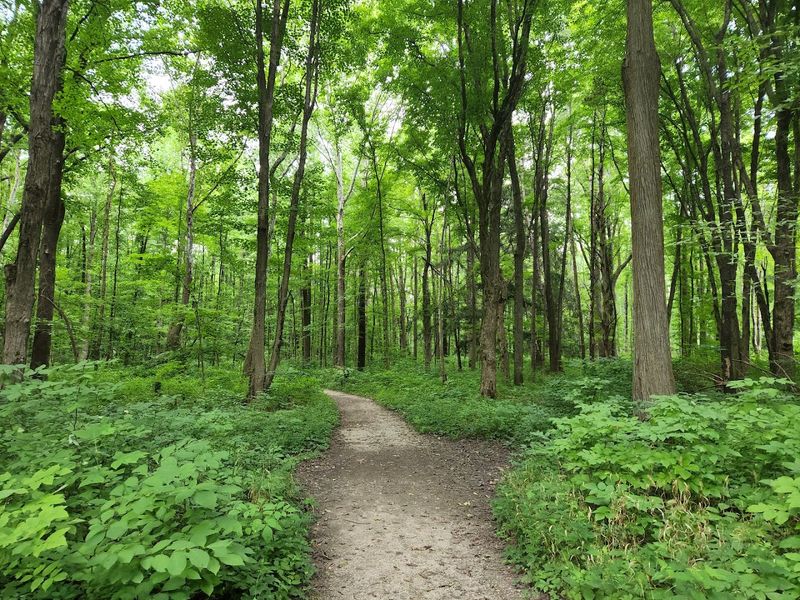
Eagle Creek Park sits right in Indianapolis, making it incredibly convenient for city residents who want a nature fix without a long drive. The South Overlook Trail is a 2-mile loop that includes a birdwatching boardwalk extending over the reservoir.
The boardwalk section is the highlight, putting you right over the water where you can watch waterfowl up close. Spring migration brings a variety of ducks, geese, and other water birds through the area.
Bring binoculars and a bird identification guide, or just enjoy watching the birds without worrying about names. The reservoir stretches out around you, and on calm days, the water reflects the sky like a mirror.
The rest of the trail winds through woods and along the shoreline, offering a nice variety of scenery. The terrain is easy, with no significant hills to challenge beginners.
Spring brings fresh green leaves to the trees and wildflowers to the forest floor. You might spot deer, squirrels, and a wide variety of songbirds in the woods.
Eagle Creek is one of the largest city parks in the United States, so there’s plenty more to explore if you want to extend your visit. The park has a nature center, beach, marina, and numerous other trails.
A daily entrance fee applies for vehicles. The South Overlook Trail can get busy on nice weekends since it’s so accessible to Indianapolis residents.
Early mornings offer the best wildlife viewing and fewer crowds. This trail proves you don’t have to leave the city to find quality outdoor experiences.
7. Trail 4 (Spring Mill State Park)
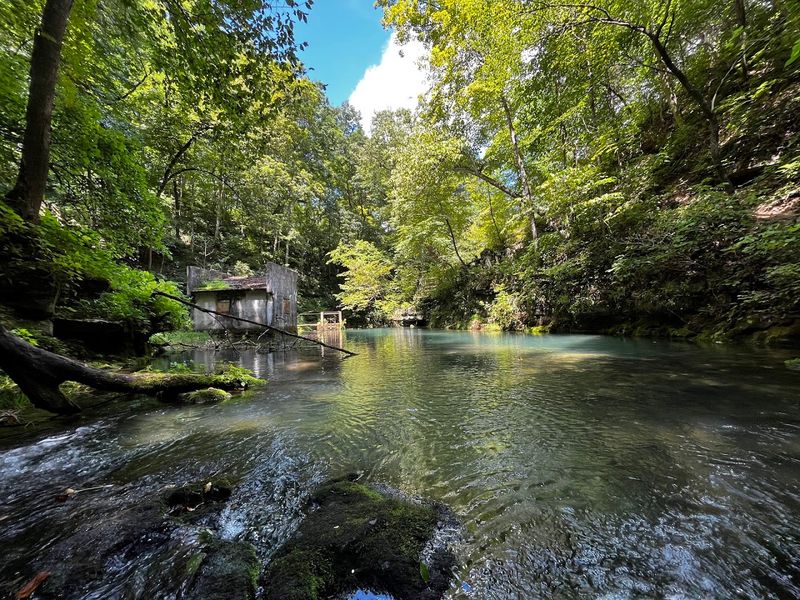
Spring Mill State Park combines natural beauty with fascinating history, and Trail 4 delivers both in a 2-mile loop. You’ll walk through a restored pioneer village that looks like it was frozen in time around 1820, then continue past limestone caves that add geological interest to your hike.
The pioneer village isn’t just for show. The buildings are authentic structures from the 1800s, moved here and restored.
You’ll pass a working grist mill powered by water, a general store, a blacksmith shop, and log cabins. Interpreters in period clothing sometimes demonstrate old-time crafts and skills.
It’s like walking through a living history book, which makes the hike educational as well as scenic.
Beyond the village, the trail leads to Twin Caves, where you can see underground streams emerging from the hillside. The caves themselves require a boat tour if you want to explore inside, but you can appreciate them from the trail.
Spring brings high water flow, making the cave entrances more dramatic as water rushes out.
The trail is well-maintained and suitable for beginners, with only gentle hills. Spring wildflowers bloom in the woods, and the trees provide shade for most of the route.
The park charges an entrance fee and offers camping, a swimming pool, and other amenities if you want to make a full day of it. Trail 4 is perfect for families because kids stay engaged with the historical elements while getting exercise and fresh air.
The combination of nature and history makes this trail unique among Indiana hikes.
8. Trail 5 (Mounds State Park)
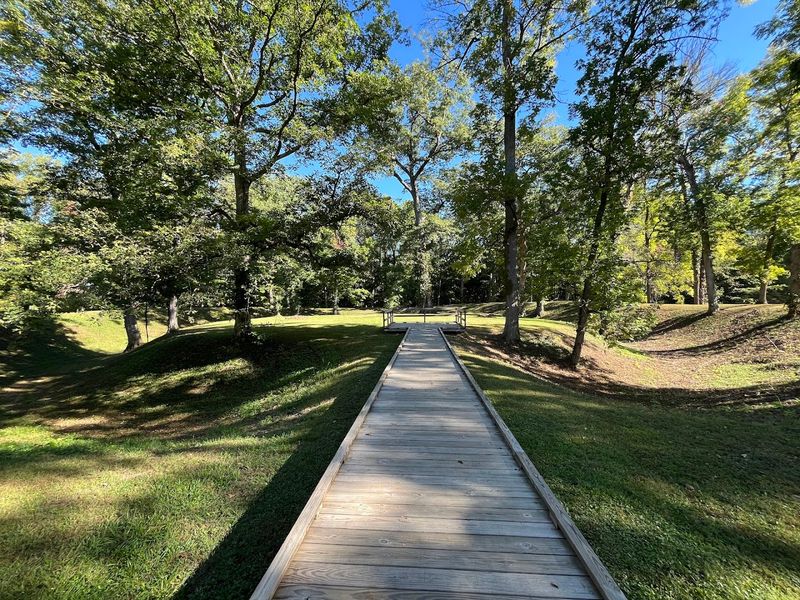
Mounds State Park protects ten ancient earthworks built by the Adena-Hopewell people between 160 BC and 200 AD. Trail 5 is a 2.7-mile loop that follows the White River and passes several of these mysterious structures, offering a hiking experience that connects you to Indiana’s deep past.
The earthworks are the main attraction here. These aren’t just random piles of dirt.
They’re carefully constructed ceremonial sites, with the Great Mound being the most impressive at 1,200 feet around and nine feet high. Walking around these ancient structures makes you think about the people who built them without modern tools, moving earth by hand for purposes we’re still trying to understand.
Interpretive signs provide context and theories about the mounds’ uses.
The trail itself hugs the White River for much of its length, providing scenic water views and opportunities to spot wildlife. River otters have been seen here, along with beavers, deer, and numerous bird species.
Spring brings the forest to life with new leaves and wildflowers. The terrain is moderate, with some hills but nothing too challenging for beginners.
The park is located near Anderson, making it accessible from Indianapolis and other central Indiana cities. An entrance fee applies.
The visitor center offers exhibits about the mounds and the people who built them, which is worth checking out before or after your hike. Trail 5 offers something different from typical nature hikes by adding a layer of archaeological and cultural significance.
You’re not just walking through pretty woods, you’re following paths that Native Americans walked thousands of years ago.
Dear Reader: This page may contain affiliate links which may earn a commission if you click through and make a purchase. Our independent journalism is not influenced by any advertiser or commercial initiative unless it is clearly marked as sponsored content. As travel products change, please be sure to reconfirm all details and stay up to date with current events to ensure a safe and successful trip.
