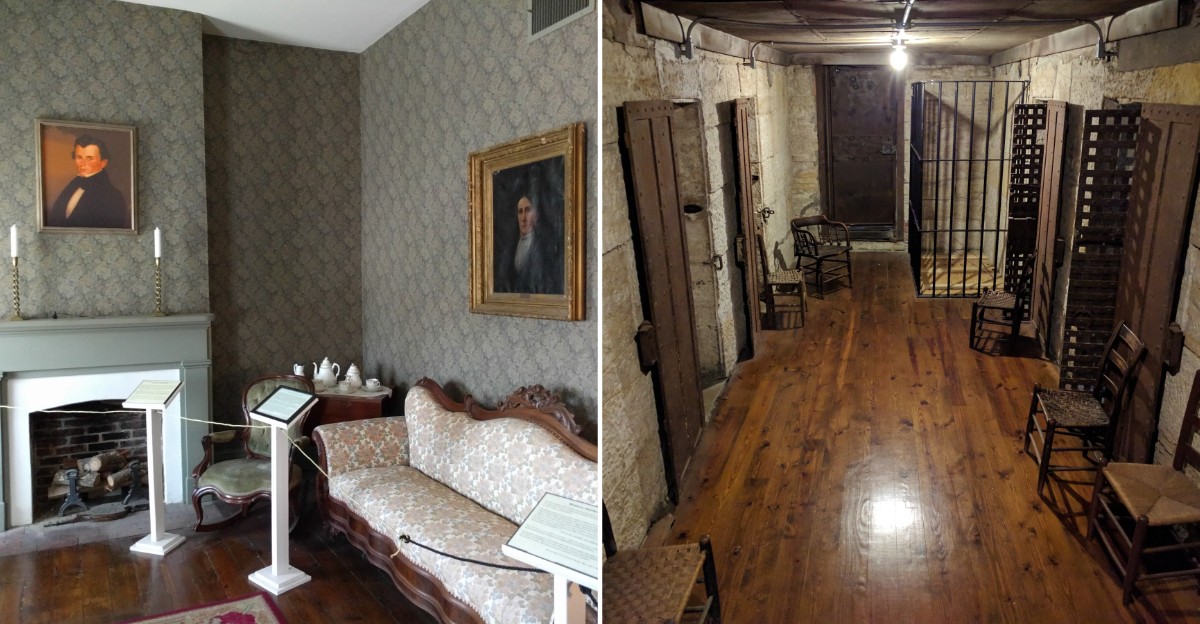
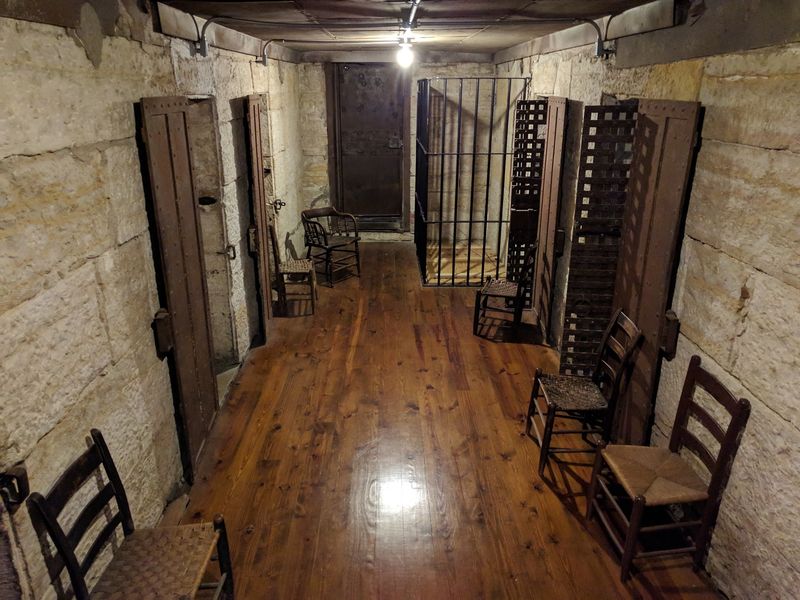
The front of the house gives almost nothing away. Behind it sits a limestone jail from 1859, complete with heavy iron doors and original cells that once held Jackson County prisoners.
This Missouri museum lets you move between two very different worlds in the same visit. One side shows where the marshal and his family lived.
The other takes you into the much harsher space just beyond their home. You can see the old office, step inside the cellblock, and even find the cell where Frank James spent several months.
That contrast makes the place especially interesting. Everyday family life and nineteenth-century law enforcement were separated by little more than a few walls.
A Family Home Sharing Walls With A Jail
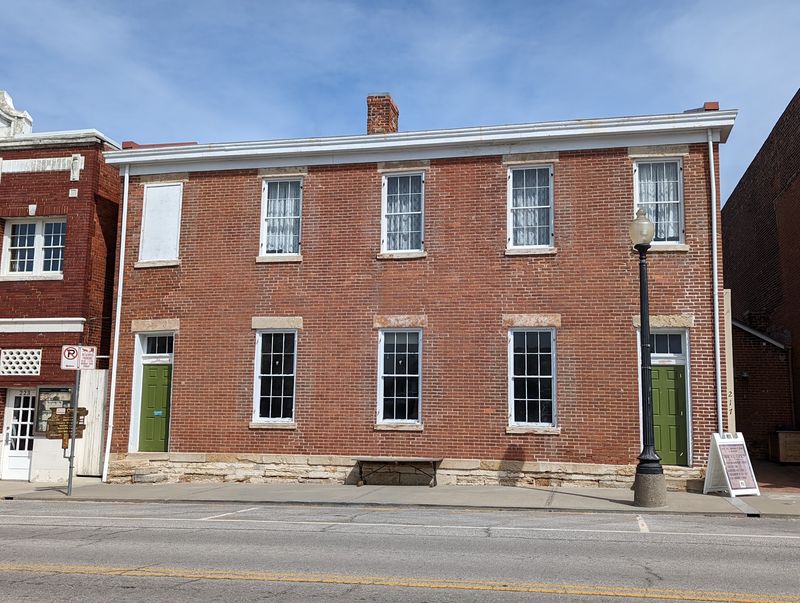
Picture tucking your kids into bed while prisoners are sitting in stone cells just behind your back door, because that was everyday life here. The marshal and his family lived in the brick house up front, and the jail was attached right behind it, so work and home were basically the same address.
When you walk in, the front part feels like a regular old house with cozy rooms and furniture from the frontier days. Then you keep going toward the back, and the mood shifts pretty fast once you reach the heavy stone section where the prisoners stayed.
That change is honestly the best part of the whole visit, since you can feel the line between family life and the law right under your feet.
I love that the setup makes you think about the people who lived here as real folks with chores, worries, and meals to cook. You are not just staring at a display case, because you are standing inside the actual rooms where these lives played out side by side.
Take a slow walk through the house first, then head back to the cells, so you get the full feel of how close everything really was for the family in this little corner of Missouri.
Finding The Spot Right Off The Historic Square
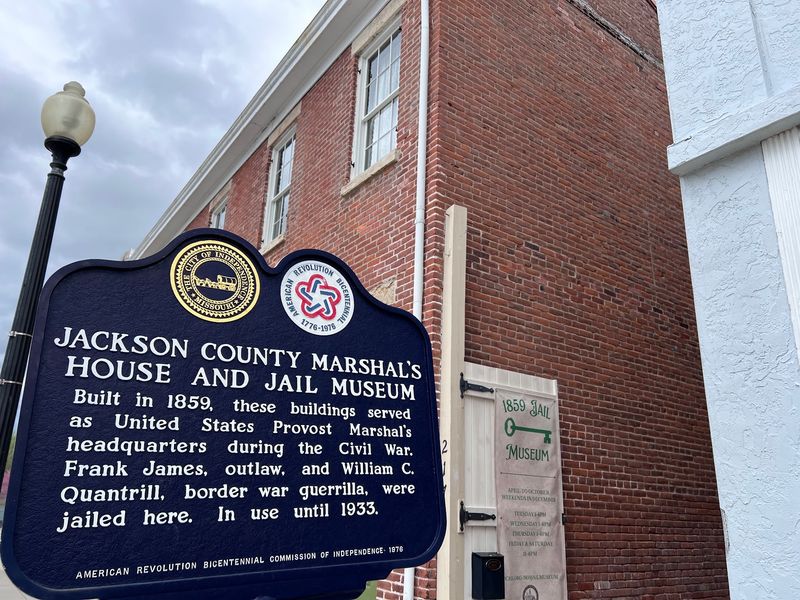
Getting here is easier than you might expect, since the museum sits just a short stroll from the historic Independence Square. The full address is 217 North Main Street, Independence, MO 64050, so you can pop it into your phone and you will be there before you know it.
Because it is so close to the square, you can easily turn this into part of a bigger day walking around town. Independence is packed with history, and the old courthouse area has shops and places to grab a bite, so you will not run out of things to see nearby.
I would plan to wander a bit before or after your tour, just to soak up that small town feel.
Before you head out, it is smart to check the Jackson County Historical Society website for current hours and tour details. Museums like this sometimes change their schedules with the seasons, and you do not want to show up to a locked door after driving over.
Wear comfy shoes too, since the building has older floors and narrow spaces that feel a lot nicer when your feet are happy. Once you are there, give yourself enough time to read the signs and look around without rushing through the rooms.
Stone Walls That Mean Business
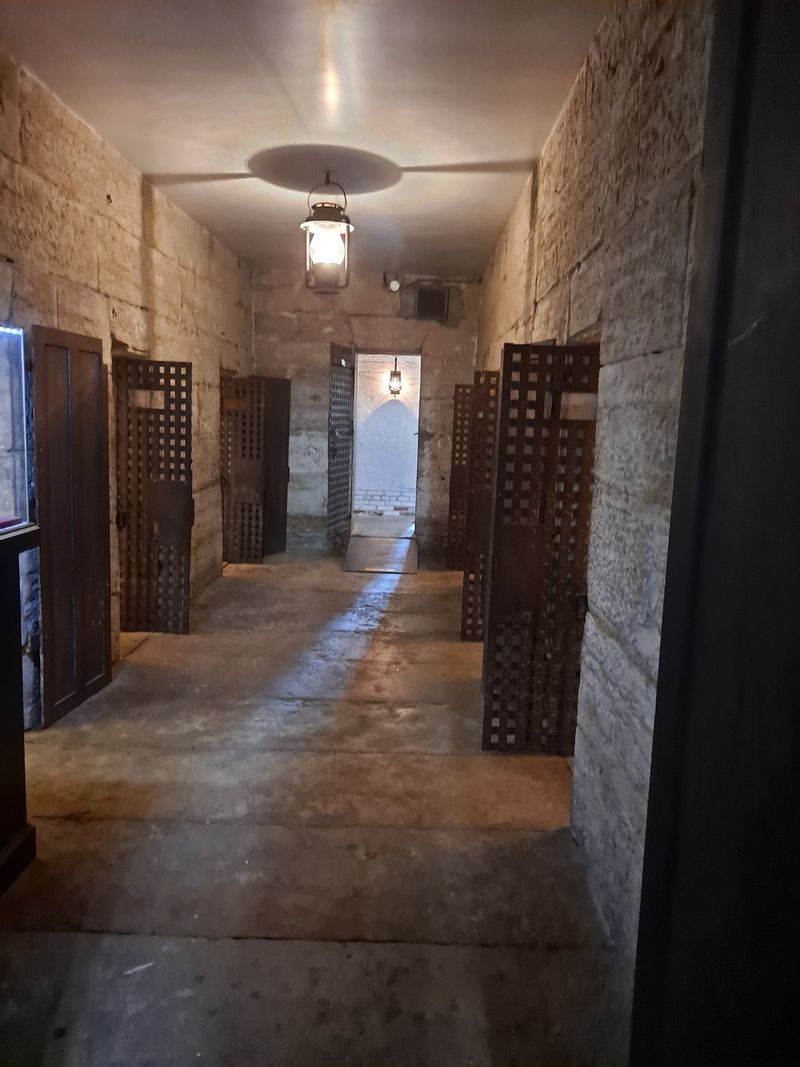
Run your eyes over those limestone walls for a second, and you will understand pretty quickly why nobody was strolling out of here. The jail section was built from thick blocks of stone, and it was clearly made to keep people in no matter how hard they tried.
Each cell has a heavy iron door, and standing next to one gives you a little shiver, in a fun museum kind of way. The cells are small and plain, with very little light, so you can picture how long and quiet the days must have felt for anyone stuck inside.
It is one thing to read about frontier jails in a book, but standing in one is a whole different feeling.
If you are bringing kids along, this is the part they will probably talk about all the way home. Let them peek inside a cell and imagine what it would be like to sit there waiting for a judge to decide their fate.
You might even try asking them how they would pass the time without any games or screens at all. Grown-ups will enjoy noticing the details too, like the thick doorways and the way the stone seems to swallow sound around you.
Rooms Where The Marshal Actually Lived
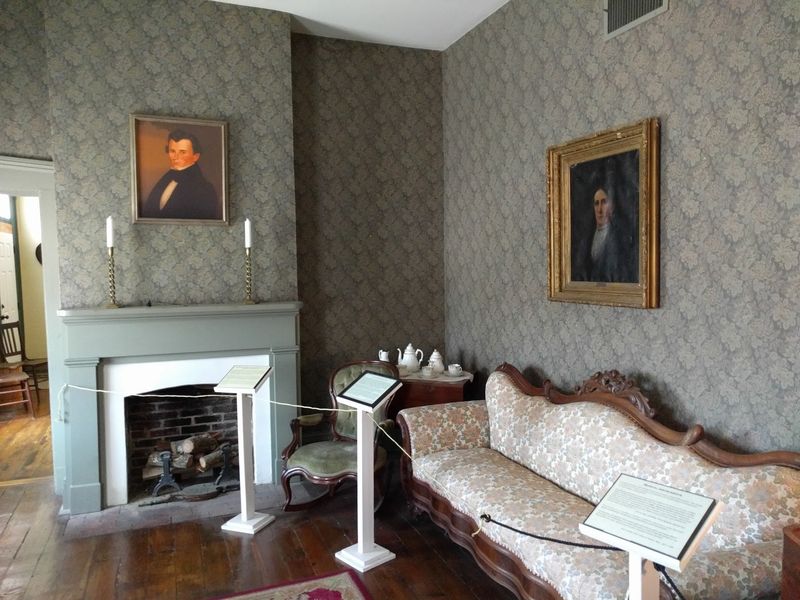
Here is something that surprised me when I first read about it: the front house was not just for one marshal but for jailers, deputies, and their families over the years. That means a lot of different people called this place home, all while keeping an eye on the jail out back.
The rooms are set up with furniture and items from the frontier days, so you get a nice sense of how folks decorated and lived back then. You will see parlors, bedrooms, and other spaces that feel warm and lived in, which is a big contrast to the cold stone behind them.
It is kind of sweet, actually, how normal and homey these rooms look.
Take a moment in each room to notice the little things, like the style of the beds or the dishes on display. Those small details tell you a lot about daily life, from how people cooked to how they relaxed at the end of a long day.
I think it helps to picture a kid running down the hallway or a parent folding laundry by the window. When you do that, the house stops feeling like a museum and starts feeling like a real family home you just happened to wander into.
What Keeping The Peace Looked Like Out West
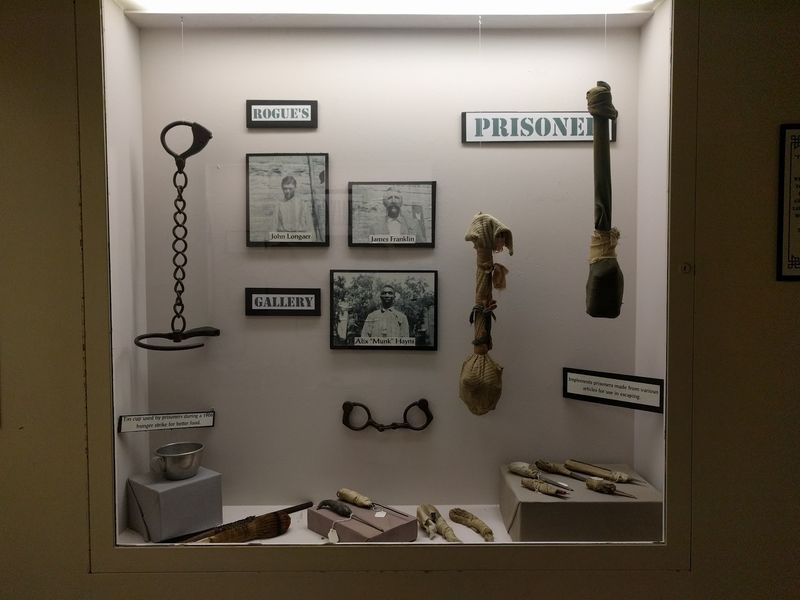
Imagine being in charge of keeping order in a busy frontier town where wagons rolled through constantly and trouble could pop up at any moment. Independence was a jumping-off point for travelers heading west, so the folks running this jail had their hands full.
The museum does a nice job explaining how law enforcement worked in Jackson County during that time. You will learn about the jobs of marshals and deputies, how prisoners were handled, and what the court process looked like back then.
It is not flashy, but it is the kind of information that makes everything else in the building click into place.
My tip is to read the displays slowly instead of skimming past them on your way to the cells. They give you context that turns the stone walls and iron doors into real stories about real people trying to make a rough place a little safer.
I also like thinking about how different it was without radios, cars, or quick ways to call for help. A lawman back then had to rely on his neighbors, his judgment, and a whole lot of patience, which honestly sounds exhausting when you think about it.
Guerrillas, Soldiers, And Other Famous Faces
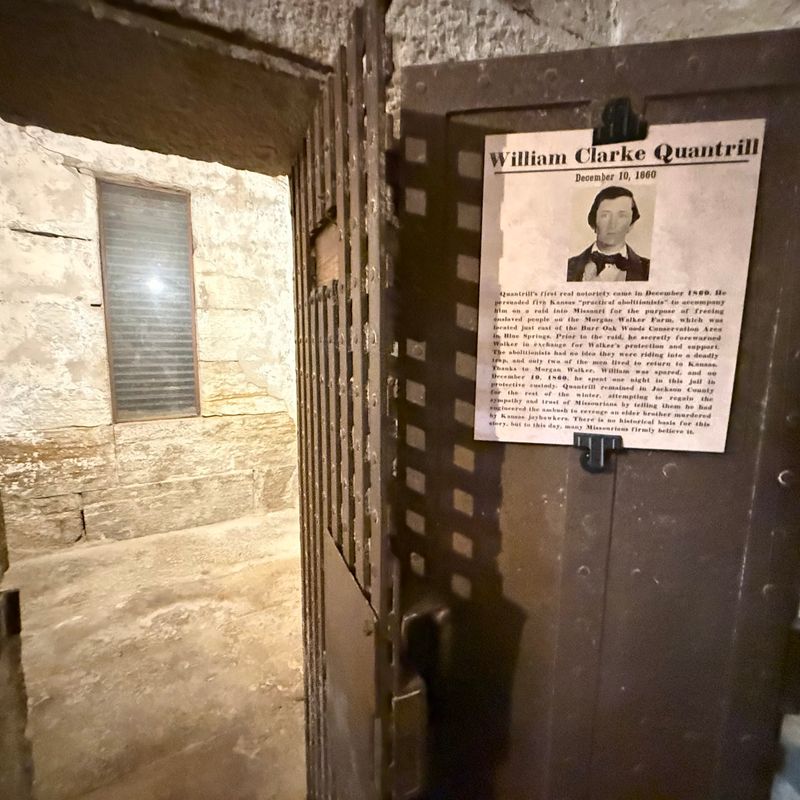
Frank James gets most of the attention, but he was far from the only interesting person who spent time behind these walls. The Confederate guerrilla leader William Quantrill was held here briefly, which adds a whole new layer to the place.
During the Civil War, this part of Missouri was a really tense and divided area, and the jail held both soldiers and regular folks. Women and even children were detained here at certain times, which is a sad but important piece of the story.
It shows how the war touched everyday families, not just the people fighting on the battlefield.
As you walk through, try to keep in mind that every cell held someone with their own background and worries. Some were dangerous, some were caught up in hard times, and some were simply in the wrong place when trouble broke out.
Reading about them helps you see the Civil War years in a much more personal way than a textbook ever could. It is a heavy topic, sure, but the museum handles it with care, and you will probably leave thinking about these people long after you get back to your car.
The Brick Addition And The Chain Gangs
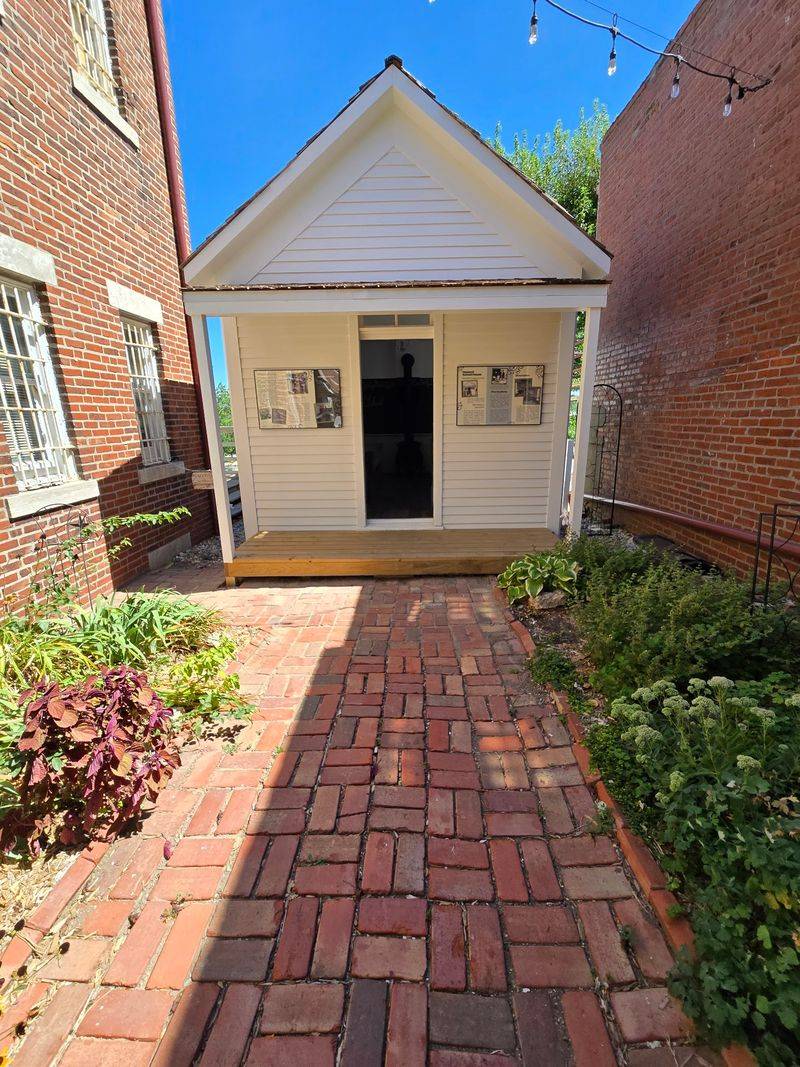
Buildings grow and change just like towns do, and this jail is a great example of that. Later on, a brick addition was built at the back to hold prisoners who worked on chain gangs around the county.
Those prisoners were put to work on public projects, like building roads and sewers that helped the area grow. It is kind of eye-opening to think that some of the streets people used every day were shaped by folks who slept in this very building.
That connection between the jail and the town around it is something you probably will not notice unless someone points it out.
When you visit, look for the difference between the old limestone section and the newer brick part. Spotting how the materials change is a fun little detective game, and it shows you how the jail kept adapting to new needs over time.
Kids might enjoy guessing which parts are older just by looking at the walls. The jail stayed in use for many years, which means it saw a lot of change in how people thought about crime and punishment, and you can actually see some of that history built right into the structure itself.
Rescued By Neighbors And A Famous President
We almost lost this place, which is honestly hard to believe once you have seen it in person. At one point the old jail was set to be torn down, and that would have wiped out a huge chunk of local history.
Thankfully, the Jackson County Historical Society stepped up to save it, and they had some help from a pretty famous neighbor. Former President Harry S.
Truman, who called Independence home, supported the effort to preserve the building. Knowing that a president cared about this little jail makes it feel even more special when you walk through the door.
Today the Historical Society still takes care of the site, and visiting is a nice way to support their work keeping these stories alive. If you have time, swing by some of the Truman sites around town too, since they pair really well with this stop and give you more of the Independence story.
I like ending a visit here by thinking about how close we came to losing it all. It is a good reminder that old buildings only stick around when people decide they matter, and this one clearly mattered to a lot of folks in Missouri.
