Indiana’s back roads hold secrets that most travelers never discover.
When a horse-drawn buggy clip-clops past your car window, you’re catching a fleeting glimpse of a community that lives by values unchanged for centuries.
The Amish people of Indiana have built a world that exists parallel to modern life, yet remains beautifully separate from it.
Understanding what lies beneath the surface of these quiet roads reveals lessons about simplicity, faith, and human connection that might just change how you see your own life.
A Faith That Shapes Every Single Decision
Religion isn’t just something the Amish practice on Sundays.
Every choice they make, from the clothes they wear to the technology they refuse, flows directly from their interpretation of Christian scripture and commitment to living humbly before God.
Their faith teaches that pride is dangerous and that staying separate from the world protects their souls from corruption.
This belief system, rooted in Anabaptist traditions from 16th-century Europe, guides them to reject anything that might make them feel superior to others or dependent on worldly systems.
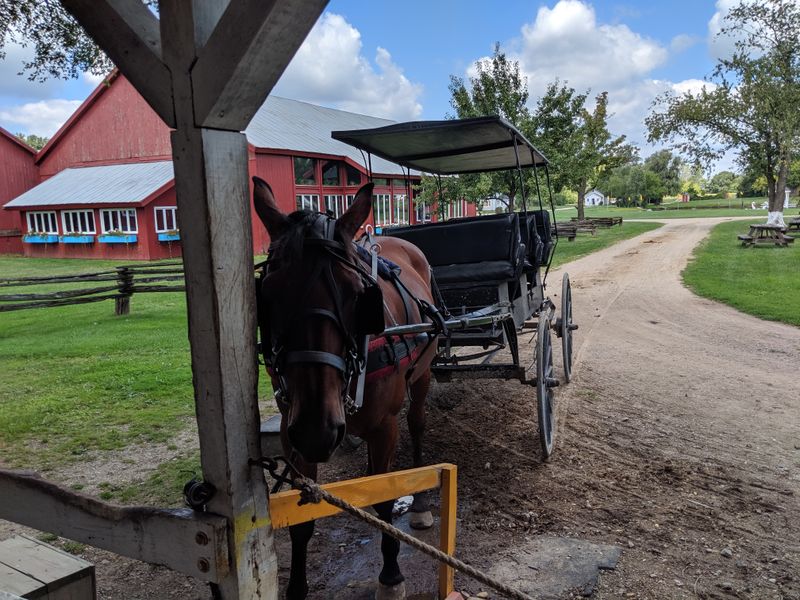
When you see a buggy instead of a car, you’re witnessing a theological choice, not a lifestyle preference.
The Amish believe that owning cars would make it too easy to drift away from their tight-knit communities and expose them to outside influences that contradict their values.
Electricity from public grids gets rejected for similar reasons, as it connects them to a system they didn’t create and can’t control.
Instead, many Amish homes use propane gas for lighting and refrigeration, which allows them to maintain some modern conveniences without compromising their independence.
Church services happen in members’ homes rather than in special buildings, rotating from family to family every two weeks.
These gatherings last three hours and include hymns sung without instruments, sermons delivered in Pennsylvania Dutch, and communal meals that strengthen social bonds.
The faith that tourists glimpse for seconds actually structures every waking hour of Amish life.
Children learn these values from birth, watching parents model humility, hard work, and devotion in practical ways that make religion feel less like rules and more like breathing.
An Economy Built on Skill and Sweat
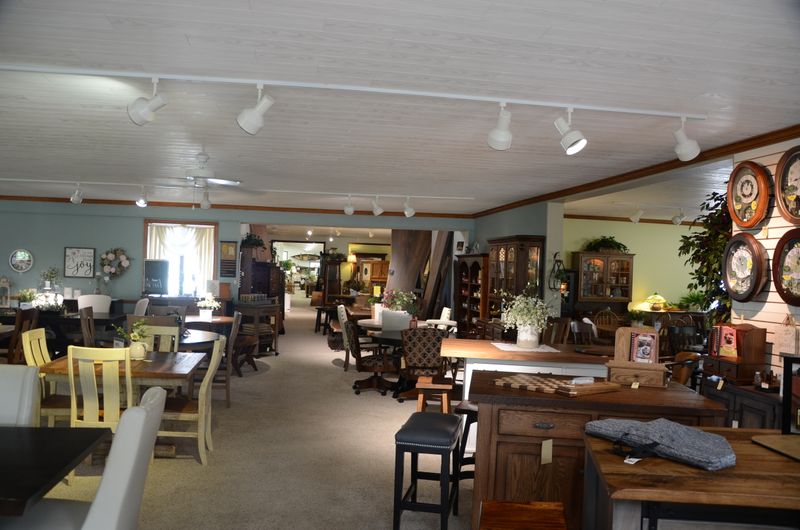
Walk into an Amish furniture shop and you’ll immediately notice something different about the quality.
Each table, chair, and cabinet gets constructed using techniques passed down through generations, with joints that fit so perfectly they barely need glue.
The Amish economy thrives because their products reflect values that mass production simply cannot replicate.
Farming remains central to many Amish families, though rising land costs have pushed some toward trades like carpentry, blacksmithing, and quilt-making.
These occupations allow them to work with their hands, stay close to home, and avoid the time clocks and bosses that come with factory jobs.
An Amish carpenter might spend an entire day perfecting a single rocking chair, knowing that his reputation and his family’s income depend on delivering excellence.
This approach to work stands in sharp contrast to the rush and efficiency obsession that dominates modern business culture.
Many Amish businesses operate without websites or advertising, relying instead on word-of-mouth recommendations that spread through both Amish and non-Amish networks.
Tourists who stop at roadside stands to buy fresh produce, baked goods, or handcrafted items are participating in an economy where trust matters more than contracts.
The money exchanged supports families directly rather than corporate shareholders.
Interestingly, some Amish entrepreneurs have found creative ways to balance tradition with business needs.
They might hire non-Amish drivers to transport goods or use computers owned by English neighbors to process orders.
These compromises show how the community adapts without abandoning core principles.
The work ethic you glimpse from your car window represents an entire philosophy about what labor should mean in human life.
Education That Ends at Eighth Grade
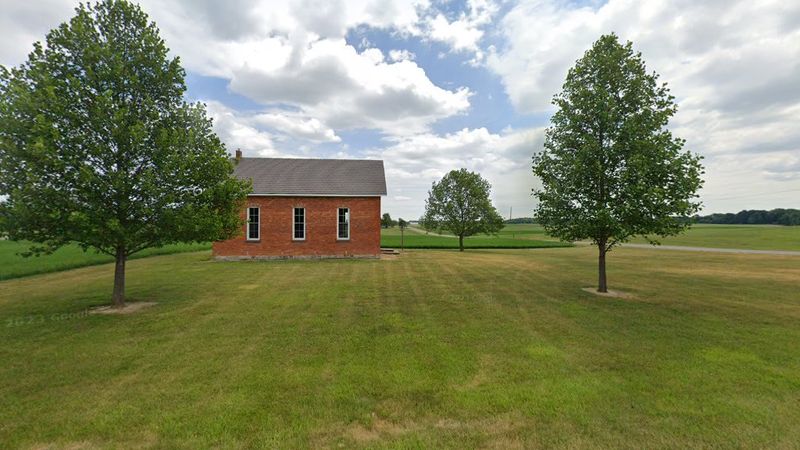
Amish children attend one-room schoolhouses that look like they belong in history books.
A single teacher, usually a young Amish woman, instructs students from first through eighth grade, all gathered in the same space.
The curriculum focuses on reading, writing, arithmetic, and practical skills, with lessons often taught in English even though Pennsylvania Dutch is spoken at home.
Formal education stops after eighth grade, a practice the Amish fought for and won in a landmark 1972 Supreme Court case called Wisconsin v. Yoder.
The court recognized that Amish teens learn everything they need for their way of life through apprenticeships and hands-on work within their community.
This decision protects their right to raise children according to their beliefs without state interference.
Critics sometimes question whether limiting education restricts children’s future choices, but the Amish see it differently.
They believe that too much formal schooling fills young minds with ideas that contradict faith and encourages ambitions that pull families apart.
After eighth grade, teenagers begin learning trades from parents or other community members, gaining skills that will support them throughout adulthood.
Boys might apprentice with carpenters, farmers, or blacksmiths, while girls typically learn homemaking, gardening, and sewing.
These aren’t considered lesser skills but rather essential knowledge for maintaining self-sufficient households.
The schoolhouses themselves reflect Amish values, with no electricity, computers, or flashy decorations.
Children play simple games during recess and bring lunches packed in metal tins.
When tourists drive past these modest buildings, they’re seeing an educational philosophy that prioritizes community needs over individual achievement and practical wisdom over academic credentials.
Rumspringa and the Choice to Stay

Hollywood loves to sensationalize rumspringa, portraying it as a wild period when Amish teens go crazy with freedom.
The reality is far more nuanced and interesting than any movie script.
Rumspringa, which translates roughly to “running around,” begins around age sixteen and gives unbaptized young people a chance to experience life outside Amish rules before deciding whether to join the church.
During this time, teenagers might wear modern clothes, get driver’s licenses, listen to popular music, or attend parties with non-Amish friends.
Parents generally look the other way, understanding that their children need space to make an informed choice about baptism and lifelong commitment to the community.
Contrary to popular belief, most Amish youth don’t go wild during rumspringa.
Many continue living at home and working in family businesses, experimenting only mildly with outside culture.
The most important fact about rumspringa is that roughly 85 to 90 percent of Amish young people ultimately choose baptism and remain in the community.
This high retention rate surprises outsiders who assume that exposure to modern conveniences would make the Amish lifestyle seem unbearably restrictive.
Instead, young people who’ve tasted both worlds often report that the Amish way offers something contemporary culture lacks, including strong family bonds, clear purpose, and genuine community support.
Once baptized, members make a sacred promise to follow church rules for life.
Breaking this vow after baptism can result in shunning, a serious consequence where the community limits contact with the rule-breaker to encourage repentance.
The choice to stay isn’t made lightly or out of ignorance.
When you pass a buggy carrying young Amish adults, you’re likely seeing people who consciously chose this path after considering alternatives.
Technology Decisions That Aren’t Simply About Being Old-Fashioned
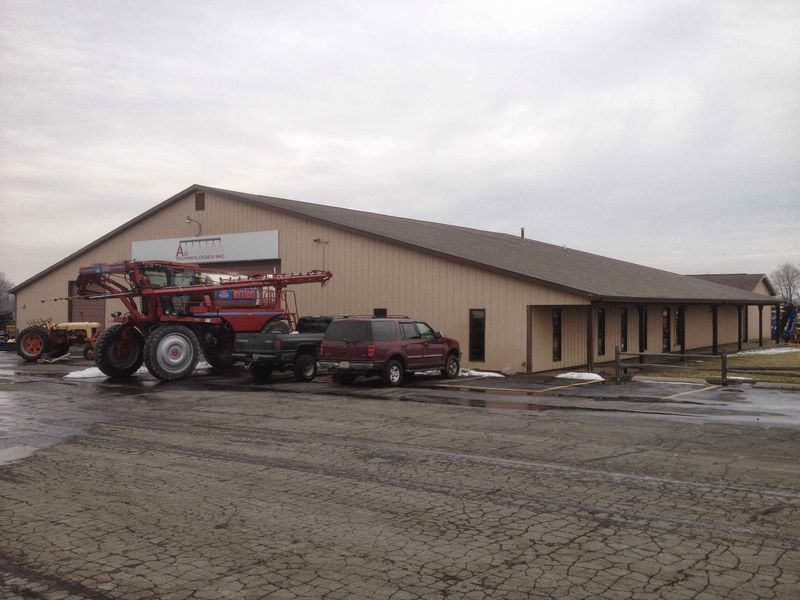
The Amish relationship with technology is far more sophisticated than most people realize.
They don’t reject innovation because they’re stuck in the past or afraid of progress.
Instead, each new technology gets carefully evaluated based on how it might affect community cohesion, family relationships, and spiritual life.
Church leaders and community members discuss whether adopting a particular tool would create dependency on outside systems, encourage pride, or give individuals too much independence from the group.
This process explains why you’ll see some Amish using solar panels while rejecting connection to the electrical grid.
Solar power allows them to generate electricity independently without linking to the larger world’s infrastructure.
Similarly, many Amish businesses use pneumatic tools powered by compressed air rather than electricity, achieving similar results through different means.
Phones present an interesting case study in Amish decision-making about technology.
Most communities prohibit phones inside homes because they would disrupt family time and allow the outside world to intrude at any moment.
However, many Amish have adopted shared community phones housed in small sheds at the end of lanes or near businesses.
These phones serve practical needs without dominating daily life the way smartphones do in mainstream culture.
Some progressive Amish groups even permit cell phones for business purposes, though they must be kept in barns or workshops rather than brought into living spaces.
The key principle is that technology should serve the community’s needs without controlling its members or replacing face-to-face interaction.
When tourists see buggies sharing roads with cars, they often assume the Amish are simply backward.
In truth, these communities are making deliberate choices about which aspects of modern life align with their values and which ones threaten what they hold most dear.
A Social Structure Where Everyone Belongs
Loneliness has become an epidemic in modern society, but it’s virtually unknown among the Amish.
Their social structure ensures that every person, from cradle to grave, has a clearly defined place within a network of relationships that provide both support and accountability.
When an Amish family faces a crisis like a barn fire or serious illness, the community responds immediately with practical help rather than just sympathy.
Barn raisings have become somewhat famous as examples of Amish cooperation, with entire communities gathering to construct a building in a single day.
Men work on the frame and roof while women prepare enormous meals to feed the workers.
Children run around playing and learning by watching adults model teamwork and generosity.
These events aren’t just about construction but about reinforcing the bonds that hold the community together.
The Amish organize themselves into church districts of about 25 to 35 families, small enough that everyone knows everyone else intimately.
When a district grows too large, it divides, creating two new communities that maintain close ties.
This structure prevents the anonymity that plagues modern neighborhoods where people might not know who lives three doors down.
Elderly Amish people don’t get shipped off to nursing homes but instead live in small houses called dawdy haus built next to their children’s homes.
Grandparents remain involved in daily family life, helping with childcare and chores as they’re able, receiving care in return as they age.
This intergenerational living arrangement benefits everyone by keeping wisdom close at hand and ensuring the elderly maintain purpose and dignity.
The sense of belonging that tourists glimpse for seconds actually represents a completely different approach to organizing human society.
It’s an approach that prioritizes collective wellbeing over individual freedom and mutual responsibility over personal convenience.
A Landscape Shaped by Different Values

Drive through Amish country and you’ll notice the landscape itself looks different from typical American rural areas.
Fields are meticulously maintained with crops planted in ruler-straight rows, but there are no massive industrial farming operations with huge machinery and chemical storage tanks.
Instead, you’ll see smaller farms worked by families using horse-drawn equipment, a sight that seems to belong to a different century.
The absence of power lines creates surprisingly open vistas since Amish homes don’t connect to electrical grids.
Clotheslines full of plain, dark-colored garments flutter in the breeze outside nearly every house, a reminder that the Amish still do laundry the way your great-grandparents did.
Gardens bursting with vegetables occupy spaces near homes, providing fresh food and reducing dependence on stores.
Barns often look more substantial than the houses themselves, reflecting the importance of animals and agriculture in Amish life.
These aren’t the neglected, collapsing barns you see on abandoned farms but well-maintained structures painted in traditional colors and built to last generations.
The roads themselves tell a story, with wide shoulders accommodating buggies and special slow-moving vehicle signs warning drivers to watch for horse-drawn traffic.
Small businesses dot the landscape, including furniture workshops, bakeries, and produce stands that operate on the honor system, with payment boxes where customers leave cash without supervision.
This landscape reflects environmental stewardship that comes naturally to people who work closely with land and animals.
Amish farming practices often align with organic methods not because of trendy environmental concerns but because they’ve always farmed this way, using crop rotation and animal manure instead of synthetic fertilizers.
When tourists snap photos of picturesque farms from car windows, they’re capturing a landscape that demonstrates how human communities can exist in harmony with nature rather than constantly trying to dominate it.
Dear Reader: This page may contain affiliate links which may earn a commission if you click through and make a purchase. Our independent journalism is not influenced by any advertiser or commercial initiative unless it is clearly marked as sponsored content. As travel products change, please be sure to reconfirm all details and stay up to date with current events to ensure a safe and successful trip.
