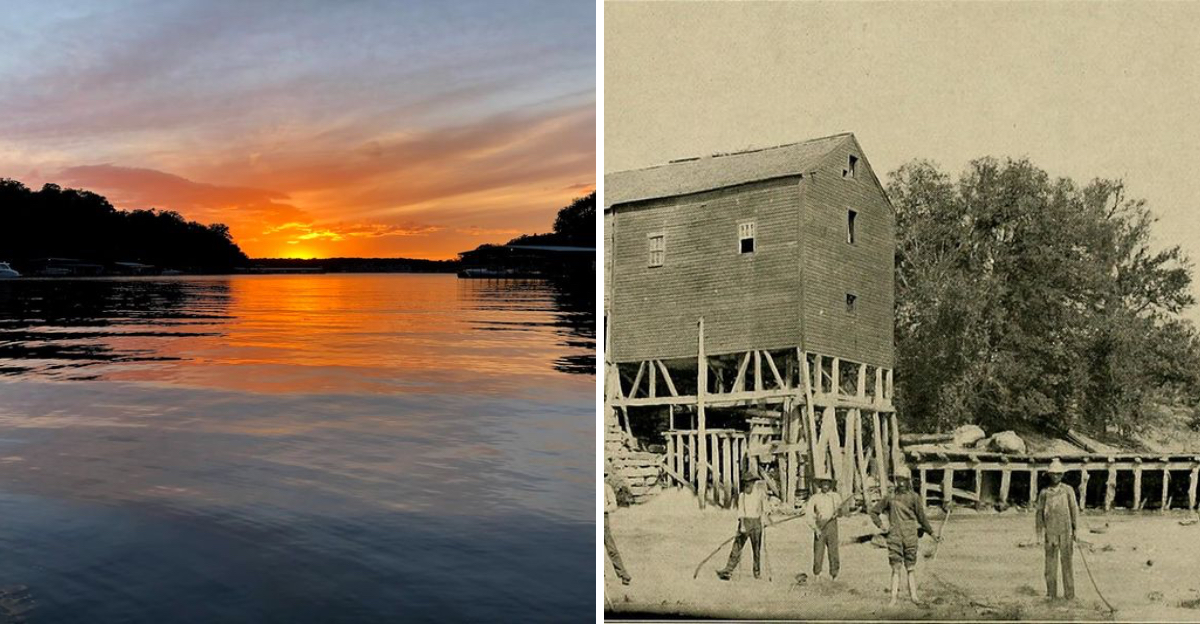
The water looks peaceful enough on a sunny afternoon. Boats drift.
Fishermen cast. Families picnic on the shore without any idea what lies beneath their floating coolers.
But down there, beneath the surface of the Lake of the Ozarks, a whole town sits in cold, dark silence. Old Linn Creek was flooded in the 1920s to make way for the dam that created the lake, and the residents had to pack up their lives and move to higher ground.
The church, the school, the general store, the houses where children were born and grandparents died, all of it now rests underwater, visited only by scuba divers and the occasional curious historian. Most people drive right over it without a clue.
But the story is still down there, waiting for someone to remember.
The Town Before the Water Came
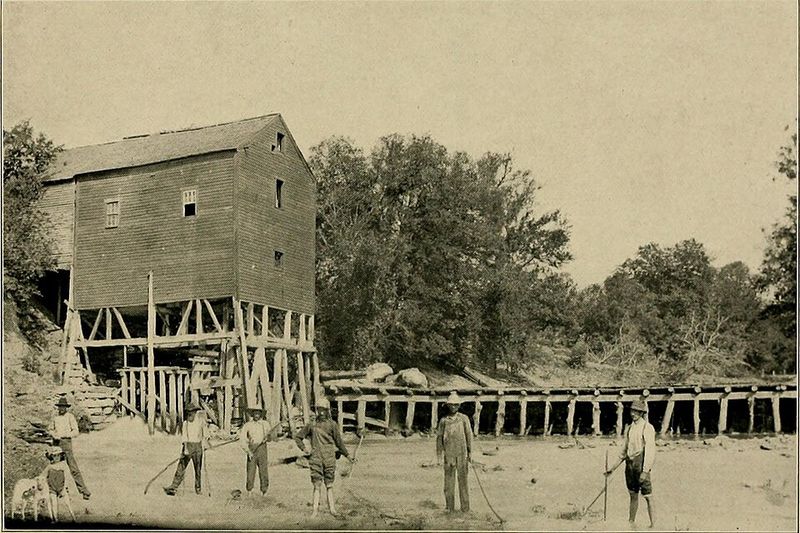
Old Linn Creek did not appear on a map by accident. It grew naturally along the Osage River in what is now Camden County, Missouri, and by the early 1900s it was a functioning county seat with a courthouse, churches, schools, and shops.
The town had real roots. Families had lived there for generations, and the community had all the features of a proper small-town life in rural Missouri.
There was a post office, a jail, and roads that connected it to neighboring communities. People farmed the surrounding land and relied on the river for transportation and trade.
It was not a ghost town before the water arrived. It was alive.
That is what makes its story so striking, because nothing about Old Linn Creek suggested that it would one day vanish beneath millions of gallons of water.
The town had earned its place on the Missouri landscape, and then, in a matter of years, a decision made far away changed everything for everyone who called it home.
Bagnell Dam Changed Everything
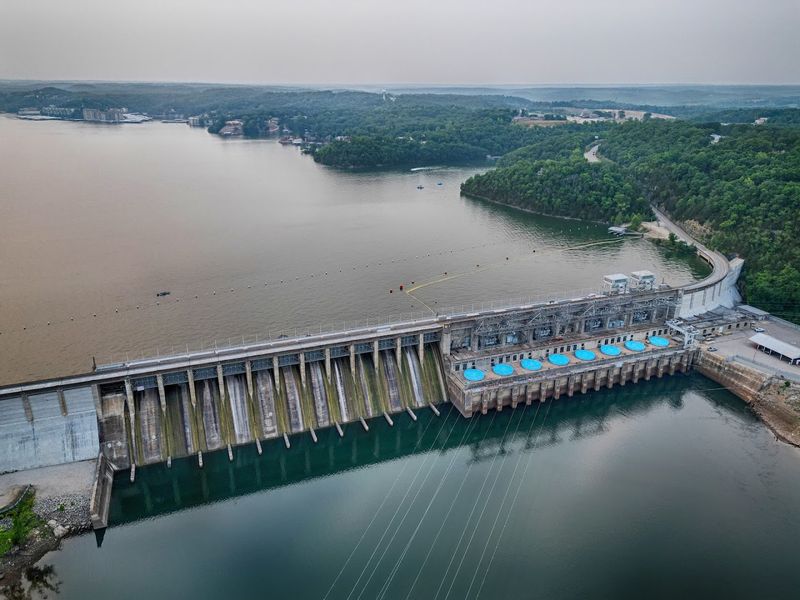
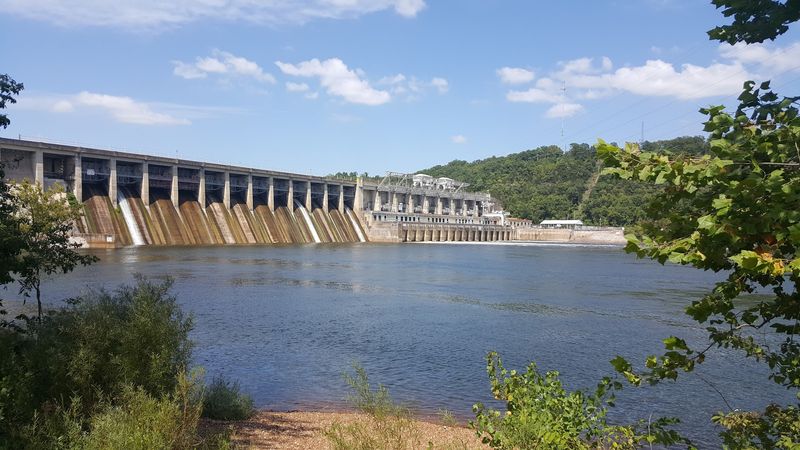
The construction of Bagnell Dam is the reason Old Linn Creek no longer exists above the waterline. Union Electric Company began building the dam in 1929, and it was completed in 1931.
The project was massive for its time. It created the Lake of the Ozarks, which became one of the largest man-made lakes in the United States when measured by shoreline length.
Missouri gained a major recreational lake, but communities like Old Linn Creek paid the price. The rising water did not discriminate between old homes and new ones, between beloved landmarks and forgotten sheds.
Everything in the flood zone had to go. The dam was seen as a symbol of modern progress, and the power it generated was genuinely needed in the region.
But progress always has a cost, and for the residents of Old Linn Creek, that cost was their entire hometown. The dam still stands today at the eastern end of the lake, and it remains a working hydroelectric facility in Missouri to this day.
Families Were Told to Leave and Not Come Back
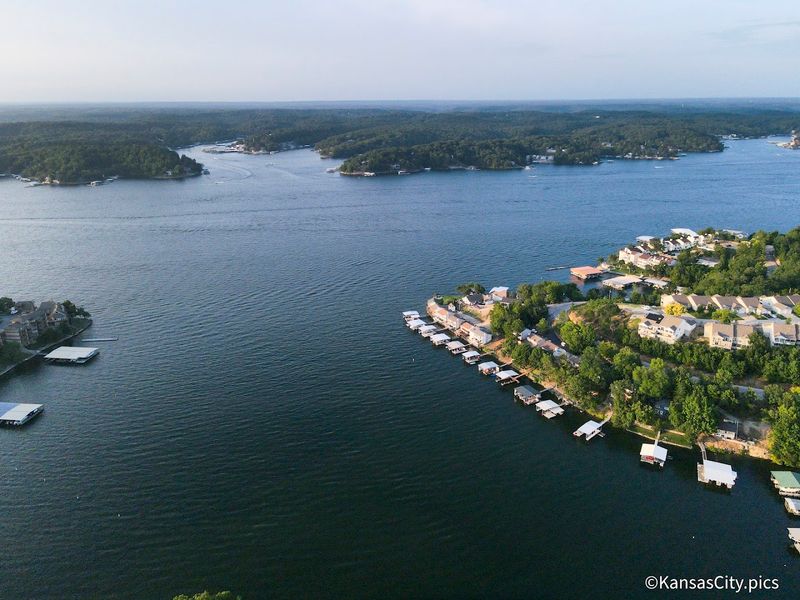
When word came that the valley would be flooded, residents of Old Linn Creek had to make fast decisions about what to take and what to leave behind. Some families had only weeks to relocate.
Moving an entire household in the 1930s was not simple. There were no moving trucks lined up on the street.
People relied on wagons, mules, and whatever help their neighbors could offer.
Some families moved to the newly established town of Linn Creek, which was built on higher ground nearby in Missouri to serve as the replacement county seat. Others scattered to different parts of the state entirely.
The emotional weight of leaving a place your family had lived in for decades is hard to put into words. Children said goodbye to schools they attended.
Adults locked doors on homes they had built with their own hands.
There was no option to stay, and no promise that the new town would ever feel the same. For many, it never did.
The displacement was quiet, but it was deep, and it shaped how those families remembered Missouri for the rest of their lives.
Even the Graves Were Relocated
One of the most striking parts of the Old Linn Creek story is what happened to the cemeteries. When a town is going to be permanently submerged, you cannot simply leave the burial grounds behind.
Workers carefully disinterred remains from local cemeteries and moved them to higher ground before the water rose. It was a solemn and labor-intensive process that required coordination across multiple burial sites.
Some graves were moved to the new Linn Creek area in Missouri. Others were relocated to family plots on private land where descendants could still visit them.
Not every grave was successfully identified or moved, and that reality adds another layer of weight to the story. The idea that some of those original resting places now sit silently beneath the lake is something that many local families have never quite let go of.
Missouri has a long history of river communities that faced similar situations when dams were built across the state, but few cases feel as personal as a relocated cemetery. It is the kind of detail that makes history feel human rather than just historical.
The Courthouse Had to Come Down

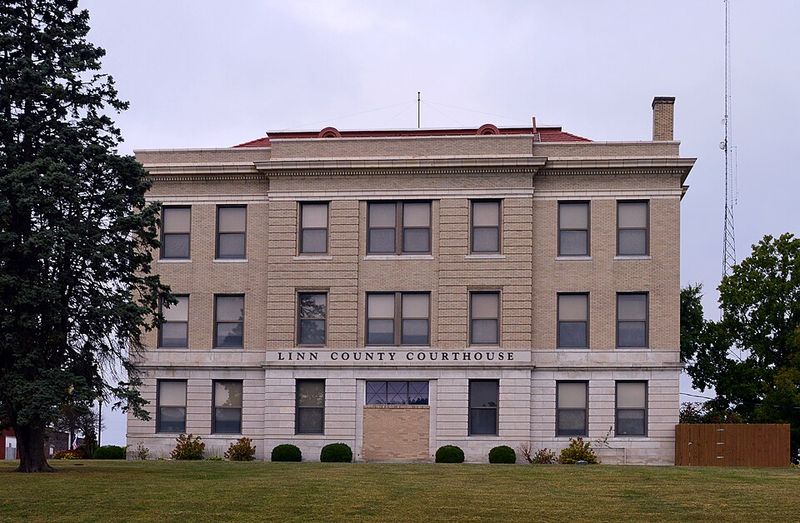
Old Linn Creek served as the county seat of Camden County, Missouri, which meant it had a courthouse at its center. That courthouse handled the legal affairs of the entire county, and it stood as the most official building in town.
When the flooding became inevitable, the county seat status had to be transferred. New Linn Creek, built on higher ground, took over that role, and a new courthouse was eventually established there.
The original courthouse in Old Linn Creek was among the structures left behind or demolished before the waters rose. Watching a courthouse come down is not a small thing.
It signals the end of an era in a way that few other events can match.
For Camden County residents, the transition meant rebuilding civic life from scratch on unfamiliar ground. Records had to be transported, offices had to be reassigned, and the entire machinery of local government had to restart in a new location in Missouri.
The courthouse was more than a building. It was the place where land was recorded, disputes were settled, and community decisions were made official.
Losing it meant losing a piece of how the county understood itself.
What Lies Beneath the Lake Today
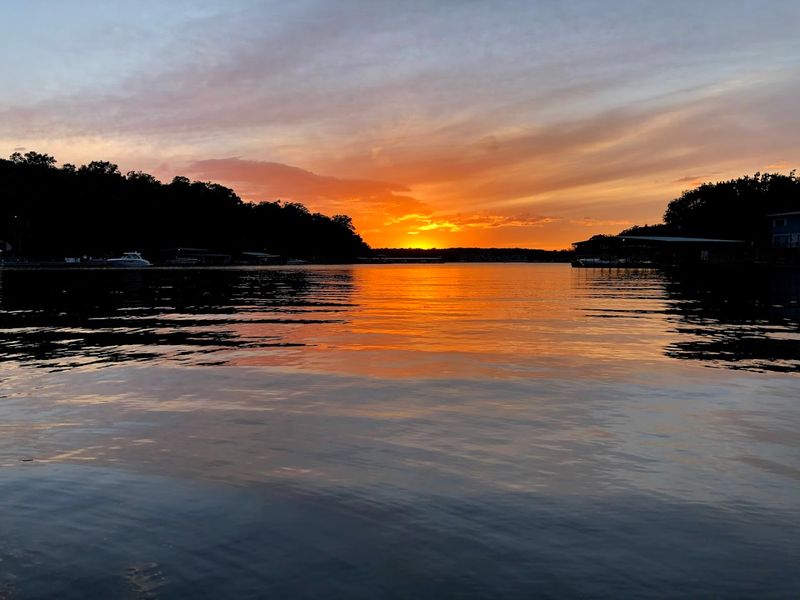
On a calm day at the Lake of the Ozarks in Missouri, the water looks peaceful and blue. But underneath that surface, the old footprint of Old Linn Creek still exists in some form.
Stone foundations, old road beds, and remnants of the town’s layout have been documented by divers over the years. The lake bottom preserves some of these traces, though decades of silt and natural change have altered much of what was originally left behind.
During periods of extreme drought, when the lake level drops significantly, portions of the old town area become partially visible. Local residents and curious visitors have spotted old structures and road outlines emerging from the receding water.
Those moments are genuinely surreal. Seeing a piece of a forgotten Missouri community rise briefly out of the water is a reminder that the lake has a history that goes far deeper than fishing and boating.
The lakebed holds the memory of a community in a very literal sense. It is one of those rare places where the past and the present share the same physical space, just separated by about sixty feet of Missouri lake water.
Low Water Levels Reveal Ghostly Outlines
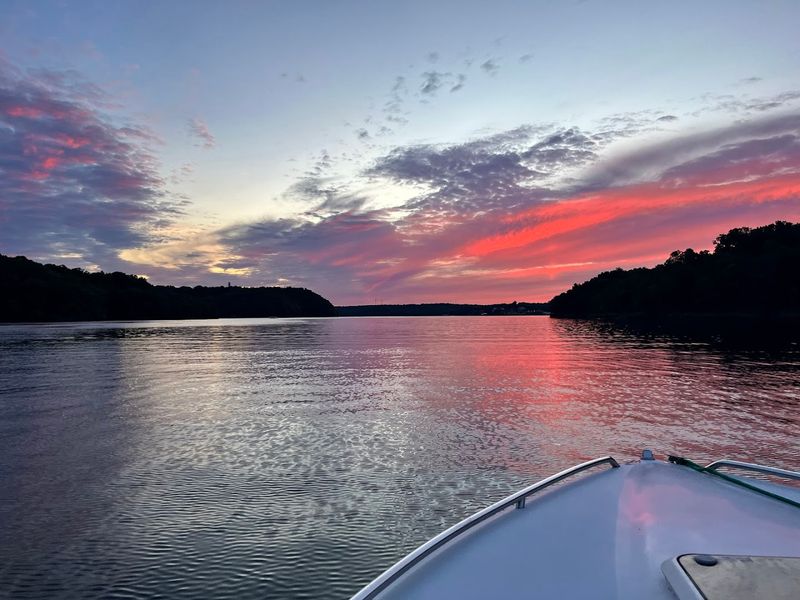
Every few years, drought conditions or deliberate lake management causes the water level at Lake of the Ozarks to drop noticeably. When that happens, something remarkable occurs near the area of Old Linn Creek in Missouri.
Old foundations begin to peek above the waterline. Cracked stone walls, remnants of road surfaces, and the skeletal shapes of what were once buildings start to appear along the exposed lakebed.
Standing at the edge of the water and looking out at those outlines is one of the most quietly powerful experiences Missouri has to offer. There is no dramatic soundtrack, no historical marker right at your feet, just stone and silence.
Photographers and history enthusiasts make a point of visiting during low-water periods specifically to document what emerges. The images they capture have a haunting, almost dreamlike quality to them.
The town does not fully resurface, of course. Most of it remains well below the normal waterline.
But those partial glimpses are enough to remind you that the lake you are looking at is not just a recreational destination. It is also a place where an entire Missouri community once went about its daily life.
New Linn Creek Was Built to Replace the Old One
When it became clear that Old Linn Creek was going to be submerged, planners in Missouri did not simply leave residents without a county seat. A new town was established on higher ground and given essentially the same name.
New Linn Creek, now simply called Linn Creek, sits a few miles from where the original town once stood. It was built to serve Camden County’s administrative needs and to give displaced residents a place to rebuild.
The transition was not seamless. Starting over in a new location, even one nearby, meant constructing new buildings, establishing new routines, and trying to recreate a sense of community that had taken generations to build.
Linn Creek today is a small, quiet town in Missouri. It carries the name of its predecessor but has its own distinct identity that has developed over the decades since the flooding.
Visiting Linn Creek now and knowing the story of its origin gives the town a different kind of weight. Every building there exists because another building somewhere beneath the lake was left behind.
That is a founding story unlike almost any other small Missouri community can claim.
The Lake of the Ozarks Became a Major Destination
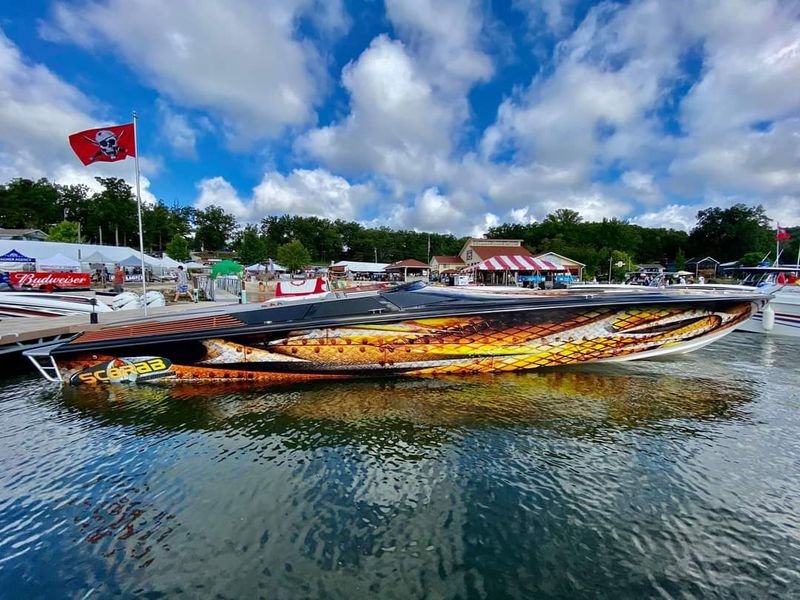
Whatever mixed feelings surrounded the creation of Lake of the Ozarks, there is no denying that it became one of Missouri’s most visited destinations. The lake stretches for miles with a famously irregular shoreline.
Boating, fishing, swimming, and waterfront dining all became central to the lake’s identity in the decades following its creation. Resort communities popped up along the shores, and tourism became a major part of the local economy.
The lake draws visitors from across Missouri and neighboring states every summer. Its warm water and scenic Ozark surroundings make it an appealing place to spend a weekend or an entire vacation.
But even amid all that activity, the story of Old Linn Creek quietly persists. Local historians, curious visitors, and longtime Missouri residents keep the memory of the submerged town alive through conversation, photography, and occasional exhibits.
The lake is genuinely beautiful. Watching the sun drop behind the Ozark hills while sitting on a dock above where a courthouse once stood is the kind of moment that makes Missouri feel like a place with real depth, literally and historically speaking.
Local Historians Keep the Memory Alive
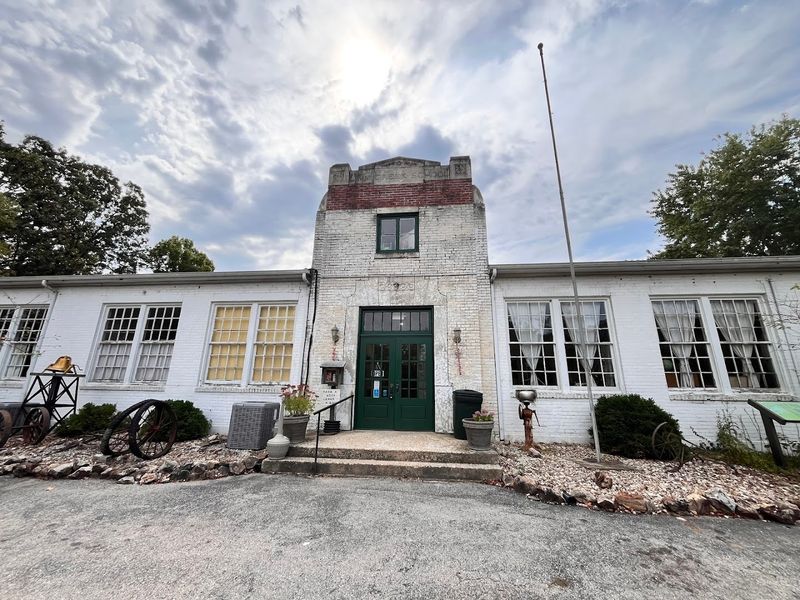
Stories like Old Linn Creek’s do not survive on their own. They require people who care enough to collect photographs, preserve documents, and keep talking about what happened even when the world moves on.
Camden County has a small but dedicated community of local historians and preservationists who have worked to document the story of Old Linn Creek and other communities affected by the lake’s creation in Missouri.
Old photographs of the town, maps of its original layout, and records of the families who lived there have been gathered and preserved over the years. Some of these materials are held by local historical societies and libraries in Missouri.
Walking into a small Missouri museum and finding a display about a town that no longer exists above water is a genuinely moving experience. The images of streets and storefronts that are now dozens of feet underwater make history feel immediate.
These historians are doing something important. Without their work, Old Linn Creek would fade from memory entirely, becoming just another coordinate on a lake map rather than a real place where real people built their lives and then had to say goodbye.
Visiting the Area Around Old Linn Creek
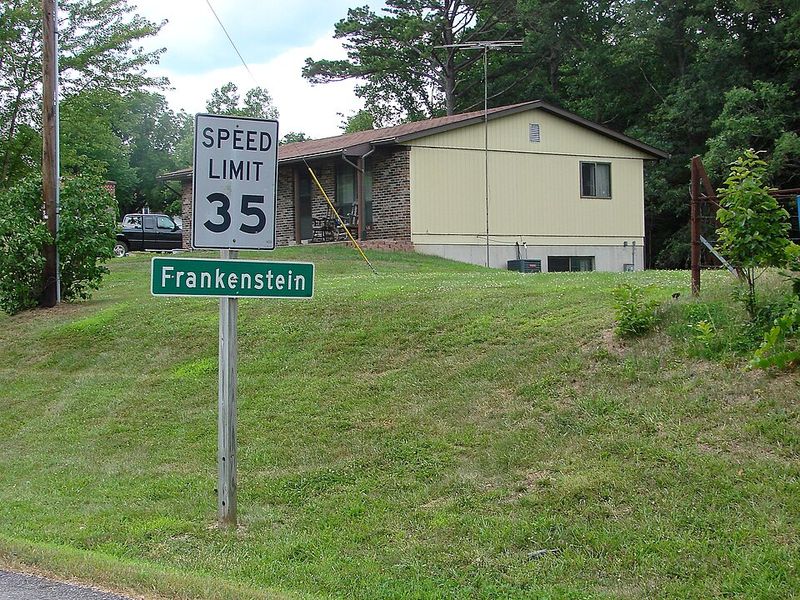
Getting to the area around Old Linn Creek is straightforward. The site is located in Osage Township, Camden County, Missouri, near the coordinates 38.0725 north, 92.7366 west, within the Lake of the Ozarks region.
There is no formal visitor center dedicated specifically to Old Linn Creek, but the surrounding area offers plenty of access points to the lake where you can get close to where the town once stood.
Bringing a map of the original town layout, which can sometimes be found through local historical societies in Missouri, adds a lot to the experience. Knowing what was where makes standing at the water’s edge feel more connected to the actual history.
The best time to visit is during late summer or early fall when lake levels tend to be lower and visibility of the lakebed is occasionally better. Early mornings are quieter and give you space to actually think.
Missouri has no shortage of beautiful lakes and scenic Ozark views, but very few places offer this particular combination of natural beauty and buried history. Coming here feels less like a typical lake visit and more like a quiet act of remembrance for a place that deserved to be remembered.
Why Old Linn Creek Still Matters
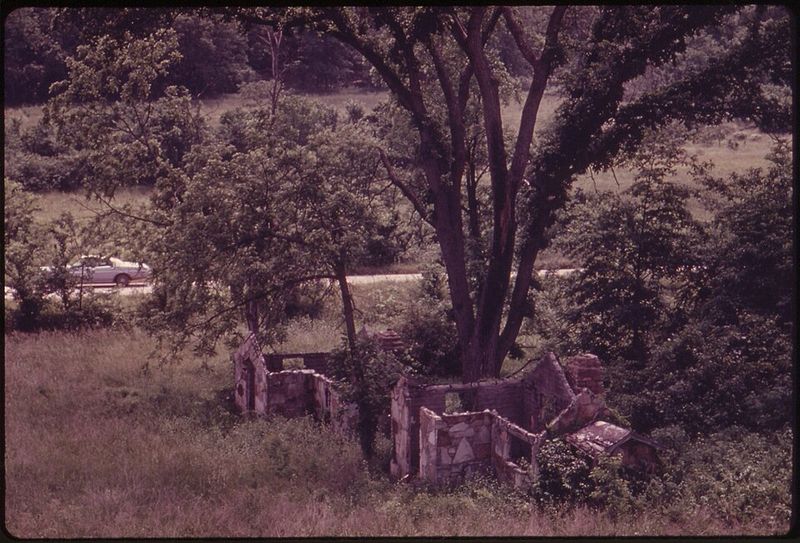
Old Linn Creek is not just a curiosity for history buffs. It represents something that happened to real families in Missouri, and it raises questions that are still relevant today about what we sacrifice in the name of progress.
The town was not abandoned because people stopped caring about it. It was taken, deliberately and permanently, to make way for a project that served a larger economic and industrial purpose.
That kind of story plays out in different ways all over the country, but Old Linn Creek is one of the more complete examples because an entire town, including its courthouse, churches, and cemeteries, was involved.
Keeping this story alive is a way of honoring the people who had to start over. It is also a way of reminding ourselves that the landscapes we enjoy today often have complicated histories beneath their surfaces.
Missouri has many layers to it, and Old Linn Creek is one of the deepest. The lake above it is beautiful, the region around it is worth exploring, and the story beneath it is one that deserves far more attention than it typically receives from the world above the waterline.
