
Louisiana draws you in with color, rhythm, and a legal playbook that reads like a collection of folkloric dares. You come for jazz and jambalaya, but the laws spark the funniest conversations long after the music fades. You will find rules about sandwiches, gators, and even handlebars that turn small moments into unforgettable stories. Stick with this guide and you will navigate the quirks with a grin while seeing more of the state in the process.
1. Three-Sandwich Limit at a Wake

Louisiana’s legal lore includes a curious guideline that limits mourners to three sandwiches at a wake, a detail that always makes travelers blink.
You might not expect a state to regulate grief snacks, yet lore says the rule aimed to keep gatherings orderly.
The notion lives on in stories shared between bites and hushed condolences.
In New Orleans, funeral traditions carry music, memory, and food with reverence that tourists often admire.
You can see historic processions pass near St. Louis Cathedral, 615 Pere Antoine Alley, New Orleans, LA 70116.
The surroundings provide context for how custom and courtesy often blend in this state.
Local historians suggest the sandwich guideline emerged to prevent waste and competition at crowded wakes.
You will hear old timers explain that fairness mattered when kitchens ran tight and neighbors pitched in.
Today it mostly sparks smiles and gentle questions about etiquette.
Visitors sometimes ask if anyone counts, and the short answer is rarely.
Etiquette remains the real keeper, steering guests toward moderation and respect.
When in doubt, follow the host’s lead and keep the buffet line moving.
The larger story speaks to how Louisiana balances tradition and community.
Rules once guarded harmony when gatherings spilled from parlor to porch.
You get a glimpse of that culture whenever you share a plate.
Walking the French Quarter, the mix of solemnity and celebration feels natural.
A brass line might echo while families trade stories and small plates.
Obey the tone, not just the letter, and you will fit right in.
2. Alligators and Fire Hydrants

In Louisiana lore, New Orleans forbids tying an alligator to a fire hydrant, a rule that sounds like a tall tale until you read the local code.
The idea is simple enough, protecting public utilities and public safety from unpredictable reptiles.
You will hear guides tell it with a grin as you pass colorful streets.
Walk along the French Market near 1008 N Peters St, New Orleans, LA 70116, and notice how urban life presses against wild edges.
The city knows water and wildlife better than most, which makes the ordinance feel oddly practical.
You can imagine a prank gone wrong on a humid night.
Hydrants are lifelines for firefighters, so access matters when seconds count.
Tethering any large animal risks damage, confusion, and crowding around critical equipment.
The gator clause adds local flavor to an otherwise straightforward principle.
Tourists often ask if officers actually encounter gators on leashes.
The truth leans toward prevention, education, and the occasional novelty story.
You will still see gator imagery everywhere, but keep the real ones away from fixtures.
New Orleans weaves humor into its civil code without losing focus on function.
A vivid prohibition can teach faster than a dry paragraph.
People remember a rule that paints a picture they cannot forget.
As you explore the Quarter’s balconies and alleys, let the ordinance guide your common sense.
Respect infrastructure and the workers who rely on it every day.
Snap a photo of a hydrant, not a reptile, and keep moving.
3. No Snakes Near Mardi Gras Parades
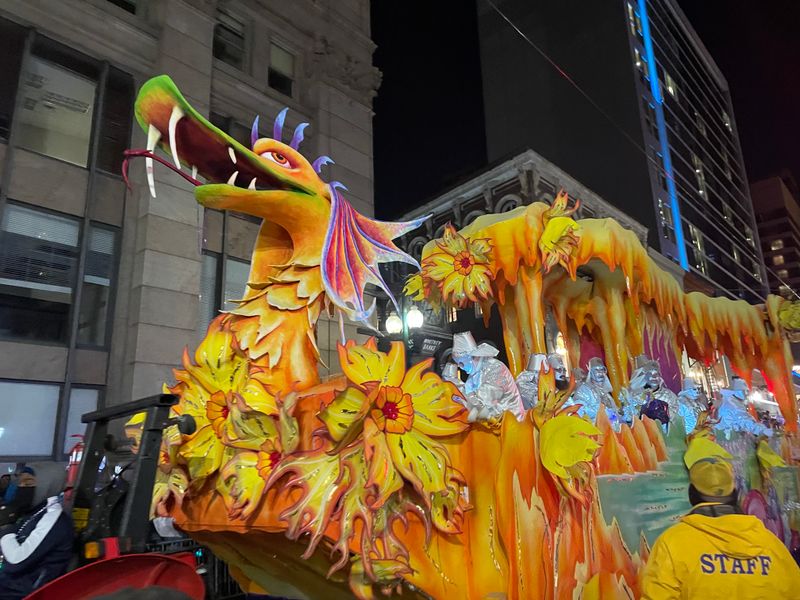
Mardi Gras puts the streets of Louisiana on a global stage, and the rules adapt to keep it safe and joyful.
One lesser known restriction bans snakes within 200 yards of a parade route.
You can guess why, since packed crowds and startled reptiles do not mix.
Head to the parade staging areas near 1524 Napoleon Ave, New Orleans, LA 70115, and you will see how logistics rule the day.
Barricades, police lines, and float queues turn avenues into moving theaters.
The no snake rule slots neatly into that choreography.
Handlers sometimes argue their pets are harmless, but a single surprise can ripple fast in dense crowds.
The policy reduces risk, speeds emergency responses, and prevents spectacle from outshining safety.
You will appreciate the quiet order tucked beneath the glitter.
Parade marshals use clear signage, radio chatter, and practiced routes to keep flow steady.
Noise, drums, and costumes already challenge senses without adding hiss and coils.
Less chaos means more room to enjoy throws and music.
Louisiana prides itself on pageantry, yet it never forgets practical boundaries.
The most memorable parades balance drama with restraint.
Those lines keep families comfortable on long sidewalks.
If you bring a pet, choose distance and calm streets away from the main run.
Carry water, a leash, and a plan for quick exits after the last float.
You will leave with beads, photos, and no emergency detours.
4. False Teeth as a Weapon

Louisiana criminal law treats dentures used to bite as a potential weapon, a detail that catches visitors off guard.
The logic follows injury risk rather than comedy.
If an object amplifies harm, prosecutors can elevate the charge.
You can read about aggravated battery cases at the Orleans Parish Criminal District Court, 2700 Tulane Ave, New Orleans, LA 70119.
The courthouse architecture stands stark against a stream of everyday disputes and unusual facts.
You will recognize how flexible definitions serve real victims.
Courts analyze intent, circumstances, and the object’s capability to cause serious damage.
Dentures, being hard and detachable, can qualify when misused in a fight.
That framework keeps the law adaptive without listing every possible implement.
Tourists sometimes share this tidbit between bites of beignets and laugh.
The reality sits heavier for people who need the protection of clear rules.
You get a reminder that statutes carry lives within their lines.
Louisiana’s civil code roots meet practical criminal doctrine in a living system.
Evidence remains king, and context steers charging decisions.
Defenders challenge the details while prosecutors frame risk and intent.
When conflict brews, step away and seek help instead of trading blows.
Your best souvenir is a calm night and an uneventful report.
The law will be there if someone ignores that advice.
5. Public Gargling Prohibited
Stories from Louisiana mention ordinances in places like Lafayette that frown on public gargling, a rule that sounds like a prank.
The idea emphasizes public decorum rather than harsh punishment.
You will notice how small courtesies shape everyday street life.
Stroll by Parc Sans Souci, 201 E Vermilion St, Lafayette, LA 70501, and you will see families, cyclists, and food trucks.
The plaza’s easy rhythm rewards small restraint, including where you freshen up.
A sink inside a cafe beats sidewalk theatrics every time.
Hygiene behaviors can create splatter and awkwardness in crowded areas.
Ordinances nudge people toward restrooms instead of curbs.
You will avoid stares and keep sidewalks pleasant for everyone.
Visitors often read the rule as a punchline and snap a photo.
Locals chuckle, then point toward nearby facilities.
A little laughter goes a long way in changing habits.
Louisiana blends practicality with a flair for the memorable.
The wording sticks in your head long after the sign fades from view.
That stickiness does the quiet work of community standards.
If you need a quick rinse, head indoors and take a minute.
Consider those around you, and the city will feel friendlier in return.
Travel feels smoother when you match the rhythm of the block.
6. Illegal to Promote Fake Wrestling

Louisiana once kept a sharp eye on how promoters billed professional wrestling, barring them from advertising scripted matches as real sport.
The rule targeted deception rather than theater.
You can see how regulators wanted consumers to know what they were buying.
For a sense of oversight history, visit the Louisiana State Capitol, 900 N 3rd St, Baton Rouge, LA 70802.
The building’s stately silhouette frames decades of quirky and serious policy alike.
You feel the weight of governance in every corridor.
Consumer protection laws across the country often tackle misleading claims.
In this state, the spectacle of wrestling made those lines especially visible.
Promoters had to frame shows as entertainment to stay clear of trouble.
Tourists laugh because fans already understand the staged nature of the drama.
Regulators cared about tickets, fairness, and honest marketing.
The rule reads like a time capsule from a more literal era.
Louisiana’s approach reveals how culture and commerce intersect under the law.
A popular pastime can still trigger serious paperwork.
You will leave appreciating the difference between hype and fraud.
When you spot an old poster in a thrift shop, imagine the disclaimers that once followed.
Picture a promoter choosing words with legal eyes in mind.
The fine print can be as theatrical as the ring.
7. Cooking Garbage for Hogs in Jefferson Parish

Jefferson Parish tells a grounded story with its rule that garbage or food fed to hogs must be cooked on the premises.
The goal is sanitation and disease control rather than culinary flair.
You will find practical wisdom beneath the odd phrasing.
Drive by the Jefferson Parish Government complex at 1221 Elmwood Park Blvd, Jefferson, LA 70123, and picture inspectors tracking compliance.
The area blends suburban offices with service hubs that keep daily life steady.
Oversight happens in quiet ways that rarely make headlines.
Cooking scraps reduces pathogens and pests that thrive in raw waste.
Farms and backyard pens stay safer when feed is properly treated.
The rule protects neighbors as much as animals.
Visitors chuckle at the image of a farmer stirring a pot of peelings.
The laughter fades once you consider public health against Gulf Coast humidity.
You respect the science when the summer air turns heavy.
Louisiana’s agricultural edges sit close to neighborhoods, so shared air matters.
Rules like this keep smells and swarms in check.
You will notice calmer yards and cleaner drainage when people comply.
If you tour local markets, ask vendors how they handle scraps.
Many will describe composting, cooking, or hauling services that meet code.
The small steps add up to fewer problems for everyone.
8. No Goatees Without a License

An old Louisiana oddity suggests a man once needed a special license to wear a goatee in public, a relic that lingers in local chatter.
The rule sits in the realm of folklore and dusty ledgers.
You will hear it repeated because it paints a vivid picture of civic style control.
Wander by the Old State Capitol, 100 North Blvd, Baton Rouge, LA 70801, and consider how fashion trends once met public policy.
The Gothic Revival halls echo with debates both grand and trivial.
A beard fee feels small next to big issues, yet it survives in memory.
Grooming laws around the world have tried to frame identity as compliance.
Louisiana’s tale reminds you how culture shifts faster than paperwork.
The idea now reads as satire with bureaucratic handwriting.
Barbers love the story because it sparks conversation in the chair.
Tourists ask if anyone checks chins at the door.
The answer comes with a smile and a clean trim.
The state thrives on colorful anecdotes that let history breathe.
You will carry this one into your next photo caption.
It turns a haircut into a heritage lesson.
If you try new facial hair on your trip, capture the before and after outside.
Good light on a sunny sidewalk does wonders for shape and shadow.
The only license you need today is confidence.
9. No Obscene Language on the Phone in Sulphur

In Sulphur, a city ordinance bans obscene or profane language during telephone calls, a rule that surprises visitors who vent on the line.
The measure aims to curb harassment and keep communications civil.
You will notice how it mirrors broader policies against threatening speech.
Stop by Sulphur City Hall, 101 N Huntington St, Sulphur, LA 70663, to see where local ordinances take shape.
The modest building anchors a community that values orderly conduct.
Paperwork here shapes how neighbors talk to neighbors.
Enforcement usually follows complaints rather than random monitoring.
The focus is intent, repetition, and the effect on the person receiving the call.
That emphasis reflects practical policing over dramatic stings.
Travelers often ask whether heated sports debates trigger citations.
Context matters more than colorful vocabulary in a private dispute.
You can always hang up and reset before crossing a line.
Louisiana communities balance expression with courtesy, and Sulphur adds its own line.
Civil talk keeps problems smaller and nights quieter.
The ordinance nudges people to solve issues without threats.
As you drive through town, notice the calm pace around storefronts and schools.
Manners scale from porches to switchboards and back again.
Your best bet is to cool off before you dial.
10. No One-Handed Bicycle Riding in New Orleans

New Orleans requires cyclists to keep at least one hand on the handlebars when riding, covering bikes, trikes, and similar vehicles.
The simple standard helps with balance, signaling, and quick braking.
You will ride smoother when both eyes and at least one hand stay forward.
Trace the Lafitte Greenway near 1971 St Louis St, New Orleans, LA 70112, and you will see commuters and kids sharing space.
Lanes, crosswalks, and bollards shape predictable routes through busy blocks.
The rule supports that choreography by limiting showy tricks in traffic.
Urban biking calls for quick reactions around doors, dogs, and potholes.
With a hand planted, corrections arrive faster when something jumps into your path.
The law turns a good habit into a baseline expectation.
Tourists who try to film while riding often learn this the hard way.
Keep the camera strapped and stop for your shot instead of juggling.
You will get better photos and fewer near misses.
Louisiana cities lean on practical road wisdom that keeps streets flowing.
Clear signs and simple instructions reduce confusion for visitors.
The rhythm rewards people who match the pace of locals.
Before you roll, check tire pressure, lights, and a bell for crowded segments.
Signal early, scan wide, and yield where sightlines pinch around parked cars.
You will finish your loop without a scraped palm.
Dear Reader: This page may contain affiliate links which may earn a commission if you click through and make a purchase. Our independent journalism is not influenced by any advertiser or commercial initiative unless it is clearly marked as sponsored content. As travel products change, please be sure to reconfirm all details and stay up to date with current events to ensure a safe and successful trip.
