
Oregon has laws that make you blink, laugh, and seriously question reality. I dug into 9 of the weirdest rules, and yes – some of them are actually still on the books.
From banning odd behaviors you’d never think about to rules so specific they feel like a prank, this state knows how to keep things interesting. Locals shrug like it’s normal, while the rest of us just try to wrap our heads around it.
Every law is stranger than the last, making you wonder how they even came to be. Even reading about them is like stepping into a parallel universe where logic takes a back seat.
By the end, I was half-amused, half-bewildered, and fully convinced that Oregon marches to the beat of its own, very peculiar drum.
1. No Whistling Underwater in Portland

Portland, Oregon is famous for its coffee scene, food carts, and apparently its very firm stance on underwater musical performances. Yes, you read that correctly.
It is actually illegal to whistle underwater in the city of Portland.
Now, I have tried to picture the exact scenario that inspired this law, and I keep coming up empty. Who was out there causing enough underwater whistling chaos to demand a legal response?
The world may never know.
Portland sits in Multnomah County in northwestern Oregon, USA, and it is one of the most visited cities in the Pacific Northwest. Tourists flock here for the food, the culture, and the bridges spanning the Willamette River.
What they do not expect to find is a law regulating what sounds you can make while submerged. Technically, whistling underwater is physically nearly impossible for most people anyway, which makes this ordinance even more delightfully absurd.
It is the kind of rule that makes you wonder if lawmakers were just having a slow afternoon when they decided to put pen to paper on this one. Oregon has always marched to the beat of its own drum, and this law is proof that the beat sometimes comes from somewhere very strange indeed.
Portland keeps surprising me every single time I visit.
2. No Pumping Your Own Gas

For decades, pulling into a gas station in Oregon felt like stepping back into a simpler time. An attendant would appear at your window, and you simply handed over the keys to the fueling process.
You did not lift a finger, and honestly, it was kind of great.
Oregon was one of only two states in the entire country where self-service gas pumping was outright banned for regular motorists. New Jersey was the other holdout, making these two states a very exclusive club of pump-it-for-you loyalty.
The law had roots going back to the 1950s, when safety concerns and job preservation were major talking points. Oregon lawmakers argued that trained attendants reduced fire hazards and kept local employment numbers healthy.
Whether or not you agreed, the rule stuck around for a remarkably long time.
In 2023, the law was finally lifted, allowing Oregon drivers to pump their own gas for the first time in modern history. The reaction was a fascinating mix of relief and genuine confusion, as many longtime residents had simply never done it before.
I remember stopping at a station near Eugene in Lane County and chatting with an attendant who had mixed feelings about the change. Oregon, located in the Pacific Northwest of the USA, never does anything the easy way, and this law was a perfect example of that independent spirit in action.
3. No Ice Cream on Sundays

Imagine planning the perfect Sunday afternoon around a scoop of your favorite flavor, only to find out the law might have something to say about it. In certain parts of Oregon, consuming ice cream on Sundays has historically been prohibited under old blue laws.
Blue laws were designed to enforce religious observance on Sundays, restricting various commercial and leisure activities. Ice cream somehow made the list of forbidden Sunday pleasures, which tells you a lot about how seriously some communities took their day of rest back in the day.
Oregon is located in the Pacific Northwest of the United States, bordered by Washington to the north and California to the south. It is a state known for its progressive attitude and love of local artisan food, which makes this ice cream restriction feel especially out of place.
Today, you can absolutely walk into a scoop shop on a Sunday without fear of legal consequences. But the fact that this law existed at all is a fascinating snapshot of how deeply moral codes were once baked into everyday legislation.
I found myself thinking about this while enjoying a double scoop of marionberry ice cream on a Sunday afternoon in Salem, the state capital. The irony was not lost on me, and I savored every bite just a little bit more knowing the complicated history behind that simple Sunday treat.
4. No Fortune-Telling in Yamhill

The small city of Yamhill, tucked into Yamhill County in northwestern Oregon, USA, has taken a firm stance against the mystical arts. Fortune-telling, palmistry, astrology readings, and clairvoyance are all considered illegal activities within city limits.
Before you pack up your crystal ball and head to Yamhill to test the law, know that local authorities take this ordinance seriously. The regulation covers a surprisingly wide range of practices, essentially banning anyone from claiming to predict or reveal the future for profit.
The reasoning behind laws like this typically traces back to concerns about fraud and the exploitation of vulnerable people. Lawmakers worried that unscrupulous practitioners might take advantage of grieving or desperate individuals willing to pay for reassurance about what lies ahead.
That logic is understandable, even if the blanket ban feels a bit extreme by modern standards. Today, psychic services and astrology readings are common and widely accepted forms of entertainment across most of the country.
Yamhill itself is a charming wine country community surrounded by rolling hills and vineyard landscapes. It draws visitors for its agricultural beauty and small-town warmth rather than its legal quirks.
Still, knowing that a fortune teller would technically be operating outside the law adds a wonderfully mysterious layer to any visit. The stars may have a lot to say about Yamhill, but the city code would prefer you keep that information to yourself.
5. No Juggling Without a License in Hood River
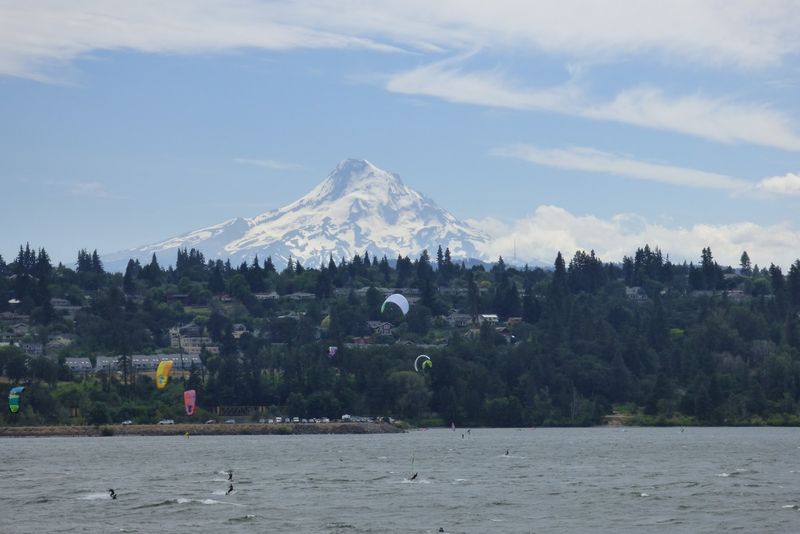
Hood River is one of those places that genuinely has it all: dramatic mountain views, world-class windsurfing on the Columbia River, and a strict bureaucratic position on unlicensed juggling. Yes, in Hood River, Oregon, you need a license to juggle in public.
Hood River sits in Hood River County in northern Oregon, USA, right along the southern bank of the Columbia River Gorge. It is an outdoor adventure hub that attracts athletes, hikers, and nature lovers from across the country.
The juggling law feels a little out of place in such a free-spirited setting.
The regulation likely originated from older ordinances aimed at controlling street performers and managing public spaces. Cities in earlier eras were often concerned about performers drawing crowds that might block traffic or create disturbances.
What makes this law particularly amusing is that juggling is widely considered one of the most harmless street performance arts imaginable. A person tossing three bean bags in the air poses very little threat to public safety, yet Hood River decided official licensing was the appropriate response.
I visited Hood River on a crisp autumn morning and watched a street performer toss rings near the waterfront. I spent a good ten minutes wondering if they had gone through the proper channels to secure their juggling credentials.
Hood River is wonderful, wild, and wonderfully weird in equal measure, and that combination is exactly why I keep coming back.
6. No Weddings on Ice Skating Rinks in Portland

Portland has strong opinions about where love should be officially declared, and apparently ice skating rinks did not make the approved venue list. The city has an ordinance specifically prohibiting wedding ceremonies from taking place on ice skating rinks.
Portland, the largest city in Oregon, sits at the confluence of the Willamette and Columbia rivers in Multnomah County in the Pacific Northwest, USA. It is a city celebrated for its creativity, its independent spirit, and its deeply specific regulations about matrimonial locations.
One can only imagine the backstory here. Did a particularly ambitious couple once attempt to exchange vows mid-skate, causing a scene that required legislative intervention?
The historical record is frustratingly quiet on the matter.
What is clear is that someone, at some point, decided this was a situation worth addressing in writing. And so Portland added ice skating rink weddings to its list of prohibited activities, right alongside whatever other civic concerns were on the agenda that day.
From a purely practical standpoint, ice rinks are slippery, cold, and not exactly designed for standing still in formal attire. So the law might actually be doing couples a favor, even if the reasoning behind it remains gloriously unclear.
Portland has always been a city that operates on its own terms, and this small, bizarre ordinance is a perfect little window into that wonderfully strange civic soul. I love this city more every time I visit.
7. No Spitting on Sidewalks in Portland

Portland takes its public spaces seriously, and that commitment extends to keeping sidewalks free from a very specific kind of mess. The city has a long-standing ordinance making it unlawful to spit on sidewalks, public transportation, or the floors and walls of any public building.
On the surface, this might not sound bizarre at all. Many cities have similar rules, and keeping public spaces clean is a reasonable goal.
But the sheer specificity of Portland’s ordinance, which lists out public halls, offices, and conveyances in careful detail, gives it a wonderfully formal energy.
Portland is located in Multnomah County in northwestern Oregon, USA, and is the state’s most populous city. It is famous for its vibrant arts scene, its independent bookstores, and its deeply held sense of civic pride.
A clean sidewalk fits right into that identity.
Historically, anti-spitting laws became popular in the early twentieth century during public health campaigns targeting the spread of tuberculosis. Spitting in public was seen as a genuine health hazard, and cities across America rushed to legislate against it.
Portland’s version of this law has endured long past the era that inspired it, which is both a testament to legislative inertia and a reminder that some old rules just quietly stick around. Walking through Portland’s Pearl District on a recent trip, the sidewalks were indeed spotless.
Maybe the law is actually working exactly as intended after all.
8. No Hunting in Cemeteries

Oregon’s natural landscapes are spectacular, offering hunters access to elk, deer, and a wide variety of game across millions of acres of public land. With so much available hunting territory, it is hard to imagine anyone looking at a cemetery and thinking, that is the spot.
And yet, Oregon found it necessary to explicitly prohibit hunting in cemeteries across the state. The law exists, it is on the books, and it raises more questions than it answers about the circumstances that inspired it.
Oregon is located in the Pacific Northwest of the United States and shares borders with Washington, Idaho, California, and Nevada. The state is a paradise for outdoor recreation, including hunting, fishing, hiking, and camping across its diverse terrain.
Cemeteries in Oregon, as in most places, are considered sacred and solemn spaces. The idea of combining them with hunting activity is jarring enough that the prohibition makes a certain emotional sense, even if the practical need for such a law remains mysterious.
Perhaps wildlife occasionally wanders through cemetery grounds, and lawmakers wanted to ensure those spaces remained peaceful and undisturbed. Or perhaps someone, somewhere, actually attempted to hunt in a graveyard and forced the issue into law.
Either way, the regulation stands as one of Oregon’s most quietly surreal pieces of legislation.
On a visit to the Willamette Valley, I passed several beautiful old cemeteries shaded by Douglas firs. Peaceful, quiet, and entirely hunt-free, exactly as the law intended.
9. No Dishes in the Sink Overnight in Marion County

Marion County in Oregon has a local ordinance that takes household tidiness to a whole new level. Leaving unwashed dishes in the sink overnight is technically a violation of the law in certain jurisdictions within the county.
Domestic life in Oregon apparently comes with terms and conditions.
Marion County is located in the Willamette Valley in northwestern Oregon, USA, and is home to Salem, the state capital. It is a region known for its agricultural richness, particularly its fruit orchards and wine production.
What it is less known for is its strong feelings about your dinner plates.
This type of law likely traces back to early health codes designed to prevent pest infestations and maintain sanitary conditions in residential areas. Food residue left on dishes overnight can attract insects and rodents, so the underlying concern is not entirely without merit.
Still, the idea of a law enforcement officer peering into your kitchen window to check the state of your sink is a mental image that is hard to shake. Enforcement of such a rule would be a logistical nightmare, which is probably why violations are not exactly flooding the court system.
I stayed in Salem for a few nights during a road trip through the Willamette Valley and made absolutely sure my dishes were done before bed each evening. Partly out of good habit, and partly because I was not about to become the subject of Oregon’s most domestic arrest record.
Dear Reader: This page may contain affiliate links which may earn a commission if you click through and make a purchase. Our independent journalism is not influenced by any advertiser or commercial initiative unless it is clearly marked as sponsored content. As travel products change, please be sure to reconfirm all details and stay up to date with current events to ensure a safe and successful trip.
