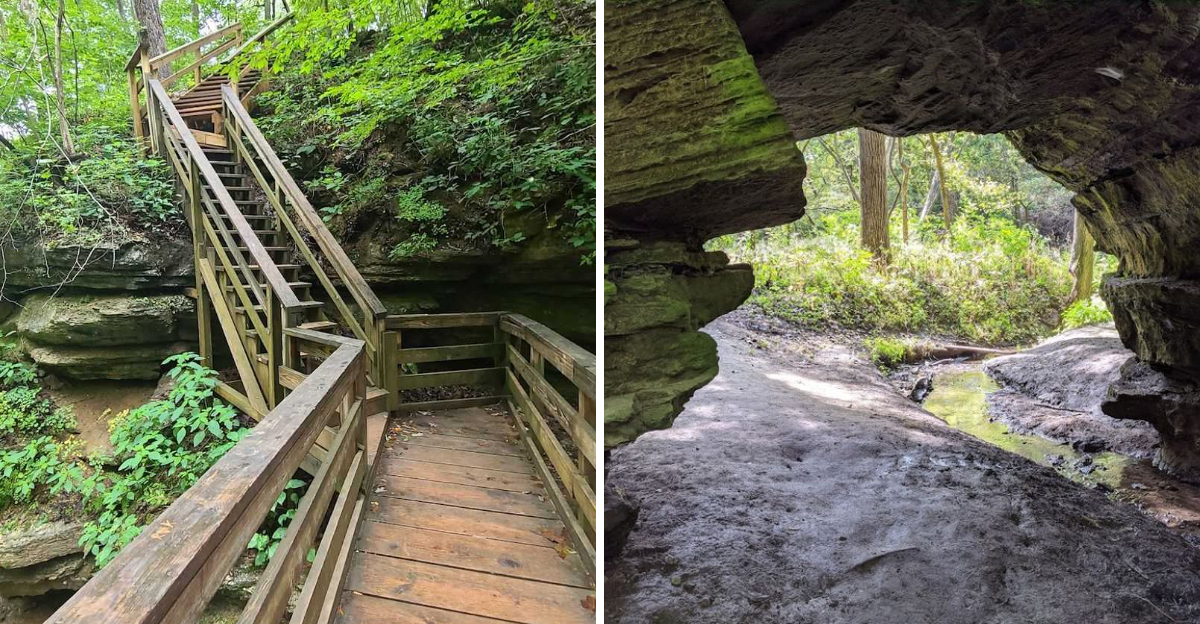
I have spent a lot of time exploring Indiana, and I keep coming back to one truth: this state hides some genuinely stunning natural scenery. You do not need to drive across the country to find dramatic canyons, roaring waterfalls, and sweeping ridgeline views.
This place has all of that, and most of it is packed into short trails you can finish in a single afternoon. I put together this list of ten hikes all under five miles because I wanted to show just how much beauty fits into a small stretch of trail.
Whether you are a casual walker or someone who loves a good challenge, there is something here for every type of outdoor lover. Grab your hiking boots, pack some water, and get ready to see our state in a completely new way.
1. Trail 3 (The Ladders Trail) at Turkey Run State Park
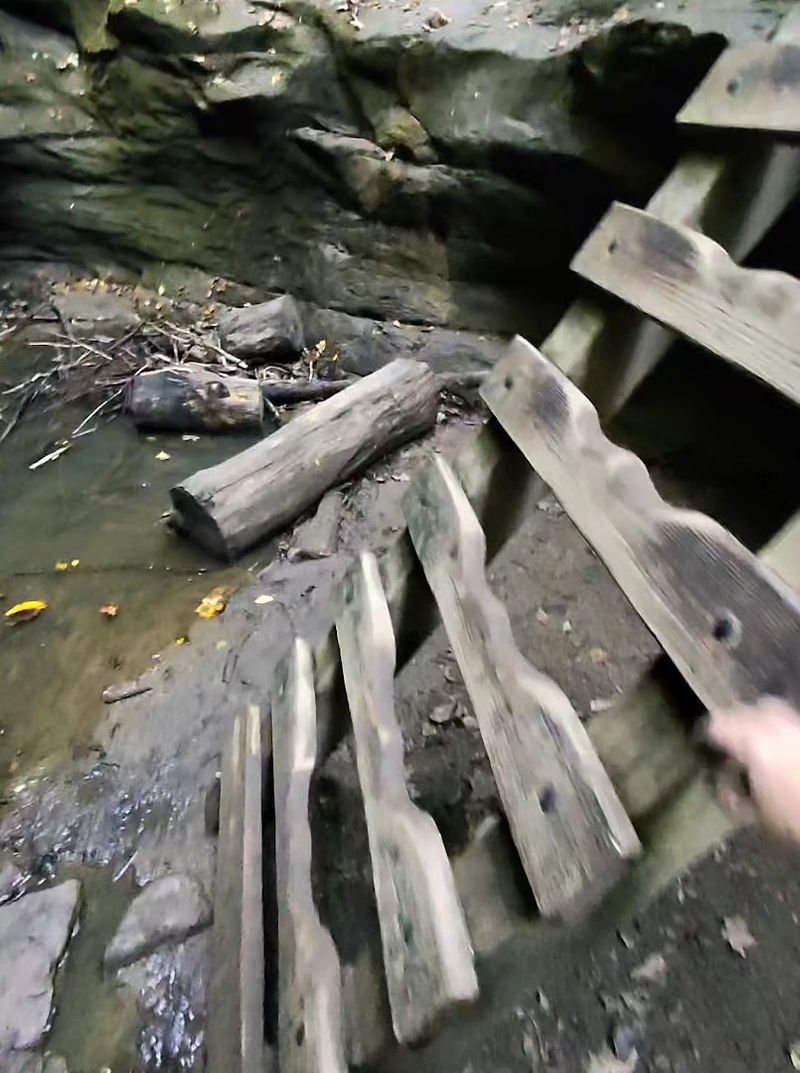
Few trails in Indiana punch as hard as Trail 3 at Turkey Run State Park, located at 8121 E Park Rd, Marshall, IN 47859. The moment you drop into the first sandstone canyon, you realize this is not your average woodland walk.
The walls rise sharply on both sides, and the air gets noticeably cooler and quieter.
The trail earns its nickname from the wooden ladders bolted directly into the rock face. You will climb up and down these ladders multiple times throughout the 1.9-mile loop.
It sounds intimidating, but most hikers with a reasonable fitness level handle it just fine.
Sugar Creek runs alongside parts of the trail, adding the sound of moving water to an already dramatic landscape. The suspension bridge crossing is a highlight that most visitors stop to appreciate.
It sways gently underfoot while offering a wide view of the creek below and the forested bluffs beyond.
The canyon sections feel almost prehistoric, with mossy boulders and towering rock formations pressing in from every direction. Wear shoes with grip because the canyon floors stay wet and slippery even on dry days.
The trail is rated moderate to difficult, but the scenery makes every challenging step worthwhile.
After your hike, the Turkey Run Inn at the same address serves hot meals and is a solid spot to rest tired legs before the drive home.
2. Dune Succession Trail at Indiana Dunes National Park
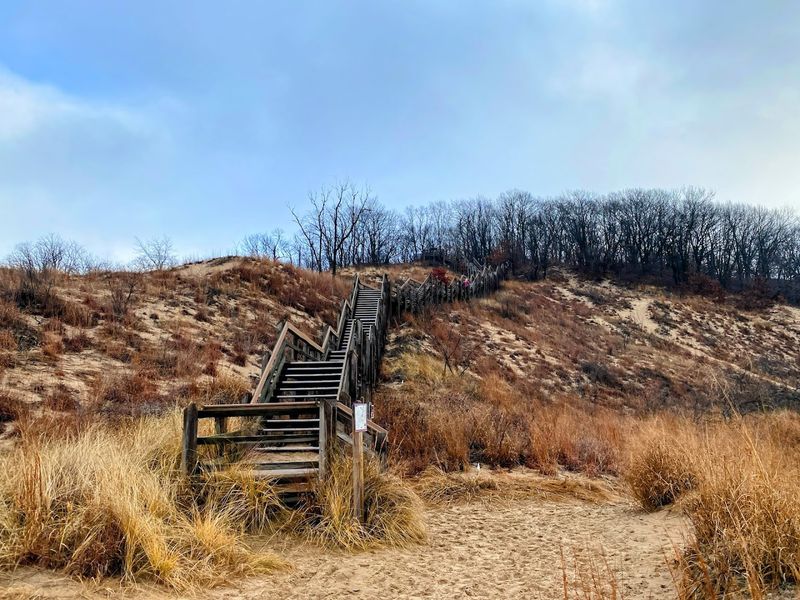
The Dune Succession Trail at Indiana Dunes National Park, located at 376 North County Line Road, Gary, IN 46403, tells a story that most people never think about.
It walks you through several distinct ecosystems in a single short loop, showing how bare sand slowly transforms into a full forest over hundreds of years.
That kind of living science lesson is hard to find anywhere else.
You will move from open sandy flats dotted with marram grass to shaded forests of black oak and cottonwood within just a few hundred feet. Each zone feels completely different from the last.
The contrast is striking and genuinely educational for hikers of all ages.
The views open up dramatically when you reach the top of the larger dune ridges. On a clear day you can see across the flat wetlands toward Lake Michigan shimmering in the distance.
The scale of the dune landscape is something photographs rarely capture accurately.
This trail sits in one of the most ecologically diverse areas in the entire Midwest. Indiana Dunes National Park protects over 15,000 acres of dunes, wetlands, prairies, and forests all within striking distance of Chicago.
That mix of environments is what makes every visit feel fresh.
The trail itself is under two miles and relatively easy to navigate. Bring sunscreen because the open dune sections offer zero shade and the sun reflects off the pale sand with surprising intensity.
3. Trail 10 (The Fire Tower Trail) at Brown County State Park
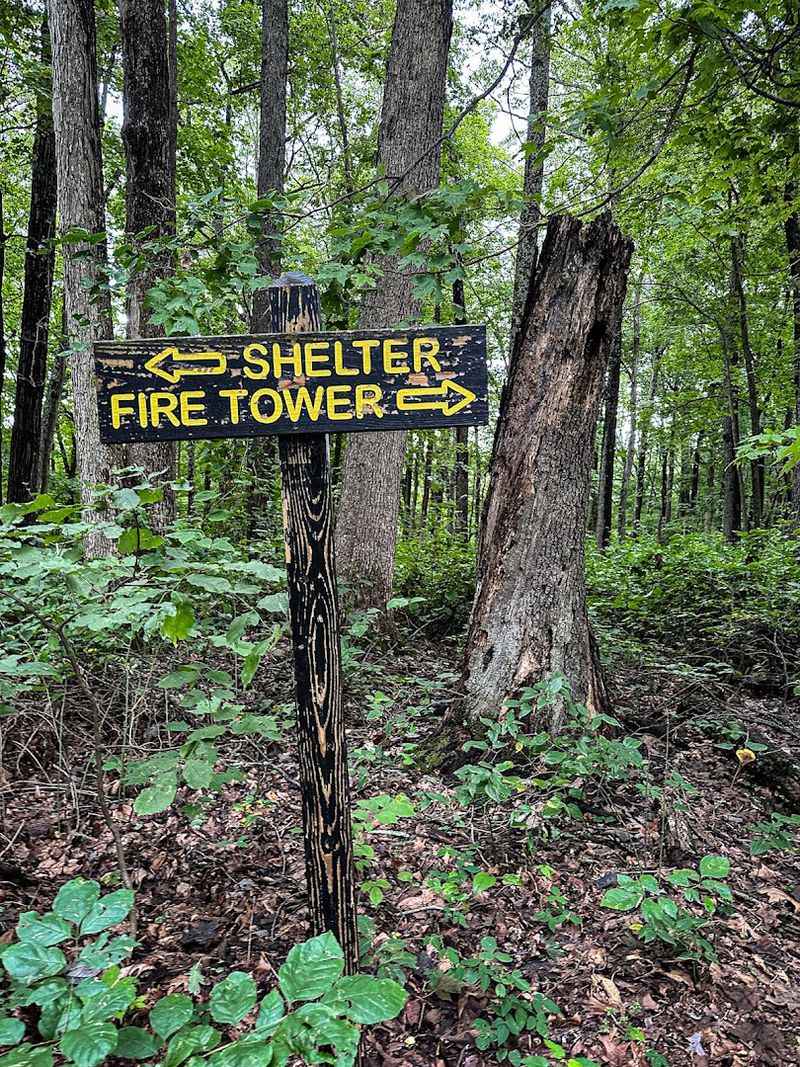
Brown County State Park is already famous for fall color, but Trail 10 gives you a reason to visit that goes beyond leaf-peeping season.
The Fire Tower Trail at 1810 State Road 46 E, Nashville, IN 47448 climbs steadily through hardwood forest before arriving at a historic fire lookout tower that most casual visitors never find.
That climb is what separates the views here from anything you will get roadside.
The tower itself dates back to the era when fire spotters lived and worked in the Indiana hills. Climbing to the observation deck puts you above the tree line and rewards you with a 360-degree panorama of the rolling Brown County hills.
In autumn, that view becomes one of the most spectacular things you can see in the entire state.
The trail covers about 2.5 miles round trip and involves some elevation change that will get your heart rate up. It is rated moderate and is suitable for older children and adults who are reasonably active.
The path is well-marked and easy to follow throughout.
Wildlife sightings are common along this route. White-tailed deer, wild turkey, and various songbirds are frequent trail companions.
The forest feels deep and undisturbed for much of the hike, which adds to the sense of real wilderness.
After finishing, the town of Nashville, Indiana just minutes away offers charming shops, local art galleries, and several good spots to grab a warm meal before heading home.
4. Trail 2 at Clifty Falls State Park
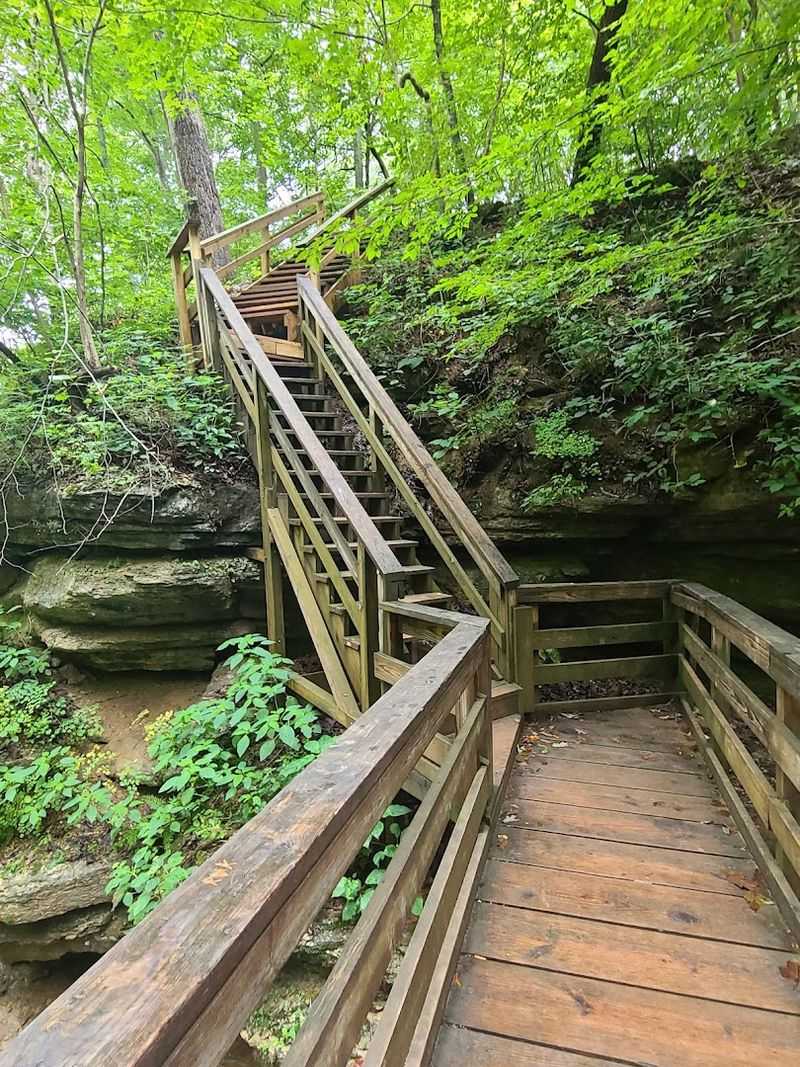
Clifty Falls State Park at 2221 Clifty Drive, Madison, IN 47250 is home to some of the most dramatic waterfall scenery in the entire Midwest. Trail 2 puts you right in the middle of it.
The trail winds through deep limestone canyons carved by glacial meltwater thousands of years ago, and the results are genuinely jaw-dropping.
The waterfalls along this route range from delicate seasonal trickles to full roaring cascades after spring rains. Clifty Falls itself drops over 60 feet, making it one of the tallest waterfalls in Indiana.
Seeing it in full flow after a wet spring morning is an experience that stays with you.
The canyon walls along Trail 2 rise dramatically on both sides of the creek. Exposed fossil beds in the limestone are visible in several places, quietly hinting at the ancient ocean that once covered this region.
Geology lovers will find plenty to appreciate beyond just the scenery.
Trail 2 runs just over one mile but packs in a remarkable amount of visual variety. The terrain is moderately challenging with some uneven footing near the creek crossings.
Trekking poles are helpful if you plan to explore the canyon floor sections.
The nearby city of Madison, Indiana sits right along the Ohio River and is worth exploring before or after your hike. The Madison Historic District along Main Street offers well-preserved 19th-century architecture and several locally owned cafes and shops.
5. Pine Hills Nature Preserve Trail at Shades State Park
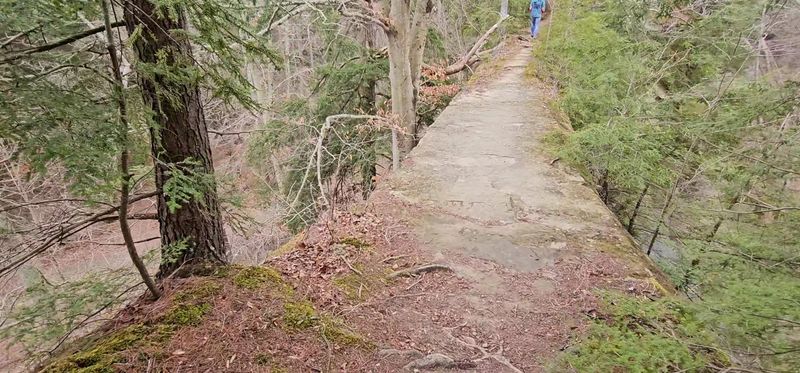
Pine Hills Nature Preserve inside Shades State Park at 7751 S 890 W, Waveland, IN 47989 protects one of the most unusual landscapes in all of Indiana. The preserve features four dramatic sandstone ridges called “backbones” that rise like fins above the surrounding forest floor.
Walking among them feels more like something you would expect in the American Southwest than the Midwest.
The trail through Pine Hills is relatively short but demands your full attention. The narrow ridgeline paths have steep drop-offs on both sides in places, and the footing requires care.
This is one of those trails where slowing down and being present actually enhances the experience rather than frustrating you.
Hemlock trees grow in the cool, shaded ravines below the ridges, creating a microclimate that feels completely different from the surrounding upland forest. The contrast between the sunlit ridge tops and the dark hemlock hollows below is visually striking throughout the hike.
Spring and fall are particularly beautiful times to visit.
The preserve is managed jointly with Shades State Park, which surrounds it and offers additional trails for those who want more mileage. Shades is sometimes called the “Little Smokies of Indiana” for good reason.
The layered forest scenery and rugged terrain live up to that comparison on most days.
Parking is limited at the Pine Hills trailhead, so arriving early on weekends is strongly recommended to secure a spot and avoid the busiest crowds on the trail.
6. Falls Canyon Trail (Trail 3) at McCormick’s Creek State Park
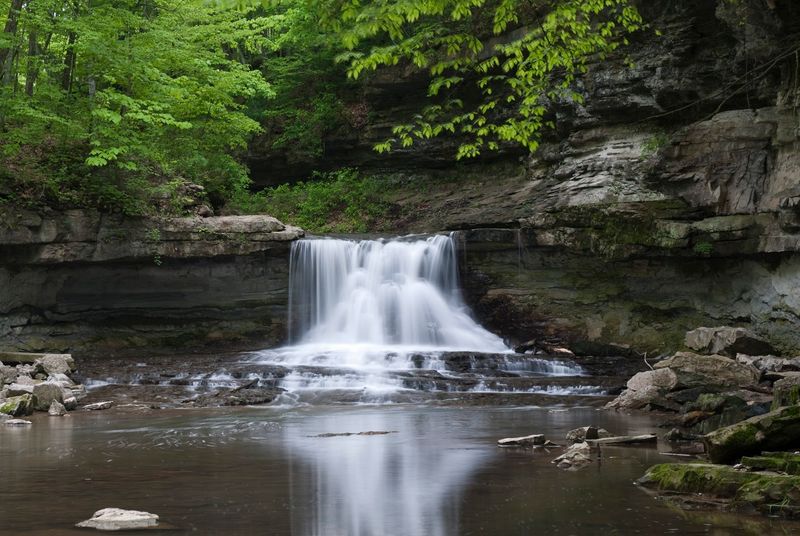
McCormick’s Creek State Park holds the distinction of being Indiana’s very first state park, established in 1916. The Falls Canyon Trail at 250 McCormick’s Creek Park Rd, Spencer, IN 47460 leads to the park’s signature waterfall and remains one of the most visited short hikes in the state for good reason.
History and natural beauty arrive together on this trail.
The walk from the Canyon Inn to the main waterfall is short, just around a quarter mile, but the payoff is immediate. The falls drop over a curved limestone ledge into a wide shallow pool, and stone steps cut into the canyon wall bring you down to a close-up vantage point.
Standing at the base with the mist on your face is a genuinely refreshing moment.
Smaller secondary waterfalls appear along McCormick’s Creek further downstream, rewarding hikers who choose to extend their walk beyond the main falls. The canyon walls are lined with ferns and wildflowers that change with the seasons.
Early spring brings trillium blooms that carpet the forest floor in white and purple.
The Canyon Inn at the same address is a historic limestone lodge that has been welcoming visitors for over a century. It offers lodging, a dining room, and a large fireplace that makes post-hike relaxation feel genuinely cozy.
Staying overnight allows you to catch the falls in early morning light when the canyon is completely quiet.
The trail surface is paved near the falls, making the initial section accessible for most visitors regardless of mobility level.
7. Donaldson Cave and Twin Caves Loop (Trail 3) at Spring Mill State Park
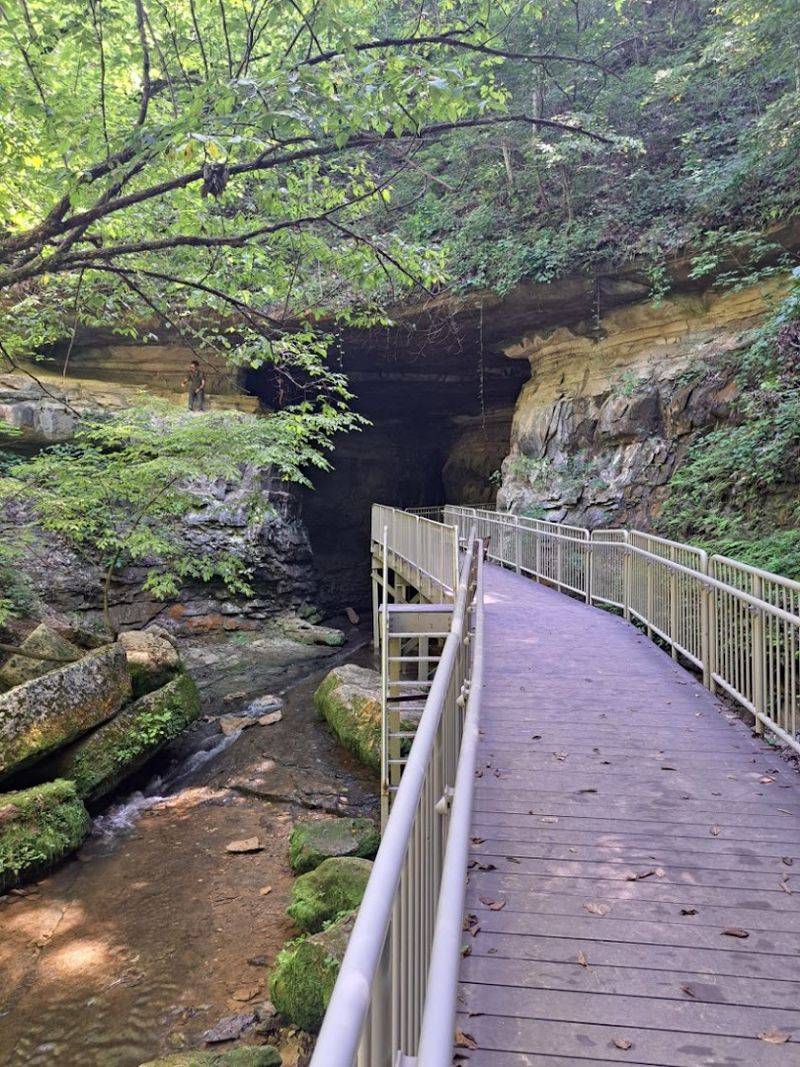
Spring Mill State Park at 3333 State Road 60 E, Mitchell, IN 47446 offers something that most Indiana parks simply cannot match: a working historic gristmill village, cave systems, and forest trails all within the same property.
Trail 3 connects the Donaldson Cave and Twin Caves sites in a loop that covers some of the most unusual terrain in the state.
Donaldson Cave is home to a crystal-clear underground stream that flows out from the hillside in a stunning display of natural plumbing. The water emerges cold and brilliantly blue-green, surrounded by mossy limestone bluffs.
Even on a hot summer day, the cave entrance area feels noticeably cool and refreshing.
Twin Caves offers guided boat tours that take you inside the cave system on the underground stream itself. The tours are short but memorable, and the guides provide solid natural history context.
Booking in advance during peak season is wise because spots fill up quickly.
The forested sections of the loop trail pass through mature hardwood stands with a rich understory of wildflowers in spring. The Spring Mill Pioneer Village at the same address is a fully restored 1800s settlement where costumed interpreters demonstrate life in early Indiana.
It is worth setting aside extra time to explore the village before or after your hike.
The combination of cave geology, forest scenery, and living history makes Spring Mill one of the most complete outdoor destinations anywhere in Indiana.
8. Portland Arch Nature Preserve Trail
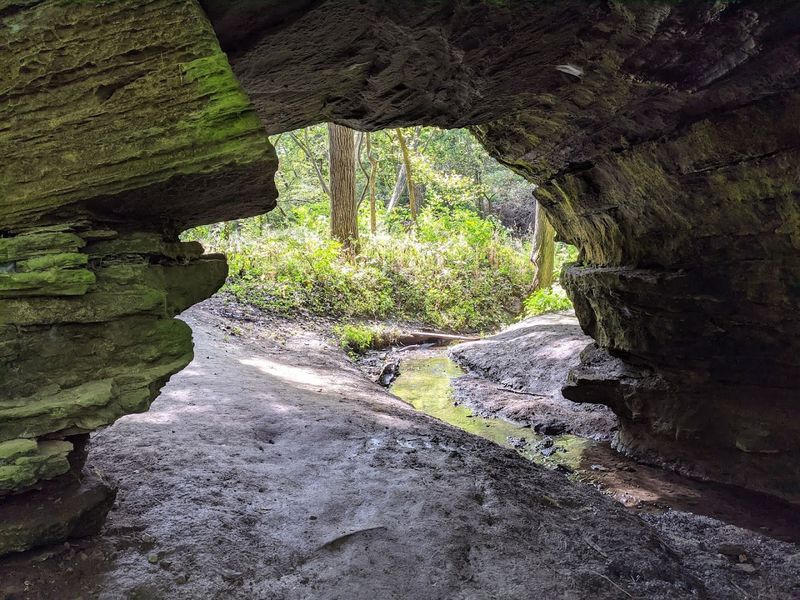
Portland Arch Nature Preserve at 20 Portland Arch Rd, Covington, IN 47932 protects one of Indiana’s most remarkable geological features. The natural sandstone arch that gives the preserve its name spans a wooded ravine and is one of the largest natural arches in the entire state.
Most people who live in Indiana have never heard of it, which makes the discovery feel all the more rewarding.
The trail to the arch is short and relatively easy, winding through a forested hollow before the arch comes into view around a bend. The first glimpse of that stone span framing the sky above the ravine is genuinely surprising.
It looks more like something from Utah than the Indiana countryside.
Bear Creek runs through the preserve and adds a peaceful soundtrack to the hike. The creek bed is lined with smooth sandstone boulders that are perfect for sitting and taking in the surroundings.
Wildflower diversity here is exceptional in spring, with bloodroot, wild ginger, and trout lily appearing in large numbers.
The preserve is managed by the Indiana Department of Natural Resources and sees far fewer visitors than the major state parks. That low traffic level means you can often have the arch entirely to yourself on a weekday morning.
The quiet makes the experience feel more personal and less like a tourist attraction.
Covington, Indiana sits nearby along the Wabash River and offers a small historic downtown worth a brief visit after your hike.
9. Bluebird Hills Trail (Trail 7) at Pokagon State Park

Pokagon State Park sits in the northeastern corner of Indiana in a landscape shaped entirely by glaciers.
The Bluebird Hills Trail at 450 Lane 100 Lake James, Angola, IN 46703 takes full advantage of that glacially sculpted terrain by routing hikers through rolling hills, open meadows, and forest edges overlooking the clear waters of Lake James.
The combination of lake views and upland scenery is hard to beat in this part of the state.
Trail 7 covers a moderate distance and involves enough elevation change to make the walk genuinely engaging without being exhausting. The open meadow sections feel expansive and breezy, especially in summer when the surrounding forest holds heat.
Bluebirds are a common sighting along the trail margins, living up to the trail’s name in the best possible way.
Lake James appears through the trees at several points along the route, offering blue water glimpses that contrast beautifully with the surrounding green canopy. The lake covers over 1,000 acres and is one of the clearest natural lakes in Indiana.
Seeing it from the elevated trail sections gives you a perspective that shoreline visitors never get.
The Potawatomi Inn at the same address is a full-service resort lodge within the park that has been welcoming guests since 1925. It offers lakefront accommodations, a dining room, and access to the park’s famous toboggan run in winter.
Staying overnight turns a day hike into a proper outdoor weekend getaway.
Fall color arrives early in this part of Indiana, making late September and early October the most visually spectacular time to walk Trail 7.
10. Hemlock Cliffs National Scenic Trail at Hoosier National Forest
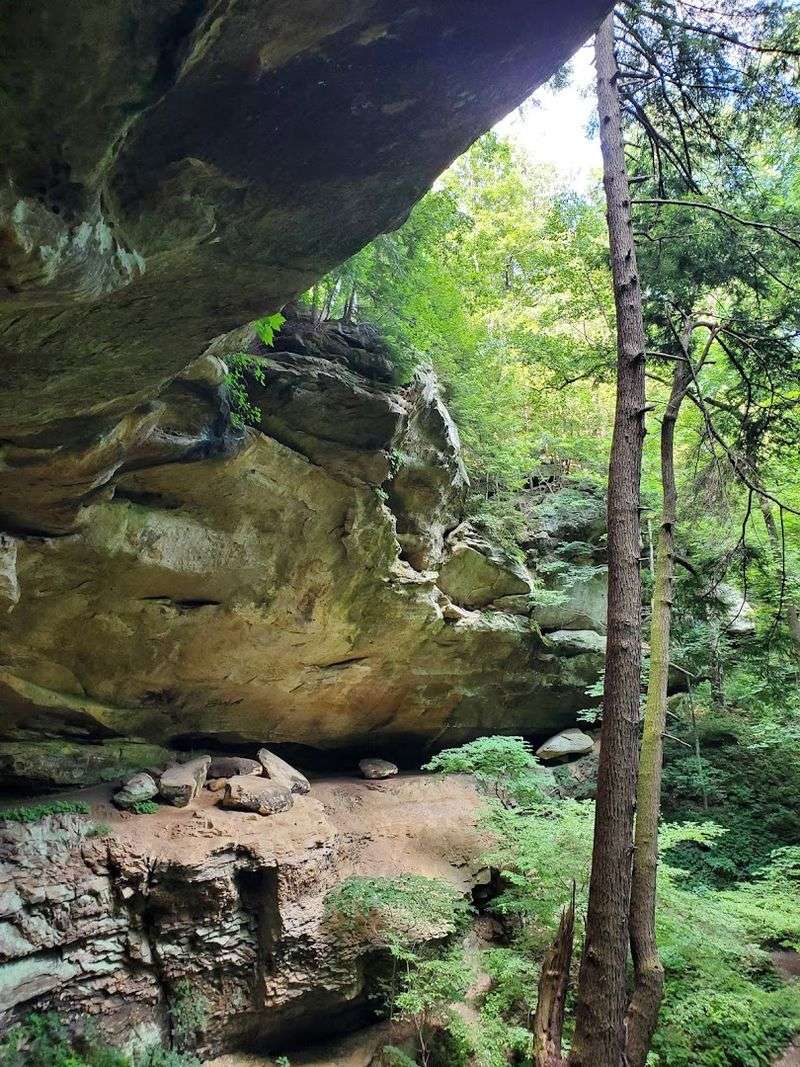
If you want to feel like you have stepped into a completely different world, Hemlock Cliffs in Hoosier National Forest at 10255 National Forest Rd, English, IN 47118 is the trail to choose. The canyon here is carved from ancient sandstone, and the walls rise high enough to block out the sky in places.
Ancient hemlock trees cling to the ledges above, their roots gripping the rock face in ways that look genuinely impossible.
The trail is a short loop of under two miles, but the scenery it delivers is wildly disproportionate to its length. A seasonal waterfall drops over the main cliff face into a small plunge pool at the canyon floor.
During wet seasons the falls are powerful and loud, filling the enclosed canyon with sound that bounces off the sandstone walls.
Alcoves and overhangs in the cliff walls create natural shelters that Indigenous people used for thousands of years before European settlement. The historical weight of the place adds a layer of meaning to the walk that goes beyond simple scenery appreciation.
Interpretive signs along the trail provide helpful context about the area’s natural and cultural history.
Hoosier National Forest covers over 200,000 acres of southern Indiana and offers a dramatic change in landscape compared to the flat agricultural land that dominates much of the state. The Hemlock Cliffs area is one of its most beloved and photogenic destinations.
Visiting on a weekday almost guarantees you a peaceful, crowd-free experience in this stunning canyon.
